Похожие презентации:









Quantitative Data Analysis Lecture 2: Scientific Process, Experiment Design & Descriptive Stats
1. Quantitative Data Analysis
Lecture 2: Scientific Process, Experiment Design & Descriptive StatsDr Sophie Leonard
2. The Scientific Process
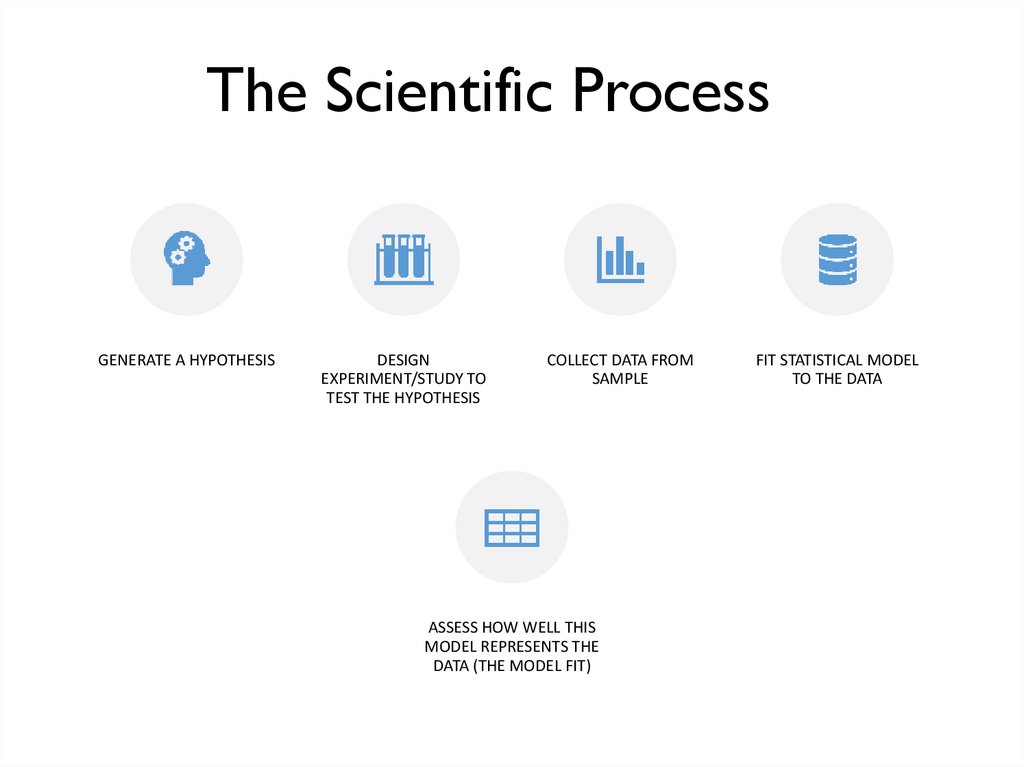
GENERATE A HYPOTHESISDESIGN
EXPERIMENT/STUDY TO
TEST THE HYPOTHESIS
COLLECT DATA FROM
SAMPLE
ASSESS HOW WELL THIS
MODEL REPRESENTS THE
DATA (THE MODEL FIT)
FIT STATISTICAL MODEL
TO THE DATA
3. How do we come up with hypotheses?
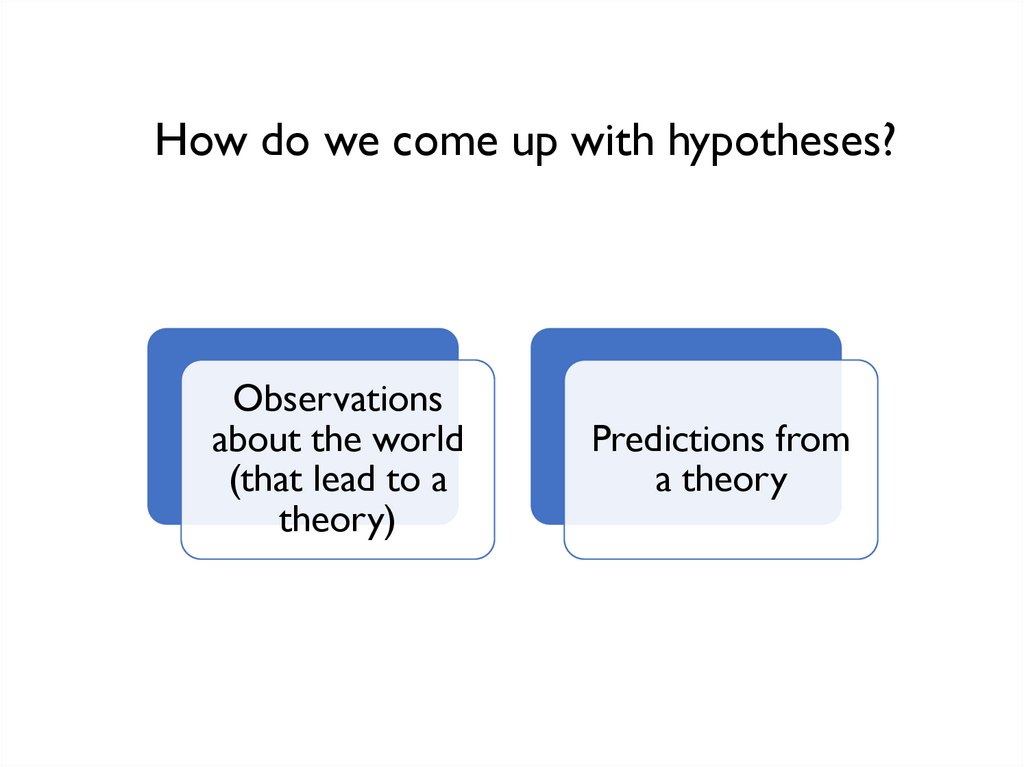
Observationsabout the world
(that lead to a
theory)
Predictions from
a theory
4. Types of studies (generally)
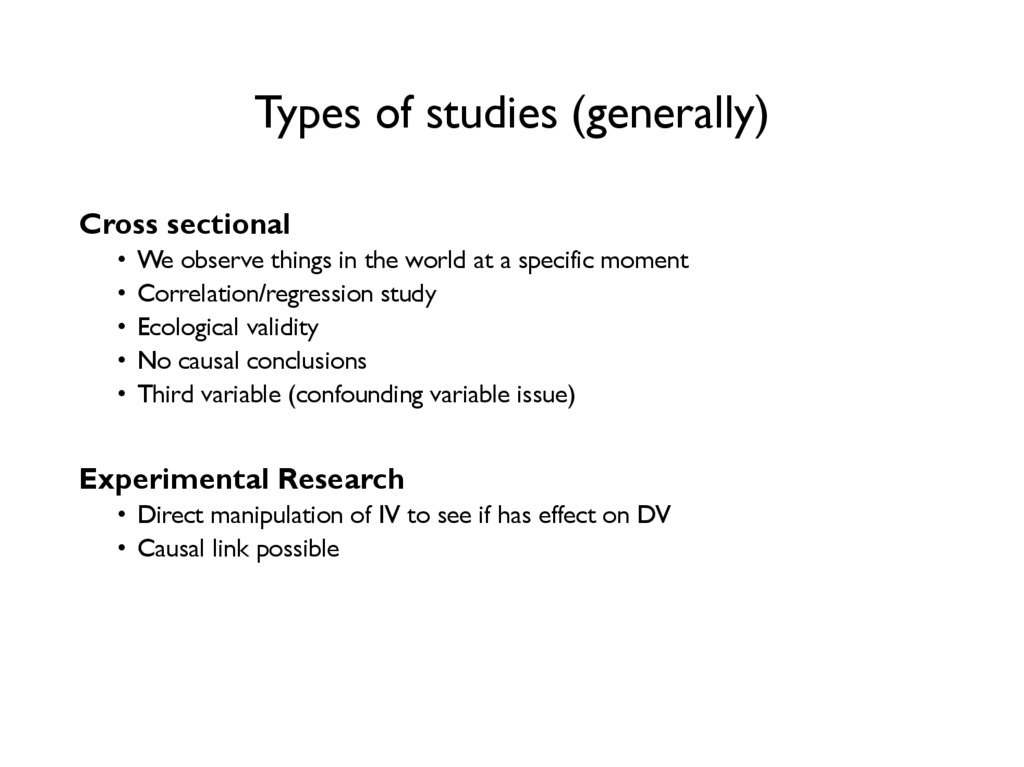
Cross sectional• We observe things in the world at a specific moment
• Correlation/regression study
• Ecological validity
• No causal conclusions
• Third variable (confounding variable issue)
Experimental Research
• Direct manipulation of IV to see if has effect on DV
• Causal link possible
5. Research Example
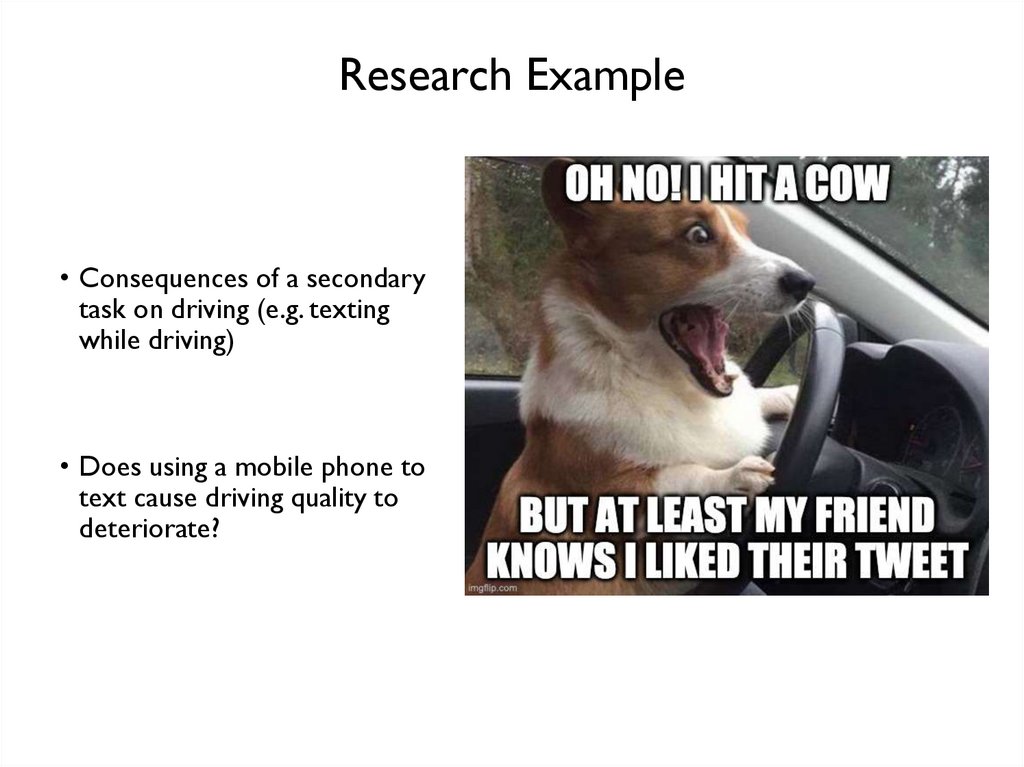
• Consequences of a secondarytask on driving (e.g. texting
while driving)
• Does using a mobile phone to
text cause driving quality to
deteriorate?
6. Independent and Dependent Variables
Quantitative research studies should have at leastone Independent Variable (IV) and one Dependent
Variable (DV)
We systematically manipulate something (IV)
…….to see how it impacts something we measure
(DV)
7. Research Design
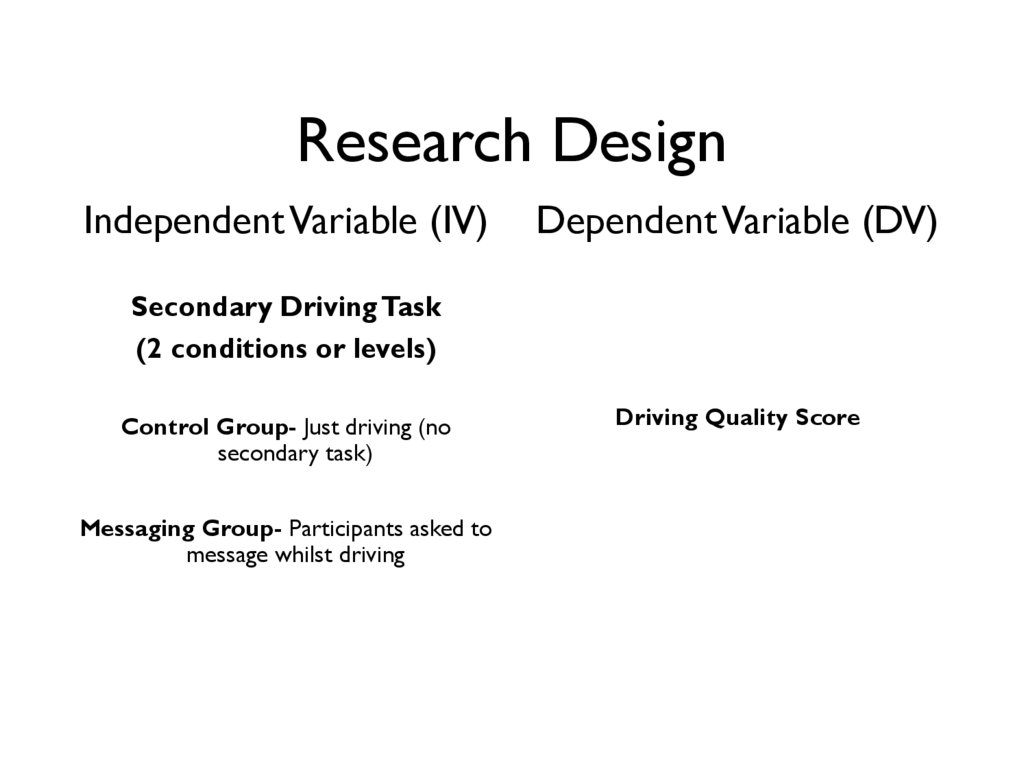
Independent Variable (IV)Dependent Variable (DV)
Secondary Driving Task
(2 conditions or levels)
Control Group- Just driving (no
secondary task)
Messaging Group- Participants asked to
message whilst driving
Driving Quality Score
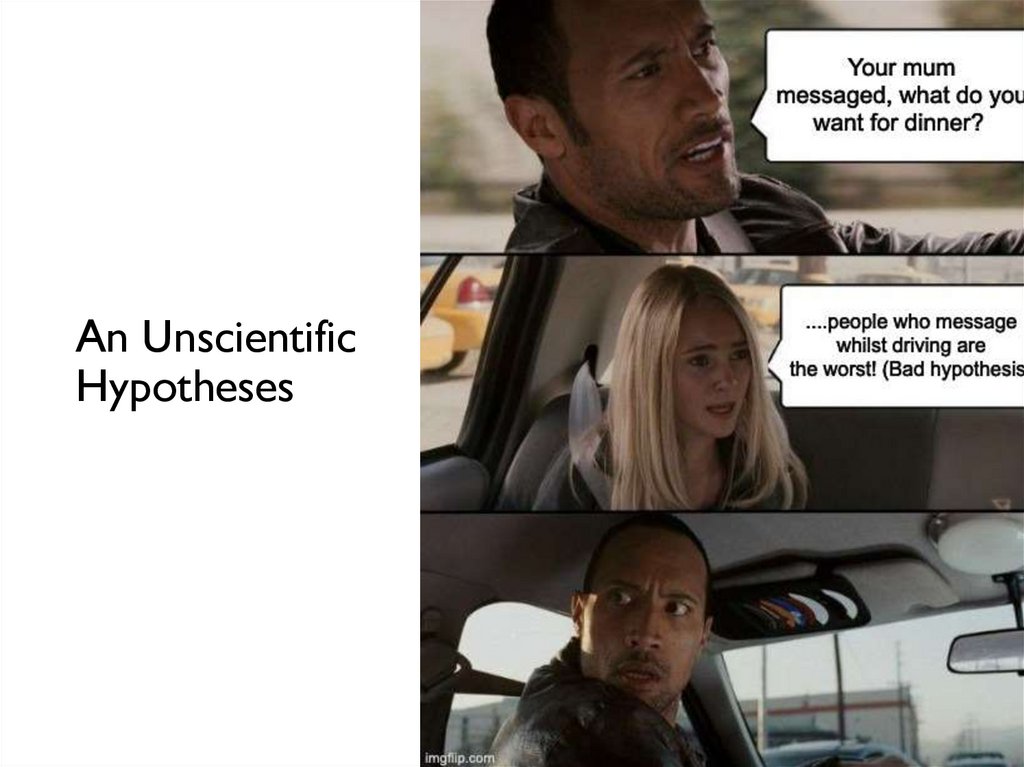
8. An Unscientific Hypotheses
9. An Unscientific Hypotheses
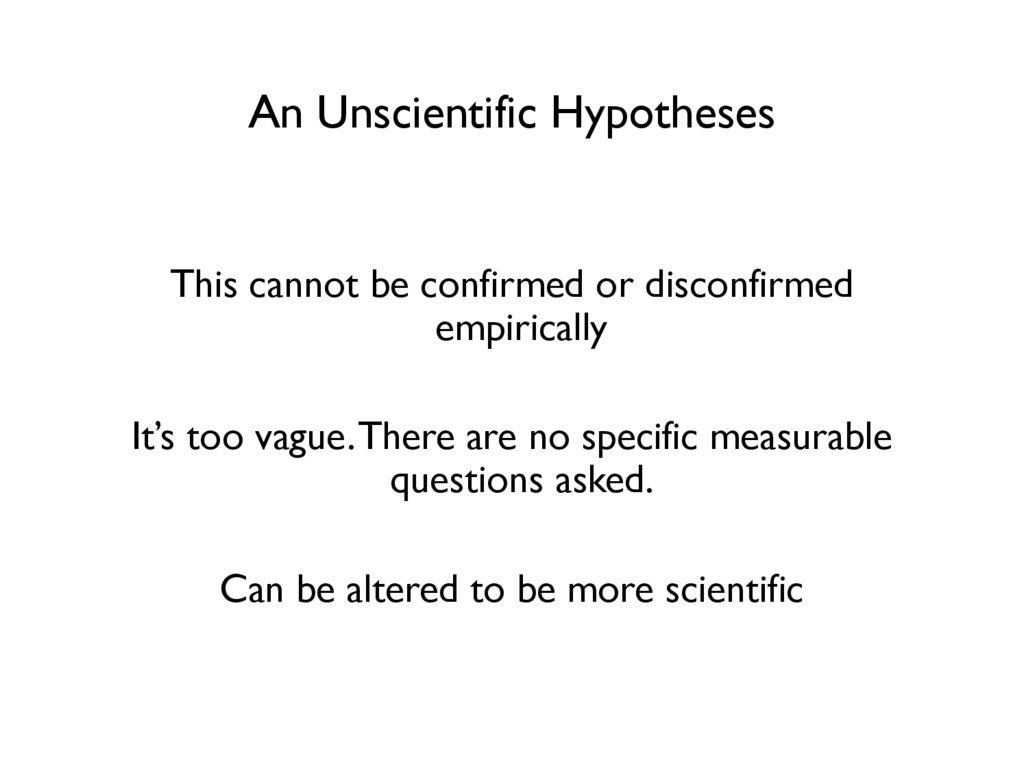
This cannot be confirmed or disconfirmedempirically
It’s too vague. There are no specific measurable
questions asked.
Can be altered to be more scientific
10. A More Scientific Hypotheses
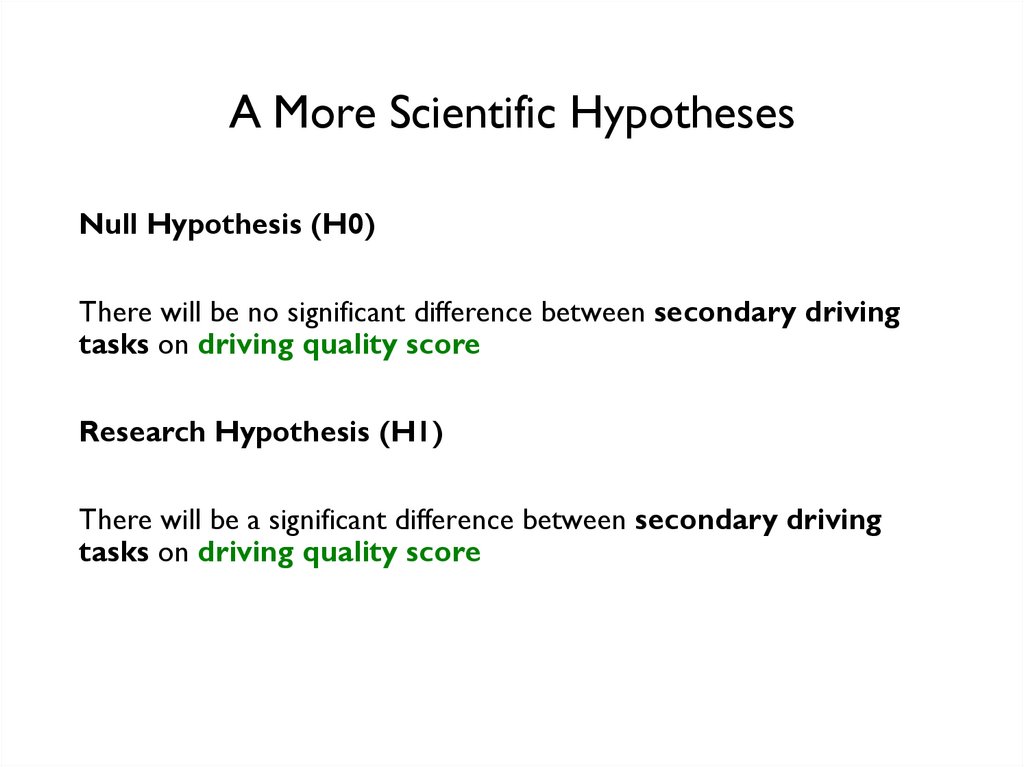
Null Hypothesis (H0)There will be no significant difference between secondary driving
tasks on driving quality score
Research Hypothesis (H1)
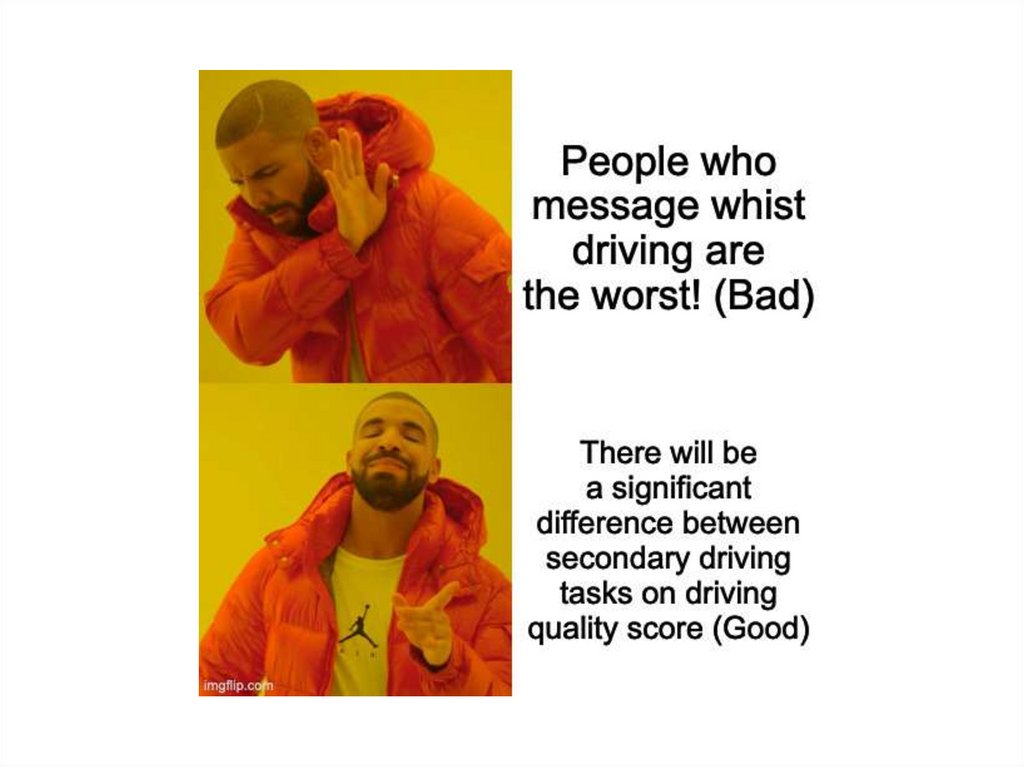
There will be a significant difference between secondary driving
tasks on driving quality score
11.
12. Philosophy of Null Hypothesis Testing
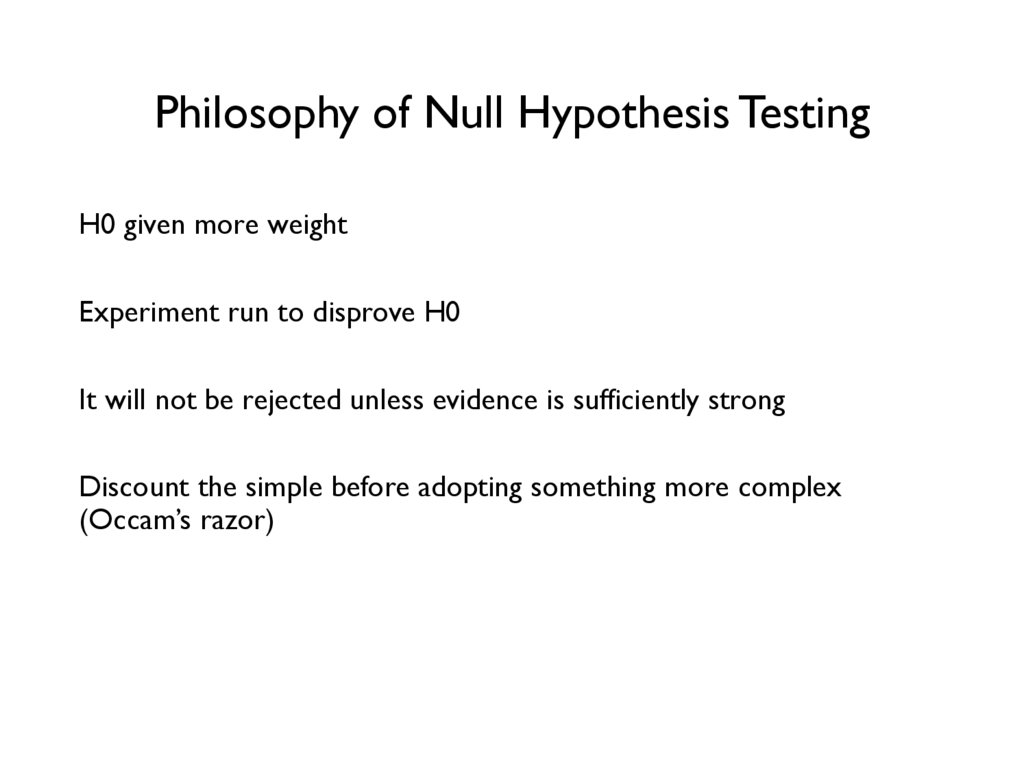
H0 given more weightExperiment run to disprove H0
It will not be rejected unless evidence is sufficiently strong
Discount the simple before adopting something more complex
(Occam’s razor)
13. Between Subjects Studies
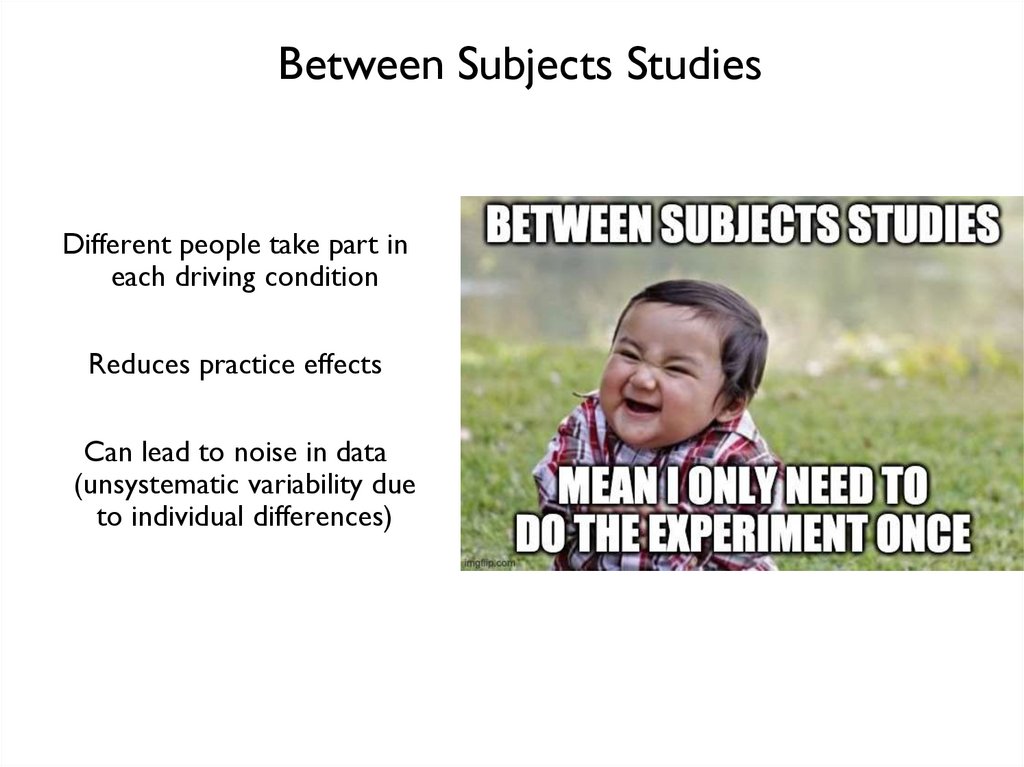
Different people take part ineach driving condition
Reduces practice effects
Can lead to noise in data
(unsystematic variability due
to individual differences)
14. Within Subjects Studies
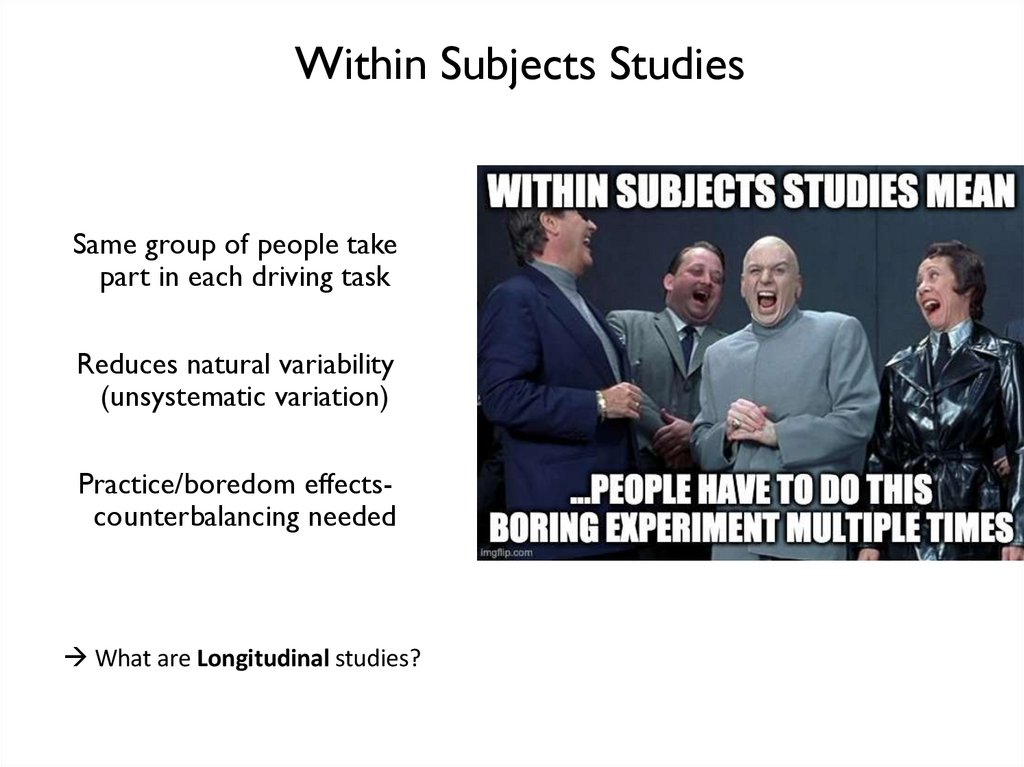
Same group of people takepart in each driving task
Reduces natural variability
(unsystematic variation)
Practice/boredom effectscounterbalancing needed
What are Longitudinal studies?
15. Types of Data
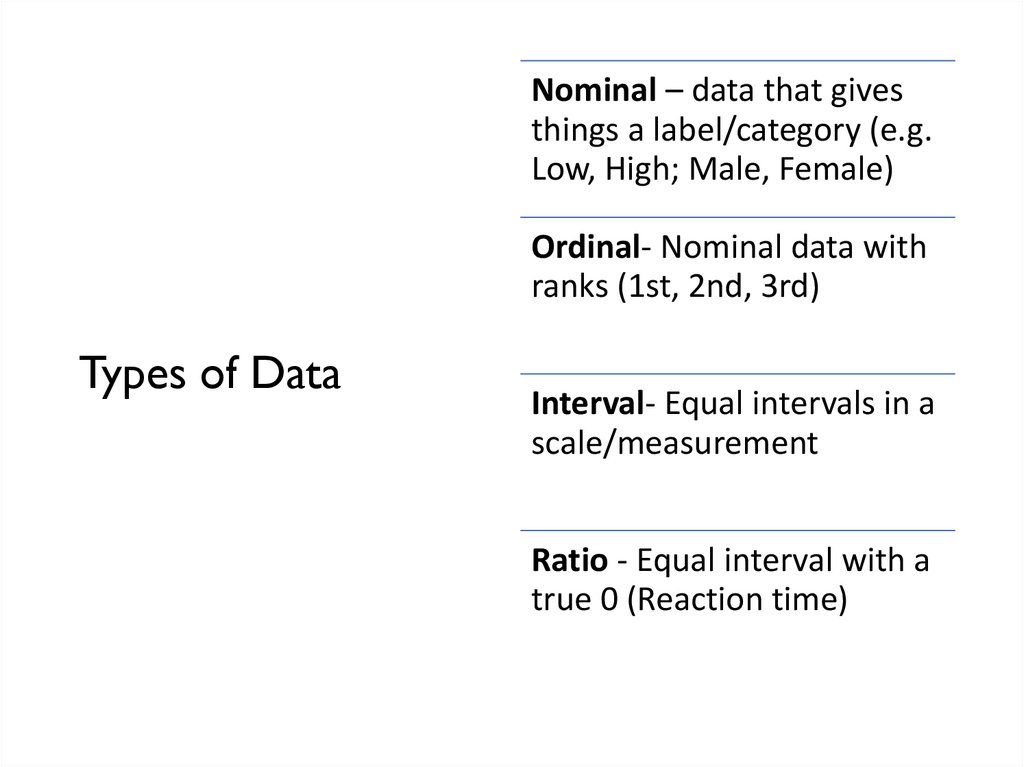
Nominal – data that givesthings a label/category (e.g.
Low, High; Male, Female)
Ordinal- Nominal data with
ranks (1st, 2nd, 3rd)
Types of Data
Interval- Equal intervals in a
scale/measurement
Ratio - Equal interval with a
true 0 (Reaction time)
16. Descriptive statistics central tendency
Mean (Average score)• Average score
• Affected by extreme scores
Median (Middle score when all are ordered)
• 12,14,18,24,26,27,34,38,40
• With even number of scores:
• 12,14,18,24,26,27,34,38; median= (24+26)/2=
25
• Not affected by extreme scores
Mode (most common value is dataset)
• Can have multiple values- multimodal