

 История
Похожие презентации:




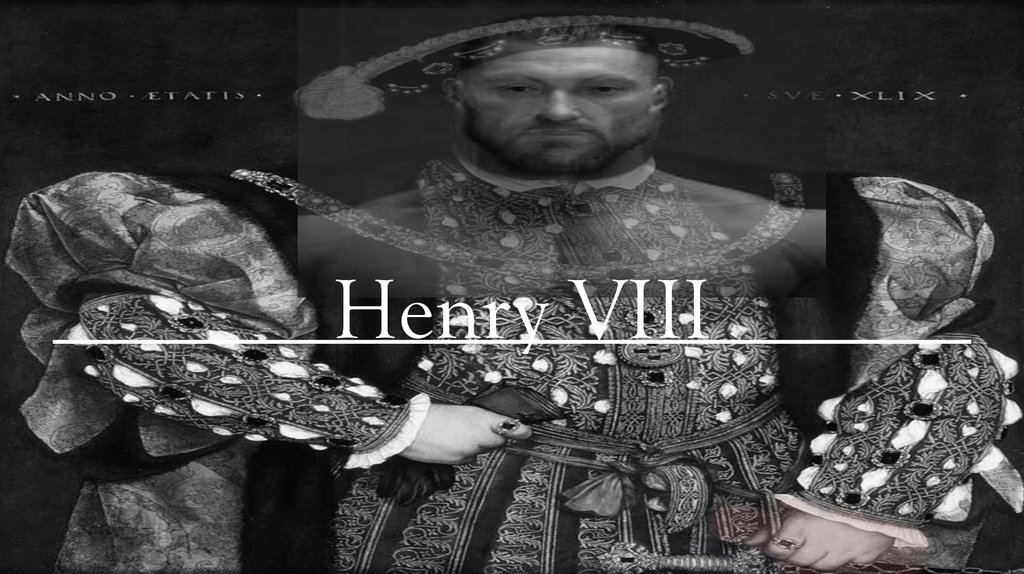
Henry VIII
1.
Henry VIII2. Henry VIII
3.
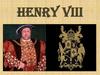
Henry VIII; June 28, 1491, Placentia Palace, London — 28 January 1547, Whitehall, London) — King of England sinceApril 22, 1509, son and heir of King Henry of England VII, the second English monarch from the Tudor dynasty. With the consent
of the Roman Catholic Church, the English kings were also called "Lords of Ireland," but in 1541, at the request of Henry VIII, who
was excommunicated from the Catholic Church, the Irish Parliament endowed him with the title "King of Ireland." Educated and
gifted, Henry ruled as a representative of European absolutism, and by the end of his reign he was brutally persecuting his real and
imaginary political opponents. In his later years, he suffered from obesity and gangrene of the leg.
4.
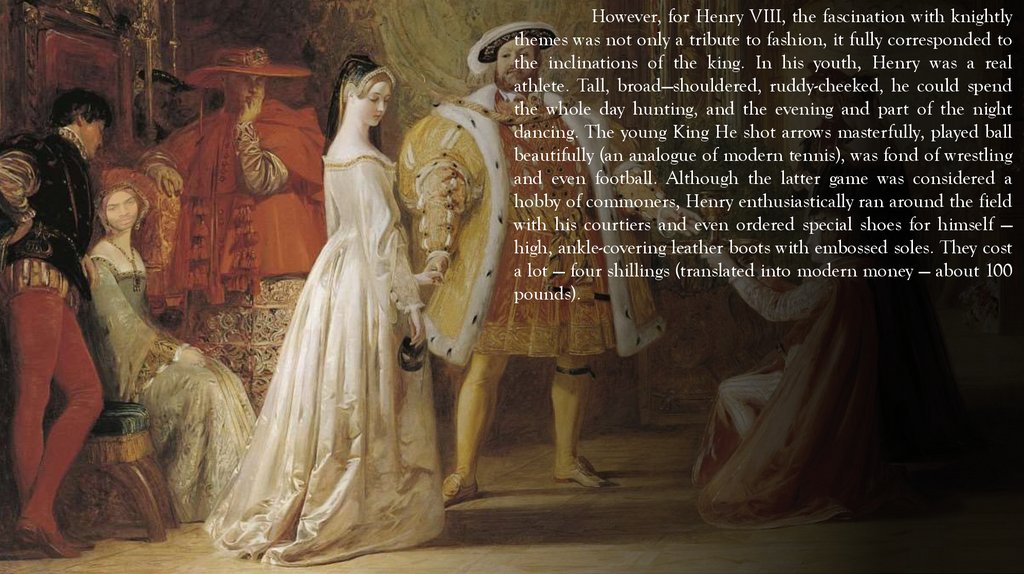
However, for Henry VIII, the fascination with knightlythemes was not only a tribute to fashion, it fully corresponded to
the inclinations of the king. In his youth, Henry was a real
athlete. Tall, broad—shouldered, ruddy-cheeked, he could spend
the whole day hunting, and the evening and part of the night
dancing. The young King He shot arrows masterfully, played ball
beautifully (an analogue of modern tennis), was fond of wrestling
and even football. Although the latter game was considered a
hobby of commoners, Henry enthusiastically ran around the field
with his courtiers and even ordered special shoes for himself —
high, ankle-covering leather boots with embossed soles. They cost
a lot — four shillings (translated into modern money — about 100
pounds).
5.
Henry VIII is best known for his direct involvement in the English Reformation, which made England a mostlyProtestant nation; and for the unusual number of marriages for a Christian, the king had six wives in total, two of whom he
divorced, and two were executed on charges of treason. The king sought to produce a male heir to consolidate the power of the
Tudor dynasty. The divorce of Henry VIII from his first wife, Catherine of Aragon, led to the excommunication of the king from
the Catholic Church and a number of church reforms in England when the Anglican Church separated from the Roman Catholic
Church. In addition, the constant change of wives and favorites of the king and the church Reformation proved to be a serious
arena for political struggle and led to a number of executions of political figures, including, for example, Thomas More.