
 Английский язык
Похожие презентации:



Present Simple and Present Continuous
1. Present Simple and Present Continuous
2.
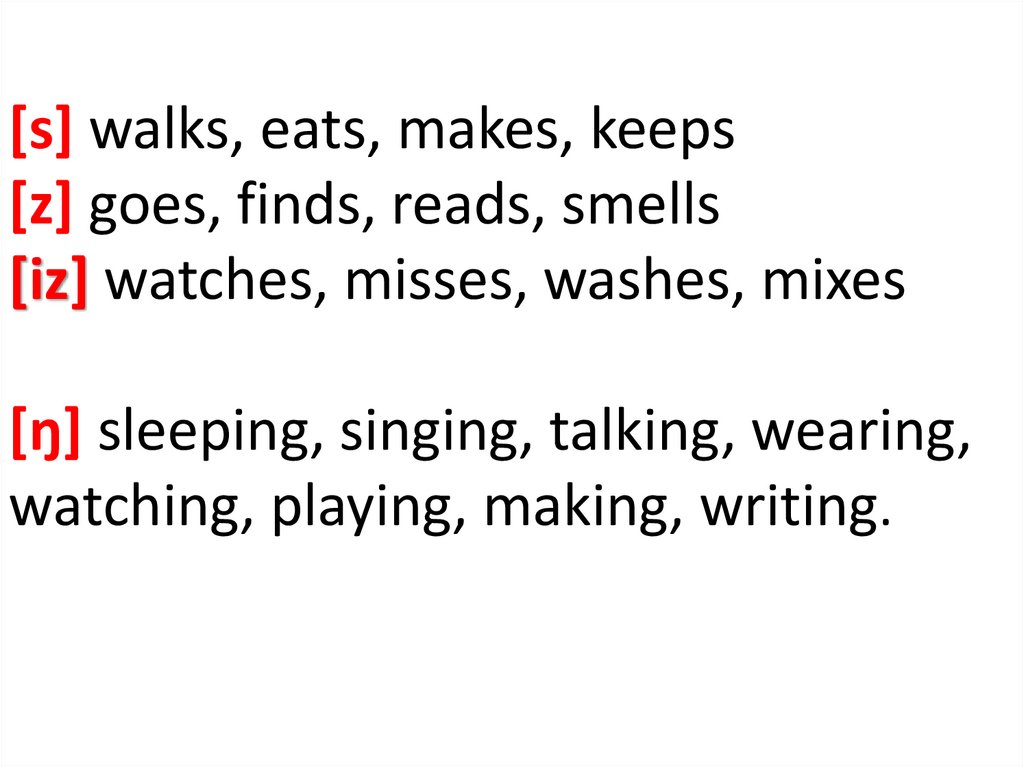
[s] walks, eats, makes, keeps[z] goes, finds, reads, smells
[iz] watches, misses, washes, mixes
[ŋ] sleeping, singing, talking, wearing,
watching, playing, making, writing.
3. Present Simple Tense
4.
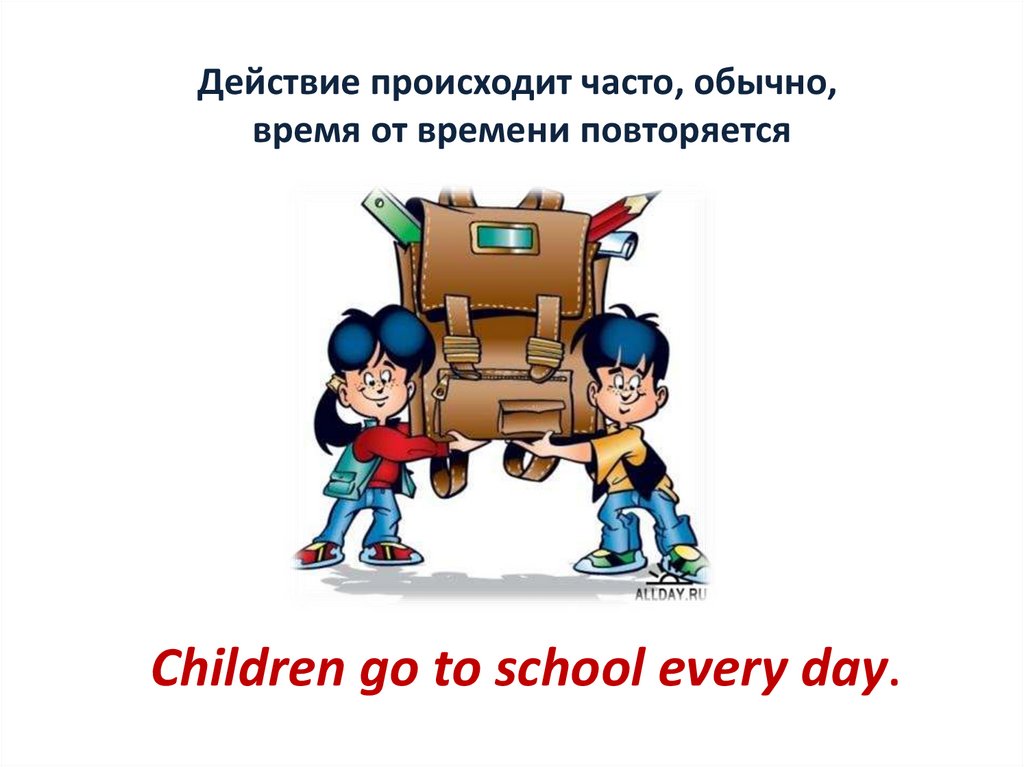
Действие происходит часто, обычно,время от времени повторяется
Children go to school every day.
5.
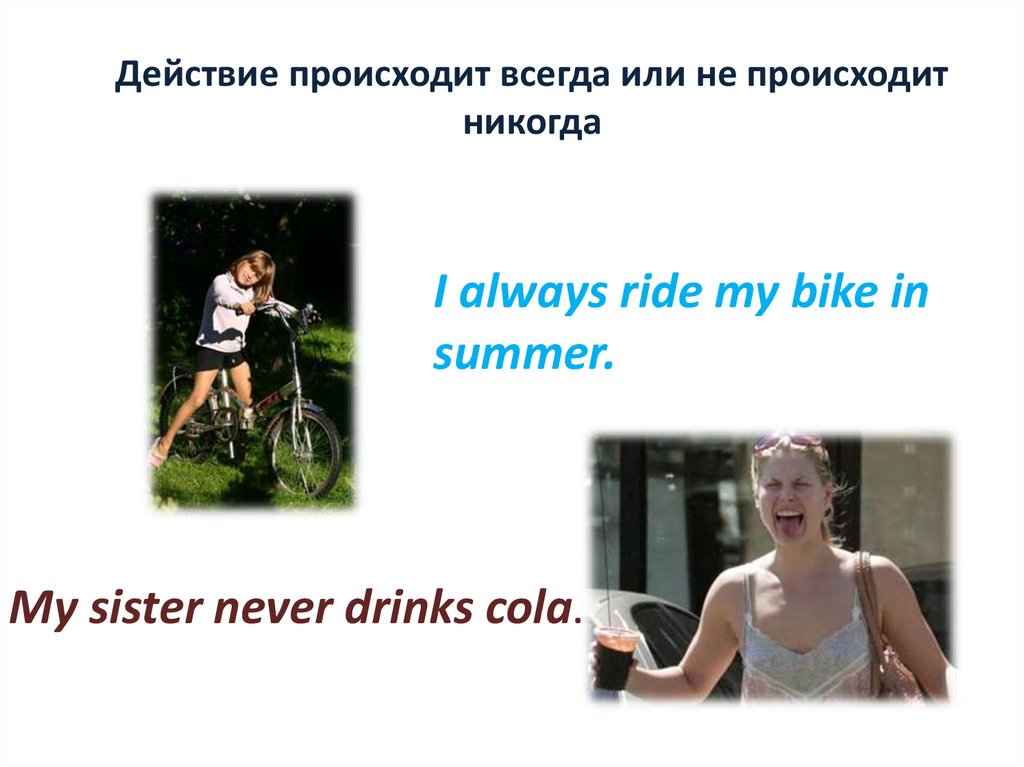
Действие происходит всегда или не происходитникогда
I always ride my bike in
summer.
My sister never drinks cola.
6.
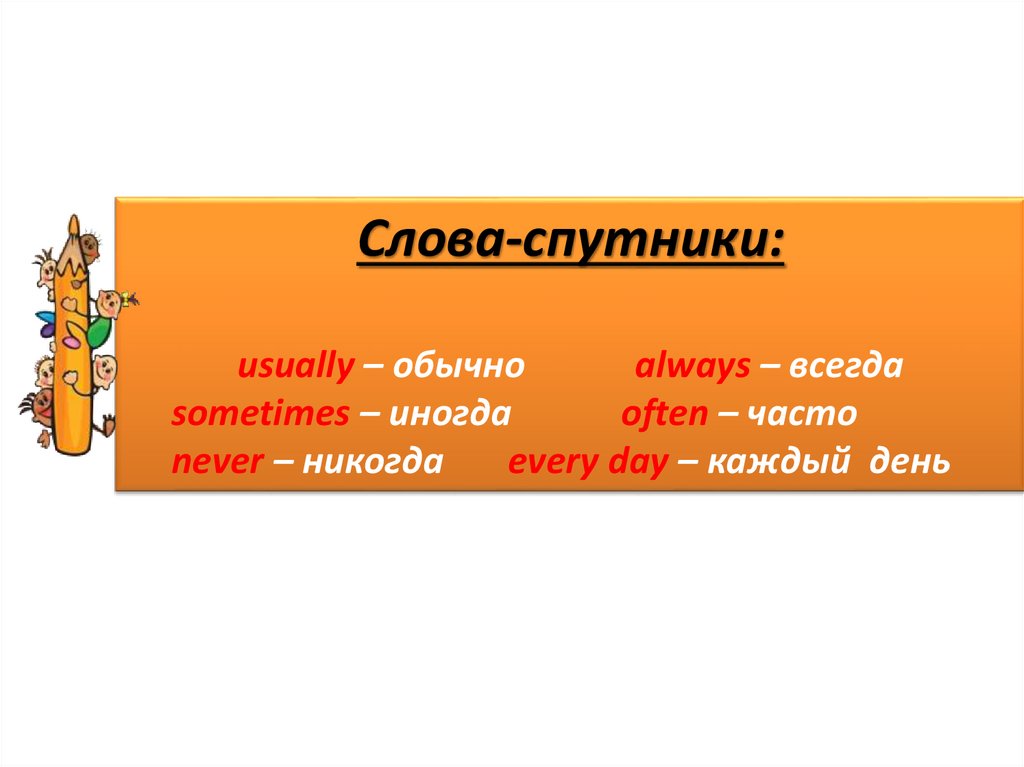
Слова-спутники:usually – обычно
always – всегда
sometimes – иногда
often – часто
never – никогда
every day – каждый день
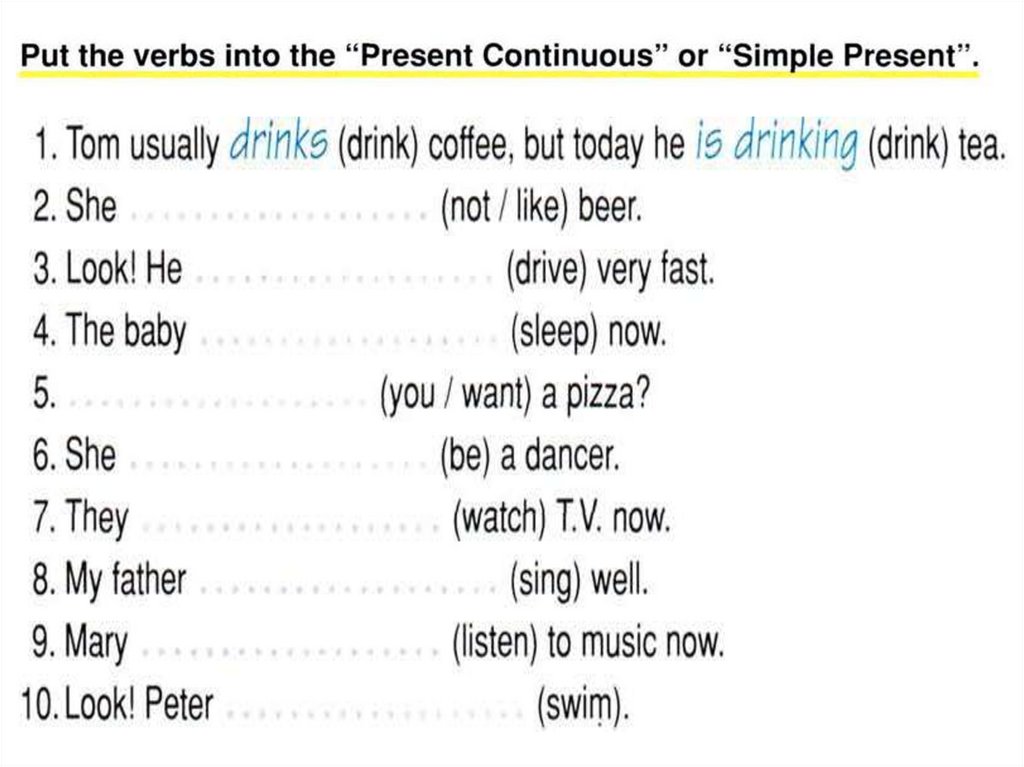
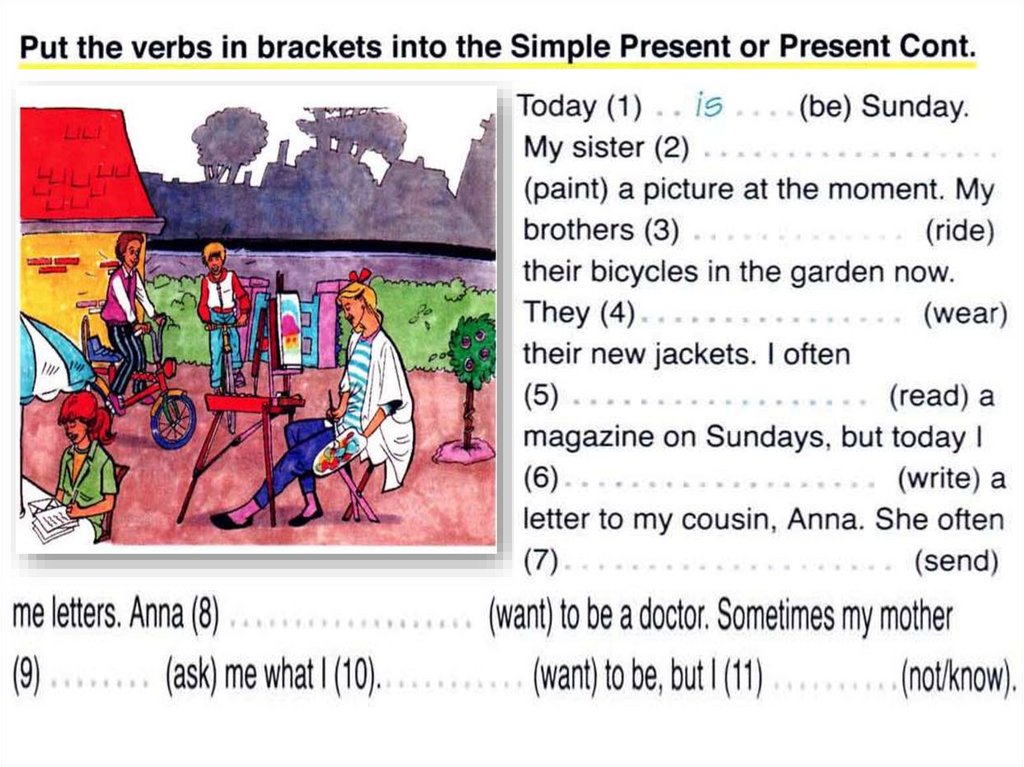
7.
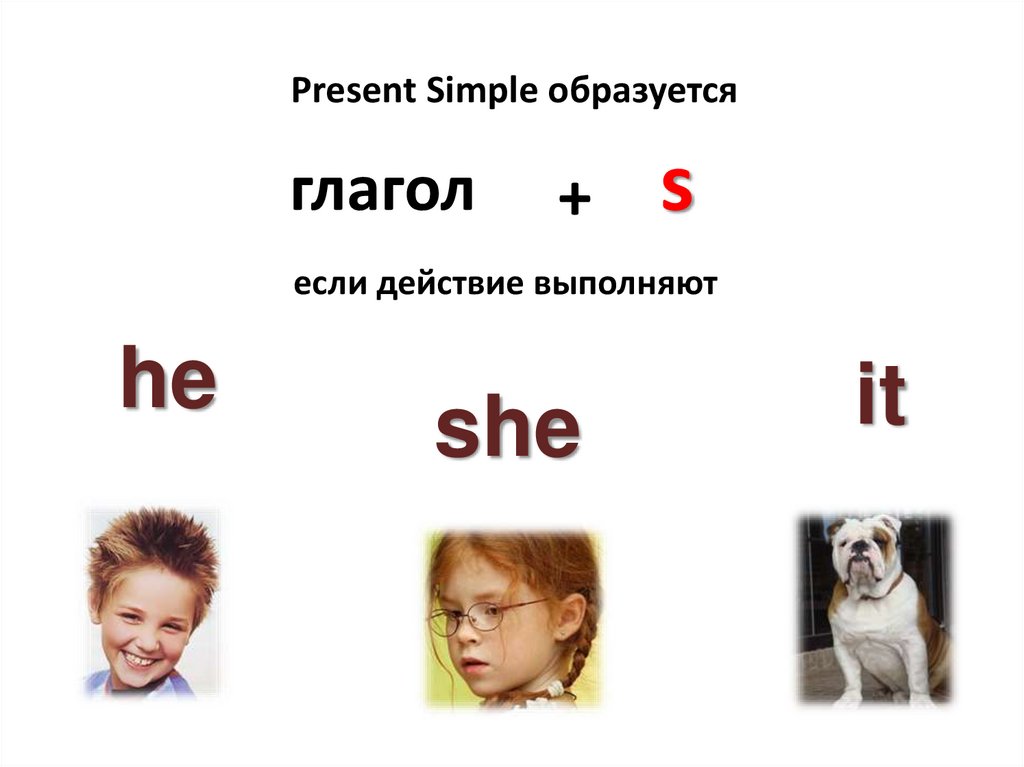
Present Simple образуетсяглагол
+
s
если действие выполняют
he
she
it
8.
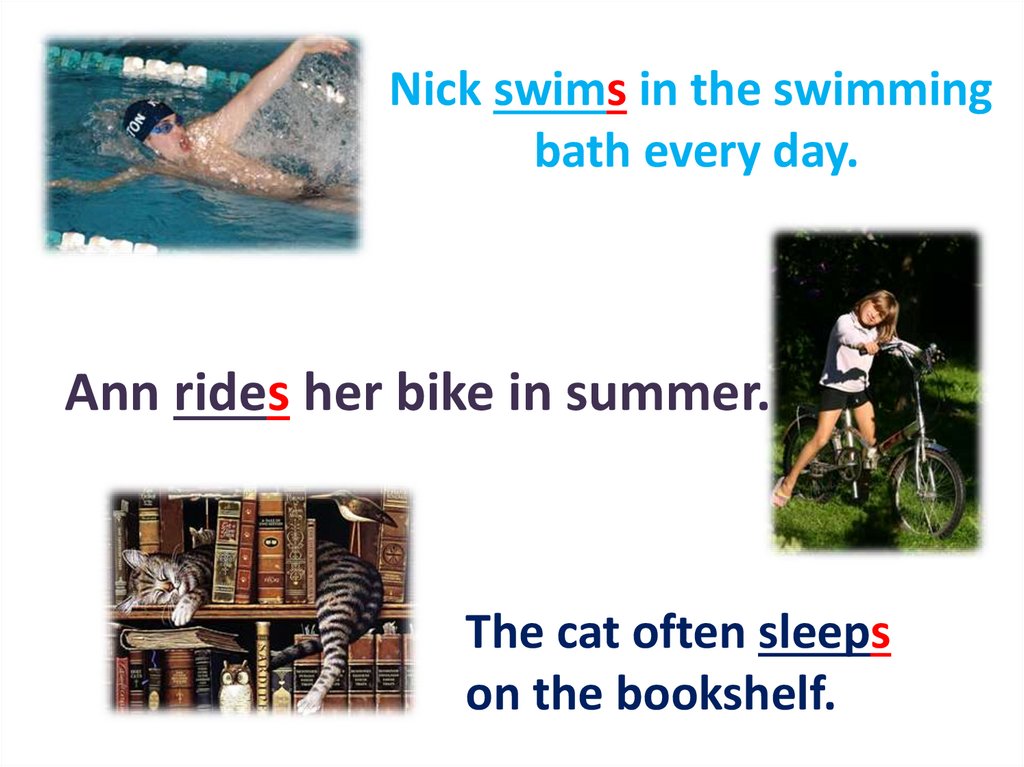
Nick swims in the swimmingbath every day.
Ann rides her bike in summer.
The cat often sleeps
on the bookshelf.
9.
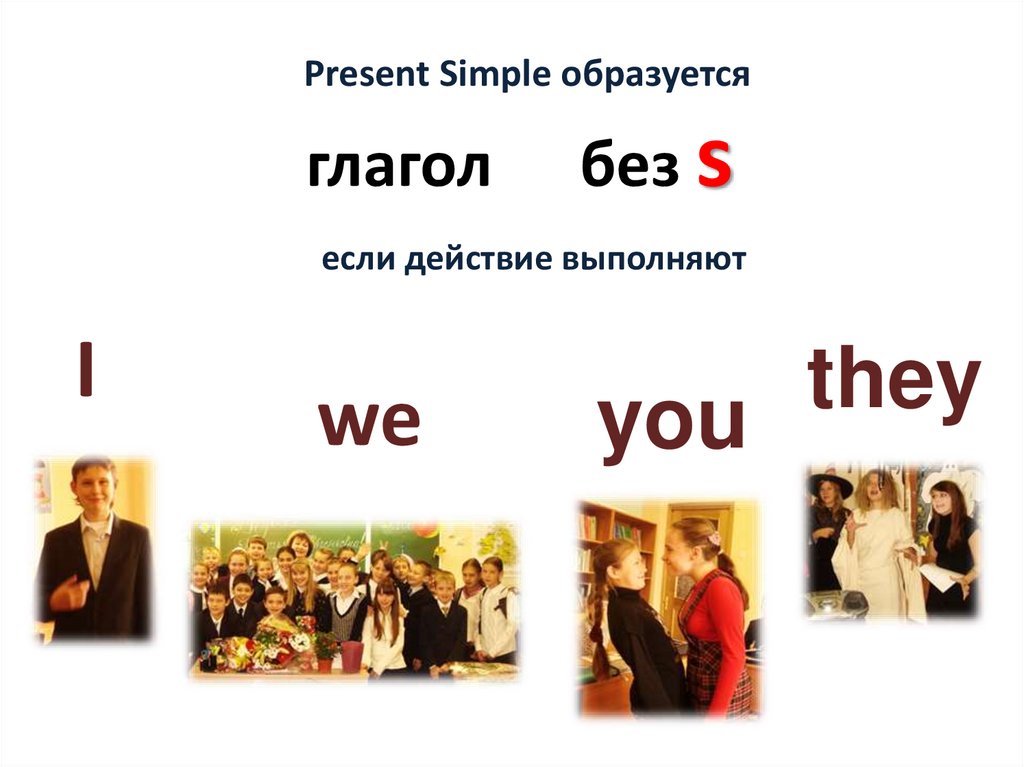
Present Simple образуетсяглагол
без s
если действие выполняют
I
we
they
you
10.
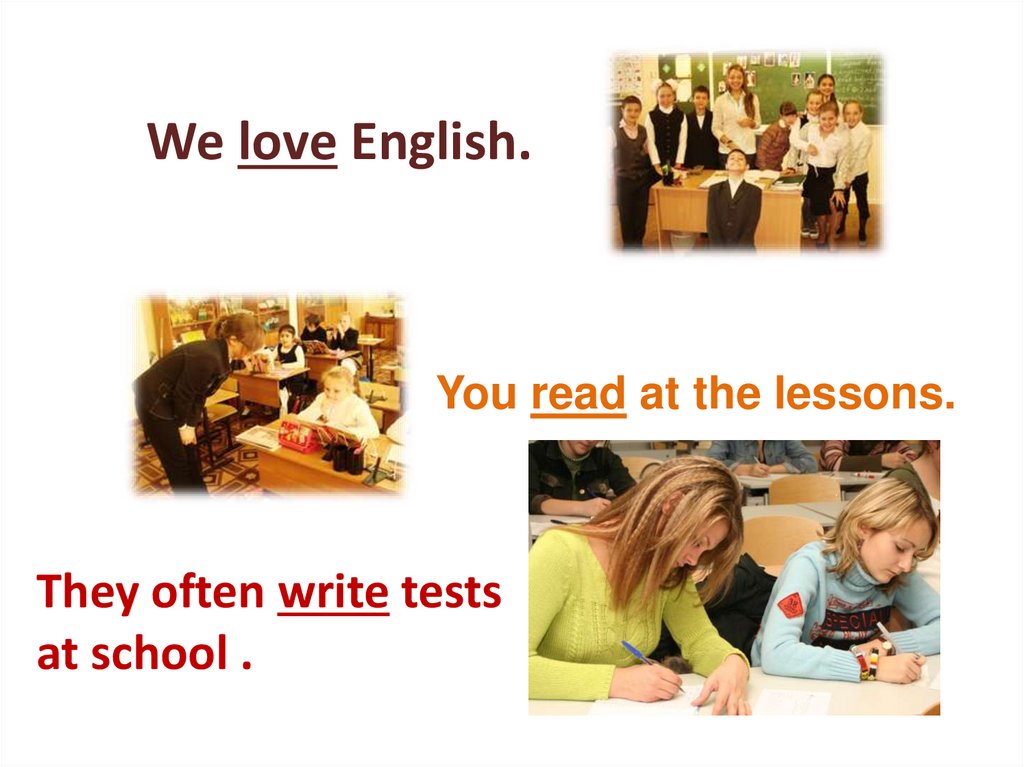
We love English.You read at the lessons.
They often write tests
at school .
11.
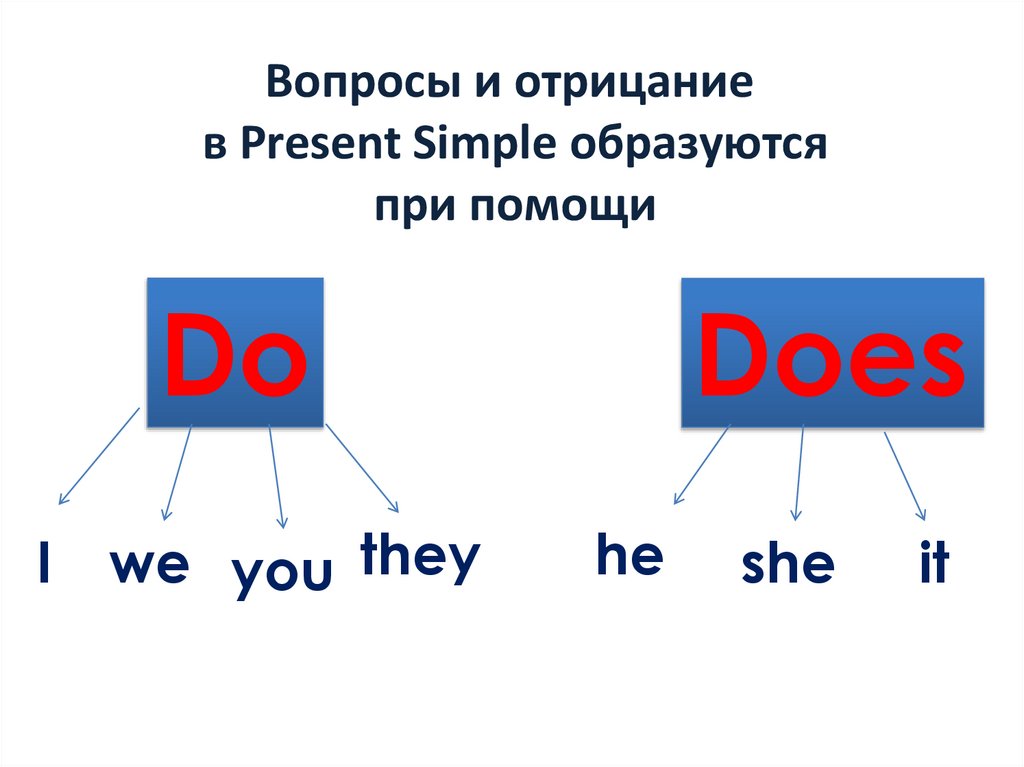
Вопросы и отрицаниев Present Simple образуются
при помощи
Does
Do
I we you they
he
she
it
12.
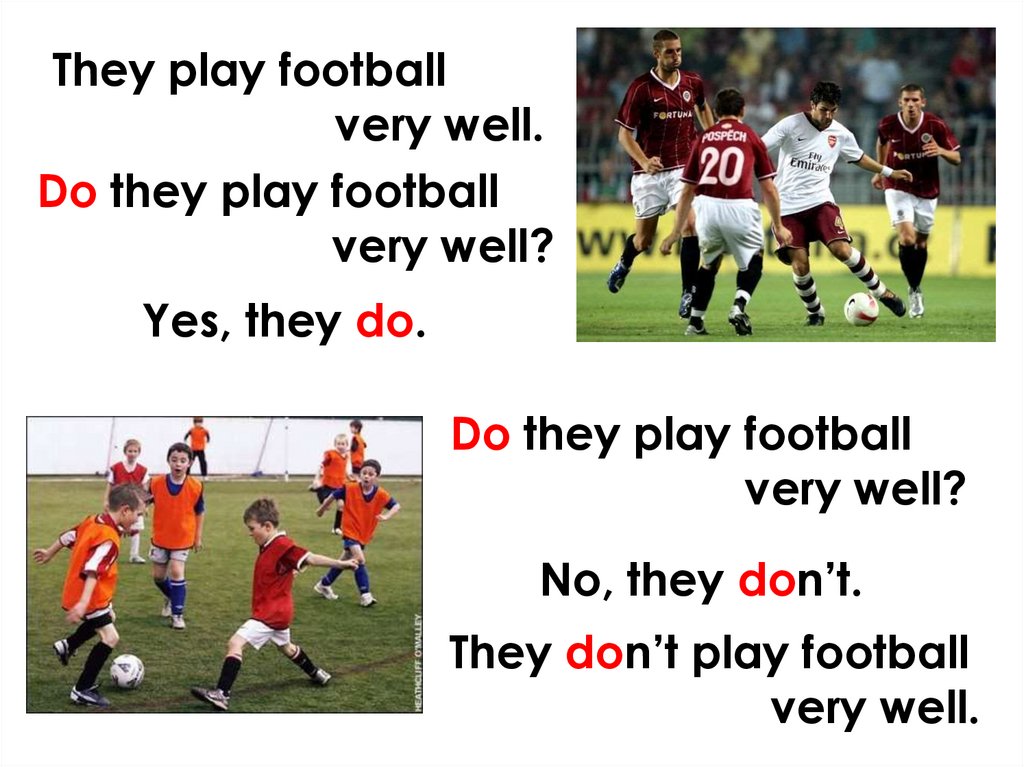
They play footballvery well.
Do they play football
very well?
Yes, they do.
Do they play football
very well?
No, they don’t.
They don’t play football
very well.
13.
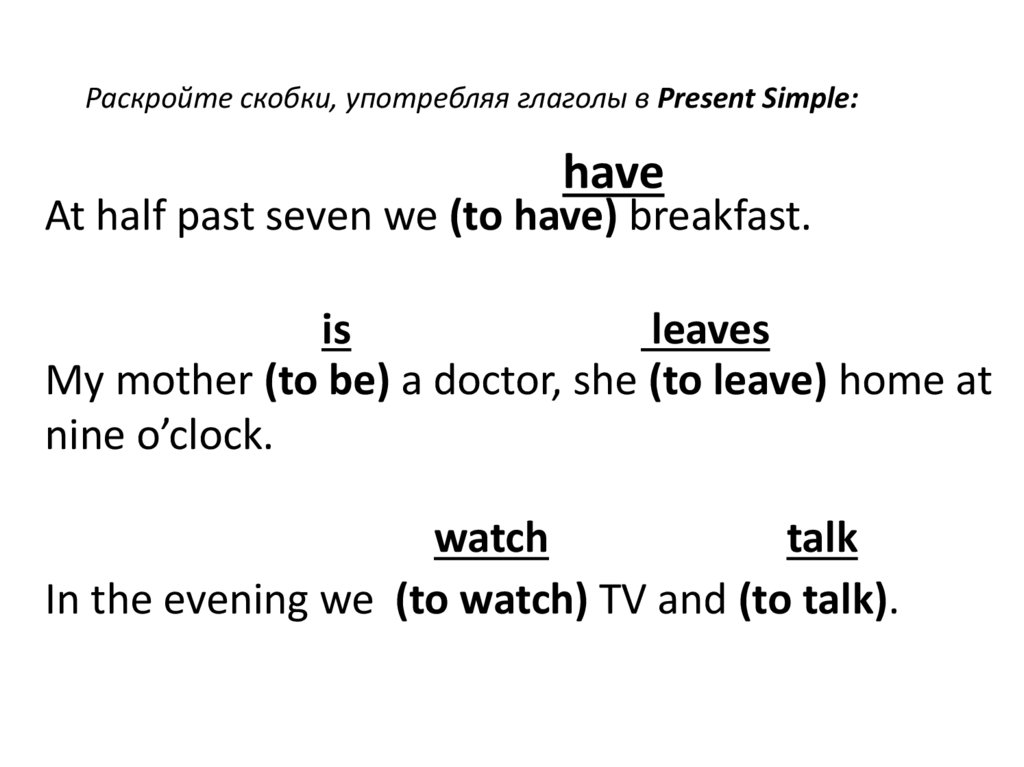
Раскройте скобки, употребляя глаголы в Present Simple:have
At half past seven we (to have) breakfast.
is
leaves
My mother (to be) a doctor, she (to leave) home at
nine o’clock.
watch
talk
In the evening we (to watch) TV and (to talk).
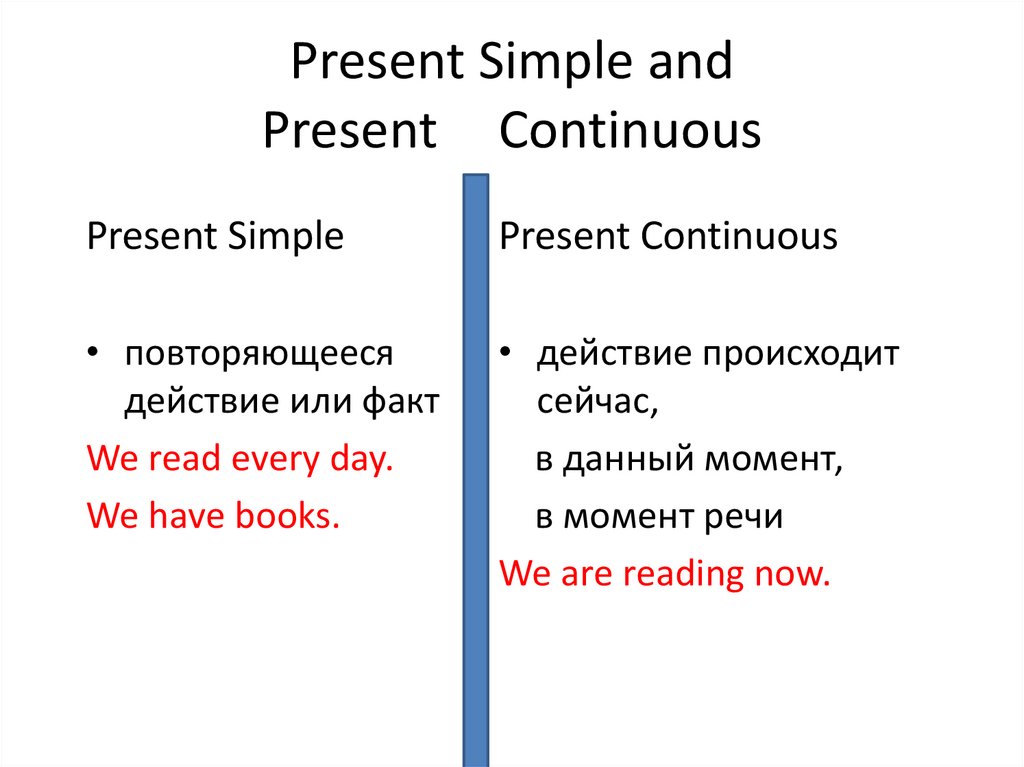
14. Present Simple and Present Continuous
Present SimplePresent Continuous
• повторяющееся
действие или факт
We read every day.
We have books.
• действие происходит
сейчас,
в данный момент,
в момент речи
We are reading now.
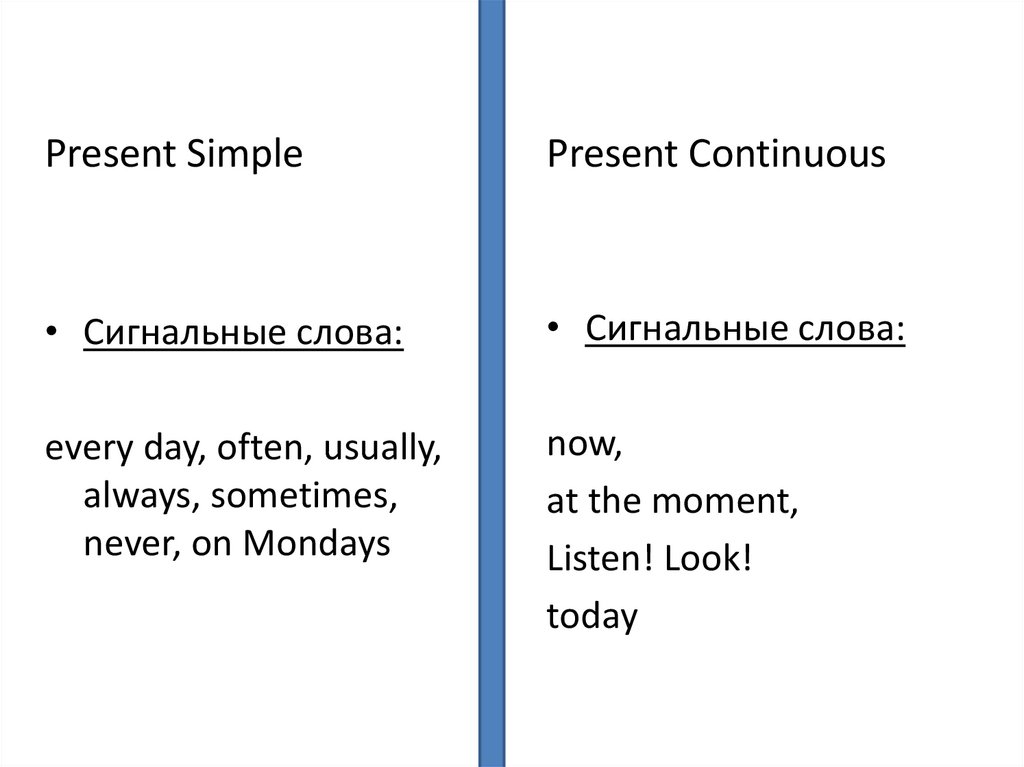
15.
Present SimplePresent Continuous
• Сигнальные слова:
• Сигнальные слова:
every day, often, usually,
always, sometimes,
never, on Mondays
now,
at the moment,
Listen! Look!
today
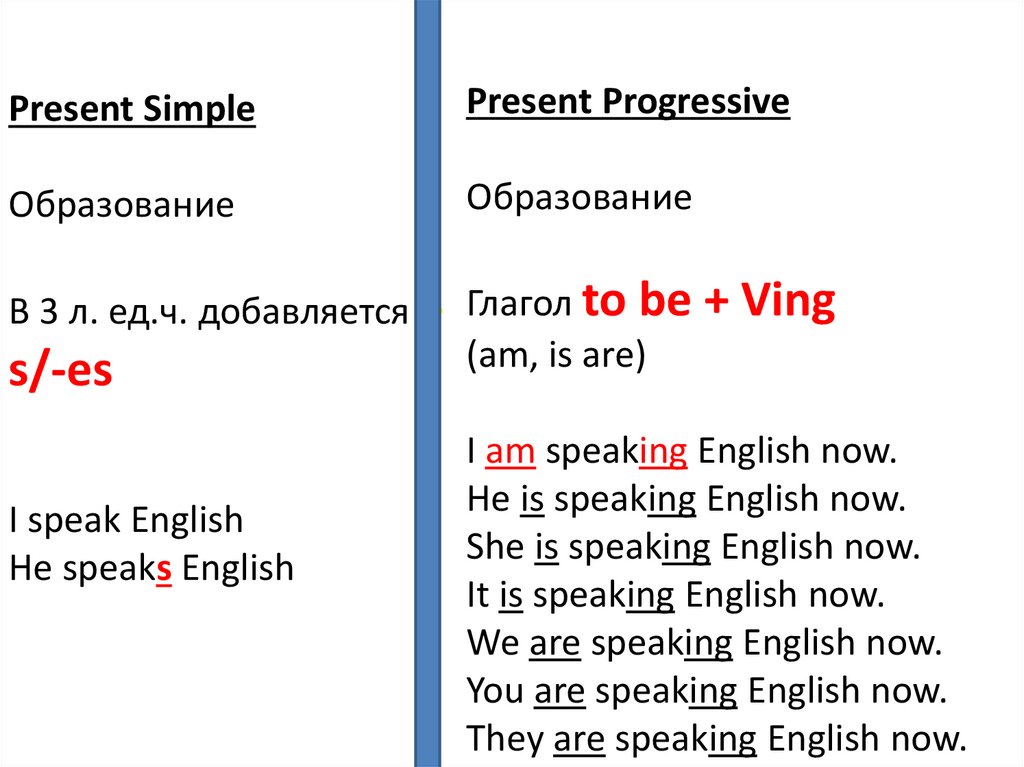
16.
Present SimplePresent Progressive
Образование
Образование
В 3 л. ед.ч. добавляется - Глагол to be + Ving
(am, is are)
s/-es
I speak English
He speaks English
I am speaking English now.
He is speaking English now.
She is speaking English now.
It is speaking English now.
We are speaking English now.
You are speaking English now.
They are speaking English now.
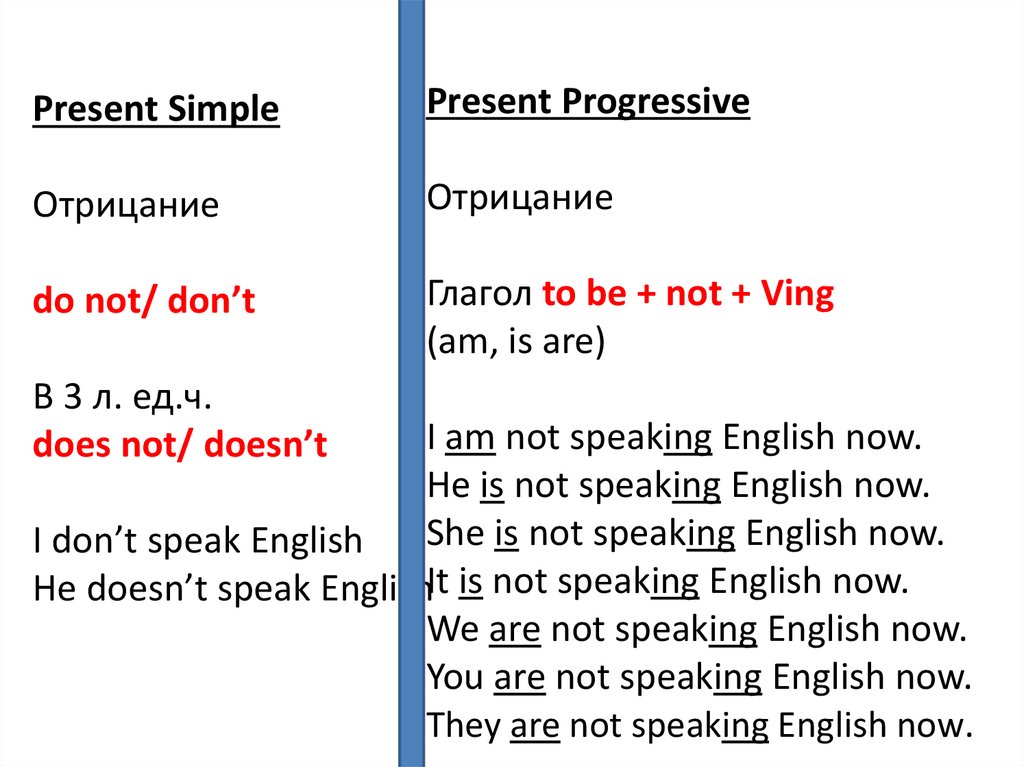
17.
Present SimplePresent Progressive
Отрицание
Отрицание
do not/ don’t
Глагол to be + not + Ving
(am, is are)
В 3 л. ед.ч.
does not/ doesn’t
I am not speaking English now.
He is not speaking English now.
She is not speaking English now.
I don’t speak English
He doesn’t speak EnglishIt is not speaking English now.
We are not speaking English now.
You are not speaking English now.
They are not speaking English now.
18.
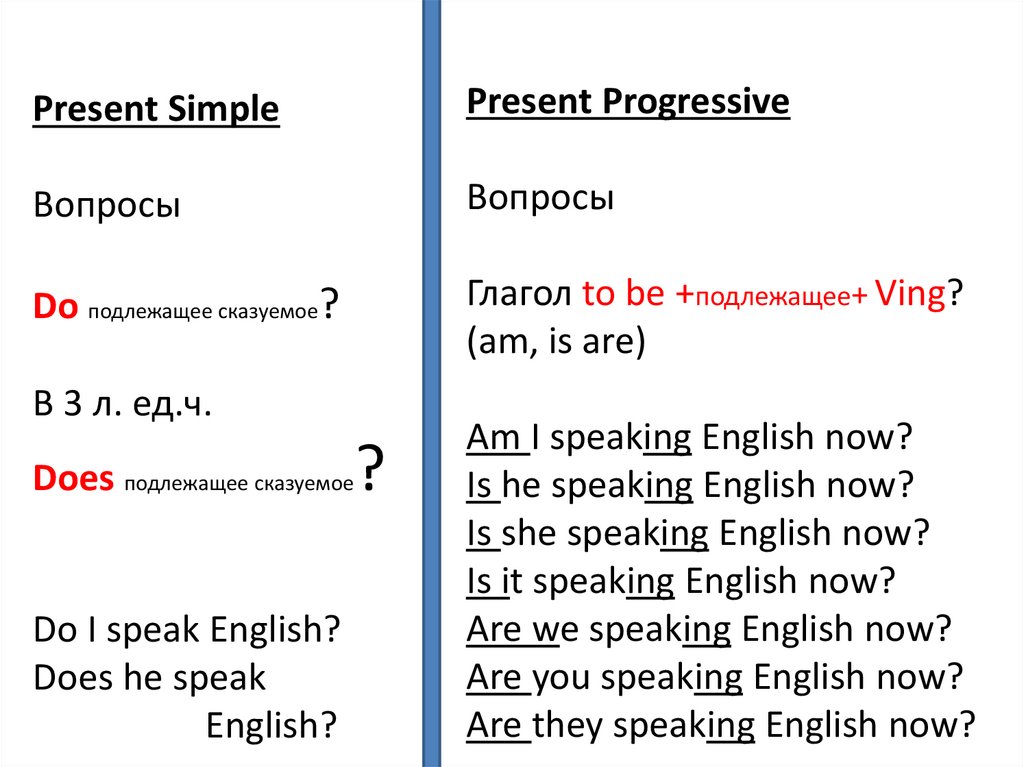
Present SimplePresent Progressive
Вопросы
Вопросы
Do подлежащее сказуемое?
Глагол to be +подлежащее+ Ving?
(am, is are)
В 3 л. ед.ч.
?
Does подлежащее сказуемое
Do I speak English?
Does he speak
English?
Am I speaking English now?
Is he speaking English now?
Is she speaking English now?
Is it speaking English now?
Are we speaking English now?
Are you speaking English now?
Are they speaking English now?
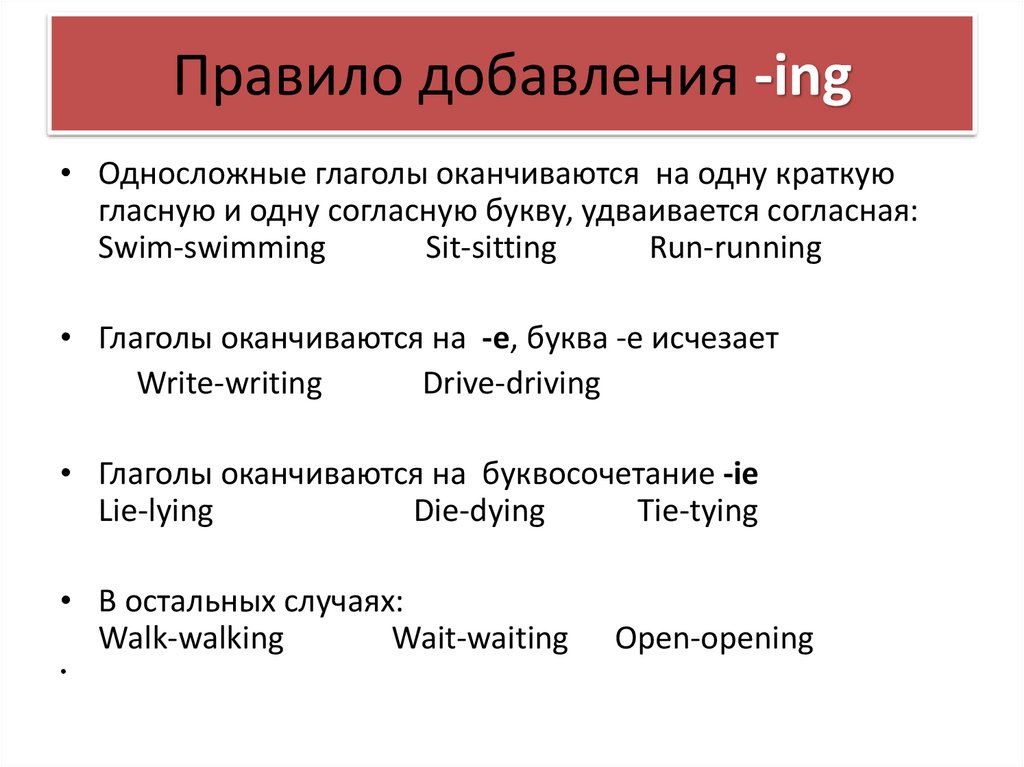
19. Правило добавления -ing
• Односложные глаголы оканчиваются на одну краткуюгласную и одну согласную букву, удваивается согласная:
Swim-swimming
Sit-sitting
Run-running
• Глаголы оканчиваются на -е, буква -e исчезает
Write-writing
Drive-driving
• Глаголы оканчиваются на буквосочетание -iе
Lie-lying
Die-dying
Tie-tying
• В остальных случаях:
Walk-walking
Wait-waiting
Open-opening
20.
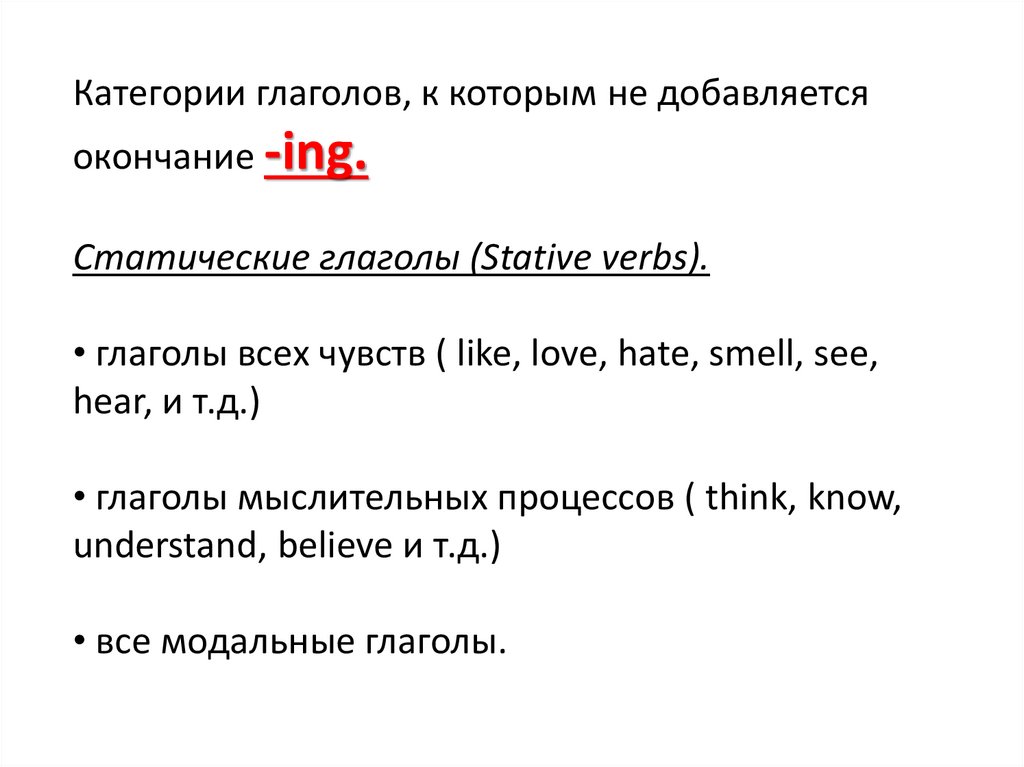
Категории глаголов, к которым не добавляетсяокончание -ing.
Статические глаголы (Stative verbs).
• глаголы всех чувств ( like, love, hate, smell, see,
hear, и т.д.)
• глаголы мыслительных процессов ( think, know,
understand, believe и т.д.)
• все модальные глаголы.
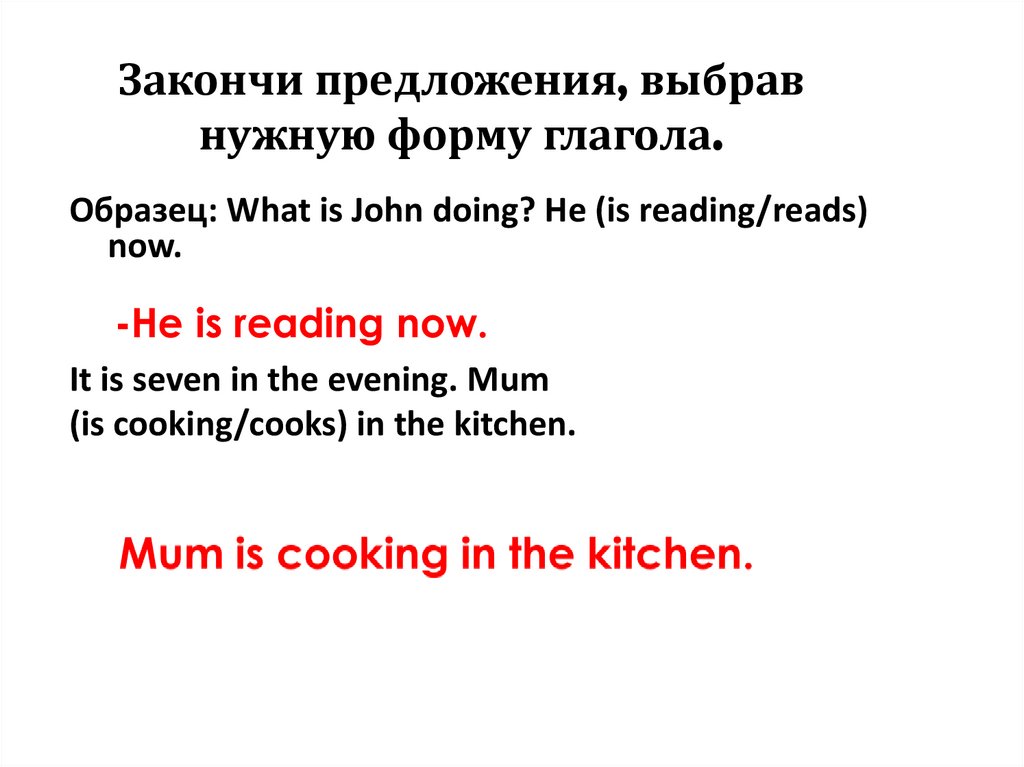
21. Закончи предложения, выбрав нужную форму глагола.
Образец: What is John doing? He (is reading/reads)now.
It is seven in the evening. Mum
(is cooking/cooks) in the kitchen.
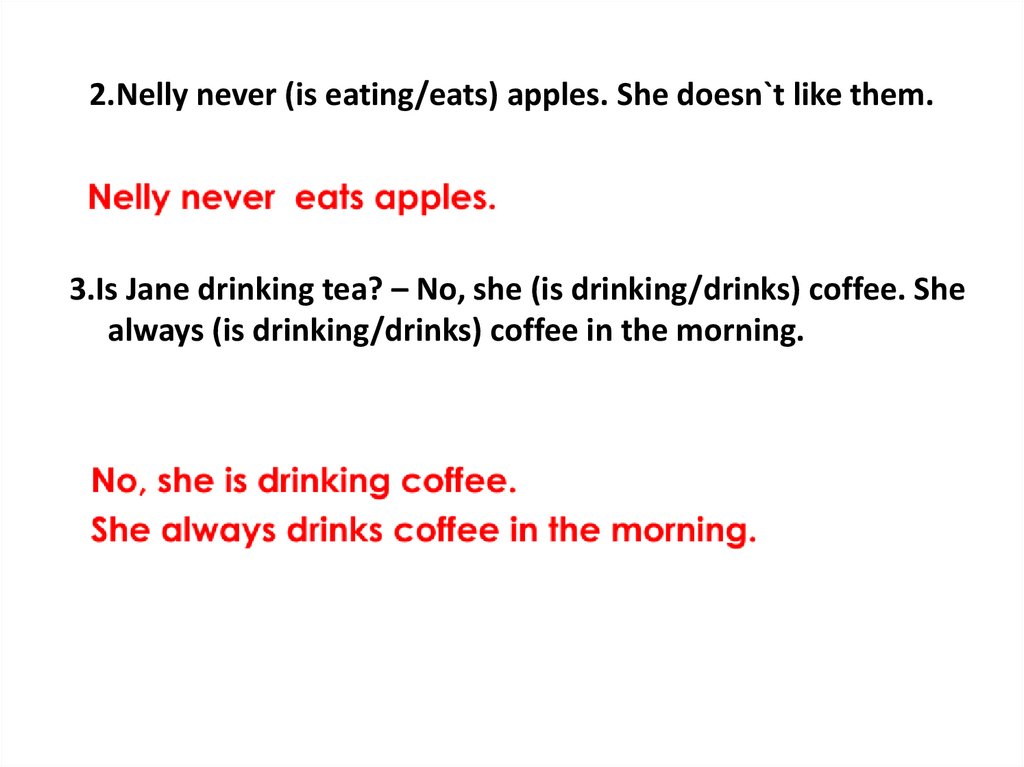
22. 2.Nelly never (is eating/eats) apples. She doesn`t like them.
3.Is Jane drinking tea? – No, she (is drinking/drinks) coffee. Shealways (is drinking/drinks) coffee in the morning.
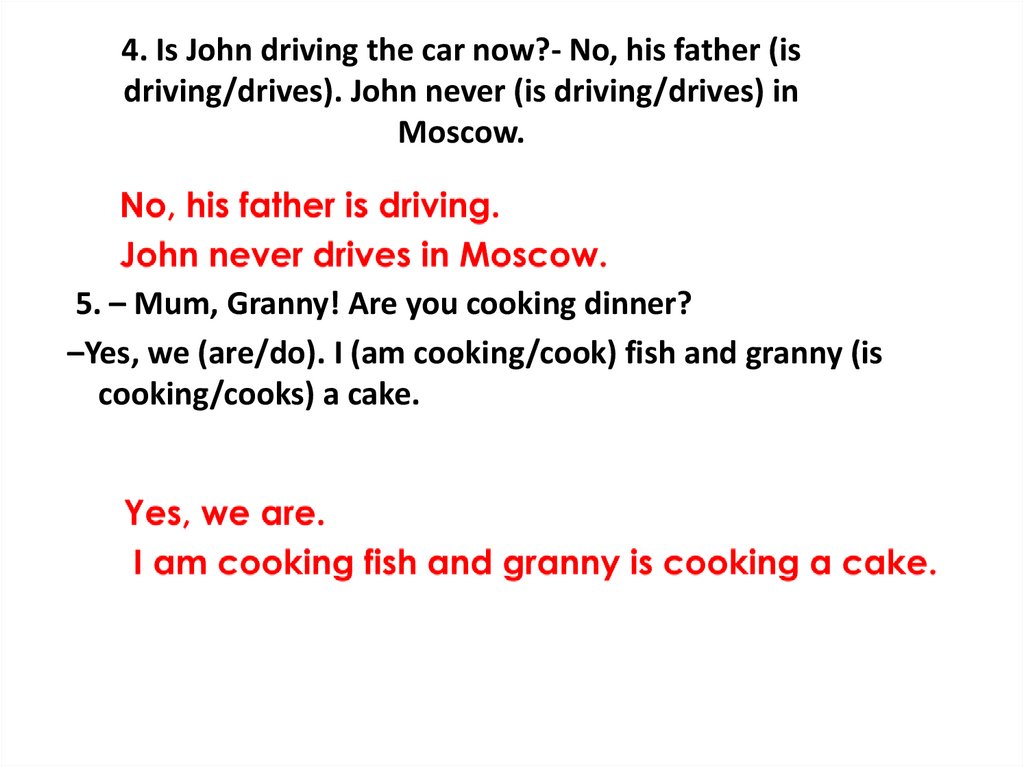
23. 4. Is John driving the car now?- No, his father (is driving/drives). John never (is driving/drives) in Moscow.
5. – Mum, Granny! Are you cooking dinner?–Yes, we (are/do). I (am cooking/cook) fish and granny (is
cooking/cooks) a cake.
24.
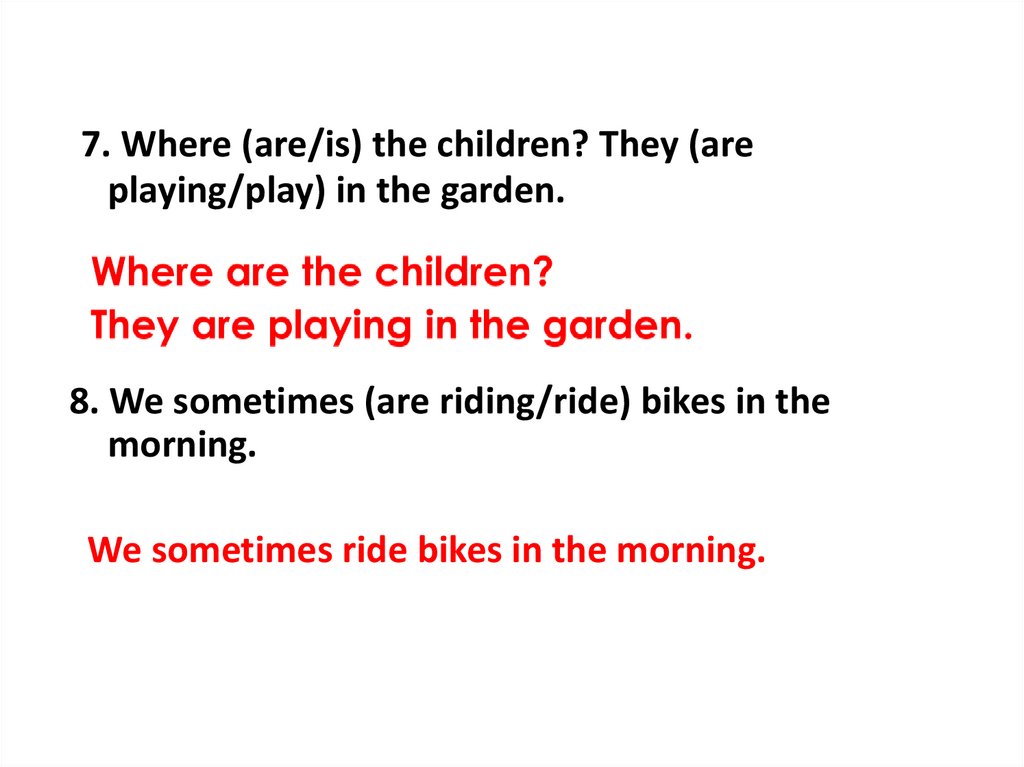
7. Where (are/is) the children? They (areplaying/play) in the garden.
8. We sometimes (are riding/ride) bikes in the
morning.
We sometimes ride bikes in the morning.
25.
26.
27.
28.
HOMEWORKВыучить правило времен present simple/ present continuous.