 Биология
Похожие презентации:







Argali – the mountain sheep of Kazakhstan
1.
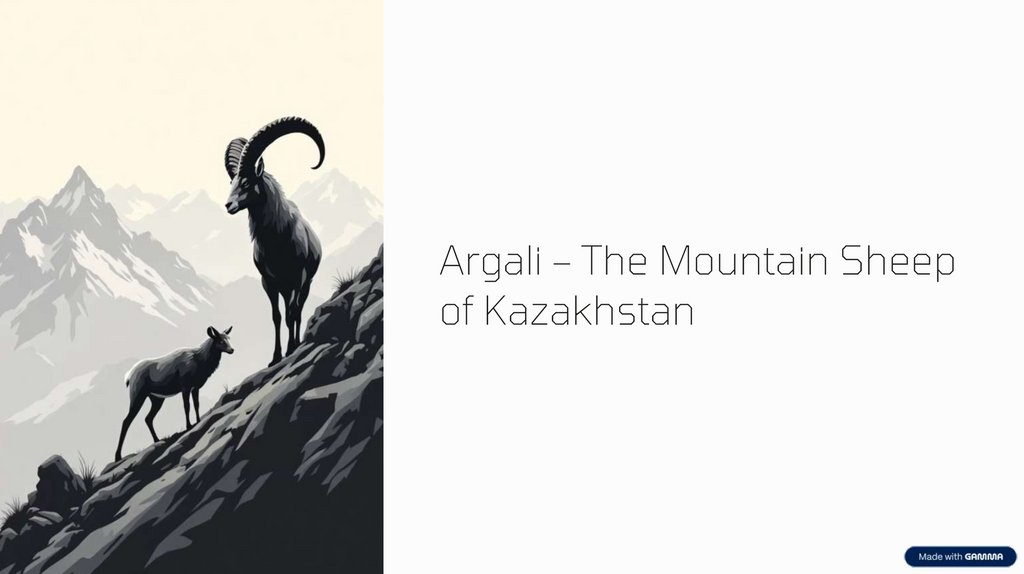
Argali – The Mountain Sheepof Kazakhstan
2.
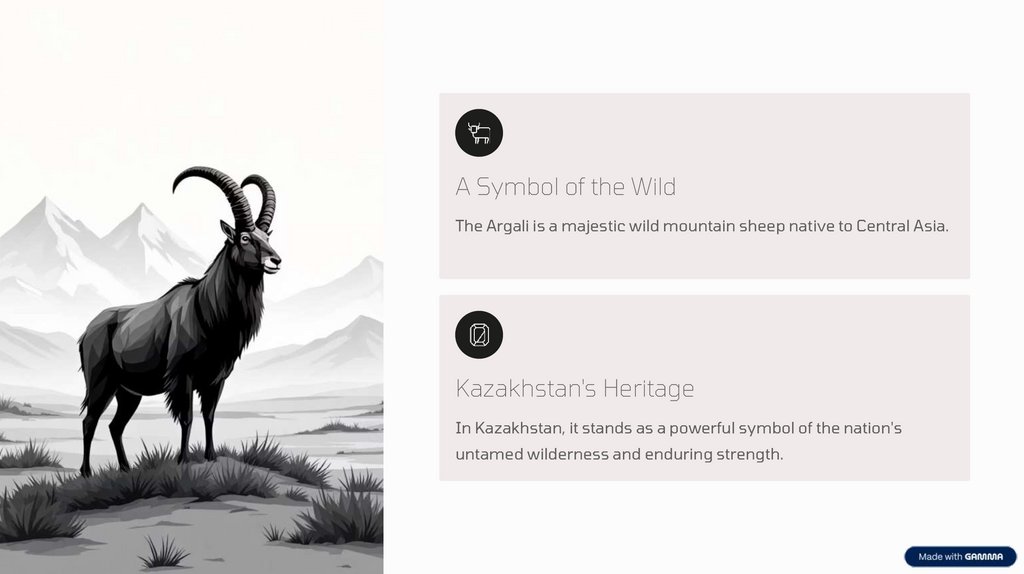
A Symbol of the WildThe Argali is a majestic wild mountain sheep native to Central Asia.
Kazakhstan's Heritage
In Kazakhstan, it stands as a powerful symbol of the nation's
untamed wilderness and enduring strength.
3.
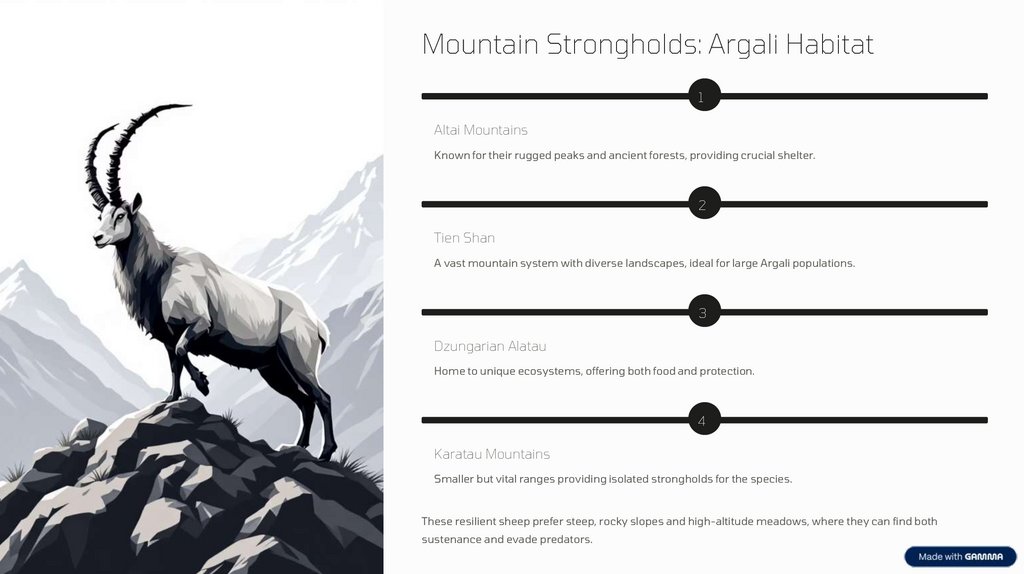
Mountain Strongholds: Argali Habitat1
Altai Mountains
Known for their rugged peaks and ancient forests, providing crucial shelter.
2
Tien Shan
A vast mountain system with diverse landscapes, ideal for large Argali populations.
3
Dzungarian Alatau
Home to unique ecosystems, offering both food and protection.
4
Karatau Mountains
Smaller but vital ranges providing isolated strongholds for the species.
These resilient sheep prefer steep, rocky slopes and high-altitude meadows, where they can find both
sustenance and evade predators.
4.
Impressive Presence: Argali AppearanceSize and Stature
Males can reach impressive sizes, weighing up to 180 kg
(nearly 400 lbs) and standing up to 120 cm (almost 4 feet) tall
at the shoulder.
Magnificent Horns
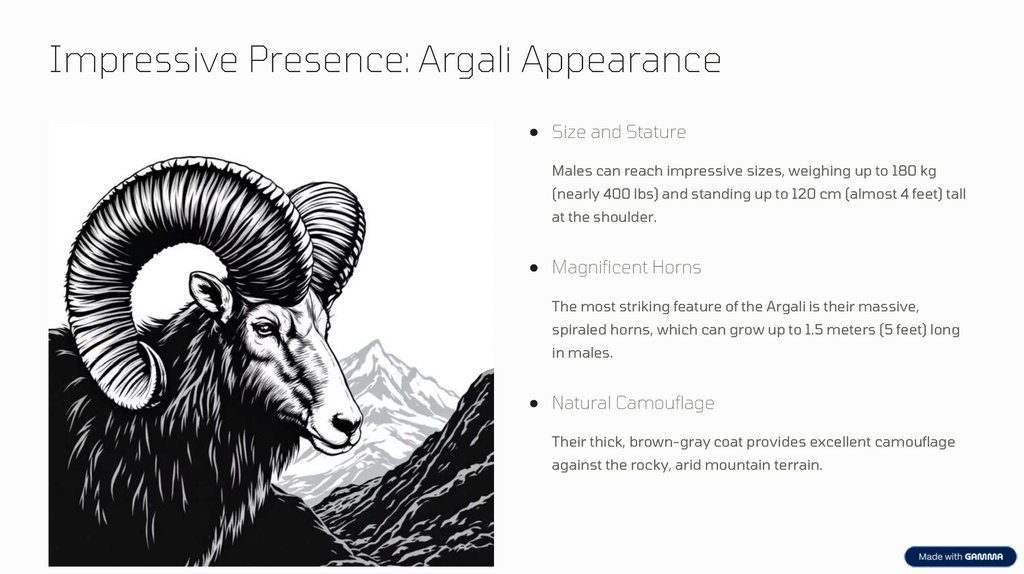
The most striking feature of the Argali is their massive,
spiraled horns, which can grow up to 1.5 meters (5 feet) long
in males.
Natural Camouflage
Their thick, brown-gray coat provides excellent camouflage
against the rocky, arid mountain terrain.
5.
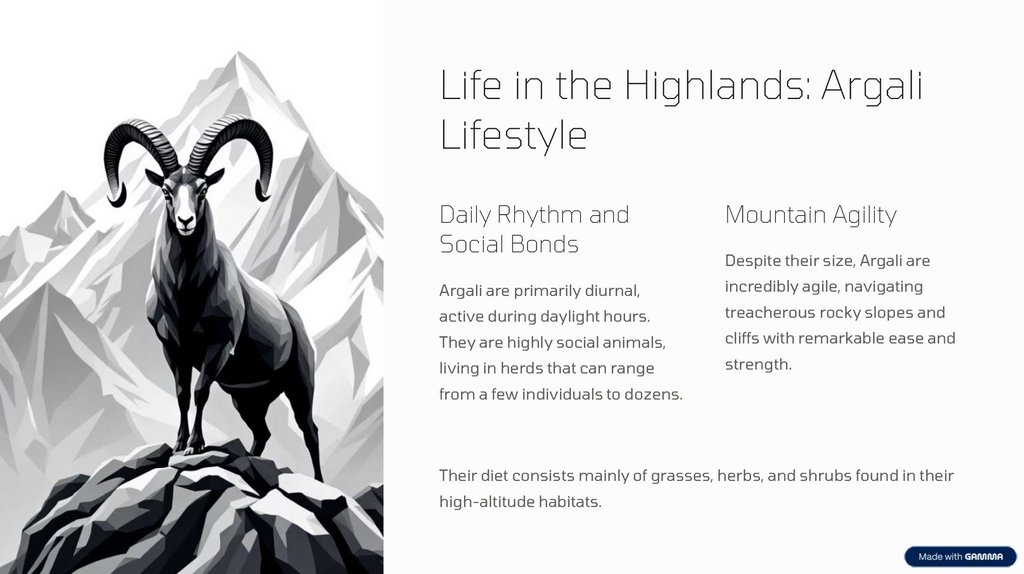
Life in the Highlands: ArgaliLifestyle
Daily Rhythm and
Social Bonds
Mountain Agility
Argali are primarily diurnal,
incredibly agile, navigating
active during daylight hours.
treacherous rocky slopes and
They are highly social animals,
cliffs with remarkable ease and
living in herds that can range
strength.
Despite their size, Argali are
from a few individuals to dozens.
Their diet consists mainly of grasses, herbs, and shrubs found in their
high-altitude habitats.
6.
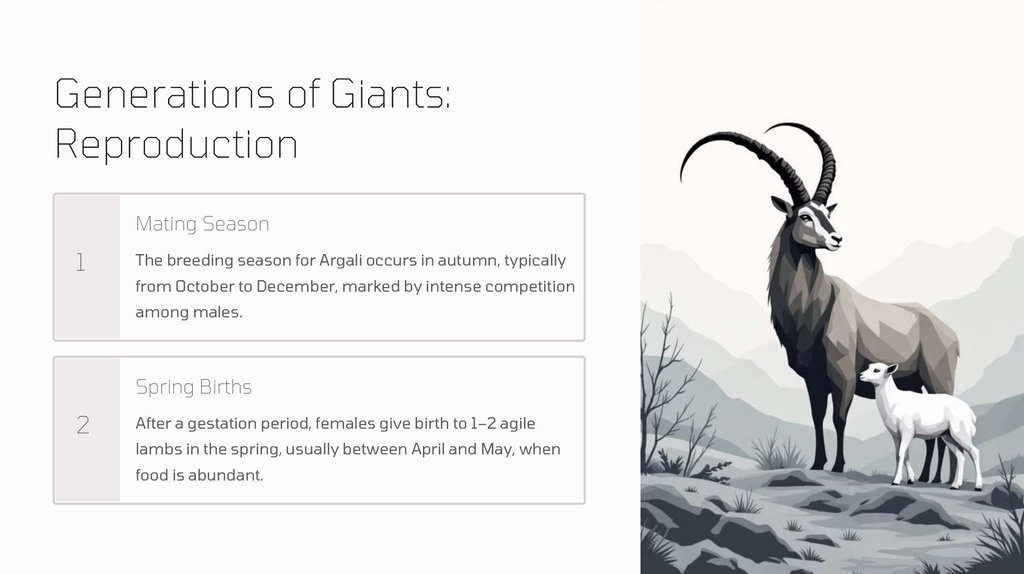
Generations of Giants:Reproduction
Mating Season
1
The breeding season for Argali occurs in autumn, typically
from October to December, marked by intense competition
among males.
Spring Births
2
After a gestation period, females give birth to 1–2 agile
lambs in the spring, usually between April and May, when
food is abundant.
7.
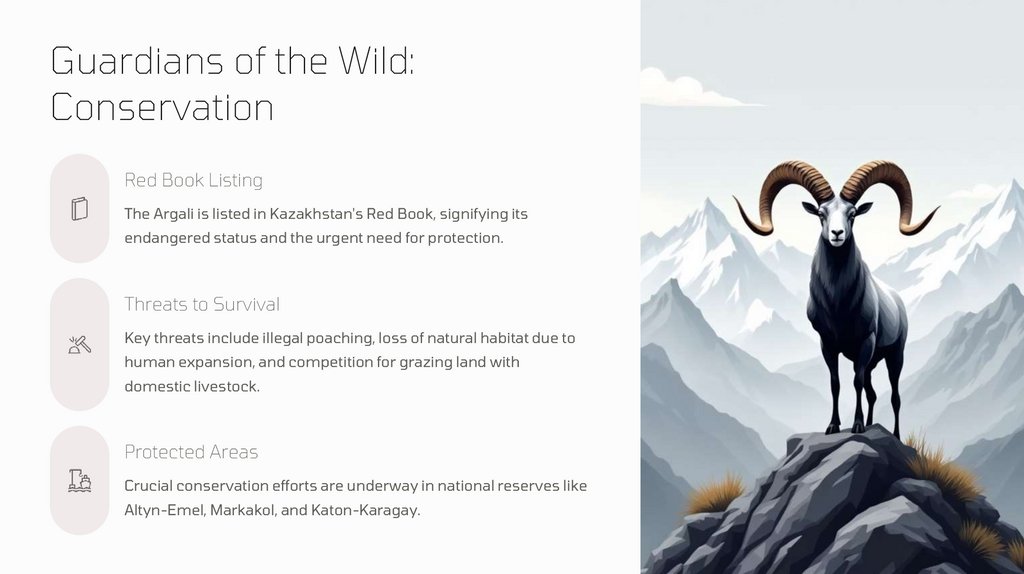
Guardians of the Wild:Conservation
Red Book Listing
The Argali is listed in Kazakhstan's Red Book, signifying its
endangered status and the urgent need for protection.
Threats to Survival
Key threats include illegal poaching, loss of natural habitat due to
human expansion, and competition for grazing land with
domestic livestock.
Protected Areas
Crucial conservation efforts are underway in national reserves like
Altyn-Emel, Markakol, and Katon-Karagay.
8.
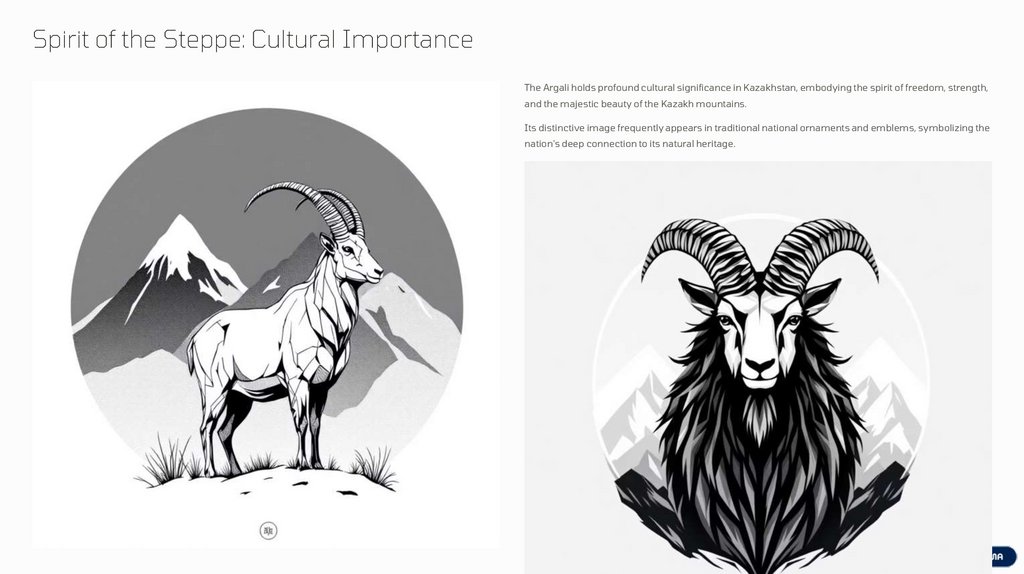
Spirit of the Steppe: Cultural ImportanceThe Argali holds profound cultural significance in Kazakhstan, embodying the spirit of freedom, strength,
and the majestic beauty of the Kazakh mountains.
Its distinctive image frequently appears in traditional national ornaments and emblems, symbolizing the
nation's deep connection to its natural heritage.
9.
Did You Know? Fascinating ArgaliFacts
Leaping Prowess
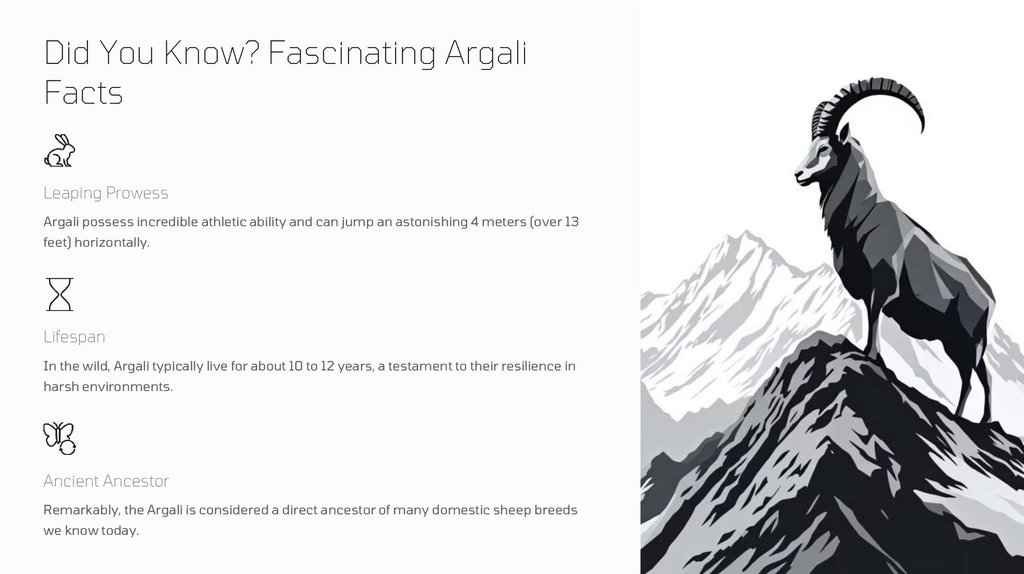
Argali possess incredible athletic ability and can jump an astonishing 4 meters (over 13
feet) horizontally.
Lifespan
In the wild, Argali typically live for about 10 to 12 years, a testament to their resilience in
harsh environments.
Ancient Ancestor
Remarkably, the Argali is considered a direct ancestor of many domestic sheep breeds
we know today.
10.
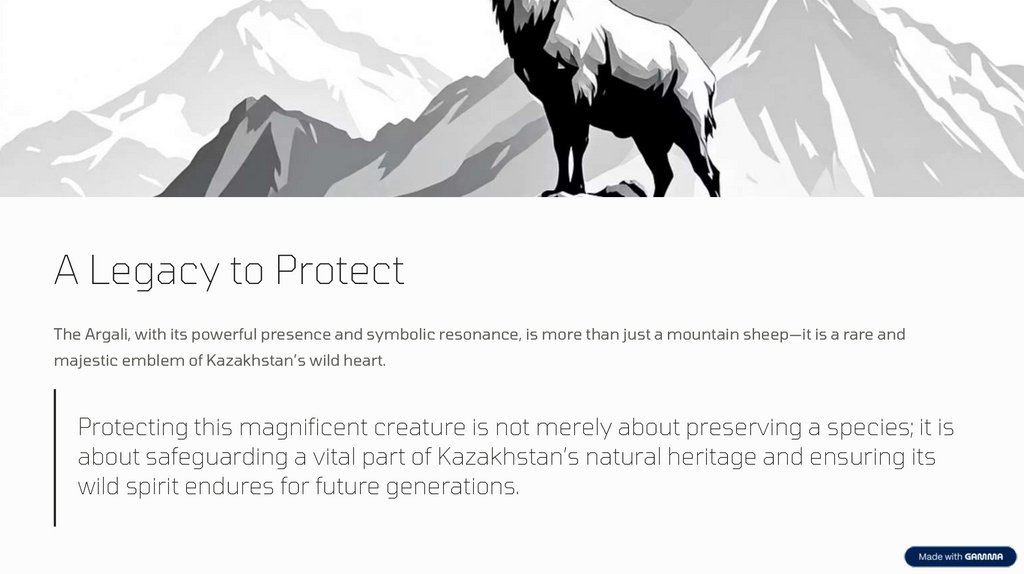
A Legacy to ProtectThe Argali, with its powerful presence and symbolic resonance, is more than just a mountain sheep—it is a rare and
majestic emblem of Kazakhstan’s wild heart.
Protecting this magnificent creature is not merely about preserving a species; it is
about safeguarding a vital part of Kazakhstan’s natural heritage and ensuring its
wild spirit endures for future generations.