 Английский язык
Похожие презентации:


Phonetics as a science
1. PHONETICS AS A SCIENCE
2. 1. The Notion of Phonetics
3. Phonetics
• The word phonetics comes from theGreek word fonetika meaning “the
science of the voice”
• Phonetics is a basic branch of linguistics,
which deals with speech sounds and
studies the outer form of the language
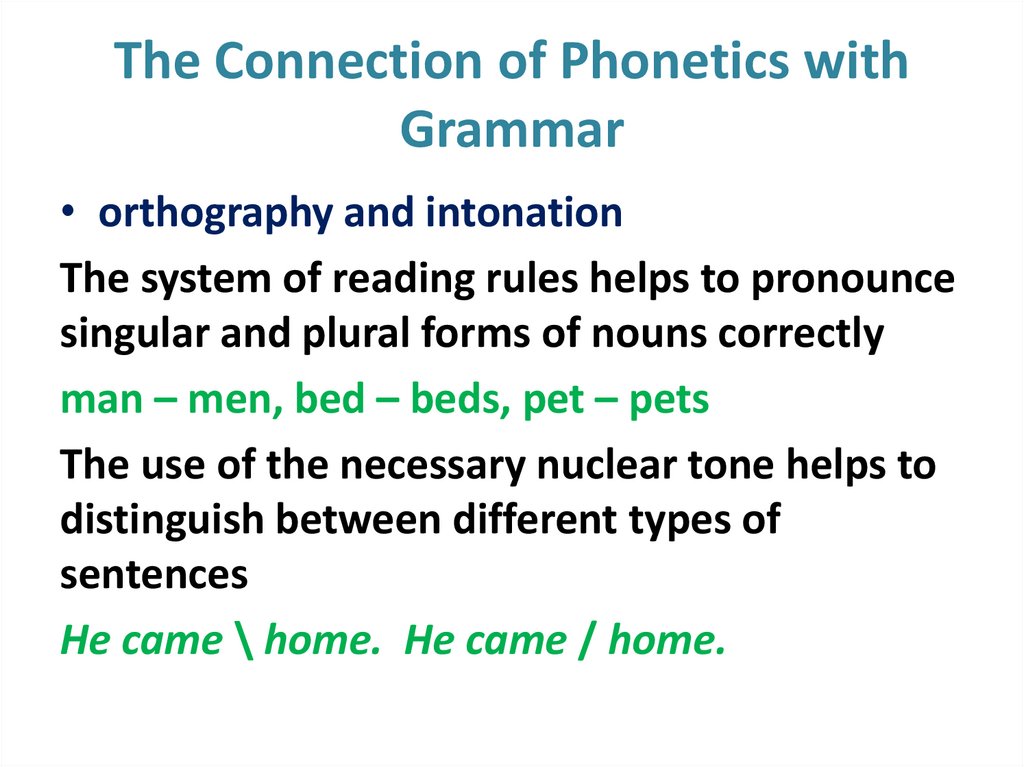
4. The Connection of Phonetics with Grammar
• orthography and intonationThe system of reading rules helps to pronounce
singular and plural forms of nouns correctly
man – men, bed – beds, pet – pets
The use of the necessary nuclear tone helps to
distinguish between different types of
sentences
He came \ home. He came / home.
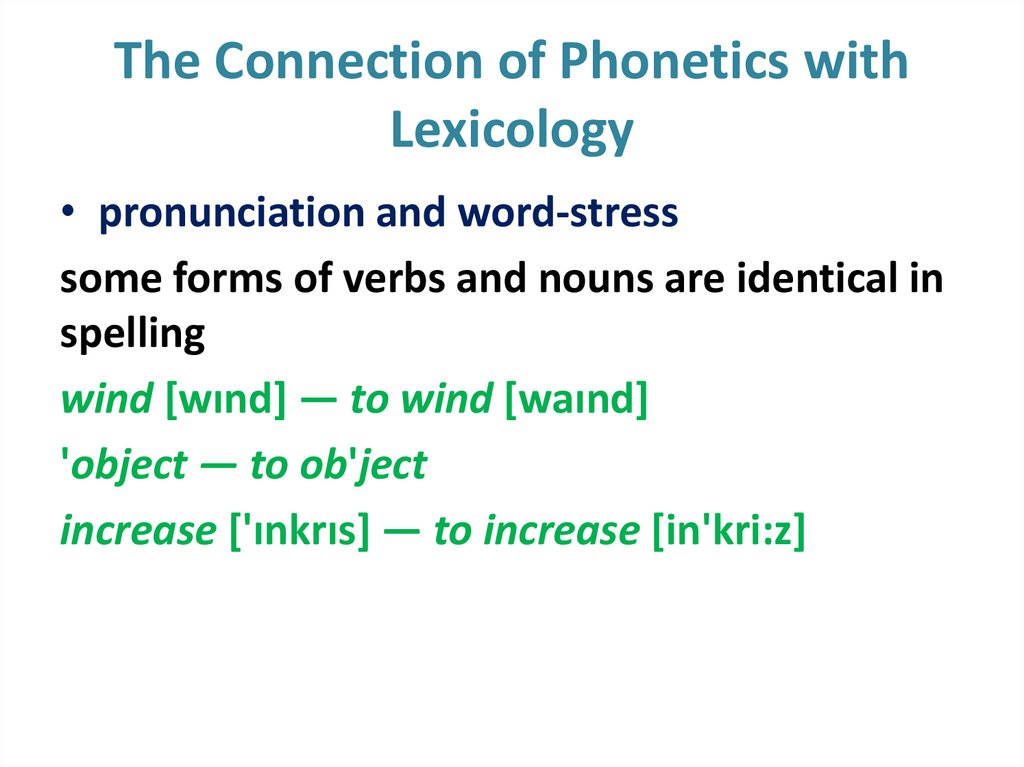
5. The Connection of Phonetics with Lexicology
• pronunciation and word-stresssome forms of verbs and nouns are identical in
spelling
wind [wınd] — to wind [waınd]
'object — to ob'ject
increase ['ınkrıs] — to increase [in'kri:z]
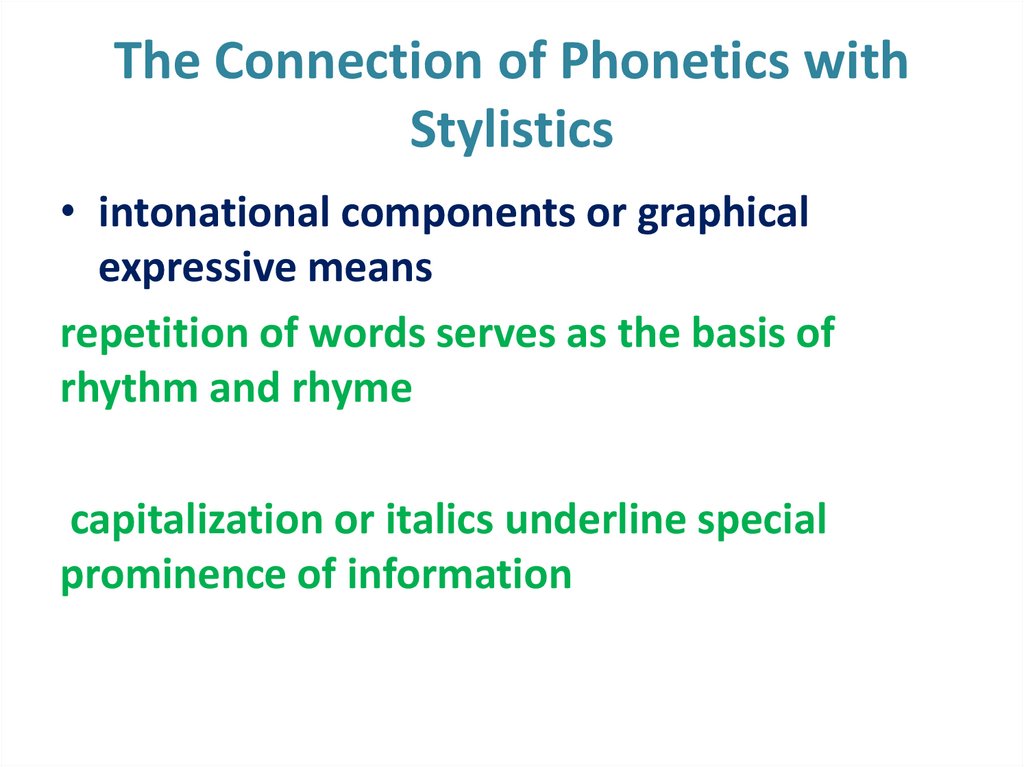
6. The Connection of Phonetics with Stylistics
• intonational components or graphicalexpressive means
repetition of words serves as the basis of
rhythm and rhyme
capitalization or italics underline special
prominence of information
7. Phonetics
studies the ways of sound organizationinto a system of units,
variations and functions of these units in
all types and styles of spoken language
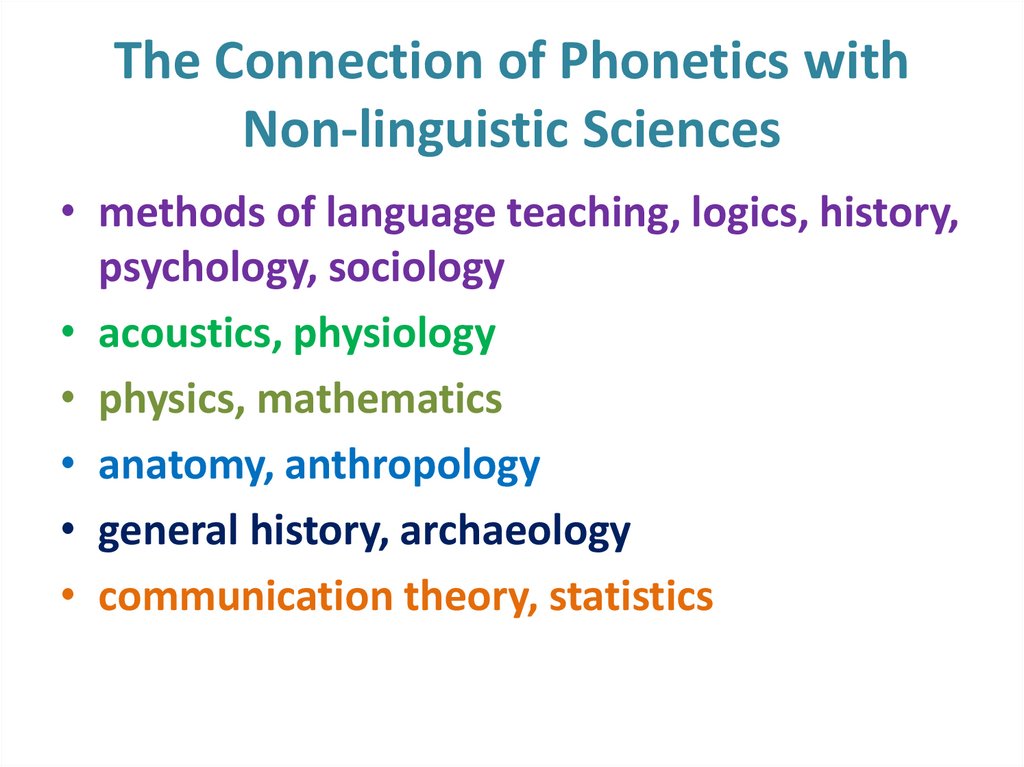
8. The Connection of Phonetics with Non-linguistic Sciences
• methods of language teaching, logics, history,psychology, sociology
• acoustics, physiology
• physics, mathematics
• anatomy, anthropology
• general history, archaeology
• communication theory, statistics
9. 2. Process of Oral Speech Production
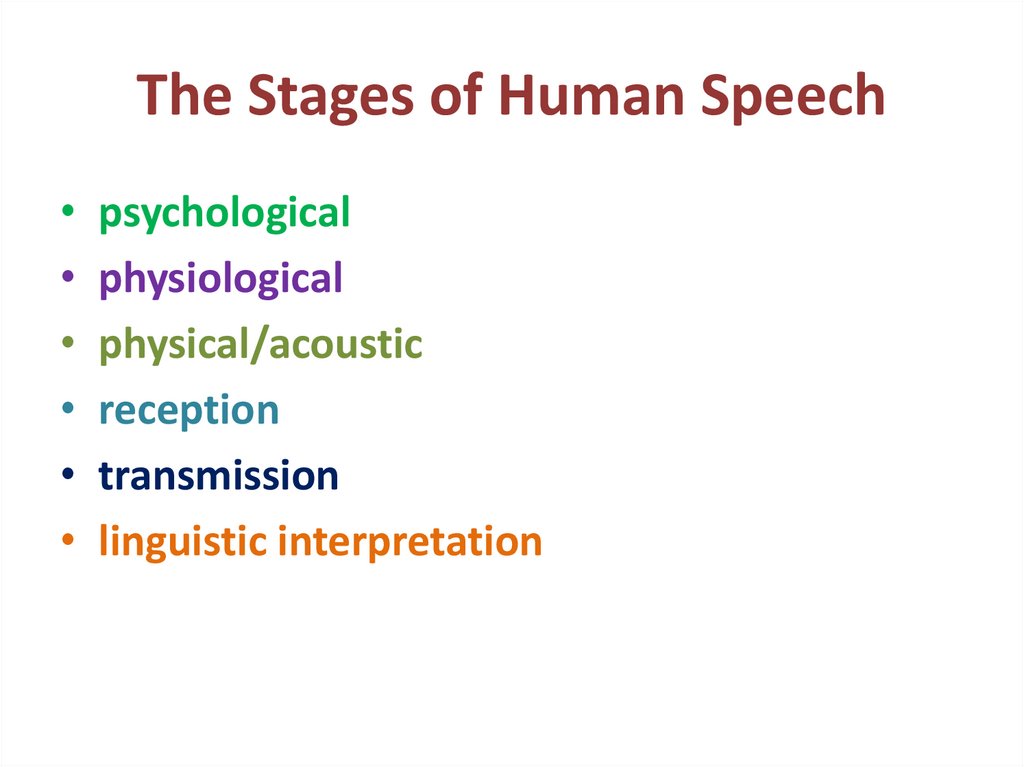
10. The Stages of Human Speech
• psychological• physiological
• physical/acoustic
• reception
• transmission
• linguistic interpretation
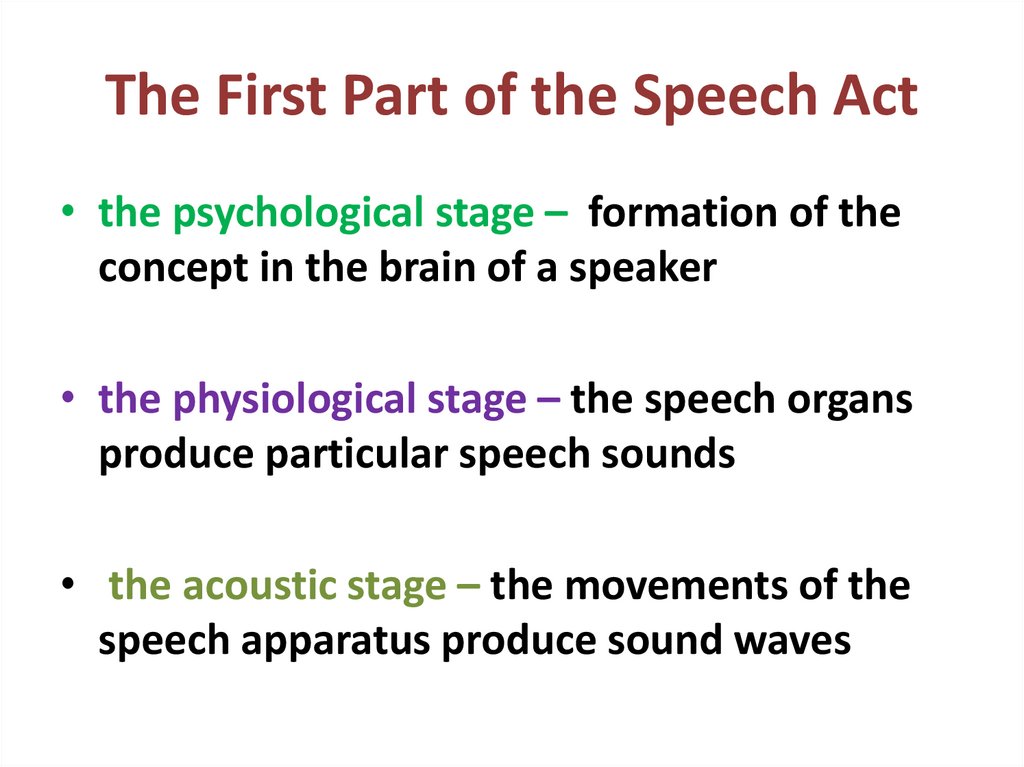
11. The First Part of the Speech Act
• the psychological stage – formation of theconcept in the brain of a speaker
• the physiological stage – the speech organs
produce particular speech sounds
• the acoustic stage – the movements of the
speech apparatus produce sound waves
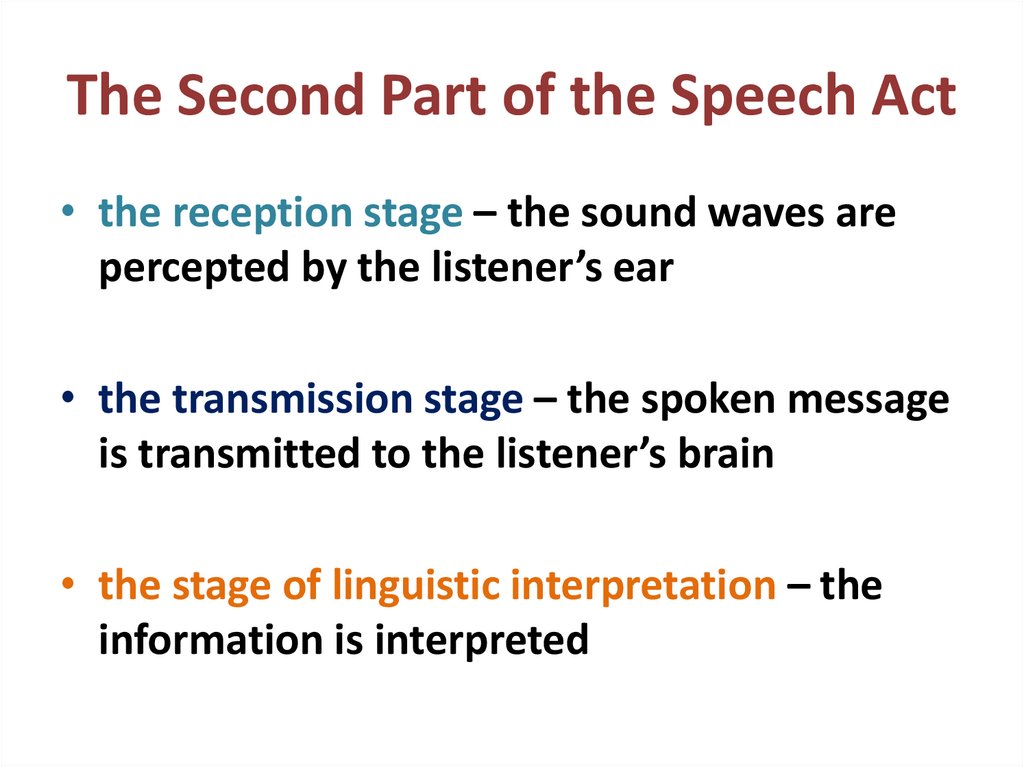
12. The Second Part of the Speech Act
• the reception stage – the sound waves arepercepted by the listener’s ear
• the transmission stage – the spoken message
is transmitted to the listener’s brain
• the stage of linguistic interpretation – the
information is interpreted
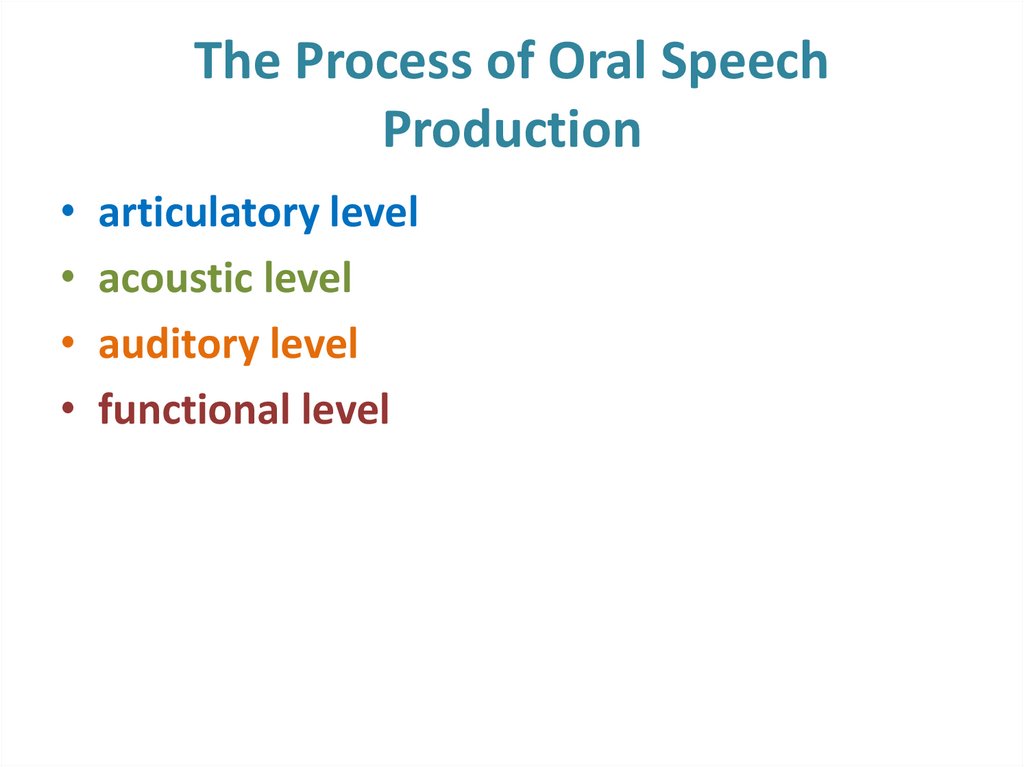
13. The Process of Oral Speech Production
• articulatory level• acoustic level
• auditory level
• functional level
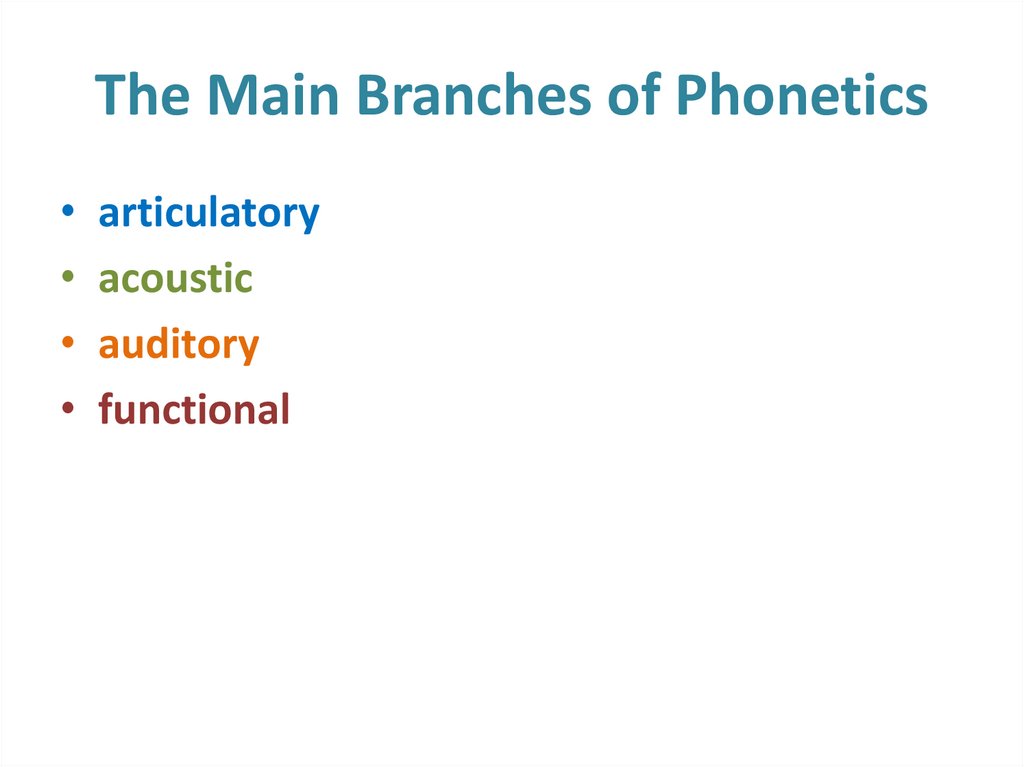
14. The Main Branches of Phonetics
• articulatory• acoustic
• auditory
• functional
15. 3. Aspects of Phonetics
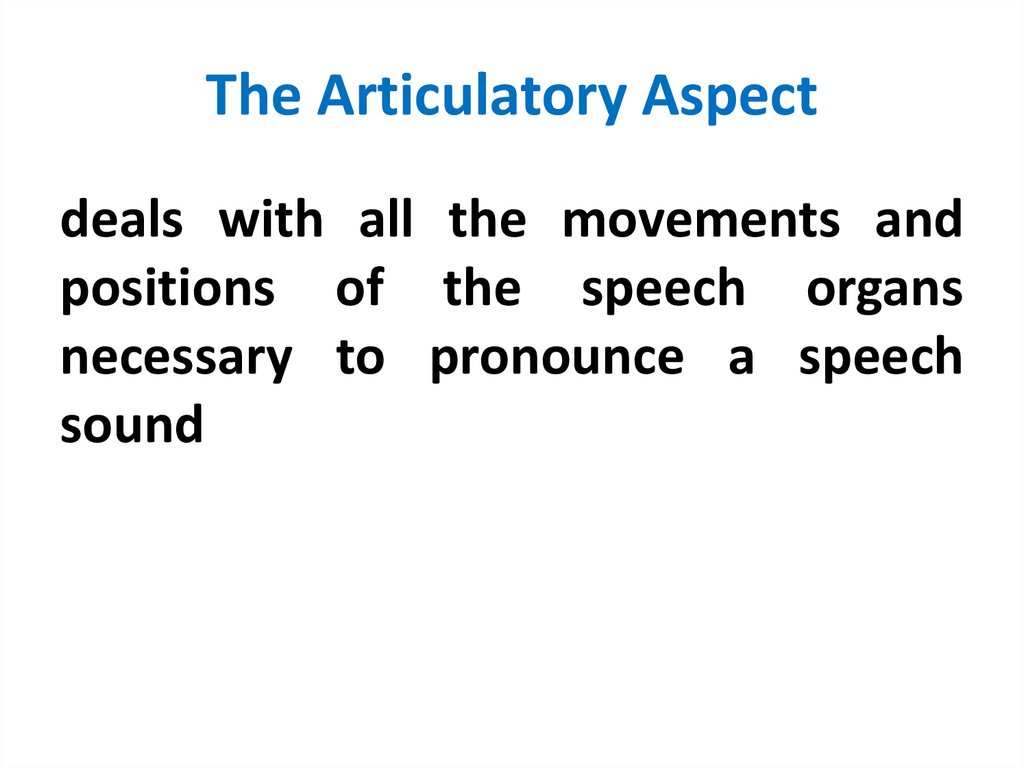
16. The Articulatory Aspect
deals with all the movements andpositions of the speech organs
necessary to pronounce a speech
sound
17. Speech Organs
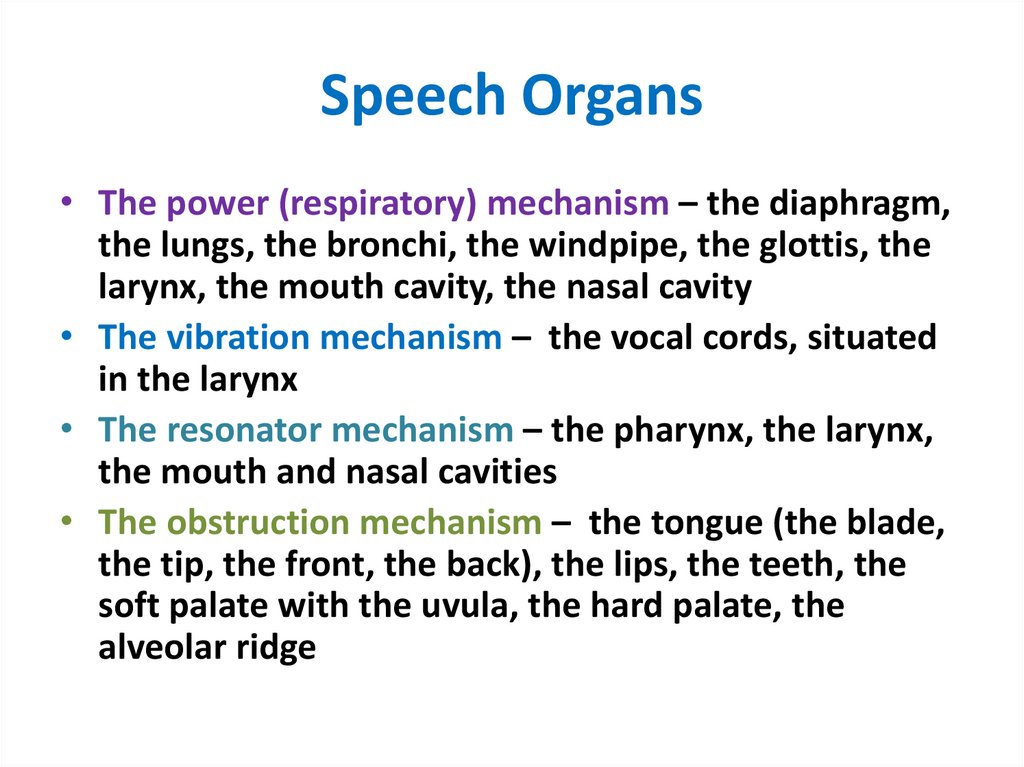
• The power (respiratory) mechanism – the diaphragm,the lungs, the bronchi, the windpipe, the glottis, the
larynx, the mouth cavity, the nasal cavity
• The vibration mechanism – the vocal cords, situated
in the larynx
• The resonator mechanism – the pharynx, the larynx,
the mouth and nasal cavities
• The obstruction mechanism – the tongue (the blade,
the tip, the front, the back), the lips, the teeth, the
soft palate with the uvula, the hard palate, the
alveolar ridge
18. The Acoustic Aspect
studies the way in which the airvibrates between the speaker’s
mouth and the listener’s ear
19. The Tone of the Voice
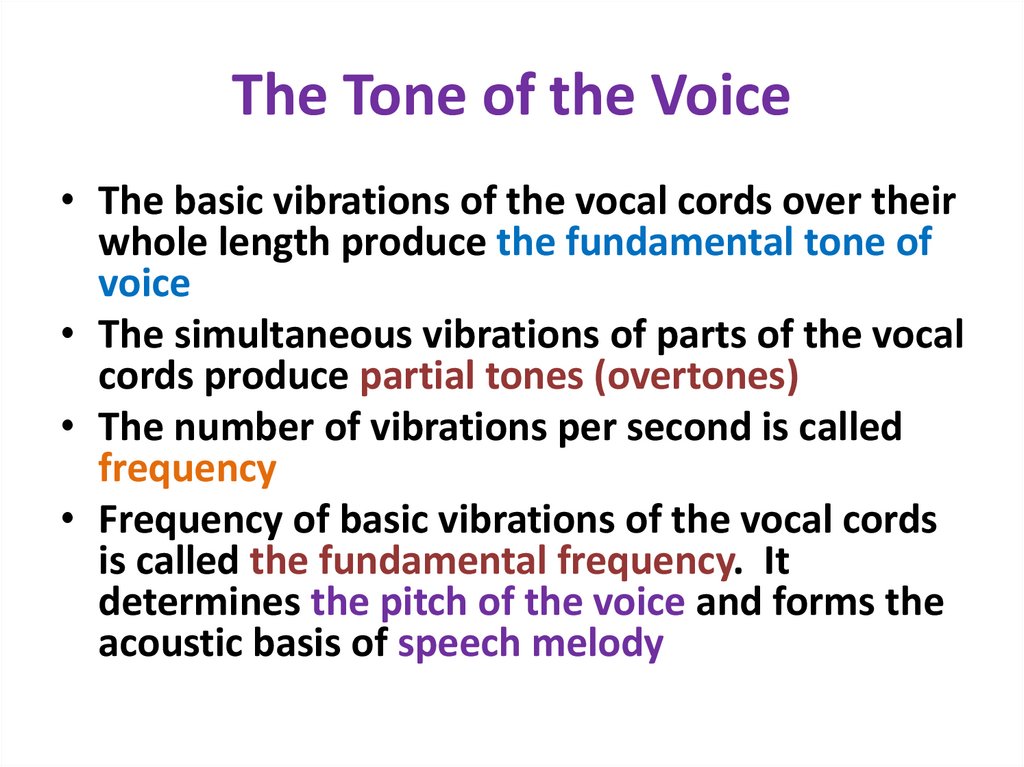
• The basic vibrations of the vocal cords over theirwhole length produce the fundamental tone of
voice
• The simultaneous vibrations of parts of the vocal
cords produce partial tones (overtones)
• The number of vibrations per second is called
frequency
• Frequency of basic vibrations of the vocal cords
is called the fundamental frequency. It
determines the pitch of the voice and forms the
acoustic basis of speech melody
20. The Auditory (Sound-perception) Aspect
combines the process of hearingwith the process of discriminating
sounds
the listener can discriminate the
quality, pitch, loudness, and
length of sounds and identify the
sounds
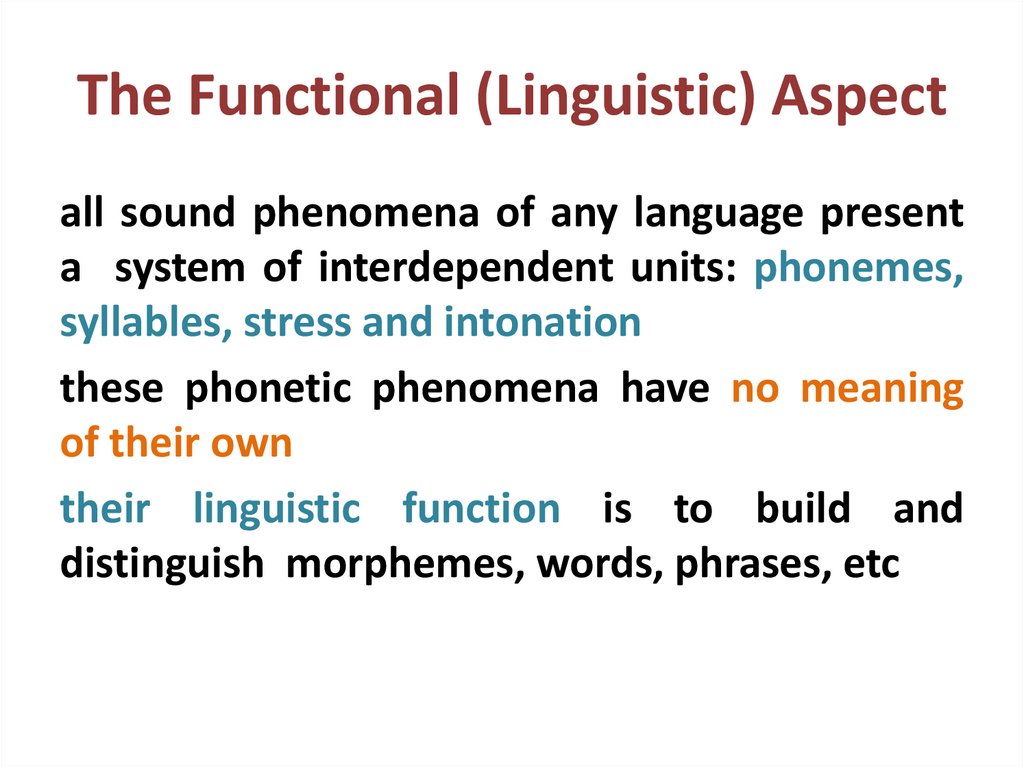
21. The Functional (Linguistic) Aspect
all sound phenomena of any language presenta system of interdependent units: phonemes,
syllables, stress and intonation
these phonetic phenomena have no meaning
of their own
their linguistic function is to build and
distinguish morphemes, words, phrases, etc
22. 4. Units and Components of Phonetic System
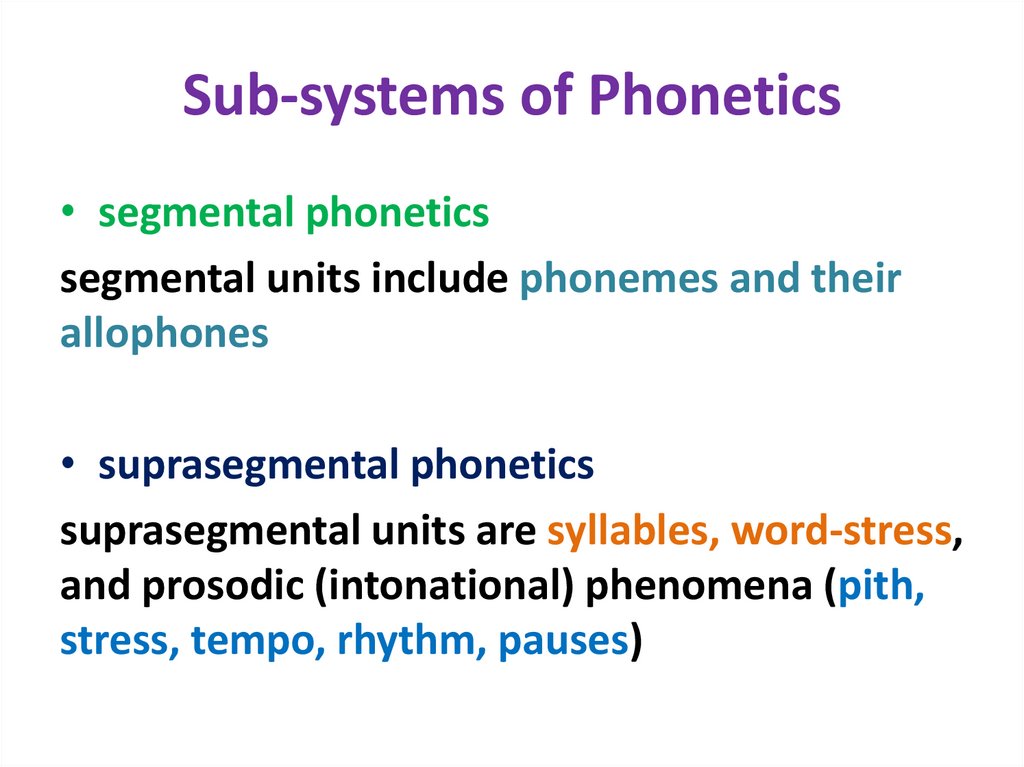
23. Sub-systems of Phonetics
• segmental phoneticssegmental units include phonemes and their
allophones
• suprasegmental phonetics
suprasegmental units are syllables, word-stress,
and prosodic (intonational) phenomena (pith,
stress, tempo, rhythm, pauses)
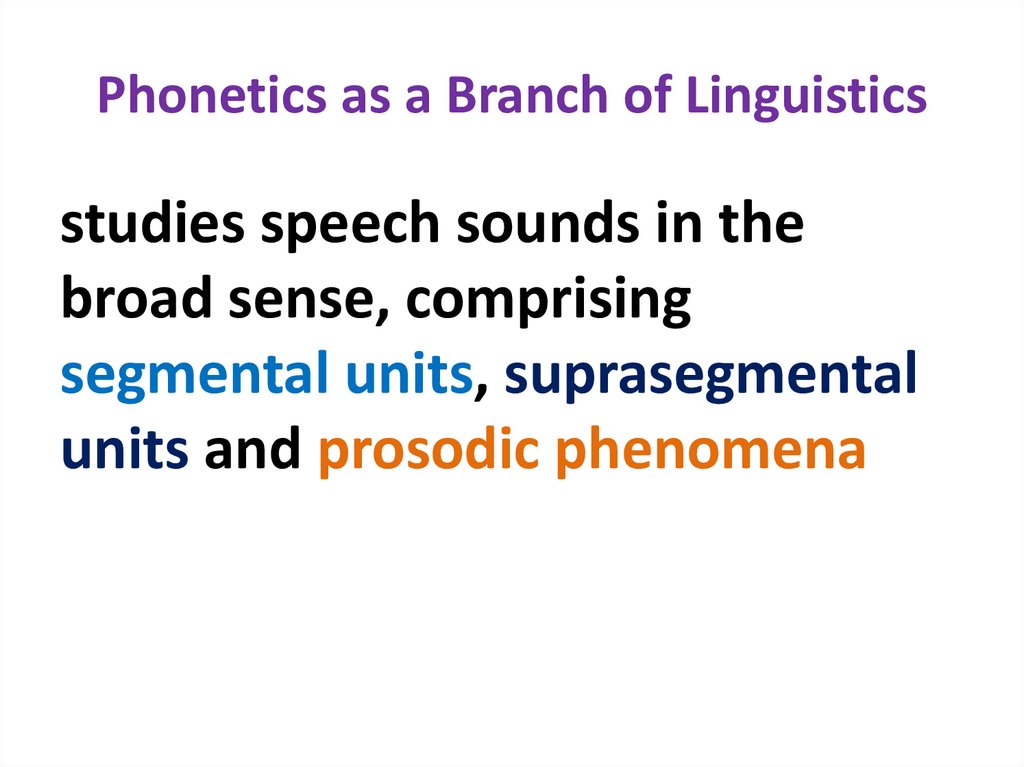
24. Phonetics as a Branch of Linguistics
studies speech sounds in thebroad sense, comprising
segmental units, suprasegmental
units and prosodic phenomena
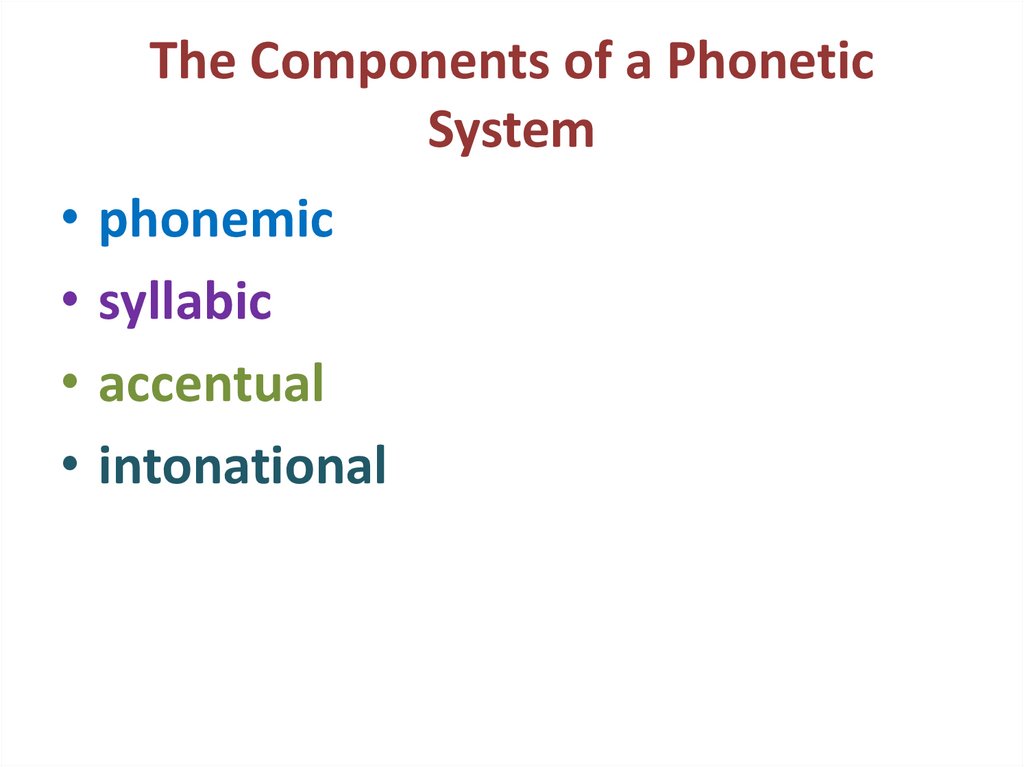
25. The Components of a Phonetic System
• phonemic• syllabic
• accentual
• intonational
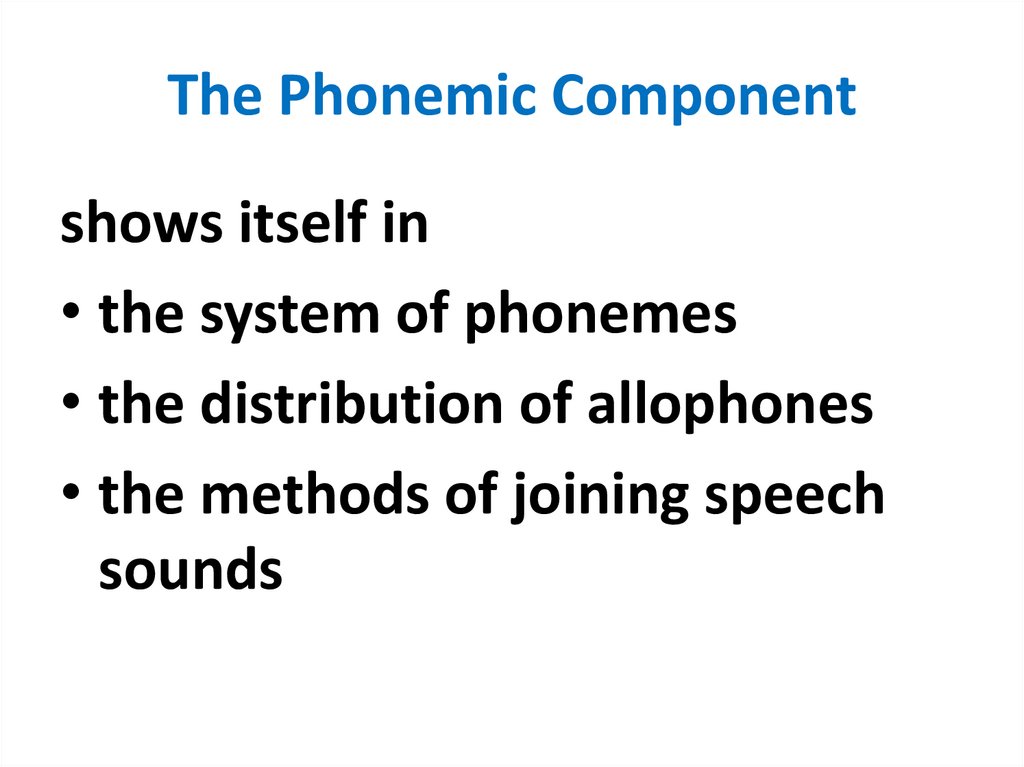
26. The Phonemic Component
shows itself in• the system of phonemes
• the distribution of allophones
• the methods of joining speech
sounds
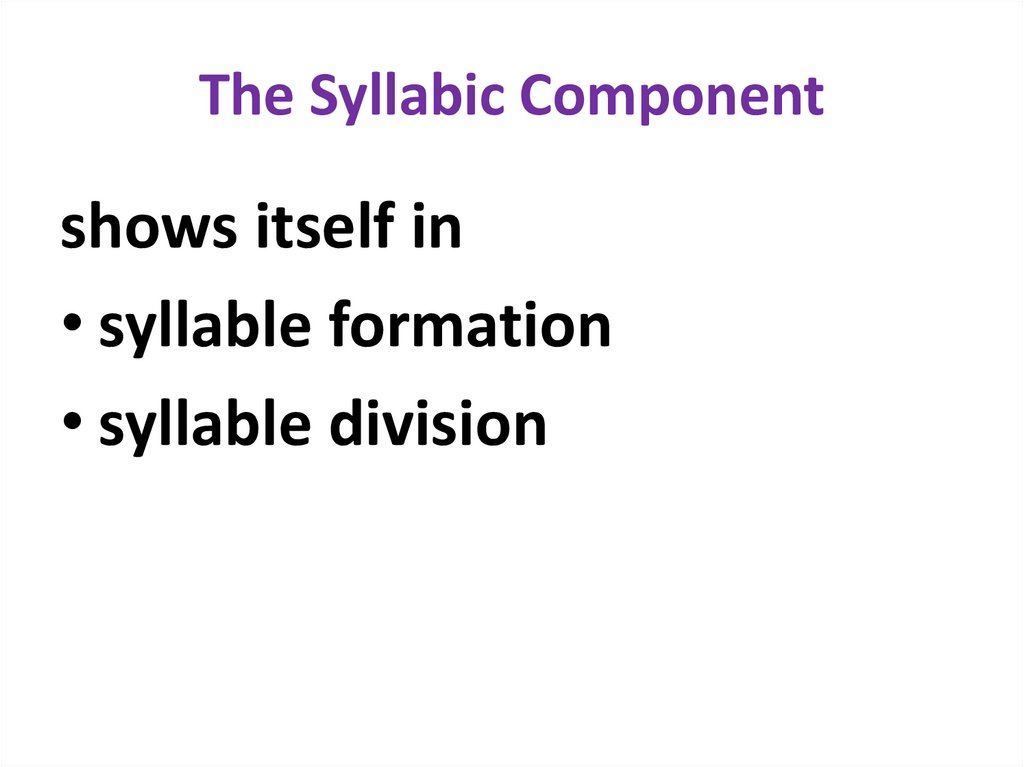
27. The Syllabic Component
shows itself in• syllable formation
• syllable division
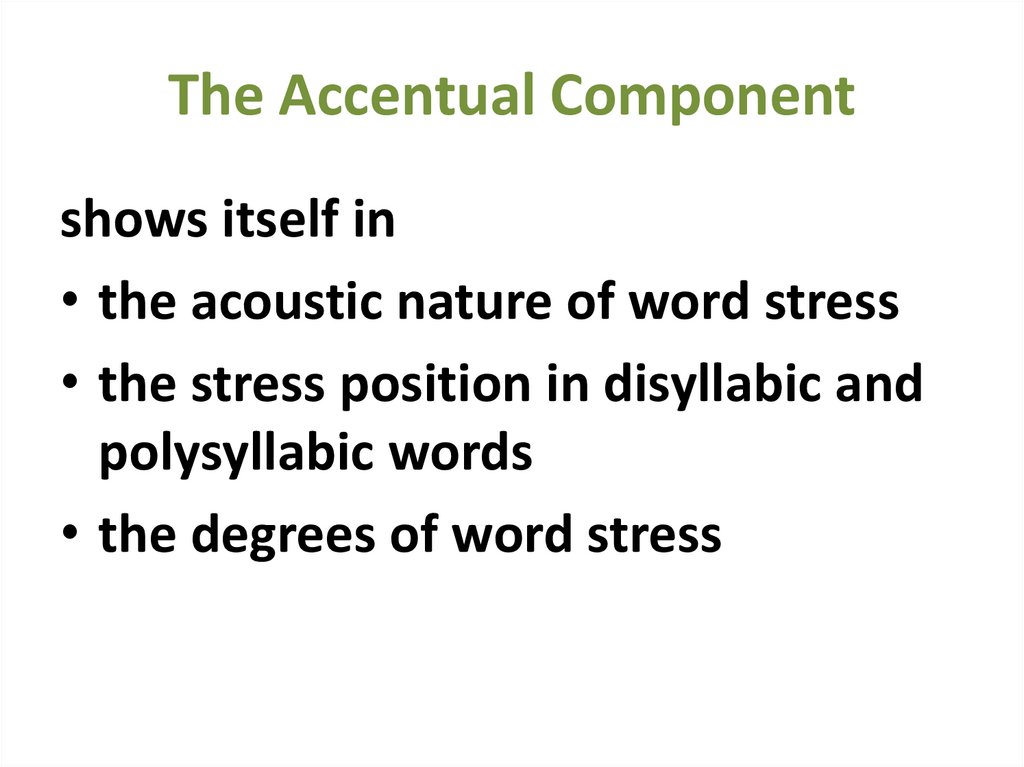
28. The Accentual Component
shows itself in• the acoustic nature of word stress
• the stress position in disyllabic and
polysyllabic words
• the degrees of word stress
29. The Intonational Component
shows itself in• the prosodic components of
intonation
• the structure of intonation groups
30. All the components of the phonetic system of the language constitute its pronunciation
31. 5. Branches of Phonetics
32. According to the Object of the Study
• articulatory phoneticsstudies how the speech organs are used to produce
sounds and their combinations
• acoustic phonetics
studies the physical properties of speech sounds
• auditory phonetics
studies the way people perceive speech sounds
• functional phonetics or phonology
studies the functional (linguistic) aspect of speech sounds
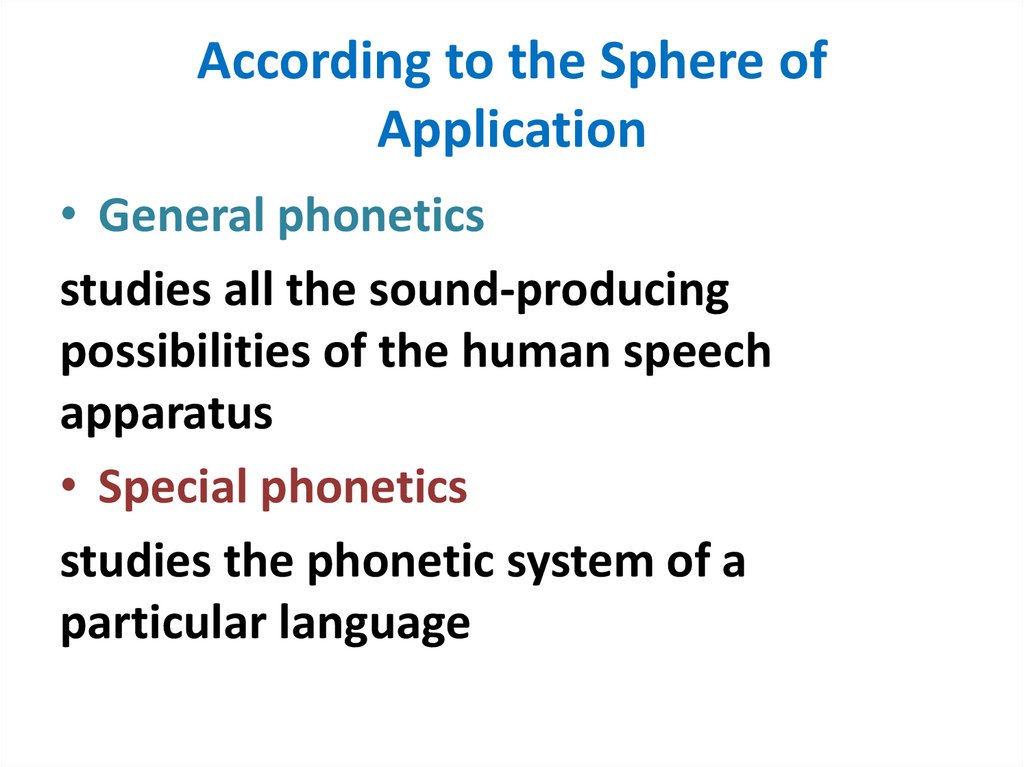
33. According to the Sphere of Application
• General phoneticsstudies all the sound-producing
possibilities of the human speech
apparatus
• Special phonetics
studies the phonetic system of a
particular language
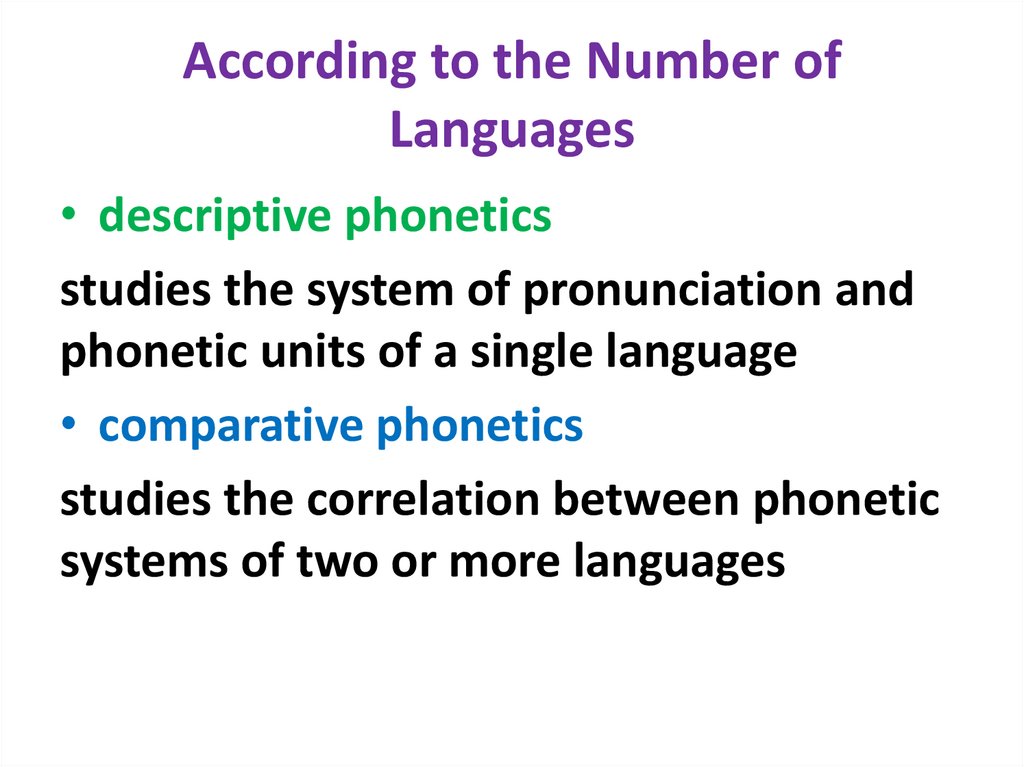
34. According to the Number of Languages
• descriptive phoneticsstudies the system of pronunciation and
phonetic units of a single language
• comparative phonetics
studies the correlation between phonetic
systems of two or more languages
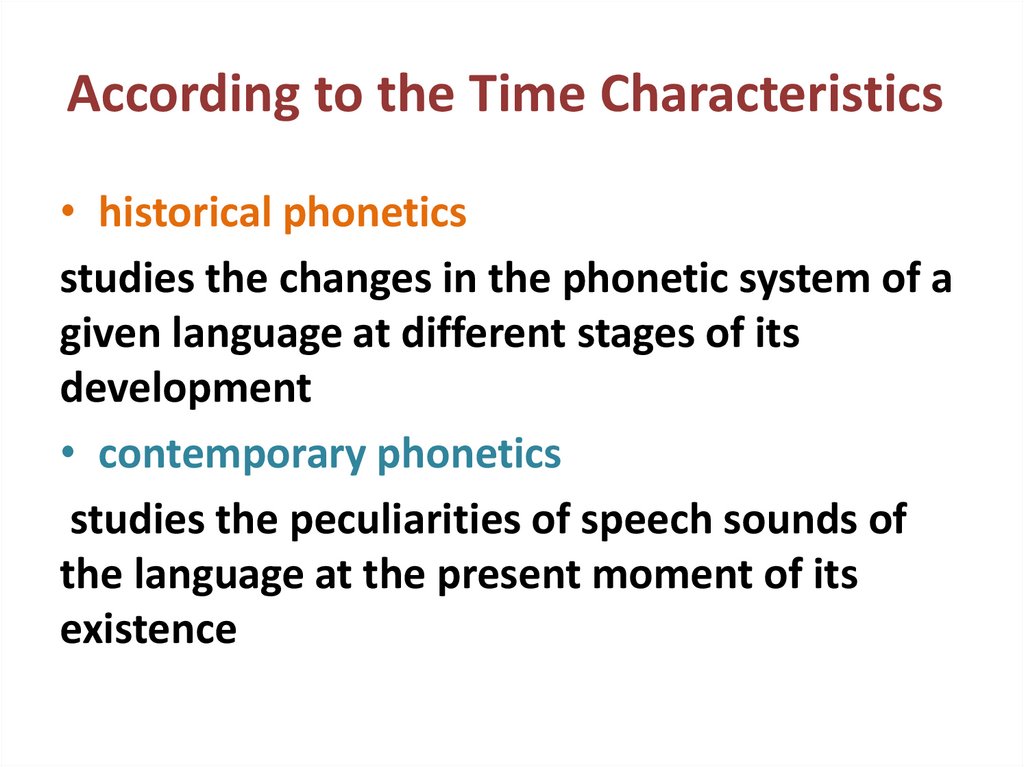
35. According to the Time Characteristics
• historical phoneticsstudies the changes in the phonetic system of a
given language at different stages of its
development
• contemporary phonetics
studies the peculiarities of speech sounds of
the language at the present moment of its
existence
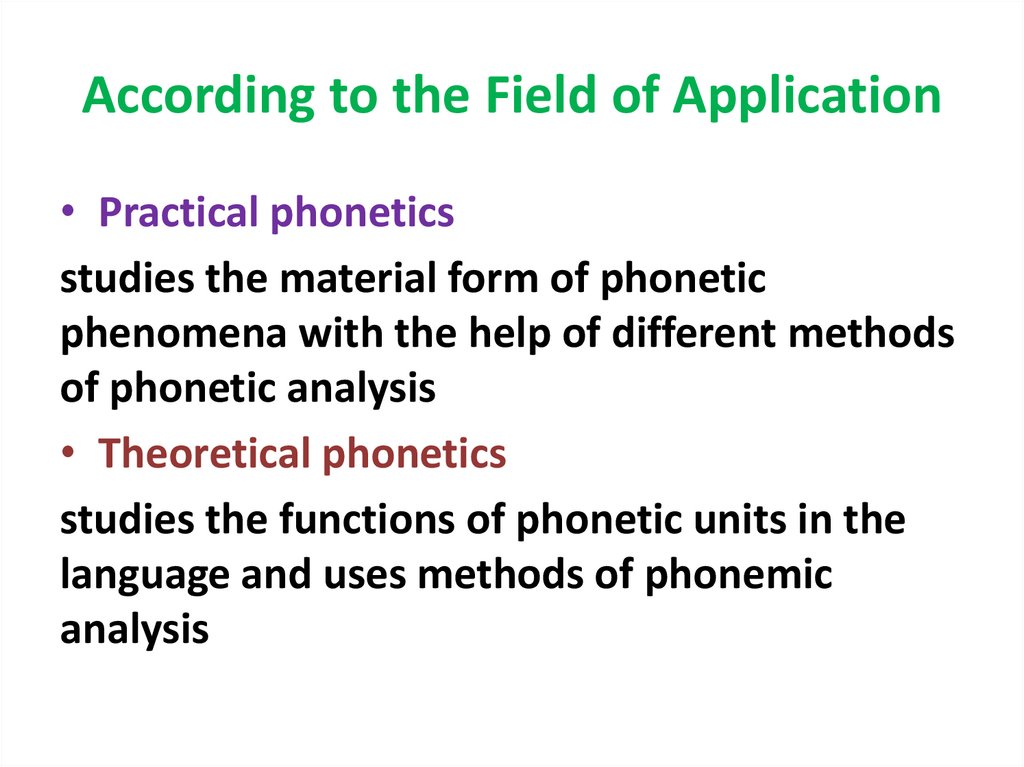
36. According to the Field of Application
• Practical phoneticsstudies the material form of phonetic
phenomena with the help of different methods
of phonetic analysis
• Theoretical phonetics
studies the functions of phonetic units in the
language and uses methods of phonemic
analysis
37. 6. Methods of Phonetic Analysis
38. Subjective (Introspective) Methods
• sensory analysis• direct observation
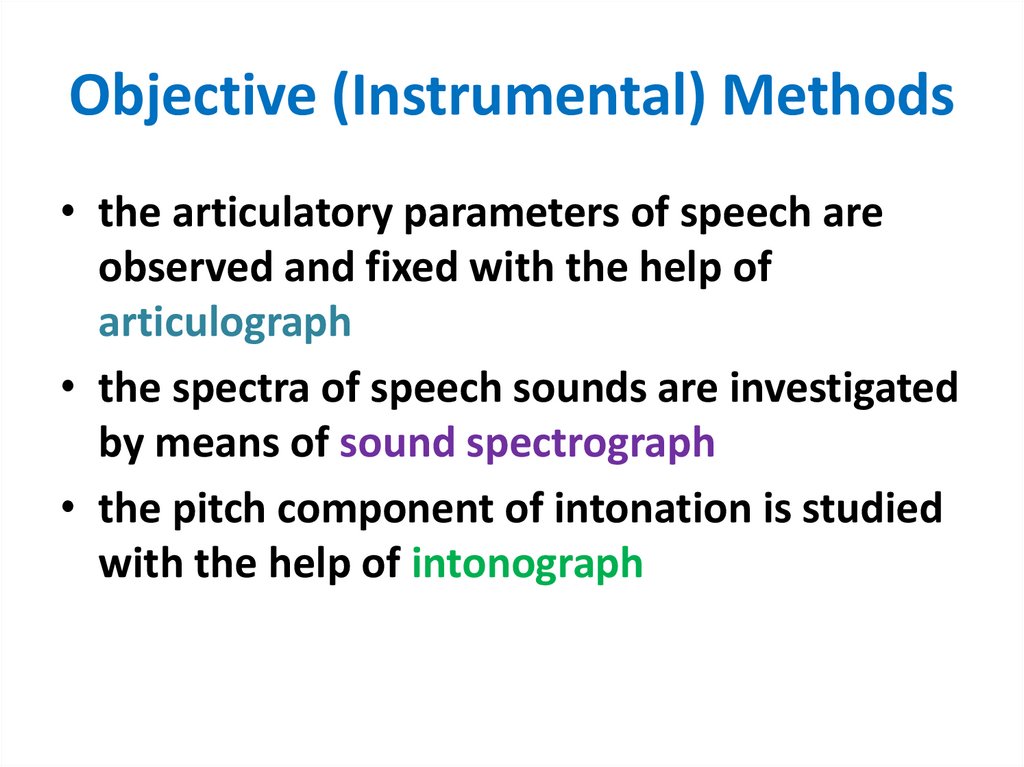
39. Objective (Instrumental) Methods
• the articulatory parameters of speech areobserved and fixed with the help of
articulograph
• the spectra of speech sounds are investigated
by means of sound spectrograph
• the pitch component of intonation is studied
with the help of intonograph