 Информатика
Похожие презентации:


Computers in Modern Banks
1. Computers in Modern Banks
COMPUTERS INMODERN BANKS
2. The Role of Computers in Modern Banks
THE ROLE OF COMPUTERS IN MODERN BANKS2
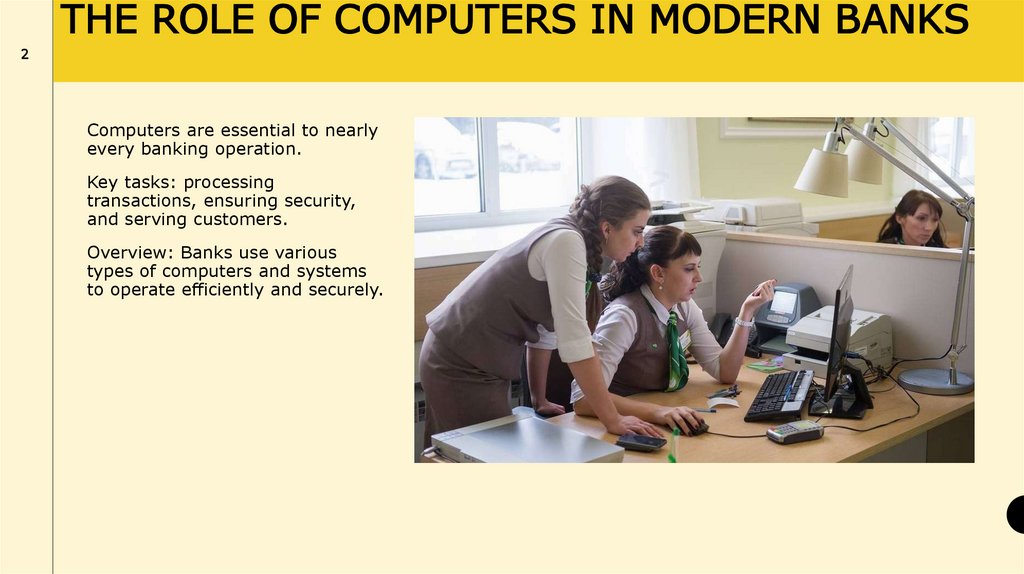
Computers are essential to nearly
every banking operation.
Key tasks: processing
transactions, ensuring security,
and serving customers.
Overview: Banks use various
types of computers and systems
to operate efficiently and securely.
3. Types of Computers and Systems
TYPES OF COMPUTERS ANDSYSTEMS
Core Technologies in Banking
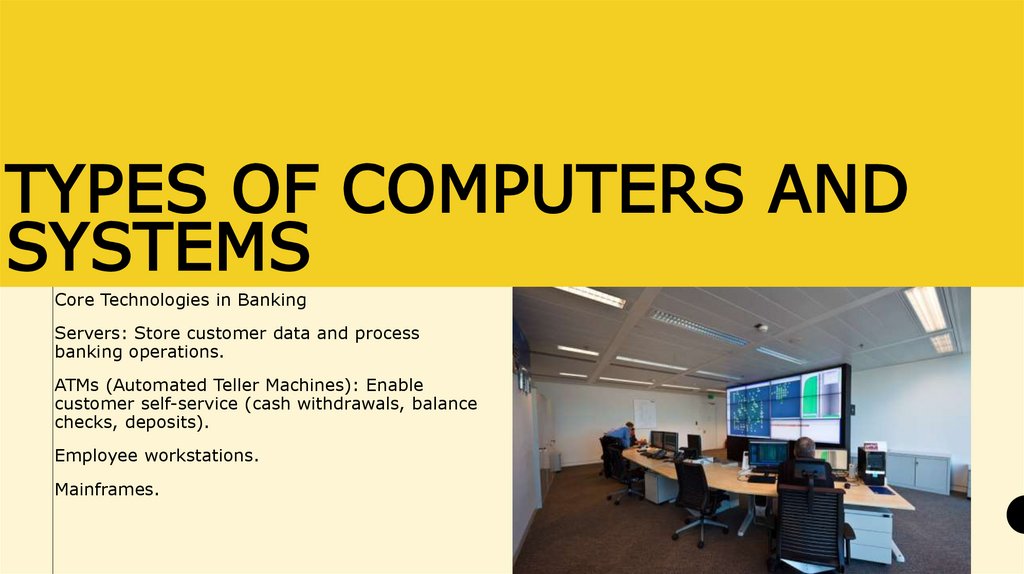
Servers: Store customer data and process
banking operations.
ATMs (Automated Teller Machines): Enable
customer self-service (cash withdrawals, balance
checks, deposits).
Employee workstations.
Mainframes.
4. Functions and Benefits
FUNCTIONS AND BENEFITS4
How Computers Improve
Banking
Automation: Transfers,
payments, loan approvals, and
more are processed quickly and
accurately.
Speed & accuracy: Real-time
data processing reduces errors
and delays.
Enhanced security: Encryption,
two-factor authentication, and
fraud detection protect sensitive
information.
24/7 customer access: Online
and mobile banking allow users
to manage accounts anytime,
anywhere.
5. Conclusion
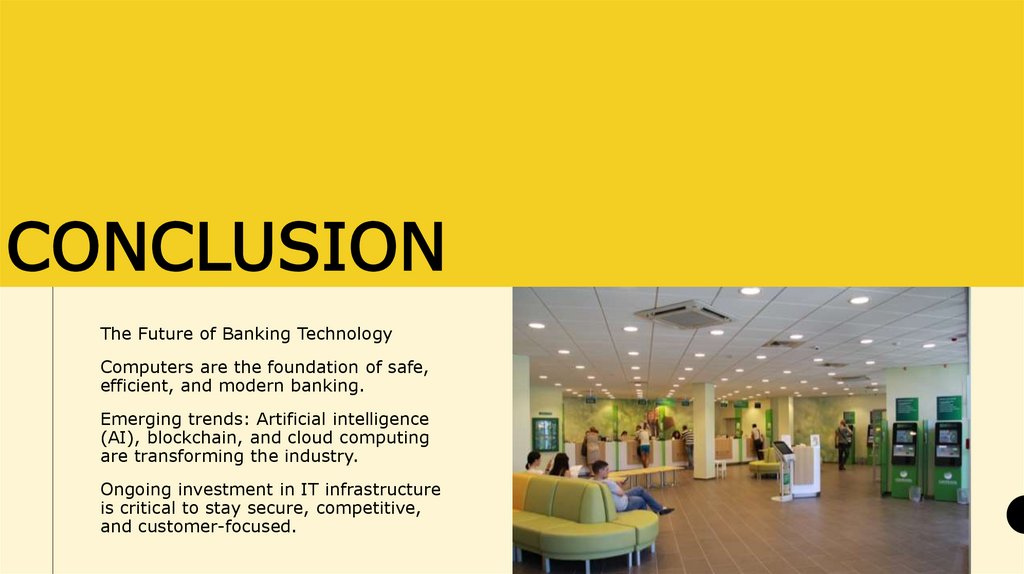
CONCLUSIONThe Future of Banking Technology
Computers are the foundation of safe,
efficient, and modern banking.
Emerging trends: Artificial intelligence
(AI), blockchain, and cloud computing
are transforming the industry.
Ongoing investment in IT infrastructure
is critical to stay secure, competitive,
and customer-focused.