
 Право
ПравоПохожие презентации:









Types of Crimes. Astana IT University
1. Types of Crimes
Astana IT UniversityDepartment of General Disciplines
English for Academic Purposes
Types of Crimes
Week 7 Lesson 3
Reading
2. Table of contents
12
Lead-in question
Reading
3
Comprehension
4
Discussion
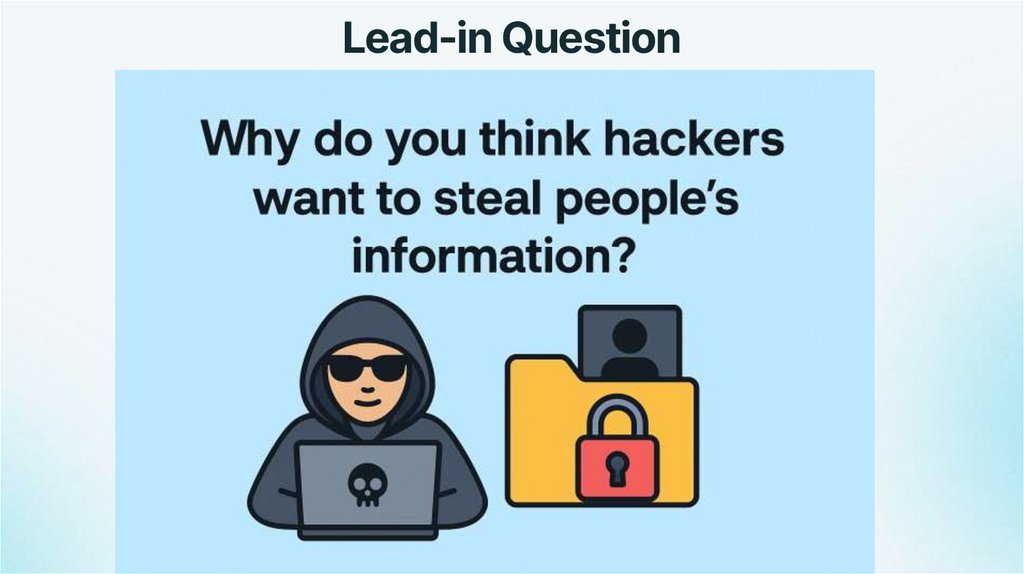
3. Lead-in Question
4. From teenage hacker to Europe’s most wanted. Part 1: The Cyberattack and the Victims
In 2020, during the Covid-19 lockdown, a big cybercrime shocked Finland.A hacker stole private files from Vastaamo, a psychotherapy center. The files contained very
personal notes from patients’ therapy sessions — about their problems, relationships, and even
secrets.
The hacker sent emails to the patients, asking them to pay money or their information would
be published online. One victim, Tiina, said she felt scared and angry because someone had
used her private life to get money.
More than 33,000 people were victims. Some of them paid the hacker, but it was too late —
the information had already been posted on the internet. The crime made headlines all over
Finland, and many people were emotionally hurt by it. Some victims even took their own lives
after their secrets were made public.
5. Part 2. Who Was the Hacker?
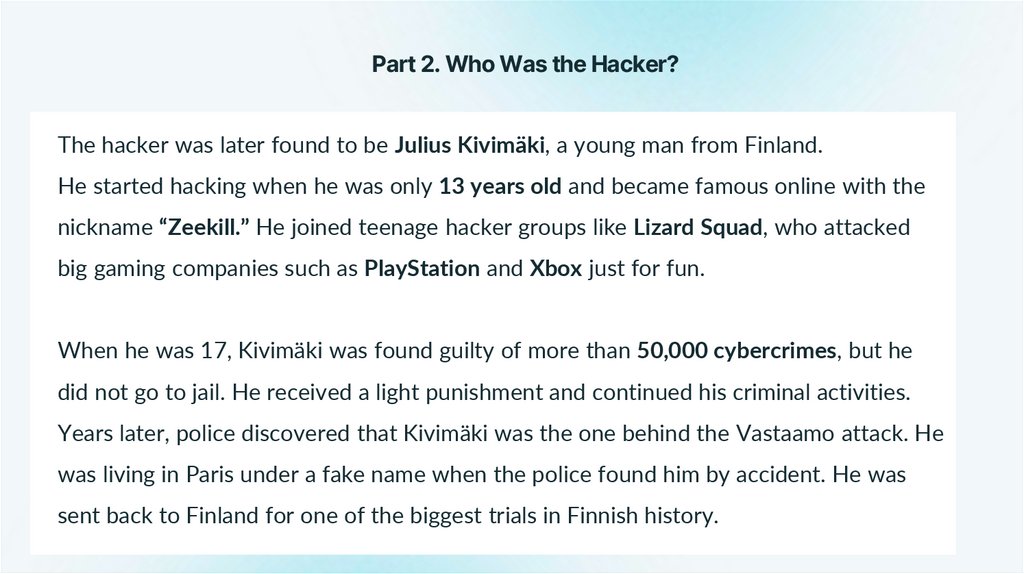
The hacker was later found to be Julius Kivimäki, a young man from Finland.He started hacking when he was only 13 years old and became famous online with the
nickname “Zeekill.” He joined teenage hacker groups like Lizard Squad, who attacked
big gaming companies such as PlayStation and Xbox just for fun.
When he was 17, Kivimäki was found guilty of more than 50,000 cybercrimes, but he
did not go to jail. He received a light punishment and continued his criminal activities.
Years later, police discovered that Kivimäki was the one behind the Vastaamo attack. He
was living in Paris under a fake name when the police found him by accident. He was
sent back to Finland for one of the biggest trials in Finnish history.
6. Part 3. The Trial and the Sentence
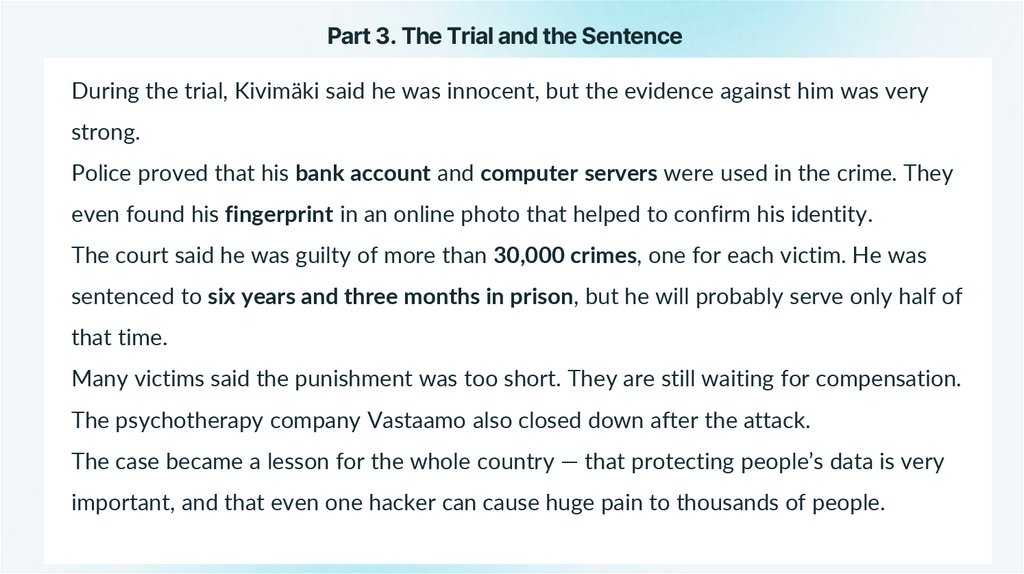
During the trial, Kivimäki said he was innocent, but the evidence against him was verystrong.
Police proved that his bank account and computer servers were used in the crime. They
even found his fingerprint in an online photo that helped to confirm his identity.
The court said he was guilty of more than 30,000 crimes, one for each victim. He was
sentenced to six years and three months in prison, but he will probably serve only half of
that time.
Many victims said the punishment was too short. They are still waiting for compensation.
The psychotherapy company Vastaamo also closed down after the attack.
The case became a lesson for the whole country — that protecting people’s data is very
important, and that even one hacker can cause huge pain to thousands of people.
7. Comprehension. Ex 1.
● What happened to the Vastaamo psychotherapy center in2020?
● Why did the hacker send emails to the patients?
● How did Tiina feel after receiving the hacker’s message?
● How many people were victims of this attack?
● What happened to the private information of the patients?
8. Comprehension. Ex 2
•What was the real name of the hacker?•What was his online nickname?
•How old was he when he started hacking?
•Which big gaming companies did his group attack?
•Where did police finally find Kivimäki?
9. Comprehension. Ex 3
•What helped police prove that Kivimäki was guilty?•How long was his prison sentence?
•Will he probably spend all six years in prison?
•Why did the victims think the punishment was too short?
•What happened to the Vastaamo company after the hack?
10. Ex 4. MCQ and True/ False Questions
•What does “published online” mean?a) Printed in a newspaper
b) Shared on the internet
c) Hidden from people
d) Sent by post
•What does “victim” mean in this story?
a) A police officer
b) A person who did the crime
c) A person hurt by the crime
d) A journalist
Instructions: Write T (True) or
F (False) next to each
sentence.
Kivimäki went to jail after his
first hacking crimes.
The hacker groups he joined
only attacked small websites.
Police found him in Paris by
accident.
11.
DiscussionDiscussion Questions (The Trial and the Sentence)
Instructions: Discuss the questions then share your ideas.
Use your own opinions and examples.
What lessons can people and companies learn from this story?
Do you think six years is a fair punishment for such a crime?
Why or why not?
How can we protect our personal data better in the future?