
 Образование
Похожие презентации:



ELT Methodology course
1. ELT Methodology course
2. This course will enable you to:
THIS COURSE WILL ENABLE YOU TO:Become familiar with the current approaches to teaching
productive skills – speaking and writing;
Understand and make practical use of the basic professional
concepts and terminology in English;
Apply and reflect upon your competence as language
learners;
Develop your understanding of major shifts and trends in
modern ELT Methodology.
3. Developing productive skills: writing
4.
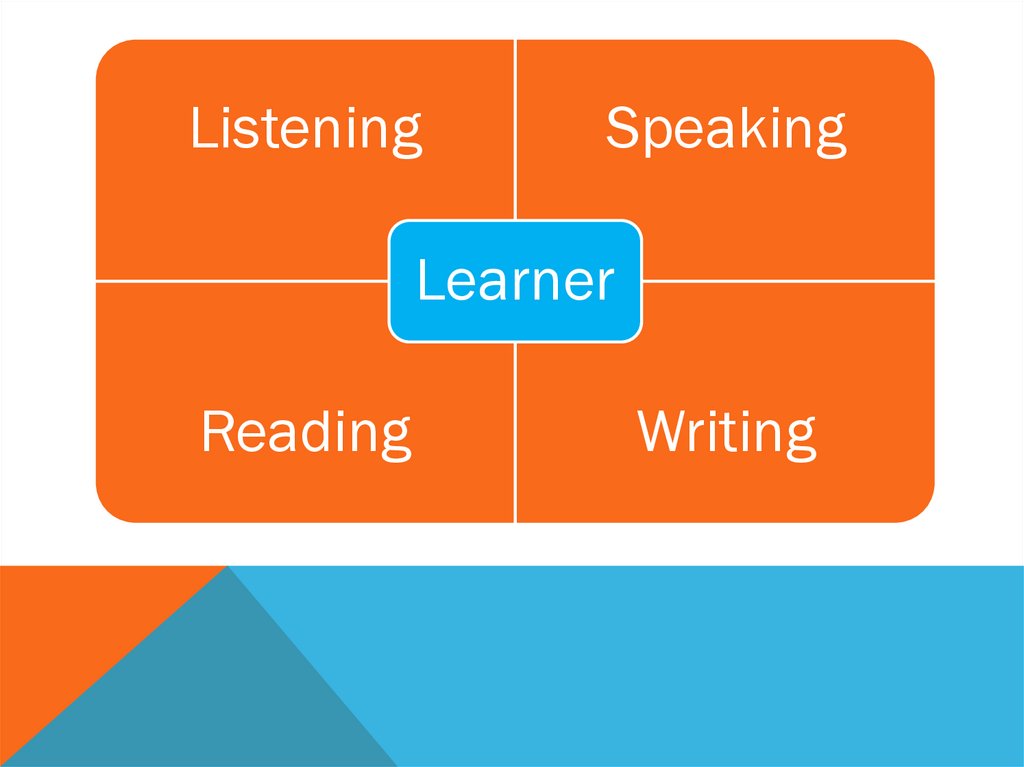
ListeningSpeaking
Learner
Reading
Writing
5.
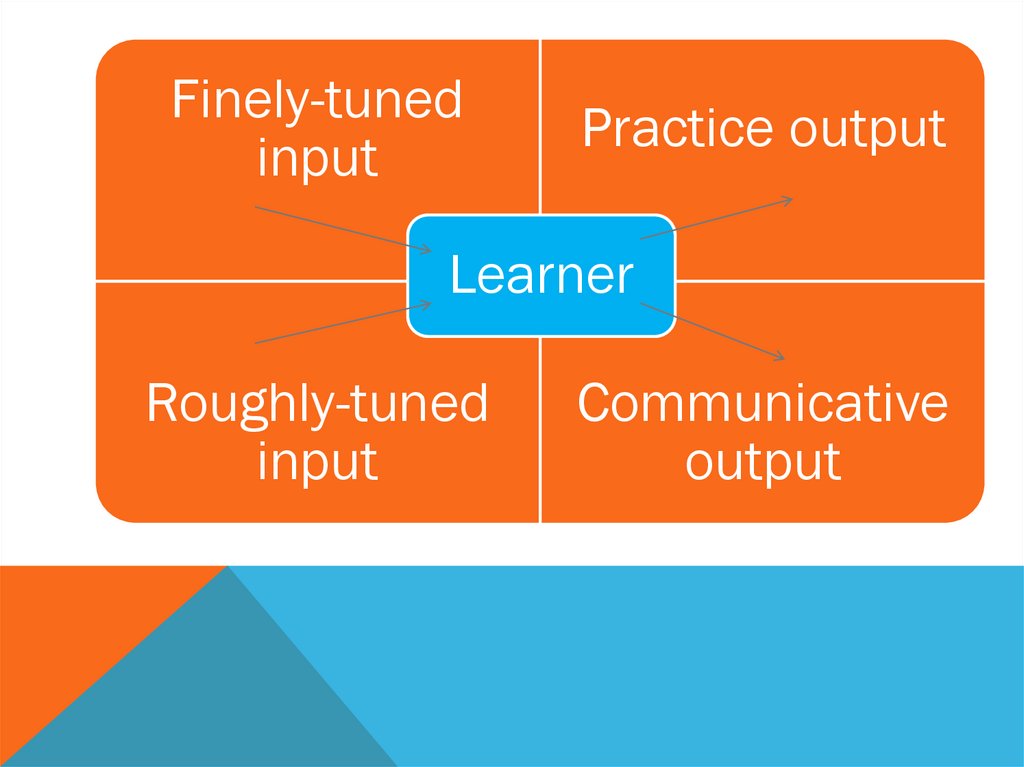
Finely-tunedinput
Practice output
Learner
Roughly-tuned
input
Communicative
output
6. The goal of developing writing is:
THE GOAL OF DEVELOPING WRITING IS:To enable learners to
produce written texts
7.
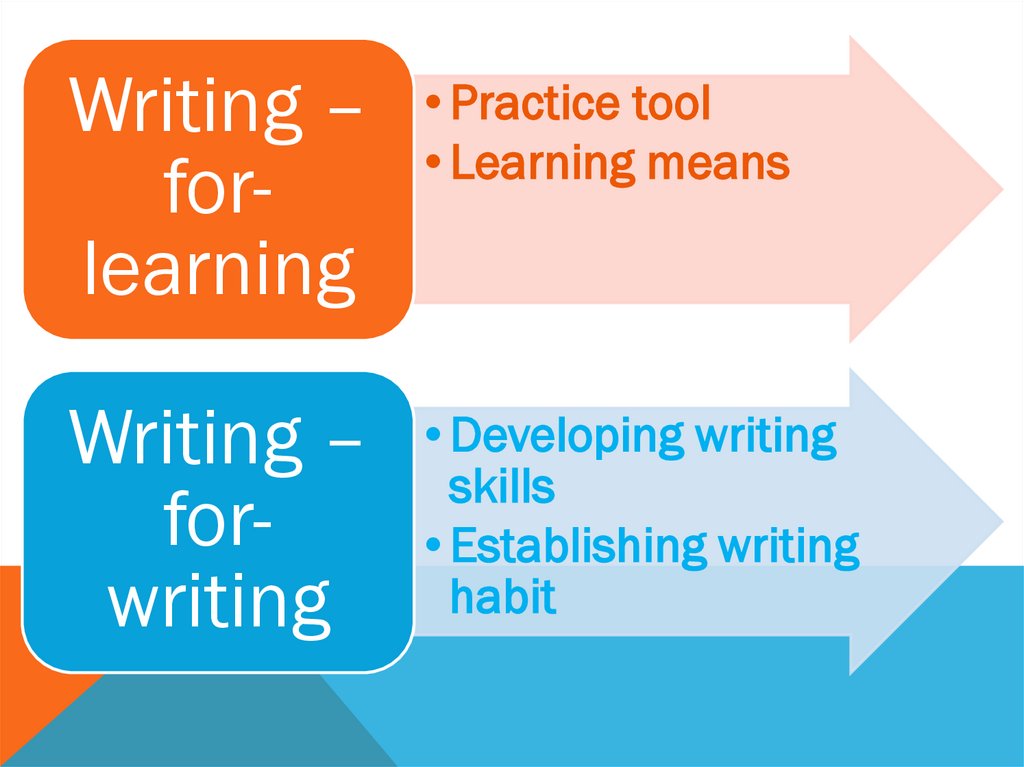
Writing – •Practice tool•Learning means
forlearning
writing
Writing – •Developing
skills
for•Establishing writing
writing habit
8. Types of writing - genres
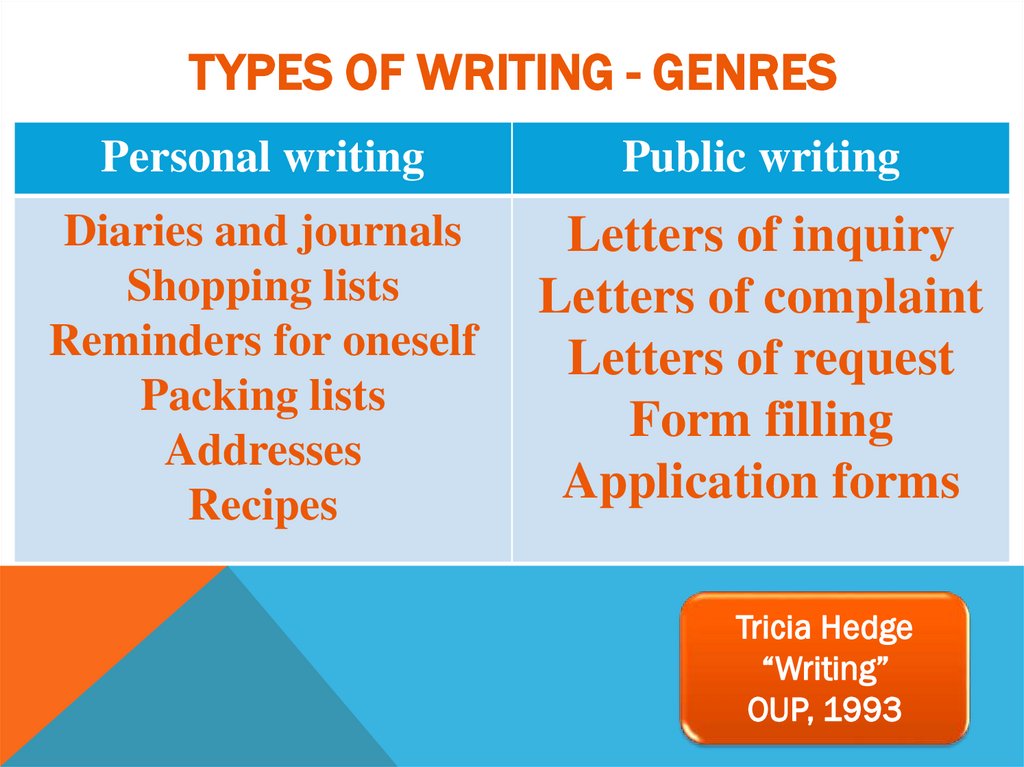
TYPES OF WRITING - GENRESPersonal writing
Public writing
Diaries and journals
Shopping lists
Reminders for oneself
Packing lists
Addresses
Recipes
Letters of inquiry
Letters of complaint
Letters of request
Form filling
Application forms
Tricia Hedge
“Writing”
OUP, 1993
9. Types of writing - genres
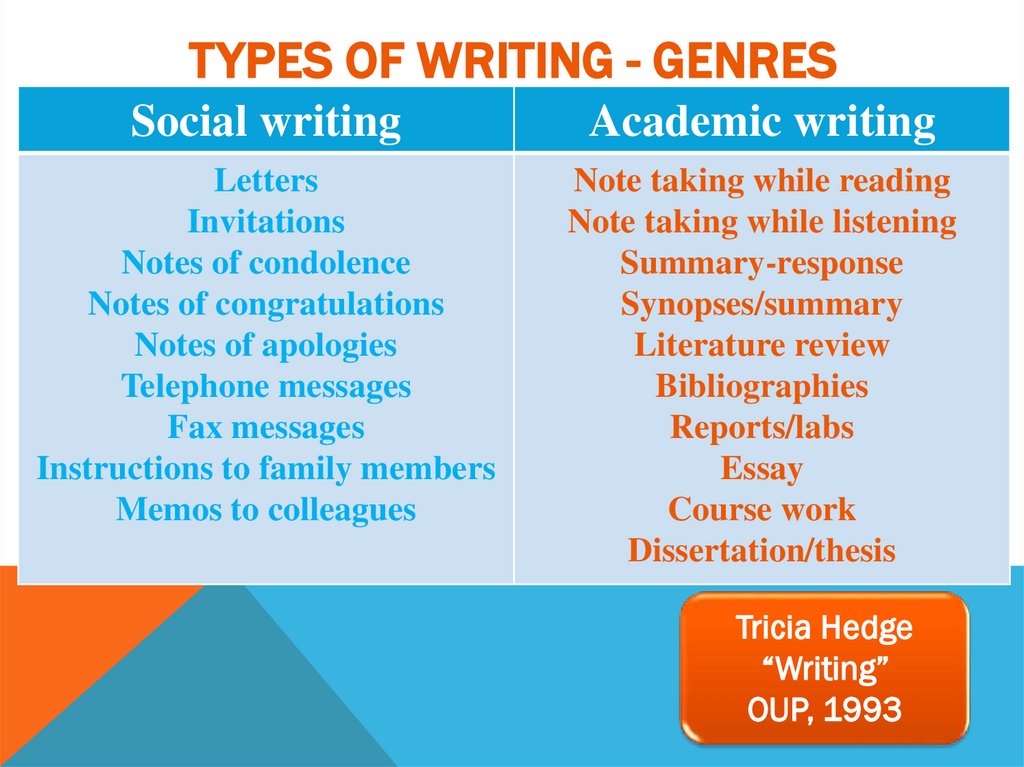
TYPES OF WRITING - GENRESSocial writing
Academic writing
Letters
Invitations
Notes of condolence
Notes of congratulations
Notes of apologies
Telephone messages
Fax messages
Instructions to family members
Memos to colleagues
Note taking while reading
Note taking while listening
Summary-response
Synopses/summary
Literature review
Bibliographies
Reports/labs
Essay
Course work
Dissertation/thesis
Tricia Hedge
“Writing”
OUP, 1993
10. Types of writing - genres
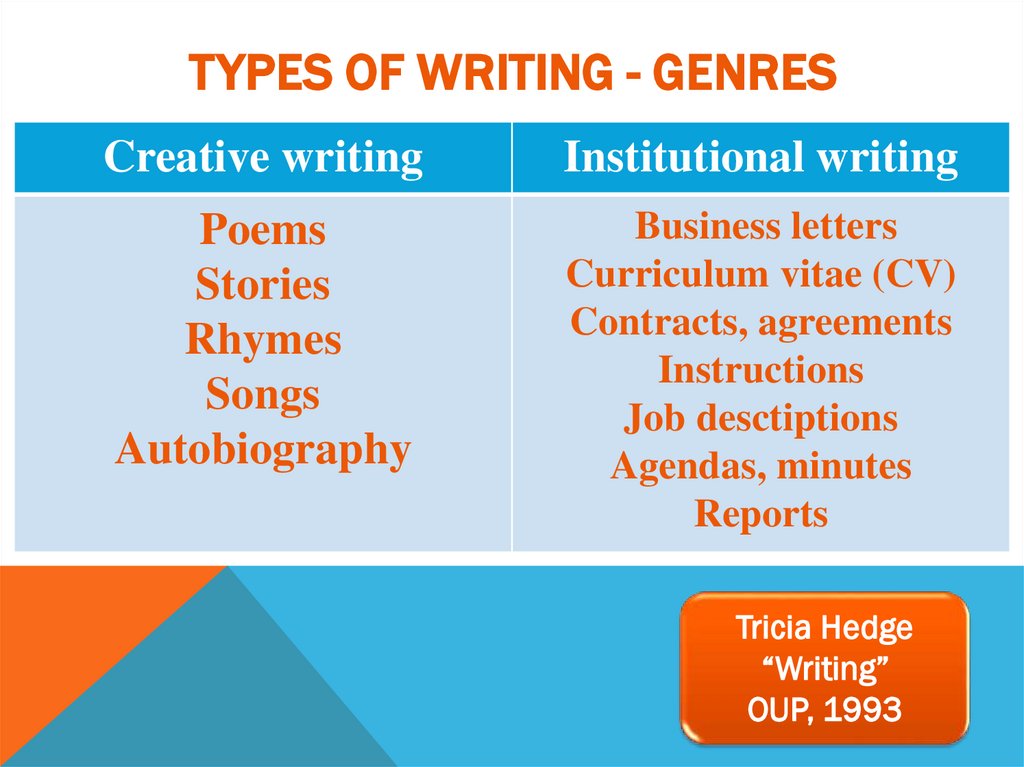
TYPES OF WRITING - GENRESCreative writing
Institutional writing
Poems
Stories
Rhymes
Songs
Autobiography
Business letters
Curriculum vitae (CV)
Contracts, agreements
Instructions
Job desctiptions
Agendas, minutes
Reports
Tricia Hedge
“Writing”
OUP, 1993
11. What do people write these days?
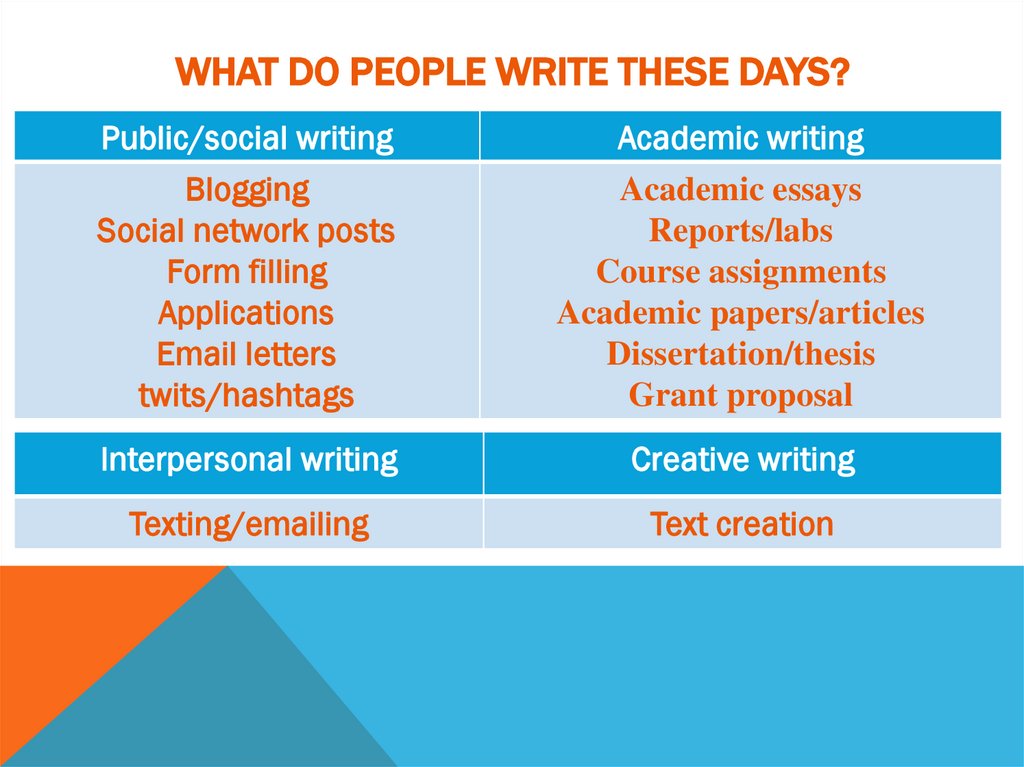
WHAT DO PEOPLE WRITE THESE DAYS?Public/social writing
Blogging
Social network posts
Form filling
Applications
Email letters
twits/hashtags
Academic writing
Academic essays
Reports/labs
Course assignments
Academic papers/articles
Dissertation/thesis
Grant proposal
Interpersonal writing
Creative writing
Texting/emailing
Text creation
12. Approaches to teaching writing
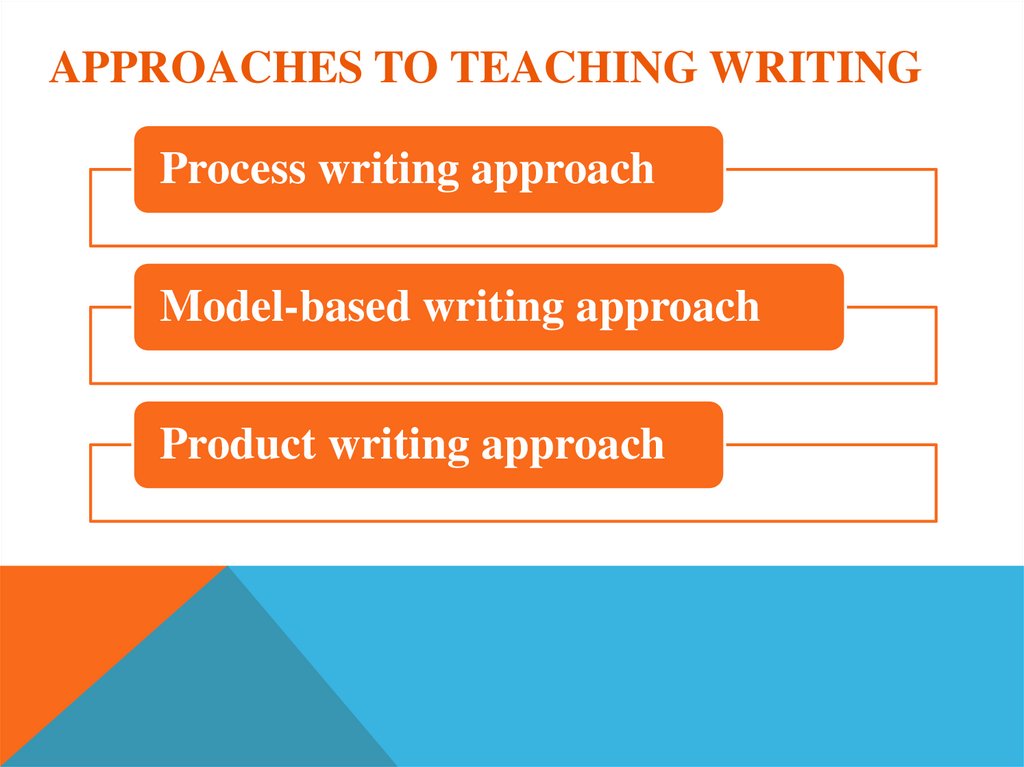
APPROACHES TO TEACHING WRITINGProcess writing approach
Model-based writing approach
Product writing approach
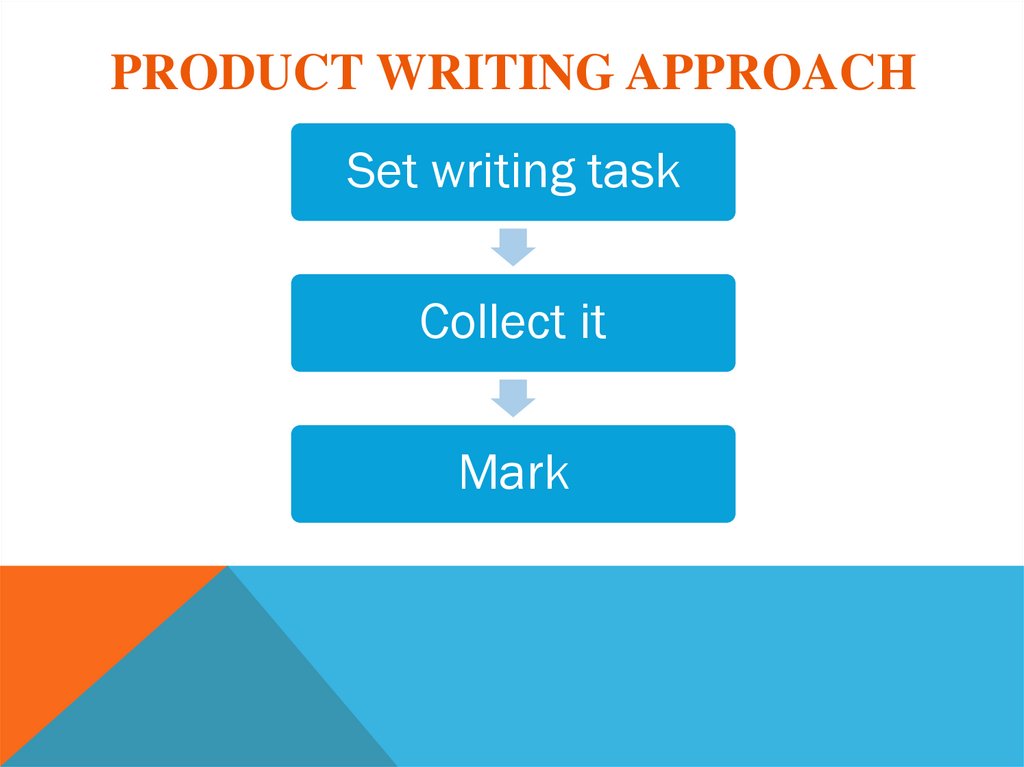
13. Product writing approach
PRODUCT WRITING APPROACHSet writing task
Collect it
Mark
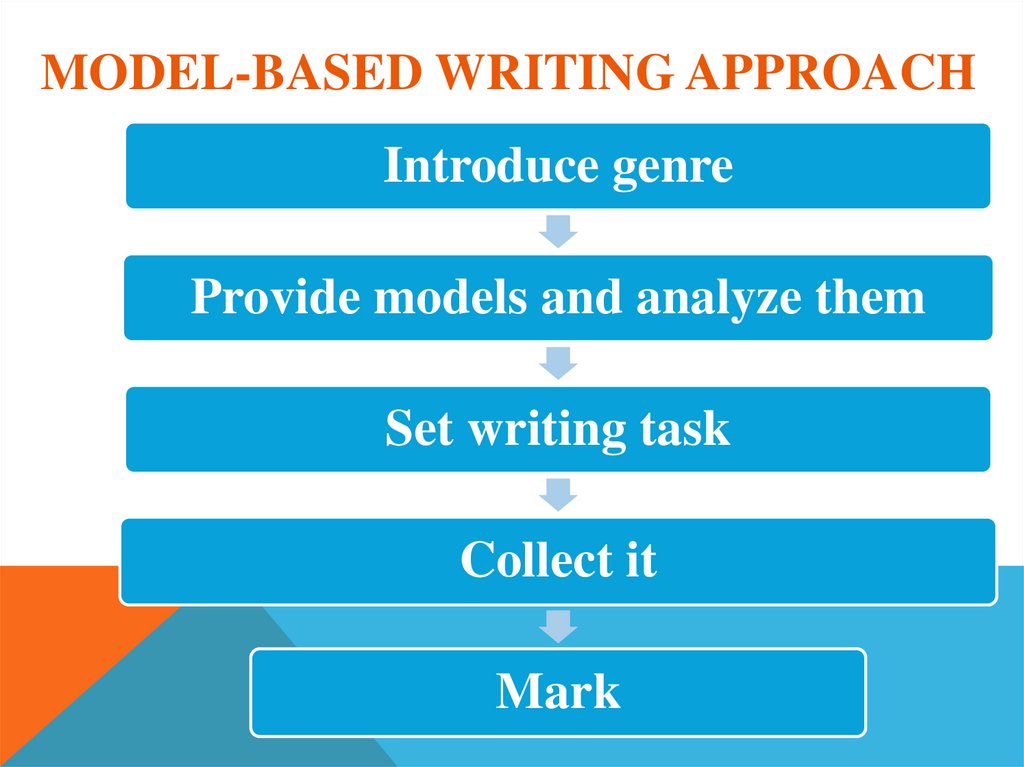
14. Model-based writing approach
MODEL-BASED WRITING APPROACHIntroduce genre
Provide models and analyze them
Set writing task
Collect it
Mark
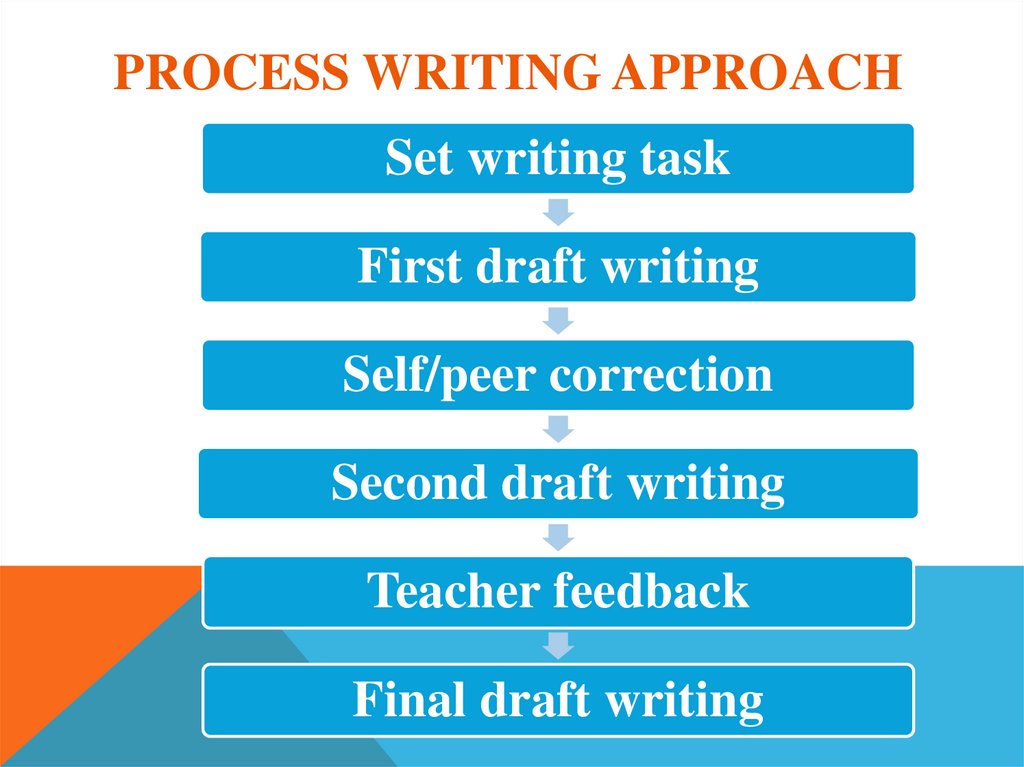
15. Process writing approach
PROCESS WRITING APPROACHSet writing task
First draft writing
Self/peer correction
Second draft writing
Teacher feedback
Final draft writing
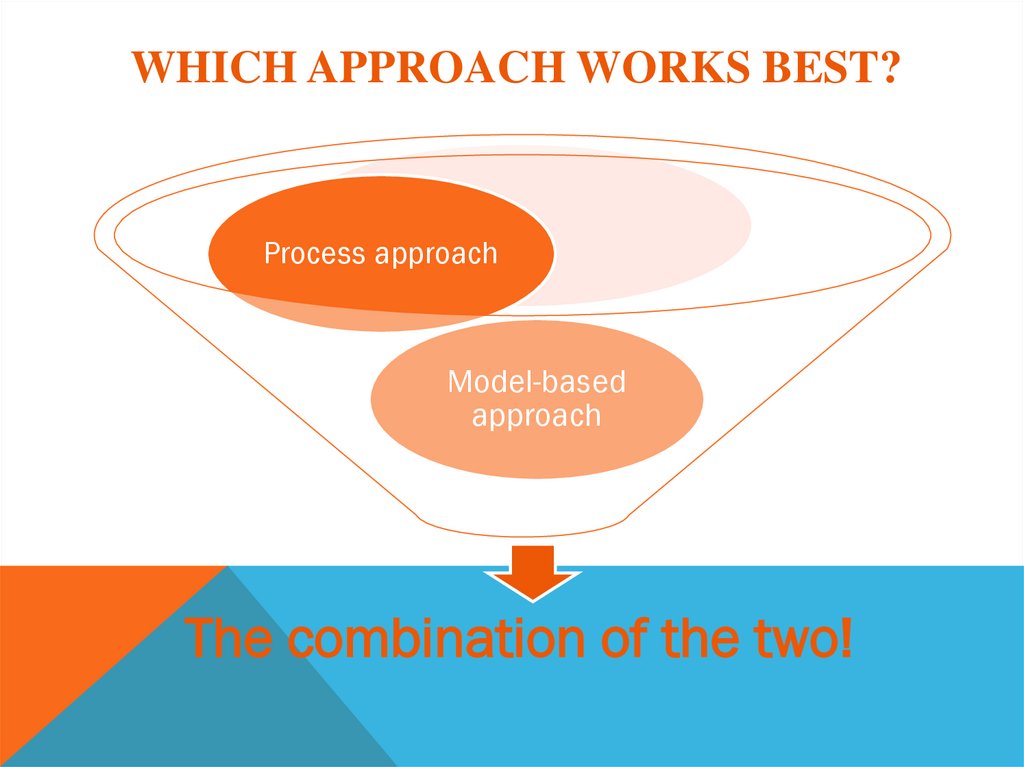
16. Which approach works best?
WHICH APPROACH WORKS BEST?Process approach
Model-based
approach
The combination of the two!
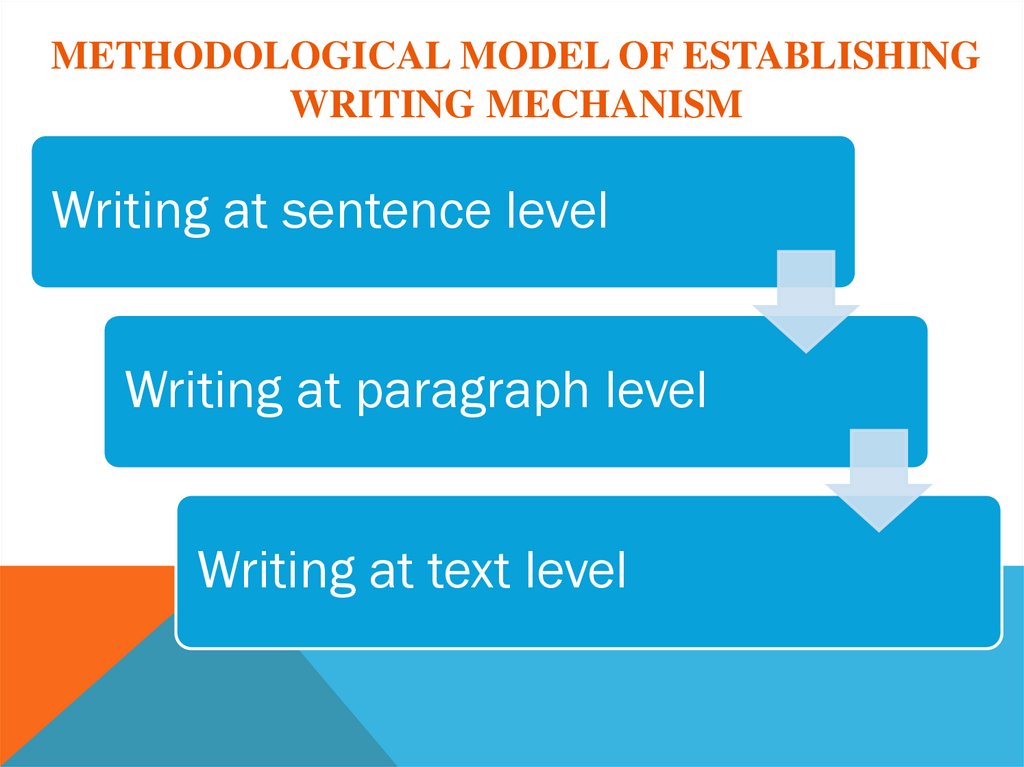
17. Methodological model of establishing writing mechanism
METHODOLOGICAL MODEL OF ESTABLISHINGWRITING MECHANISM
Writing at sentence level
Writing at paragraph level
Writing at text level
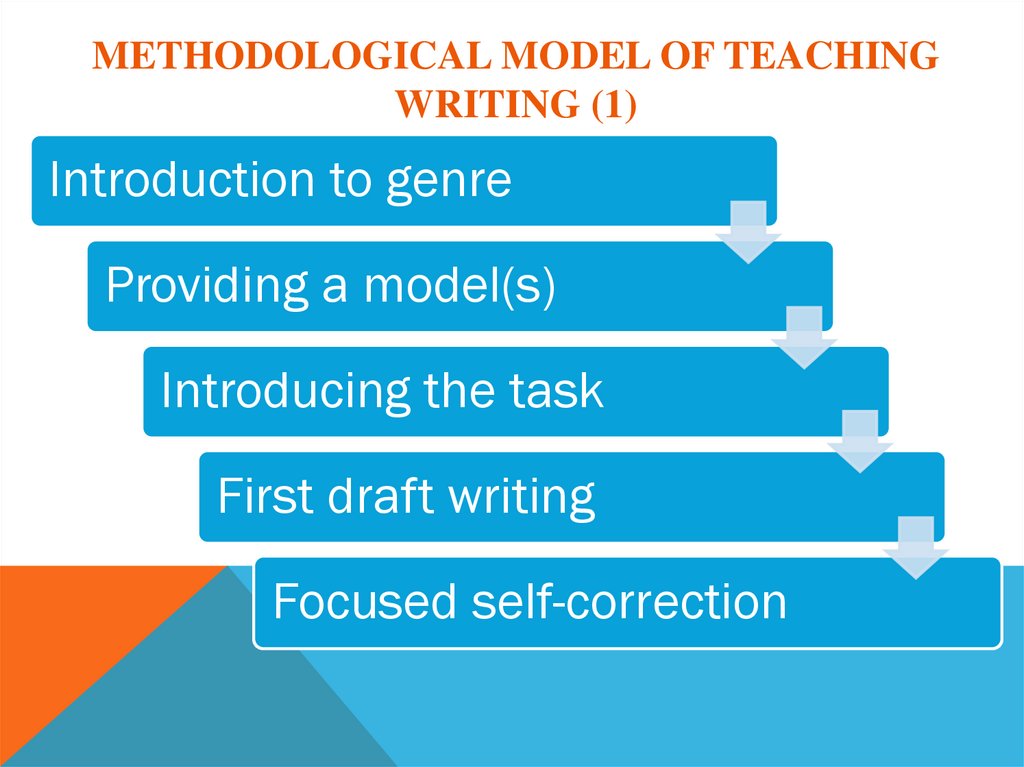
18. Methodological model of teaching writing (1)
METHODOLOGICAL MODEL OF TEACHINGWRITING (1)
Introduction to genre
Providing a model(s)
Introducing the task
First draft writing
Focused self-correction
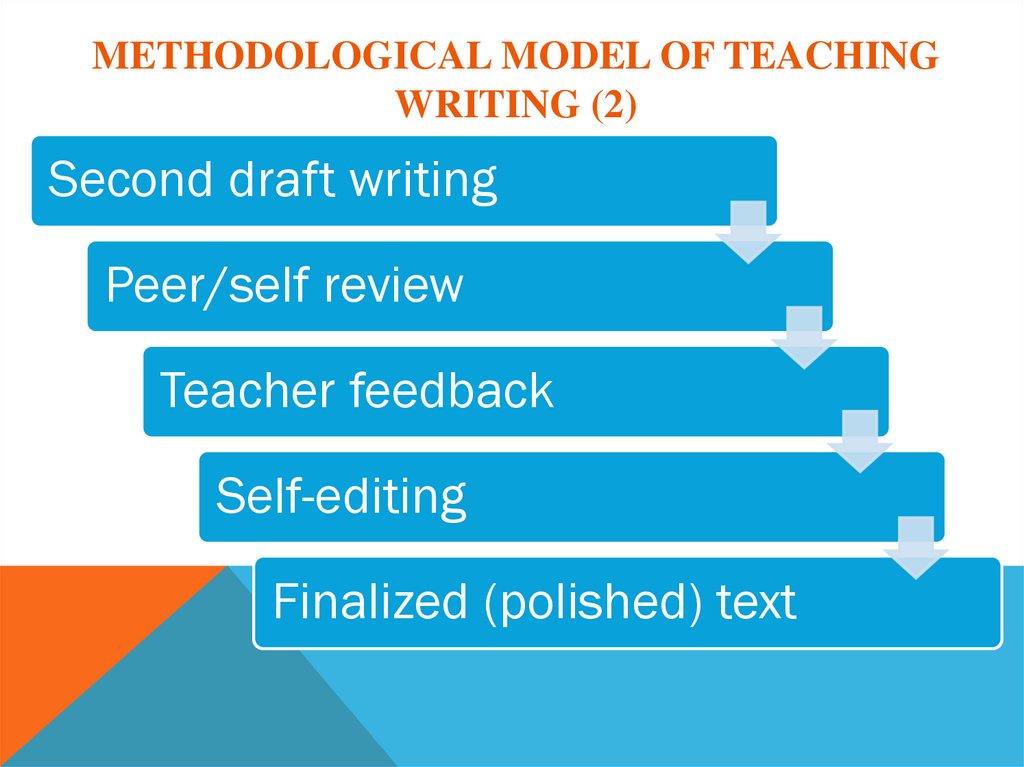
19. Methodological model of teaching writing (2)
METHODOLOGICAL MODEL OF TEACHINGWRITING (2)
Second draft writing
Peer/self review
Teacher feedback
Self-editing
Finalized (polished) text
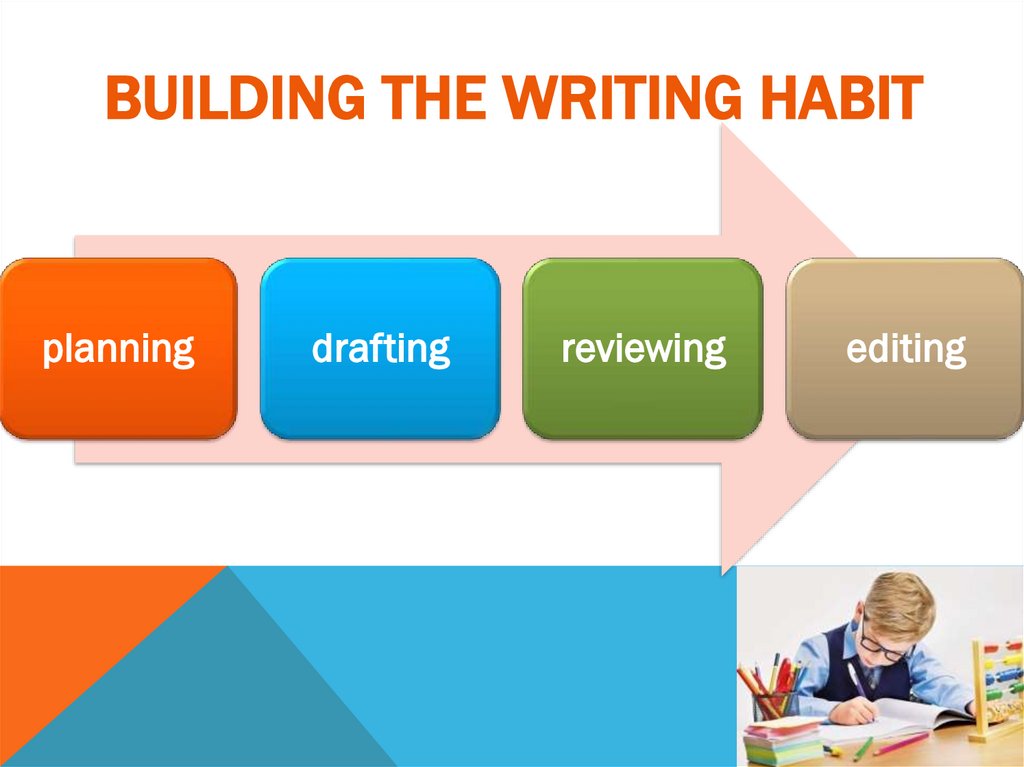
20. Building the writing habit
BUILDING THE WRITING HABITplanning
drafting
reviewing
editing
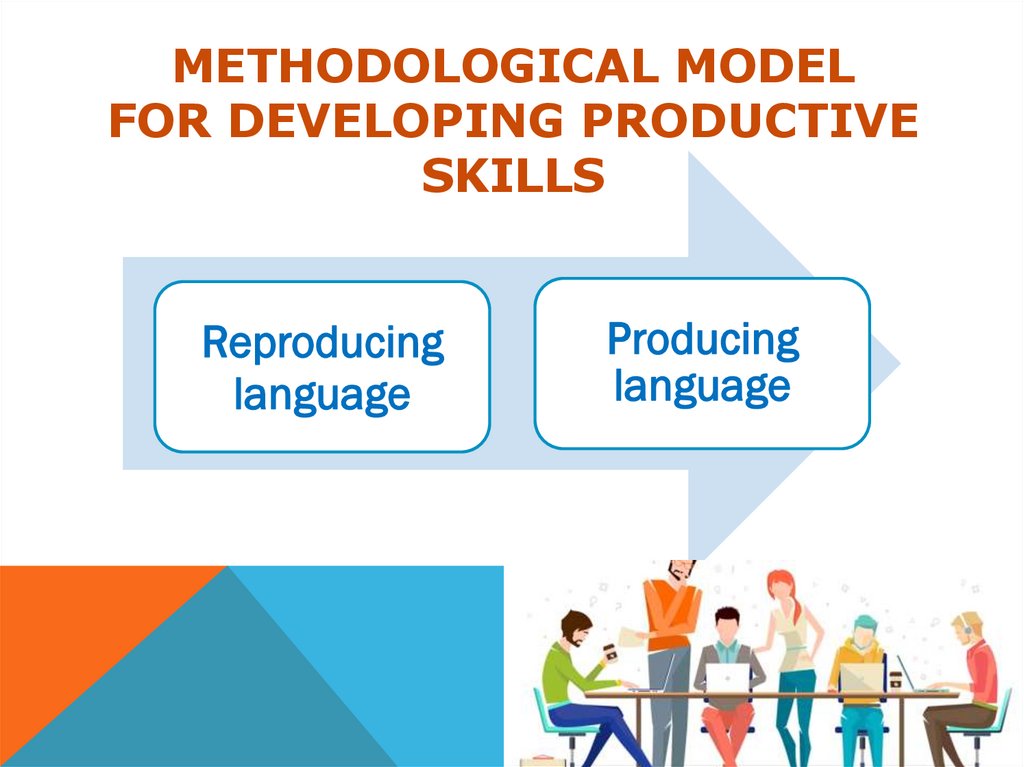
21. Methodological model for developing productive skills
METHODOLOGICAL MODELFOR DEVELOPING PRODUCTIVE
SKILLS
Reproducing
language
Producing
language
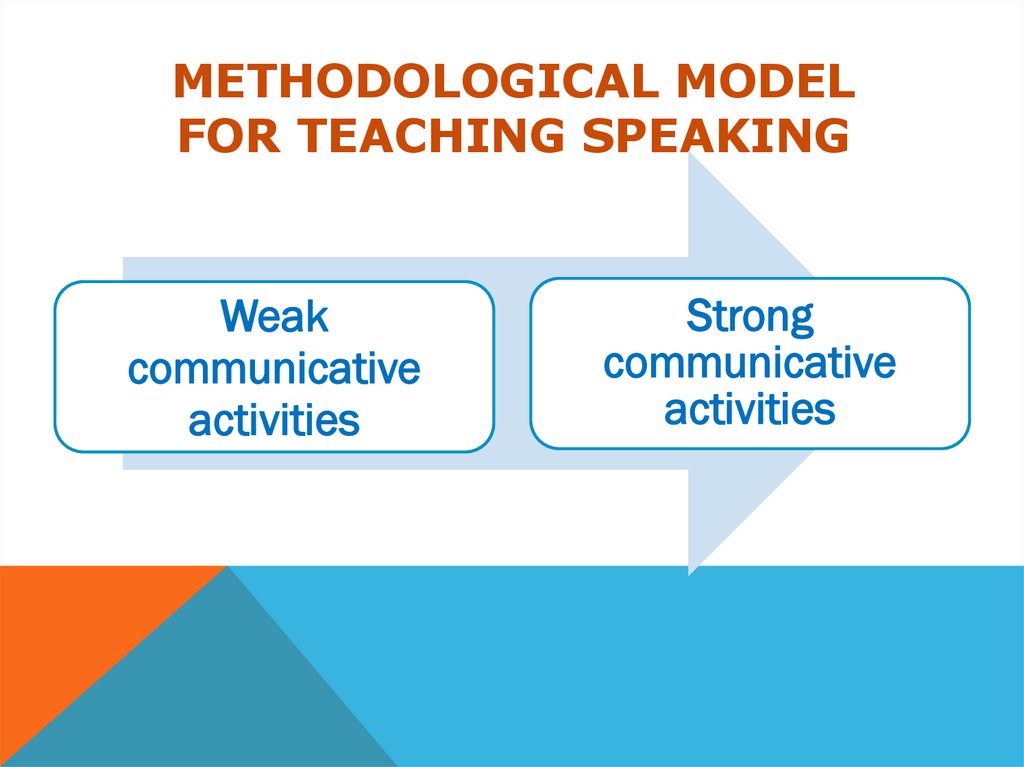
22. Methodological model for teaching speaking
METHODOLOGICAL MODELFOR TEACHING SPEAKING
Weak
communicative
activities
Strong
communicative
activities
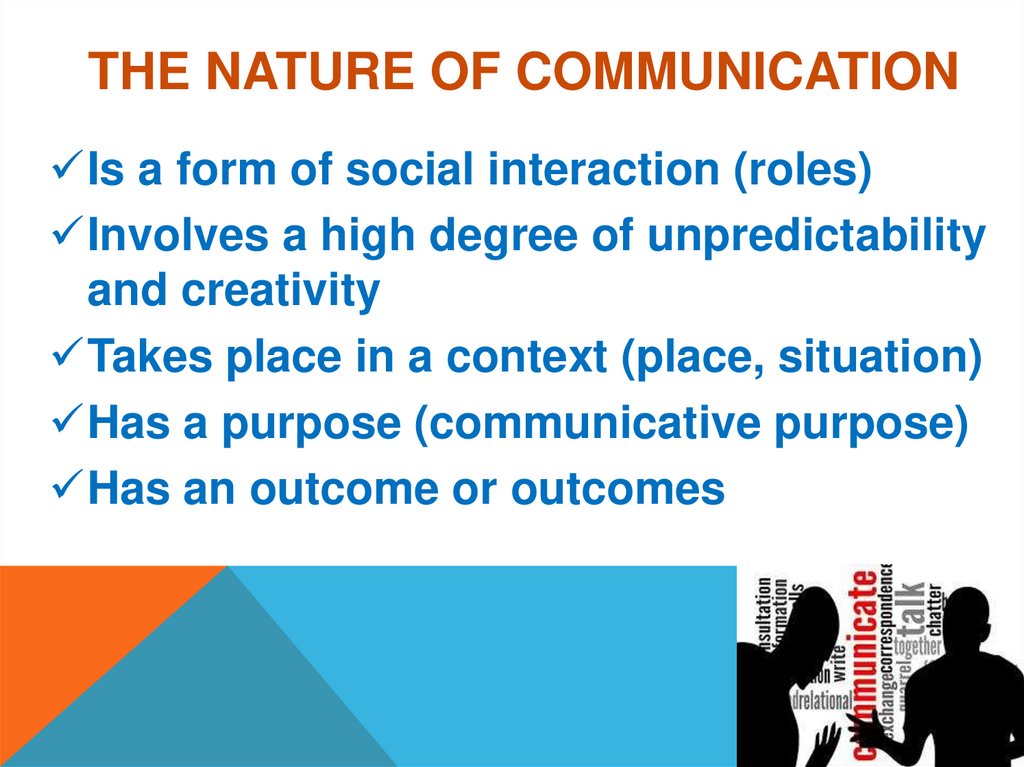
23. The nature of communication
THE NATURE OF COMMUNICATIONIs a form of social interaction (roles)
Involves a high degree of unpredictability
and creativity
Takes place in a context (place, situation)
Has a purpose (communicative purpose)
Has an outcome or outcomes
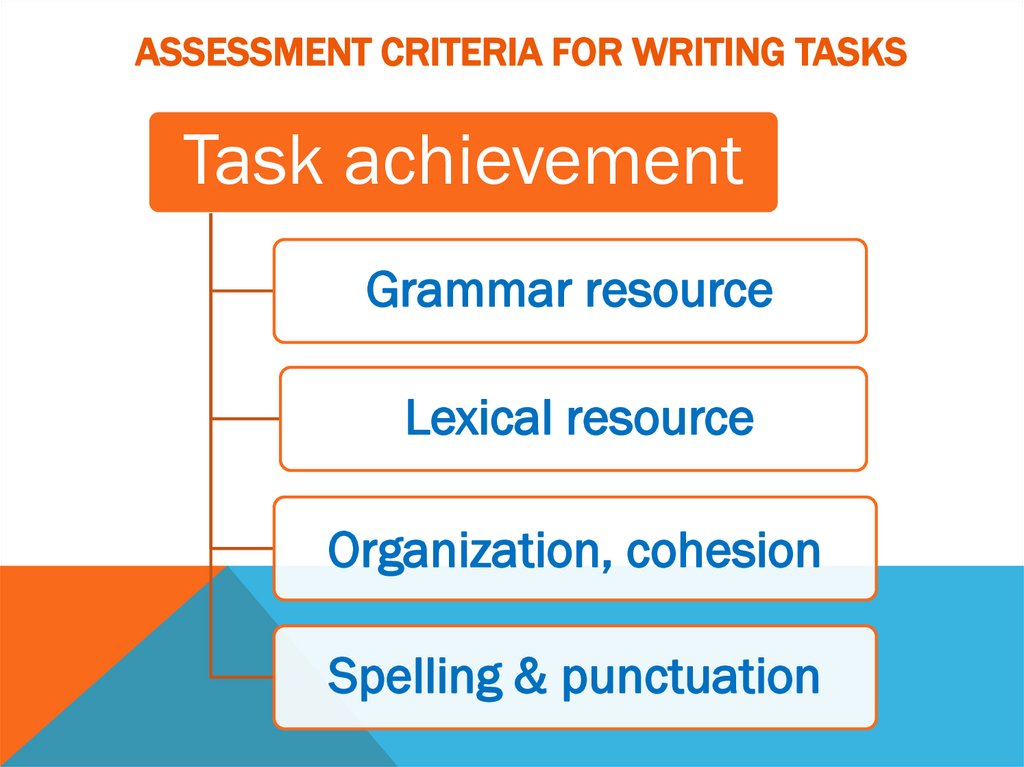
24. Assessment criteria for writing tasks
ASSESSMENT CRITERIA FOR WRITING TASKSTask achievement
Grammar resource
Lexical resource
Organization, cohesion
Spelling & punctuation
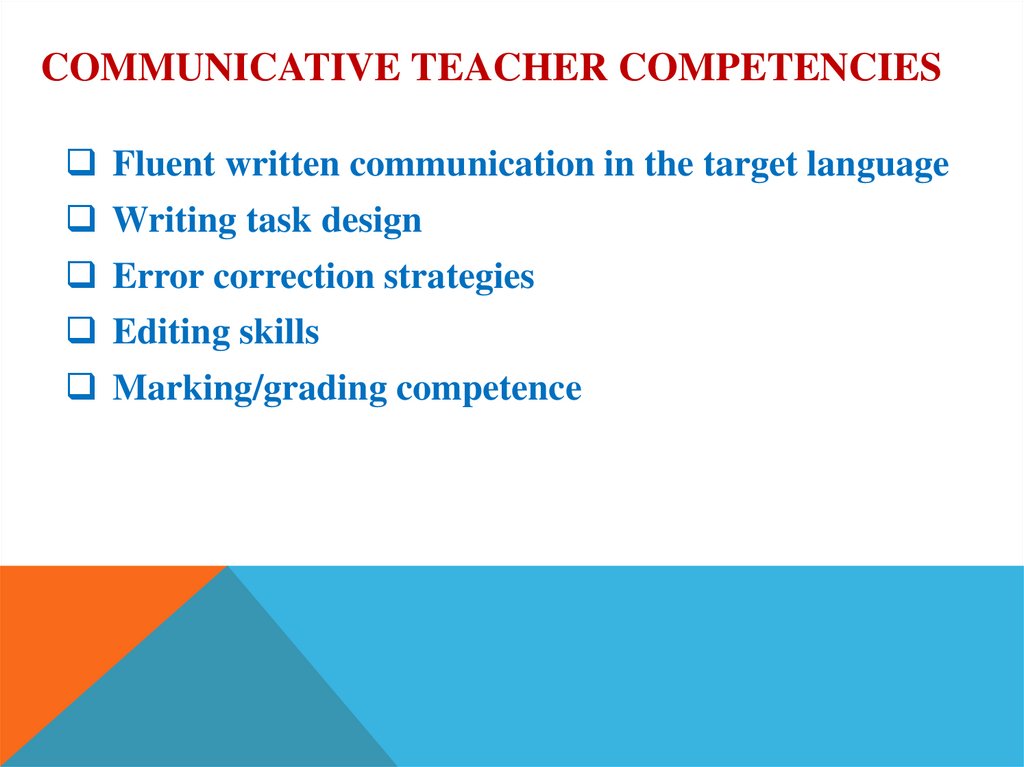
25. Communicative teacher competencies
COMMUNICATIVE TEACHER COMPETENCIESFluent written communication in the target language
Writing task design
Error correction strategies
Editing skills
Marking/grading competence