 Английский язык
Похожие презентации:






Speaking club (unit 3)
1.
LEISURE TIME&
ESCAPISM
2.
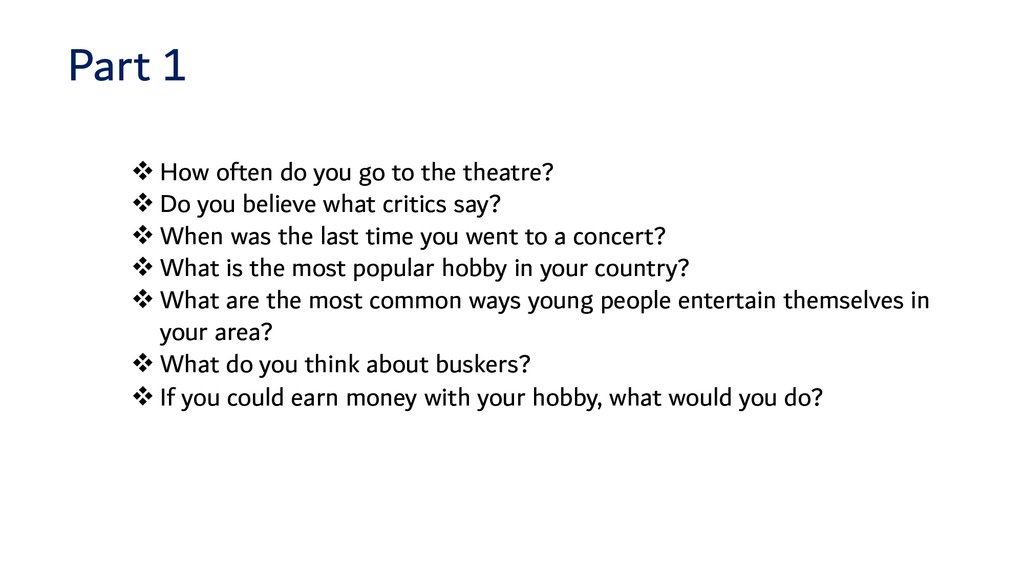
Part 1❖ How often do you go to the theatre?
❖ Do you believe what critics say?
❖ When was the last time you went to a concert?
❖ What is the most popular hobby in your country?
❖ What are the most common ways young people entertain themselves in
your area?
❖ What do you think about buskers?
❖ If you could earn money with your hobby, what would you do?
3.
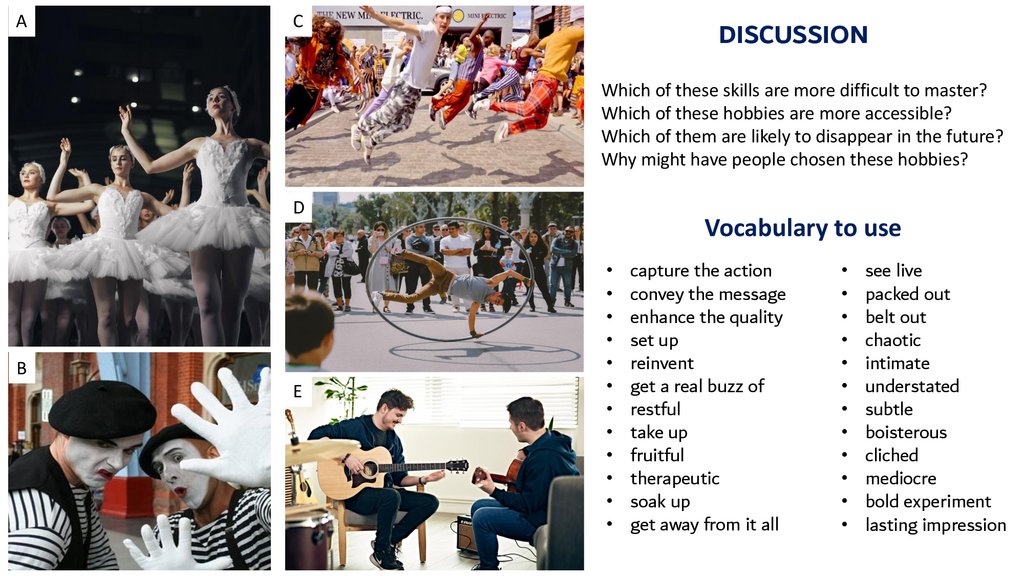
ADISCUSSION
C
Which of these skills are more difficult to master?
Which of these hobbies are more accessible?
Which of them are likely to disappear in the future?
Why might have people chosen these hobbies?
D
B
E
Vocabulary to use
capture the action
convey the message
enhance the quality
set up
reinvent
get a real buzz of
restful
take up
fruitful
therapeutic
soak up
get away from it all
see live
packed out
belt out
chaotic
intimate
understated
subtle
boisterous
cliched
mediocre
bold experiment
lasting impression
4.
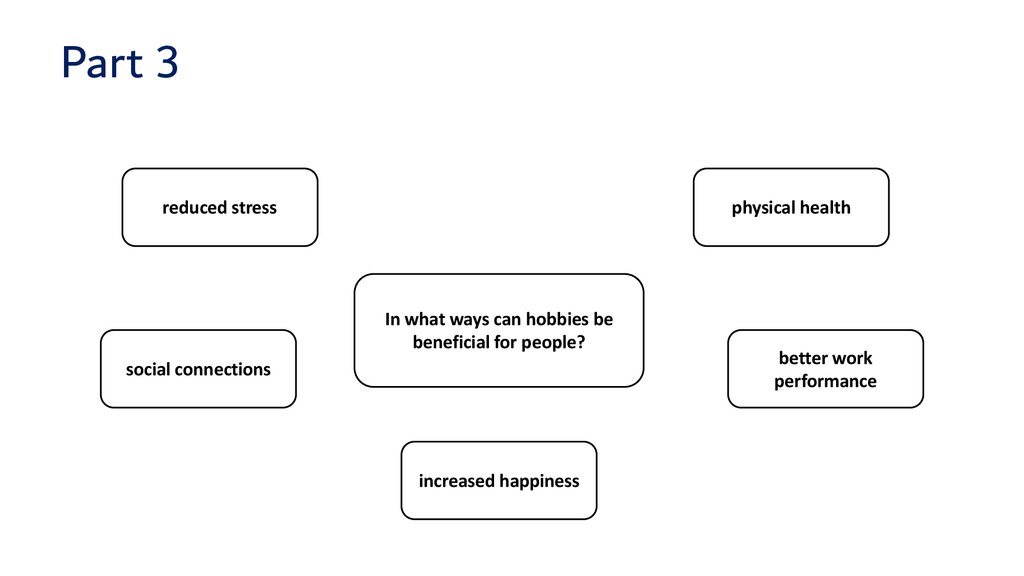
Part 3reduced stress
physical health
In what ways can hobbies be
beneficial for people?
social connections
increased happiness
better work
performance
5.
6.
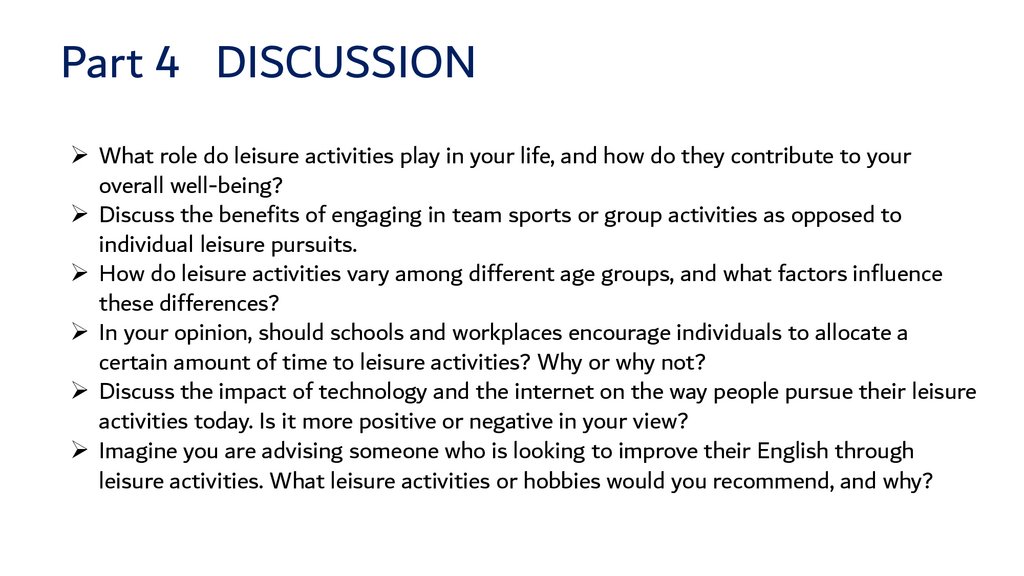
Part 4 DISCUSSION➢ What role do leisure activities play in your life, and how do they contribute to your
overall well-being?
➢ Discuss the benefits of engaging in team sports or group activities as opposed to
individual leisure pursuits.
➢ How do leisure activities vary among different age groups, and what factors influence
these differences?
➢ In your opinion, should schools and workplaces encourage individuals to allocate a
certain amount of time to leisure activities? Why or why not?
➢ Discuss the impact of technology and the internet on the way people pursue their leisure
activities today. Is it more positive or negative in your view?
➢ Imagine you are advising someone who is looking to improve their English through
leisure activities. What leisure activities or hobbies would you recommend, and why?