 География
Похожие презентации:









The Five Oceans of the World
1.
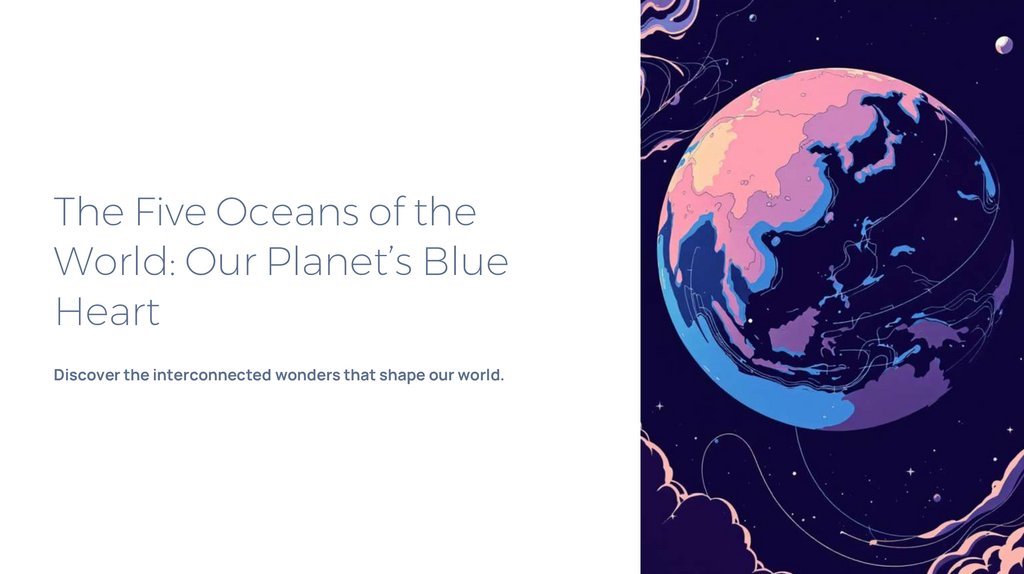
The Five Oceans of theWorld: Our Planet’s Blue
Heart
Discover the interconnected wonders that shape our world.
2.
One Global Ocean, Five Distinct RegionsEarth’s oceans cover over 71% of the surface and hold 97% of its
water, making our planet truly unique.
The five officially recognized oceans are the Pacific, Atlantic,
Indian, Arctic, and Southern.
Despite their individual names, they are all interconnected,
forming one vast, dynamic global ocean system that regulates
climate and supports immense biodiversity.
3.
The Pacific Ocean: The Largest and DeepestVast Expanse
Deepest Point
Global Influence
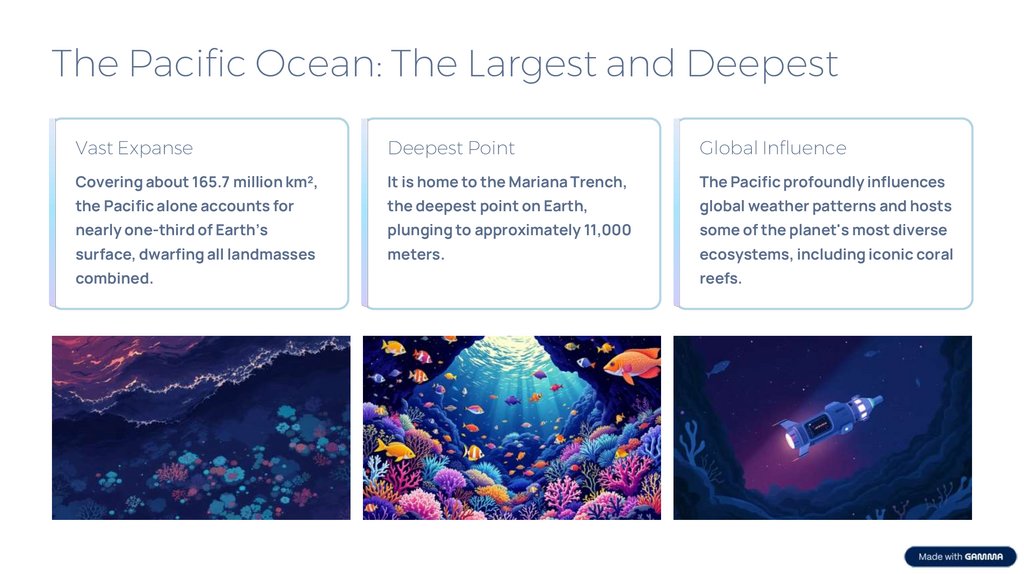
Covering about 165.7 million km²,
It is home to the Mariana Trench,
The Pacific profoundly influences
the Pacific alone accounts for
the deepest point on Earth,
global weather patterns and hosts
nearly one-third of Earth’s
plunging to approximately 11,000
some of the planet's most diverse
surface, dwarfing all landmasses
meters.
ecosystems, including iconic coral
combined.
reefs.
4.
The Atlantic and Indian Oceans:Vital Connectors
1
2
The Atlantic Ocean, Earth's
The Indian Ocean, the third
second largest, spans about 106
largest at nearly 70 million km², is
million km², separating Europe
unique for its warm waters and
and Africa from the Americas. It's
significant influence on monsoon
renowned for its powerful
seasons in South Asia.
hurricanes and critical shipping
lanes.
3
Both oceans are crucial for global trade, border multiple continents, and
support an incredibly rich marine biodiversity, from vast fisheries to
unique ecosystems.
5.
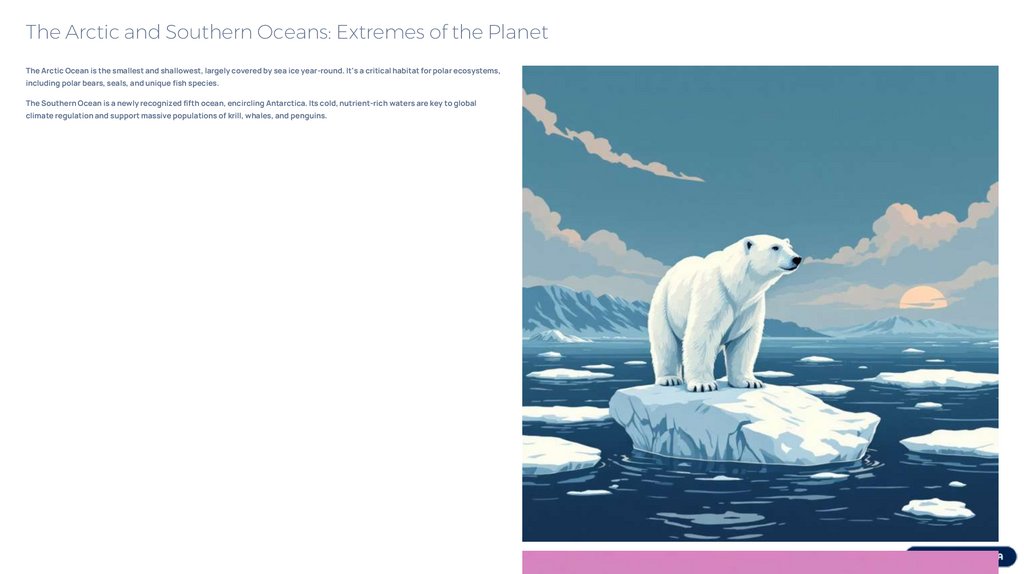
The Arctic and Southern Oceans: Extremes of the PlanetThe Arctic Ocean is the smallest and shallowest, largely covered by sea ice year-round. It's a critical habitat for polar ecosystems,
including polar bears, seals, and unique fish species.
The Southern Ocean is a newly recognized fifth ocean, encircling Antarctica. Its cold, nutrient-rich waters are key to global
climate regulation and support massive populations of krill, whales, and penguins.
6.
Protecting Our Oceans: The Future of Earth’s LifebloodOur oceans are fundamental to life on Earth. They produce over half the oxygen we breathe and directly sustain billions of lives through food,
livelihoods, and climate regulation.
Pollution
Plastic waste and chemical runoff devastate
Acidification
Increased CO2 absorption harms marine life,
marine habitats.
especially coral.
Conservation
Warming
Understanding and preserving our oceans is
vital for future generations.
Rising temperatures lead to habitat loss and
species migration.
Addressing rising pollution, ocean acidification, and warming waters is essential to safeguard the health of our planet's most vital resource.