
 Промышленность
Похожие презентации:




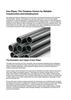



Plastics in Semiconductor Manufacturing
1.
Plastics in SemiconductorManufacturing
The technology industry demands extremely strict rules for semiconductor
production. These essential components, like wafers and microchips, require
an ultra-clean, controlled environment. Even a speck of dust can ruin them,
and corrosive chemicals pose a constant threat. Plastics are crucial in
meeting these high standards.
2.
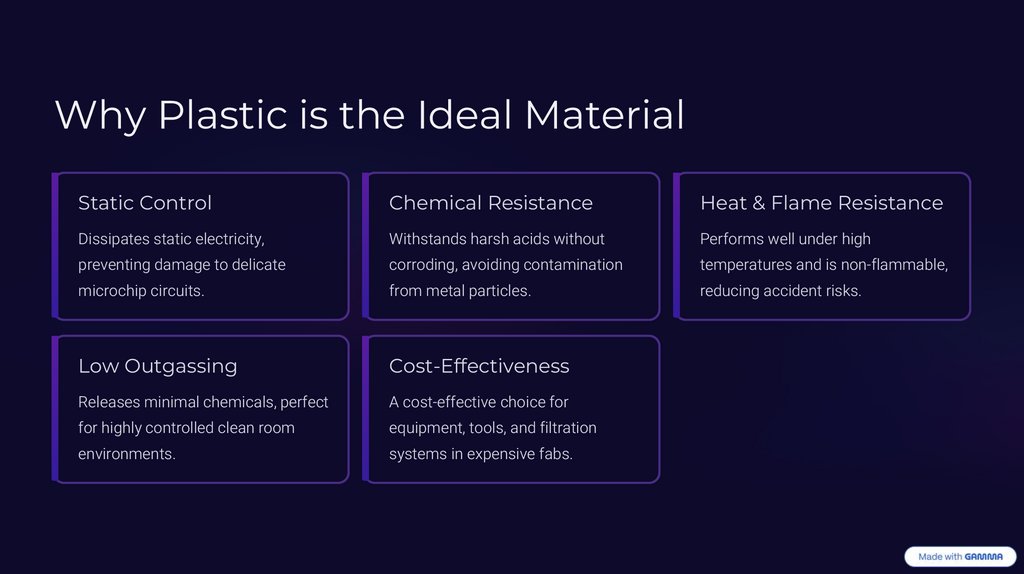
Why Plastic is the Ideal MaterialStatic Control
Chemical Resistance
Heat & Flame Resistance
Dissipates static electricity,
Withstands harsh acids without
Performs well under high
preventing damage to delicate
corroding, avoiding contamination
temperatures and is non-flammable,
microchip circuits.
from metal particles.
reducing accident risks.
Low Outgassing
Cost-Effectiveness
Releases minimal chemicals, perfect
A cost-effective choice for
for highly controlled clean room
equipment, tools, and filtration
environments.
systems in expensive fabs.
3.
The Clean Room ImperativeSemiconductor factories, known as "fabs," contain clean rooms where the most delicate components are
manufactured. Plastic materials are essential in these environments, protecting the production process from
external contamination.
Unlike traditional materials such as metal or ceramic, specialised plastics offer crucial advantages that ensure the
integrity and efficiency of semiconductor fabrication.
4.
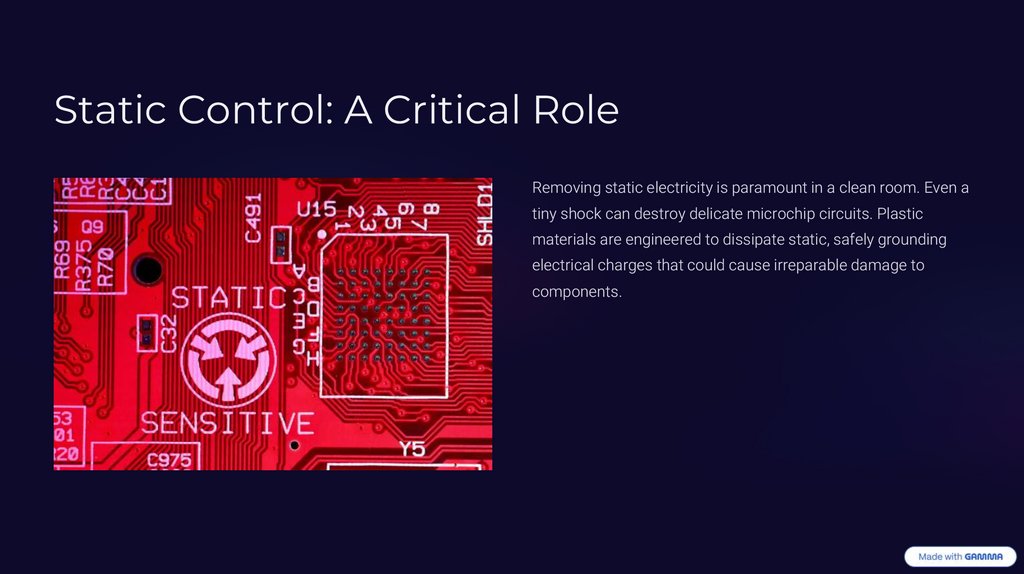
Static Control: A Critical RoleRemoving static electricity is paramount in a clean room. Even a
tiny shock can destroy delicate microchip circuits. Plastic
materials are engineered to dissipate static, safely grounding
electrical charges that could cause irreparable damage to
components.
5.
Chemical Resistance: Withstanding HarshEnvironments
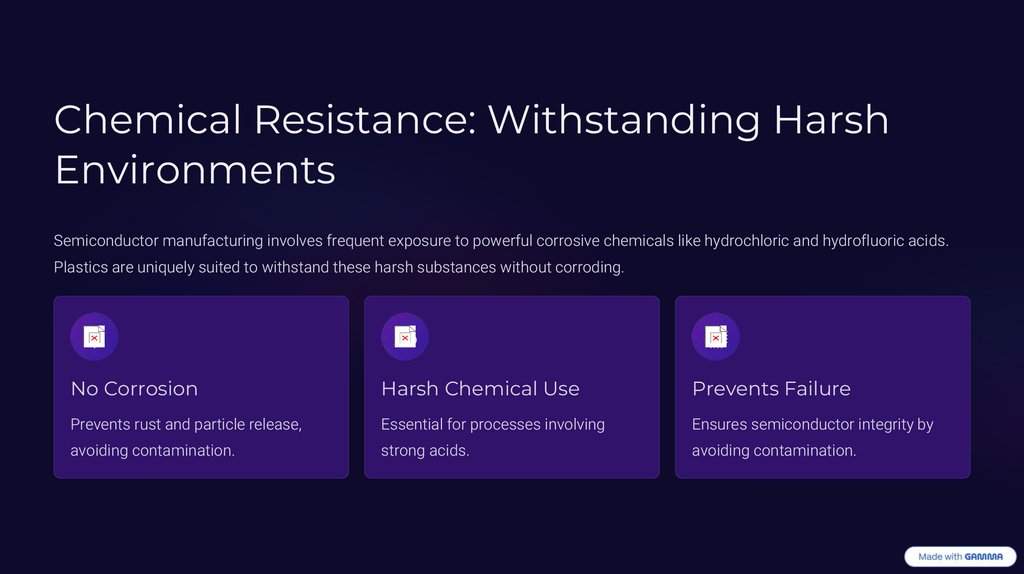
Semiconductor manufacturing involves frequent exposure to powerful corrosive chemicals like hydrochloric and hydrofluoric acids.
Plastics are uniquely suited to withstand these harsh substances without corroding.
No Corrosion
Harsh Chemical Use
Prevents Failure
Prevents rust and particle release,
Essential for processes involving
Ensures semiconductor integrity by
avoiding contamination.
strong acids.
avoiding contamination.
6.
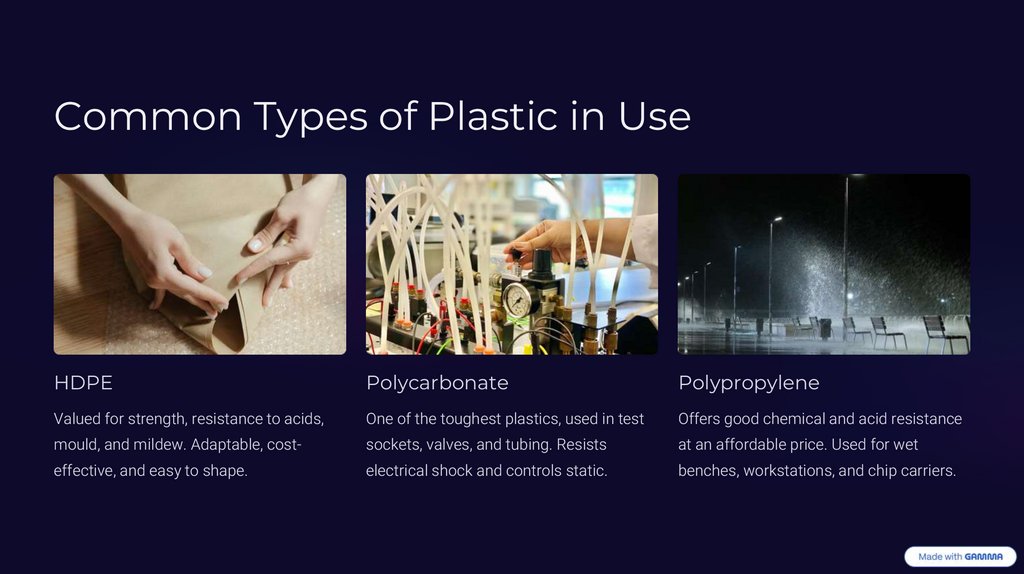
Common Types of Plastic in UseHDPE
Polycarbonate
Polypropylene
Valued for strength, resistance to acids,
One of the toughest plastics, used in test
Offers good chemical and acid resistance
mould, and mildew. Adaptable, cost-
sockets, valves, and tubing. Resists
at an affordable price. Used for wet
effective, and easy to shape.
electrical shock and controls static.
benches, workstations, and chip carriers.
7.
Understanding theLimitations
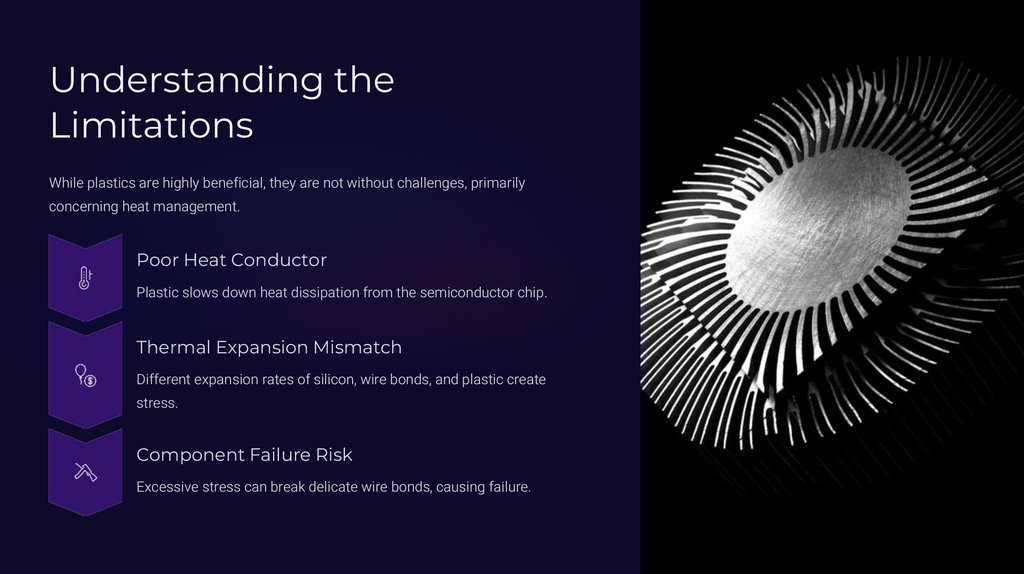
While plastics are highly beneficial, they are not without challenges, primarily
concerning heat management.
Poor Heat Conductor
Plastic slows down heat dissipation from the semiconductor chip.
Thermal Expansion Mismatch
Different expansion rates of silicon, wire bonds, and plastic create
stress.
Component Failure Risk
Excessive stress can break delicate wire bonds, causing failure.
8.
The Future of Plastics inSemiconductors
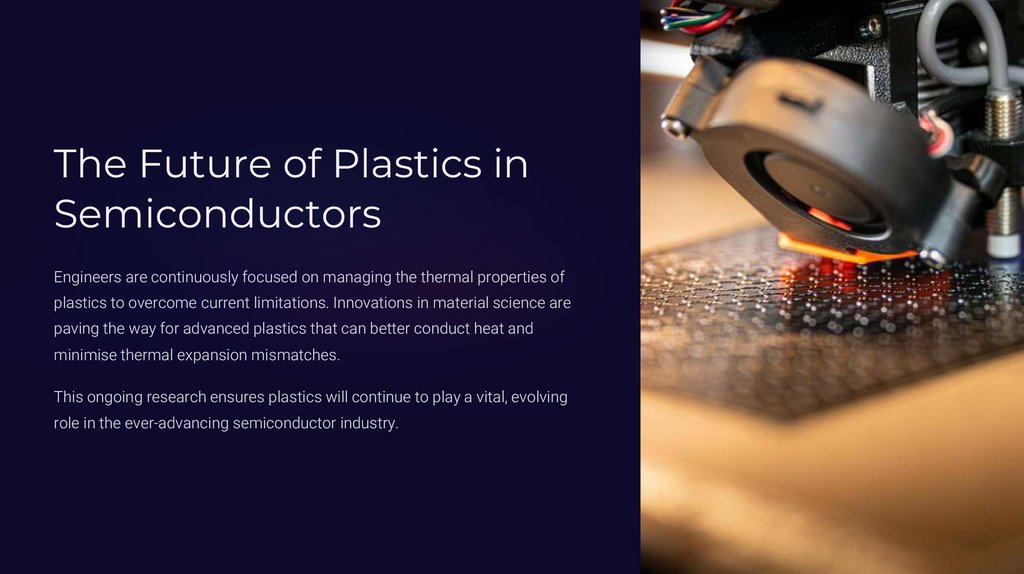
Engineers are continuously focused on managing the thermal properties of
plastics to overcome current limitations. Innovations in material science are
paving the way for advanced plastics that can better conduct heat and
minimise thermal expansion mismatches.
This ongoing research ensures plastics will continue to play a vital, evolving
role in the ever-advancing semiconductor industry.