 История
Похожие презентации:






Caravaggism. Rome as the center of International Caravaggism
1. Caravaggism
In the history of European painting, few artists had an effectcomparable in scale and depth to that of Caravaggio, whose
radical pictorial innovations induced dozens of painters from
all over Italy, as well as Spain, France, Germany, and the
Low Countries to follow his example.
These painters are commonly defined as Caravaggisti or
Caravaggeschi/ Caravaggesque painters.
1
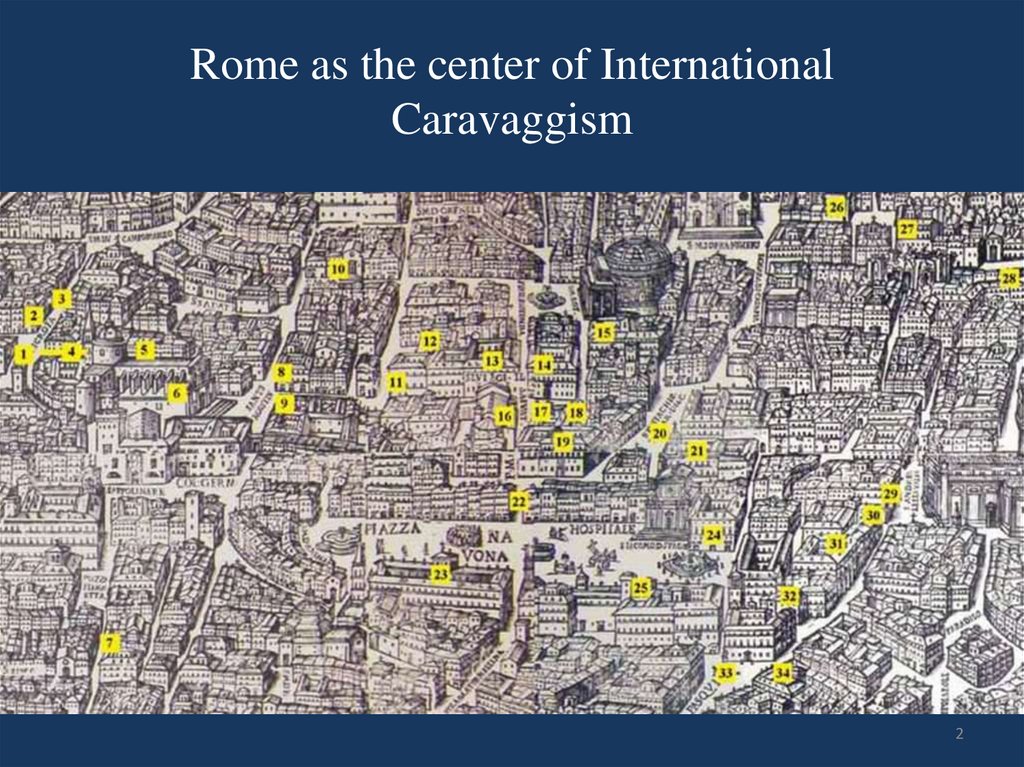
2. Rome as the center of International Caravaggism
23. Annibale Carracci and his legacy
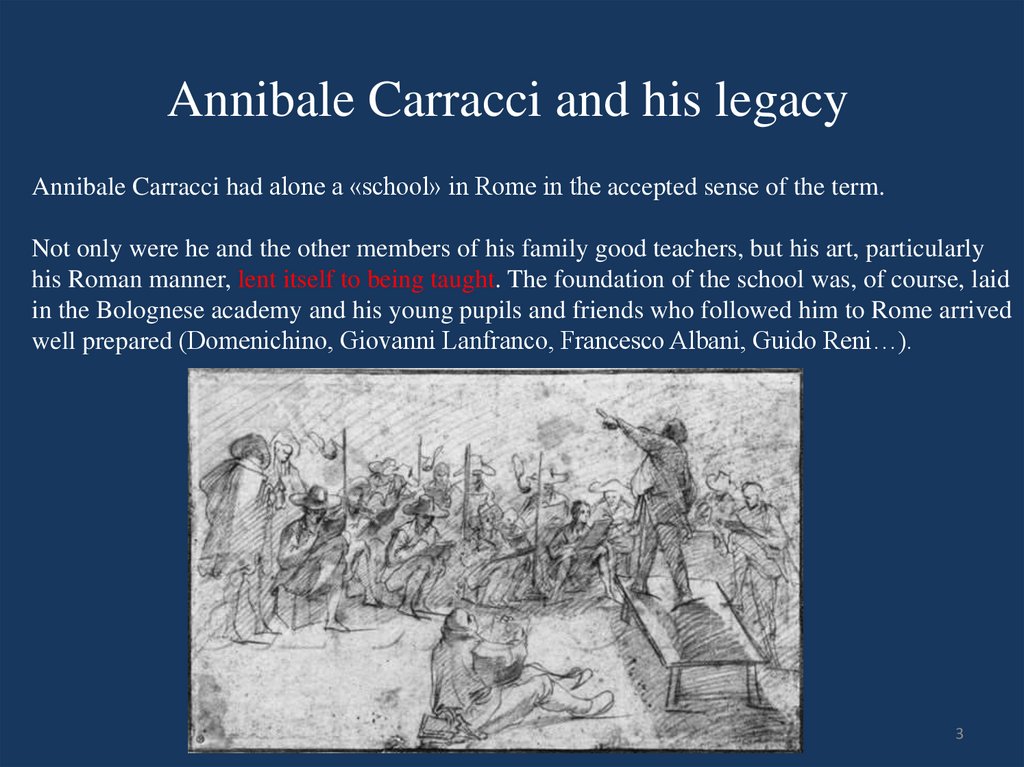
Annibale Carracci had alone a «school» in Rome in the accepted sense of the term.Not only were he and the other members of his family good teachers, but his art, particularly
his Roman manner, lent itself to being taught. The foundation of the school was, of course, laid
in the Bolognese academy and his young pupils and friends who followed him to Rome arrived
well prepared (Domenichino, Giovanni Lanfranco, Francesco Albani, Guido Reni…).
3
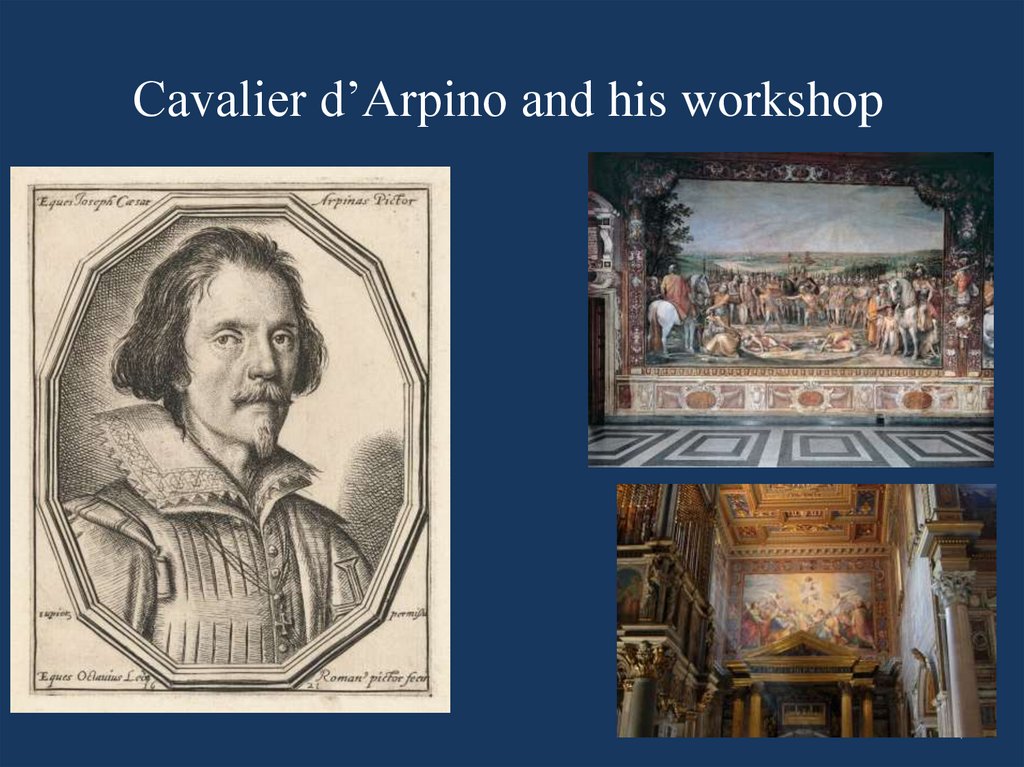
4. Cavalier d’Arpino and his workshop
45. Caravaggism
Caravaggio, on the other hand, never formed a proper school/workshop (like Cavalierd’Arpino), never tried to train a pupil, not indeed could he have done so since the subjective
qualities of his style, his improvisations, his ad hoc technique, his particular mystique of light,
and his many inner contradictions were non translatable into easy formulas.
Yet, what he had brought into the world of vision was a directness, a power of immediate
appeal that had an almost hypnotic fascination for painters, so that even Carracci pupils and
followers fell under his spell at certain stages of their development.
Where, when and how did certain artists discover Caravaggio’s art and became engaged in a
critical dialogue?
Did this encounter occur directly or indirectly?
How was it transmitted?
Which particular quality caught their attention (the use of light, the strong chiaroscuro, the
foregrounding of action? The choice of certain subjects?)
5
6. Caravaggeschi
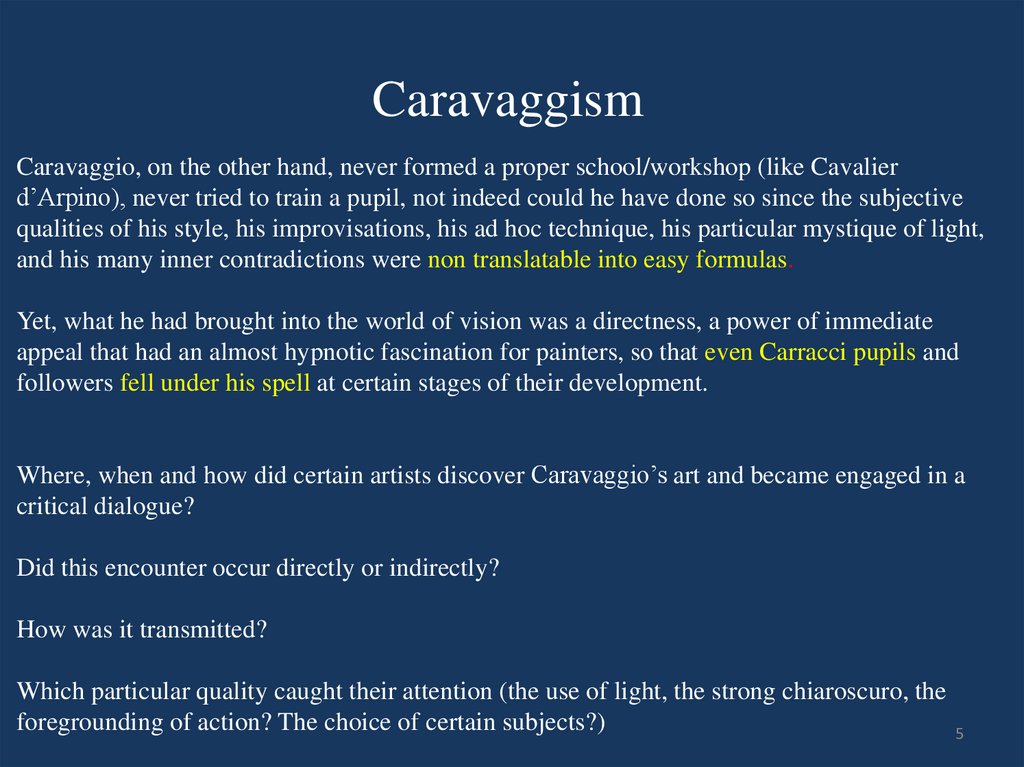
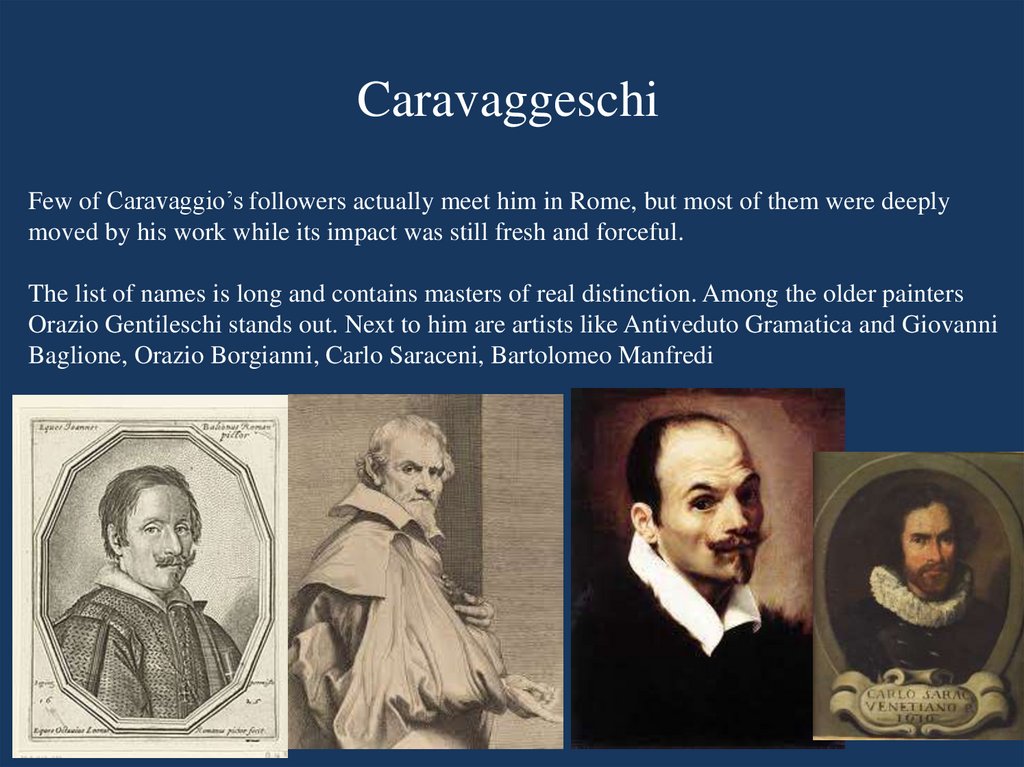
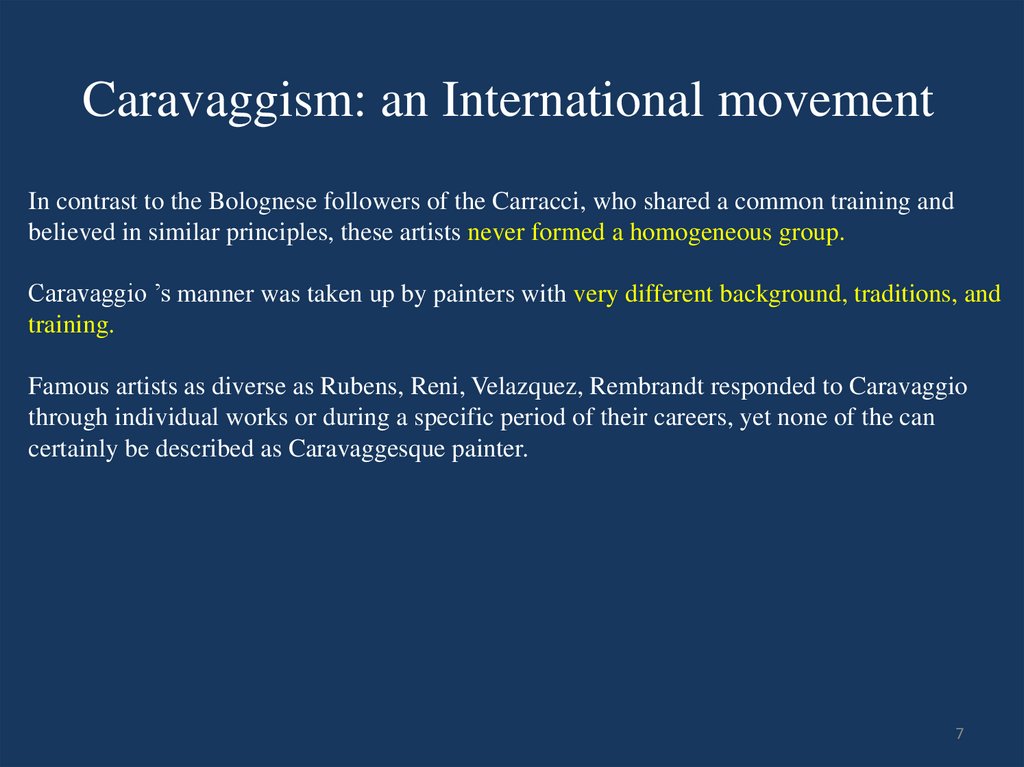
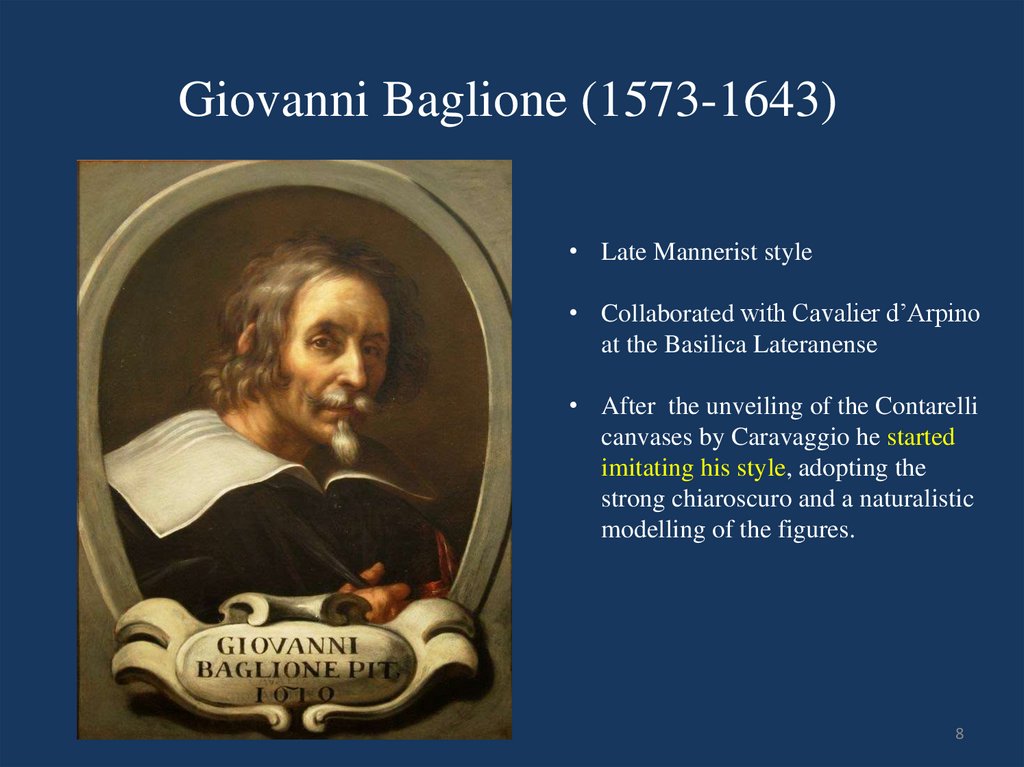
Few of Caravaggio’s followers actually meet him in Rome, but most of them were deeplymoved by his work while its impact was still fresh and forceful.
The list of names is long and contains masters of real distinction. Among the older painters
Orazio Gentileschi stands out. Next to him are artists like Antiveduto Gramatica and Giovanni
Baglione, Orazio Borgianni, Carlo Saraceni, Bartolomeo Manfredi
6
7. Caravaggism: an International movement
In contrast to the Bolognese followers of the Carracci, who shared a common training andbelieved in similar principles, these artists never formed a homogeneous group.
Caravaggio ’s manner was taken up by painters with very different background, traditions, and
training.
Famous artists as diverse as Rubens, Reni, Velazquez, Rembrandt responded to Caravaggio
through individual works or during a specific period of their careers, yet none of the can
certainly be described as Caravaggesque painter.
7
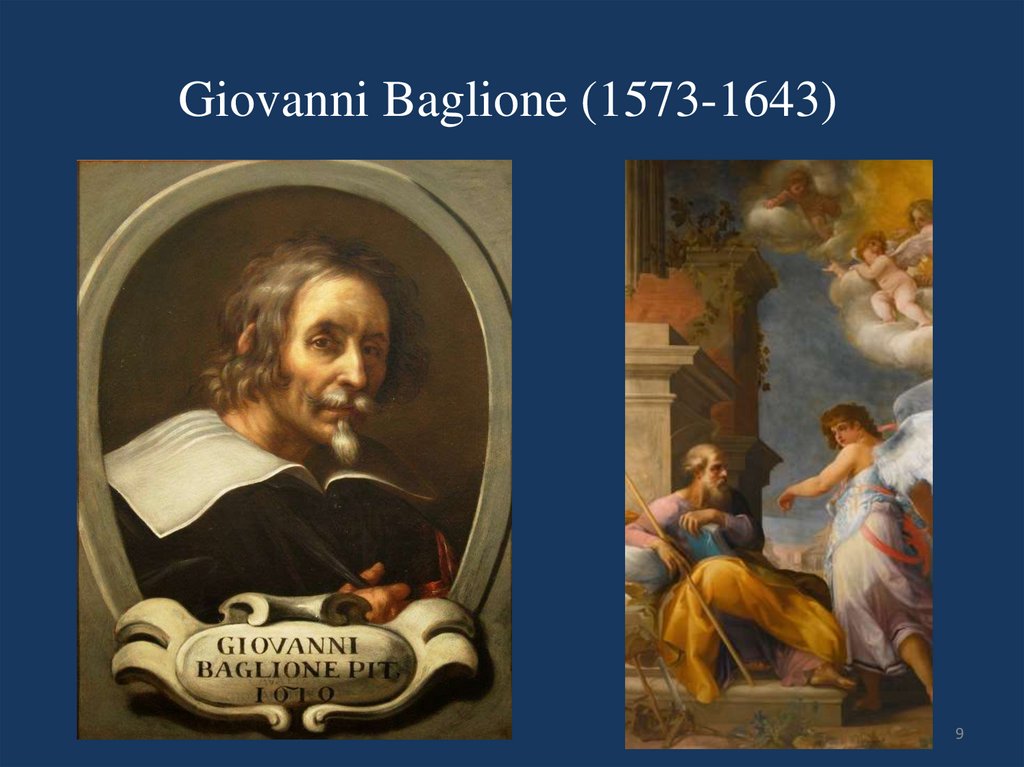
8. Giovanni Baglione (1573-1643)
• Late Mannerist style• Collaborated with Cavalier d’Arpino
at the Basilica Lateranense
• After the unveiling of the Contarelli
canvases by Caravaggio he started
imitating his style, adopting the
strong chiaroscuro and a naturalistic
modelling of the figures.
8
9. Giovanni Baglione (1573-1643)
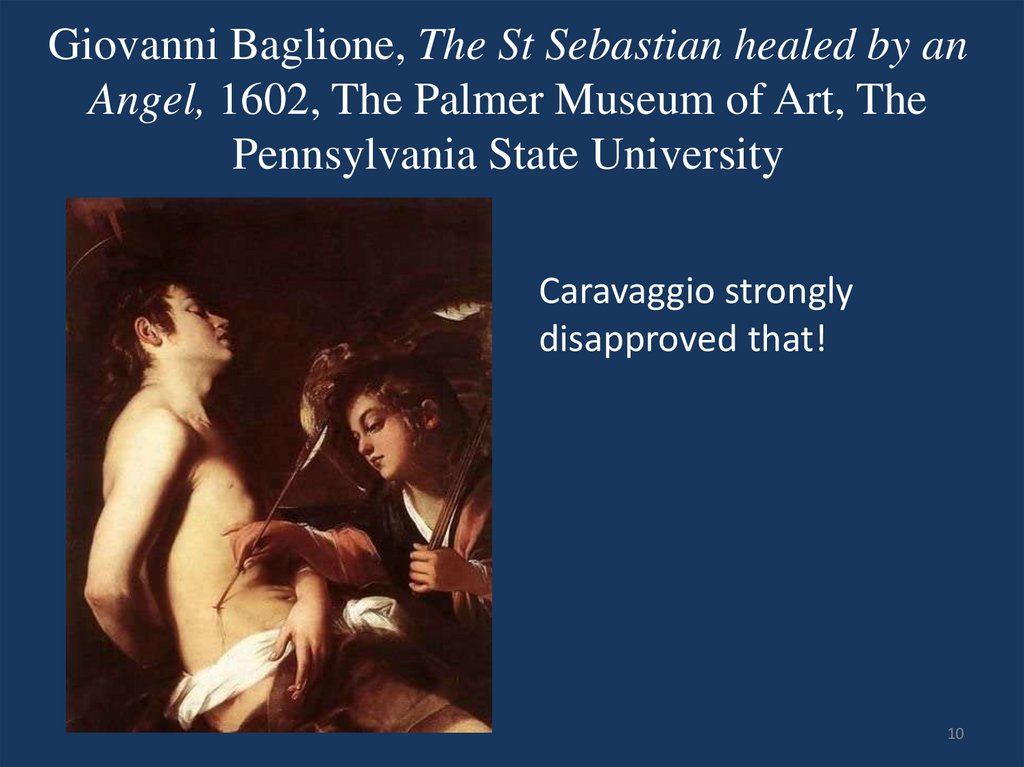
910. Giovanni Baglione, The St Sebastian healed by an Angel, 1602, The Palmer Museum of Art, The Pennsylvania State University
Caravaggio stronglydisapproved that!
10
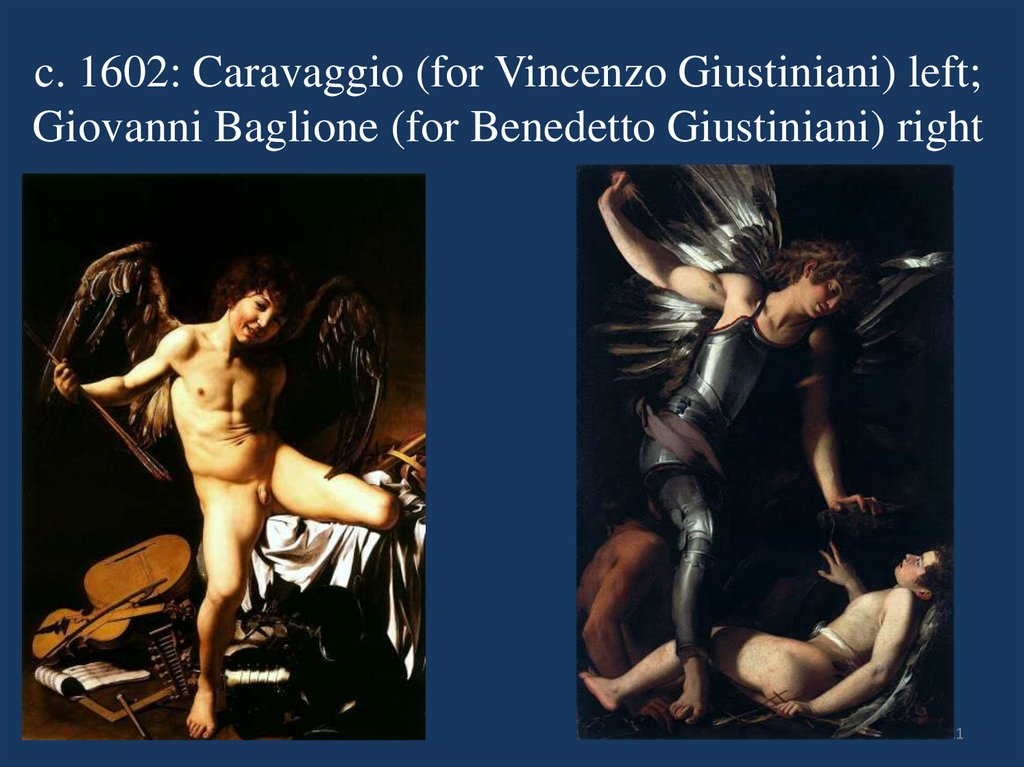
11. c. 1602: Caravaggio (for Vincenzo Giustiniani) left; Giovanni Baglione (for Benedetto Giustiniani) right
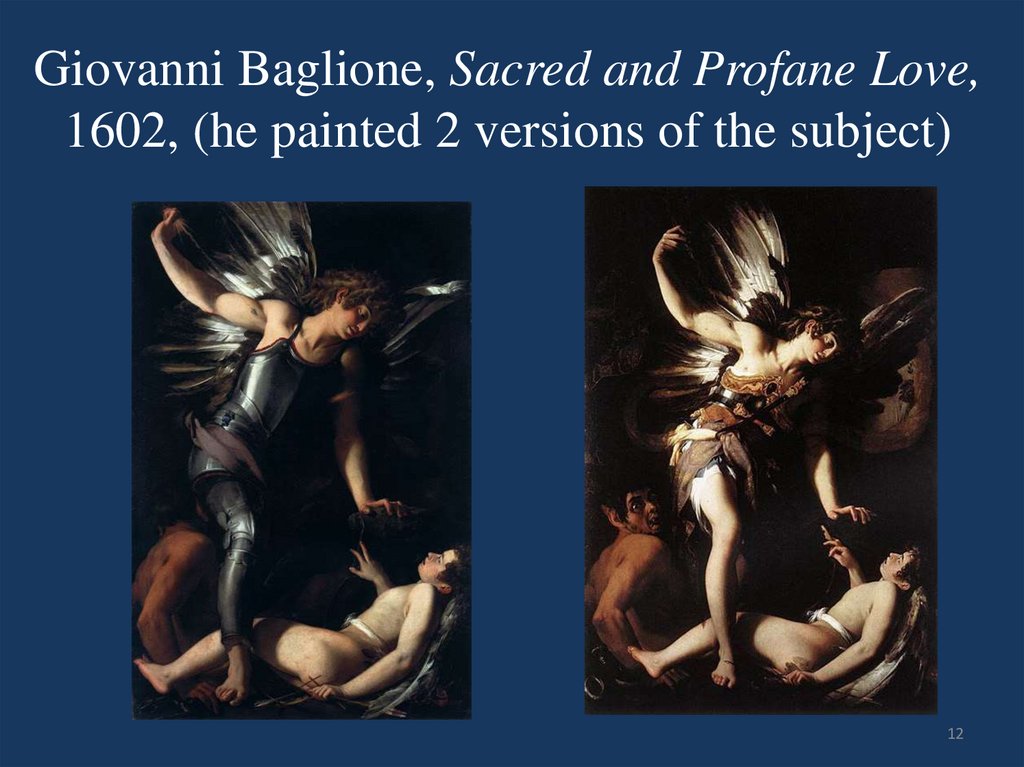
1112. Giovanni Baglione, Sacred and Profane Love, 1602, (he painted 2 versions of the subject)
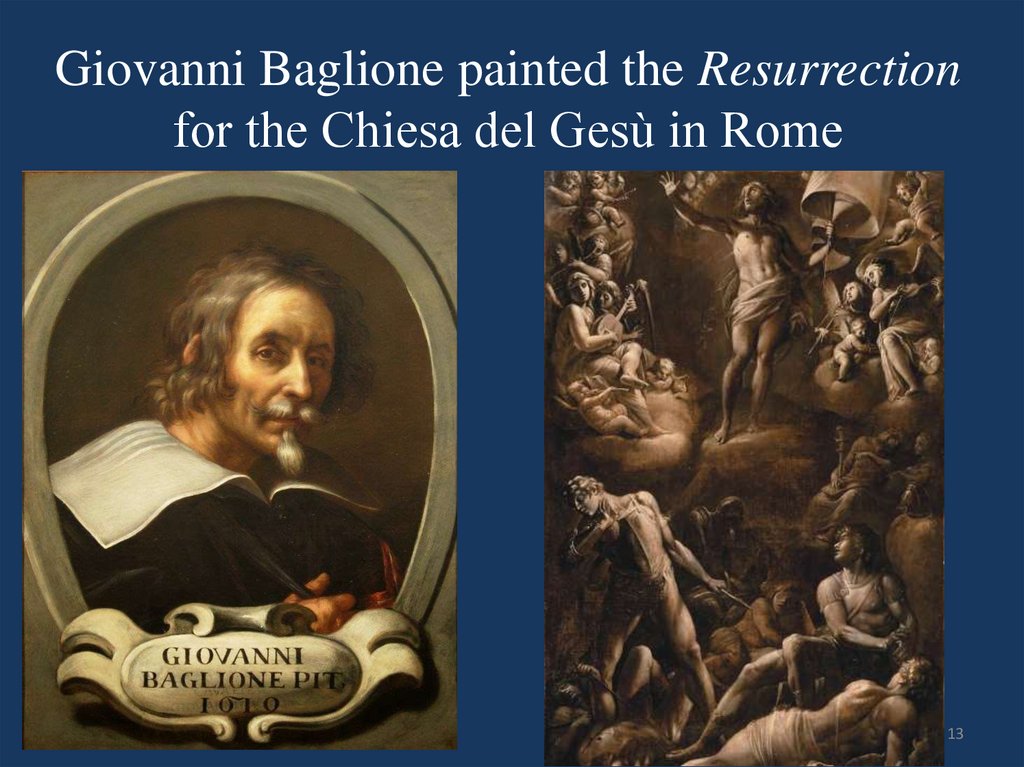
1213. Giovanni Baglione painted the Resurrection for the Chiesa del Gesù in Rome
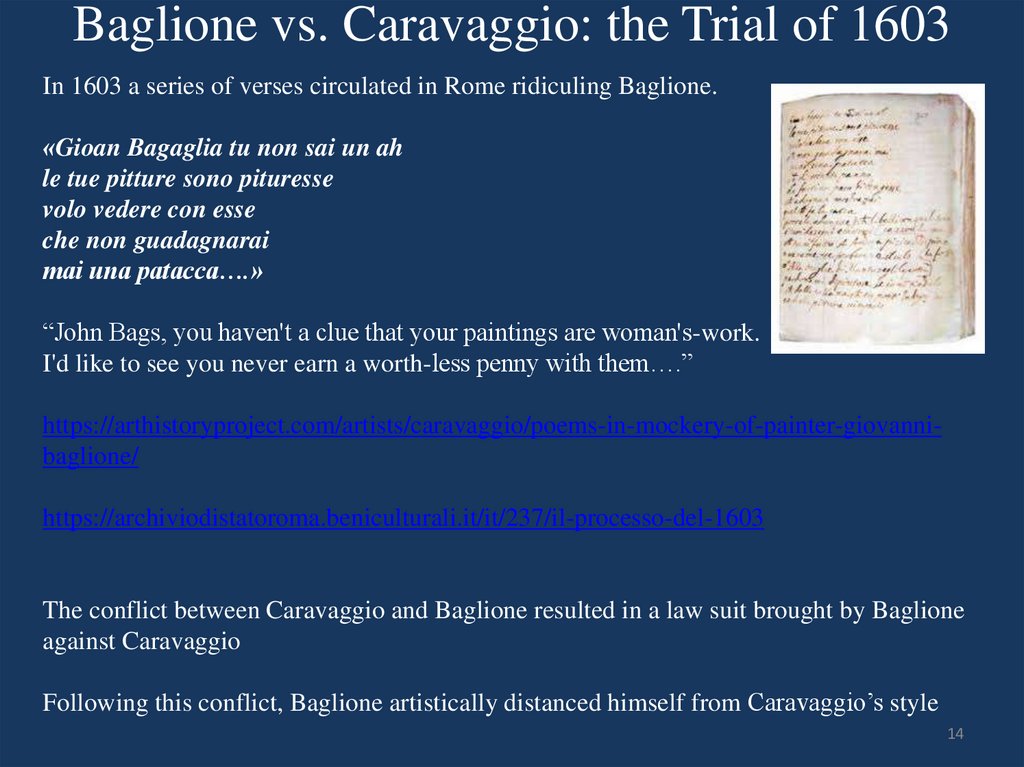
1314. Baglione vs. Caravaggio: the Trial of 1603
In 1603 a series of verses circulated in Rome ridiculing Baglione.«Gioan Bagaglia tu non sai un ah
le tue pitture sono pituresse
volo vedere con esse
che non guadagnarai
mai una patacca….»
“John Bags, you haven't a clue that your paintings are woman's-work.
I'd like to see you never earn a worth-less penny with them….”
https://arthistoryproject.com/artists/caravaggio/poems-in-mockery-of-painter-giovannibaglione/
https://archiviodistatoroma.beniculturali.it/it/237/il-processo-del-1603
The conflict between Caravaggio and Baglione resulted in a law suit brought by Baglione
against Caravaggio
Following this conflict, Baglione artistically distanced himself from Caravaggio’s style
14
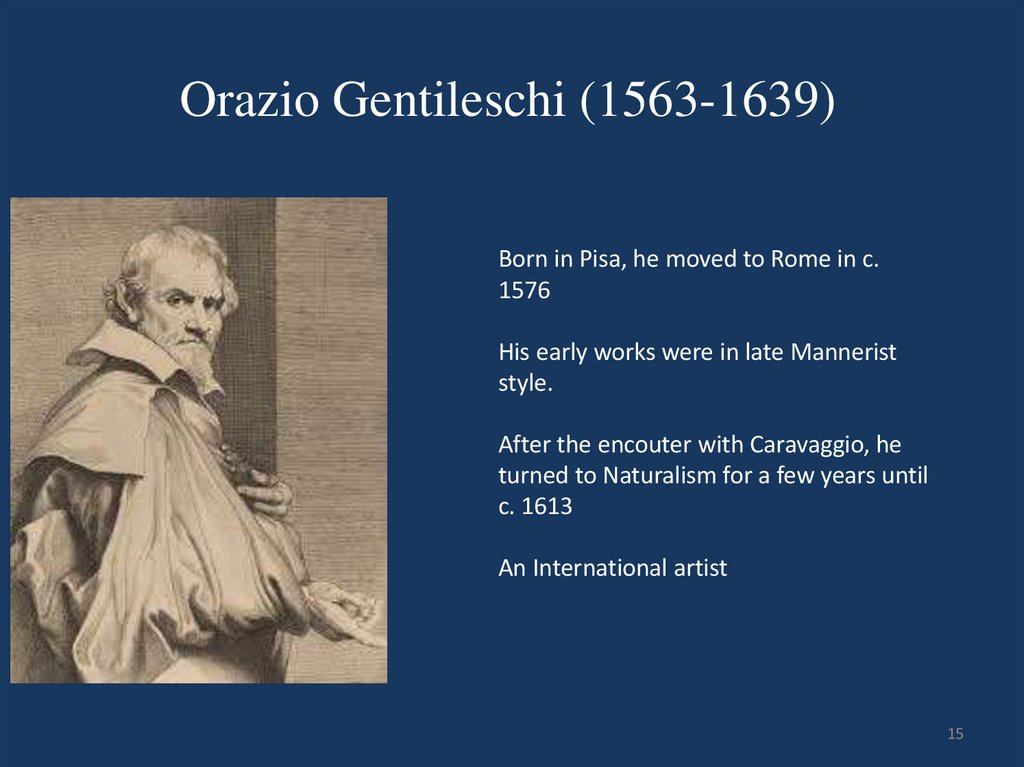
15. Orazio Gentileschi (1563-1639)
Born in Pisa, he moved to Rome in c.1576
His early works were in late Mannerist
style.
After the encouter with Caravaggio, he
turned to Naturalism for a few years until
c. 1613
An International artist
15
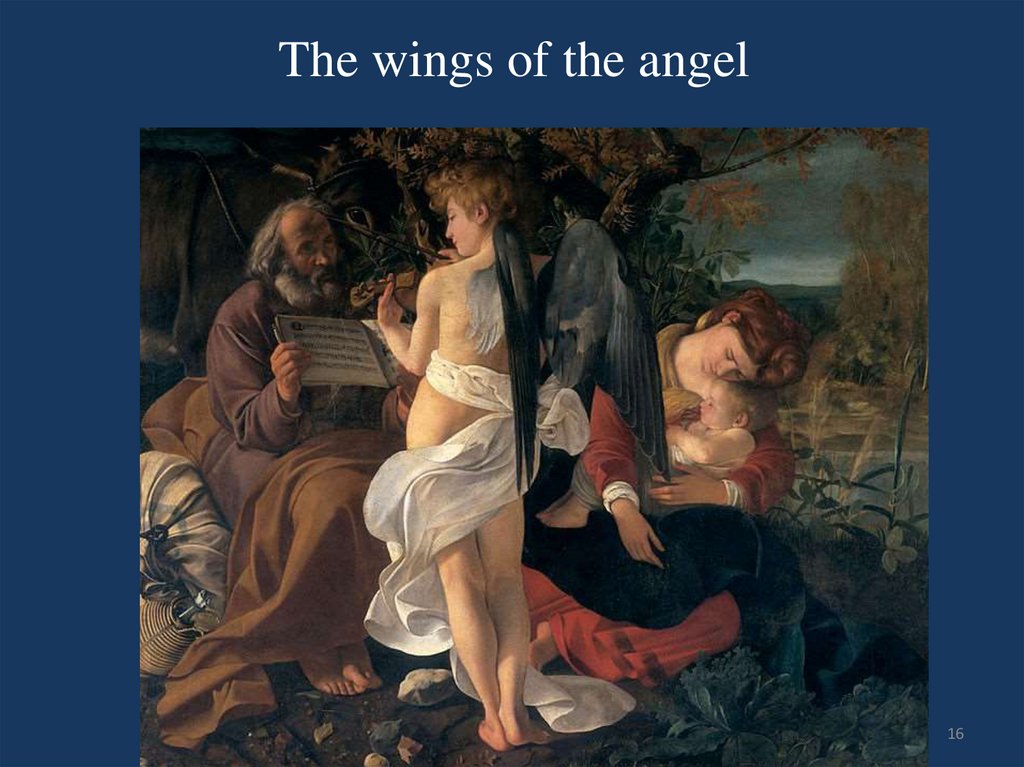
16. The wings of the angel
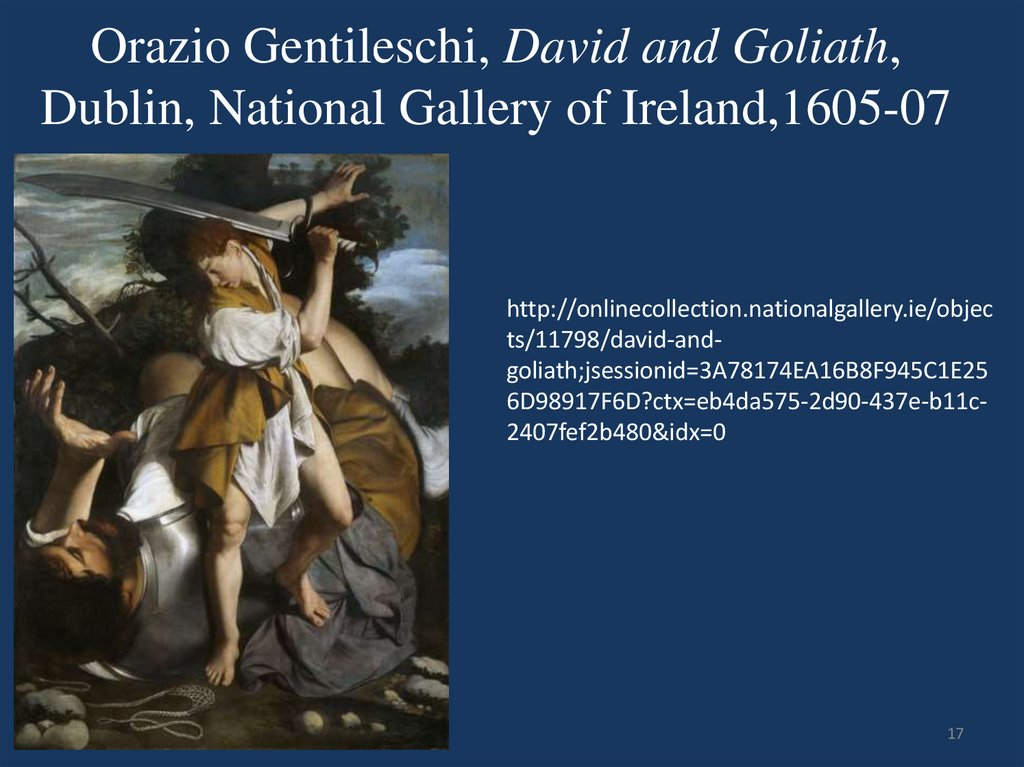
1617. Orazio Gentileschi, David and Goliath, Dublin, National Gallery of Ireland,1605-07
http://onlinecollection.nationalgallery.ie/objects/11798/david-andgoliath;jsessionid=3A78174EA16B8F945C1E25
6D98917F6D?ctx=eb4da575-2d90-437e-b11c2407fef2b480&idx=0
17
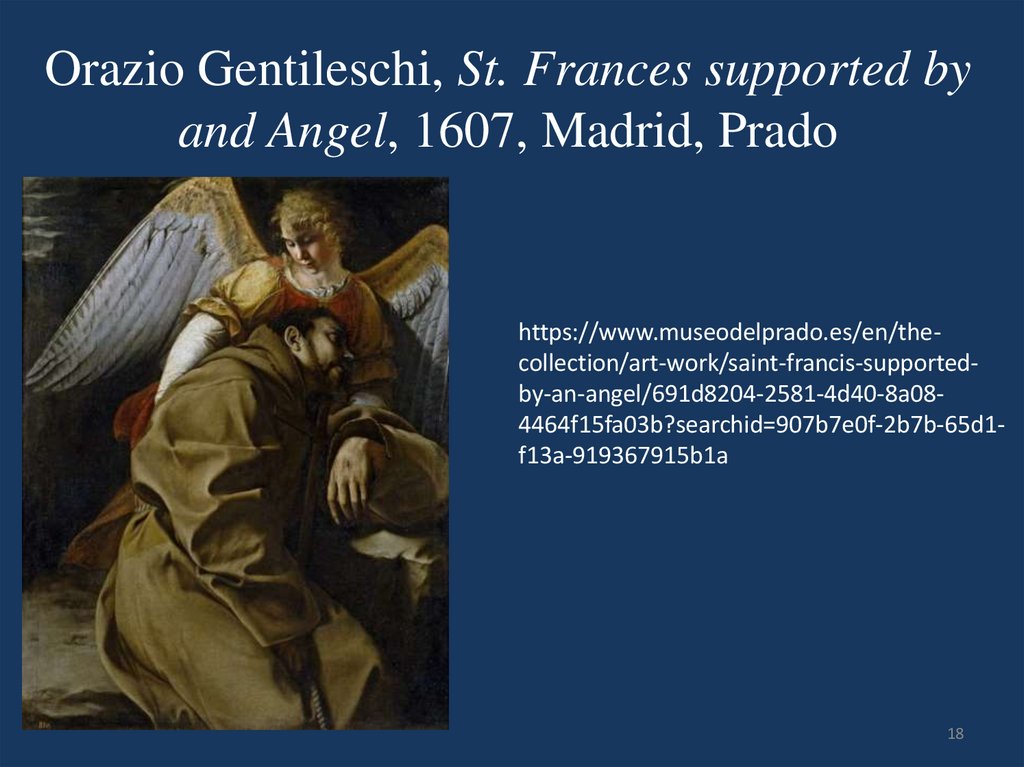
18. Orazio Gentileschi, St. Frances supported by and Angel, 1607, Madrid, Prado
https://www.museodelprado.es/en/thecollection/art-work/saint-francis-supportedby-an-angel/691d8204-2581-4d40-8a084464f15fa03b?searchid=907b7e0f-2b7b-65d1f13a-919367915b1a18
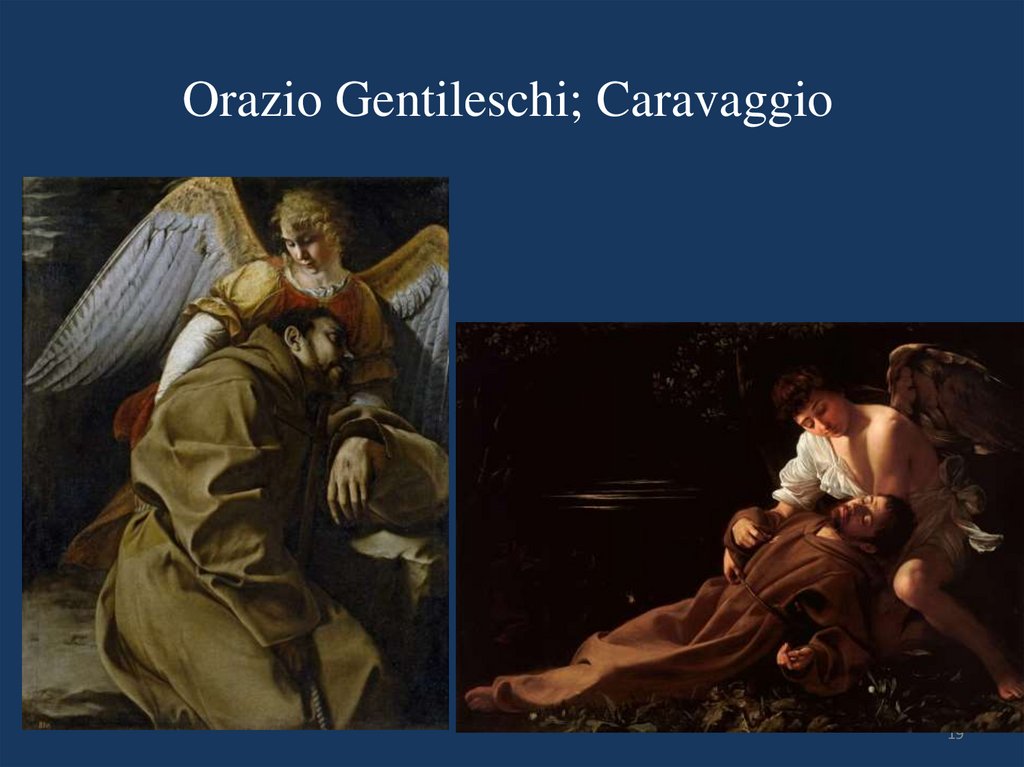
19. Orazio Gentileschi; Caravaggio
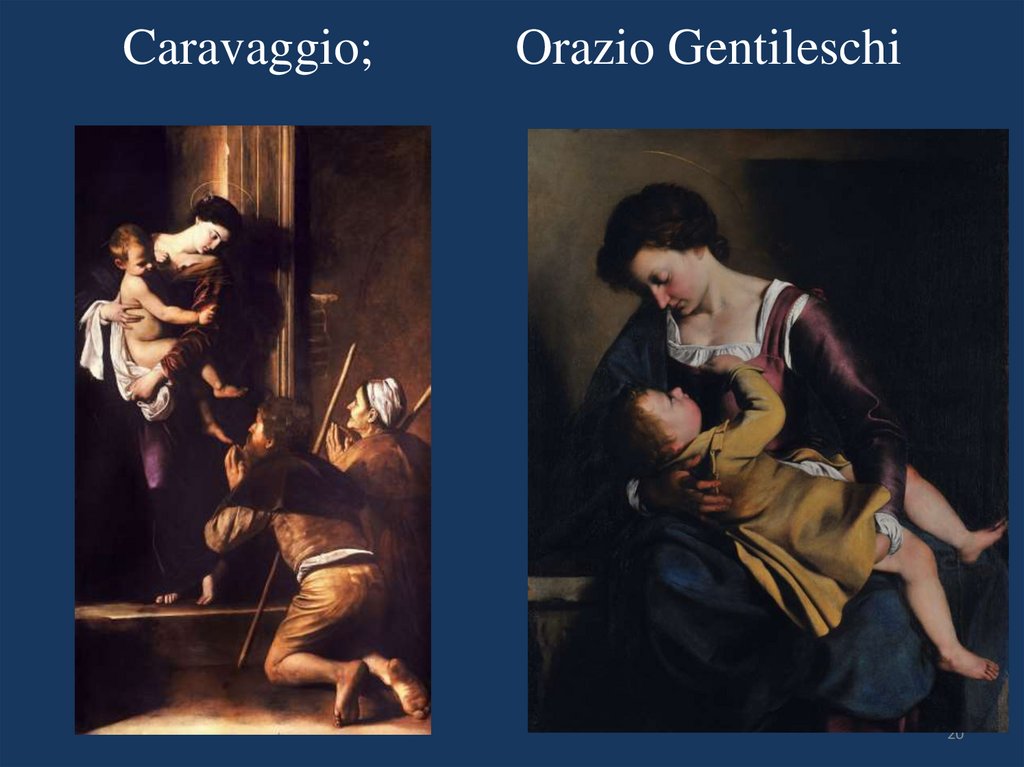
1920. Caravaggio; Orazio Gentileschi
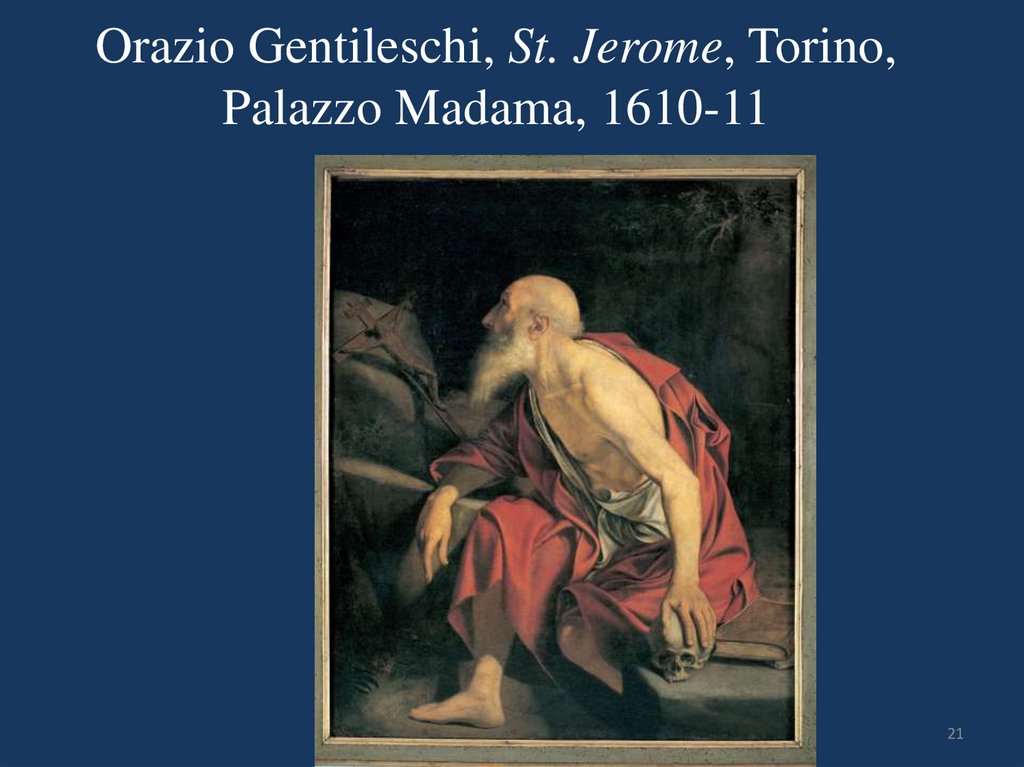
2021. Orazio Gentileschi, St. Jerome, Torino, Palazzo Madama, 1610-11
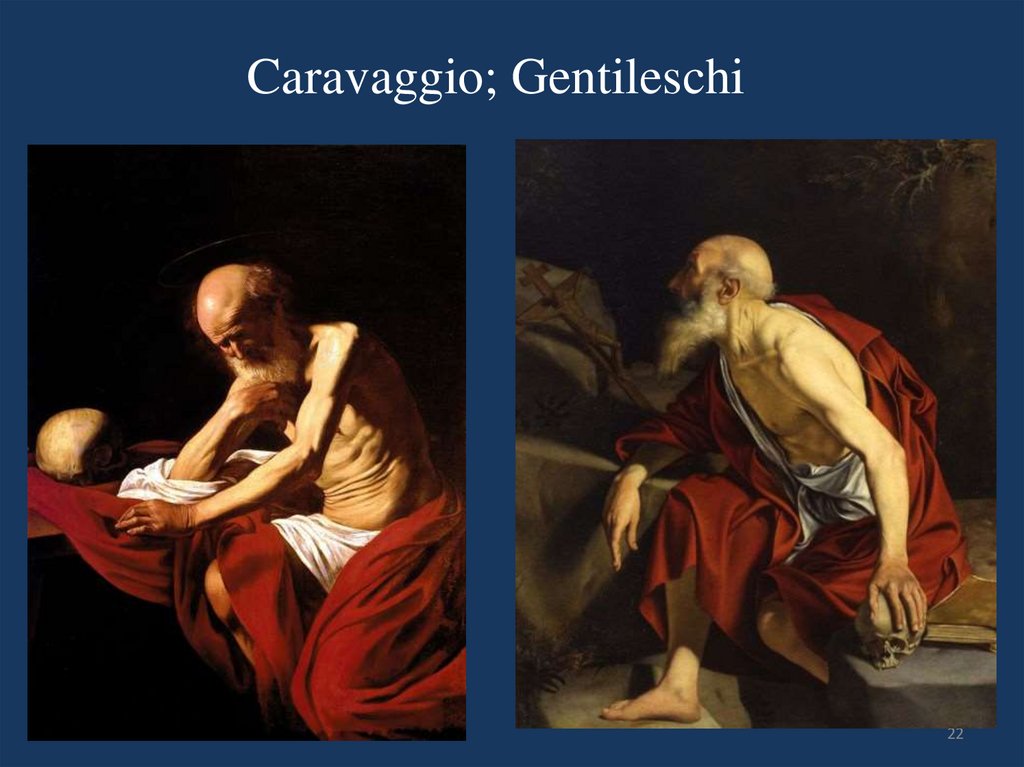
2122. Caravaggio; Gentileschi
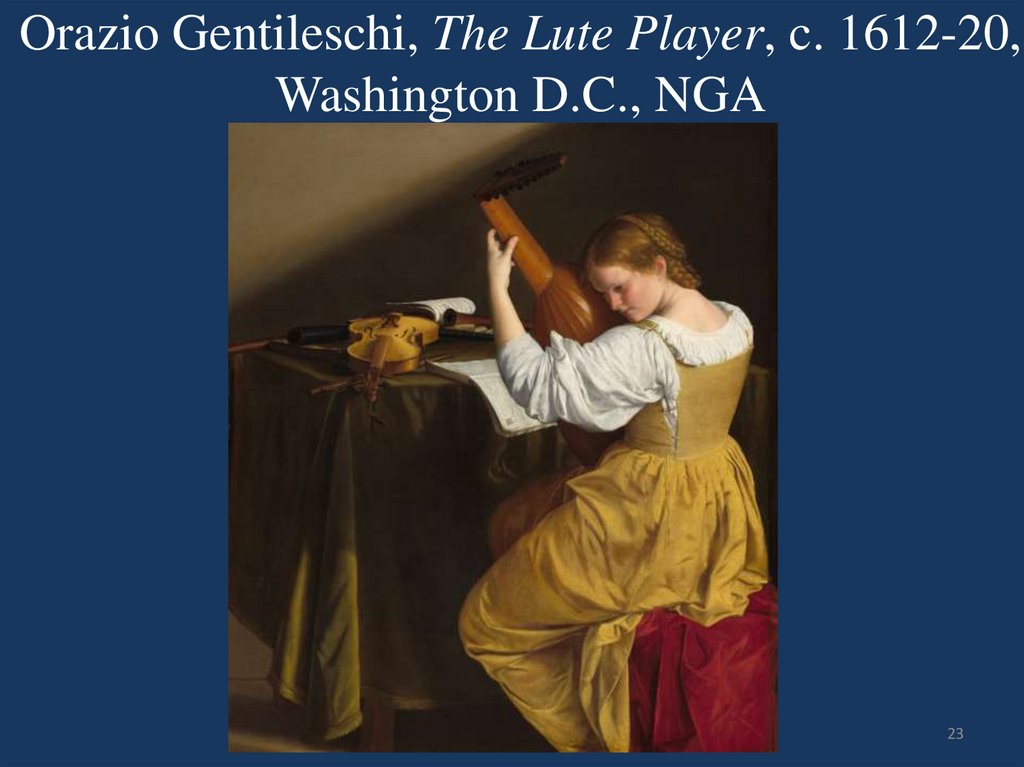
2223. Orazio Gentileschi, The Lute Player, c. 1612-20, Washington D.C., NGA
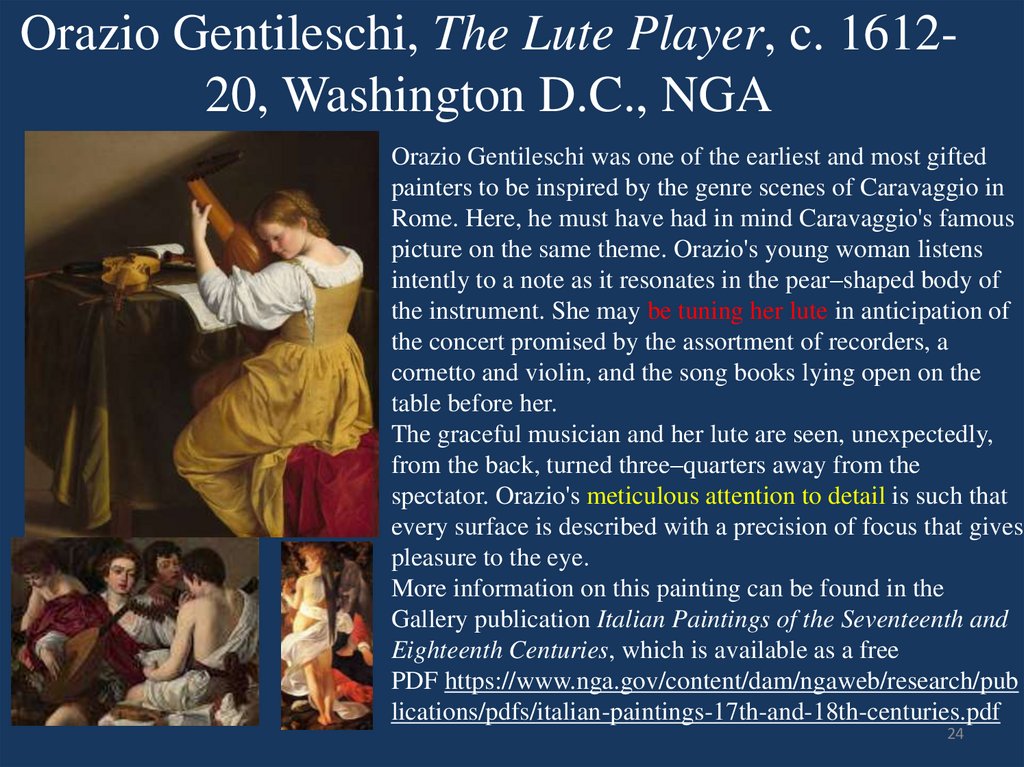
2324. Orazio Gentileschi, The Lute Player, c. 1612-20, Washington D.C., NGA
Orazio Gentileschi, The Lute Player, c. 161220, Washington D.C., NGAOrazio Gentileschi was one of the earliest and most gifted
painters to be inspired by the genre scenes of Caravaggio in
Rome. Here, he must have had in mind Caravaggio's famous
picture on the same theme. Orazio's young woman listens
intently to a note as it resonates in the pear–shaped body of
the instrument. She may be tuning her lute in anticipation of
the concert promised by the assortment of recorders, a
cornetto and violin, and the song books lying open on the
table before her.
The graceful musician and her lute are seen, unexpectedly,
from the back, turned three–quarters away from the
spectator. Orazio's meticulous attention to detail is such that
every surface is described with a precision of focus that gives
pleasure to the eye.
More information on this painting can be found in the
Gallery publication Italian Paintings of the Seventeenth and
Eighteenth Centuries, which is available as a free
PDF https://www.nga.gov/content/dam/ngaweb/research/pub
lications/pdfs/italian-paintings-17th-and-18th-centuries.pdf
24
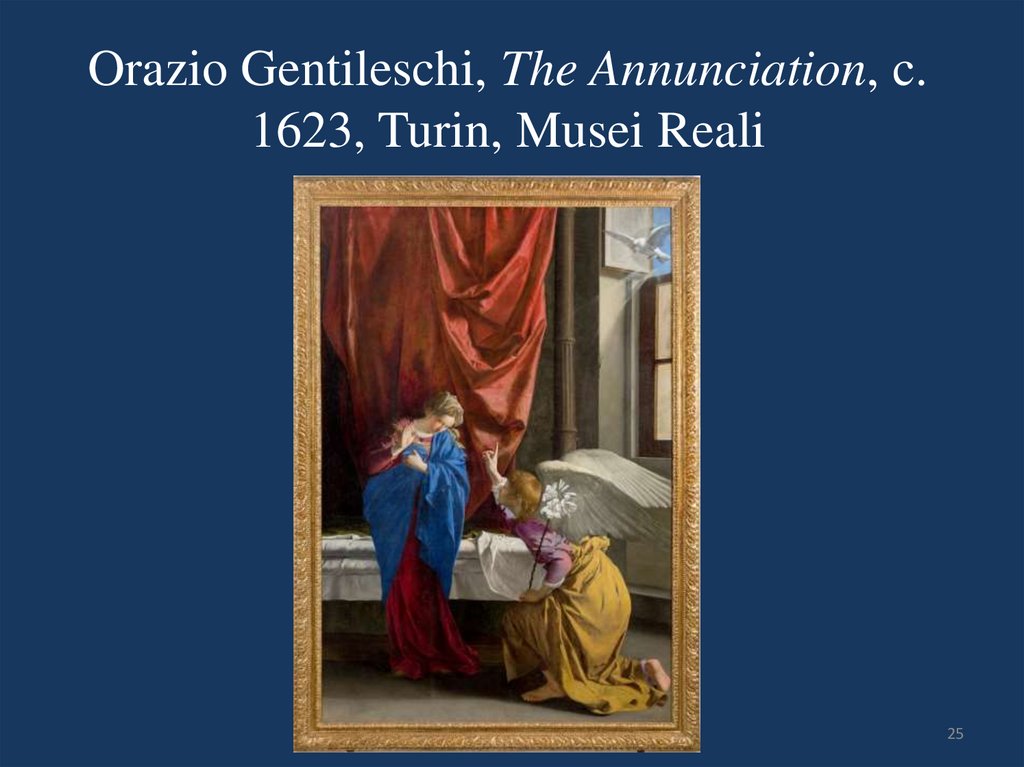
25. Orazio Gentileschi, The Annunciation, c. 1623, Turin, Musei Reali
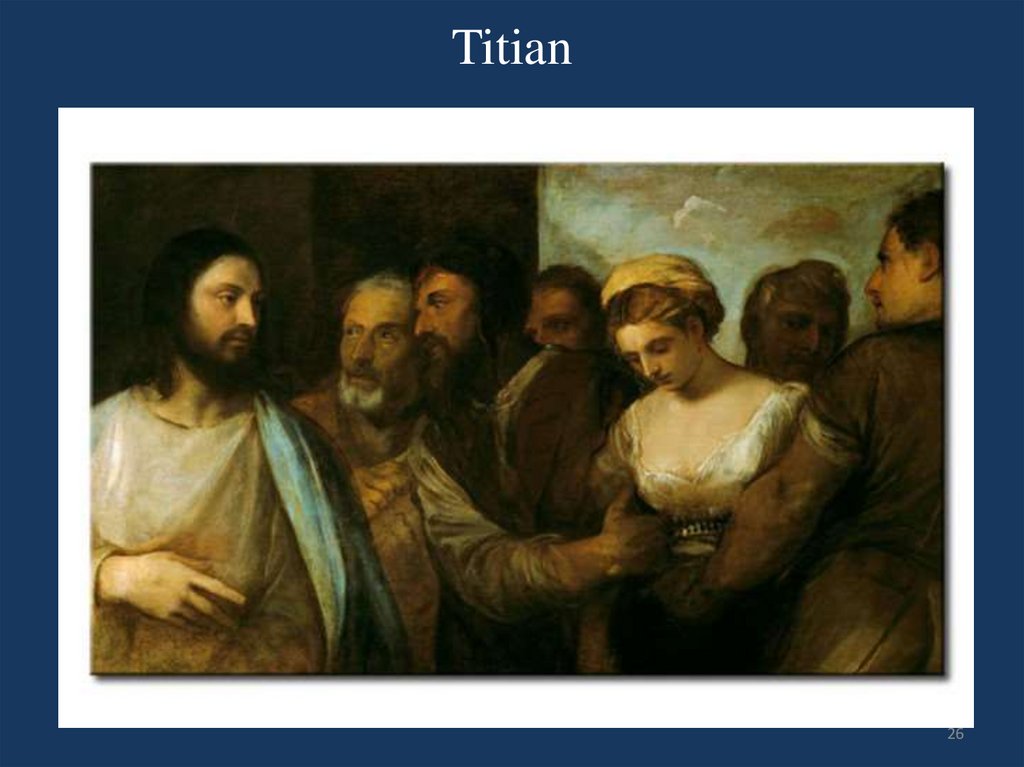
2526. Titian
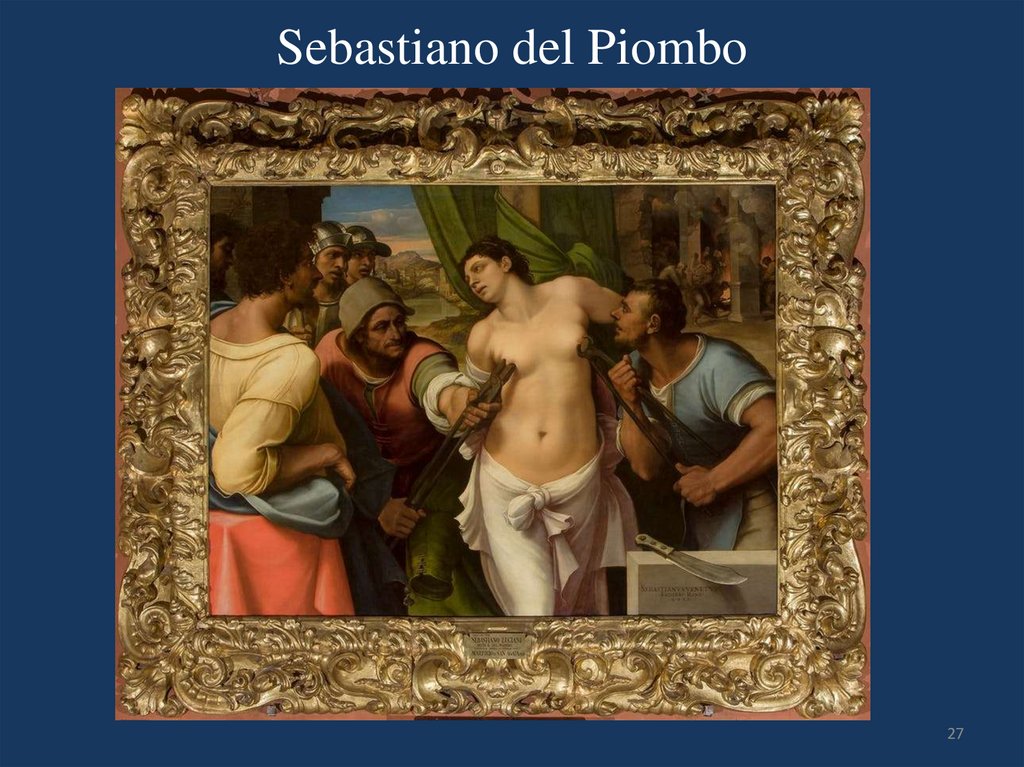
2627. Sebastiano del Piombo
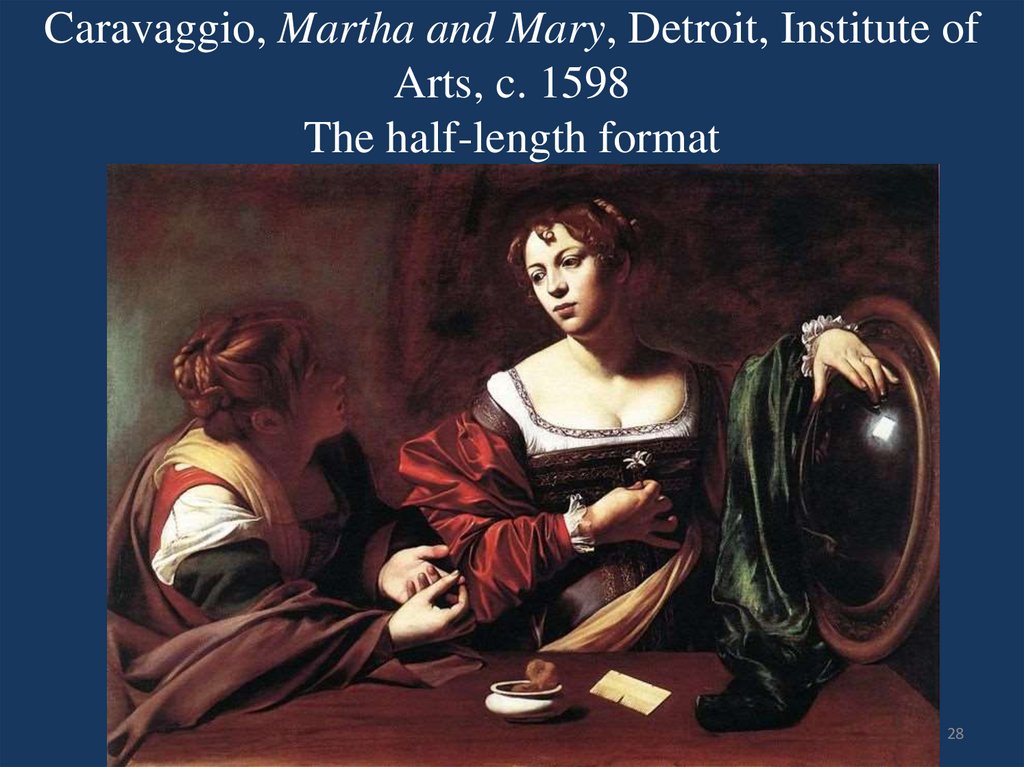
2728. Caravaggio, Martha and Mary, Detroit, Institute of Arts, c. 1598 The half-length format
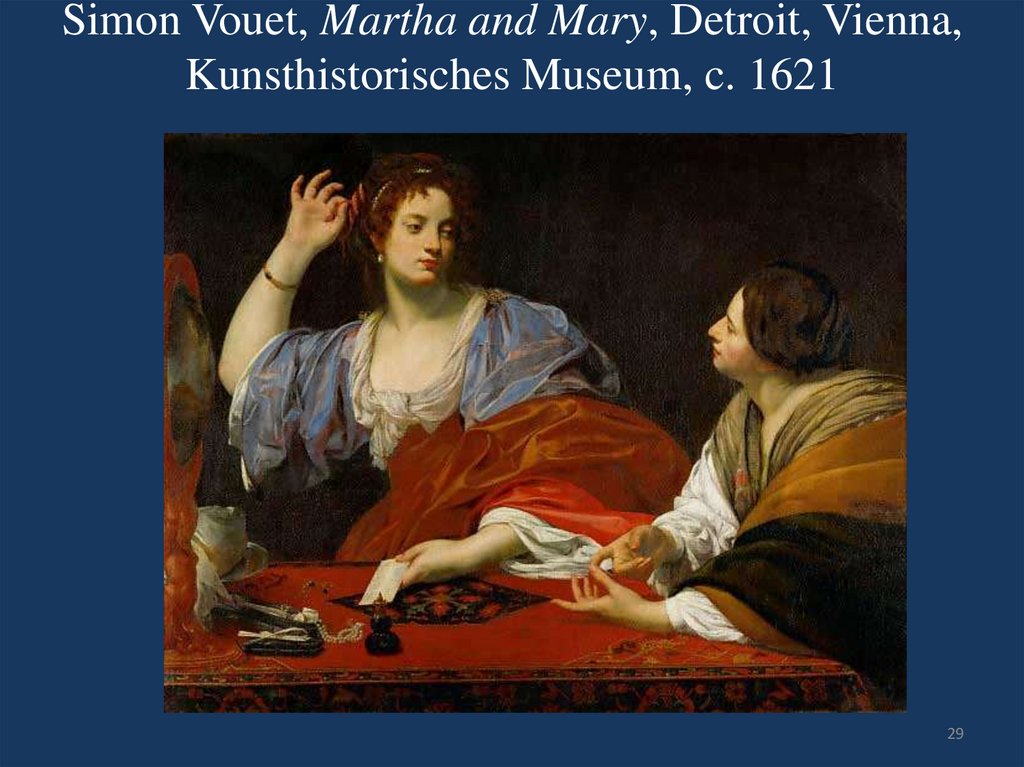
2829. Simon Vouet, Martha and Mary, Detroit, Vienna, Kunsthistorisches Museum, c. 1621
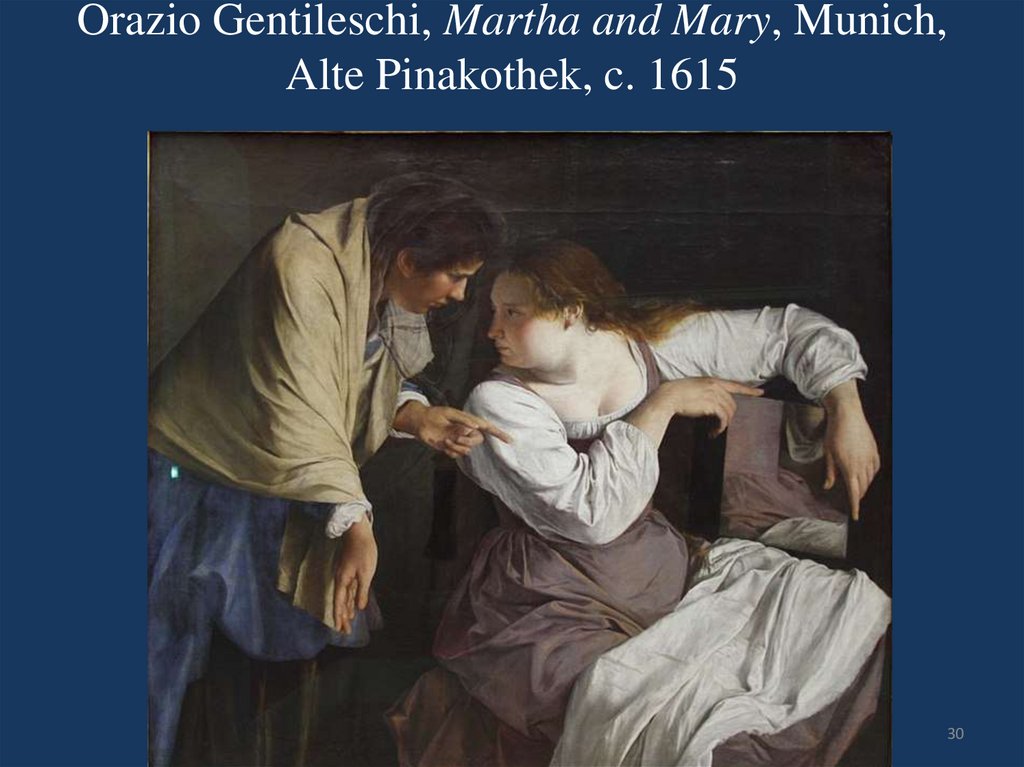
2930. Orazio Gentileschi, Martha and Mary, Munich, Alte Pinakothek, c. 1615
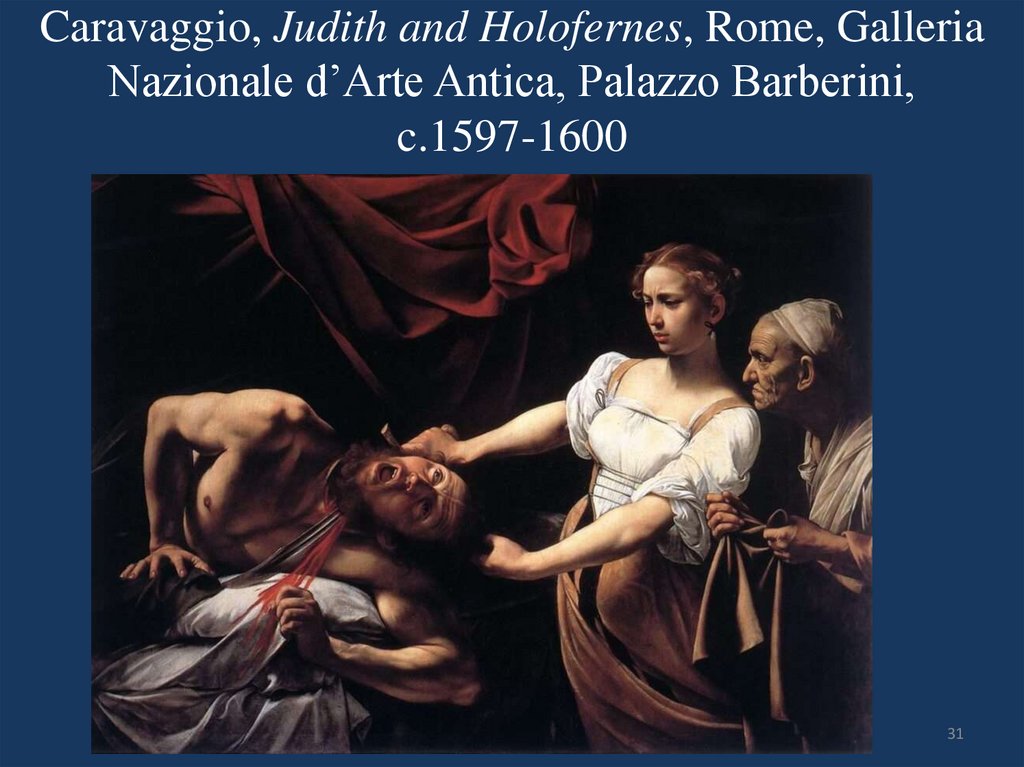
3031. Caravaggio, Judith and Holofernes, Rome, Galleria Nazionale d’Arte Antica, Palazzo Barberini, c.1597-1600
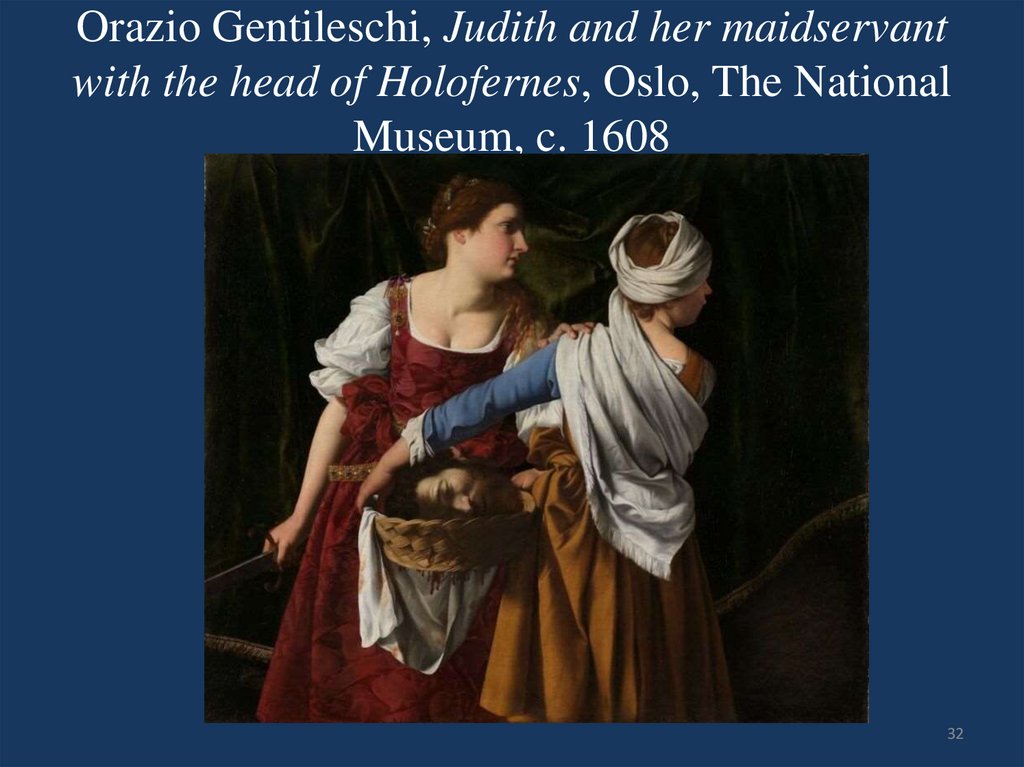
3132. Orazio Gentileschi, Judith and her maidservant with the head of Holofernes, Oslo, The National Museum, c. 1608
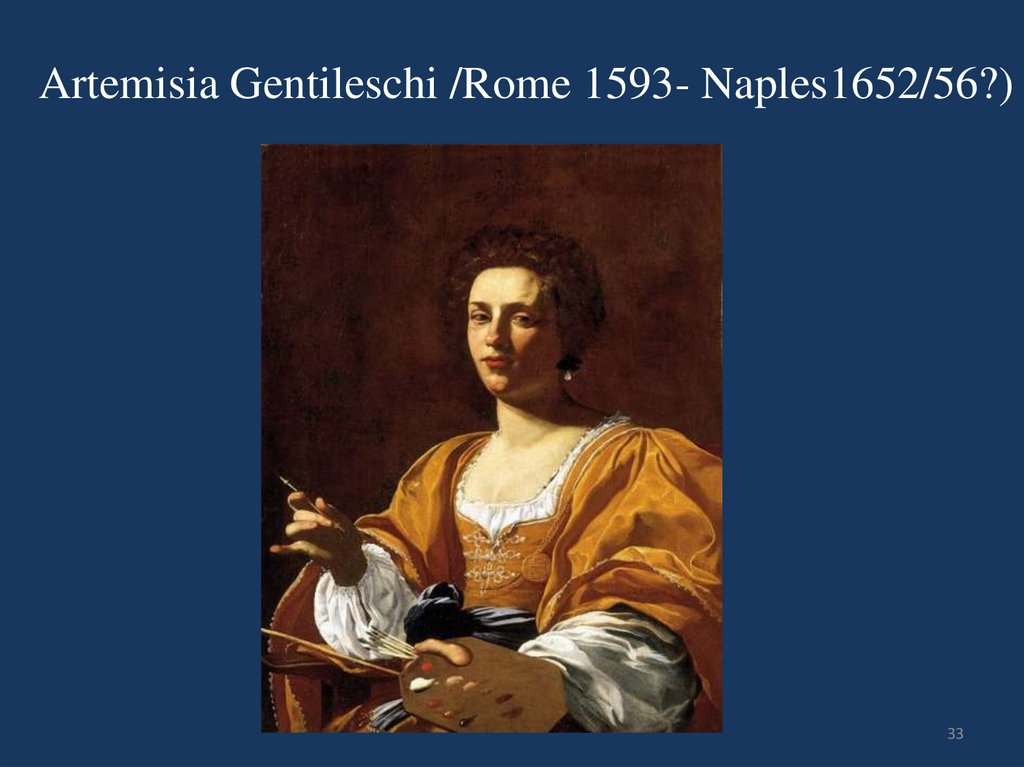
3233. Artemisia Gentileschi /Rome 1593- Naples1652/56?)
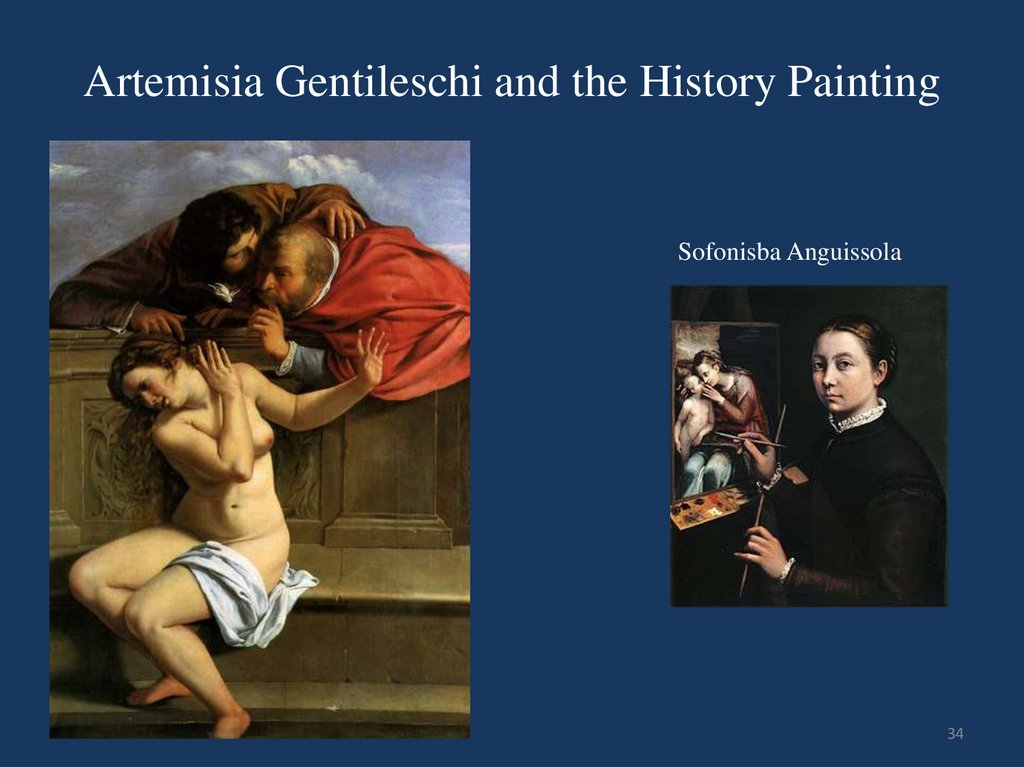
3334. Artemisia Gentileschi and the History Painting
Sofonisba Anguissola34
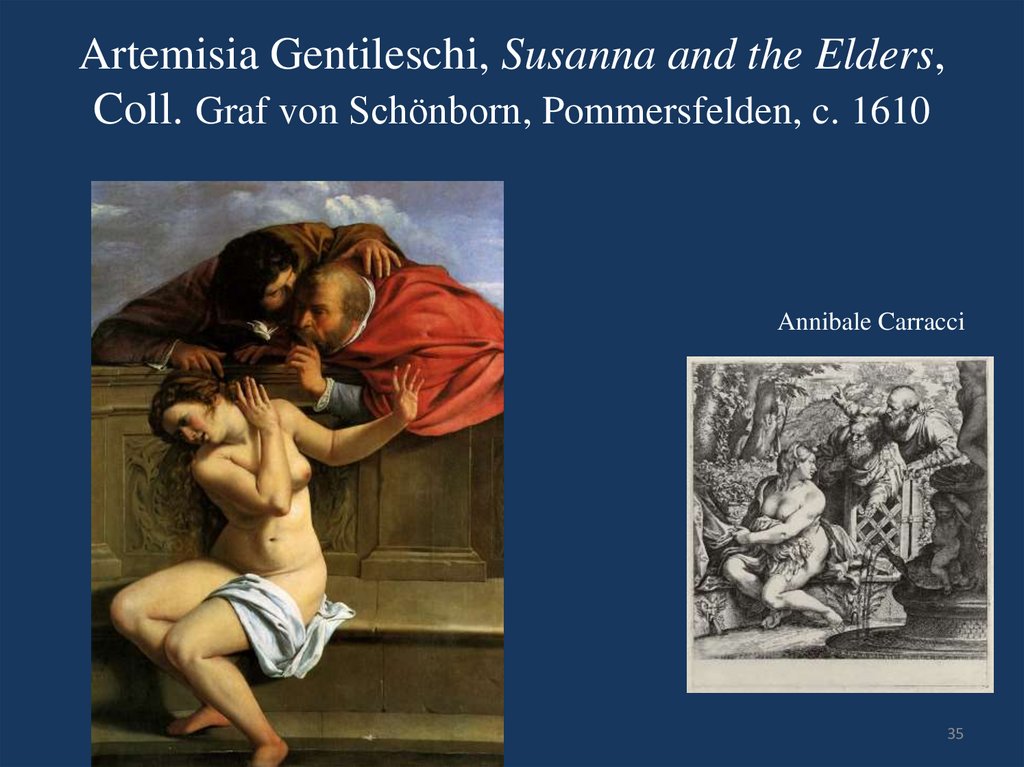
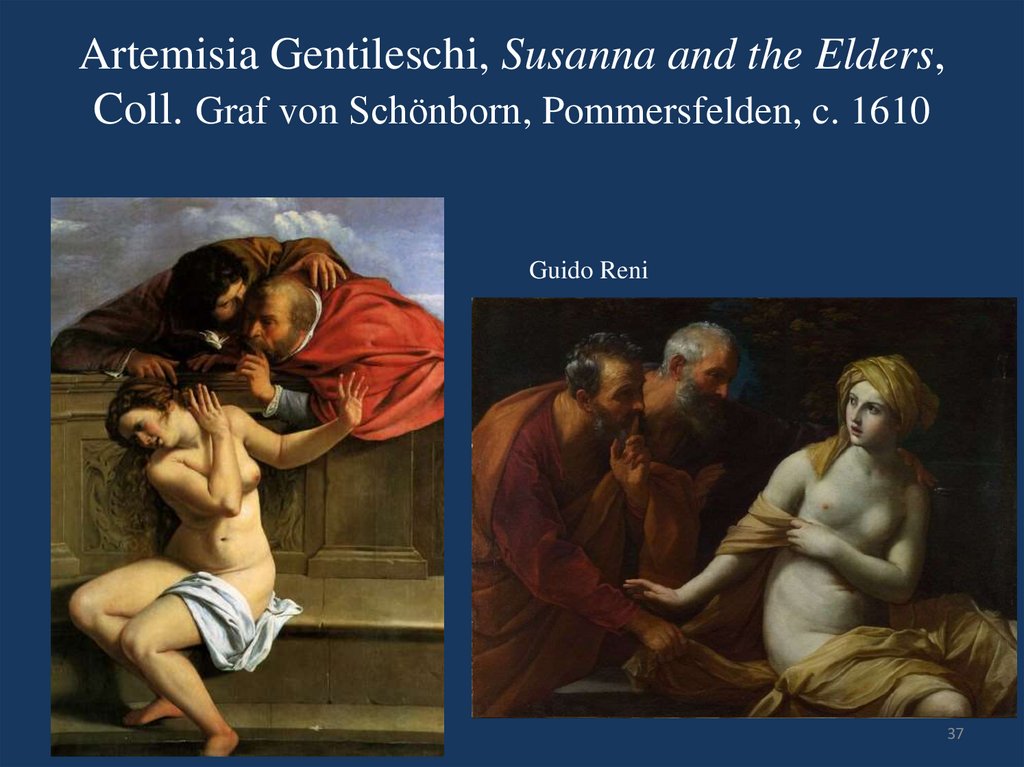
35. Artemisia Gentileschi, Susanna and the Elders, Coll. Graf von Schönborn, Pommersfelden, c. 1610
Annibale Carracci35
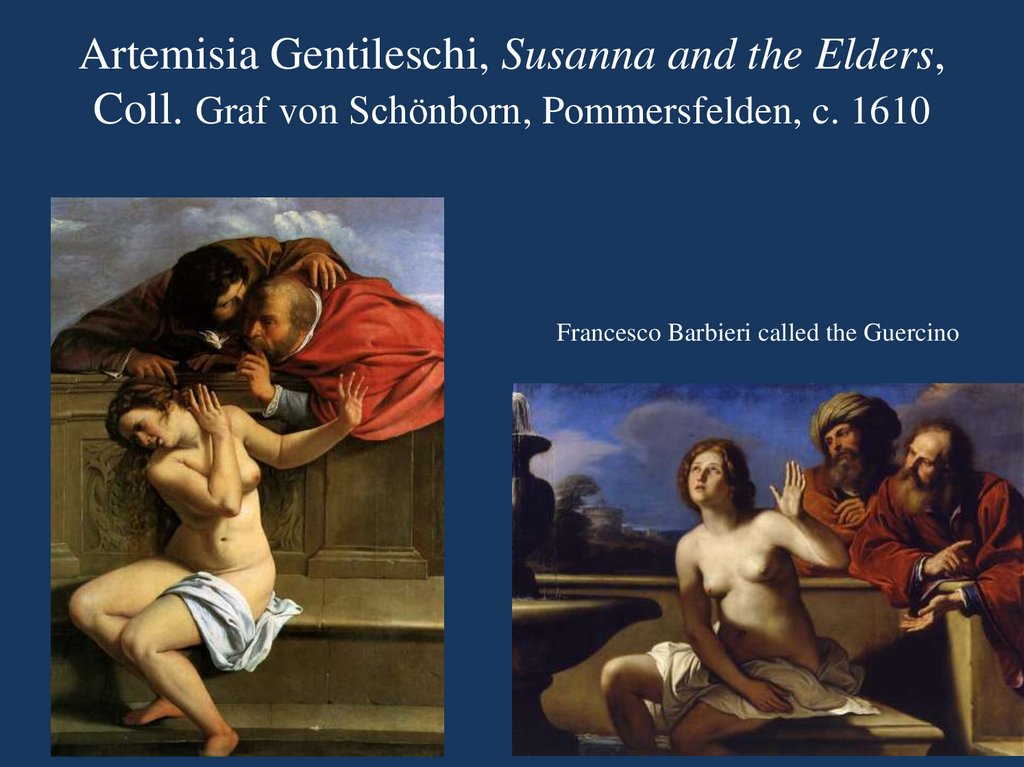
36. Artemisia Gentileschi, Susanna and the Elders, Coll. Graf von Schönborn, Pommersfelden, c. 1610
Francesco Barbieri called the Guercino36
37. Artemisia Gentileschi, Susanna and the Elders, Coll. Graf von Schönborn, Pommersfelden, c. 1610
Guido Reni37
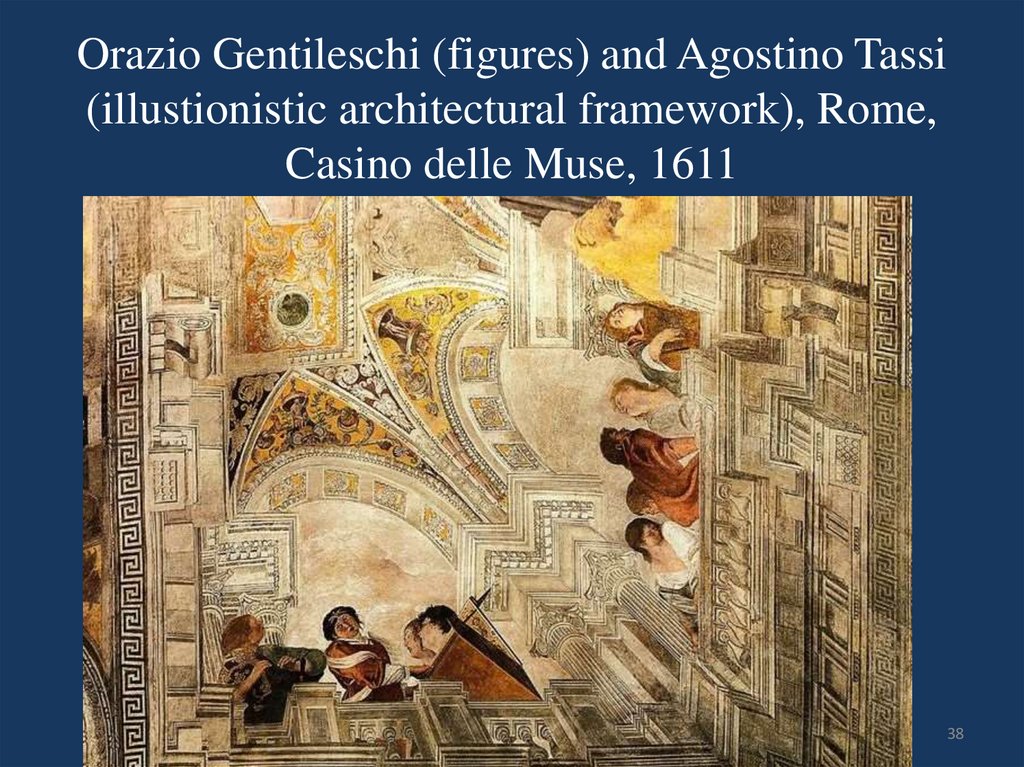
38. Orazio Gentileschi (figures) and Agostino Tassi (illustionistic architectural framework), Rome, Casino delle Muse, 1611
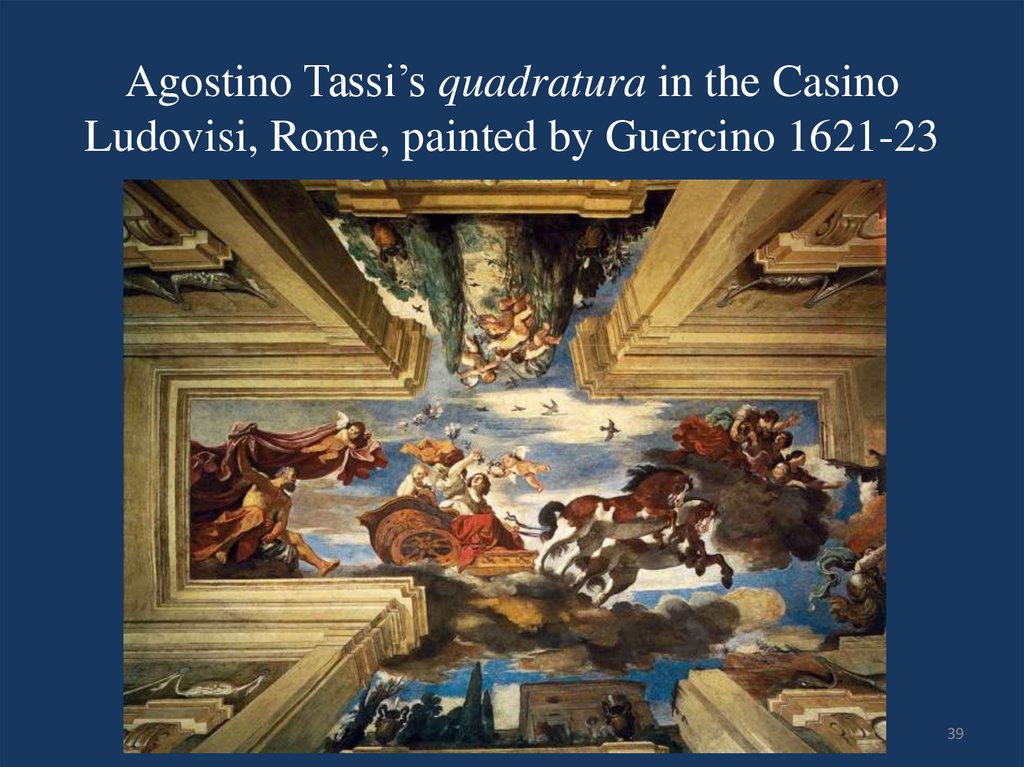
3839. Agostino Tassi’s quadratura in the Casino Ludovisi, Rome, painted by Guercino 1621-23
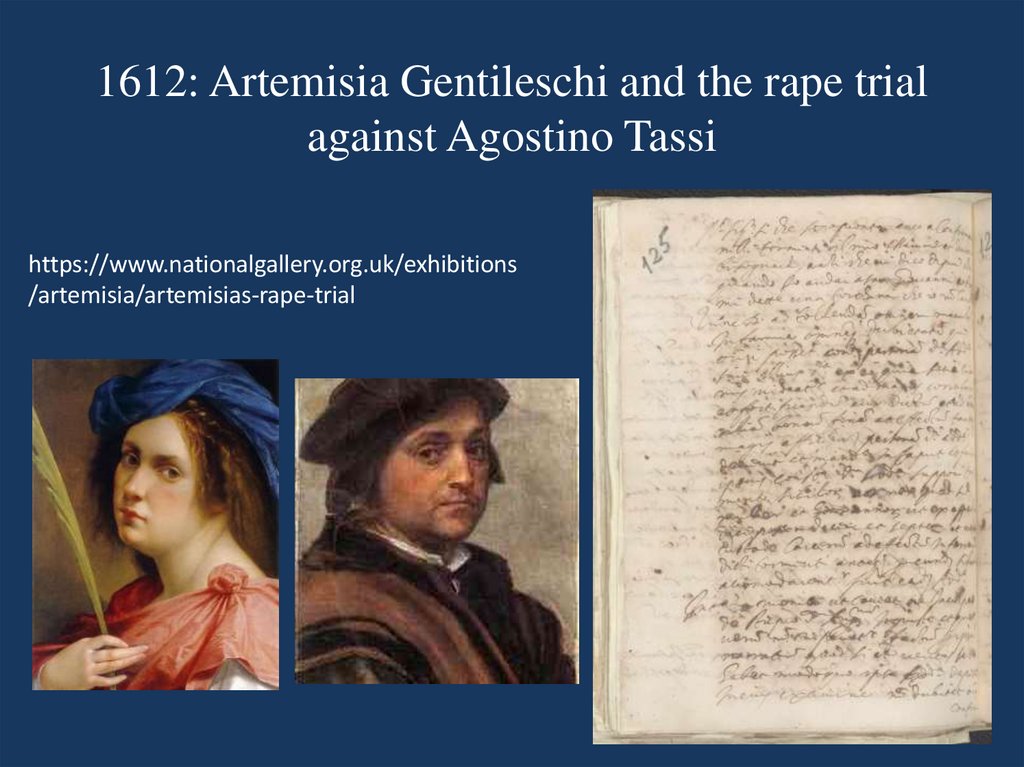
3940. 1612: Artemisia Gentileschi and the rape trial against Agostino Tassi
https://www.nationalgallery.org.uk/exhibitions/artemisia/artemisias-rape-trial
40
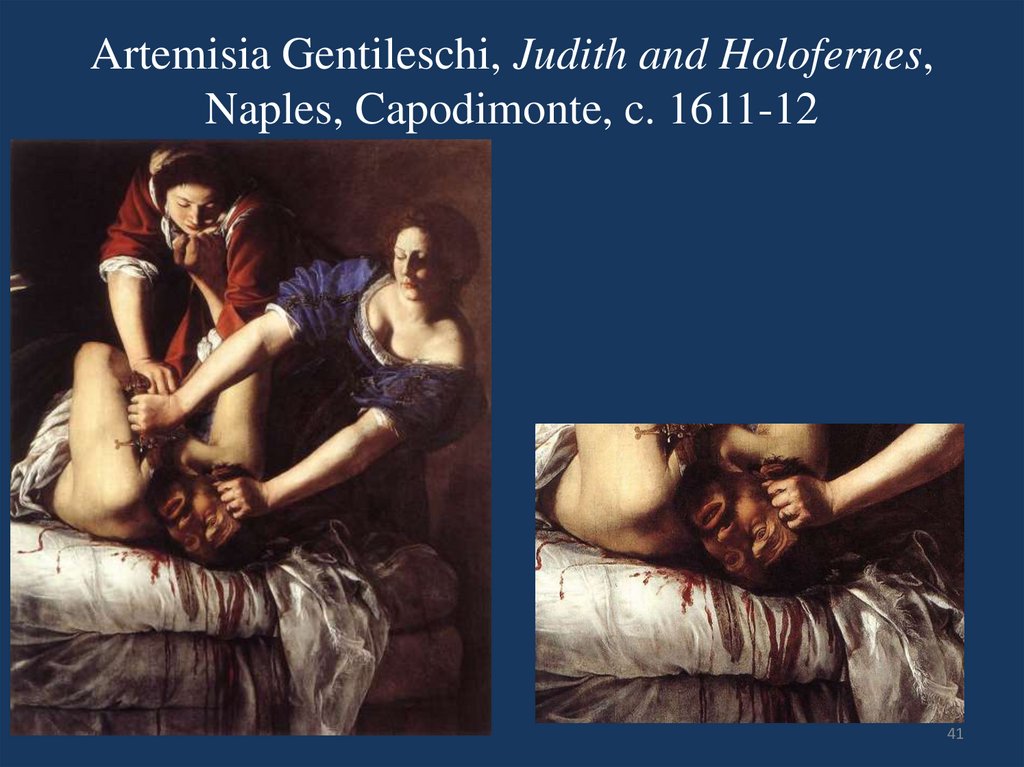
41. Artemisia Gentileschi, Judith and Holofernes, Naples, Capodimonte, c. 1611-12
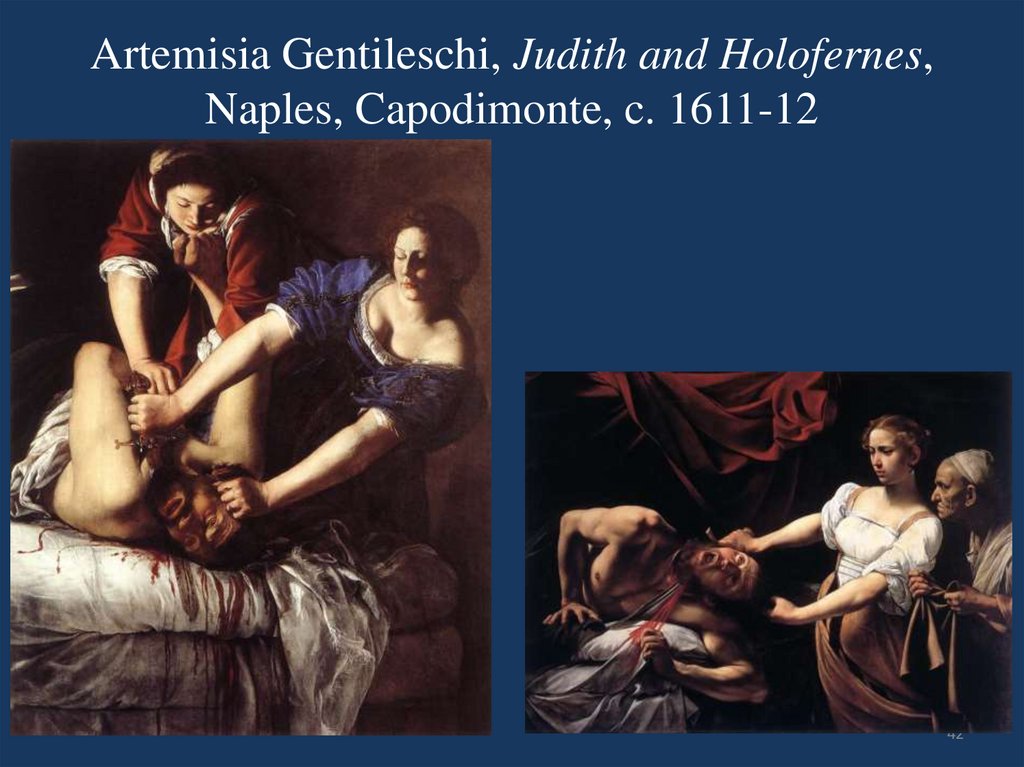
4142. Artemisia Gentileschi, Judith and Holofernes, Naples, Capodimonte, c. 1611-12
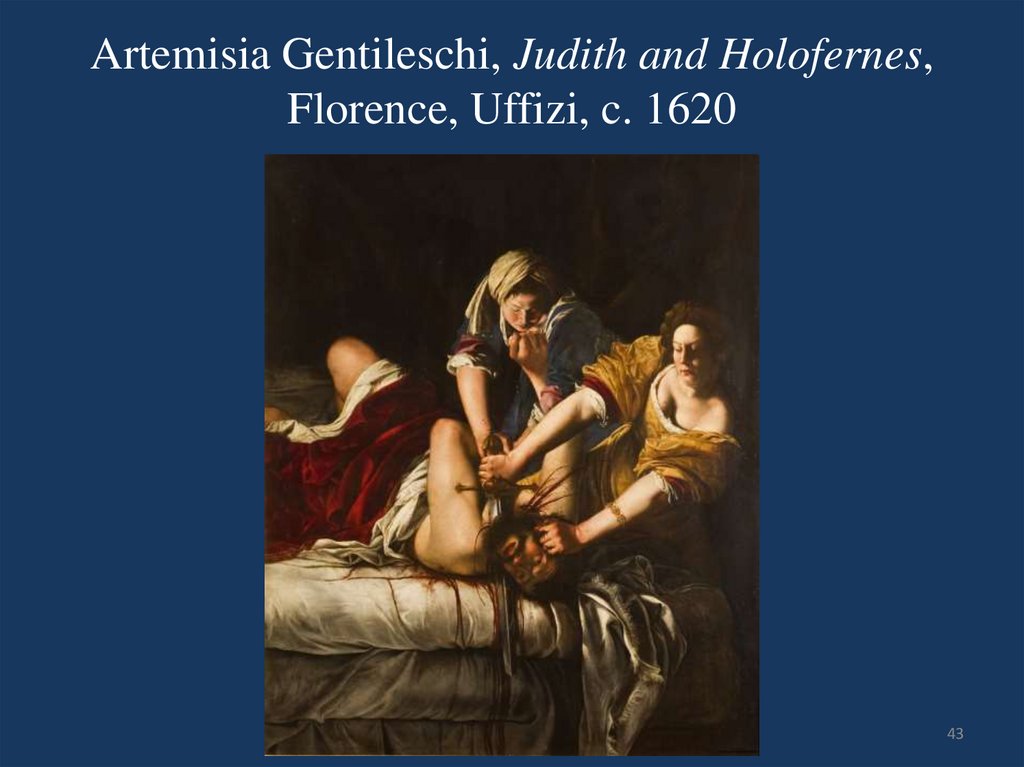
4243. Artemisia Gentileschi, Judith and Holofernes, Florence, Uffizi, c. 1620
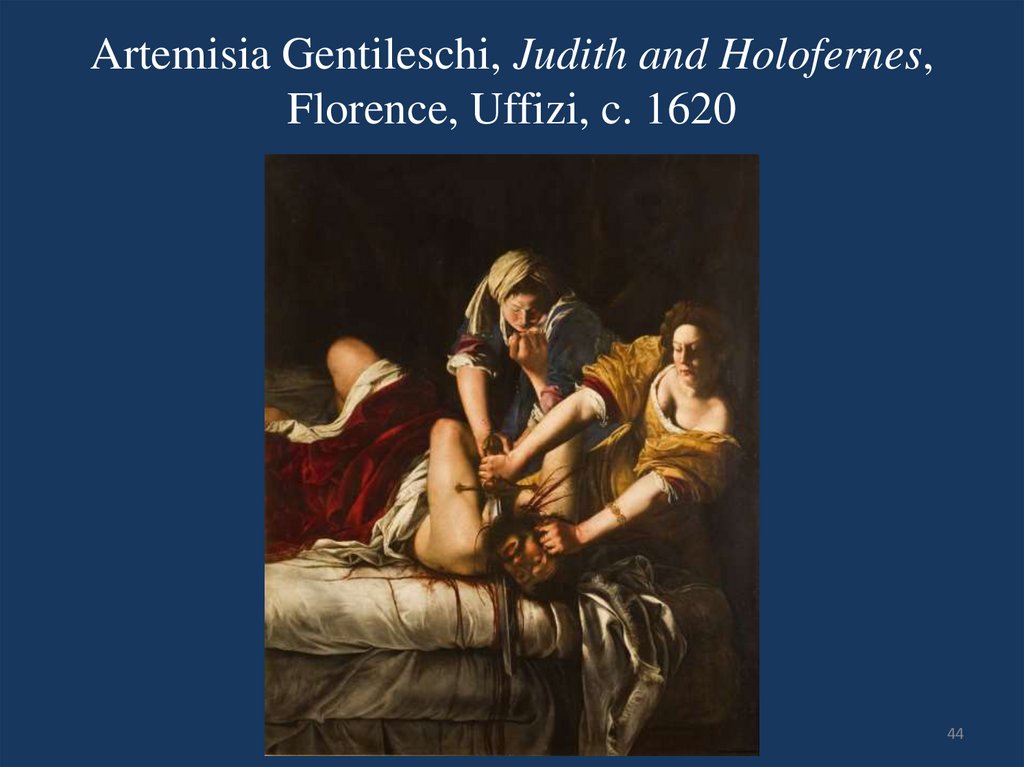
4344. Artemisia Gentileschi, Judith and Holofernes, Florence, Uffizi, c. 1620
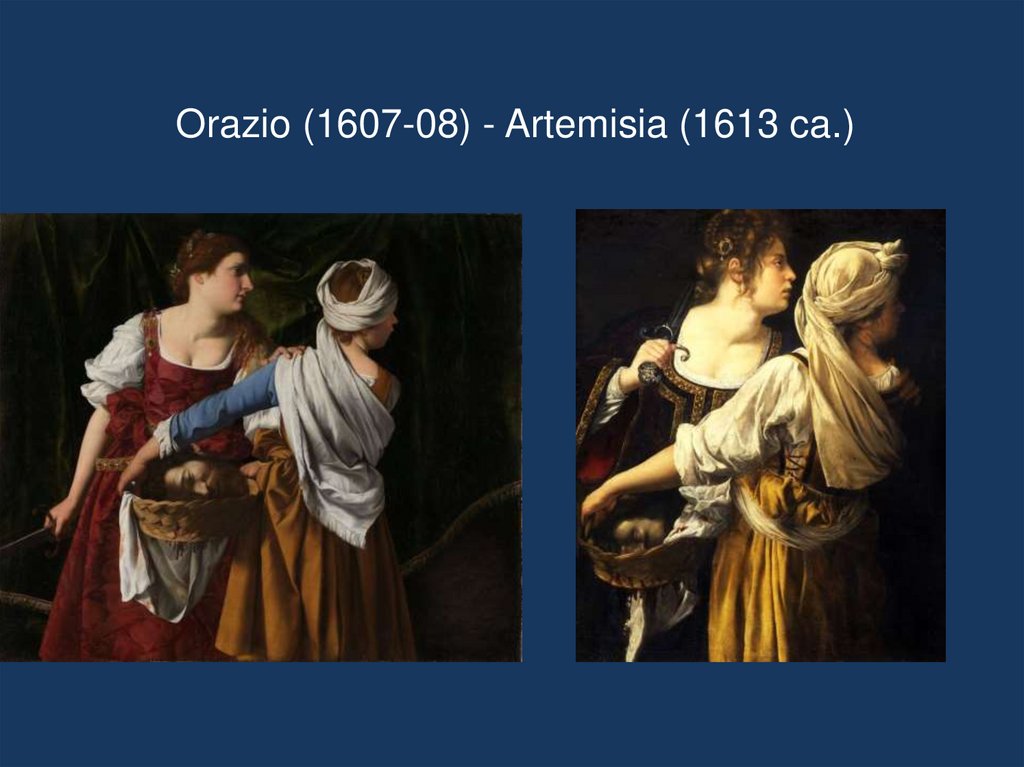
4445.
Orazio (1607-08) - Artemisia (1613 ca.)46.
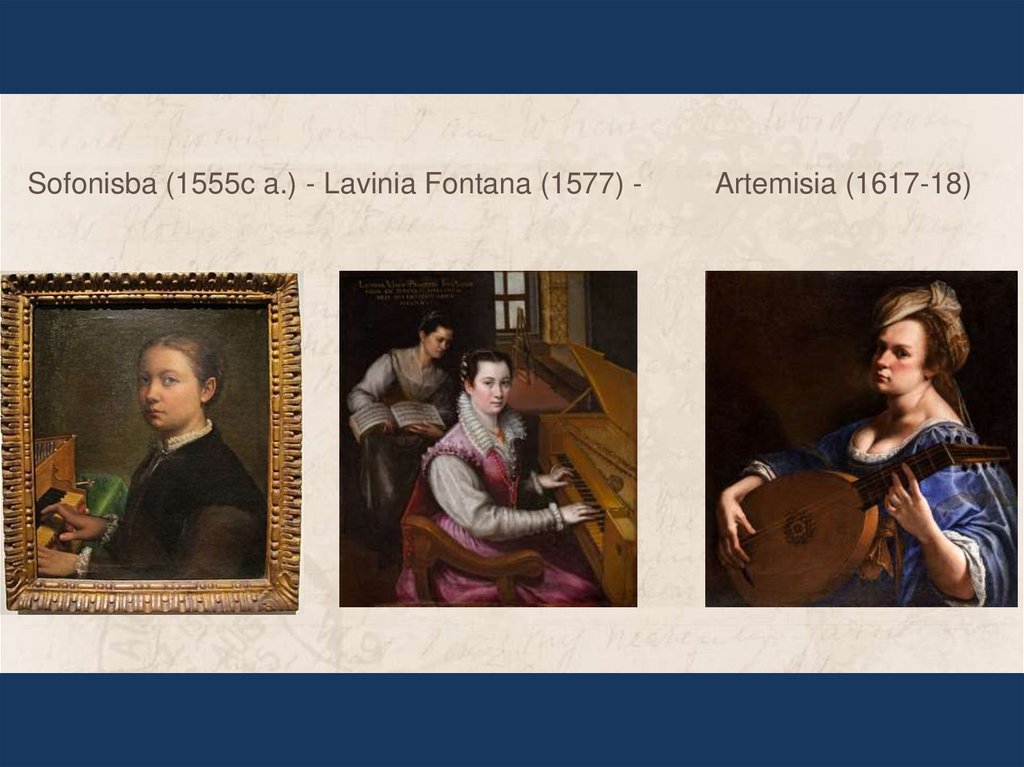
Sofonisba (1555c a.) - Lavinia Fontana (1577) -Artemisia (1617-18)
47.
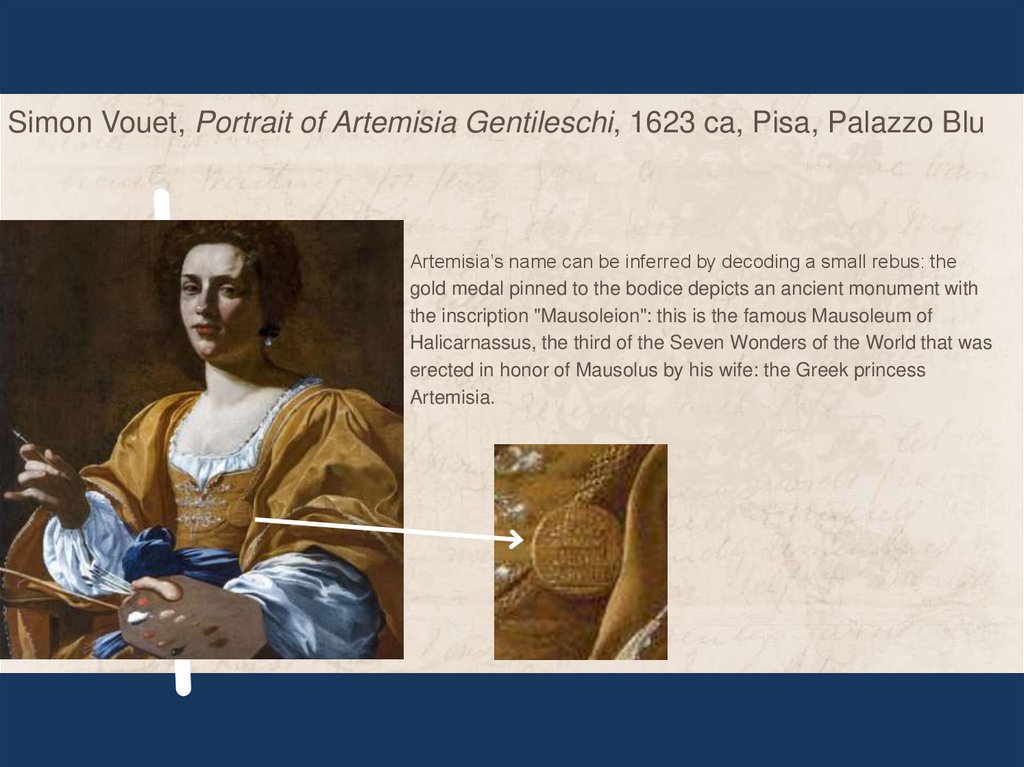
Simon Vouet, Portrait of Artemisia Gentileschi, 1623 ca, Pisa, Palazzo Blu• Artemisia’s name can be inferred by decoding a small rebus: the
gold medal pinned to the bodice depicts an ancient monument with
the inscription "Mausoleion": this is the famous Mausoleum of
Halicarnassus, the third of the Seven Wonders of the World that was
erected in honor of Mausolus by his wife: the Greek princess
Artemisia.
48.
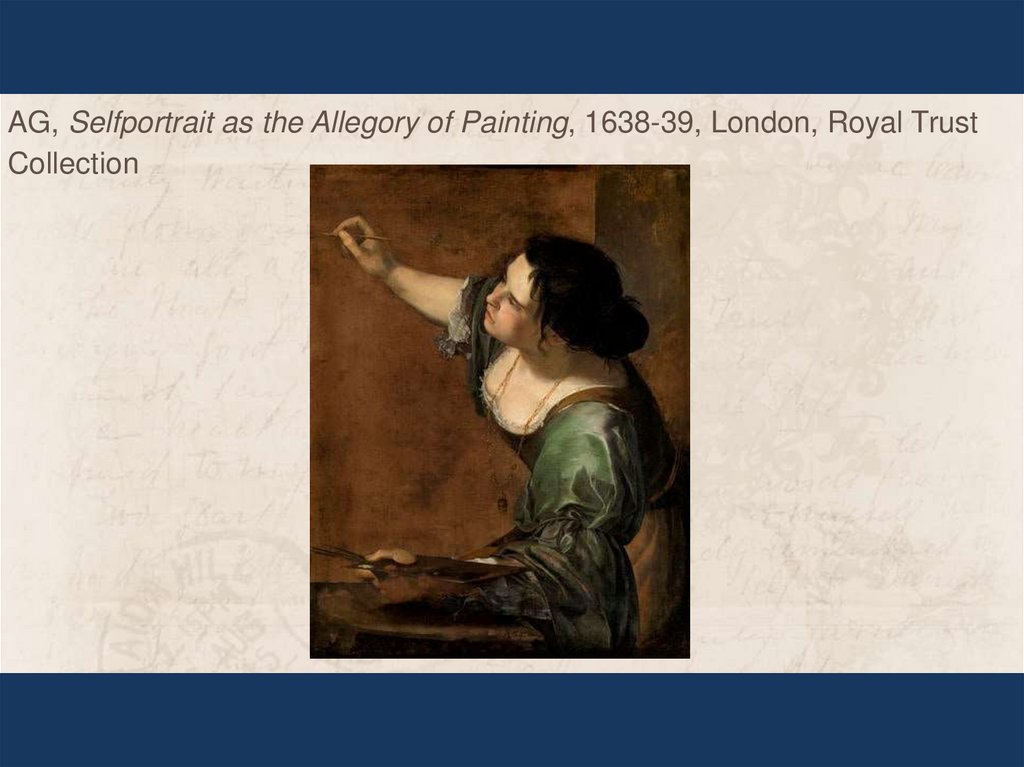
AG, Selfportrait as the Allegory of Painting, 1638-39, London, Royal TrustCollection
49. Giulio Mancini
According to Giulio Mancini:Caravaggio’s painting is closely tied to nature, which is always before their eyes as they
work. It succeeds well with one figure alone, but in narrative compositions and in the
interpretation of feelings, which are based on imagination and not direct observation of
things, mere copying does not seem to me to be satisfactory… As a result, the figures
though they look forceful, lack movement, expression, and grace.
Describing Caravaggesque work method, Mancini praised the type of painting consisting in
a single figure of saints executed while observing a model, accompanied at most by angels
or secondary figures who do not interact with the subject, but whose presence suggests a
narrative scene. Mancini raised the contradiction that would be widely debated throughout
the XVII century: the alleged failure to execute large compositions that imbue the figures
with movement and expression in accordance with traditional rules of history painting. And
the resulting difficulty in creating complex scenes from imagination.
49
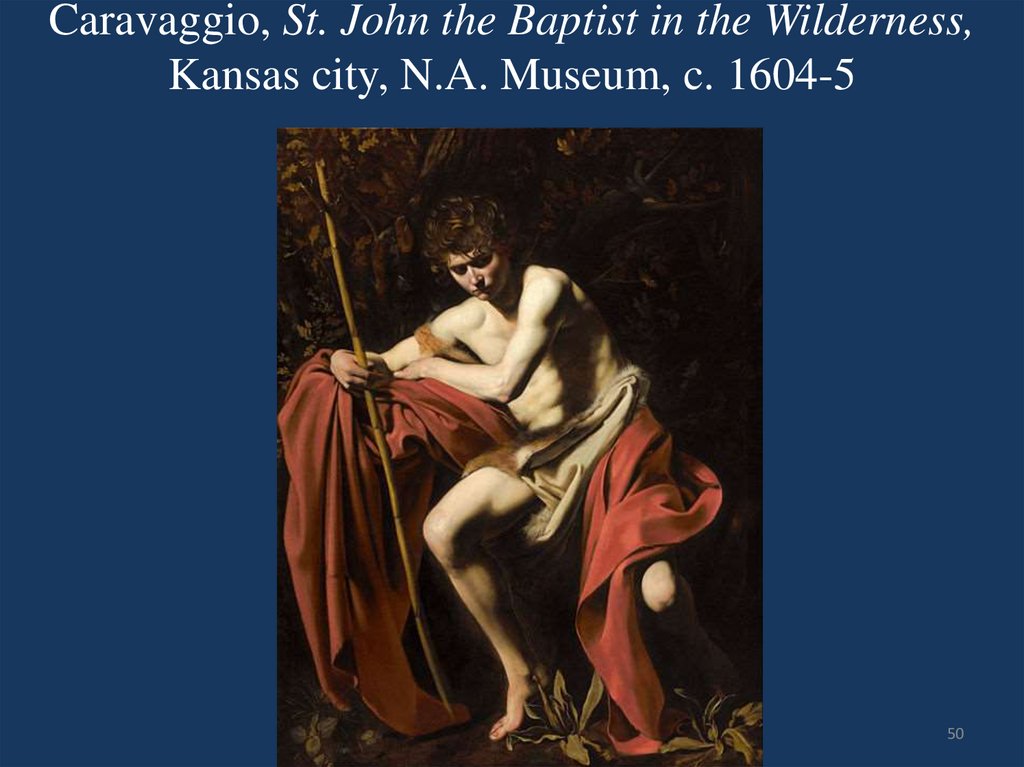
50. Caravaggio, St. John the Baptist in the Wilderness, Kansas city, N.A. Museum, c. 1604-5
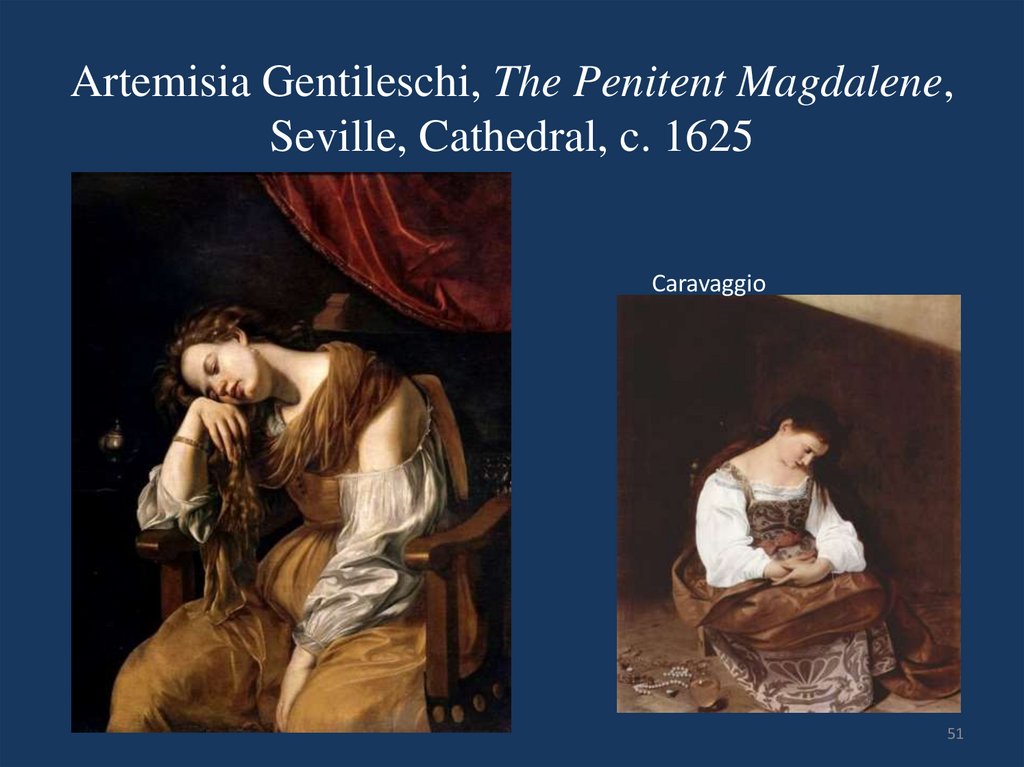
5051. Artemisia Gentileschi, The Penitent Magdalene, Seville, Cathedral, c. 1625
Caravaggio51
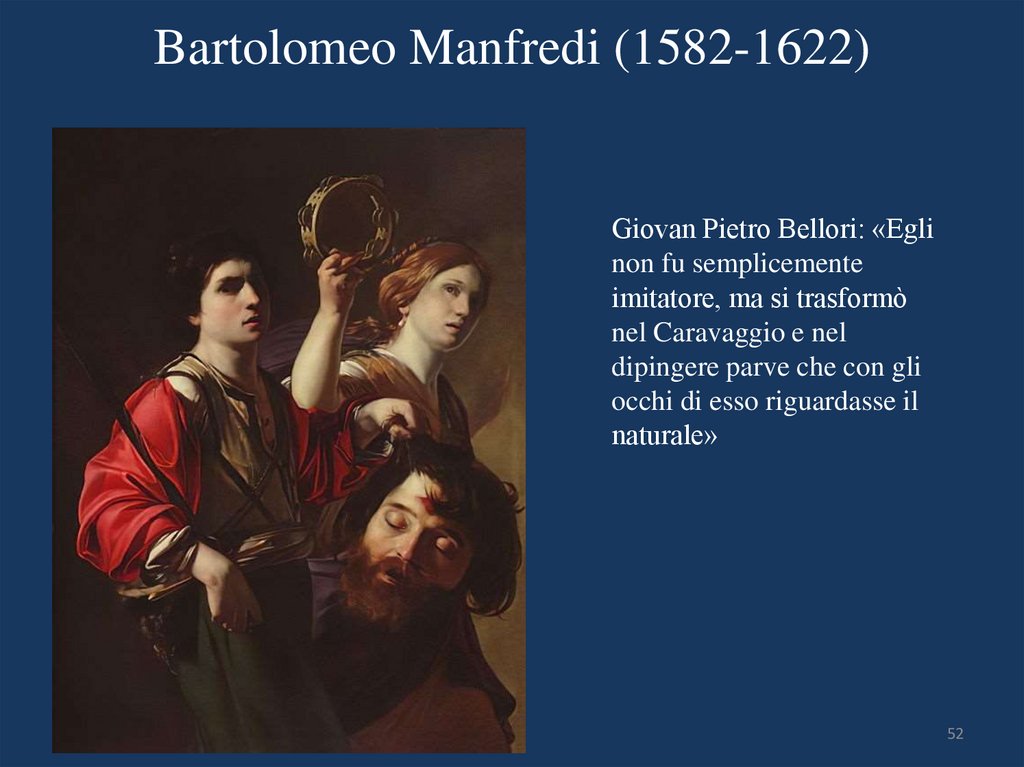
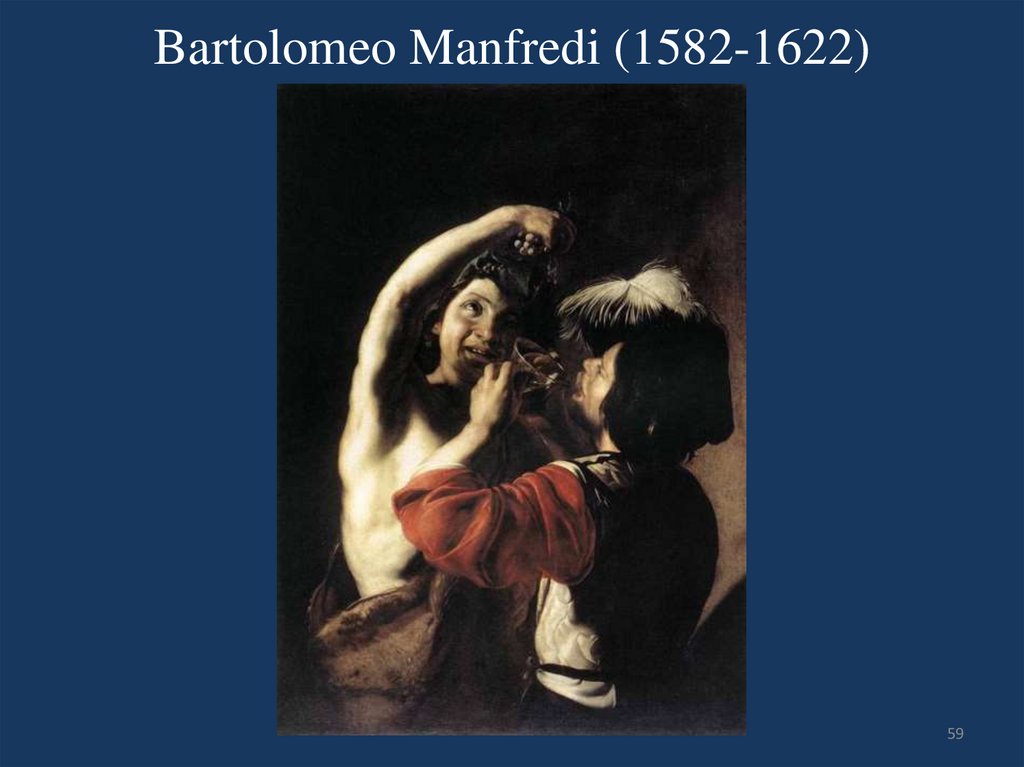
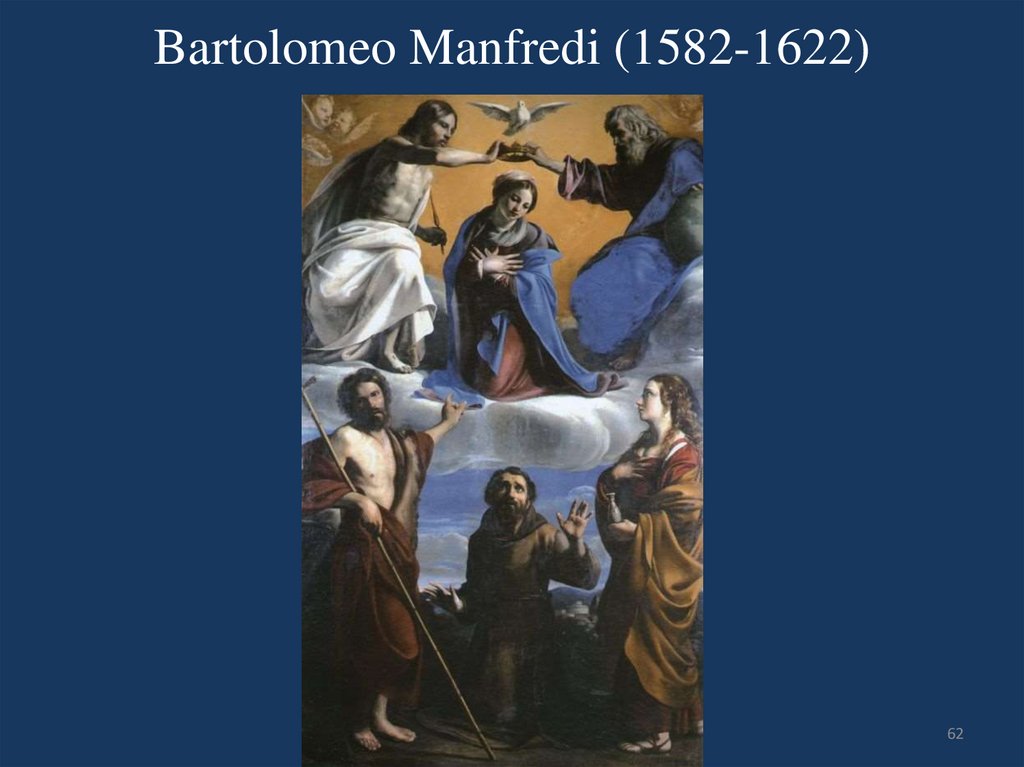
52. Bartolomeo Manfredi (1582-1622)
Giovan Pietro Bellori: «Eglinon fu semplicemente
imitatore, ma si trasformò
nel Caravaggio e nel
dipingere parve che con gli
occhi di esso riguardasse il
naturale»
52
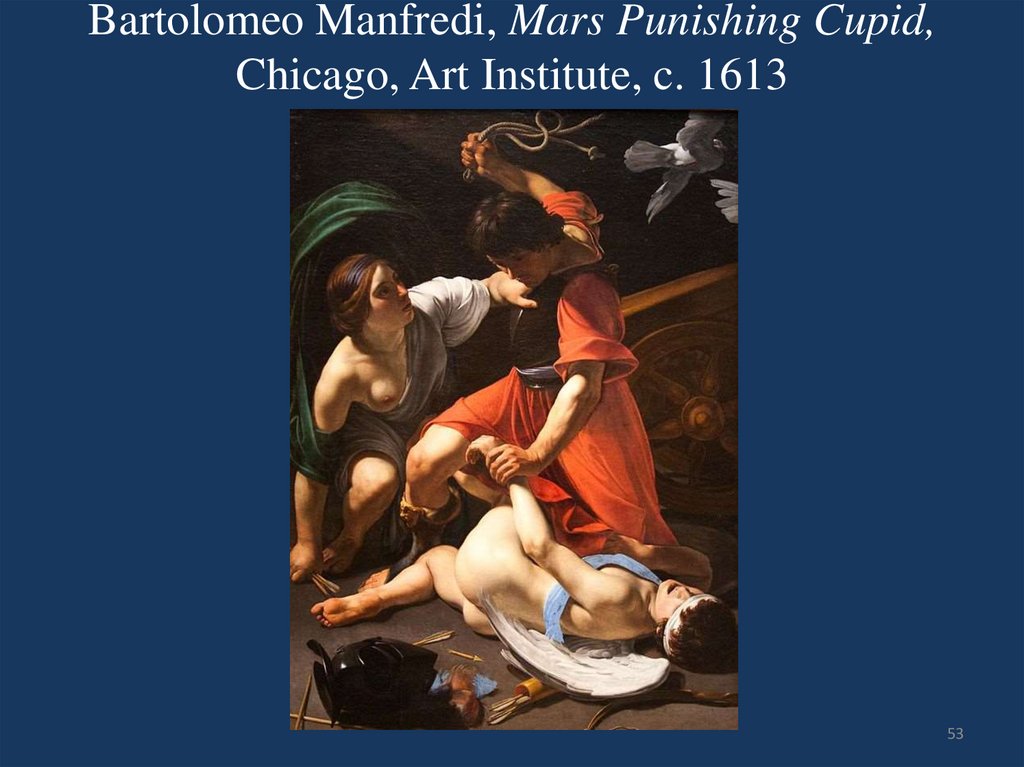
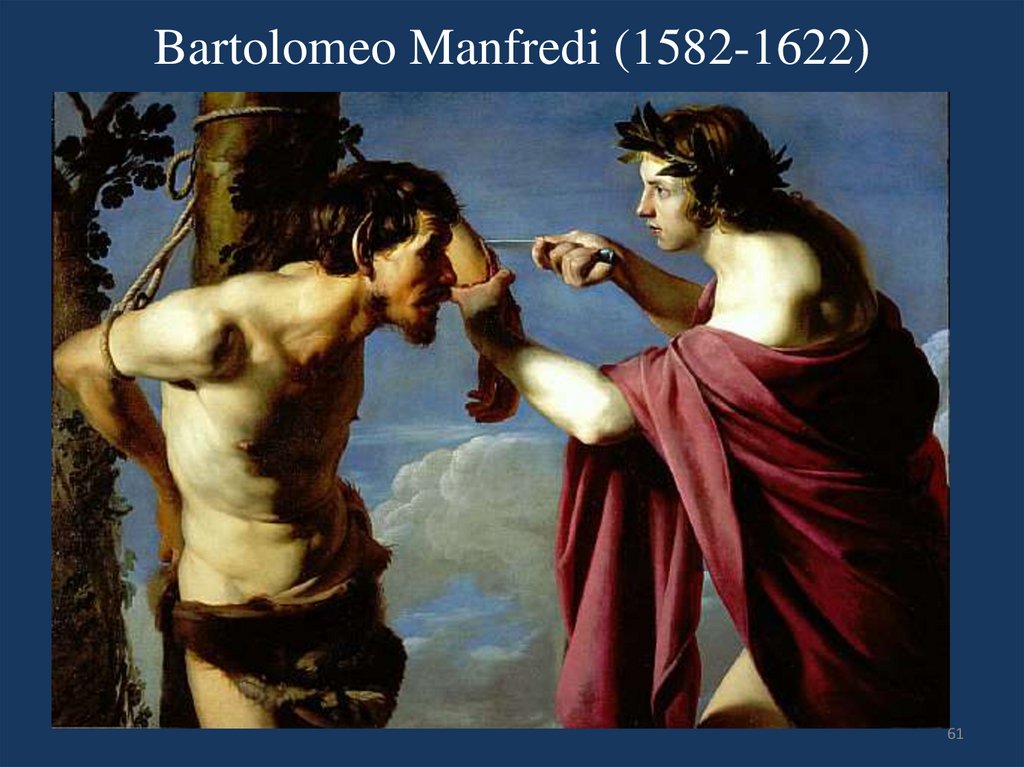
53. Bartolomeo Manfredi, Mars Punishing Cupid, Chicago, Art Institute, c. 1613
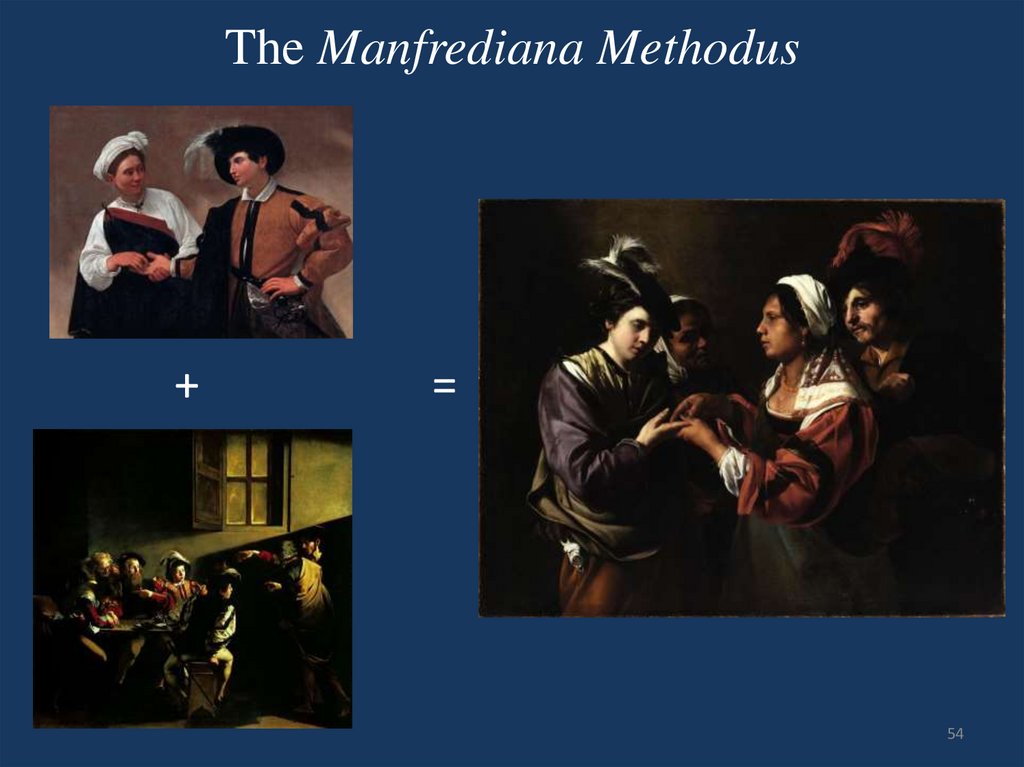
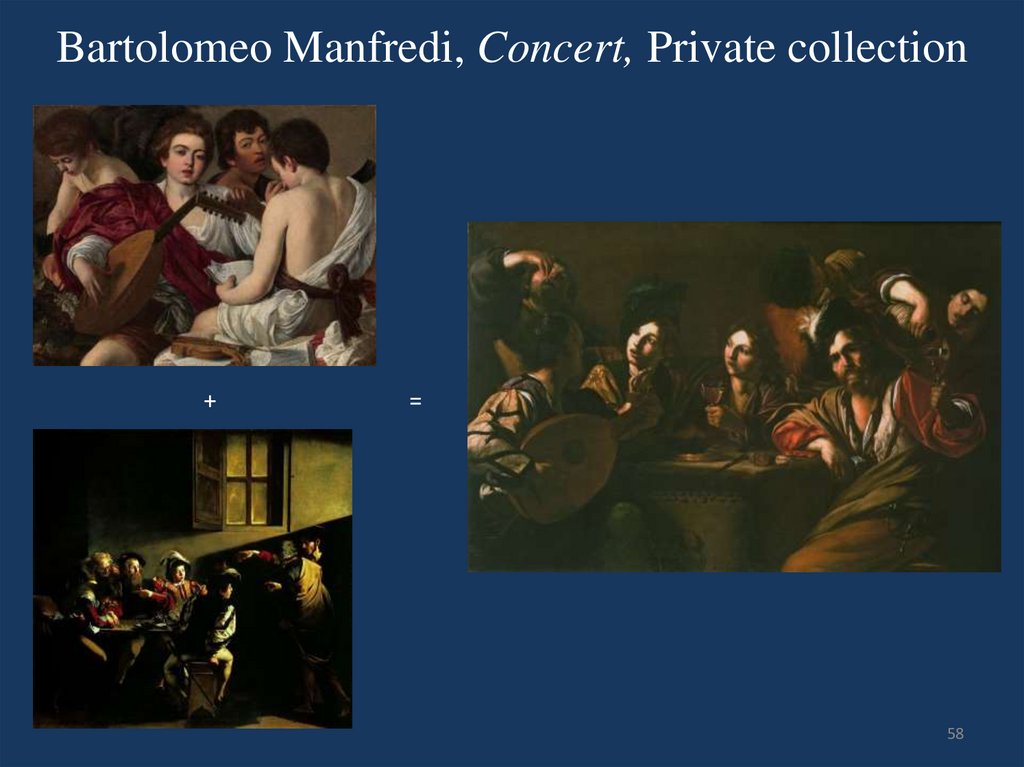
5354. The Manfrediana Methodus
+=
54
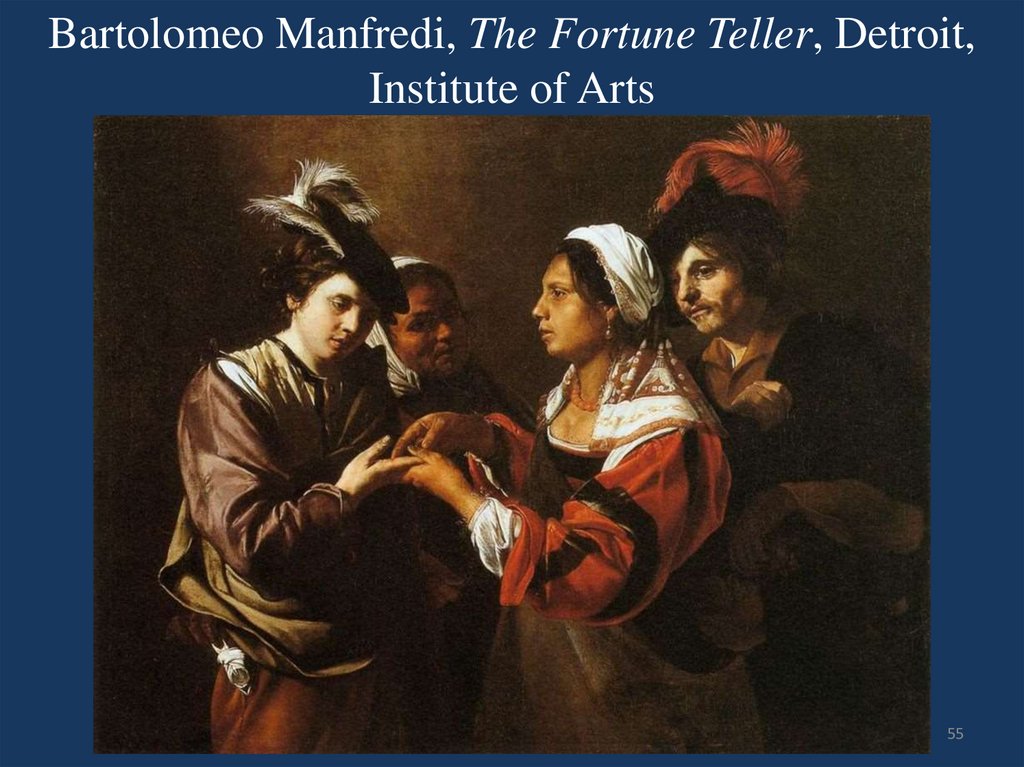
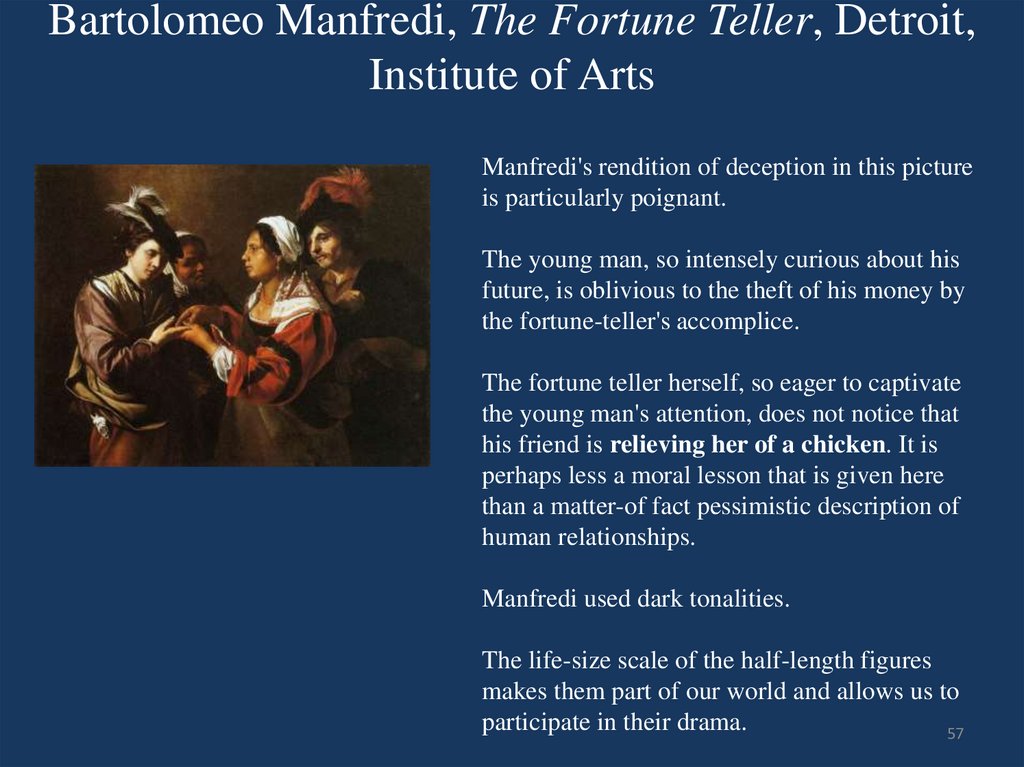
55. Bartolomeo Manfredi, The Fortune Teller, Detroit, Institute of Arts
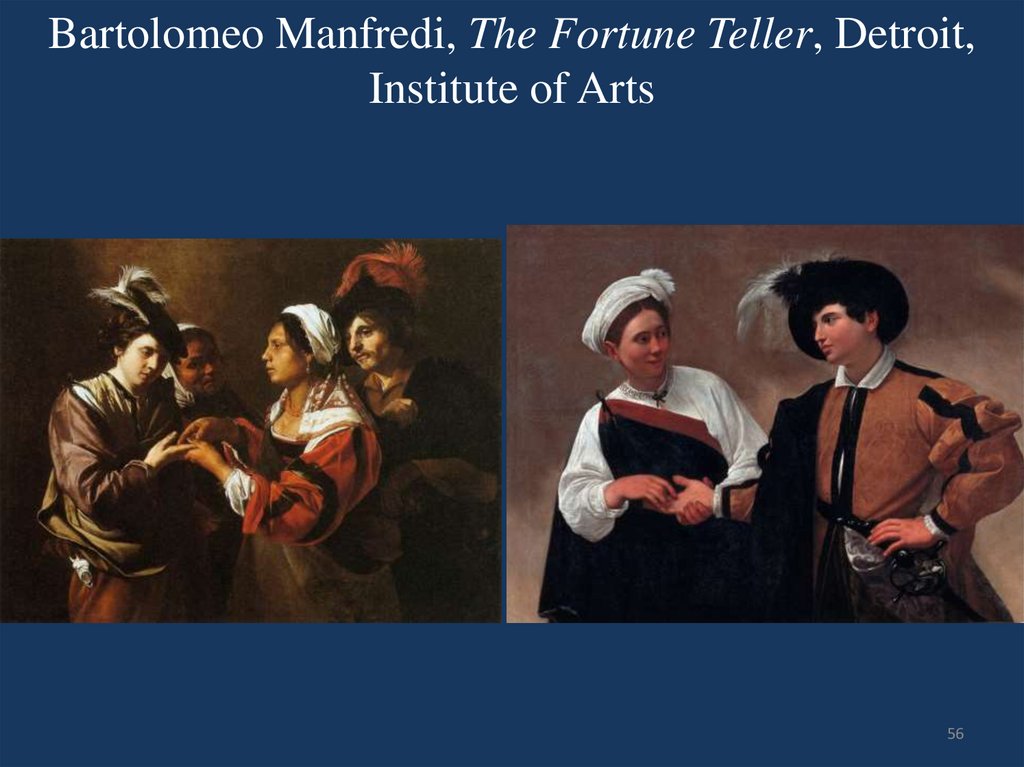
5556. Bartolomeo Manfredi, The Fortune Teller, Detroit, Institute of Arts
5657. Bartolomeo Manfredi, The Fortune Teller, Detroit, Institute of Arts
Manfredi's rendition of deception in this pictureis particularly poignant.
The young man, so intensely curious about his
future, is oblivious to the theft of his money by
the fortune-teller's accomplice.
The fortune teller herself, so eager to captivate
the young man's attention, does not notice that
his friend is relieving her of a chicken. It is
perhaps less a moral lesson that is given here
than a matter-of fact pessimistic description of
human relationships.
Manfredi used dark tonalities.
The life-size scale of the half-length figures
makes them part of our world and allows us to
participate in their drama.
57
58. Bartolomeo Manfredi, Concert, Private collection
+=
58
59. Bartolomeo Manfredi (1582-1622)
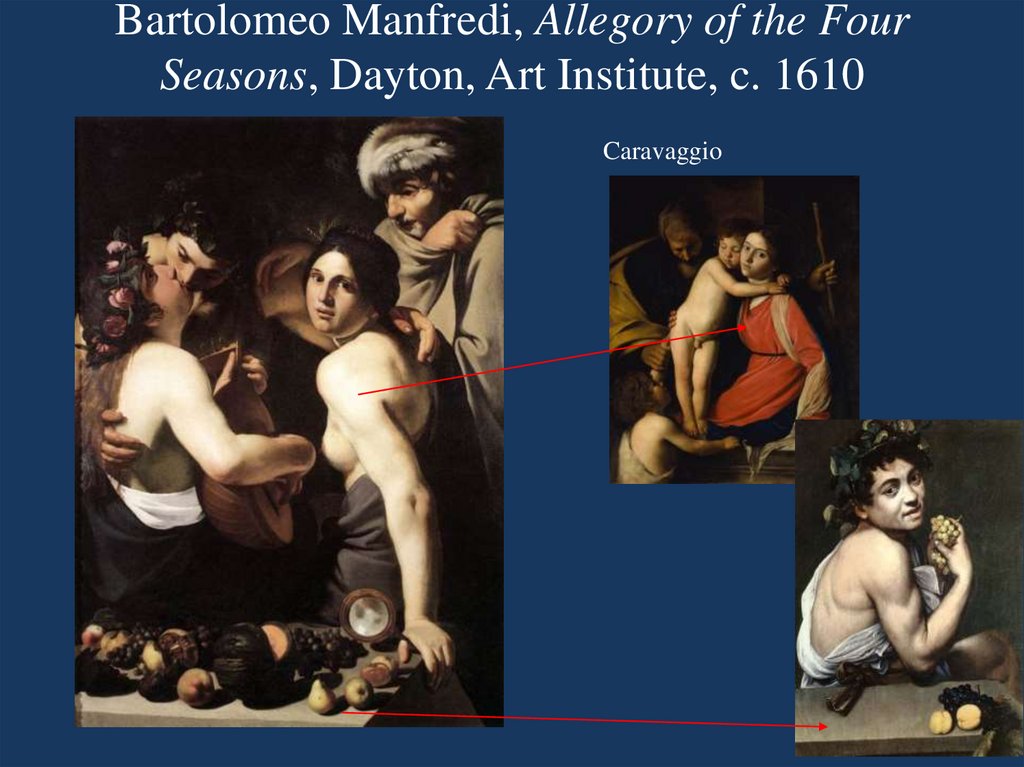
5960. Bartolomeo Manfredi, Allegory of the Four Seasons, Dayton, Art Institute, c. 1610
Caravaggio60
61. Bartolomeo Manfredi (1582-1622)
6162. Bartolomeo Manfredi (1582-1622)
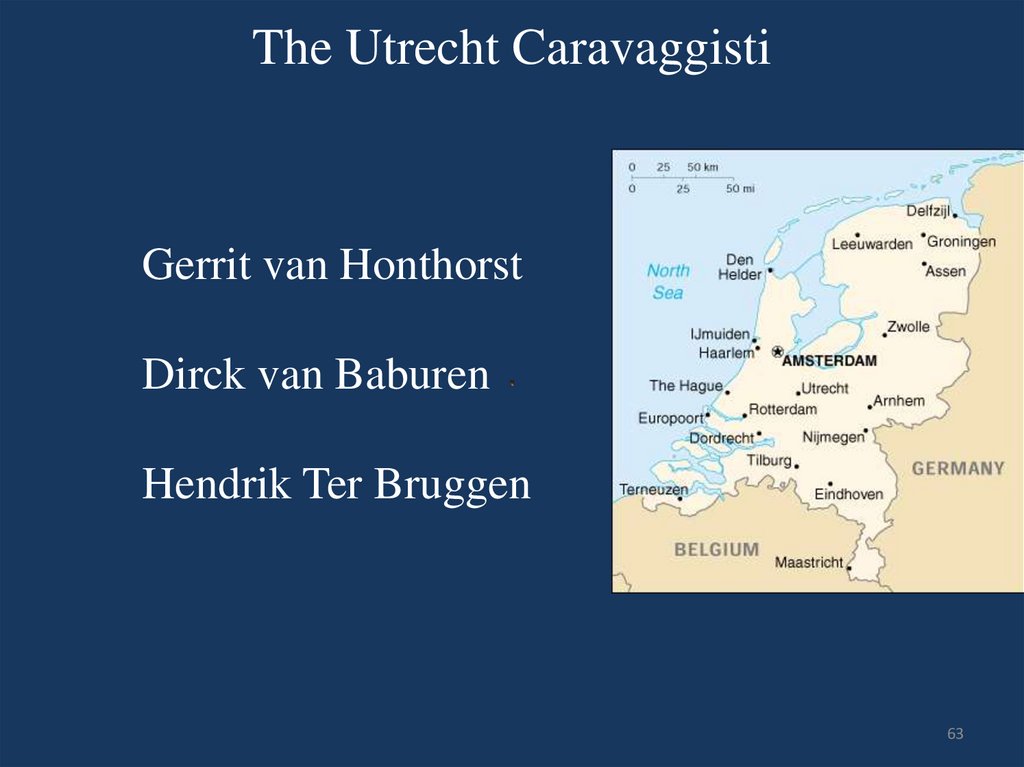
6263. The Utrecht Caravaggisti
Gerrit van HonthorstDirck van Baburen
Hendrik Ter Bruggen
63
64. Karel van Mander, 1603-4
“I would like to encourage you most earnestly to travel, were it not that I fear that you couldtake the wrong path, for Rome, more than other places, is the city that is often the goal of the
painter’s journey, being the head of the schools of painting, but it is also the ideal place for
wastrels and prodigal sons to spend all that they have.
So be careful, for Rome is the place where you risk losing everything.
Avoid small inns and bad company, do not show that you have much money with you. Do not
reveal that you are on a long journey. Be respectable and polite, do not get into arguments,
always have a goodly amount of money, but at the same time take care not to loan much to
your own unfortunate fellow countrymen. Learn the local customs everywhere, follow the
good ones and avoid the bad. Leave early and also seek lodgings early, and inspect the beds
and sheets closely in order to avoid sickness. But above all, never have anything to do with
light women, for leaving aside the sin they could damage you for life”.
Van Mander, who had himself travelled to Rome, was speaking from experience.
64
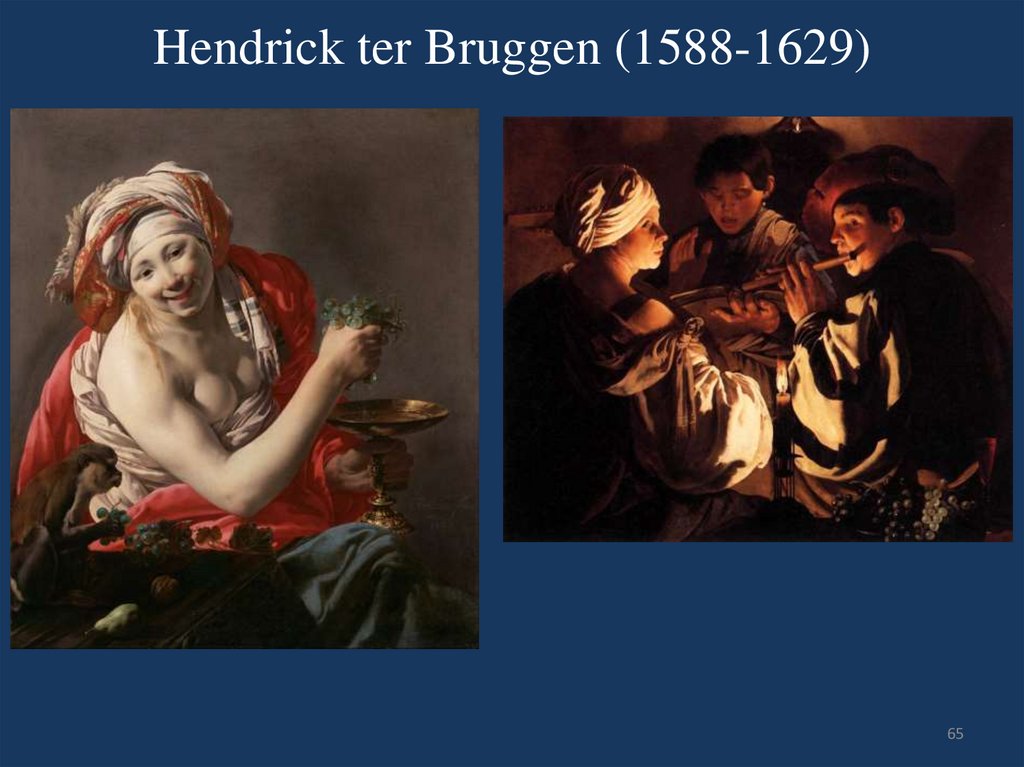
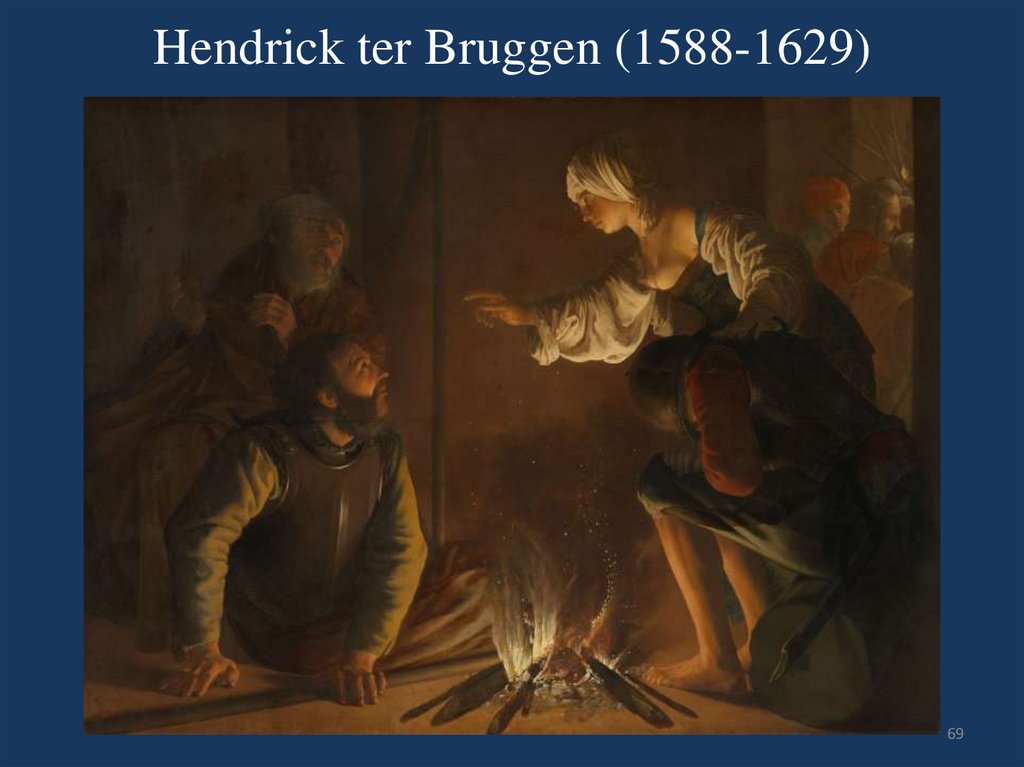
65. Hendrick ter Bruggen (1588-1629)
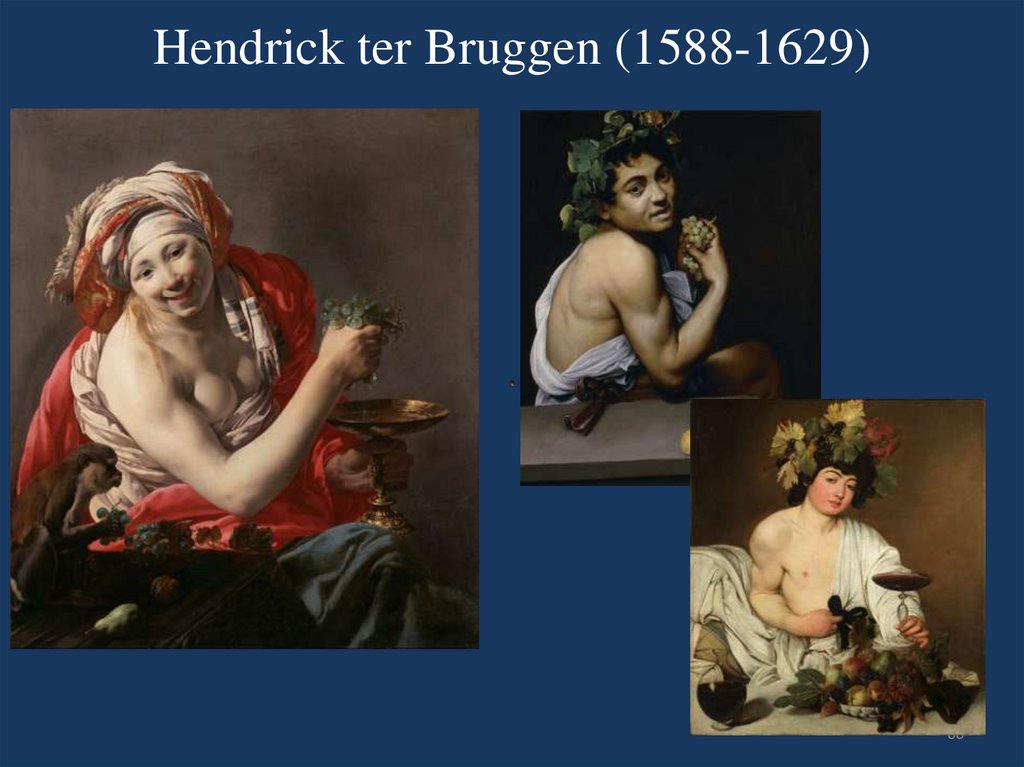
6566. Hendrick ter Bruggen (1588-1629)
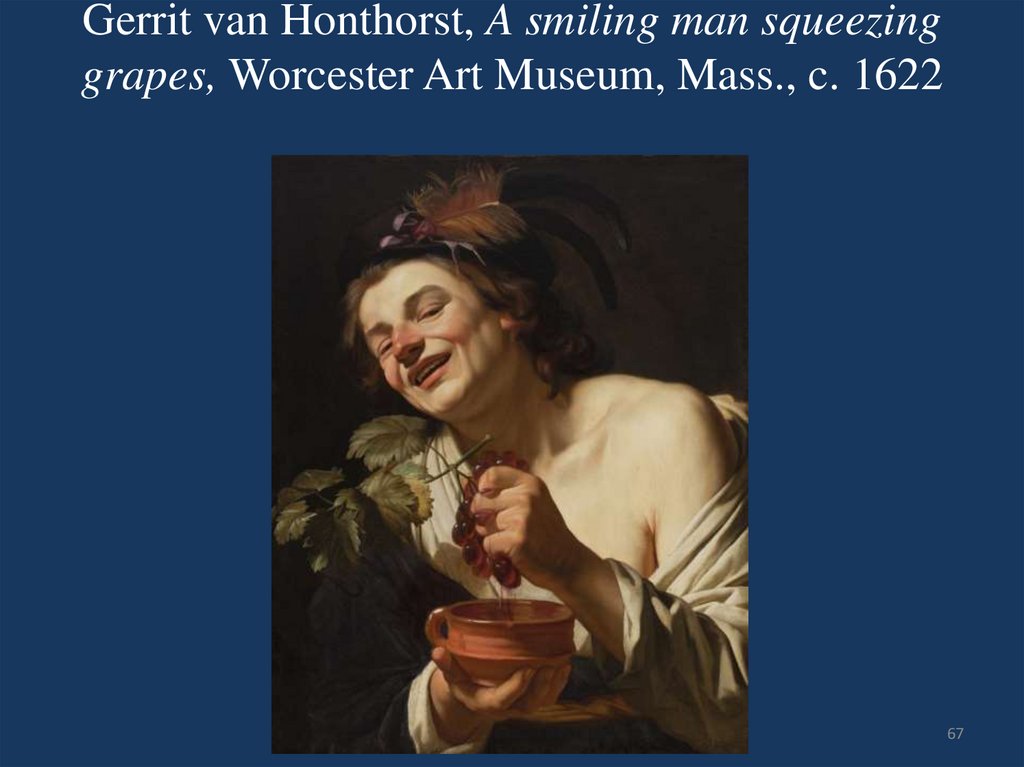
6667. Gerrit van Honthorst, A smiling man squeezing grapes, Worcester Art Museum, Mass., c. 1622
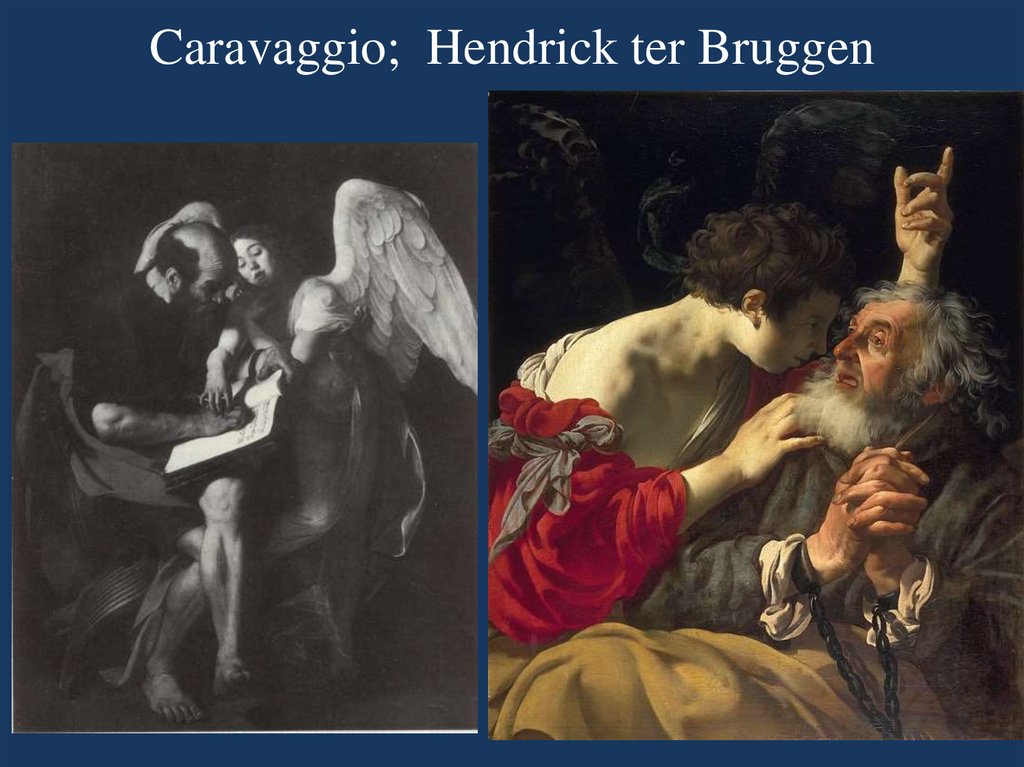
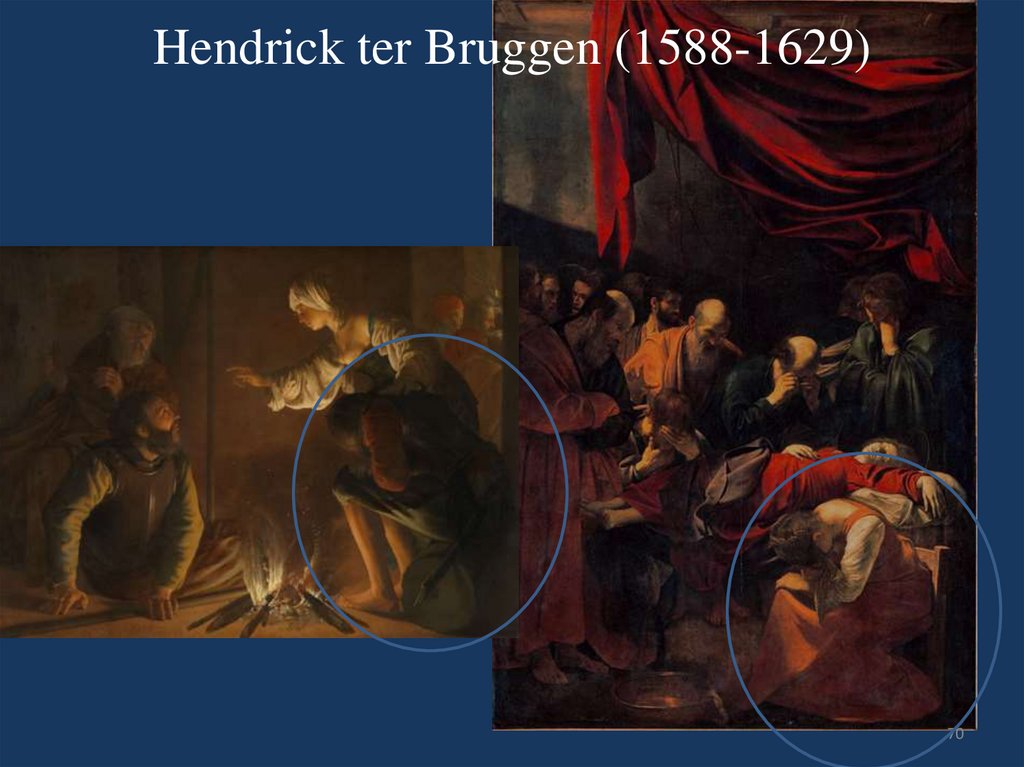
6768. Caravaggio; Hendrick ter Bruggen
6869. Hendrick ter Bruggen (1588-1629)
6970. Hendrick ter Bruggen (1588-1629)
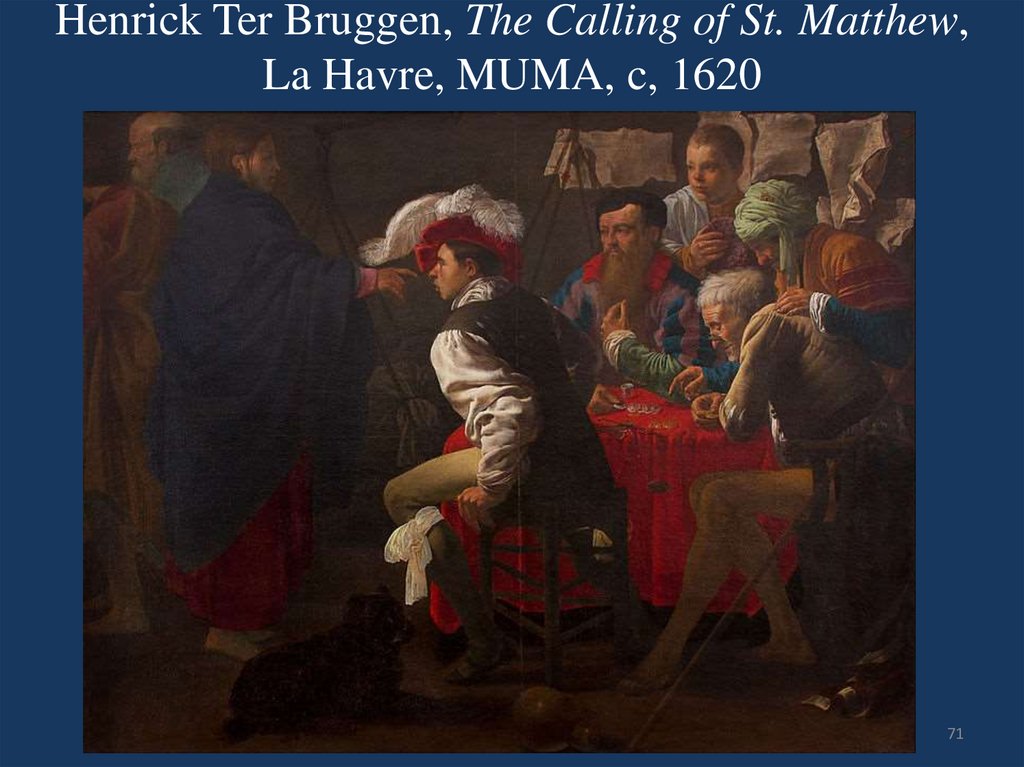
7071. Henrick Ter Bruggen, The Calling of St. Matthew, La Havre, MUMA, c, 1620
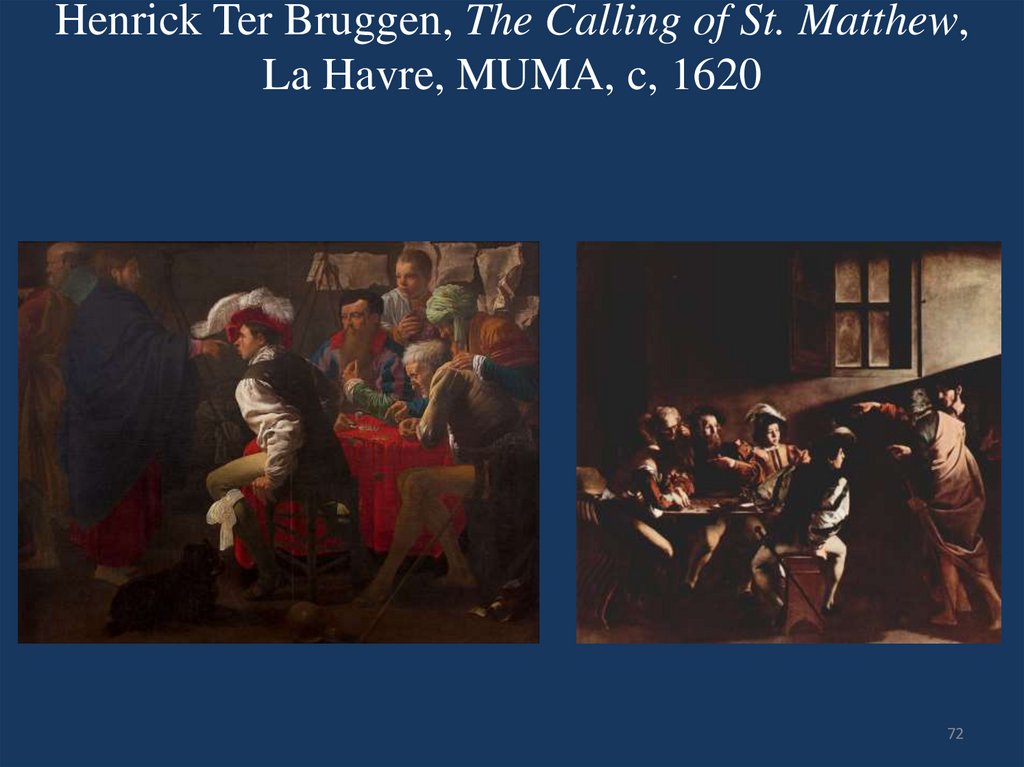
7172. Henrick Ter Bruggen, The Calling of St. Matthew, La Havre, MUMA, c, 1620
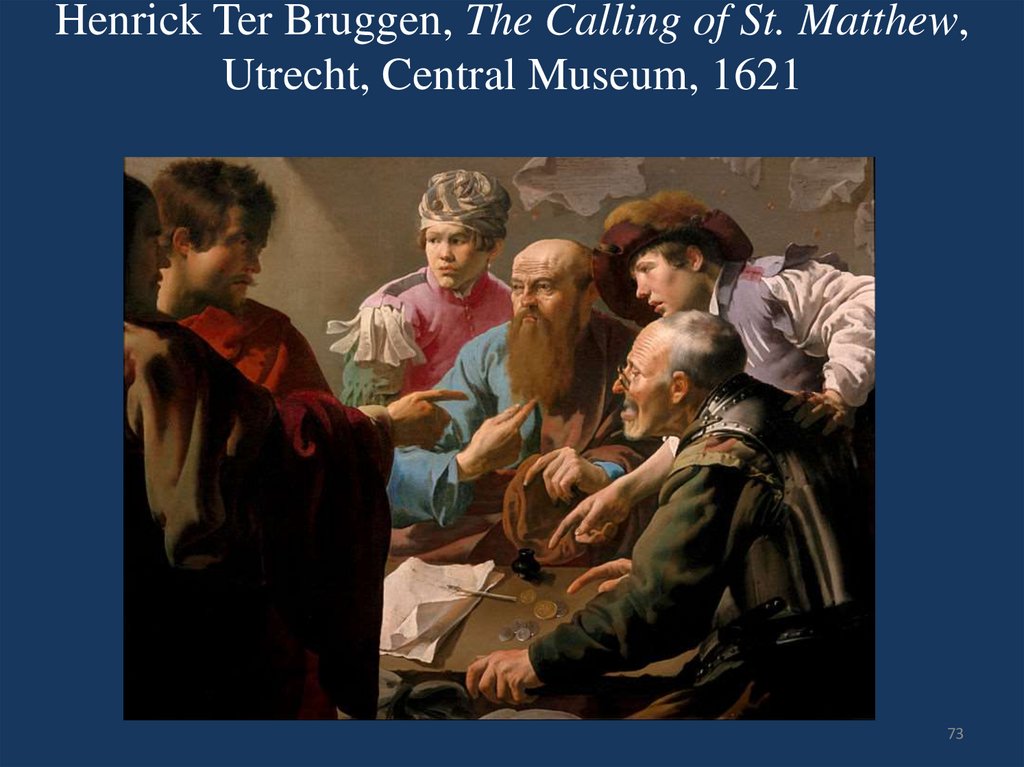
7273. Henrick Ter Bruggen, The Calling of St. Matthew, Utrecht, Central Museum, 1621
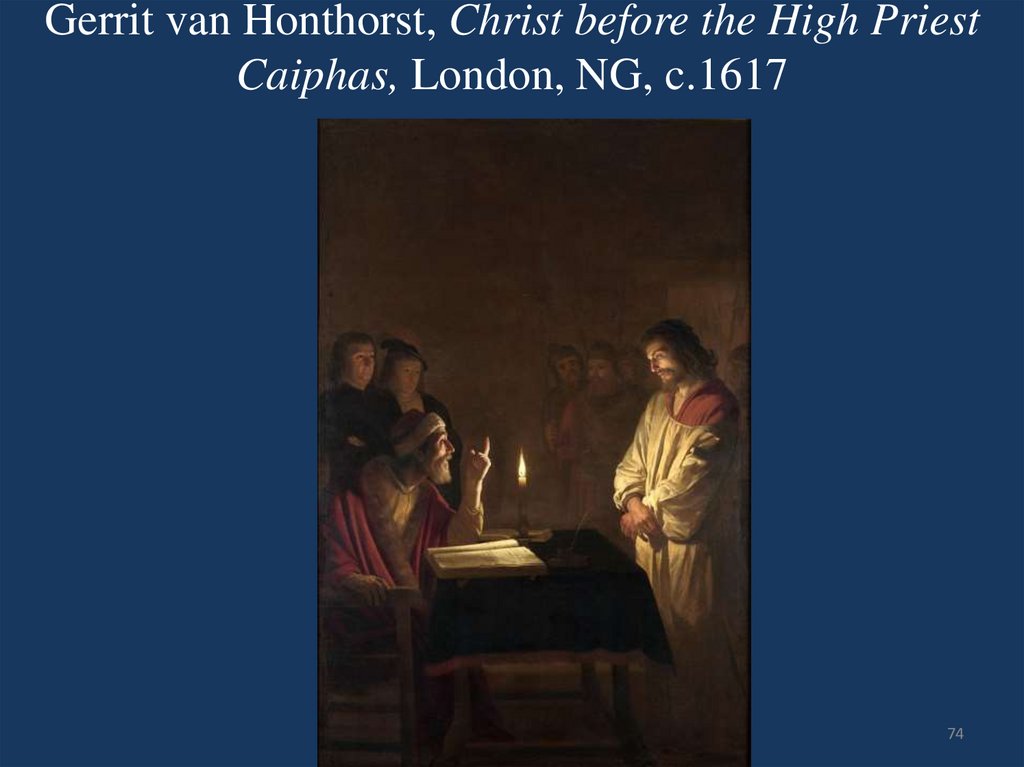
7374. Gerrit van Honthorst, Christ before the High Priest Caiphas, London, NG, c.1617
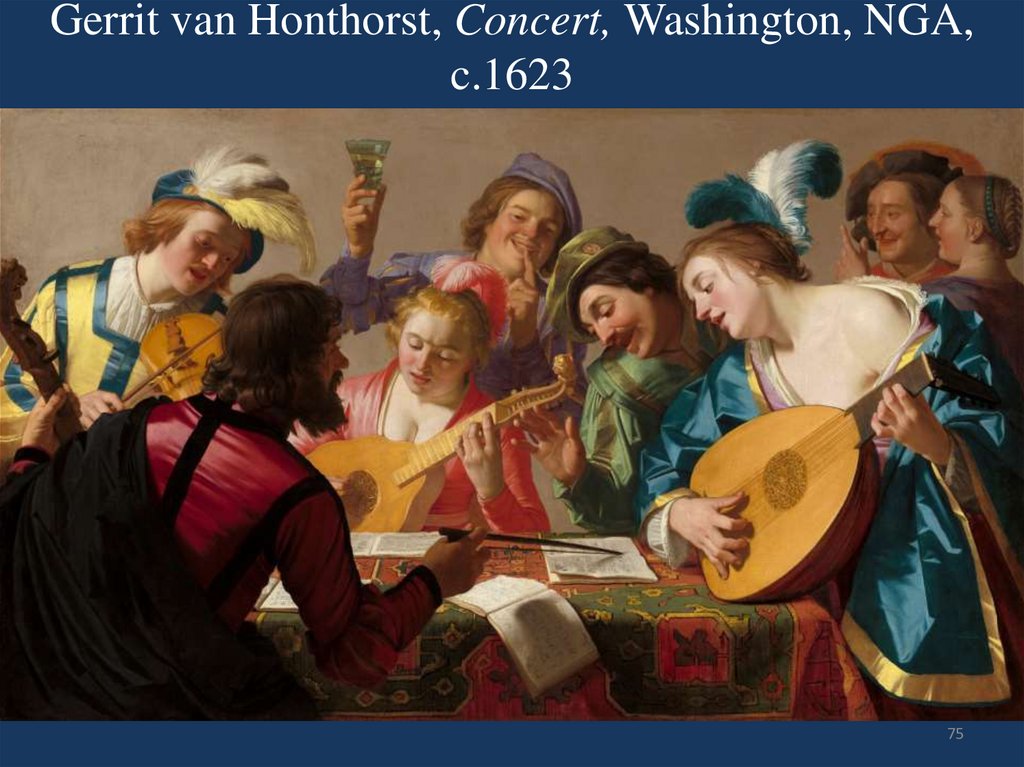
7475. Gerrit van Honthorst, Concert, Washington, NGA, c.1623
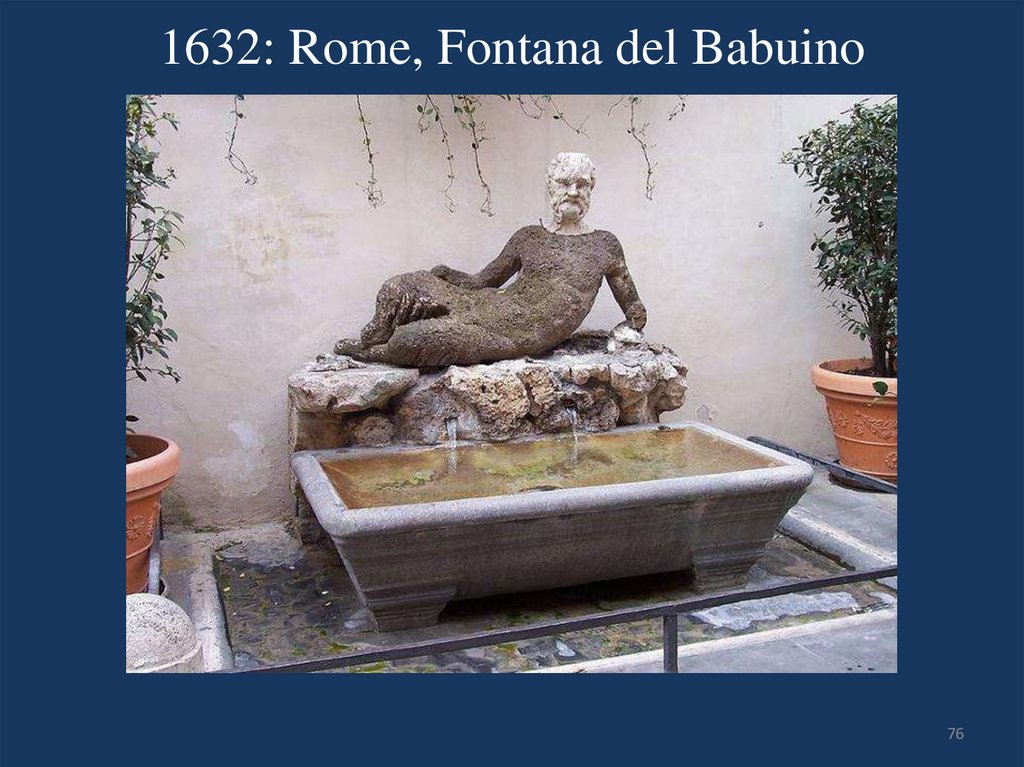
7576. 1632: Rome, Fontana del Babuino
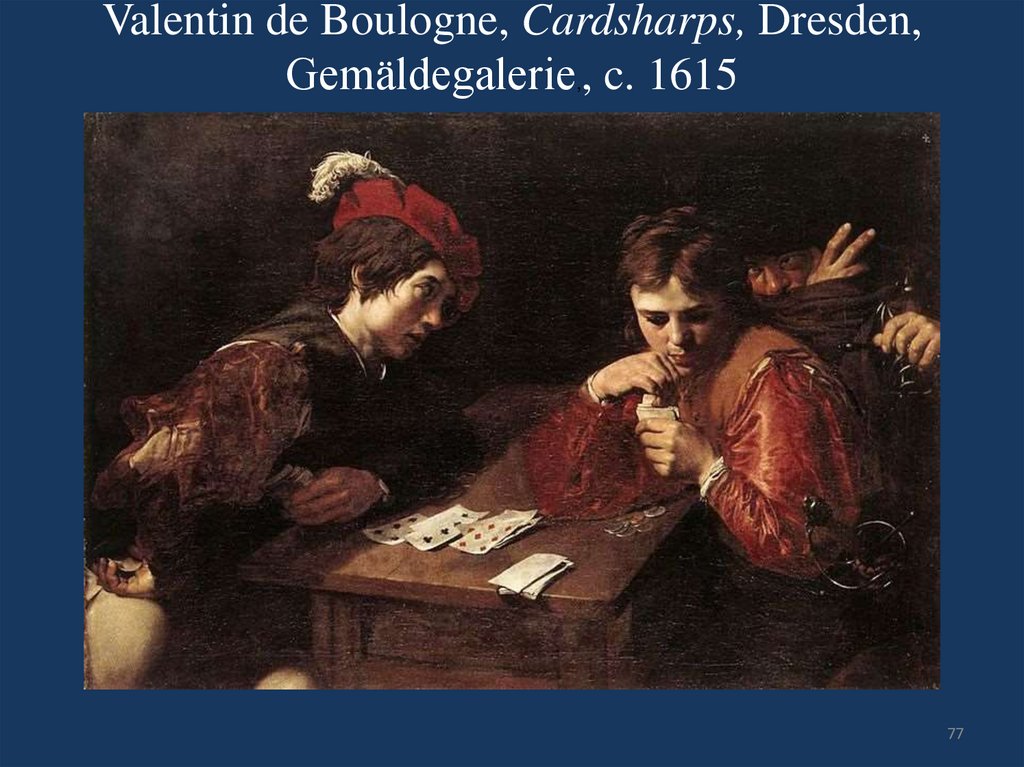
7677. Valentin de Boulogne, Cardsharps, Dresden, Gemäldegalerie,, c. 1615
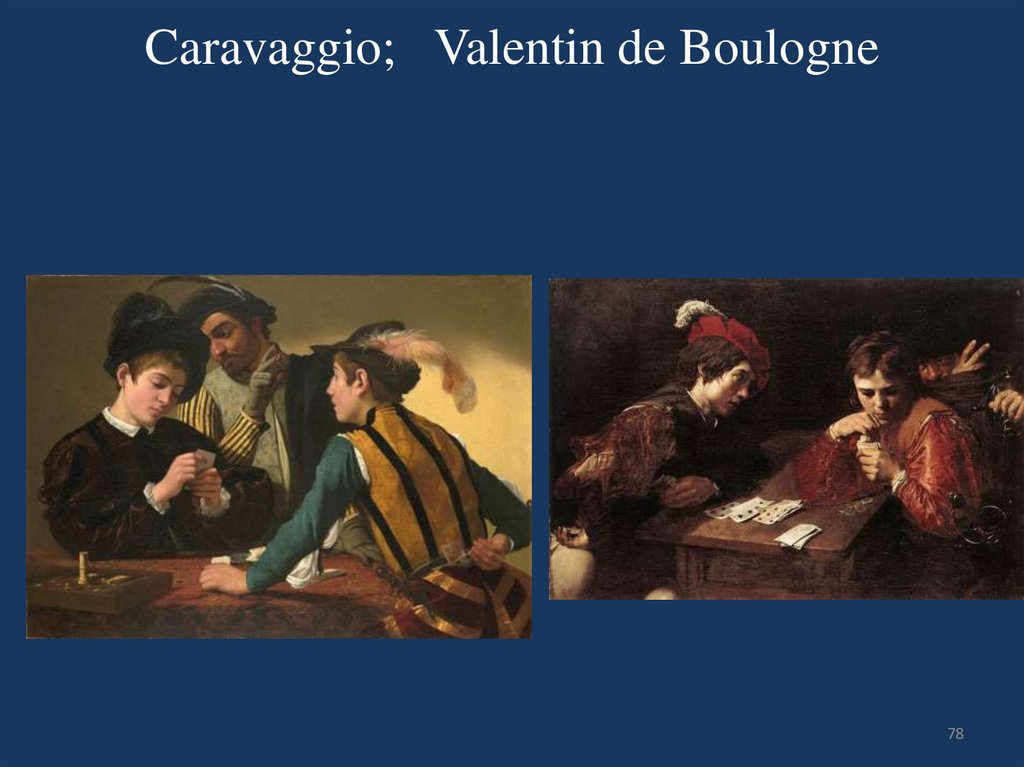
7778. Caravaggio; Valentin de Boulogne
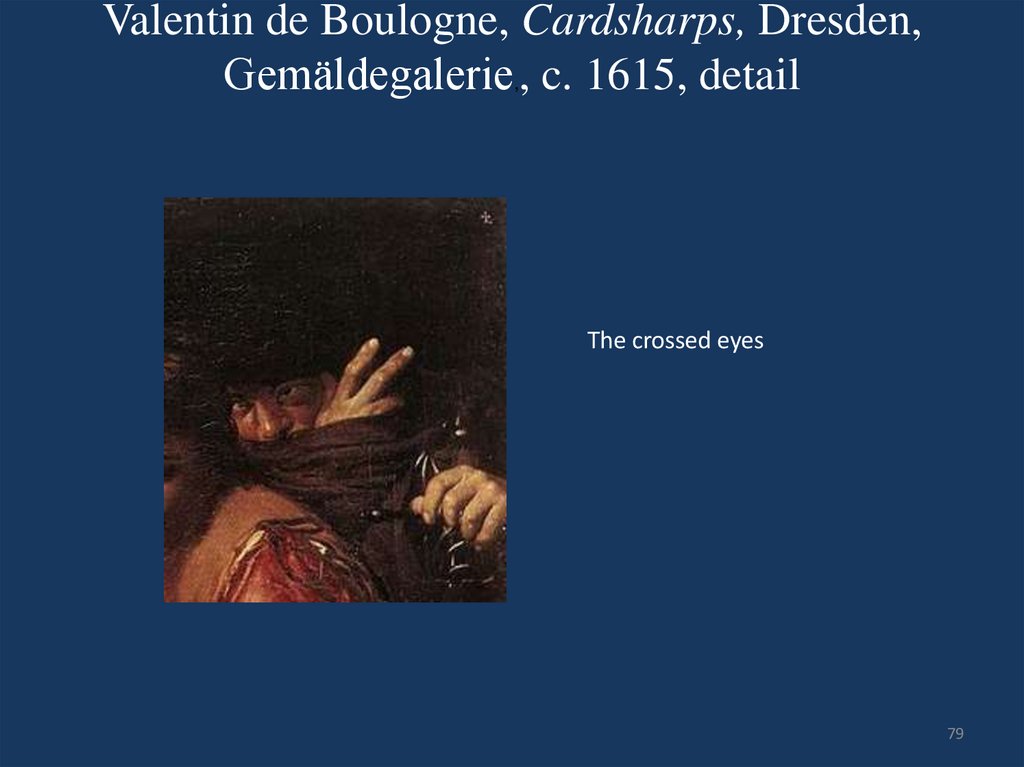
7879. Valentin de Boulogne, Cardsharps, Dresden, Gemäldegalerie,, c. 1615, detail
The crossed eyes79
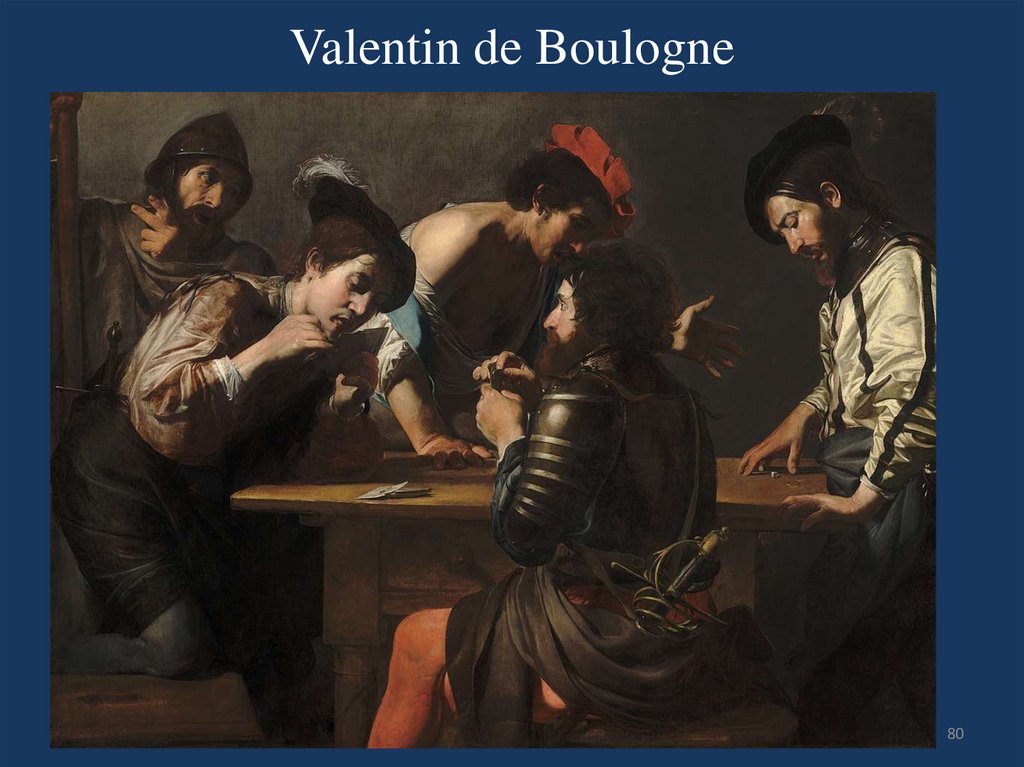
80. Valentin de Boulogne
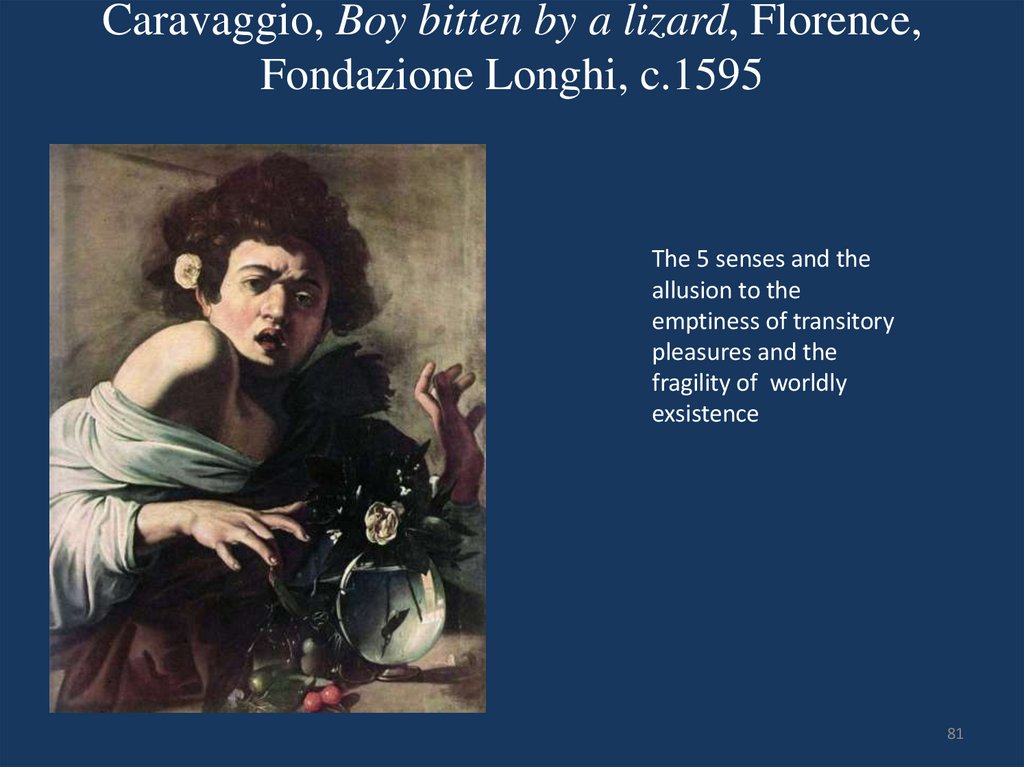
8081. Caravaggio, Boy bitten by a lizard, Florence, Fondazione Longhi, c.1595
The 5 senses and theallusion to the
emptiness of transitory
pleasures and the
fragility of worldly
exsistence
81