 История
Похожие презентации:



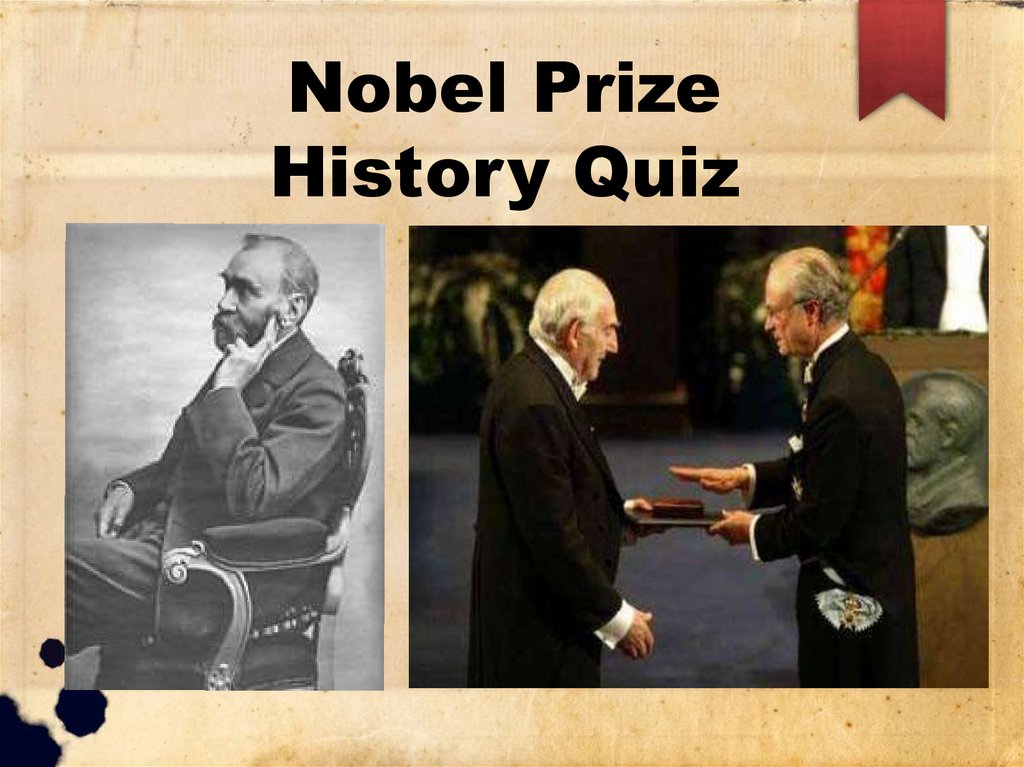
Nobel Prize History Quiz
1.
A BLUEPRINTFOR A BETTER
WORLD
2.
Nobel PrizeHistory Quiz
3.
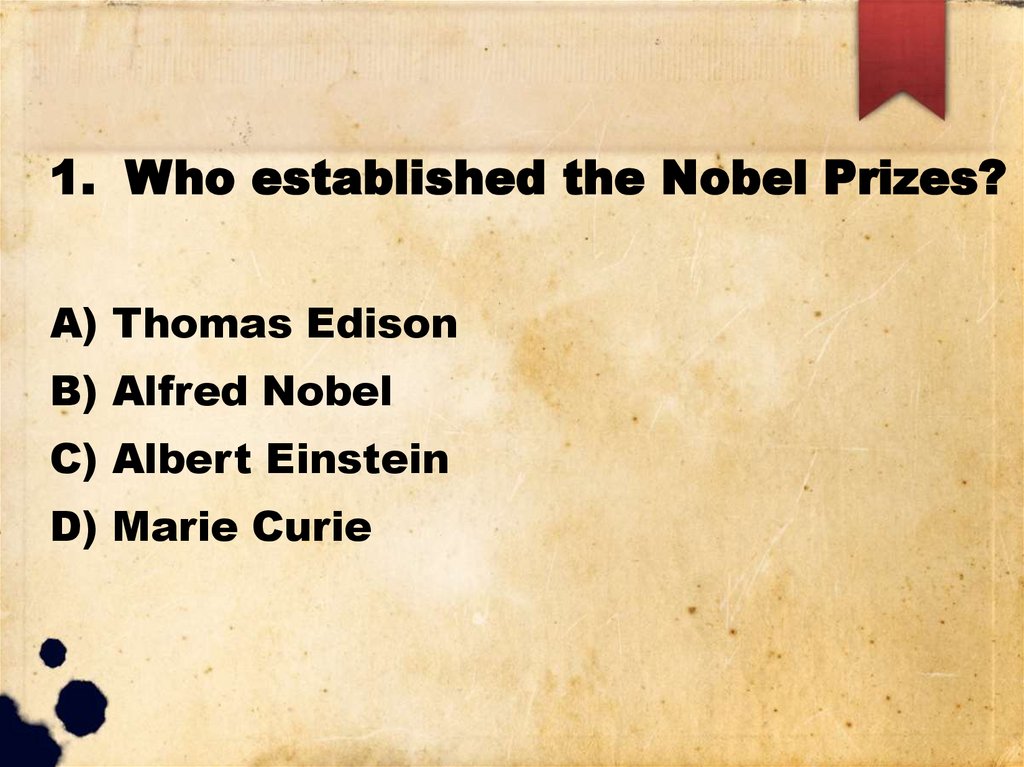
1. Who established the Nobel Prizes?A) Thomas Edison
B) Alfred Nobel
C) Albert Einstein
D) Marie Curie
4.
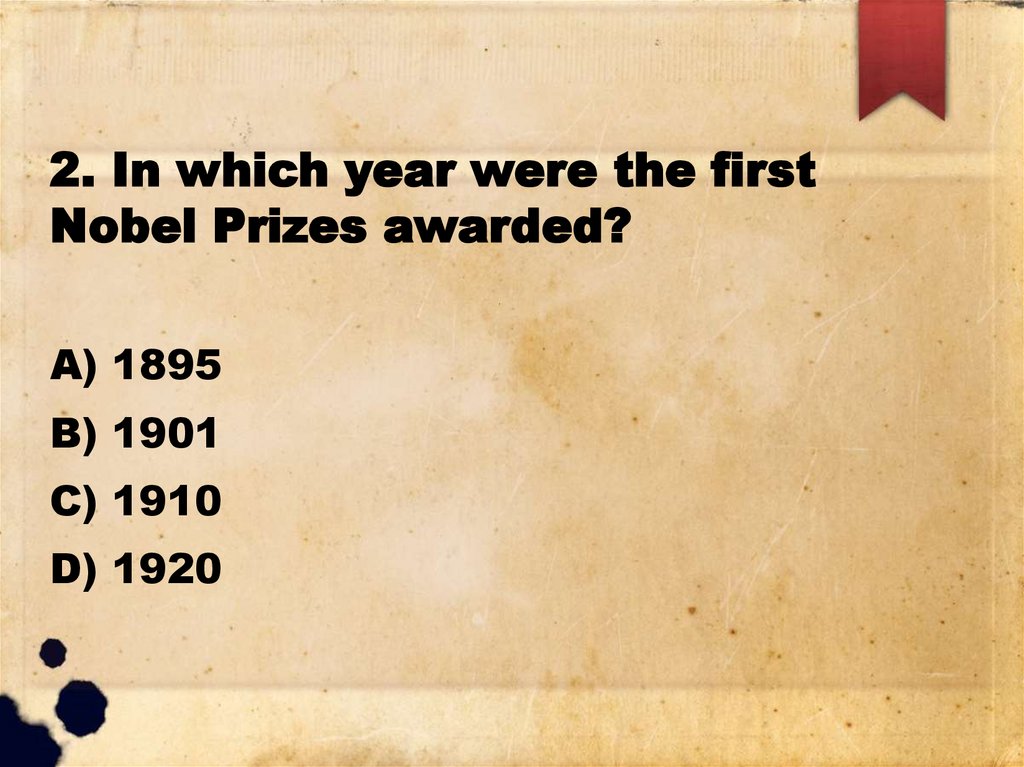
2. In which year were the firstNobel Prizes awarded?
A) 1895
B) 1901
C) 1910
D) 1920
5.
3. How many categories of NobelPrizes are there originally?
A) Four
B) Five
C) Six
D) Seven
6.
4. Which scientist was the firstwoman to win a Nobel Prize?
A) Ada Yonath
B) Jocelyn Bell Burnell
C) Marie Curie
D) Barbara McClintock
7.
5. What is the name of the prizethat honors achievements in
Economics?
A) The Adam Smith Memorial Award
B) The John Maynard Keynes Medal
C) The Nobel Memorial Prize in Economic
Sciences
D) The David Ricardo Honor
8.
6. Who won the Nobel Peace Prize forhis efforts in fighting racial inequality
and promoting civil rights?
A) Martin Luther King Jr.
B) Nelson Mandela
C) Mahatma Gandhi
D) Malala Yousafzai
9.
7. Where does the awardceremony take place every
December?
- A) Stockholm, Sweden
- B) Oslo, Norway
- C) London, UK
- D) Paris, France
10.
8. Why did Alfred Nobel establishthese prizes?
A) To honor scientific discoveries
B) To promote peace among nations
C) Both A and B
D) None of the above
11.
9. Who has received the mostNobel Prizes?
A) Linus Pauling
B) Marie Curie
C) Frederick Sanger
D) International Committee of the Red Cross
12.
10.What color is the ribbon on theNobel Prize medal?
A) Blue
B) Gold
C) Green
D) White
13.
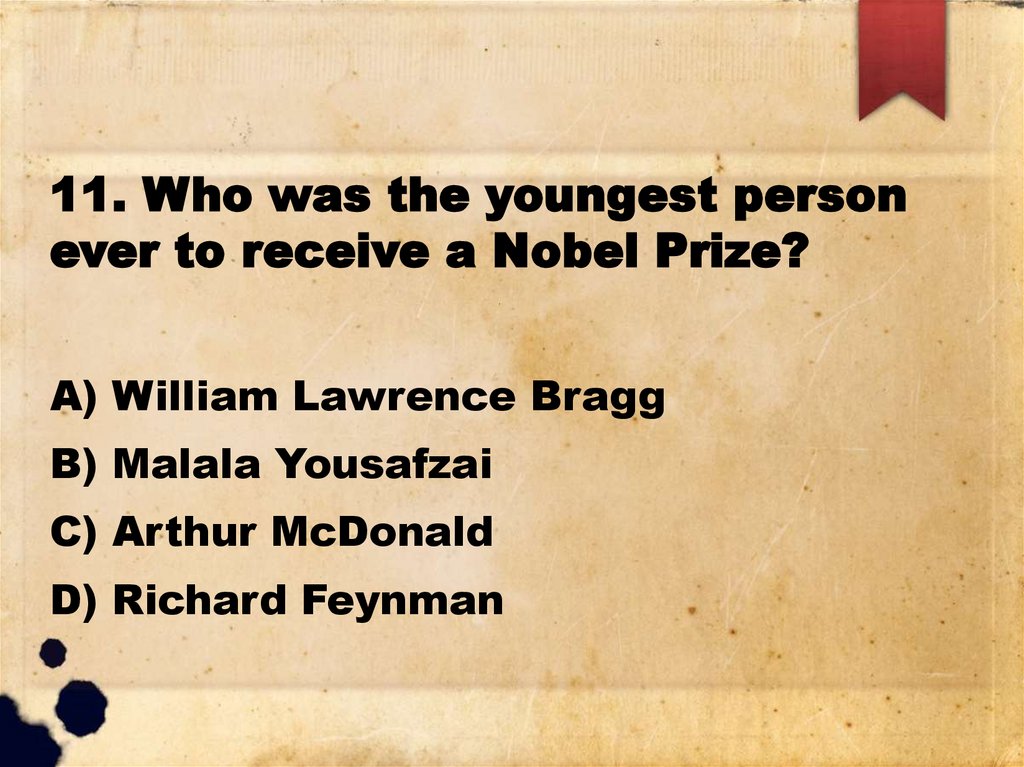
11. Who was the youngest personever to receive a Nobel Prize?
A) William Lawrence Bragg
B) Malala Yousafzai
C) Arthur McDonald
D) Richard Feynman
14.
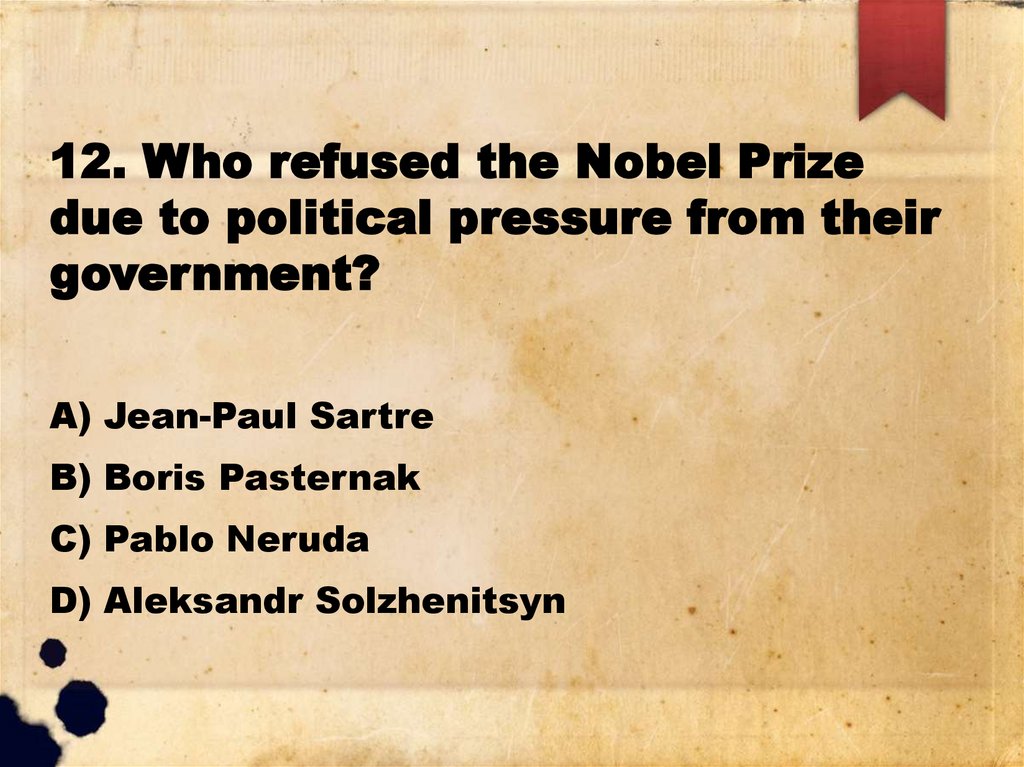
12. Who refused the Nobel Prizedue to political pressure from their
government?
A) Jean-Paul Sartre
B) Boris Pasternak
C) Pablo Neruda
D) Aleksandr Solzhenitsyn
15.
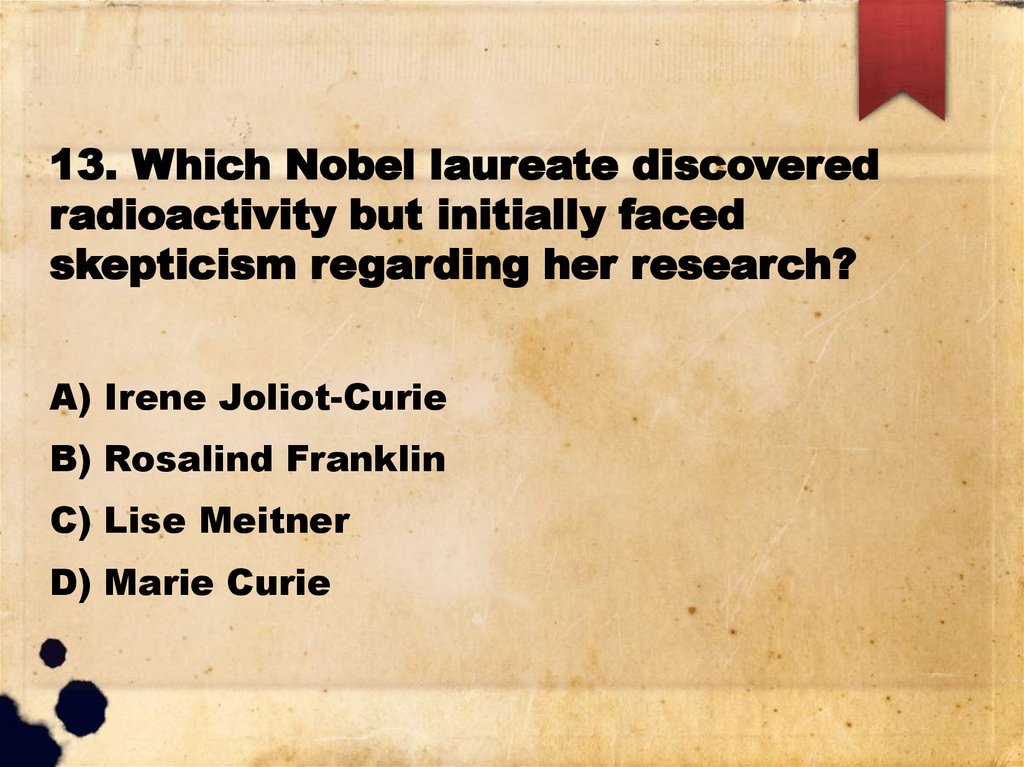
13. Which Nobel laureate discoveredradioactivity but initially faced
skepticism regarding her research?
A) Irene Joliot-Curie
B) Rosalind Franklin
C) Lise Meitner
D) Marie Curie
16.
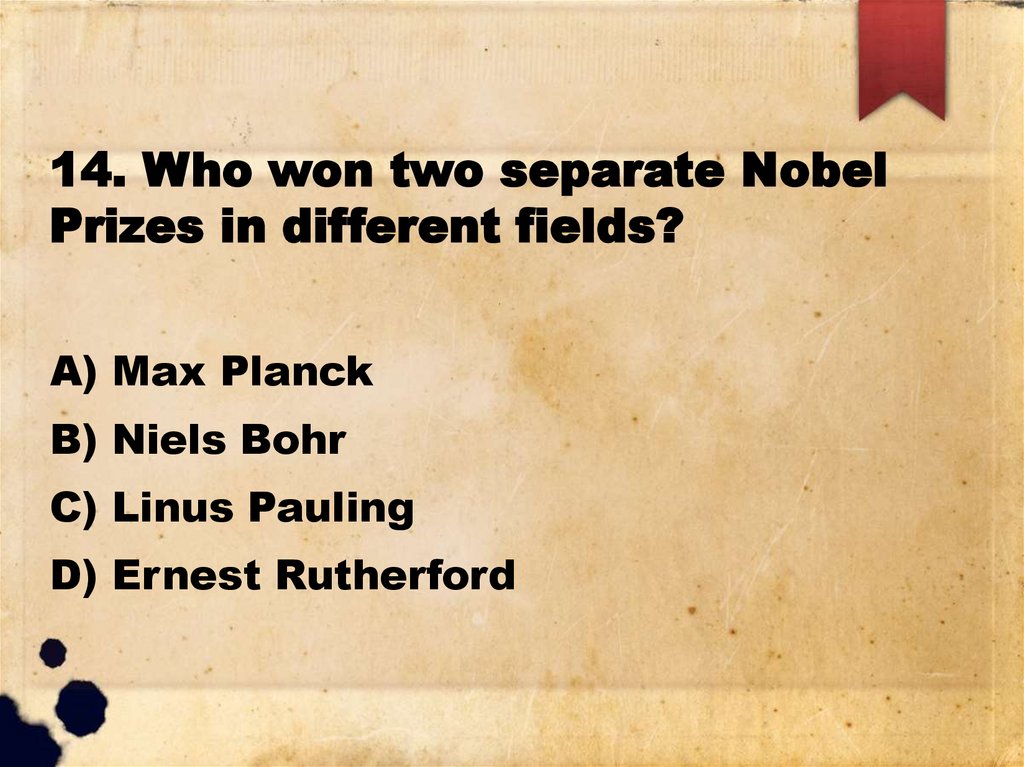
14. Who won two separate NobelPrizes in different fields?
A) Max Planck
B) Niels Bohr
C) Linus Pauling
D) Ernest Rutherford
17.
15. Which laureate's work led to thediscovery of penicillin, revolutionizing
medicine?
- A) Alexander Fleming
- B) Robert Koch
- C) Louis Pasteur
- D) Edward Jenner