 История
Похожие презентации:



Quiz. Nobel Prize History
1.
A BLUEPRINTFOR A BETTER
WORLD
2.
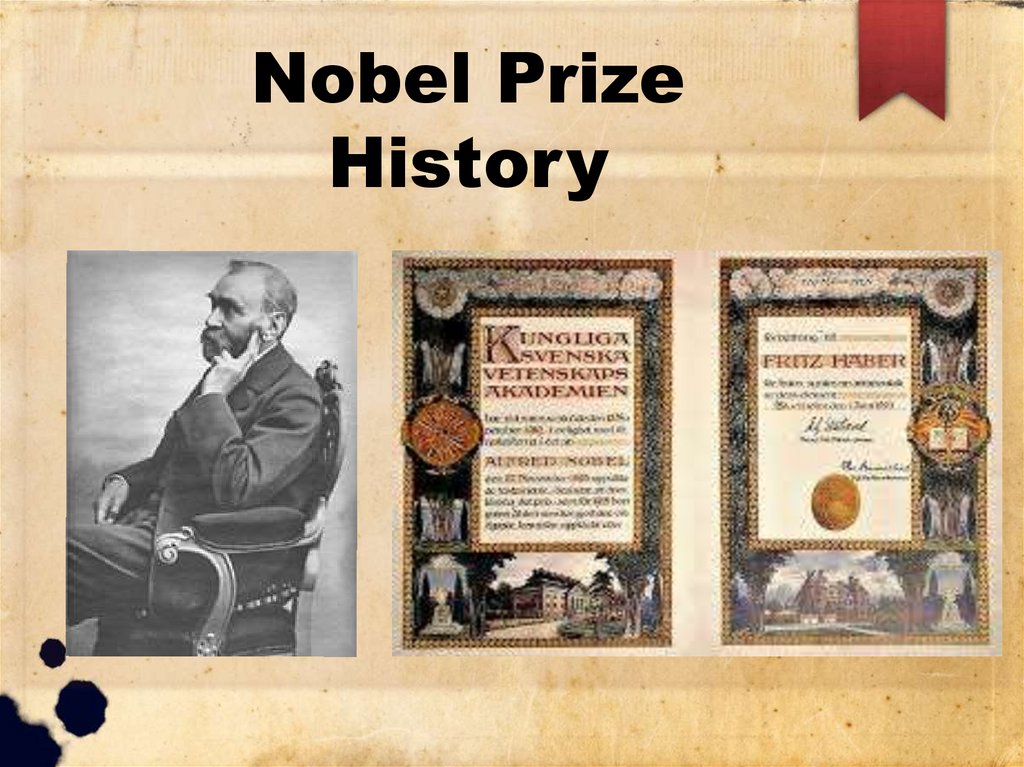
Nobel PrizeHistory
3.
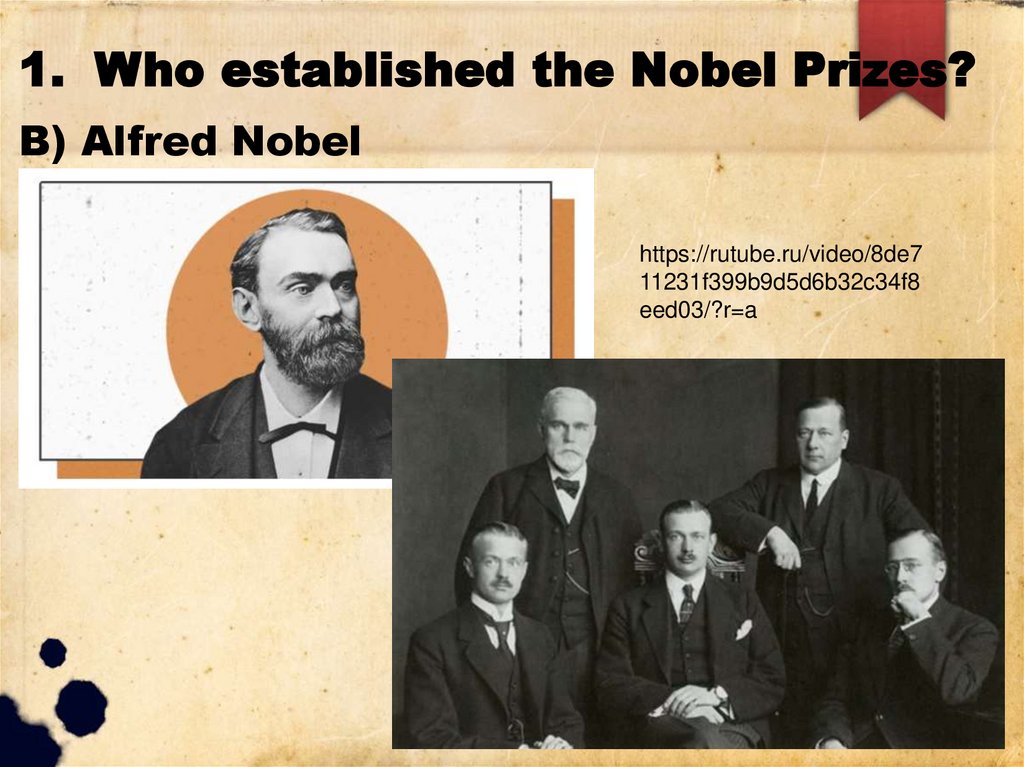
1. Who established the Nobel Prizes?B) Alfred Nobel
https://rutube.ru/video/8de7
11231f399b9d5d6b32c34f8
eed03/?r=a
4.
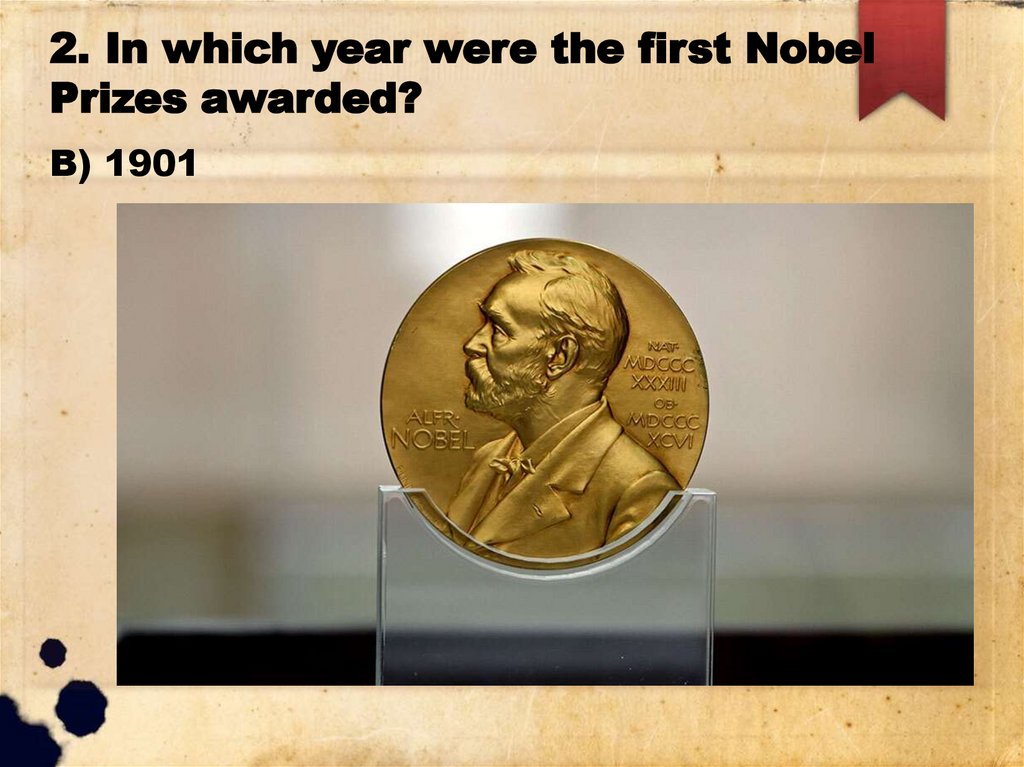
2. In which year were the first NobelPrizes awarded?
B) 1901
5.
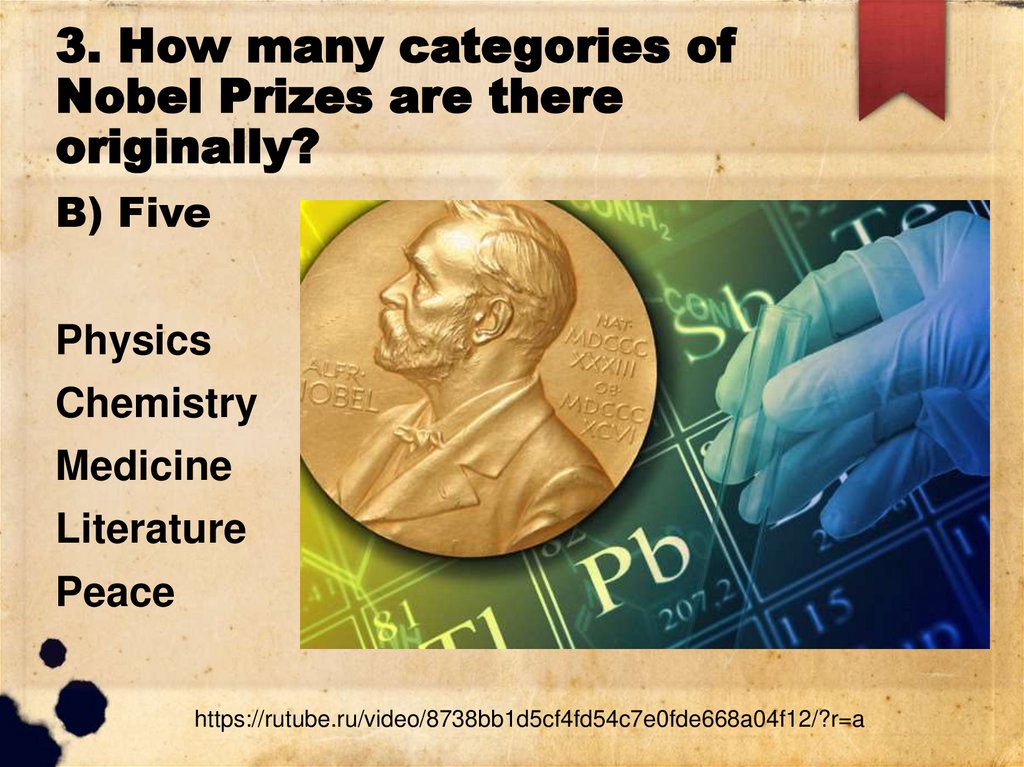
3. How many categories ofNobel Prizes are there
originally?
B) Five
Physics
Chemistry
Medicine
Literature
Peace
https://rutube.ru/video/8738bb1d5cf4fd54c7e0fde668a04f12/?r=a
6.
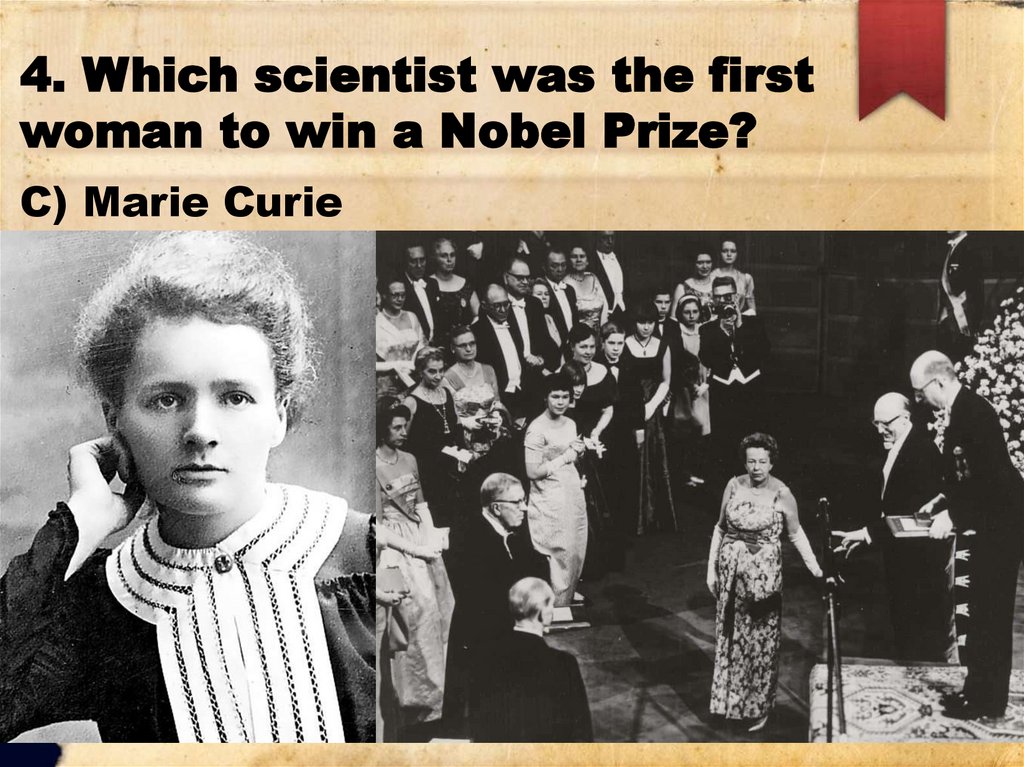
4. Which scientist was the firstwoman to win a Nobel Prize?
C) Marie Curie
7.
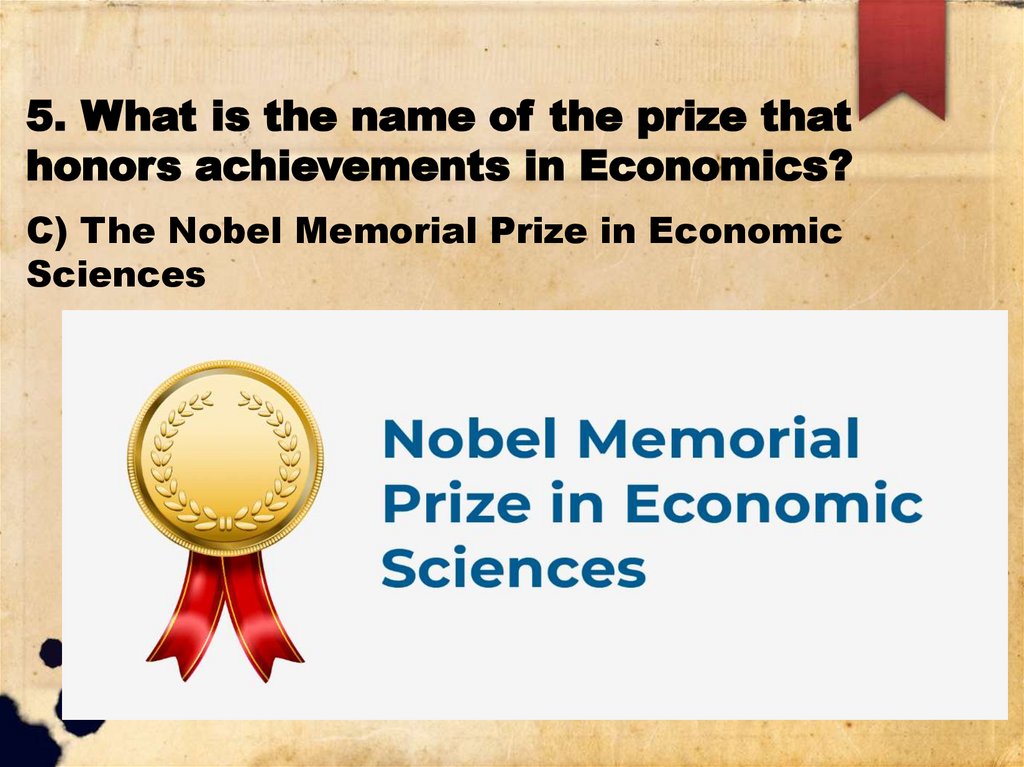
5. What is the name of the prize thathonors achievements in Economics?
C) The Nobel Memorial Prize in Economic
Sciences
8.
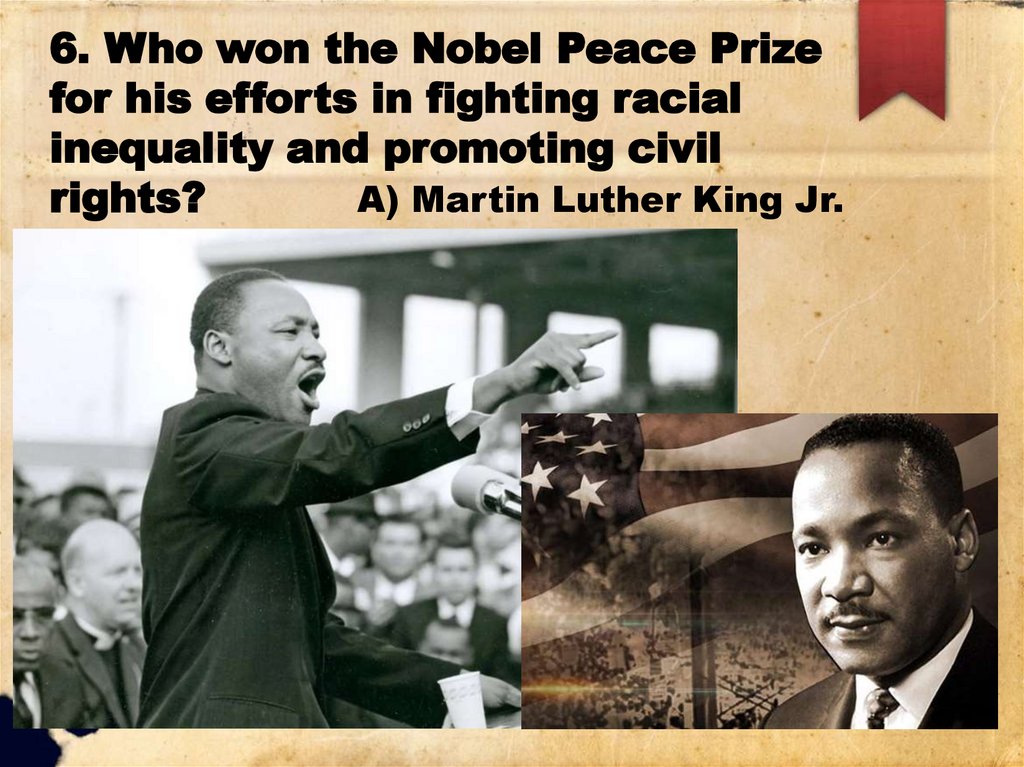
6. Who won the Nobel Peace Prizefor his efforts in fighting racial
inequality and promoting civil
rights?
A) Martin Luther King Jr.
9.
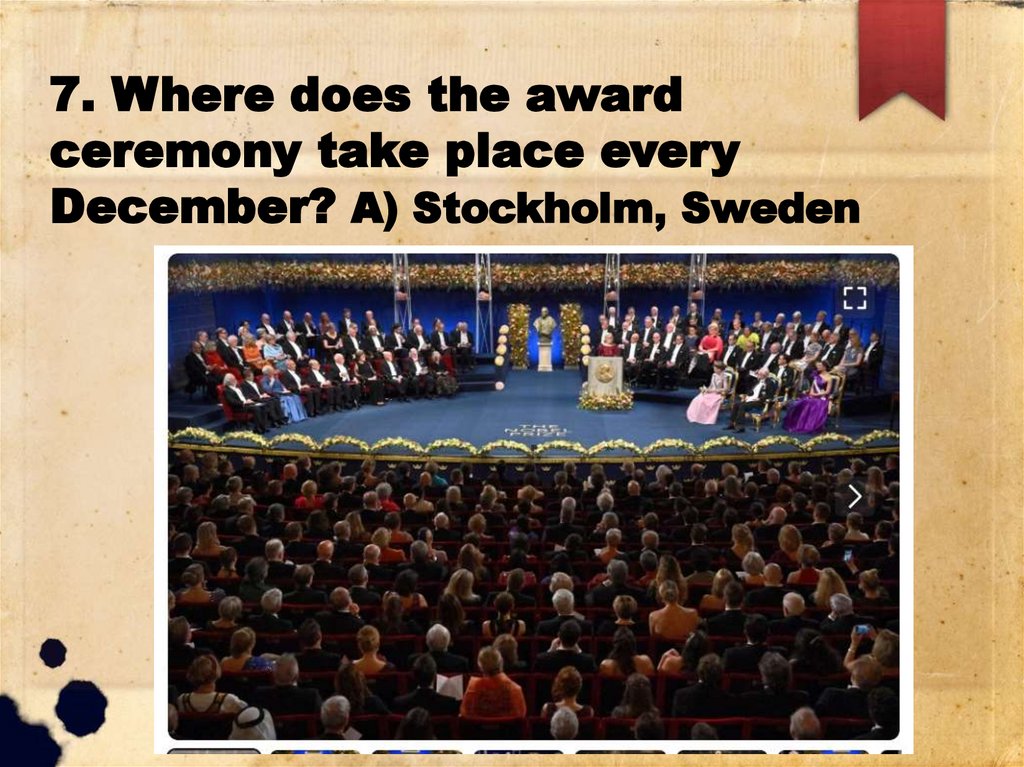
7. Where does the awardceremony take place every
December? A) Stockholm, Sweden
10.
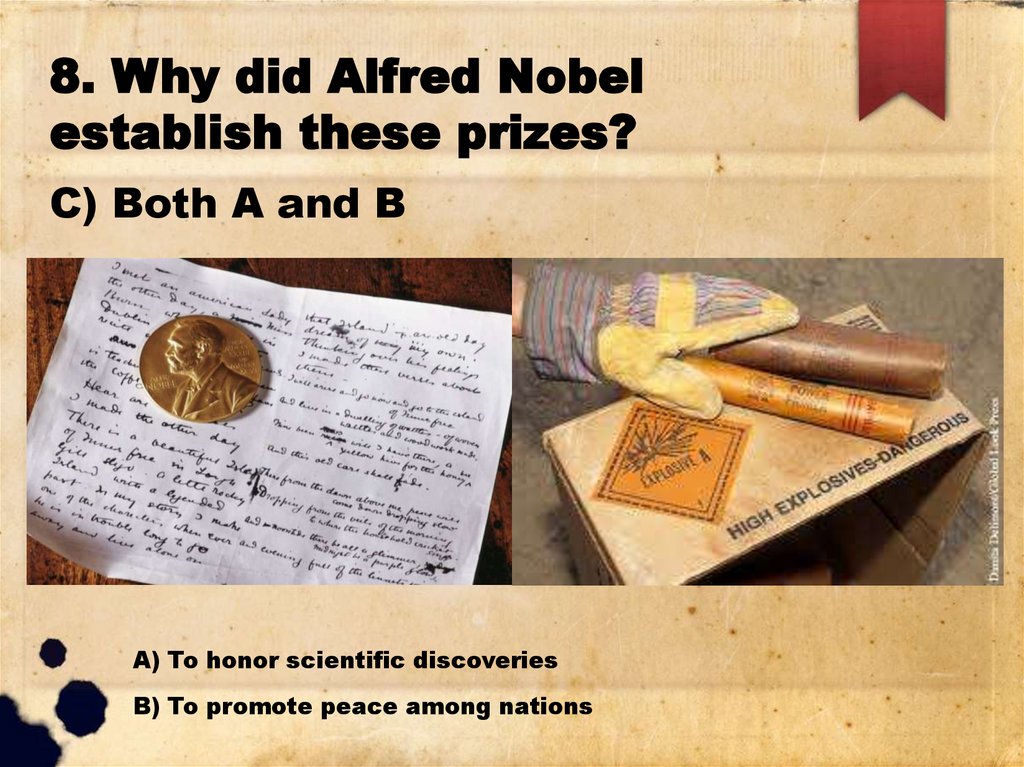
8. Why did Alfred Nobelestablish these prizes?
C) Both A and B
A) To honor scientific discoveries
B) To promote peace among nations
11.
9. Who has received the mostNobel Prizes?
D) International Committee of the Red Cross
(awarded three times)
12.
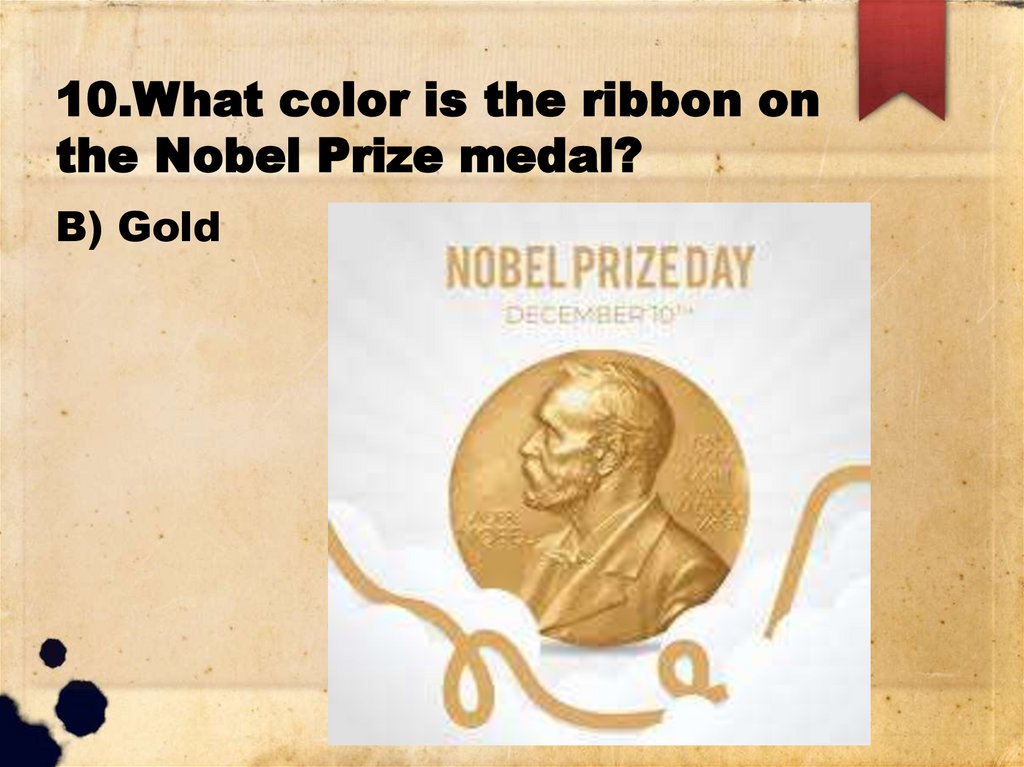
10.What color is the ribbon onthe Nobel Prize medal?
B) Gold
13.
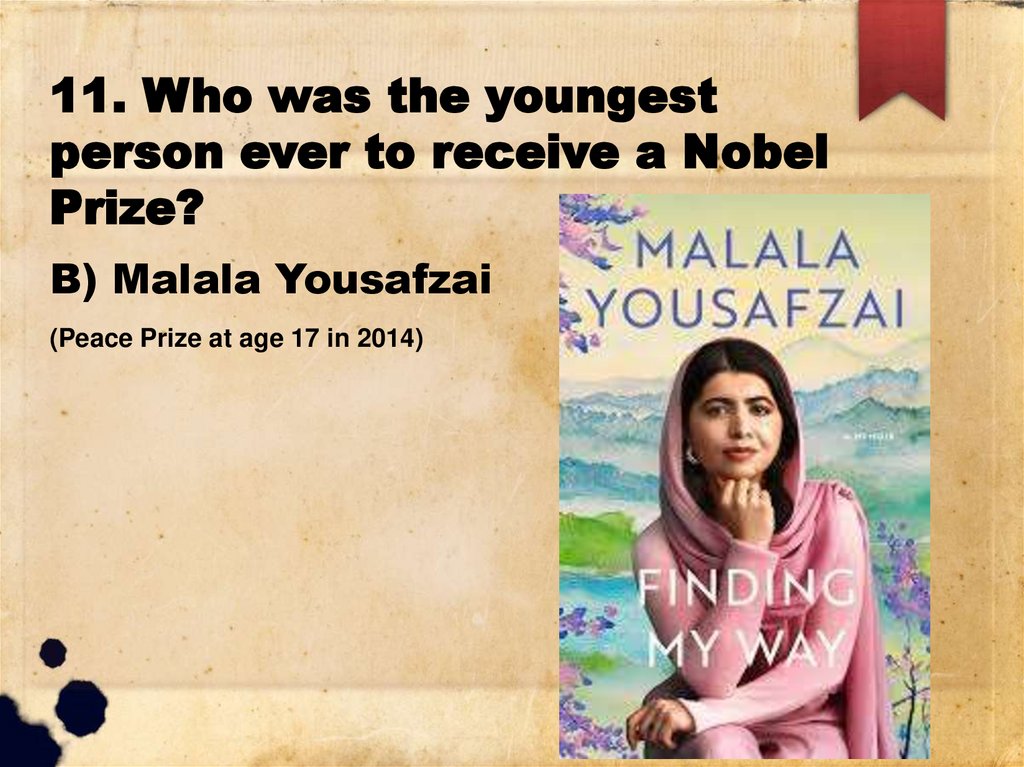
11. Who was the youngestperson ever to receive a Nobel
Prize?
B) Malala Yousafzai
(Peace Prize at age 17 in 2014)
14.
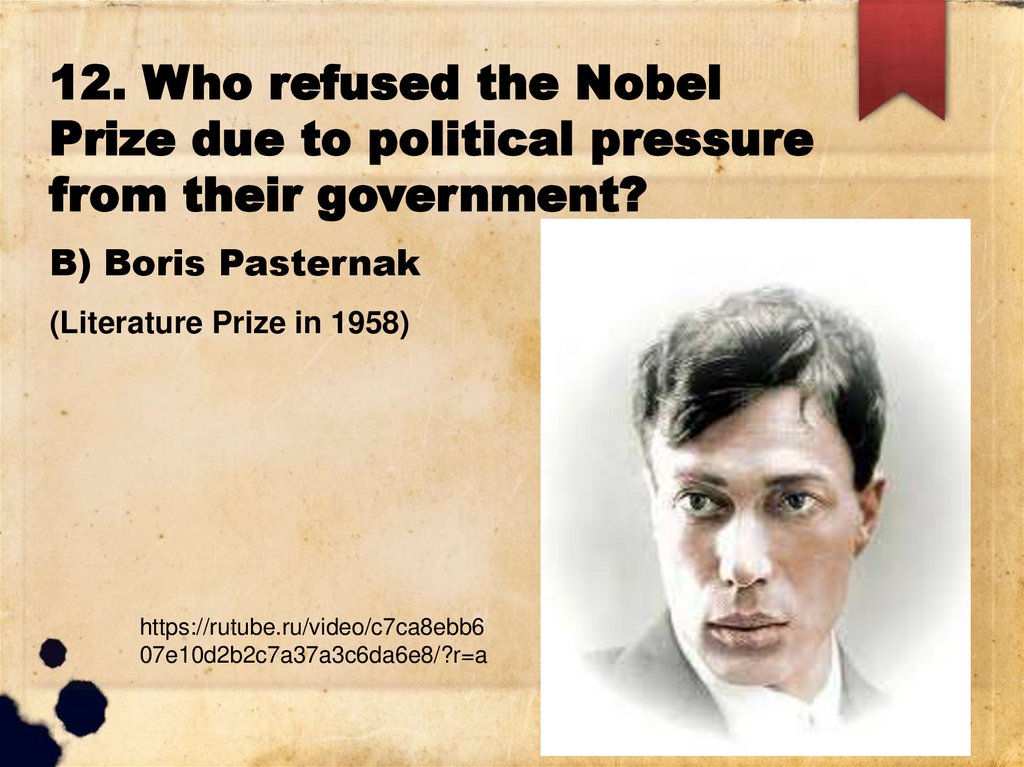
12. Who refused the NobelPrize due to political pressure
from their government?
B) Boris Pasternak
(Literature Prize in 1958)
https://rutube.ru/video/c7ca8ebb6
07e10d2b2c7a37a3c6da6e8/?r=a
15.
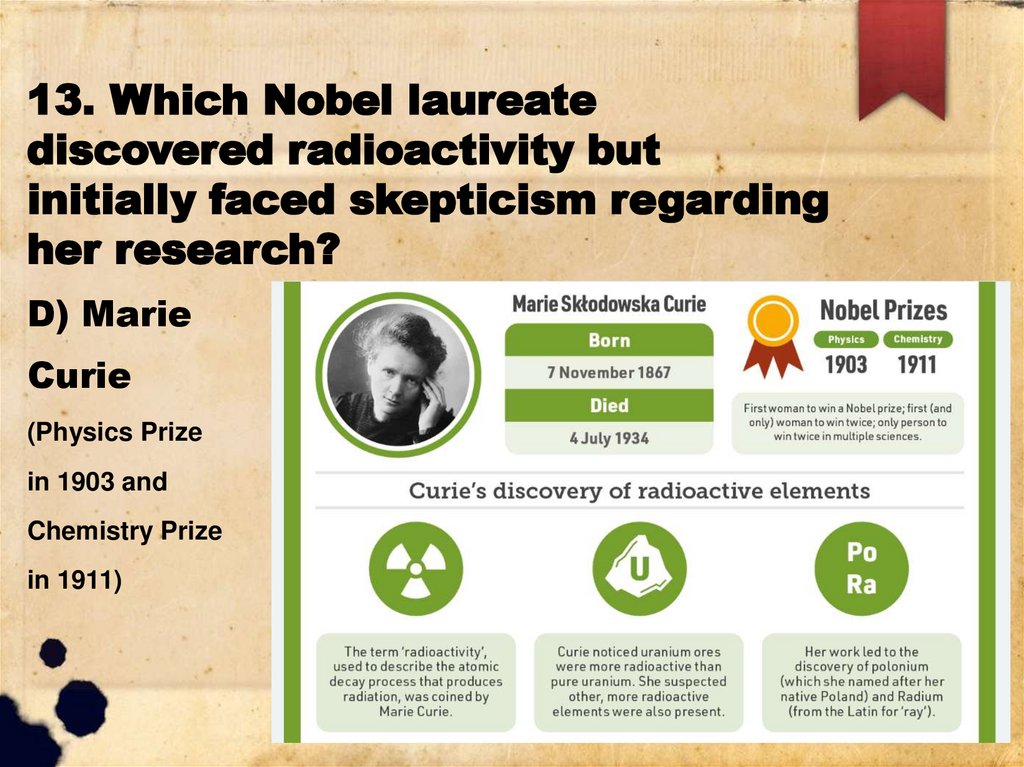
13. Which Nobel laureatediscovered radioactivity but
initially faced skepticism regarding
her research?
D) Marie
Curie
(Physics Prize
in 1903 and
Chemistry Prize
in 1911)
16.
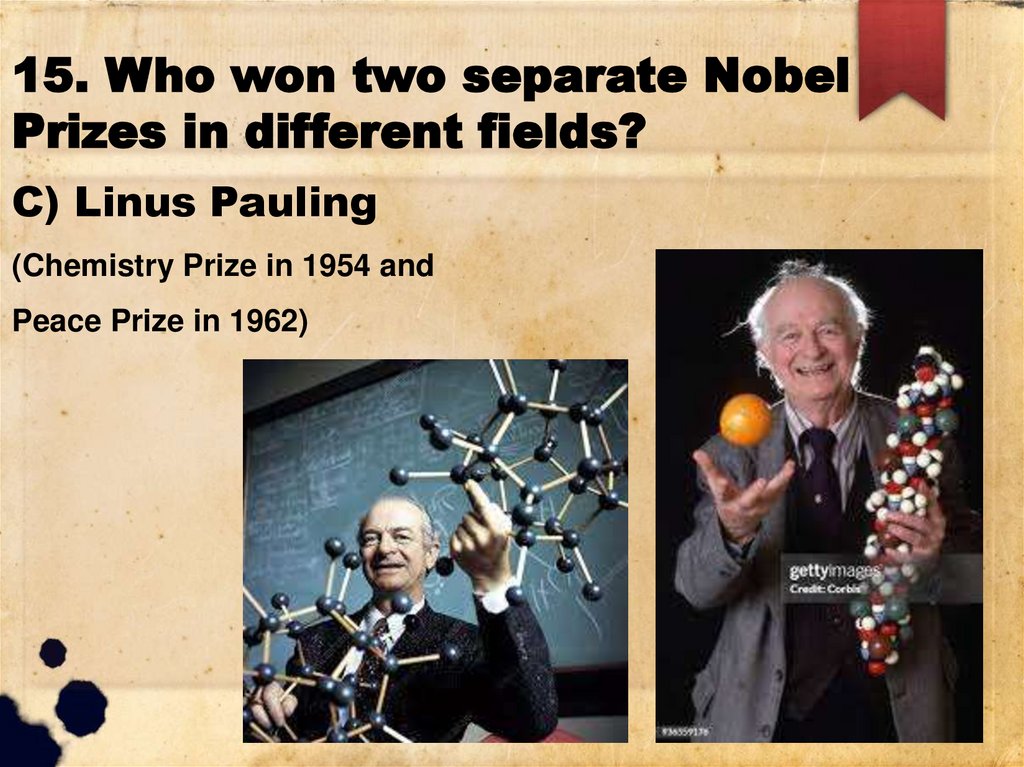
15. Who won two separate NobelPrizes in different fields?
C) Linus Pauling
(Chemistry Prize in 1954 and
Peace Prize in 1962)
17.
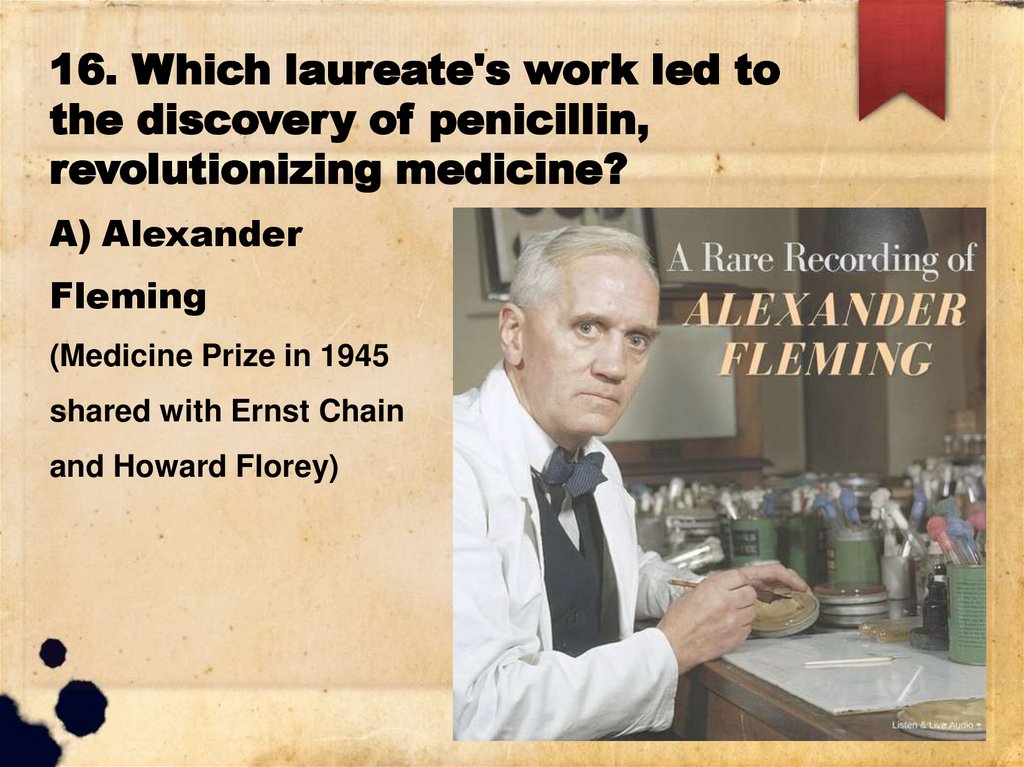
16. Which laureate's work led tothe discovery of penicillin,
revolutionizing medicine?
A) Alexander
Fleming
(Medicine Prize in 1945
shared with Ernst Chain
and Howard Florey)