 Английский язык
Похожие презентации:


Assonance
1. Assonance
• the similarity in sound between two syllablesthat are close together, created by the same
vowels but different consonants (e.g. "back" and
"hat"), or by the same consonants and different
vowels (e.g. "hit" and "hat")
2. Understatement
•a figure of speech employed by writers orspeakers to intentionally make a situation
seem less important than it really is.
3. Periphrasis
• a very peculiar stylistic device which basicallyconsists of using a roundabout form of
expression instead of a simpler one,
• i.e. of using a more or less complicated
syntactical structure instead of a word.
4. Hyperbole
•The car which picked me up on thatparticular guilty evening was a Cadillac
limousine about seventy-three blocks long.
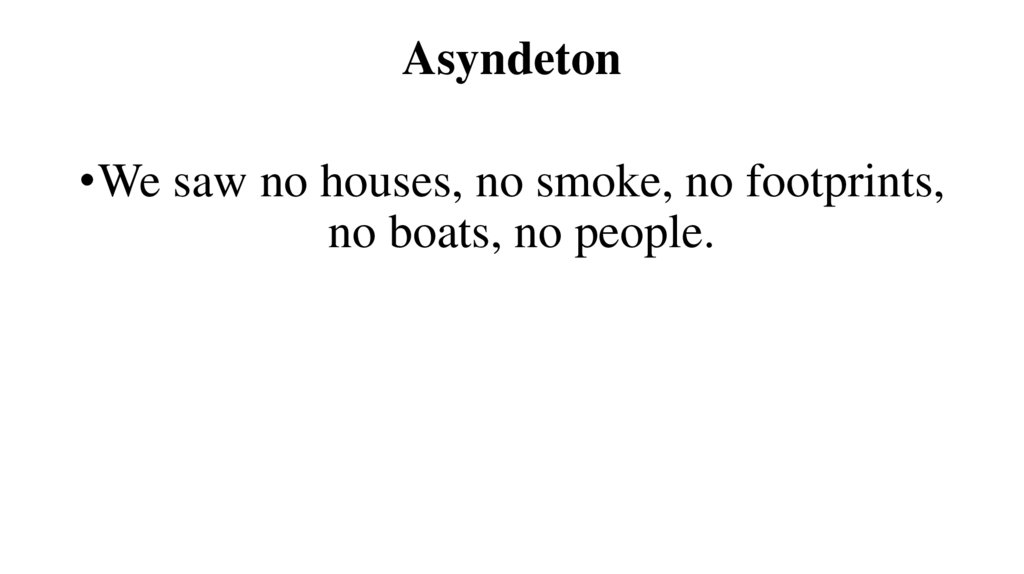
5. Asyndeton
•We saw no houses, no smoke, no footprints,no boats, no people.
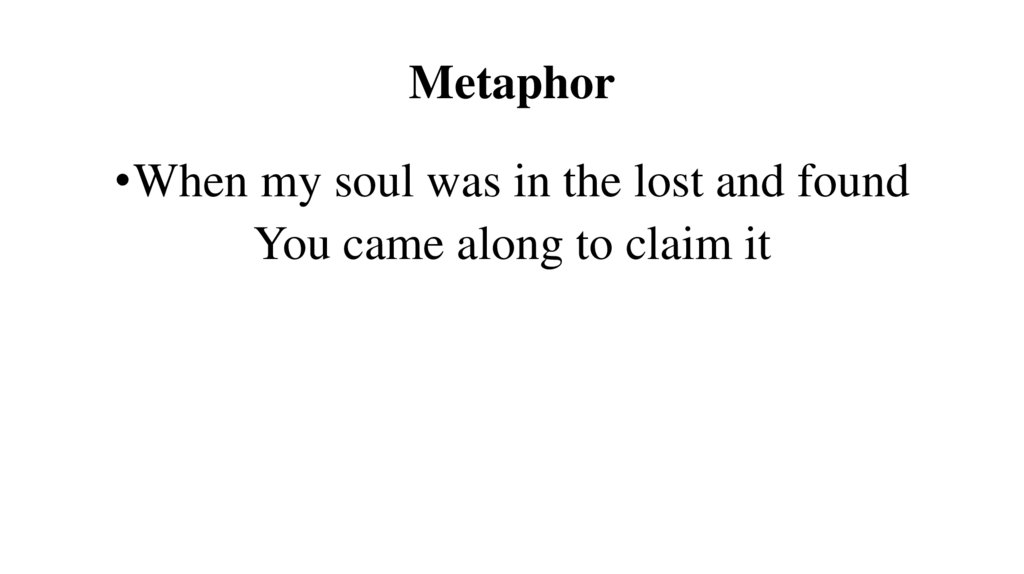
6. Metaphor
•When my soul was in the lost and foundYou came along to claim it
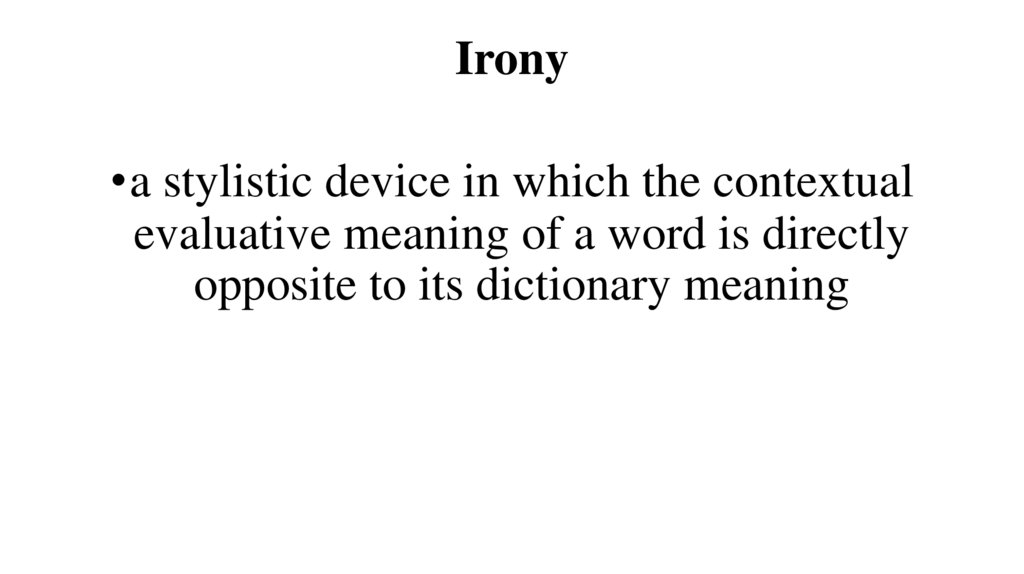
7. Irony
•a stylistic device in which the contextualevaluative meaning of a word is directly
opposite to its dictionary meaning
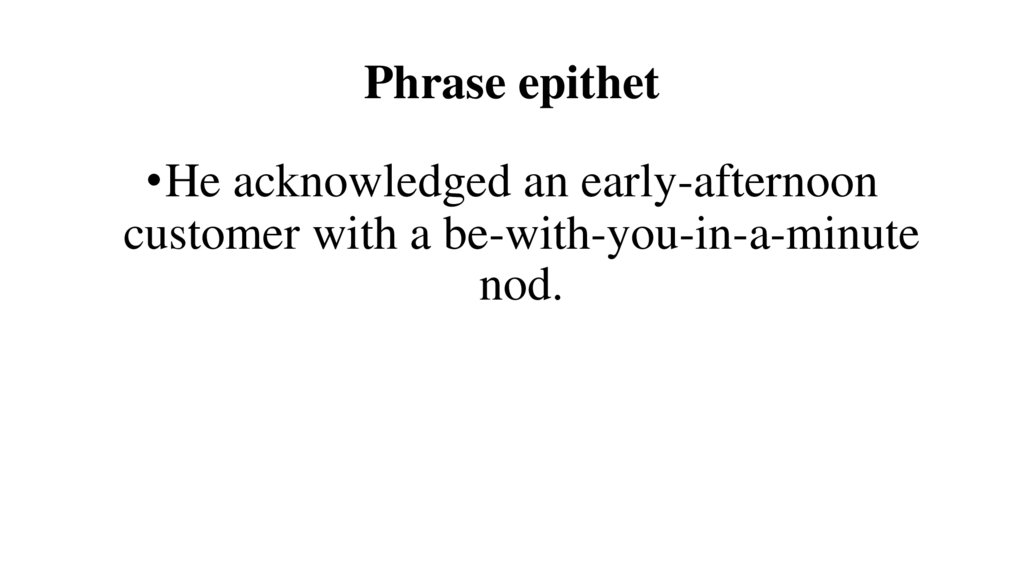
8. Phrase epithet
•He acknowledged an early-afternooncustomer with a be-with-you-in-a-minute
nod.
9. Understatement
•“I’ve got a nice place here,” he said, his eyesflashing about restlessly.
•Turning me around by one arm, he moved a
broad flat hand along the front vista, including
in its sweep a sunken Italian garden, a half acre
of deep, pungent roses, and a snub-nosed
motor-boat that bumped the tide offshore.
10. Reversed/inverted epithet
•“a little Flying Dutchman of a cab”11. Anadiplosis
Once you change your philosophy, youchange your thought pattern. Once you
change your thought pattern, you change
your attitude. Once you change your
attitude, it changes your behavior pattern
and then you go on into some action.
12. Metaphor
They walked along, two continents ofexperience and feeling, unable to
communicate.
13. Zeugma
The farmers in the valley grew potatoes,peanuts, and bored.
14. Anticlimax
In moments of crisis I size up the situation in aflash, set my teeth, contract my muscles, take a
firm grip on myself and, without a tremor,
always do the wrong thing
15. Climax
semantically complicated parallelism, inwhich each next word combination (clause,
sentence) is logically more important or
emotionally stronger and more explicit
16. Metaphor
transference of names based on theassociated likeness between two objects;
when the author identifies two objects which
have nothing in common, but in which he
subjectively sees a function, or a property, or
a feature, or a quality that may make the
reader perceive these two objects as identical
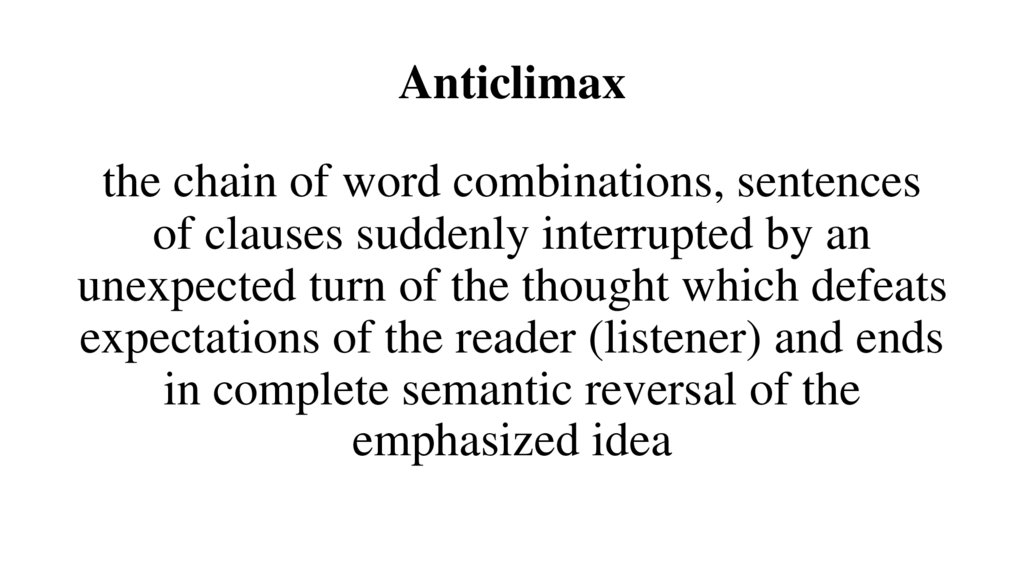
17. Anticlimax
the chain of word combinations, sentencesof clauses suddenly interrupted by an
unexpected turn of the thought which defeats
expectations of the reader (listener) and ends
in complete semantic reversal of the
emphasized idea
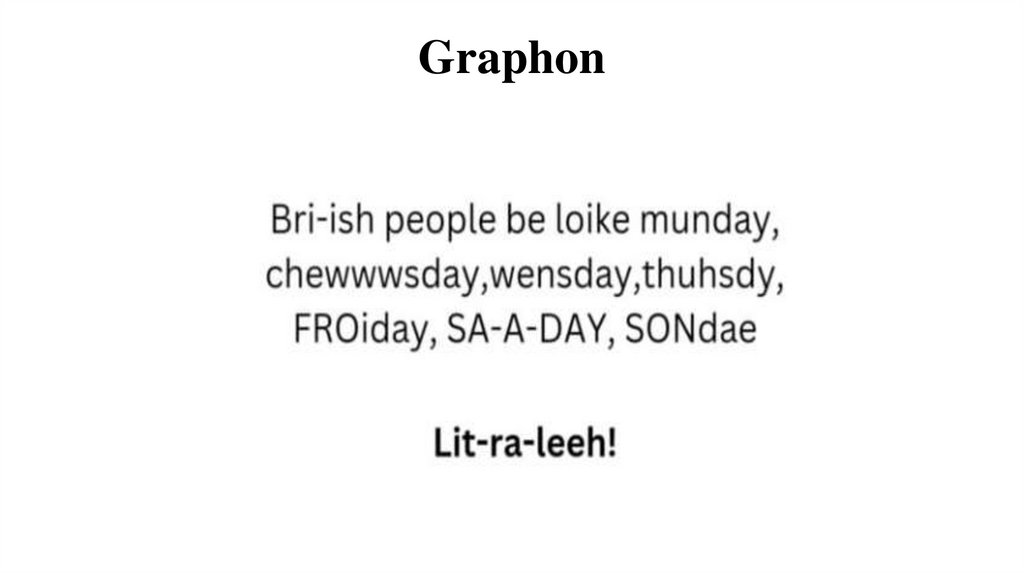
18. Graphon
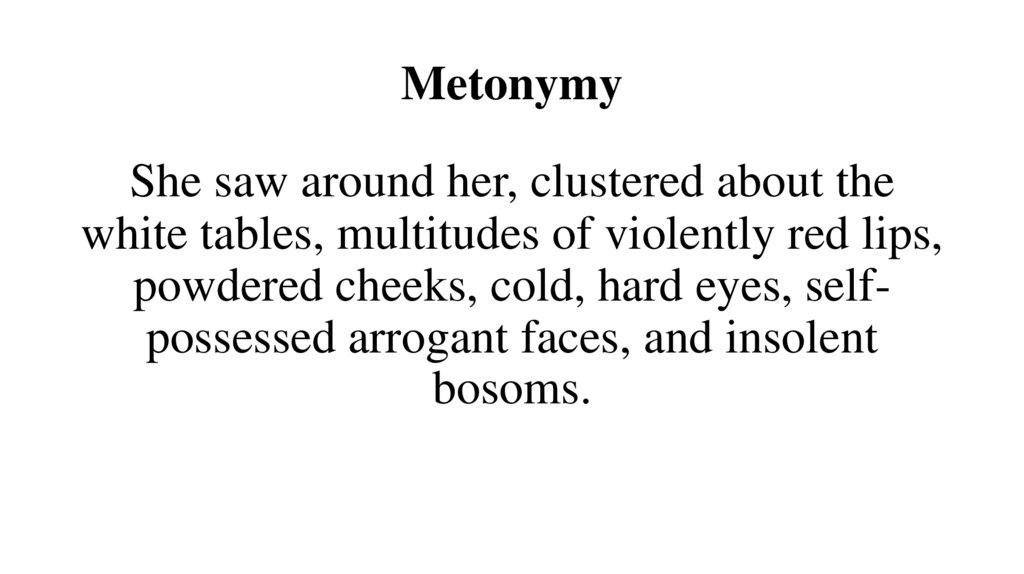
19. Metonymy
She saw around her, clustered about thewhite tables, multitudes of violently red lips,
powdered cheeks, cold, hard eyes, selfpossessed arrogant faces, and insolent
bosoms.
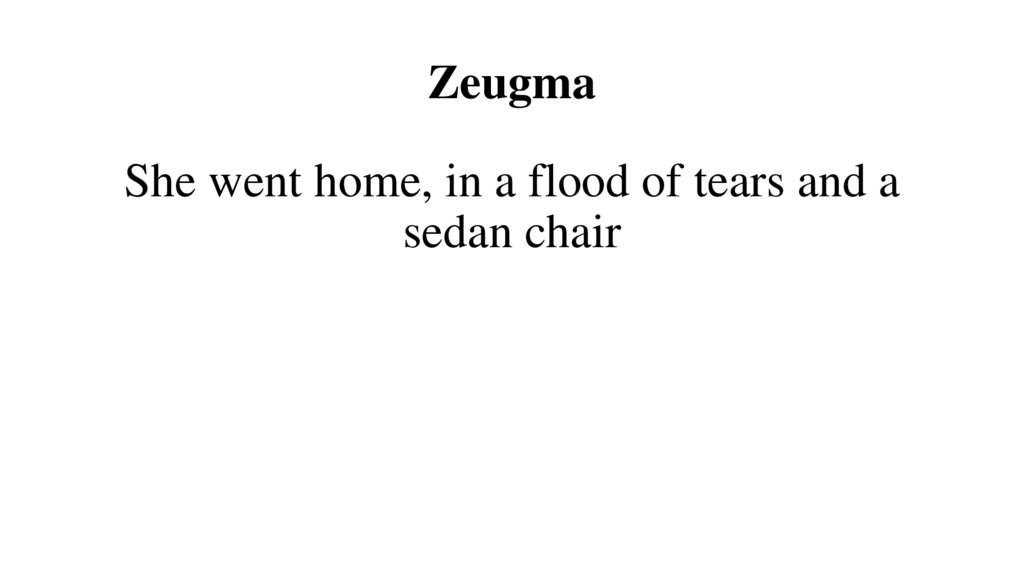
20. Zeugma
She went home, in a flood of tears and asedan chair
21. Periphrasis
When I saw him again, there were silverdollars weighting down his eyes.
22. Metaphor
She thought of the vast heat that rose abovethe house and park, suffocating the farms
and towns.
23. Assonance
Though why should I whine,Whine that the crime was other than mine?
24. Hyperbole
The lake was so still and clear that you couldsee through it down to the center of the
Earth.
25. Metaphor
Art washes away from the soul the dust ofeveryday life.
26. Zeugma
The family trip was so hectic that by the endLola had lost her patience and her car keys
27. Periphrasis
She was still fat after childbirth; thedestroyer of her figure sat at the head of the
table.
28. Anaphora
Indifference elicits no response. Indifferenceis not a response. Indifference is not a
beginning; it is an end.
29. Onomatopoeia
Boing!Liam bounced the ball off the wall
over and over.
Boing!
30. Hyperbole
Chris won’t drive her home because shelives on the other side of the universe.
31. Metaphor
There was an invisible necklace of nows,stretching out in front of her along the crazy,
twisting road, each bead a golden second.
32. Scientific prose style
The first and most noticeable feature of thisstyle is the logical sequence of utterances
with clear indication of their interrelations
and interdependence. It will not be an
exaggeration to say that in no other
functional style do we find such a developed
and varied system of connectives.
33. Belles-letters style
"aesthetico-cognitive“ functionThis is a double function which aims at the
cognitive process, which secures the gradual
unfolding of the idea to the reader and at the
same time calls forth a feeling of pleasure, a
pleasure which is derived from the form in
which the content is wrought.
34. Publicist style
The general aim of this style, which makes it standout as a separate one, is to exert a constant and deep
influence on public opinion, to convince the reader
or the listener that the interpretation given by the
writer or the speaker is the only correct one and to
cause him to accept the point of view expressed in
the speech, essay or article not merely through
logical argumentation but through emotional appeal
as well.
35. The style of official documents
The most striking, though not the mostessential feature, is a special system of
cliches, terms and set expressions by which
each substyle can easily be recognized.
36. Publicist style
Due to its characteristic combination oflogical argumentation and emotional
appeal, this style has features in common
with two other styles.
37. Scientific prose style
The language means used in this particularstyle tend to be objective, precise,
unemotional, devoid of any individuality; there
is a striving for the most generalized form of
expression;
The necessity to penetrate deeper into the
essence of things and phenomena gives rise to
new concepts, which require new words to
name them.
38. Language of drama
The author's speech is almost entirelyexcluded; the language of this genre is
entirely dialogue.