 Психология
Похожие презентации:







Cognitive Neuroscience: Concepts, Brain Maps, and Critical Thinking
1. Cognitive Neuroscience class 1
Summer 20152. Some Questions:
1.Where is cognition in the brain?
2.
What is consciousness?
3.
What are representations in the brain?
4.
Can we cognize without concepts?
3. The past: cognitive revolution brain = computer
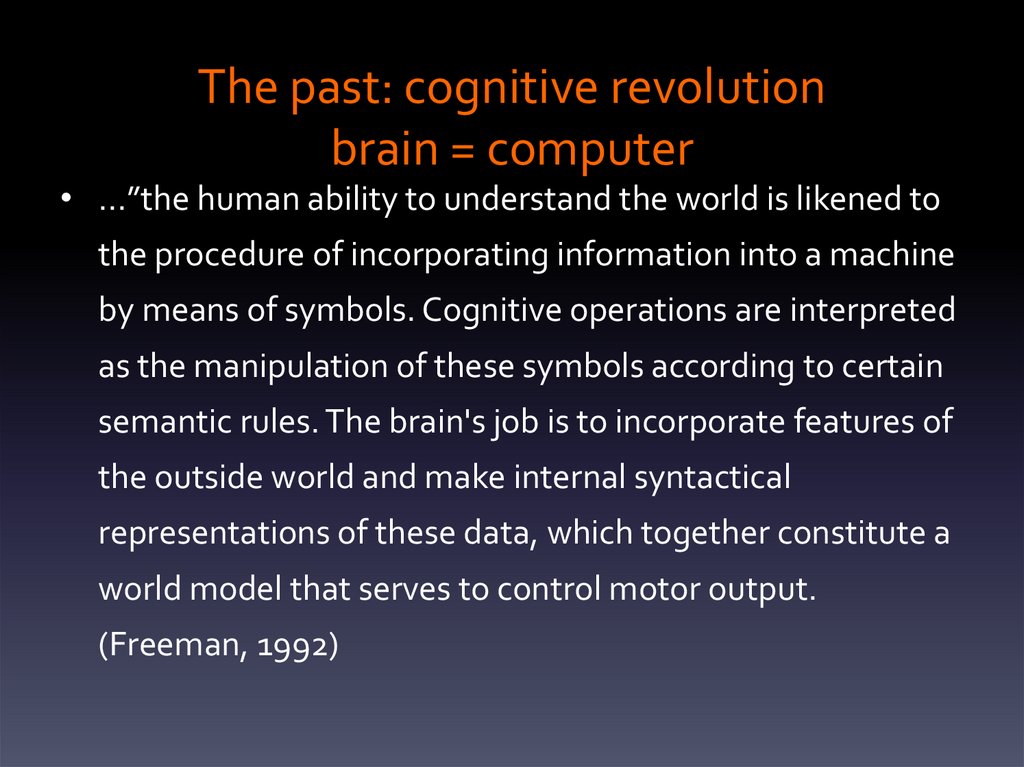
• ...”the human ability to understand the world is likened tothe procedure of incorporating information into a machine
by means of symbols. Cognitive operations are interpreted
as the manipulation of these symbols according to certain
semantic rules. The brain's job is to incorporate features of
the outside world and make internal syntactical
representations of these data, which together constitute a
world model that serves to control motor output.
(Freeman, 1992)
4.
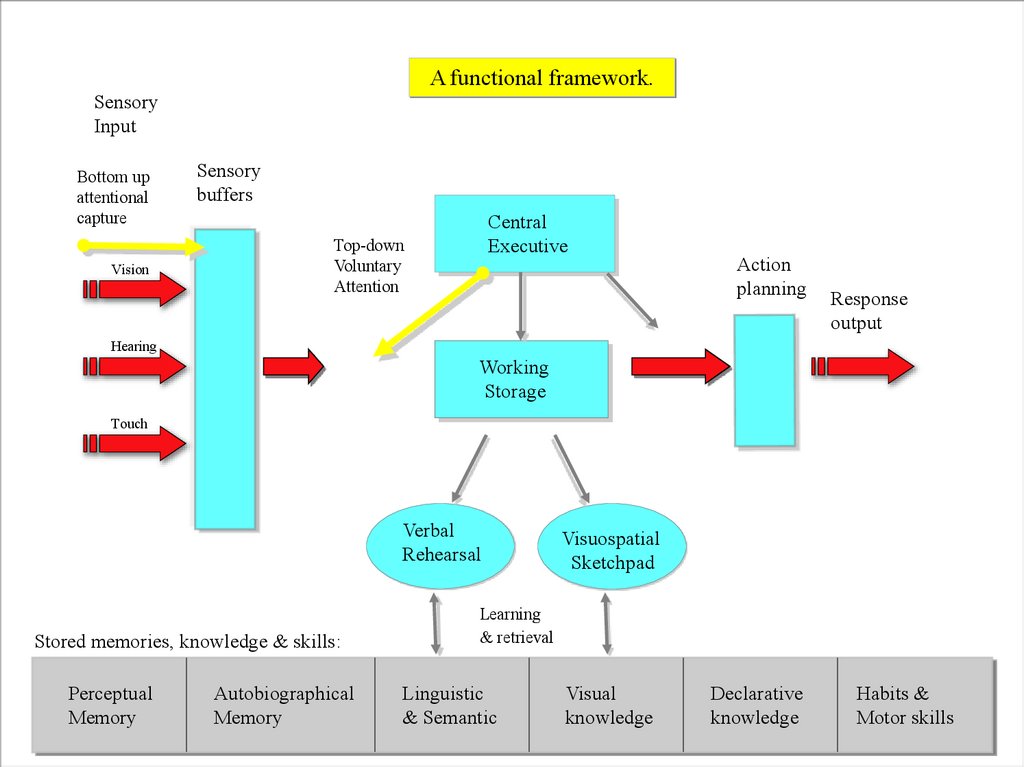
A functional framework.Sensory
Input
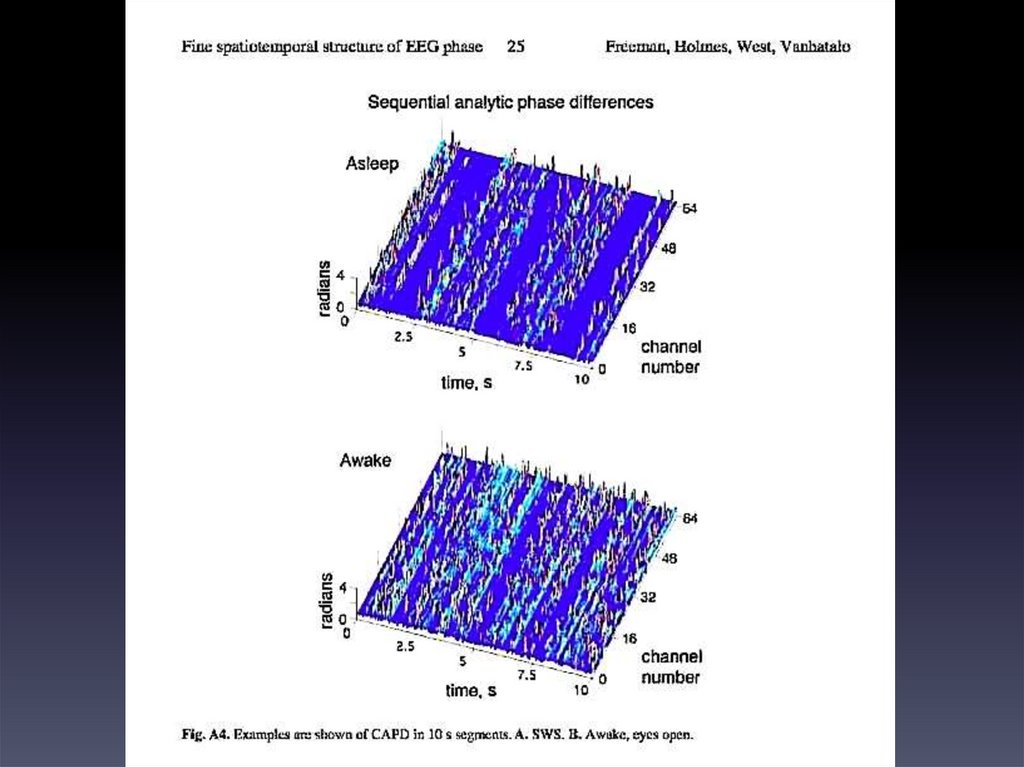
Bottom up
attentional
capture
Vision
Sensory
buffers
Central
Executive
Top-down
Voluntary
Attention
Action
planning
Response
output
Hearing
Working
Storage
Touch
Verbal
Rehearsal
Stored memories, knowledge & skills:
Perceptual
Memory
Autobiographical
Memory
Visuospatial
Sketchpad
Learning
& retrieval
Linguistic
Visual
Semantic Baars knowledge
To &
accompany
& Gage Chapter 2
Declarative
knowledge
Habits &
Motor skills
4
5.
56.
7.
8.
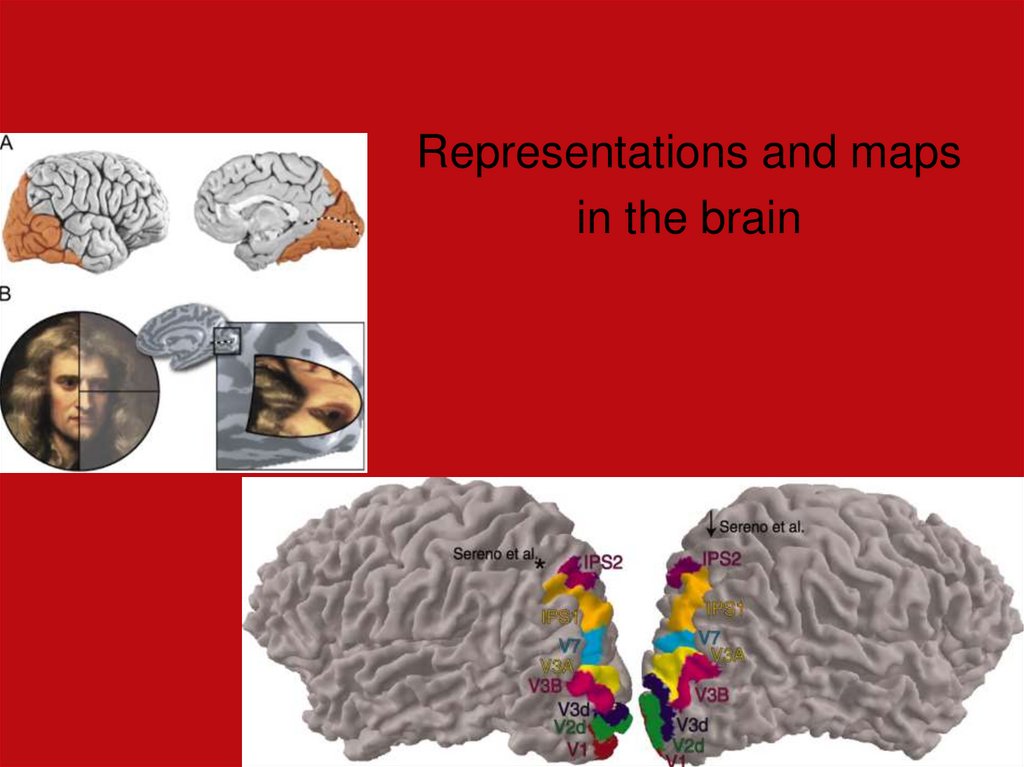
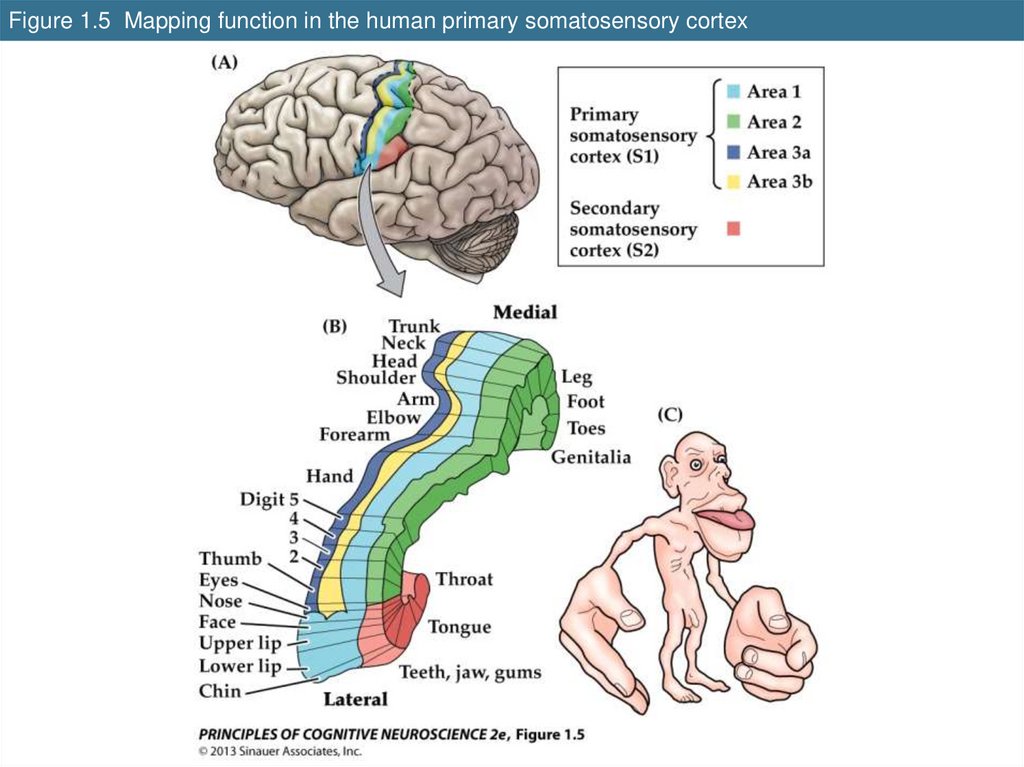
Representations and mapsin the brain
9. Figure 1.5 Mapping function in the human primary somatosensory cortex
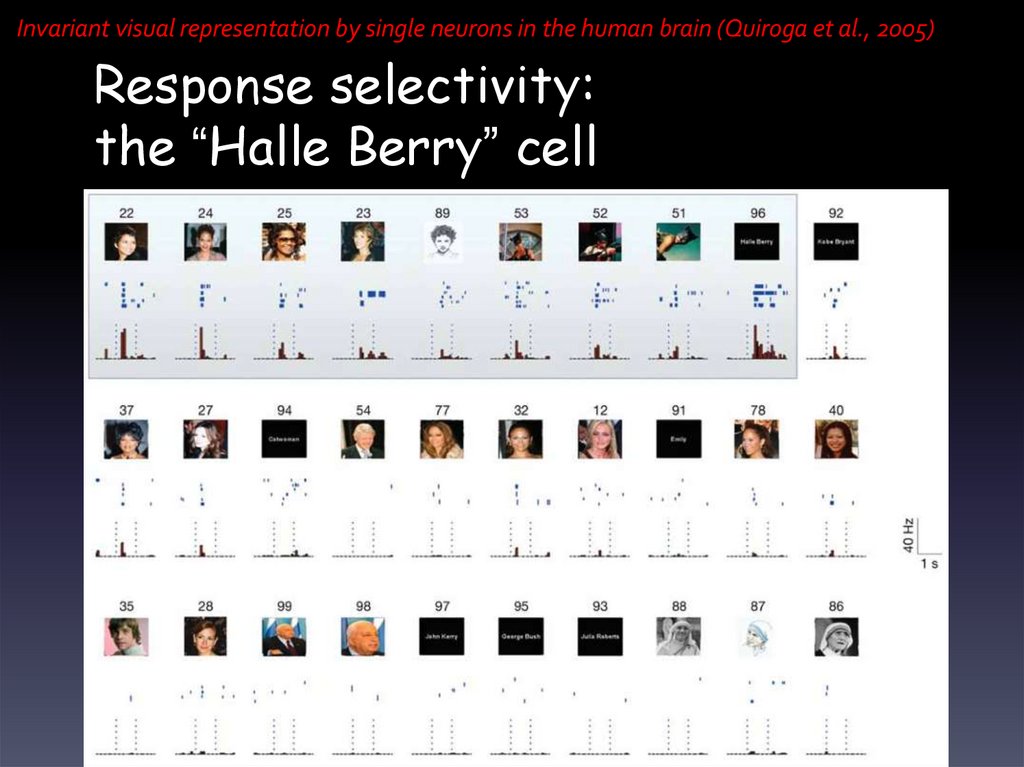
10. Response selectivity: the “Halle Berry” cell
Invariant visual representation by single neurons in the human brain (Quiroga et al., 2005)Response selectivity:
the “Halle Berry” cell
11.
David Mumford (1991) proposed a role for reciprocal
topographic cortical pathways in which higher areas send
abstract predictions of the world to lower cortical areas. At
lower cortical areas, top-down predictions are then
compared to the incoming sensory stimulation.
• questions:
• (1) do descending predictions remain abstract, or do they
translate into concrete level predictions, the ‘language’ of
lower visual areas?
• (2) how is incoming sensory information compared to topdown predictions (Mukli, 2014)
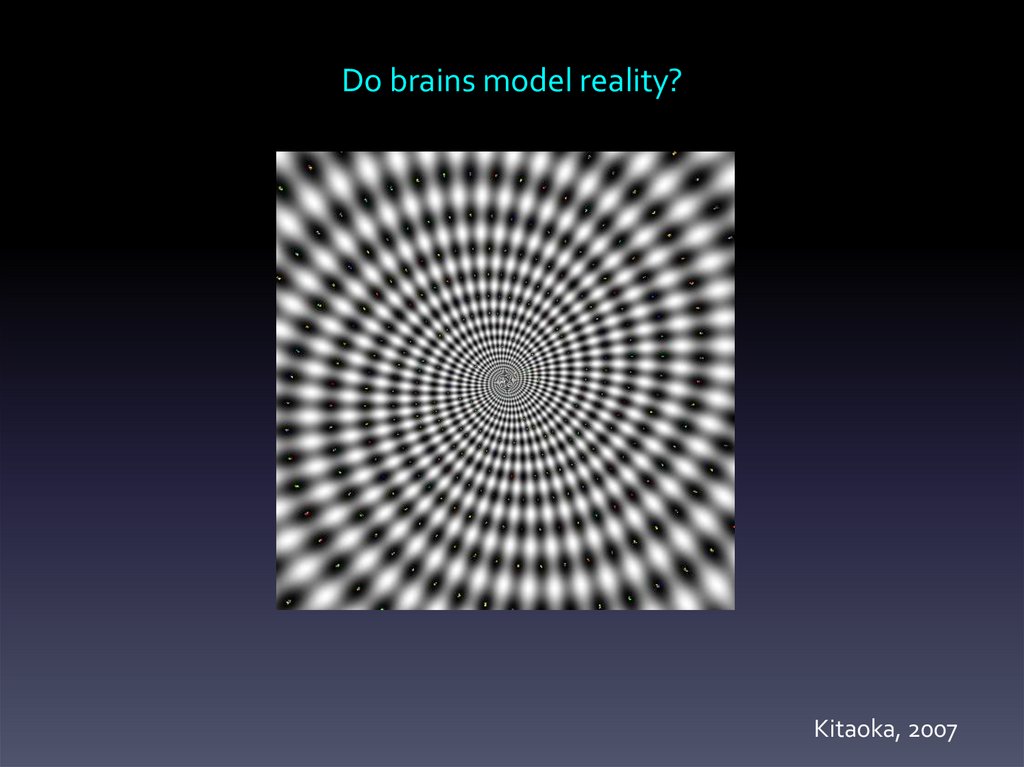
12. Do brains model reality?
Kitaoka, 200713.
“Hierarchical predictive coding”Hierarchical predictive coding depicts the top-down flow as
attempting to predict and fully “explain away” the driving sensory
signal, leaving only any residual “prediction errors” to propagate
information forward within the system (Clark, 2014).
14.
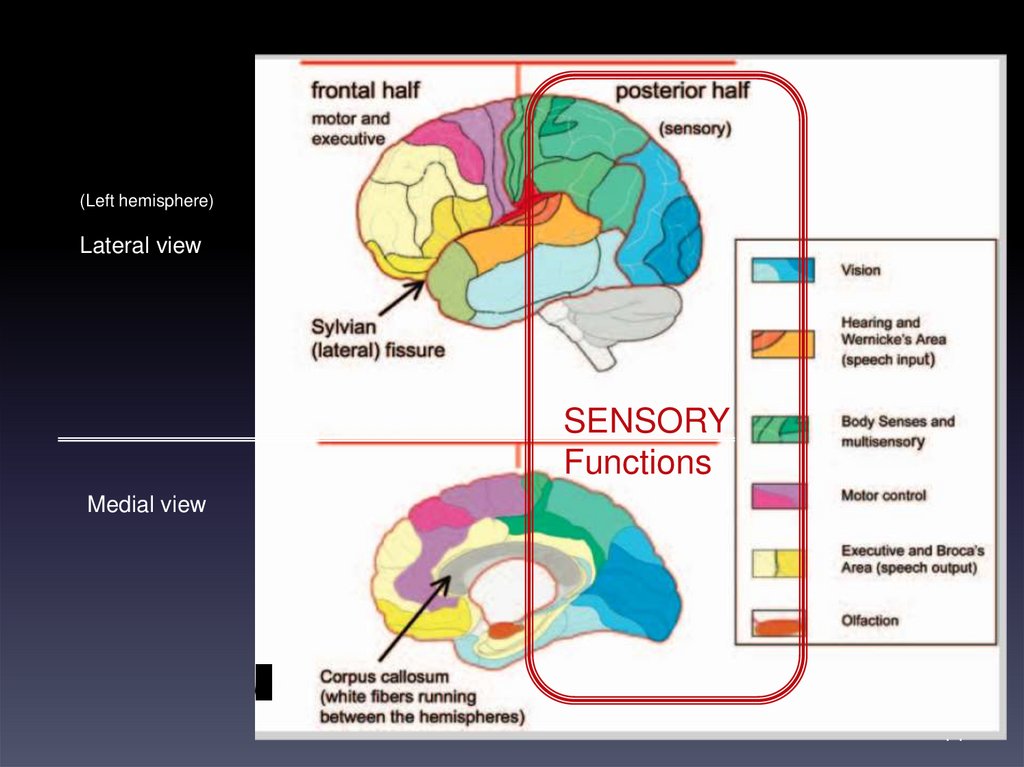
Sensory functions and sensory memory tend to be in the posterior half of cortex.(Left hemisphere)
Lateral view
SENSORY
Functions
Medial view
14
15.
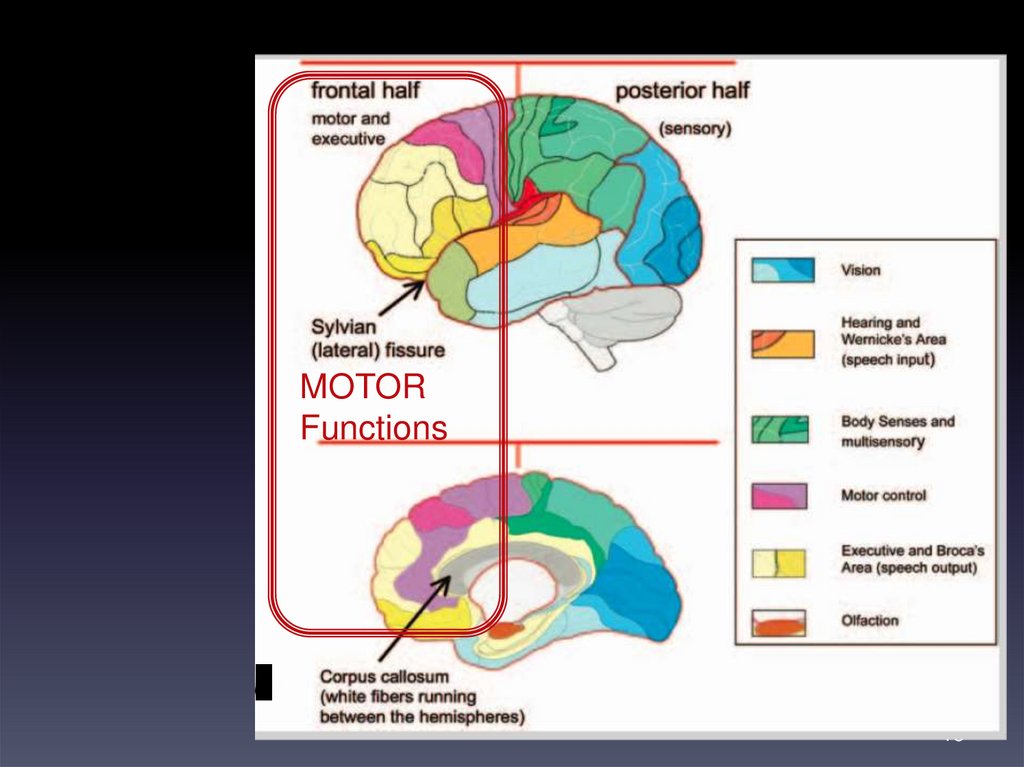
Motor functions and planning are frontal.MOTOR
Functions
15
16.
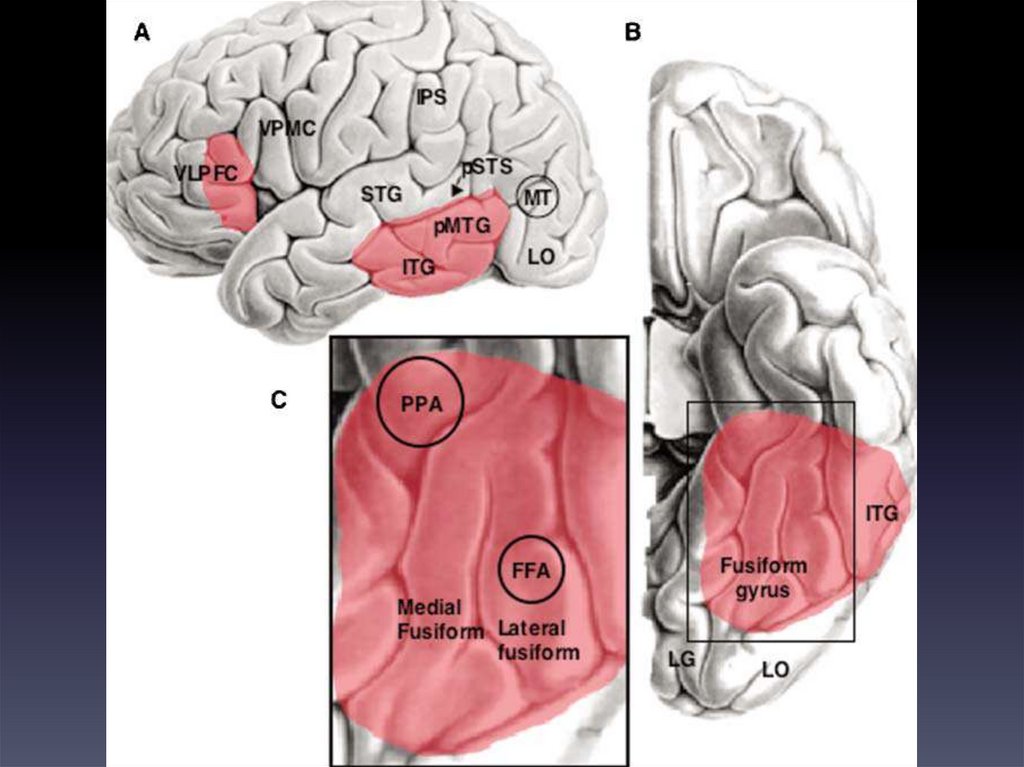
Evidence from functional neuroimaging of the human brain indicatesthat information about salient properties of an object—such as what it
looks like, how it moves, and how it is used—is stored in sensory and
motor systems active when that information was acquired. As a result,
object concepts belonging to different categories like animals and
tools are represented in partially distinct, sensory- and motor
property–based neural networks. This suggests that object concepts
are not explicitly represented, but rather emerge from weighted
activity within property-based brain regions. (Martin, 2007)
17.
18.
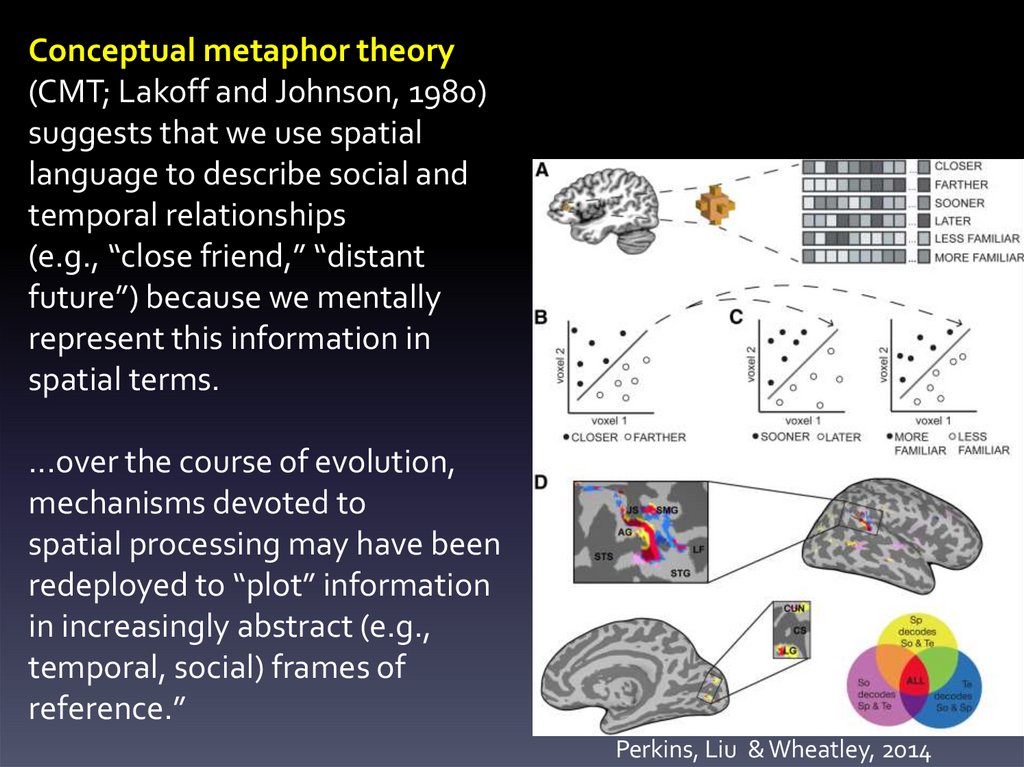
Conceptual metaphor theory(CMT; Lakoff and Johnson, 1980)
suggests that we use spatial
language to describe social and
temporal relationships
(e.g., “close friend,” “distant
future”) because we mentally
represent this information in
spatial terms.
...over the course of evolution,
mechanisms devoted to
spatial processing may have been
redeployed to “plot” information
in increasingly abstract (e.g.,
temporal, social) frames of
reference.”
Perkins, Liu & Wheatley, 2014
19. Dynamic self-organization
https://www.youtube.com/watch?v=FhosaQSWCFw20.
21.
Representation, or not?a dynamic view
• “The algorithms of back propagation and error correction are
machine processes that do not exist in biological brains
(Freedman, 1992)
• iPhone and Searle’s Chinese room
22.
• ...To view neural activity as a function of the featuresand causal impact of stimuli on the organism, and to
look for a reflection of the environment within by
correlating features of the stimuli with neural activity,
was a mistake. After years of sifting through our data,
we identified the problem: it was the concept of
representation. (Freeman, 1992)
23.
• patterned neural activity correlates best with reliableforms of interaction in a context that is behaviorally
and environmentally co–defined. There is nothing
intrinsically representational about this dynamic
process until the observer intrudes. It is the
experimenter who infers what the observed activity
patterns represent to or in a subject, in order to
explain his results to himself.
24.
• Experimental measurements of brain activity (EEG) that followssensory stimulation of animals show that sensory cortices engage
in construction of activity patterns in response to stimuli [Freeman,
1975]. This operation does not correspond to that of filtering,
storage, retrieval, or correlation. Each construction requires a first
order state transition, in which a sensory cortex switches abruptly
from one basin of attraction to another, thereby changing one
spatial pattern instantly to another as in cinema frames.
25.
26. Dynamic model
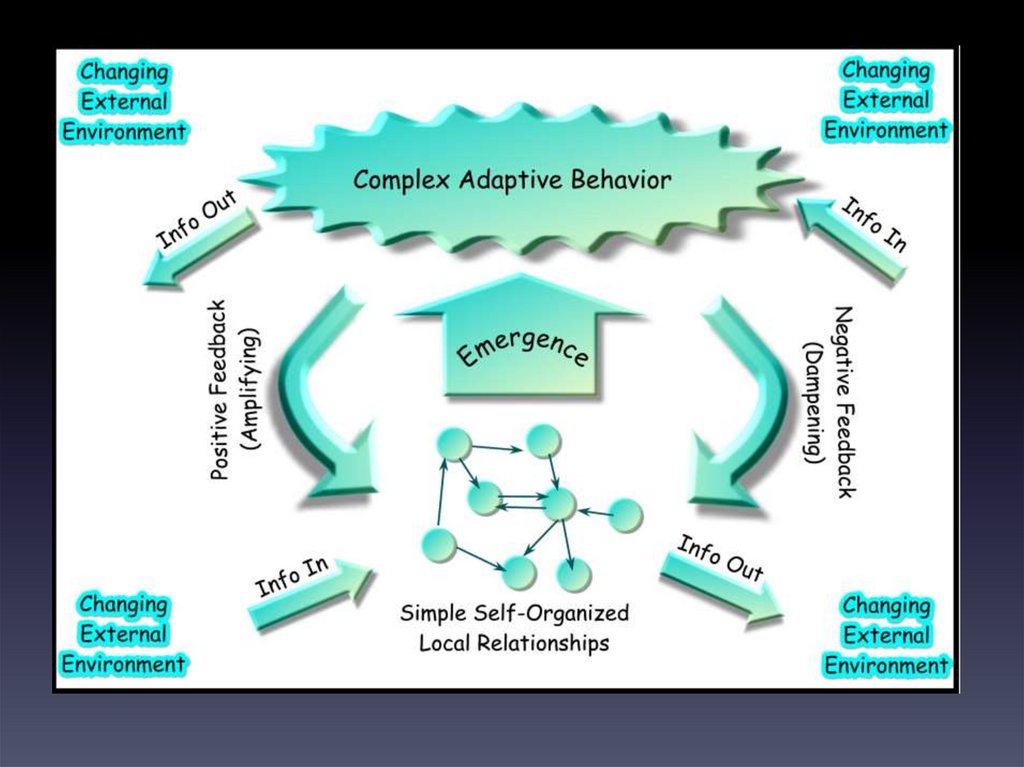
• We have found that an essential condition for these patterns to appear isthe prior existence of un-patterned energy distributions which appear to
be noise, but which in reality are chaos. New forms of order require that
old forms of order collapse back into this chaotic state before they can
appear. Therefore, in the EEG we see each burst appearing from chaotic
basal activity and collapsing back into chaos, thereby clearing the way for
the next burst of patterned activity (Skarda & Freeman, 1987).
27.
• The brain has immunity from the first and second laws of thermodynamicsbecause its assured blood supply brings it more energy than it can use and
carries off waste heat and entropy. As a result the formalisms of
information theory that underlie the representation–based computational
metaphor of brain dynamics do not apply to the neural networks of
biological systems.
28. The Future: Brain Mapping
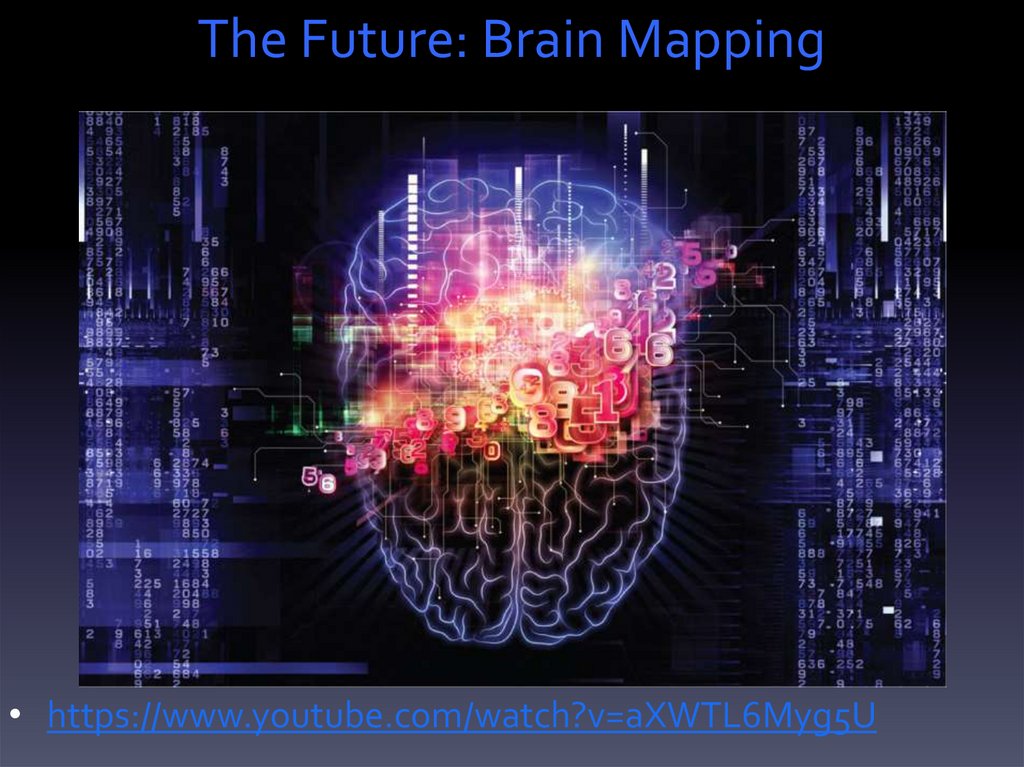
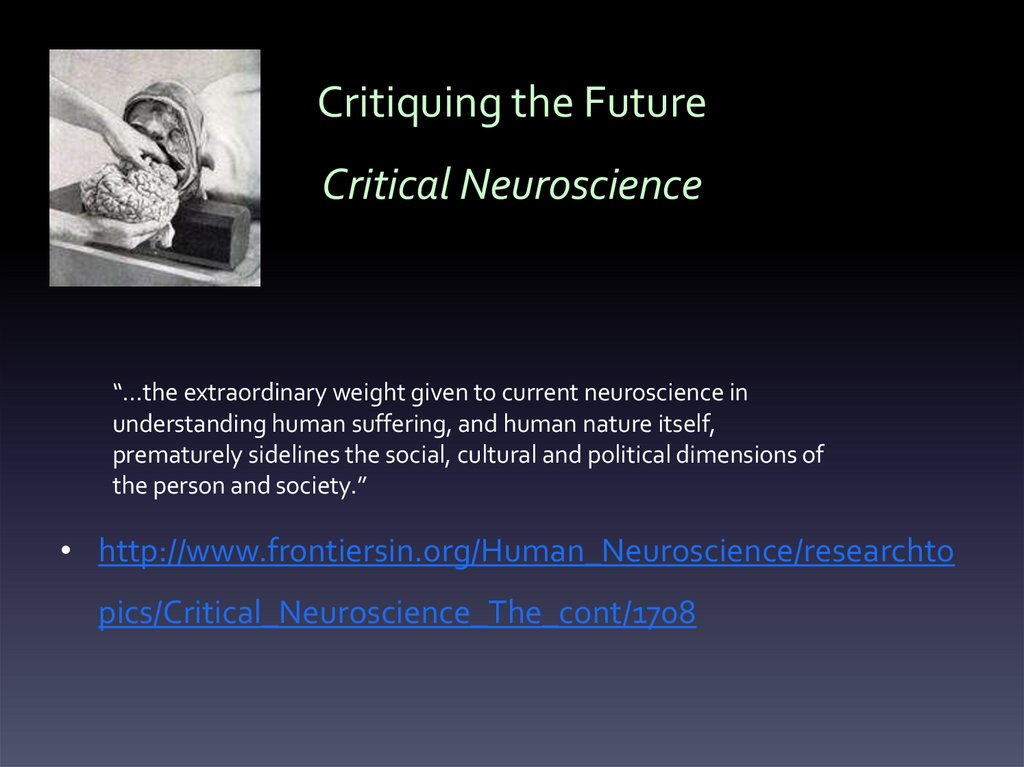
• https://www.youtube.com/watch?v=aXWTL6Myg5U29. Critiquing the Future Critical Neuroscience
“...the extraordinary weight given to current neuroscience inunderstanding human suffering, and human nature itself,
prematurely sidelines the social, cultural and political dimensions of
the person and society.”
• http://www.frontiersin.org/Human_Neuroscience/researchto
pics/Critical_Neuroscience_The_cont/1708