 Бизнес
Похожие презентации:






Business Models
1.
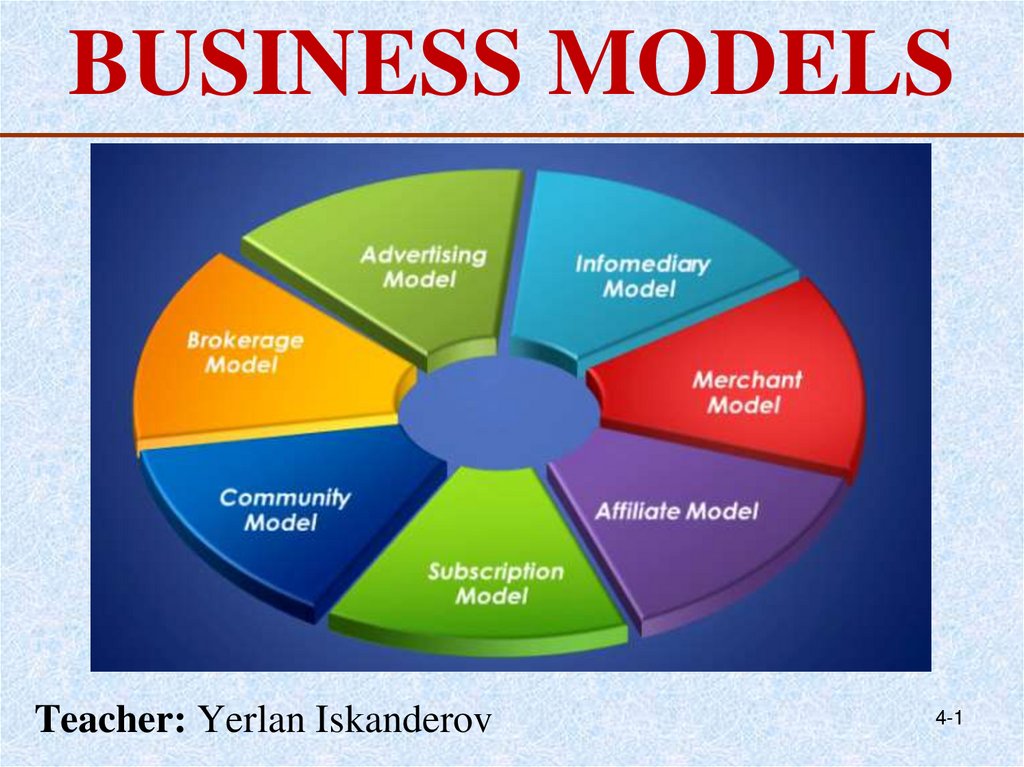
BUSINESS MODELSTeacher: Yerlan Iskanderov
4-1
2. LESSON OBJECTIVES
• Describe business models and discuss theirimportance.
• Identify the components of a business
model using the Business Model Canvas.
• Analyze and design a basic business model
for a product or service.
4-2
3. WARM-UP
• Can you think of a successful business?What do you think makes it work?
• What is a business model, and why is it
important?
4-3
4. DEFINITION
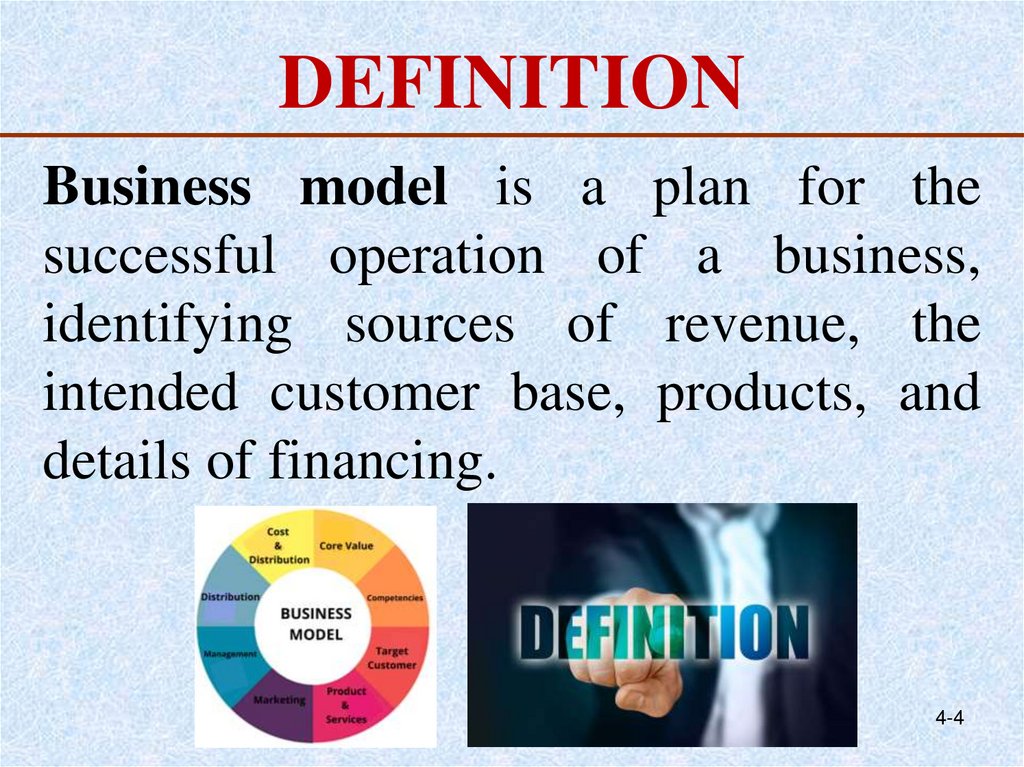
Business model is a plan for thesuccessful operation of a business,
identifying sources of revenue, the
intended customer base, products, and
details of financing.
4-4
5.
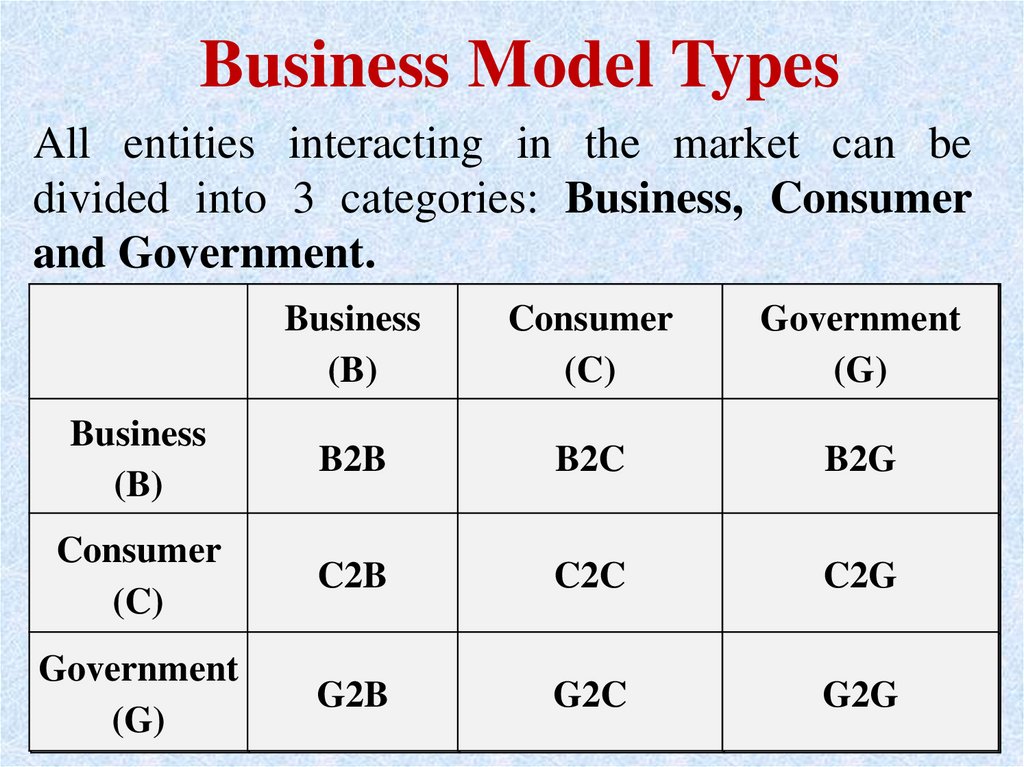
Business Model TypesAll entities interacting in the market can be
divided into 3 categories: Business, Consumer
and Government.
Business
(B)
Consumer
(C)
Government
(G)
Business
(B)
B2B
B2C
B2G
Consumer
(C)
C2B
C2C
C2G
Government
(G)
G2B
G2C
G2G
6. GROUP WORK
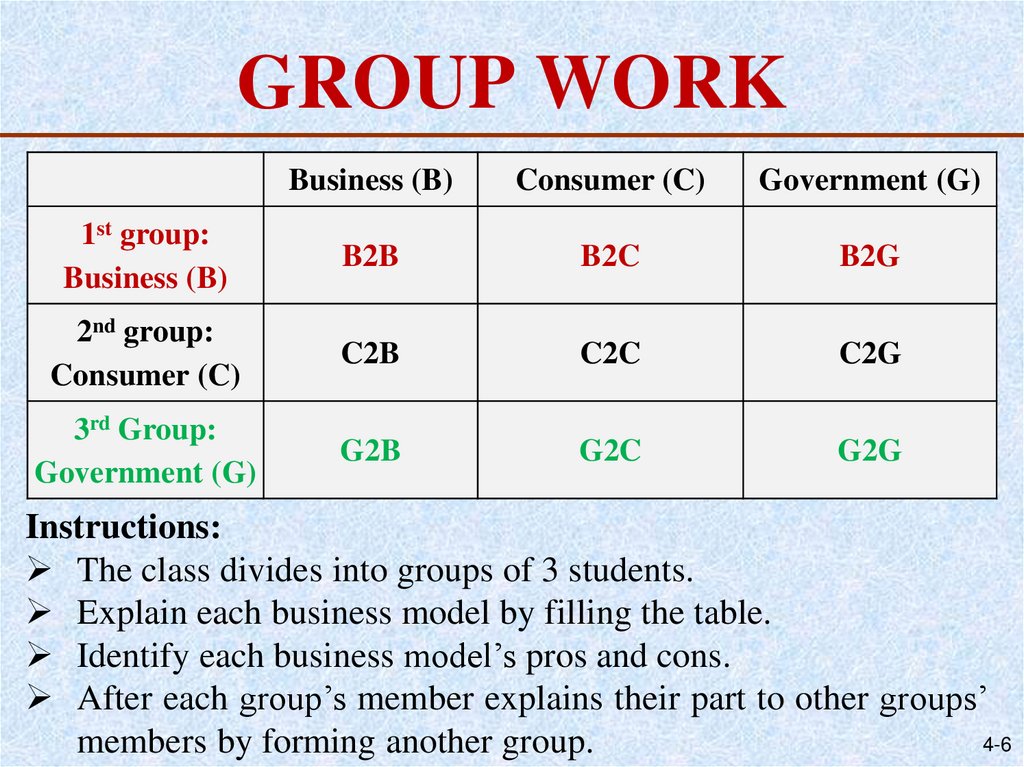
Business (B)Consumer (C)
Government (G)
1st group:
Business (B)
B2B
B2C
B2G
2nd group:
Consumer (C)
C2B
C2C
C2G
3rd Group:
Government (G)
G2B
G2C
G2G
Instructions:
The class divides into groups of 3 students.
Explain each business model by filling the table.
Identify each business model’s pros and cons.
After each group’s member explains their part to other groups’
4-6
members by forming another group.
7. BUSINESS MODEL CANVAS
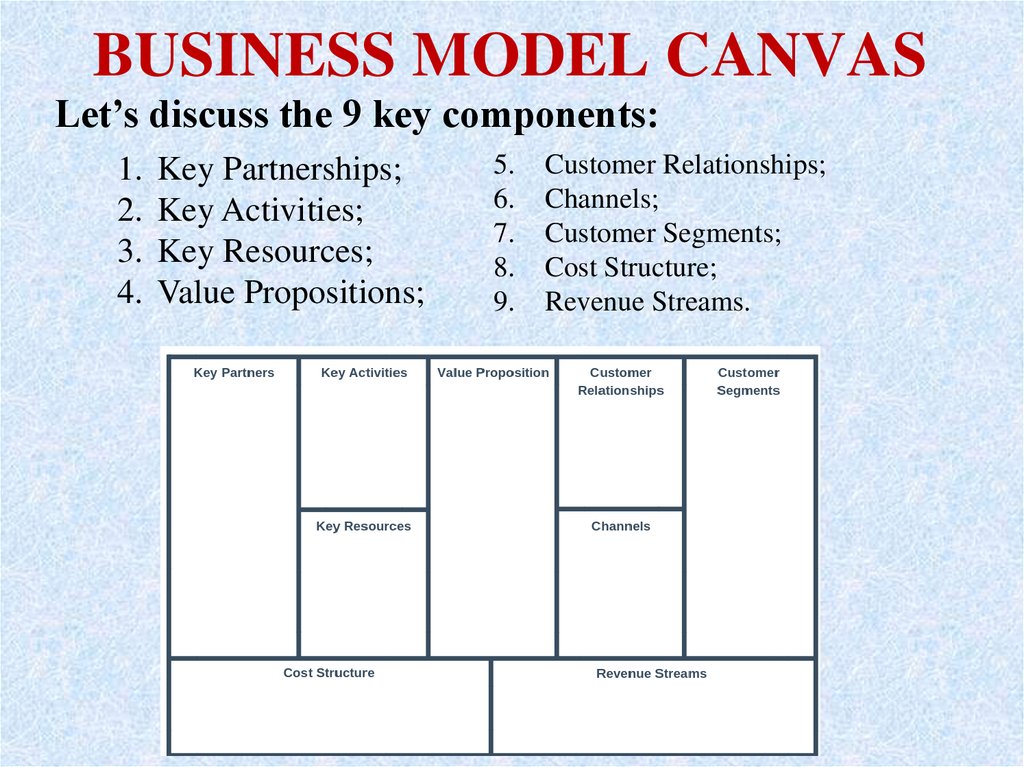
Let’s discuss the 9 key components:1. Key Partnerships;
2. Key Activities;
3. Key Resources;
4. Value Propositions;
5.
6.
7.
8.
9.
Customer Relationships;
Channels;
Customer Segments;
Cost Structure;
Revenue Streams.
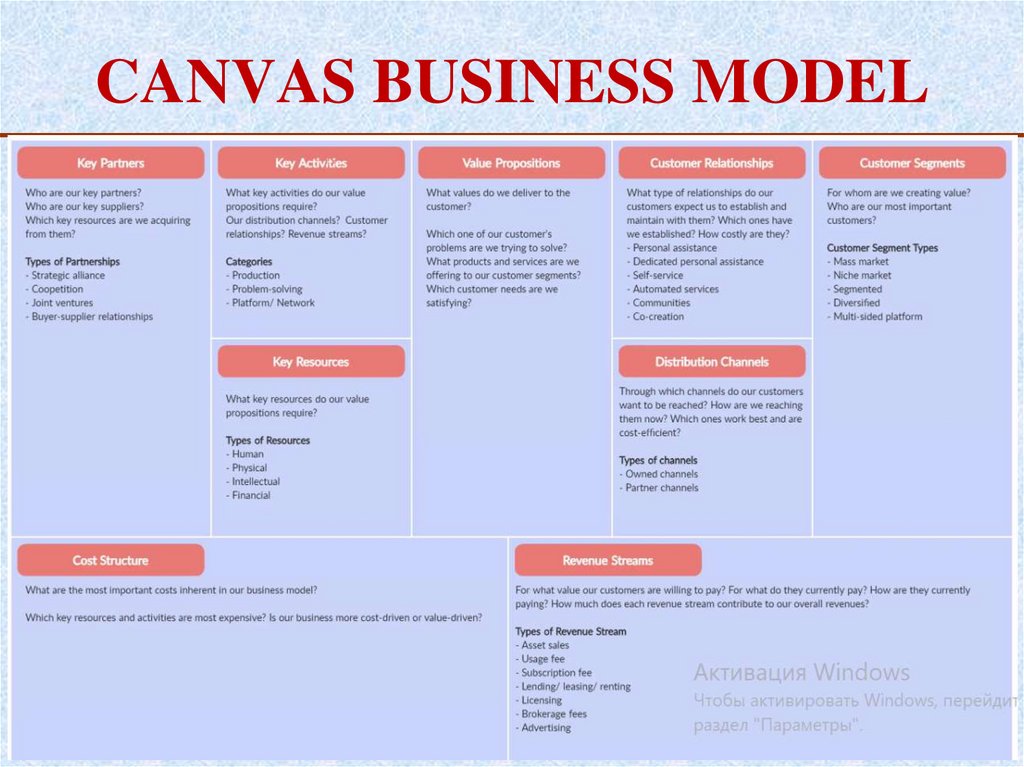
8. CANVAS BUSINESS MODEL
4-89. GROUP ACTIVITY: DESIGN YOUR OWN BUSINESS MODEL
Instructions:Students are divided into groups of 4–5.
Each group creates a business model for a
hypothetical product or service (e.g., a food
delivery app, eco-friendly products, or a tutoring
service).
or
Analyze the business model of a real company of
your choice.
Finally groups present their findings.
4-9
10. REFLECTION
• What did you learn about how businessesoperate?
• Which part of the business model was the easiest
or most challenging to design, and why?
• Share an example of how understanding business
models can help in real-life entrepreneurship or
career planning.
4-10