
 Менеджмент
Похожие презентации:





Анализ требований пользователей John Sabou, MSc Milos Ulman, PhD
1.
User Requirements AnalysisJohn Sabou, MSc
Milos Ulman, PhD
1
2.
OverviewData Governance Strategy
Enterprise Strategy/Business Model
User Analysis Requirements
Basics of Project Management
2
3.
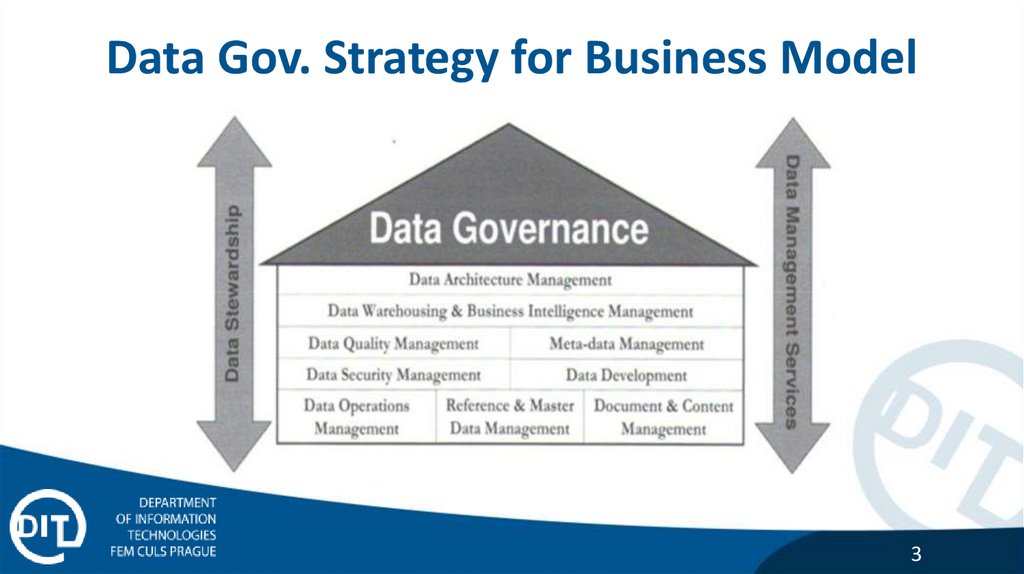
Data Gov. Strategy for Business Model3
4.
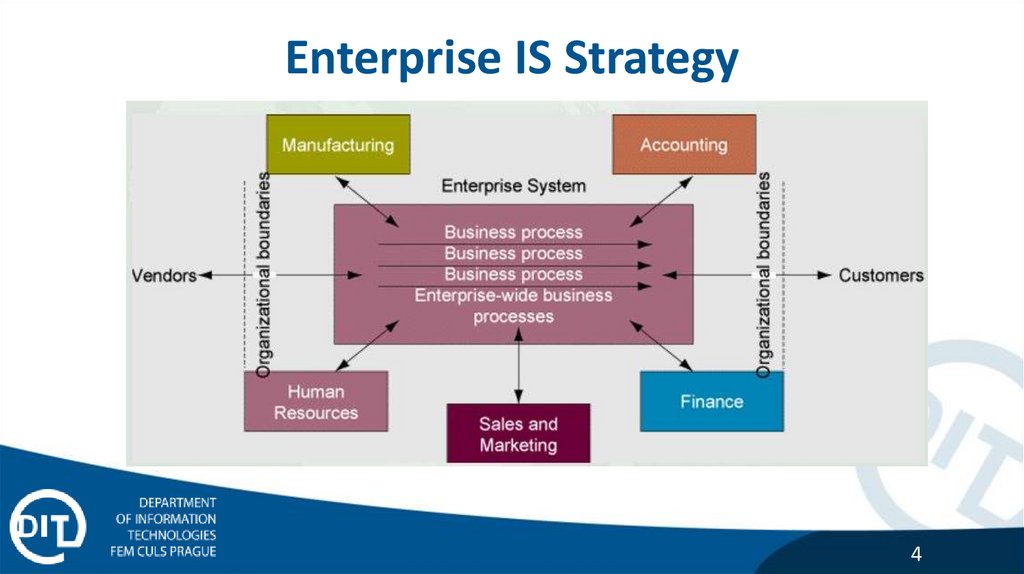
Enterprise IS Strategy4
5.
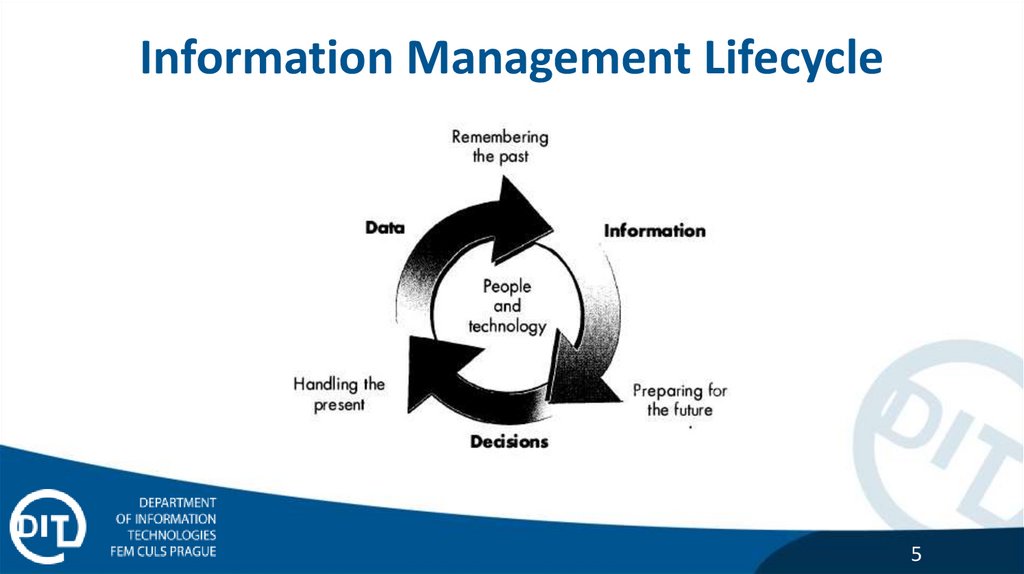
Information Management Lifecycle5
6.
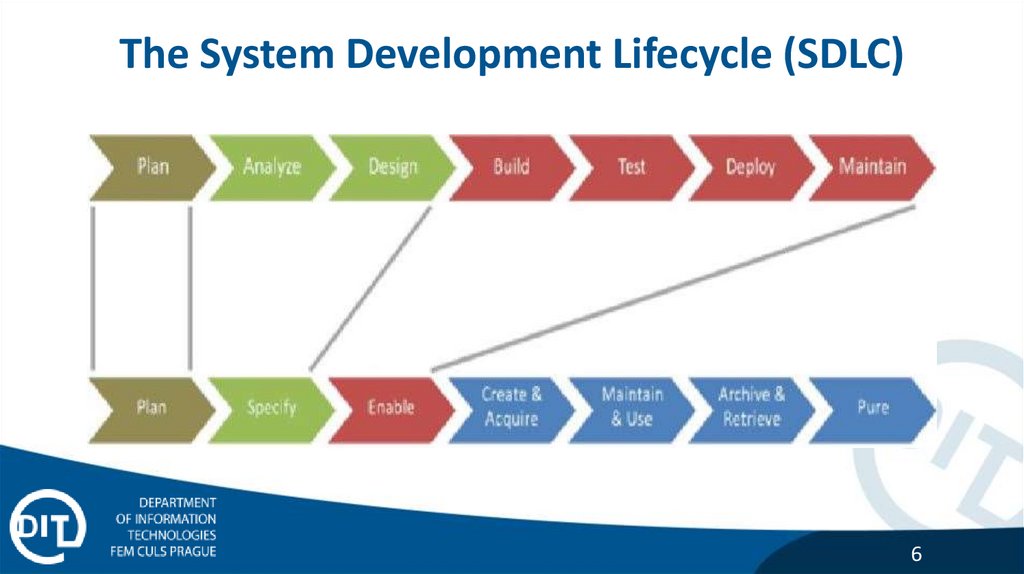
The System Development Lifecycle (SDLC)6
7.
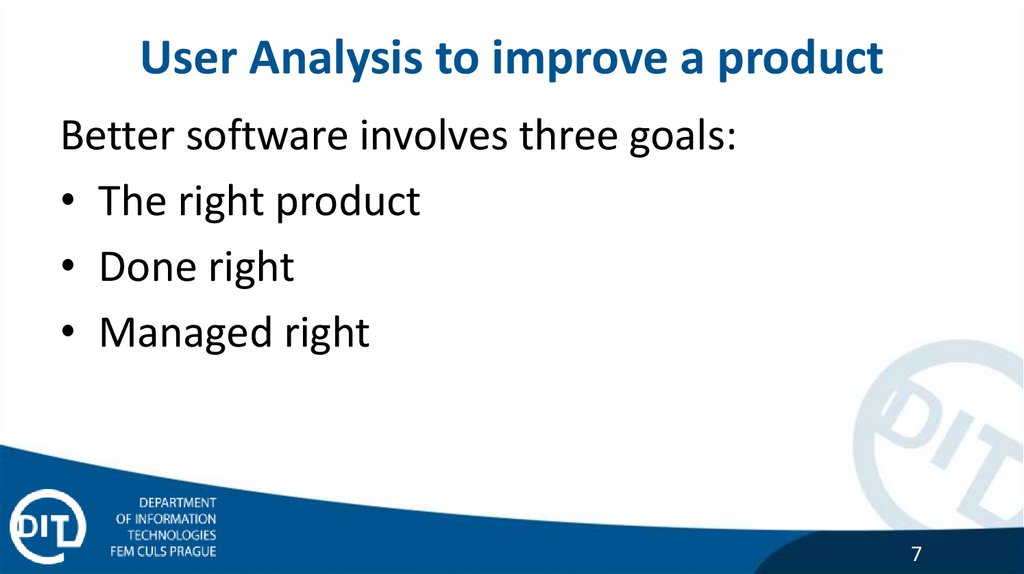
User Analysis to improve a productBetter software involves three goals:
• The right product
• Done right
• Managed right
7
8.
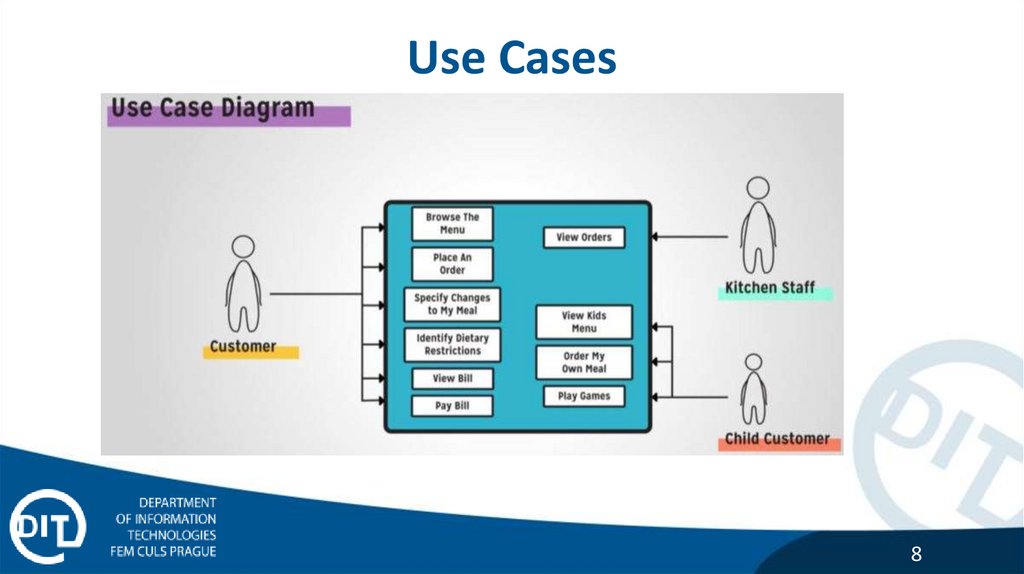
Use Cases8
9.
Client Interactions• When designing a product, one of the most
important things to take into consideration is
the end-user.
• End-users are the people who will use the
product. They are among the stakeholders of
the project.
9
10.
User Considerations• A product should be designed to be something
users can navigate and want to use. This is
primarily accomplished through good user
interface (UI) design.
• UI is what is seen when using the product, and it
can encompass anything an end-user interacts
with—features such as windows, buttons,
scrollbars, checkboxes, and text boxes.
10
11.
Elicitation• The activity of eliciting requirements is an
interactive and investigative process, which
occurs when meeting with the client and
users. E.g. Feasibility studies with focus
groups, Observing how end-users use the
product.
11
12.
Expression• Once client needs have been established by
eliciting requirements, the activity of
expressing requirements comes into play.
Expressing requirements involves framing the
requirements identified through discussion in
a way that allows a product to be built.
12
13.
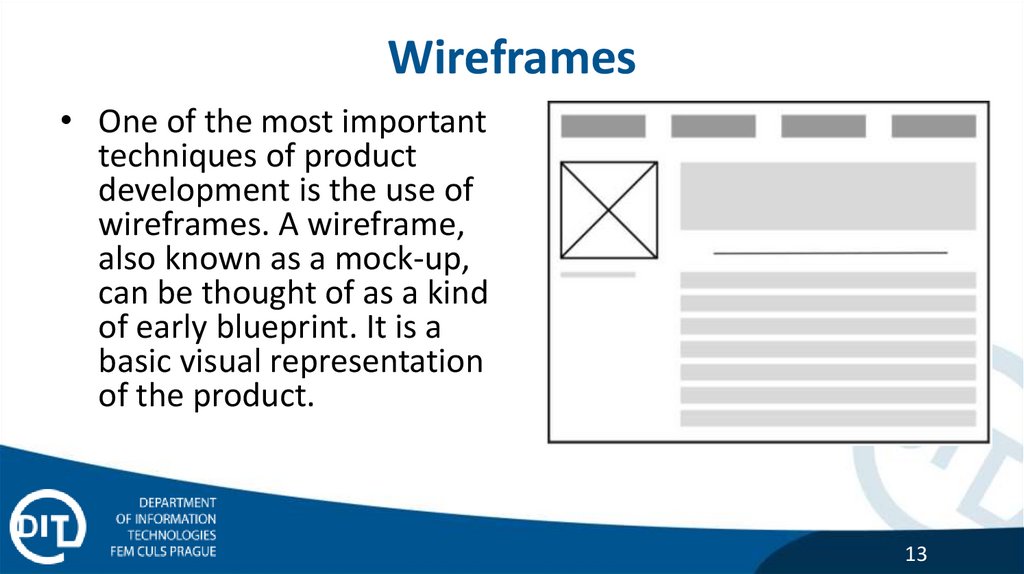
Wireframes• One of the most important
techniques of product
development is the use of
wireframes. A wireframe,
also known as a mock-up,
can be thought of as a kind
of early blueprint. It is a
basic visual representation
of the product.
13
14.
Prioritization• Once a vision of what needs to be done for
the project has been established through both
eliciting and expressing requirements, it is
important to prioritize client needs.
14
15.
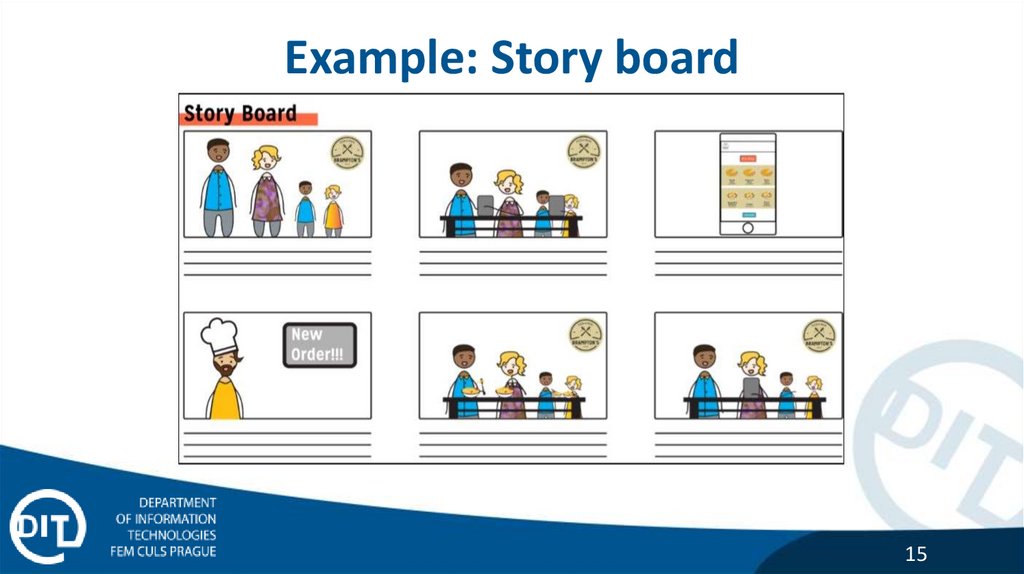
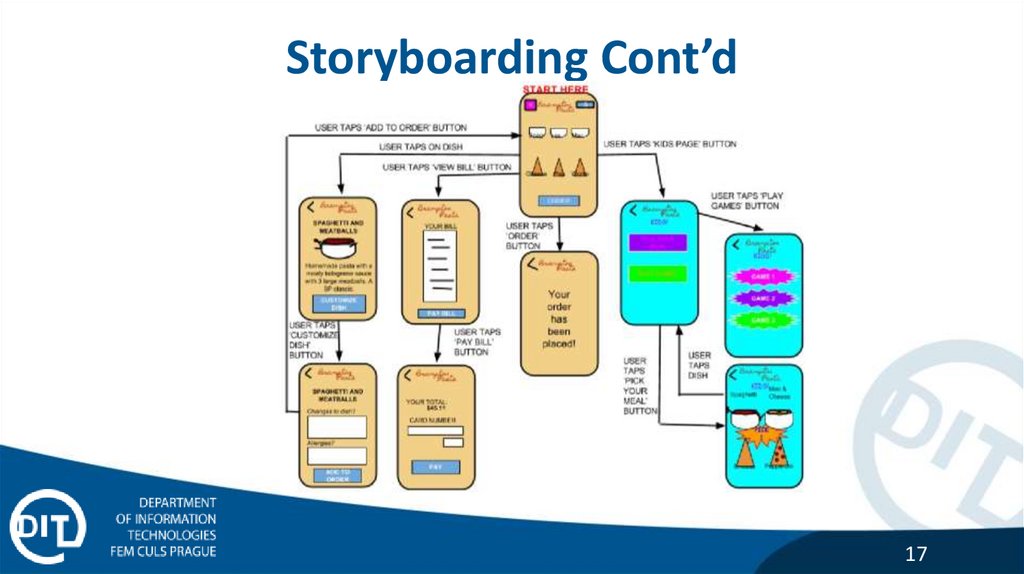
Example: Story board15
16.
Analysis• The process of examining the listed requirements of a
project to ensure that they are clear, complete, and
consistent is known as analyzing requirements.
• Analyzing requirements helps ensure that the product
is the best one possible. It is an important process, and
a constant one. A project must be continually
evaluated and requirements improved as it progresses.
16
17.
Storyboarding Cont’d17
18.
Management• The activity of managing requirements is also a continuous
process. It involves the organizing and re-organizing of
requirements and possibly reusing subsets of requirements
in different stages.
• It also involves keeping track of priorities, analyses, and
changes in requirements. This is very important because
everything is connected in a project.
• If something changes in one requirement, it will affect
other requirements and the development of the product.
18
19.
Types of Requirements
Business requirements
Business rules
User requirements
Functional requirements
Non-functional requirements
External interfaces
Physical product settings
Development constraints
19
20.
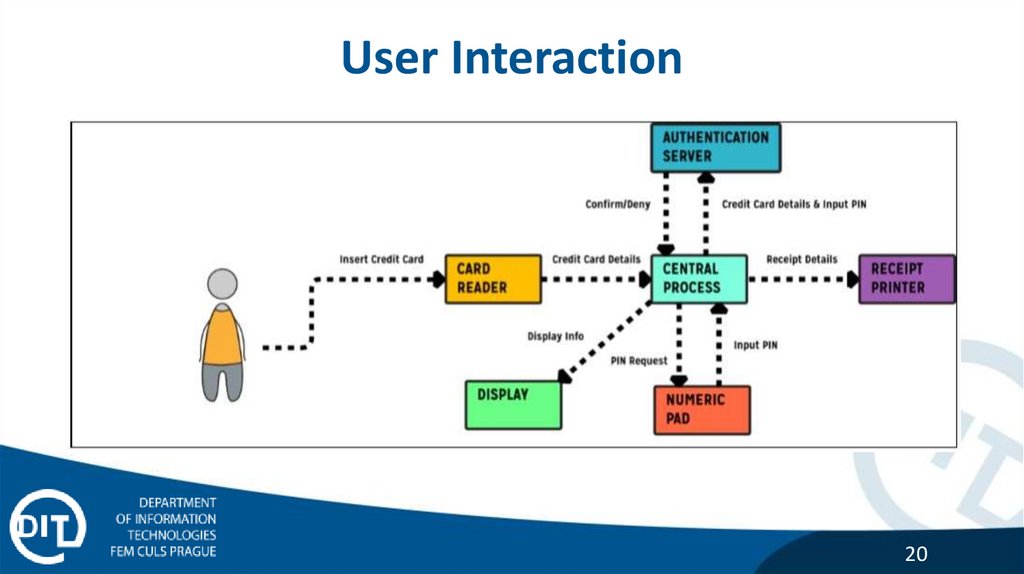
User Interaction20
21.
Thank YouQ/A
21