 Менеджмент
Похожие презентации:






Unifying ICT for Enhanced Collaboration
1.
Unifying ICT for EnhancedCollaboration
In today's interconnected world, a robust Information and Communication
Technology (ICT) system is paramount for organisational success. This
presentation outlines a comprehensive approach to integrating platforms, digital
communication tools, and data management systems to foster seamless
collaboration and operational efficiency. We will delve into the core components,
architectural design, user experience, and a compelling showcase of our
proposed solution.
2.
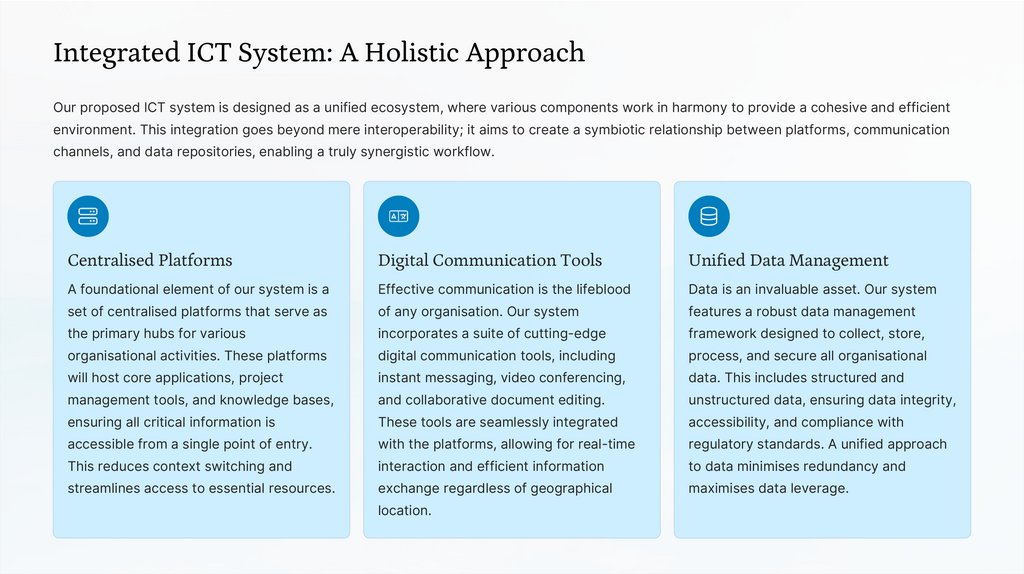
Integrated ICT System: A Holistic ApproachOur proposed ICT system is designed as a unified ecosystem, where various components work in harmony to provide a cohesive and efficient
environment. This integration goes beyond mere interoperability; it aims to create a symbiotic relationship between platforms, communication
channels, and data repositories, enabling a truly synergistic workflow.
Centralised Platforms
Digital Communication Tools
Unified Data Management
A foundational element of our system is a
Effective communication is the lifeblood
Data is an invaluable asset. Our system
set of centralised platforms that serve as
of any organisation. Our system
features a robust data management
the primary hubs for various
incorporates a suite of cutting-edge
framework designed to collect, store,
organisational activities. These platforms
digital communication tools, including
process, and secure all organisational
will host core applications, project
instant messaging, video conferencing,
data. This includes structured and
management tools, and knowledge bases,
and collaborative document editing.
unstructured data, ensuring data integrity,
ensuring all critical information is
These tools are seamlessly integrated
accessibility, and compliance with
accessible from a single point of entry.
with the platforms, allowing for real-time
regulatory standards. A unified approach
This reduces context switching and
interaction and efficient information
to data minimises redundancy and
streamlines access to essential resources.
exchange regardless of geographical
maximises data leverage.
location.
3.
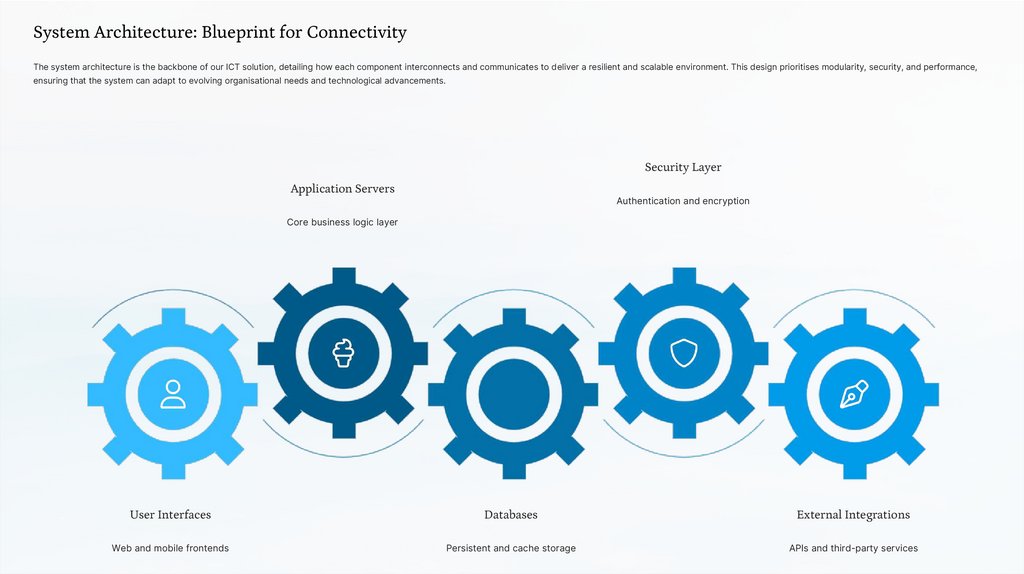
System Architecture: Blueprint for ConnectivityThe system architecture is the backbone of our ICT solution, detailing how each component interconnects and communicates to deliver a resilient and scalable environment. This design prioritises modularity, security, and performance,
ensuring that the system can adapt to evolving organisational needs and technological advancements.
Security Layer
Application Servers
Authentication and encryption
Core business logic layer
User Interfaces
Databases
External Integrations
Web and mobile frontends
Persistent and cache storage
APIs and third-party services
4.
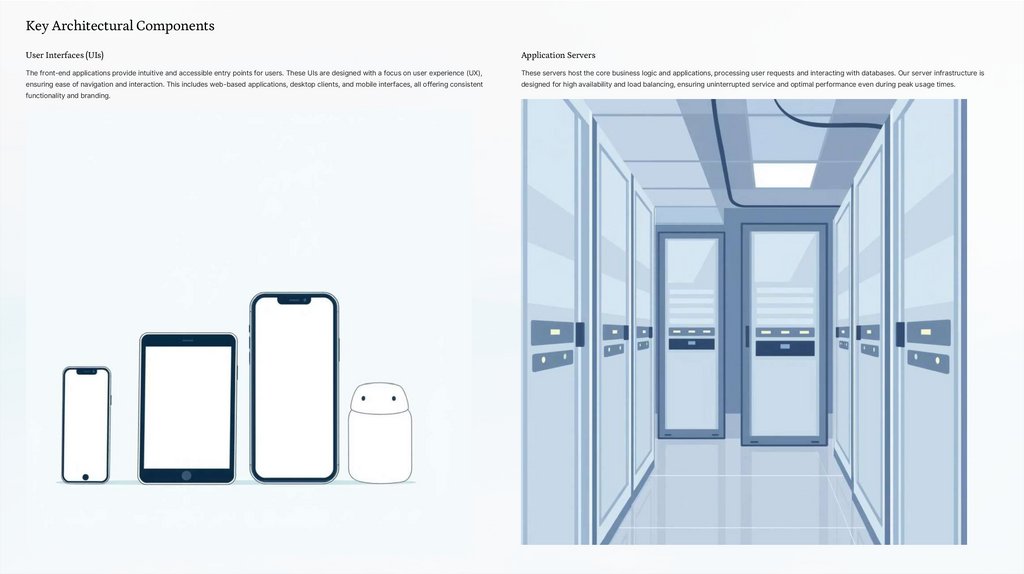
Key Architectural ComponentsUser Interfaces (UIs)
Application Servers
The front-end applications provide intuitive and accessible entry points for users. These UIs are designed with a focus on user experience (UX),
These servers host the core business logic and applications, processing user requests and interacting with databases. Our server infrastructure is
ensuring ease of navigation and interaction. This includes web-based applications, desktop clients, and mobile interfaces, all offering consistent
designed for high availability and load balancing, ensuring uninterrupted service and optimal performance even during peak usage times.
functionality and branding.
5.
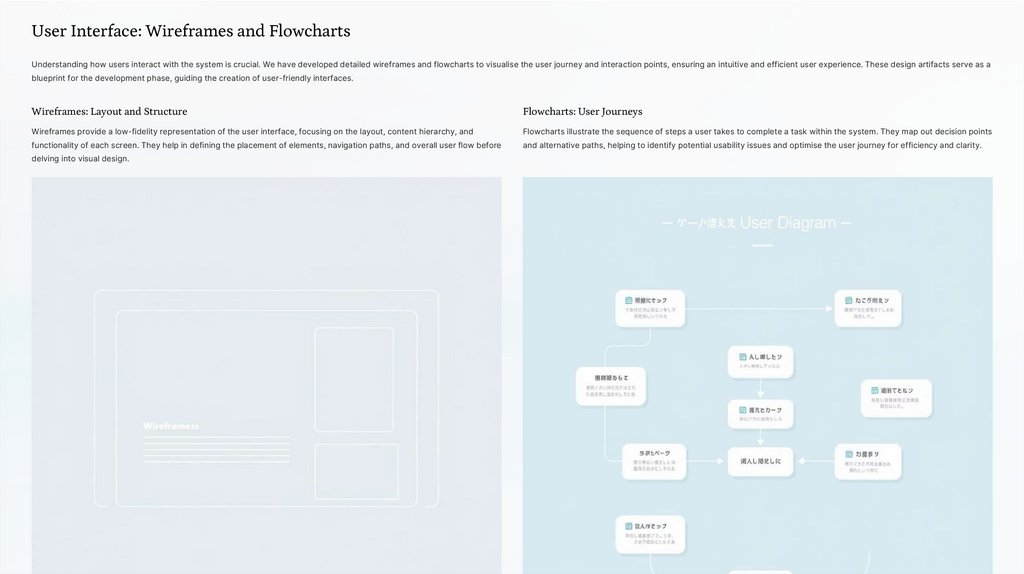
User Interface: Wireframes and FlowchartsUnderstanding how users interact with the system is crucial. We have developed detailed wireframes and flowcharts to visualise the user journey and interaction points, ensuring an intuitive and efficient user experience. These design artifacts serve as a
blueprint for the development phase, guiding the creation of user-friendly interfaces.
Wireframes: Layout and Structure
Flowcharts: User Journeys
Wireframes provide a low-fidelity representation of the user interface, focusing on the layout, content hierarchy, and
Flowcharts illustrate the sequence of steps a user takes to complete a task within the system. They map out decision points
functionality of each screen. They help in defining the placement of elements, navigation paths, and overall user flow before
and alternative paths, helping to identify potential usability issues and optimise the user journey for efficiency and clarity.
delving into visual design.
6.
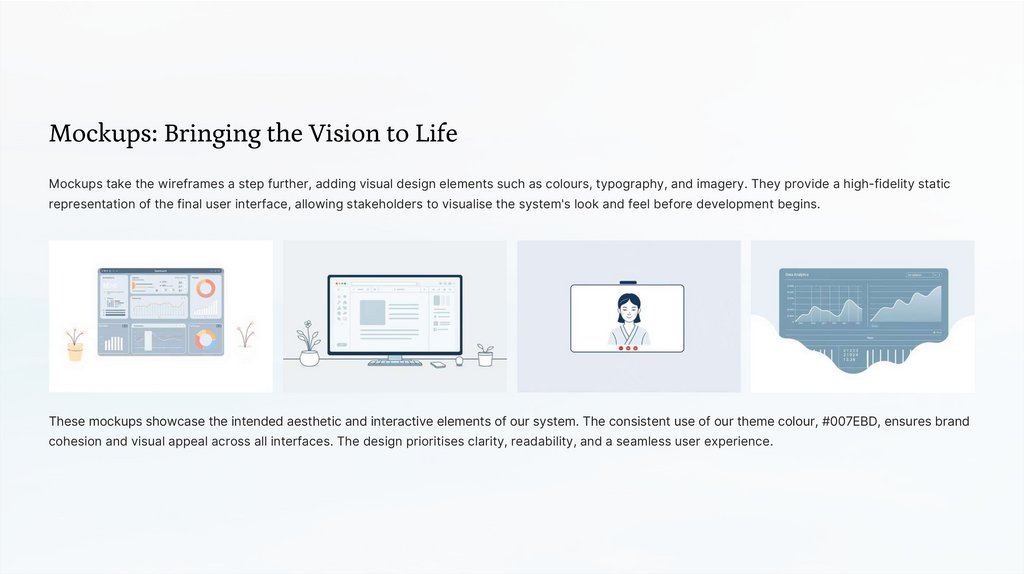
Mockups: Bringing the Vision to LifeMockups take the wireframes a step further, adding visual design elements such as colours, typography, and imagery. They provide a high-fidelity static
representation of the final user interface, allowing stakeholders to visualise the system's look and feel before development begins.
These mockups showcase the intended aesthetic and interactive elements of our system. The consistent use of our theme colour, #007EBD, ensures brand
cohesion and visual appeal across all interfaces. The design prioritises clarity, readability, and a seamless user experience.
7.
Key Features and User InteractionsOur ICT system is designed to facilitate a wide range of user interactions, from daily tasks to strategic decision-making. The following
illustrates key features that enhance productivity and collaboration.
Centralised Project Hub
Integrated Communication
Users can access all project-related information, including
Seamlessly transition from chat to video calls, share files, and
tasks, deadlines, and team members, from a single dashboard.
co-edit documents without leaving the platform. This reduces
Real-time updates and notifications keep everyone informed
friction and enhances spontaneous collaboration.
and aligned.
Advanced Search & Discovery
Personalised Dashboards
A powerful search engine allows users to quickly find
Each user can customise their dashboard to display the most
documents, discussions, and data across all integrated
relevant information and tools, optimising their personal
platforms. Intelligent filtering and tagging capabilities improve
workflow and focus.
information retrieval.
8.
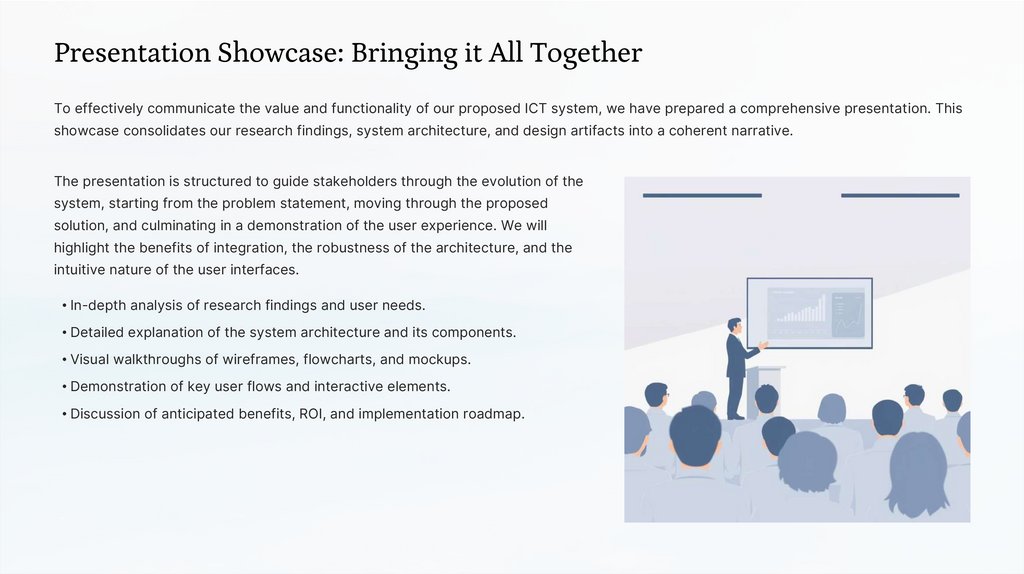
Presentation Showcase: Bringing it All TogetherTo effectively communicate the value and functionality of our proposed ICT system, we have prepared a comprehensive presentation. This
showcase consolidates our research findings, system architecture, and design artifacts into a coherent narrative.
The presentation is structured to guide stakeholders through the evolution of the
system, starting from the problem statement, moving through the proposed
solution, and culminating in a demonstration of the user experience. We will
highlight the benefits of integration, the robustness of the architecture, and the
intuitive nature of the user interfaces.
• In-depth analysis of research findings and user needs.
• Detailed explanation of the system architecture and its components.
• Visual walkthroughs of wireframes, flowcharts, and mockups.
• Demonstration of key user flows and interactive elements.
• Discussion of anticipated benefits, ROI, and implementation roadmap.
9.
Visual Aids: Enhancing UnderstandingVisual aids are integral to making complex technical information accessible and engaging. Our presentation leverages a variety of visual
tools to support explanations and reinforce key messages.
Diagrams
Mockups
System architecture diagrams clearly depict the
High-fidelity mockups provide a realistic preview of the user
interconnections between various components, helping to
interface, allowing stakeholders to visualise the final product
demystify the underlying infrastructure. These are used to
and offer feedback on design and functionality.
show data flow and component relationships.
Flowcharts
Data Visualisations
Flowcharts simplify complex processes, illustrating user
Charts and graphs are used to present research findings,
journeys and system logic in an easy-to-understand visual
performance metrics, and projected benefits, making data-
format. They help in identifying potential bottlenecks and
driven insights more digestible and impactful.
optimising workflows.
10.
Conclusion: A Future of Seamless ICTThe proposed integrated ICT system represents a significant step towards a more connected, efficient, and productive future for our
organisation. By carefully designing the architecture, prioritising user experience, and strategically leveraging digital tools, we aim to
empower our teams and enhance our overall operational capabilities.
"Innovation is seeing what everybody has seen and thinking what nobody has thought." - Dr. Albert Szent-Györgyi
Our commitment is to deliver an ICT solution that not only meets current demands but also provides a flexible foundation for future growth
and technological evolution. We believe this system will foster a culture of collaboration, drive innovation, and ultimately contribute to the
organisation's long-term success. We welcome your questions and look forward to discussing the next steps for implementation.