
 Биология
Похожие презентации:

Group of marine microbial
1.
GROUP OFMARINE MICROBIAL
COMMUNITIES
2.
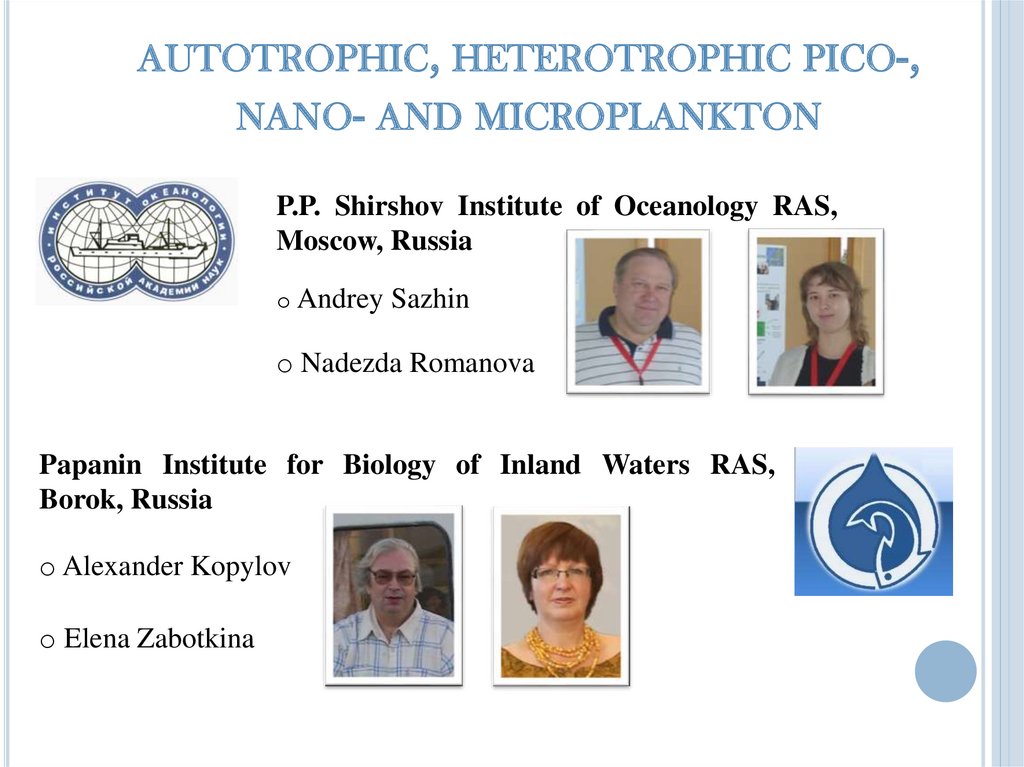
AUTOTROPHIC, HETEROTROPHIC PICO-,NANO- AND MICROPLANKTON
P.P. Shirshov Institute of Oceanology RAS,
Moscow, Russia
o Andrey Sazhin
o Nadezda Romanova
Papanin Institute for Biology of Inland Waters RAS,
Borok, Russia
o Alexander Kopylov
o Elena Zabotkina
3.
OBJECTS• Virioplankton (abundance of viral particles,
viruses attached to bacterial cells, capsid size,
frequency of infected bacterial cells, burst size,
viral-mediated bacterial mortality)
• Bacterioplankton (abundance, biomass, bacterial
production and contribution of attached cells to the
total abundance)
•Autotrophic and heterotrophic flagellates
and community structure of phytoplankton
• Ciliates and other Protists, biomass
and species composition
4.
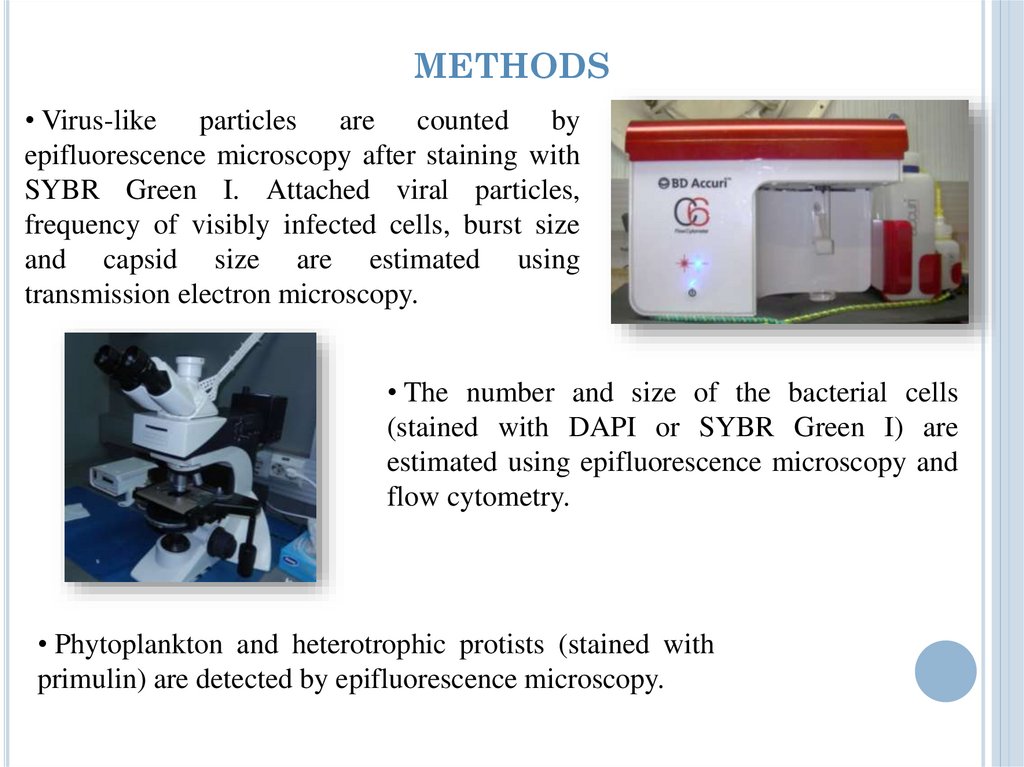
METHODS• Virus-like particles are counted by
epifluorescence microscopy after staining with
SYBR Green I. Attached viral particles,
frequency of visibly infected cells, burst size
and capsid size are estimated using
transmission electron microscopy.
• The number and size of the bacterial cells
(stained with DAPI or SYBR Green I) are
estimated using epifluorescence microscopy and
flow cytometry.
• Phytoplankton and heterotrophic protists (stained with
primulin) are detected by epifluorescence microscopy.
5.
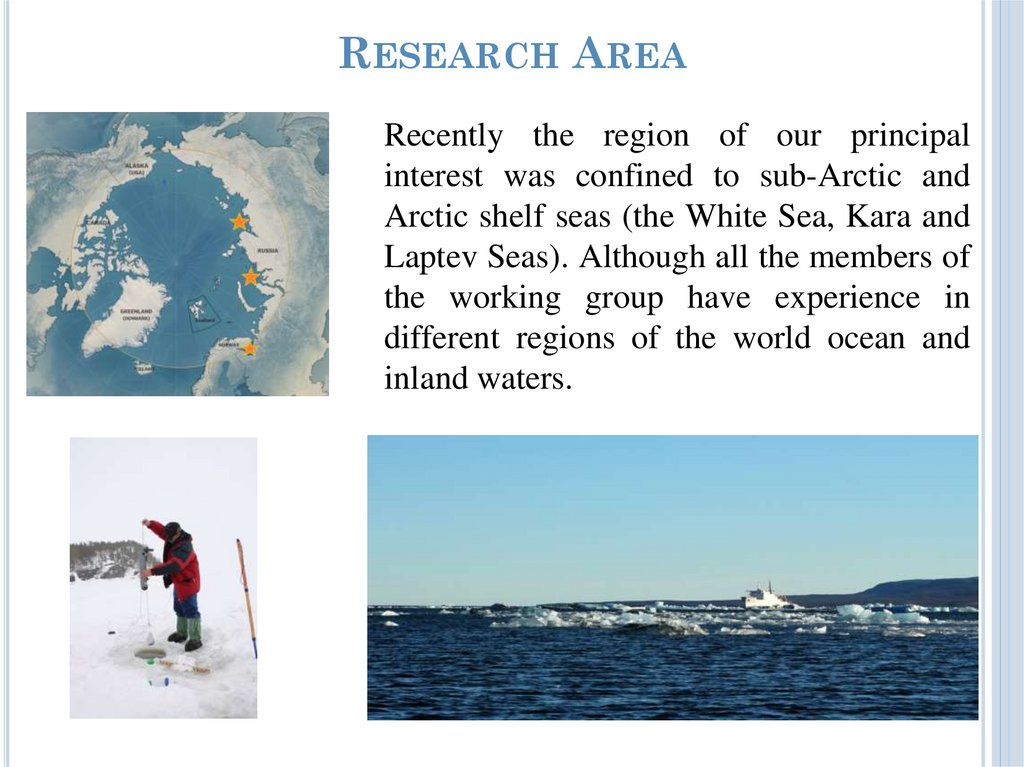
RESEARCH AREARecently the region of our principal
interest was confined to sub-Arctic and
Arctic shelf seas (the White Sea, Kara and
Laptev Seas). Although all the members of
the working group have experience in
different regions of the world ocean and
inland waters.