

 Культурология
Похожие презентации:









Japanese Business Etiquette
1.
Japanese Business EtiquetteKonkina Evgeniya, Ponkina Ksenia MP-102
2.
Japanese business ethics are deeply influenced by the nation's history, culture, andvalues. Key aspects include:
• Face and Reputation: Japanese people are highly concerned with maintaining
dignity and avoiding shame. The concept of "losing face" is central, leading to a
strong desire to avoid mistakes or incompetence.
• Restraint and Composure: Emotional control is valued, and displaying strong
emotions is generally avoided.
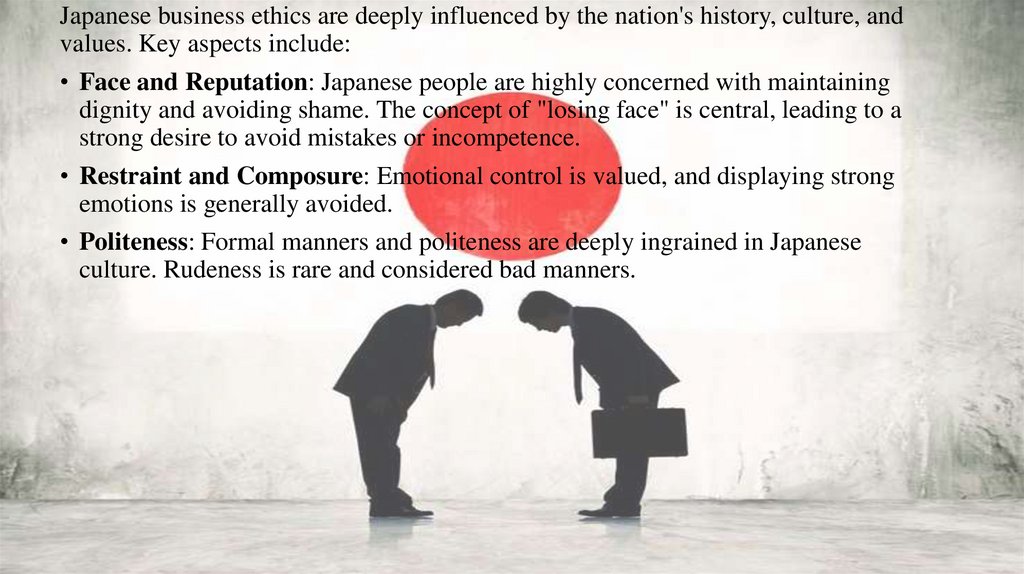
• Politeness: Formal manners and politeness are deeply ingrained in Japanese
culture. Rudeness is rare and considered bad manners.
3.
• Modesty: Extravagance or standing out is frowned upon; subtlety and humility areprized.
• Hard Work and Thrift: Diligence and avoiding excessive personal wealth accumulation
are emphasized.
• Collectivism and Loyalty: Loyalty to one's company and prioritizing collective interests
are central to Japanese business culture.
• Punctuality: Being on time is essential and lateness is considered unacceptable.
4.
Business Etiquette:• Mediators: Negotiations often involve a mediator who helps facilitate discussions
and builds trust between the parties.
• Preparation: Business meetings require thorough preparation, including financial
and technical details, documents, and visual materials.
• Punctuality: Arriving 10-15 minutes early shows respect and professionalism.
• Dress Code: Business attire is conservative, typically a suit, tie, and classic shoes.
5.
• Greetings: Greetings involve either a bow or handshake, with the Japanese partyinitiating the form. Address people by their last name with the suffix "san."
• Business Cards: Exchanging business cards is a crucial part of meetings, with the
information ideally in both English and Japanese.
• Communication Style: Conversations are polite, slow-paced, and often begin
with casual topics before moving to business. Quick transitions to business
discussions are avoided, and decisions are often made through mutual
concessions. Oral agreements are treated with the same seriousness as written
ones.