

 Финансы
Похожие презентации:




Introduction to Accounting
1. Introduction to Accounting
Bibigul Zhakupova1
2.
• What is Accounting?– What Accounting is about?
– Why Accounting is needed?
– Where Accounting takes place?
– What accountants are doing at work?
2
3.
What is Accounting?3
4.
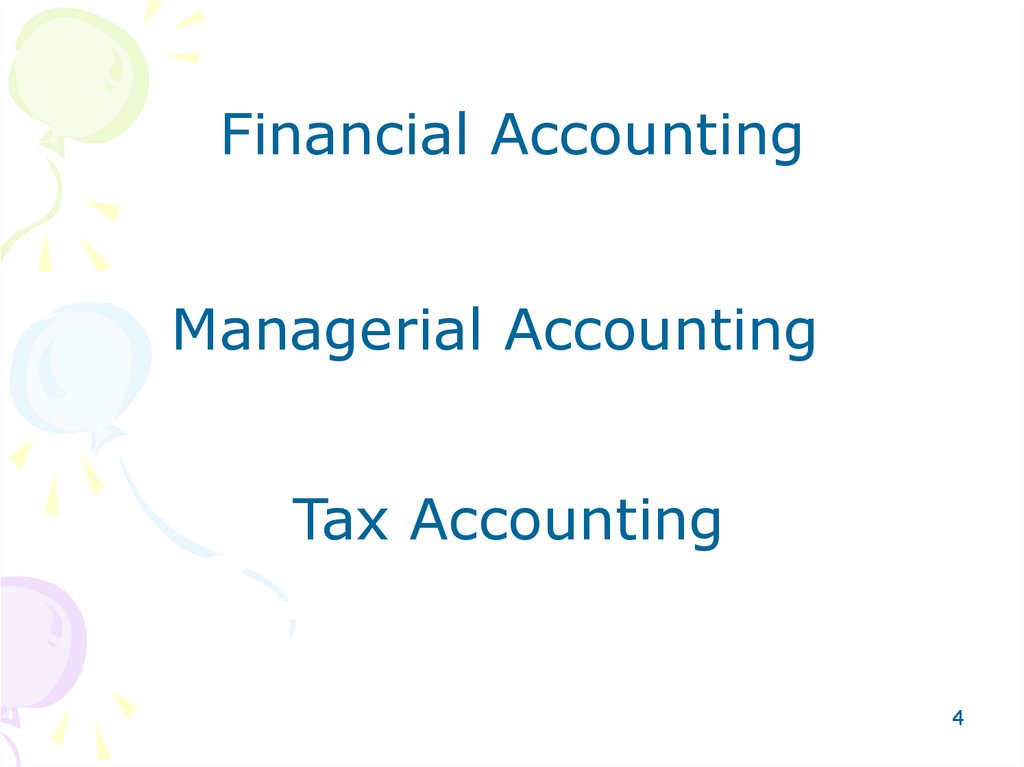
Financial AccountingManagerial Accounting
Tax Accounting
4
5.
Accounting is ….a language
of business
5
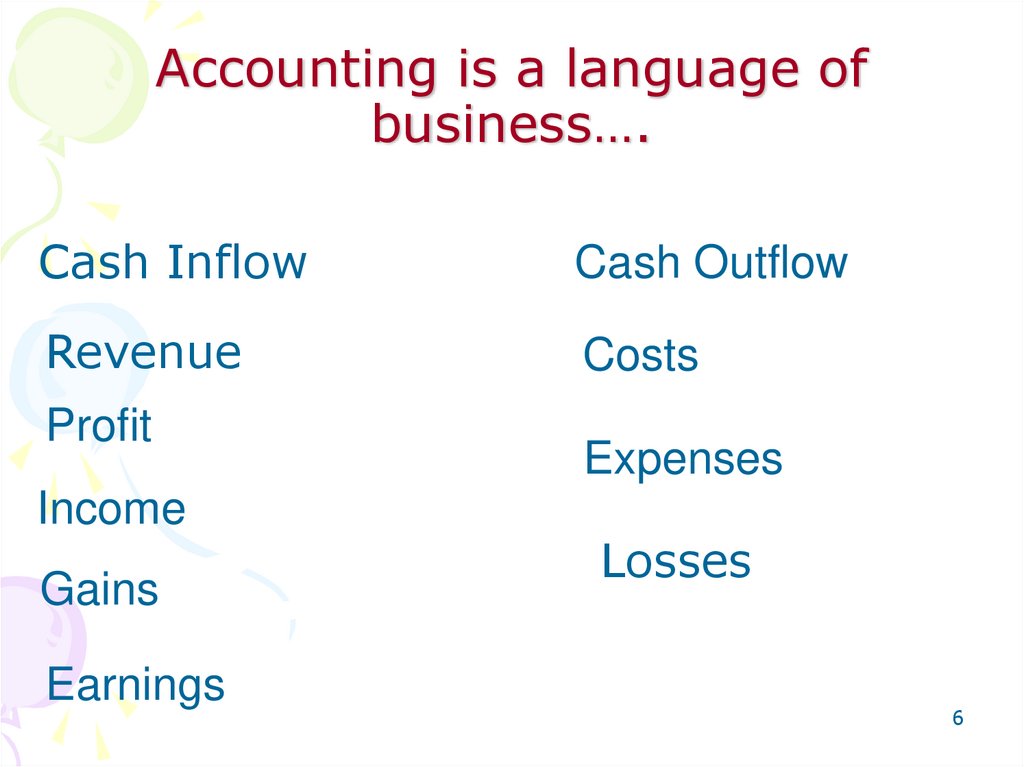
6. Accounting is a language of business….
Cash InflowCash Outflow
Revenue
Costs
Profit
Income
Gains
Earnings
Expenses
Losses
6
7.
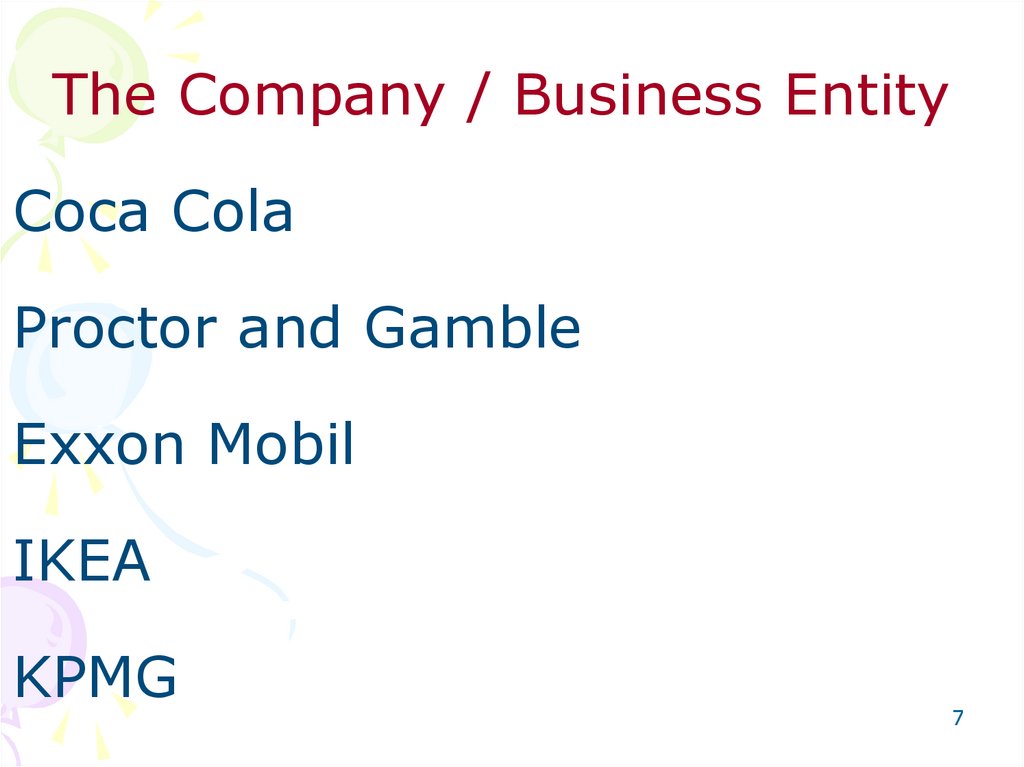
The Company / Business EntityCoca Cola
Proctor and Gamble
Exxon Mobil
IKEA
KPMG
7
8.
Financial Accounting8
9.
What are the main functionsof Financial Accounting?
To collect information about company’s
business transactions;
To prepare Financial Reports from this
information.
9
10. Functions of Accounting
To Collect Information……..What Kind of Information?
10
11. Information regarding
business transactionsof the Company
11
12.
What kind of transactions arecalled “business transactions” ?
12
13.
What kind of transactions arecalled “business transactions” ?
Examples:
Purchase of raw materials
Purchase of equipment
Construction of plant, administrative building
Payment of salaries
Payment for electricity and utilities
Sale of furniture
13
14.
How information regarding“business transactions” is
collected ?
14
15.
How information regarding “businesstransactions” is collected ?
By collecting source documents
about business transactions
15
16.
The collected information isrecorded.
How it is recorded?
16
17.
The collected information isrecorded.
How it is recorded?
By journal entries, using debits
and credits
17
18.
Financial Statements areprepared from those records
through the process called
Accounting Cycle
18
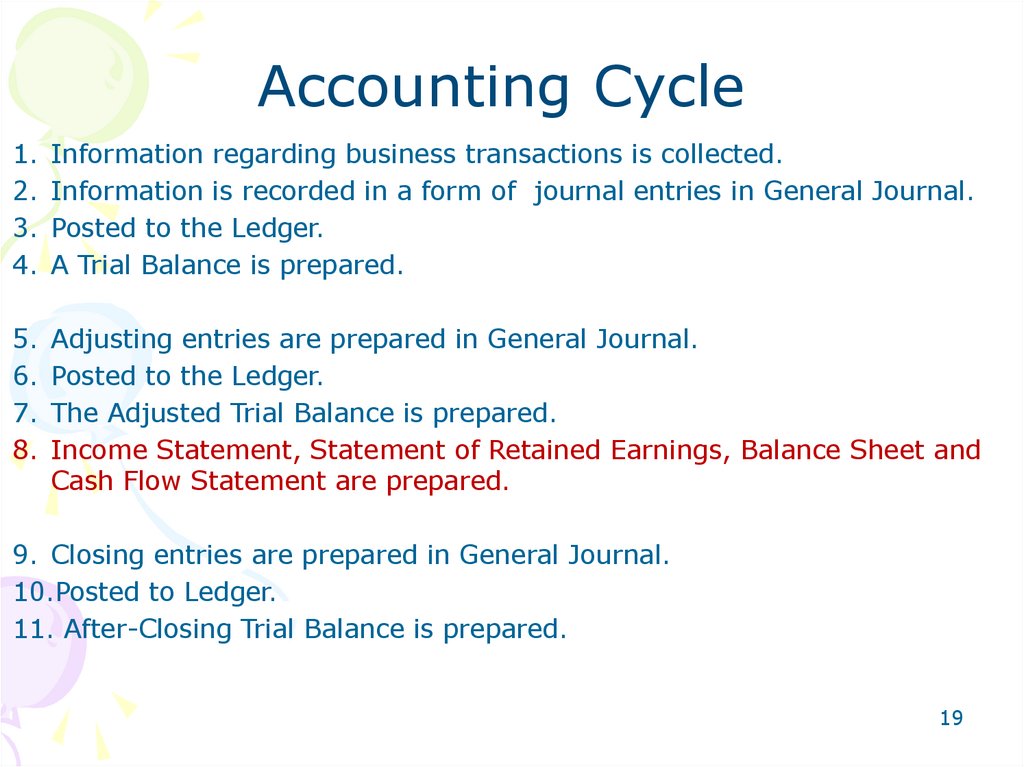
19.
Accounting Cycle1. Information regarding business transactions is collected.
2. Information is recorded in a form of journal entries in General Journal.
3. Posted to the Ledger.
4. A Trial Balance is prepared.
5. Adjusting entries are prepared in General Journal.
6. Posted to the Ledger.
7. The Adjusted Trial Balance is prepared.
8. Income Statement, Statement of Retained Earnings, Balance Sheet and
Cash Flow Statement are prepared.
9. Closing entries are prepared in General Journal.
10.Posted to Ledger.
11. After-Closing Trial Balance is prepared.
19
20.
Financial Reports are preparedin accordance with rules
similar to all business entities
20
21.
Accounting standards:• IFRS (МСФО) - European
standards;
• GAAP – US standards;
21
22.
Accounting standards areneeded:
• For the purposes of comparability of
Financial Reports of different
companies;
• To prevent frauds and manipulation
with figures in the Financial Reports.
22
23.
Accounting Standards are the rulesprescribing:
• What information should be collected;
• How it should be recorded;
• What information should be contained in
particular Financial Statements;
• Etc.
23
24.
Financial Reports are presented….To External Users of information:
• Investors: current and potential
• Creditors: banks and financial
institutions
• General Public
• State Authorities
• Etc.
24
25. Financial Accounting
Why to present informationregarding the company’s
financial performance and
financial position to the
external users?
25
26. Financial Accounting
Investors and Creditors should makea crucial decision:
How to allocate their (limited)
resources in the most optimal way?
26
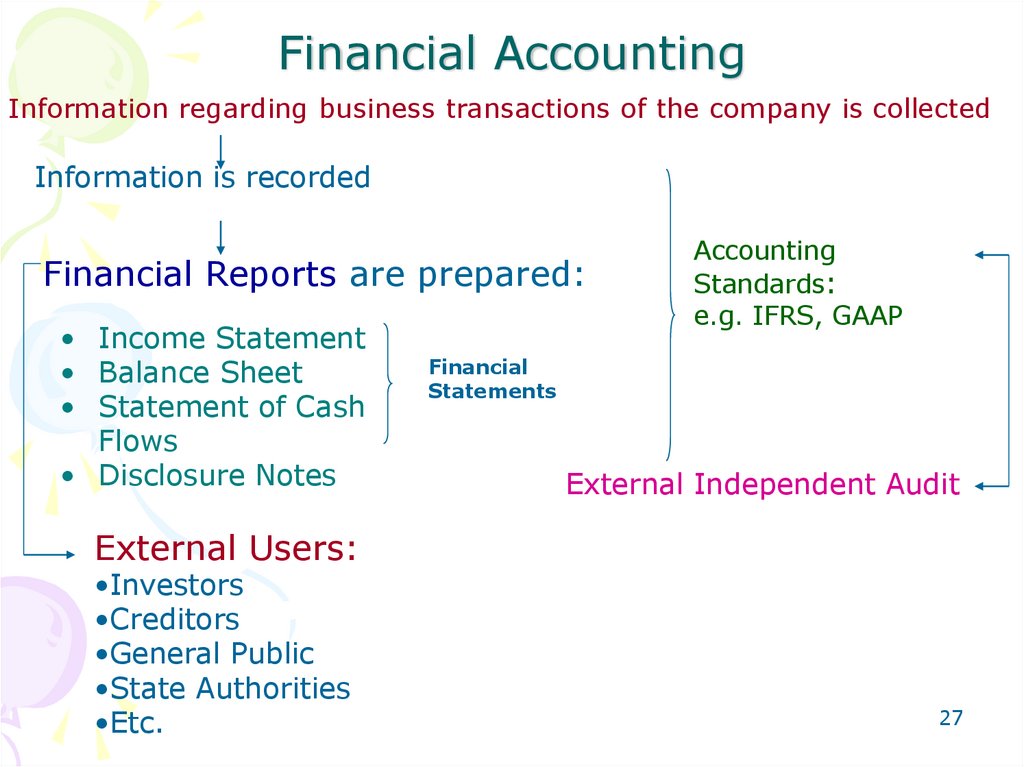
27. Financial Accounting
Information regarding business transactions of the company is collectedInformation is recorded
Financial Reports are prepared:
• Income Statement
• Balance Sheet
• Statement of Cash
Flows
• Disclosure Notes
Accounting
Standards:
e.g. IFRS, GAAP
Financial
Statements
External Independent Audit
External Users:
•Investors
•Creditors
•General Public
•State Authorities
•Etc.
27
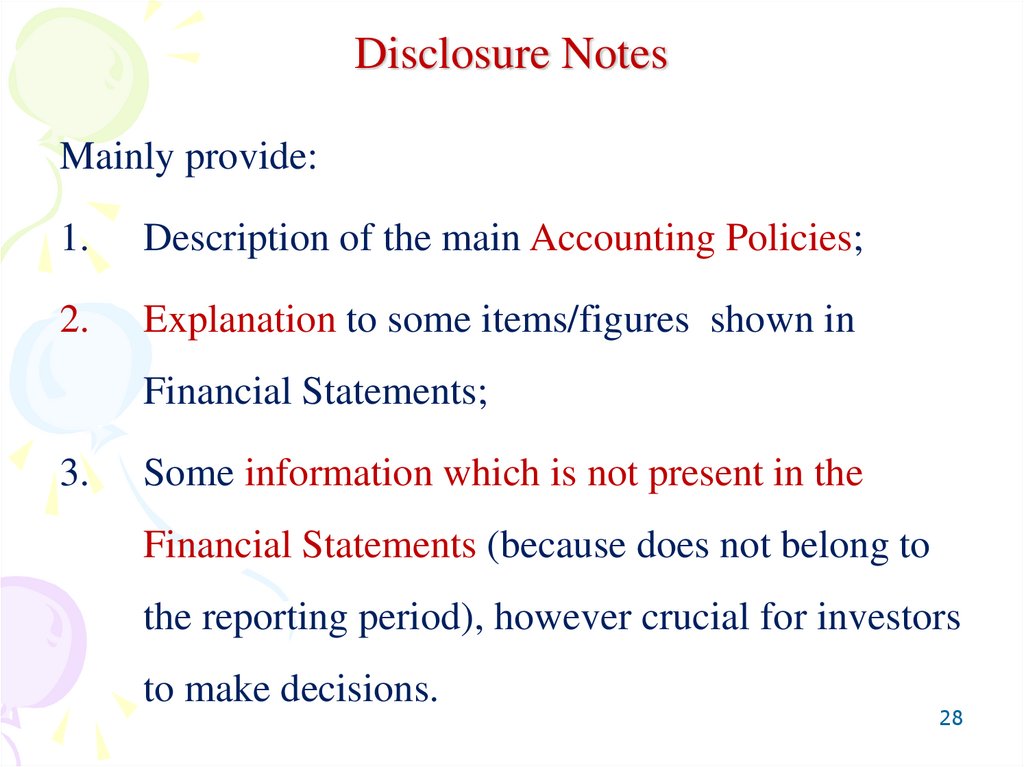
28. Disclosure Notes
Mainly provide:1.
Description of the main Accounting Policies;
2.
Explanation to some items/figures shown in
Financial Statements;
3.
Some information which is not present in the
Financial Statements (because does not belong to
the reporting period), however crucial for investors
to make decisions.
28
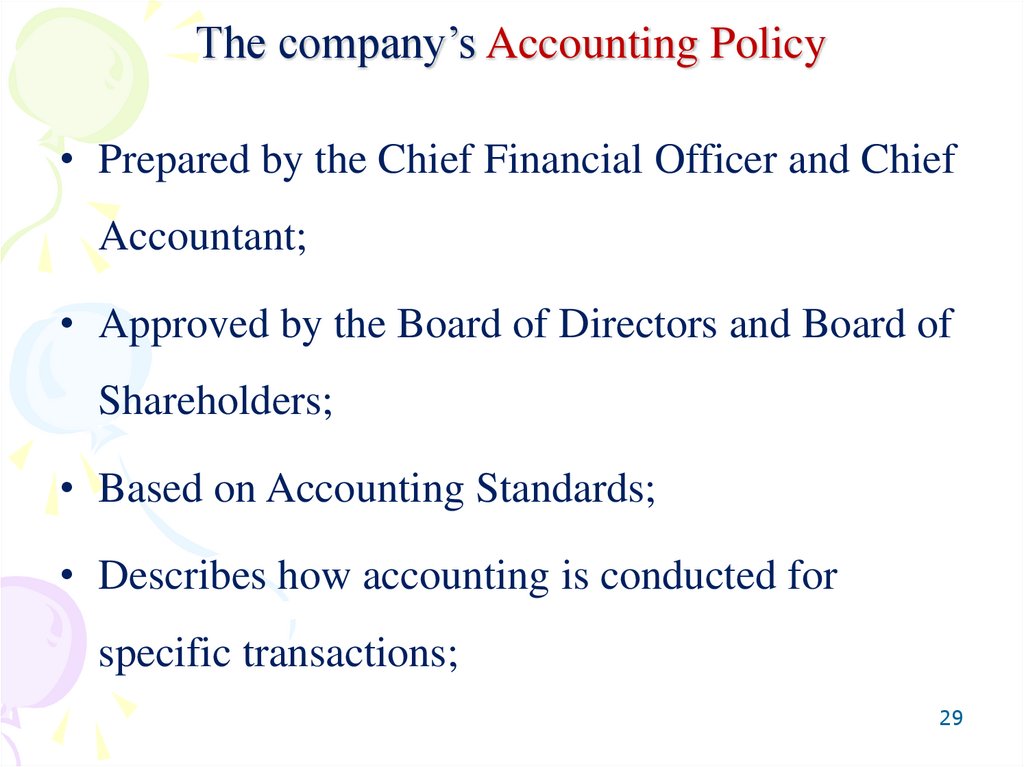
29. The company’s Accounting Policy
• Prepared by the Chief Financial Officer and ChiefAccountant;
• Approved by the Board of Directors and Board of
Shareholders;
• Based on Accounting Standards;
• Describes how accounting is conducted for
specific transactions;
29
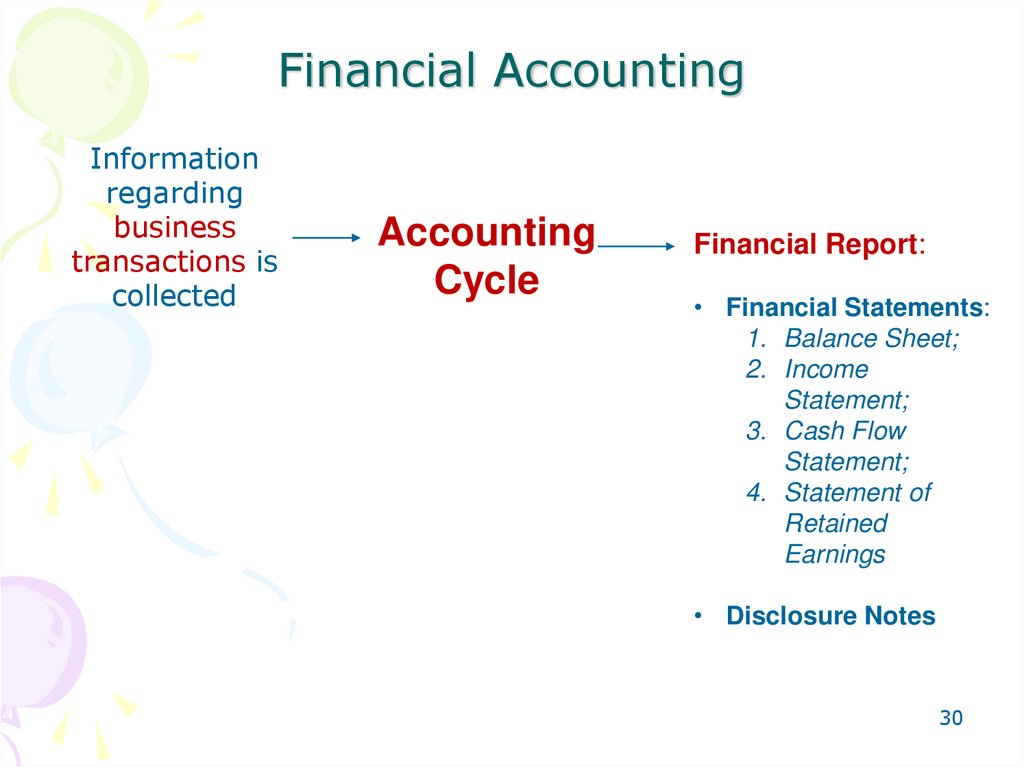
30. Financial Accounting
Informationregarding
business
transactions is
collected
Accounting
Cycle
Financial Report:
• Financial Statements:
1. Balance Sheet;
2. Income
Statement;
3. Cash Flow
Statement;
4. Statement of
Retained
Earnings
• Disclosure Notes
30
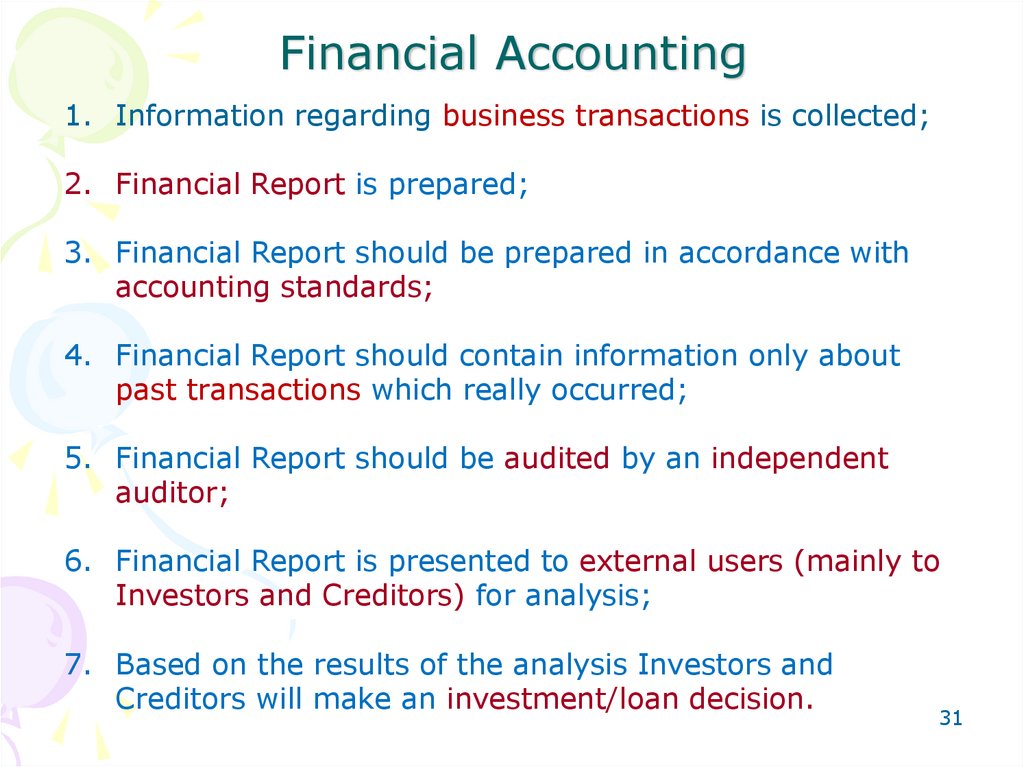
31. Financial Accounting
1. Information regarding business transactions is collected;2. Financial Report is prepared;
3. Financial Report should be prepared in accordance with
accounting standards;
4. Financial Report should contain information only about
past transactions which really occurred;
5. Financial Report should be audited by an independent
auditor;
6. Financial Report is presented to external users (mainly to
Investors and Creditors) for analysis;
7. Based on the results of the analysis Investors and
Creditors will make an investment/loan decision.
31
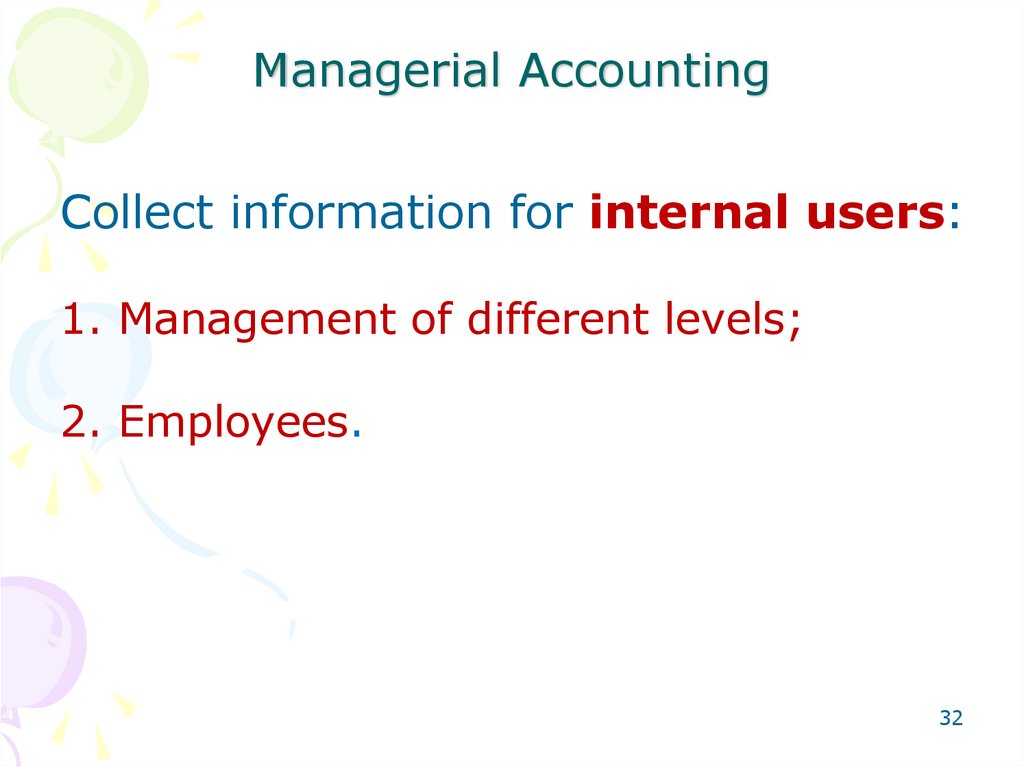
32. Managerial Accounting
Collect information for internal users:1. Management of different levels;
2. Employees.
32
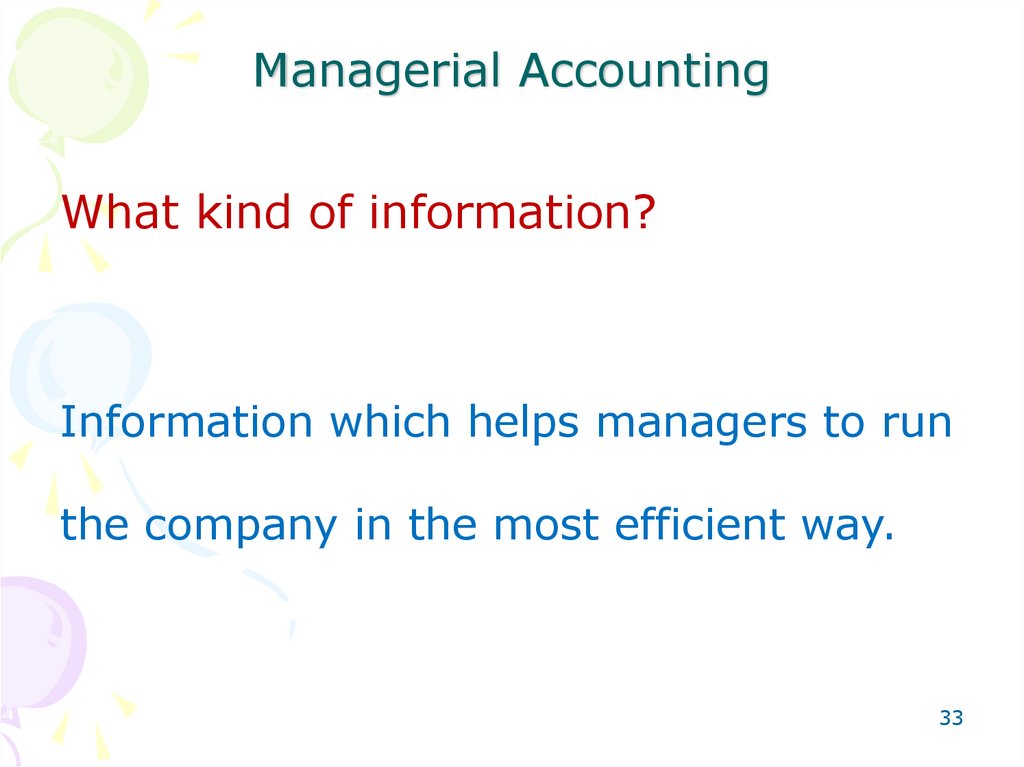
33. Managerial Accounting
What kind of information?Information which helps managers to run
the company in the most efficient way.
33
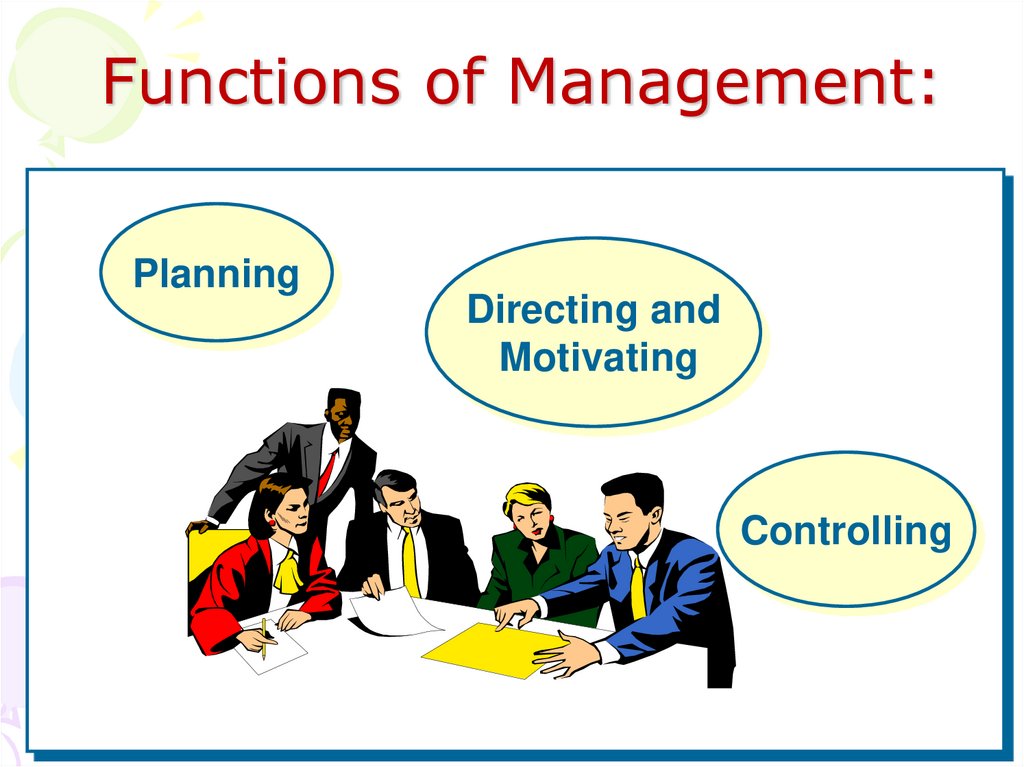
34. Functions of Management:
PlanningDirecting and
Motivating
Controlling
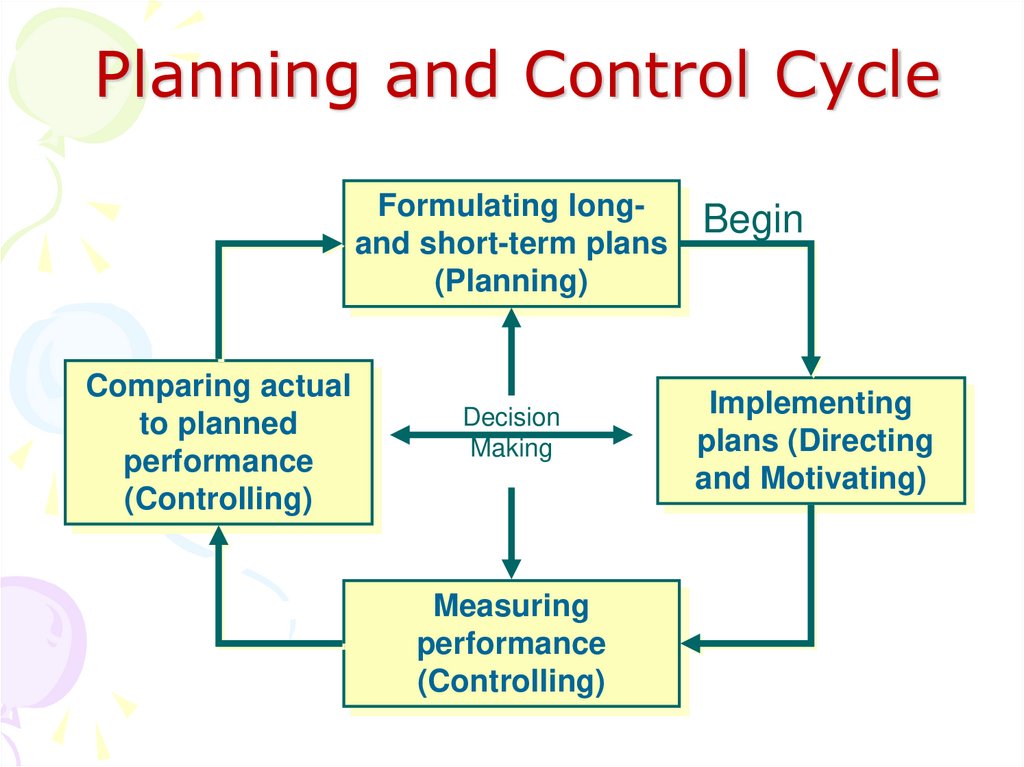
35. Planning and Control Cycle
Formulating longand short-term plans(Planning)
Comparing actual
to planned
performance
(Controlling)
Decision
Making
Measuring
performance
(Controlling)
Begin
Implementing
plans (Directing
and Motivating)
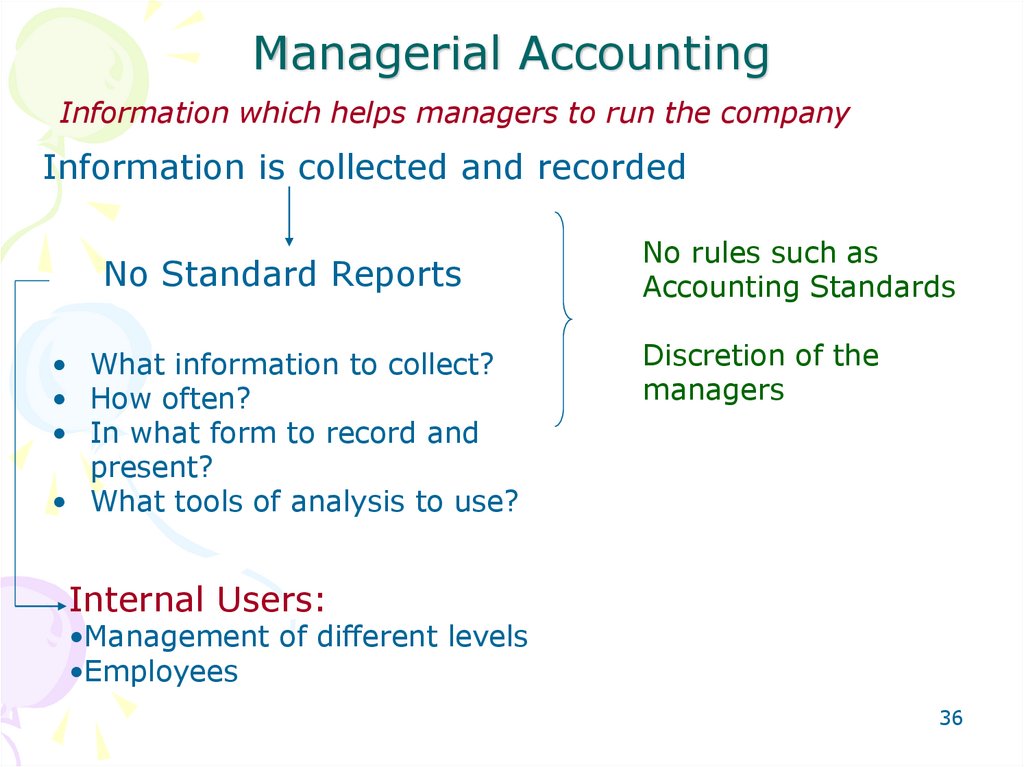
36. Managerial Accounting
Information which helps managers to run the companyInformation is collected and recorded
No Standard Reports
• What information to collect?
• How often?
• In what form to record and
present?
• What tools of analysis to use?
No rules such as
Accounting Standards
Discretion of the
managers
Internal Users:
•Management of different levels
•Employees
36
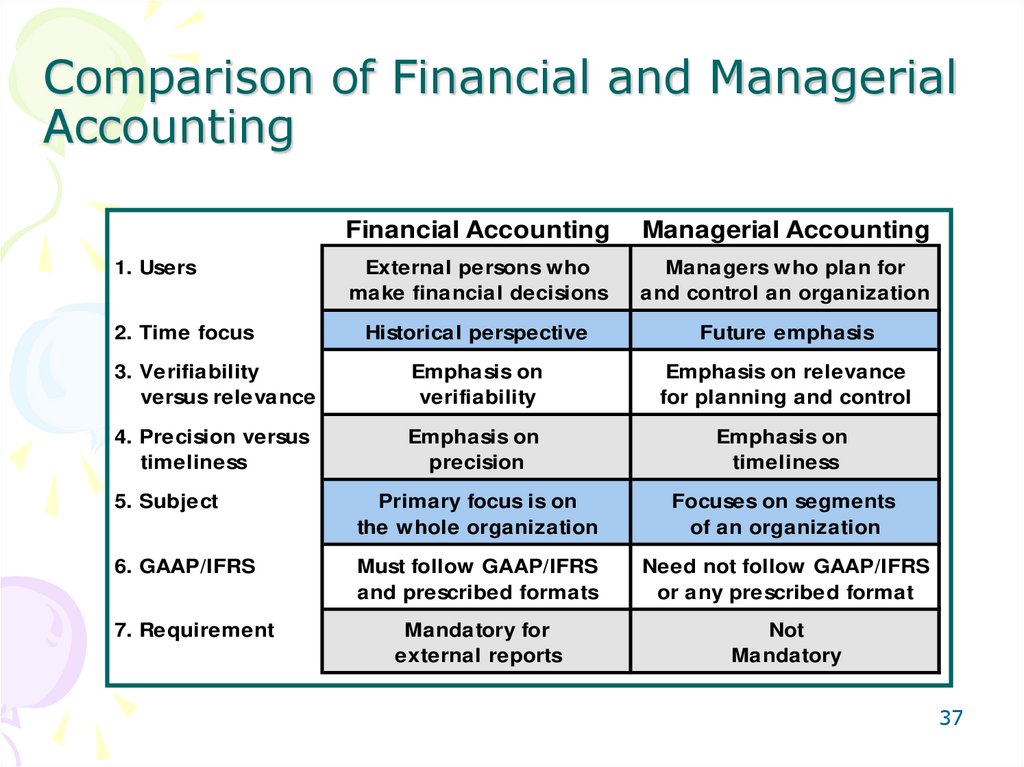
37. Comparison of Financial and Managerial Accounting
Financial AccountingManagerial Accounting
External persons who
make financial decisions
Managers who plan for
and control an organization
Historical perspective
Future emphasis
3. Verifiability
versus relevance
Emphasis on
verifiability
Emphasis on relevance
for planning and control
4. Precision versus
timeliness
Emphasis on
precision
Emphasis on
timeliness
5. Subject
Primary focus is on
the whole organization
Focuses on segments
of an organization
6. GAAP/IFRS
Must follow GAAP/IFRS
and prescribed formats
Need not follow GAAP/IFRS
or any prescribed format
7. Requirement
Mandatory for
external reports
Not
Mandatory
1. Users
2. Time focus
37
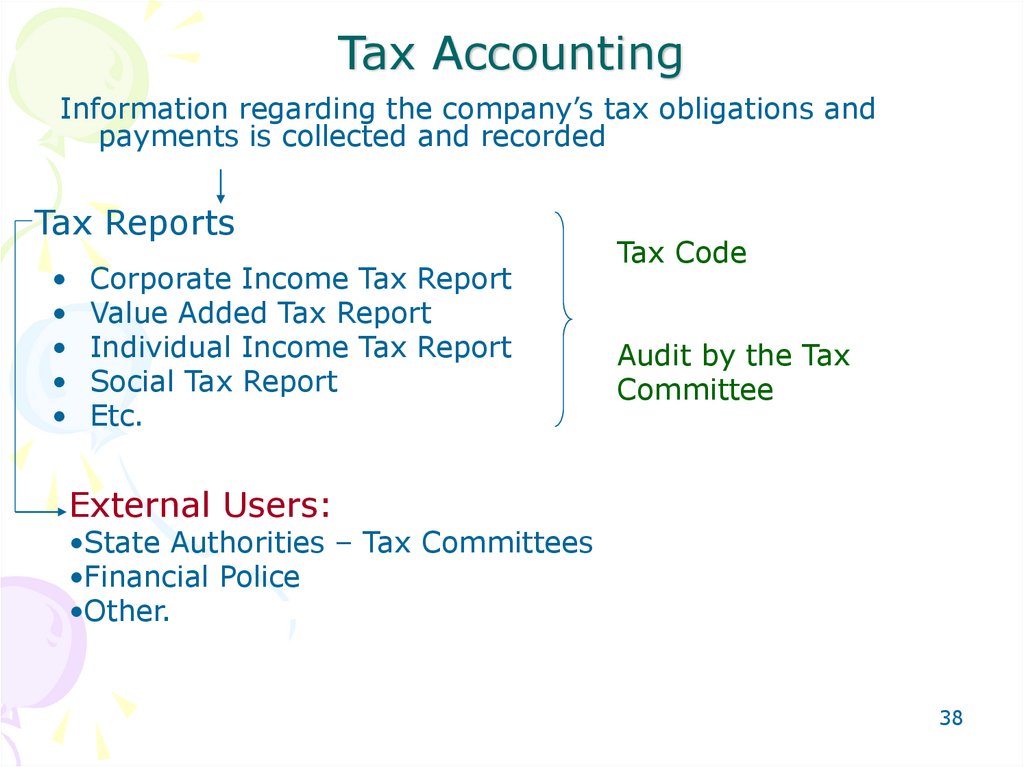
38. Tax Accounting
Information regarding the company’s tax obligations andpayments is collected and recorded
Tax Reports
Corporate Income Tax Report
Value Added Tax Report
Individual Income Tax Report
Social Tax Report
Etc.
Tax Code
Audit by the Tax
Committee
External Users:
•State Authorities – Tax Committees
•Financial Police
•Other.
38
39.
Thank you!Any questions?
39