







 Английский язык
Похожие презентации:






Глагол (verb)
1.
ГЛАГОЛ(VERB)
2.
VERB IN THE SENTENCE3.
In the sentence verb plays part of the predicate (сказуемое).It goes after the noun.
He is playing football.
He – subject (pronoun)
Is playing – predicate (verb to be + verb play)
Football – object (noun)
4.
VERB TO BE(БЫТЬ, ЯВЛЯТЬСЯ)
5.
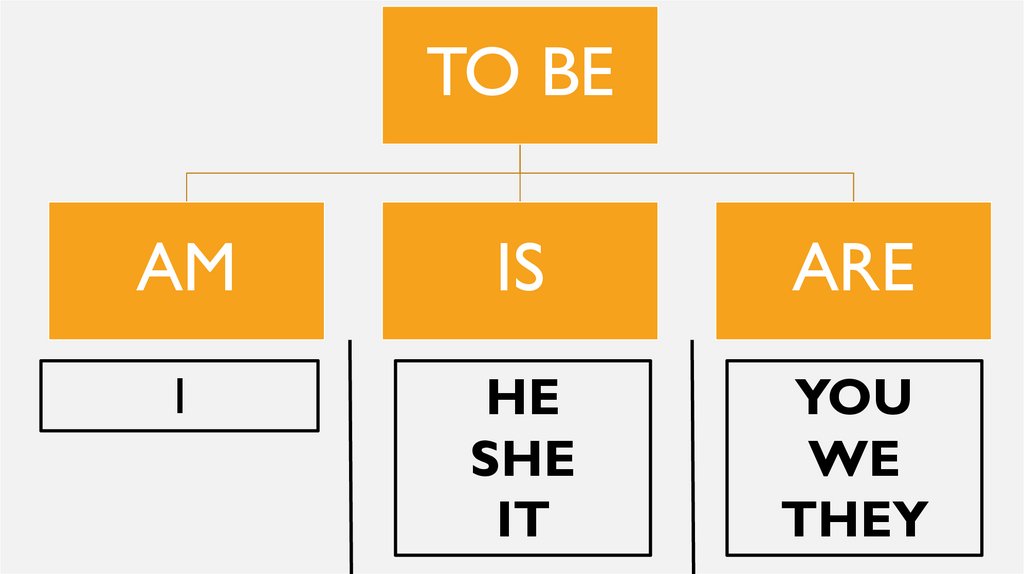
TO BEAM
IS
ARE
I
HE
SHE
IT
YOU
WE
THEY
6.
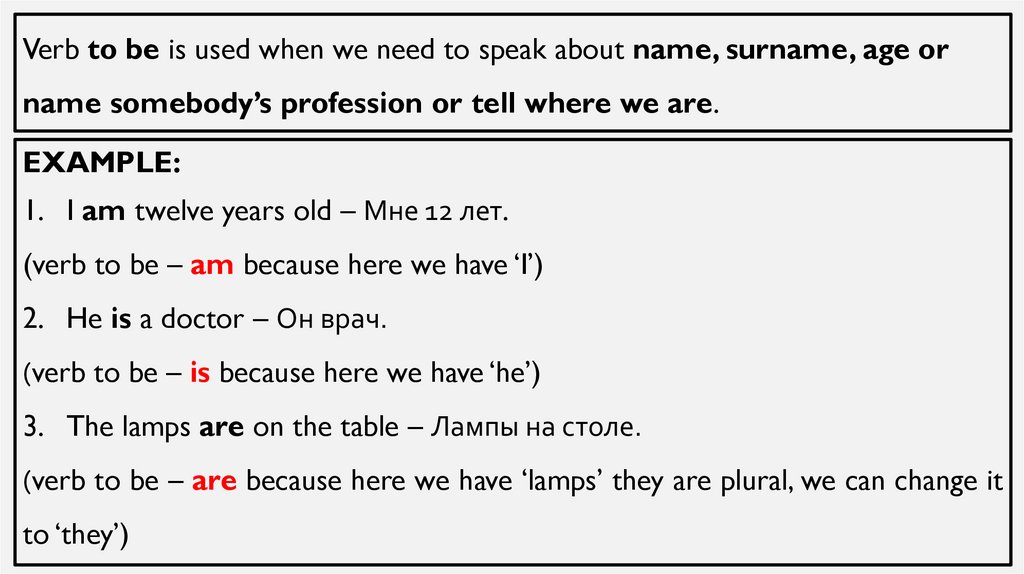
Verb to be is used when we need to speak about name, surname, age orname somebody’s profession or tell where we are.
EXAMPLE:
1. I am twelve years old – Мне 12 лет.
(verb to be – am because here we have ‘I’)
2. He is a doctor – Он врач.
(verb to be – is because here we have ‘he’)
3. The lamps are on the table – Лампы на столе.
(verb to be – are because here we have ‘lamps’ they are plural, we can change it
to ‘they’)
7.
NEGATIVEQUESTION
SCHEME:
SCHEME:
SUBJECT + TO BE + NOT+ OBJECT
TO BE + SUBJECT + OBJECT
I am not a doctor
She is not a teacher
We are not students
AM + NOT AM NOT
IS + NOT ISN’T
ARE + NOT AREN’T
Am I a doctor?
Is she a teacher?
Are we students?
8.
THERE + TO BE9.
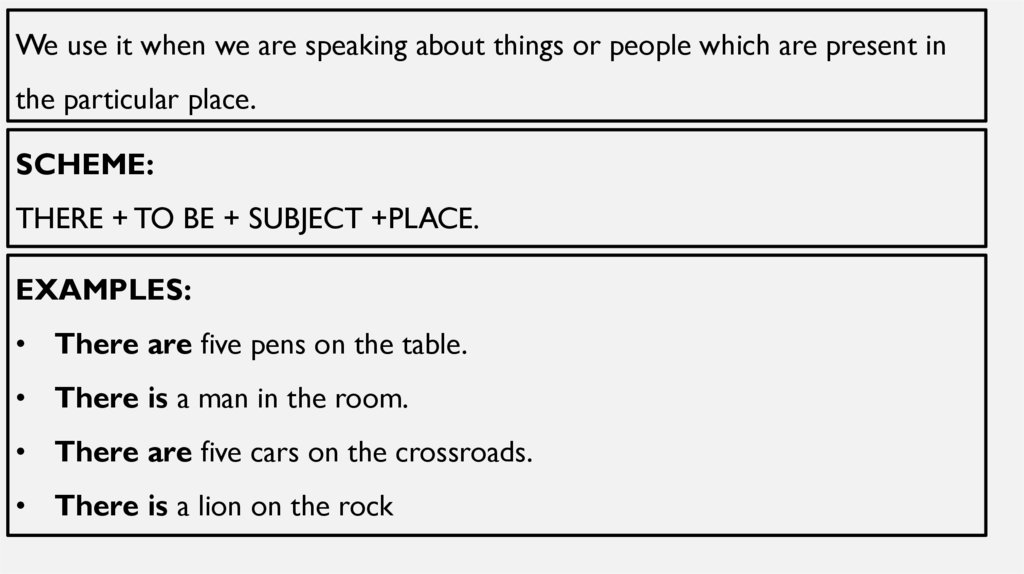
We use it when we are speaking about things or people which are present inthe particular place.
SCHEME:
THERE + TO BE + SUBJECT +PLACE.
EXAMPLES:
• There are five pens on the table.
• There is a man in the room.
• There are five cars on the crossroads.
• There is a lion on the rock
10.
VERB HAVE11.
We use verb Have when we are describing a person’s appearance or speakingabout possessions
SCHEME:
SUBJECT + HAVE GOT/HAS GOT + OBJECT
EXAMPLES:
I have got blue eyes.
I have got a red car.
He has got a yellow jacket.
She has got green eyes.
12.
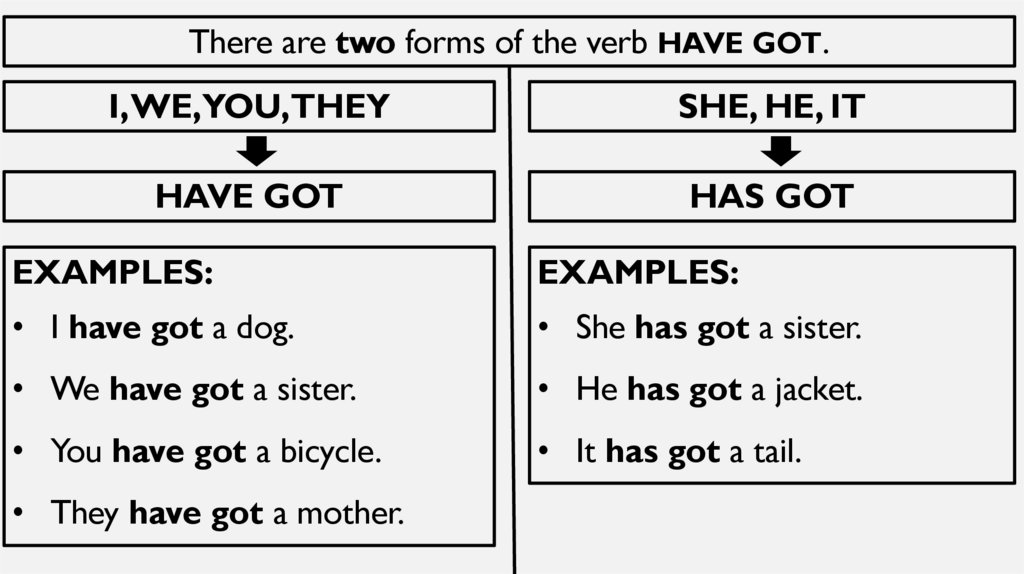
There are two forms of the verb HAVE GOT.I, WE,YOU,THEY
SHE, HE, IT
HAVE GOT
HAS GOT
EXAMPLES:
EXAMPLES:
• I have got a dog.
• She has got a sister.
• We have got a sister.
• He has got a jacket.
• You have got a bicycle.
• It has got a tail.
• They have got a mother.
13.
FORMS OF VERBS14.
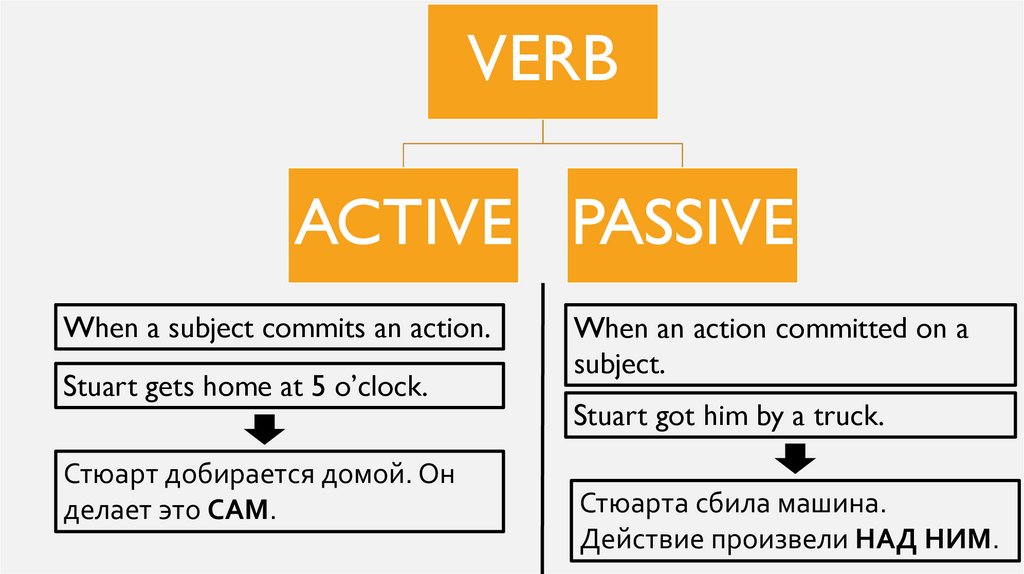
VERBACTIVE PASSIVE
When a subject commits an action.
Stuart gets home at 5 o’clock.
Стюарт добирается домой. Он
делает это САМ.
When an action committed on a
subject.
Stuart got him by a truck.
Стюарта сбила машина.
Действие произвели НАД НИМ.
15.
TENSE TIMELINE16.
YOU ARE HEREWHAT HAPPENED
(Что случилось)
ПРОШЛОЕ
(PAST)
RIGHT NOW
REGULARLY
НАСТОЯЩЕЕ
(PRESENT)
WHAT WILL HAPPEN
(Что случится)
БУДУЩЕЕ
(FUTURE)