 Химия
Химия Промышленность
Похожие презентации:








The Rise of Synthetic. Materials
1.
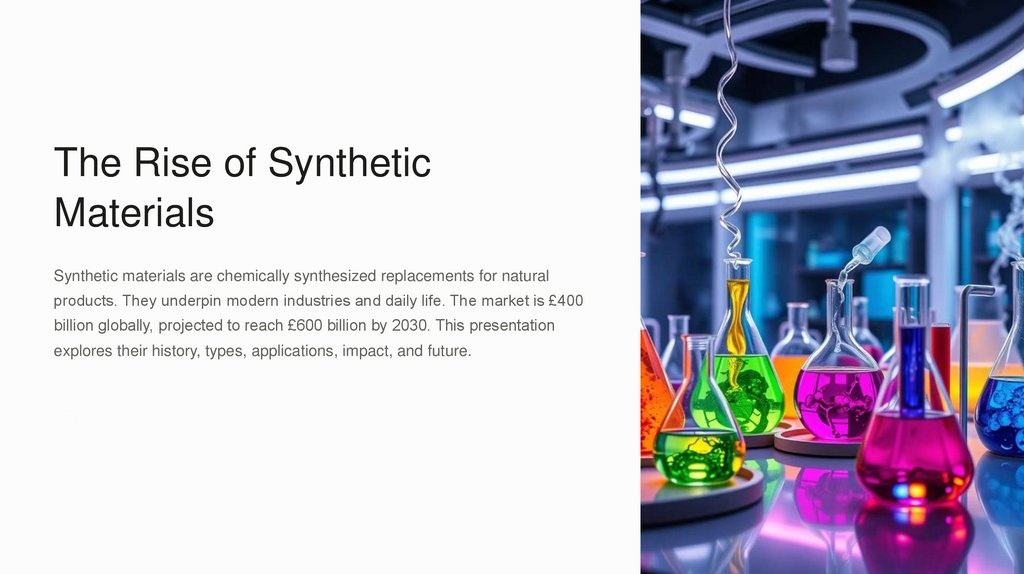
The Rise of SyntheticMaterials
Synthetic materials are chemically synthesized replacements for natural
products. They underpin modern industries and daily life. The market is £400
billion globally, projected to reach £600 billion by 2030. This presentation
explores their history, types, applications, impact, and future.
2.
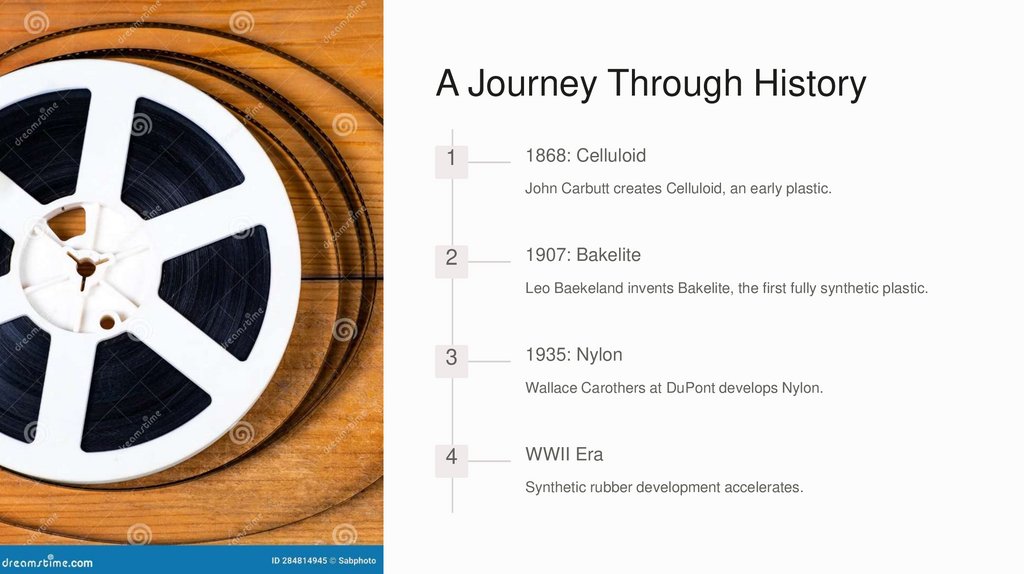
A Journey Through History1
1868: Celluloid
John Carbutt creates Celluloid, an early plastic.
2
1907: Bakelite
Leo Baekeland invents Bakelite, the first fully synthetic plastic.
3
1935: Nylon
Wallace Carothers at DuPont develops Nylon.
4
WWII Era
Synthetic rubber development accelerates.
3.
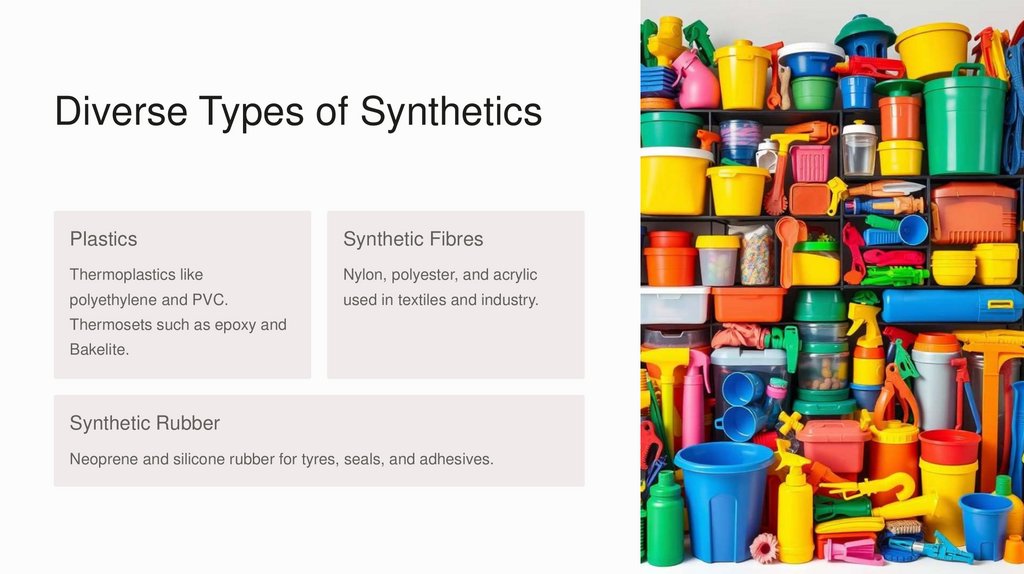
Diverse Types of SyntheticsPlastics
Synthetic Fibres
Thermoplastics like
Nylon, polyester, and acrylic
polyethylene and PVC.
used in textiles and industry.
Thermosets such as epoxy and
Bakelite.
Synthetic Rubber
Neoprene and silicone rubber for tyres, seals, and adhesives.
4.
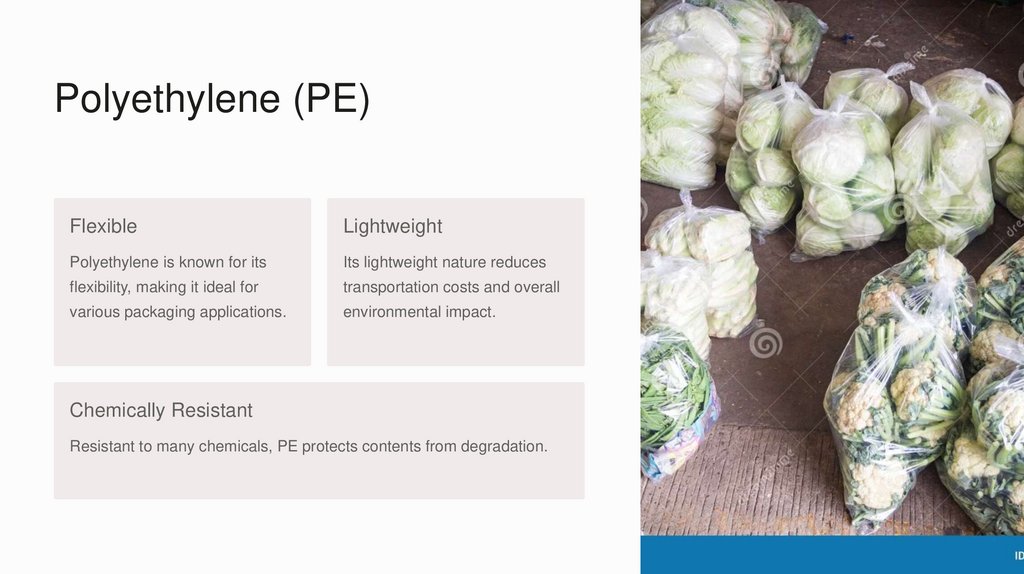
Polyethylene (PE)Flexible
Lightweight
Polyethylene is known for its
Its lightweight nature reduces
flexibility, making it ideal for
transportation costs and overall
various packaging applications.
environmental impact.
Chemically Resistant
Resistant to many chemicals, PE protects contents from degradation.
5.
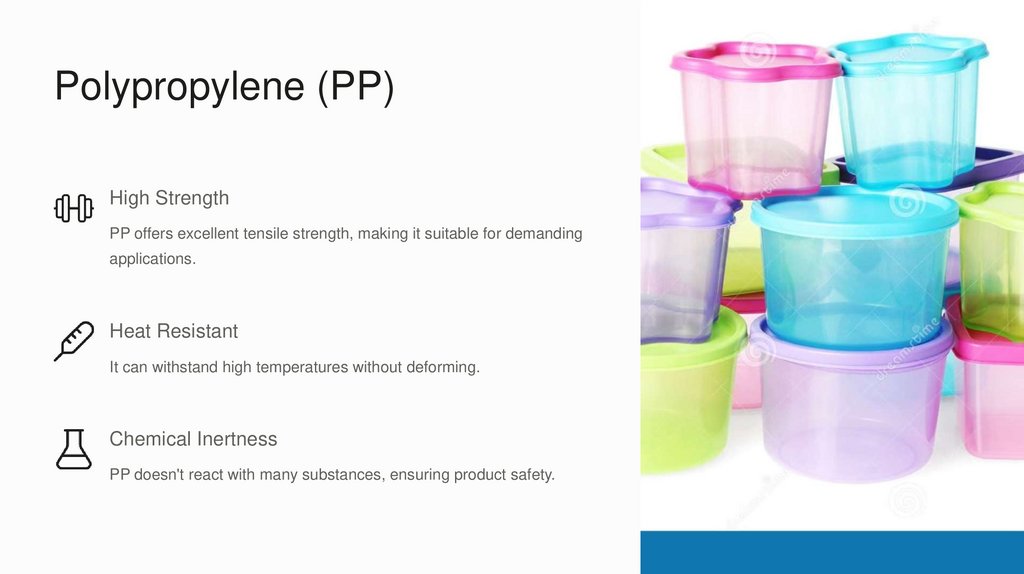
Polypropylene (PP)High Strength
PP offers excellent tensile strength, making it suitable for demanding
applications.
Heat Resistant
It can withstand high temperatures without deforming.
Chemical Inertness
PP doesn't react with many substances, ensuring product safety.
6.
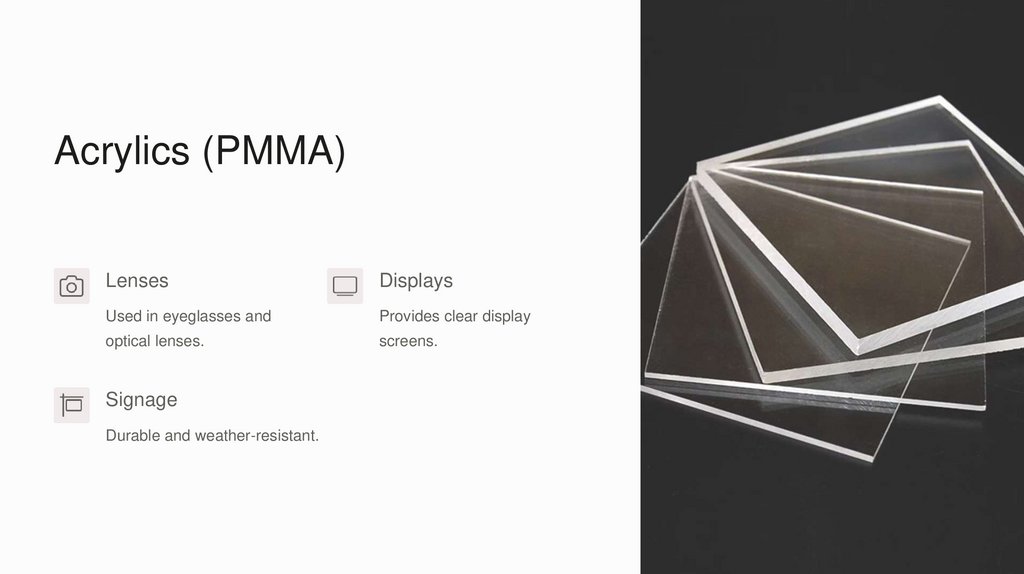
Acrylics (PMMA)Lenses
Displays
Used in eyeglasses and
Provides clear display
optical lenses.
screens.
Signage
Durable and weather-resistant.
7.
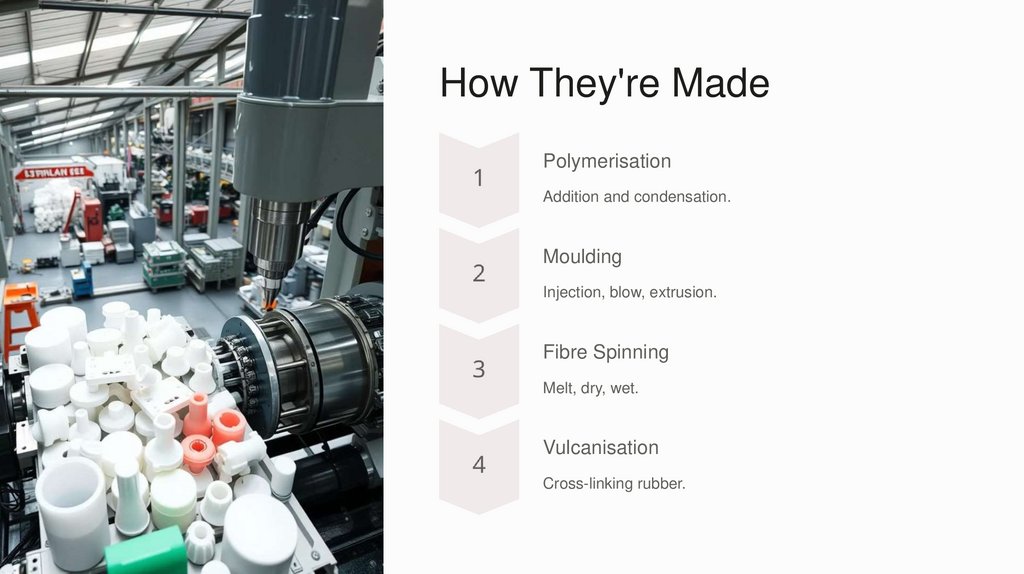
How They're MadePolymerisation
Addition and condensation.
Moulding
Injection, blow, extrusion.
Fibre Spinning
Melt, dry, wet.
Vulcanisation
Cross-linking rubber.
8.
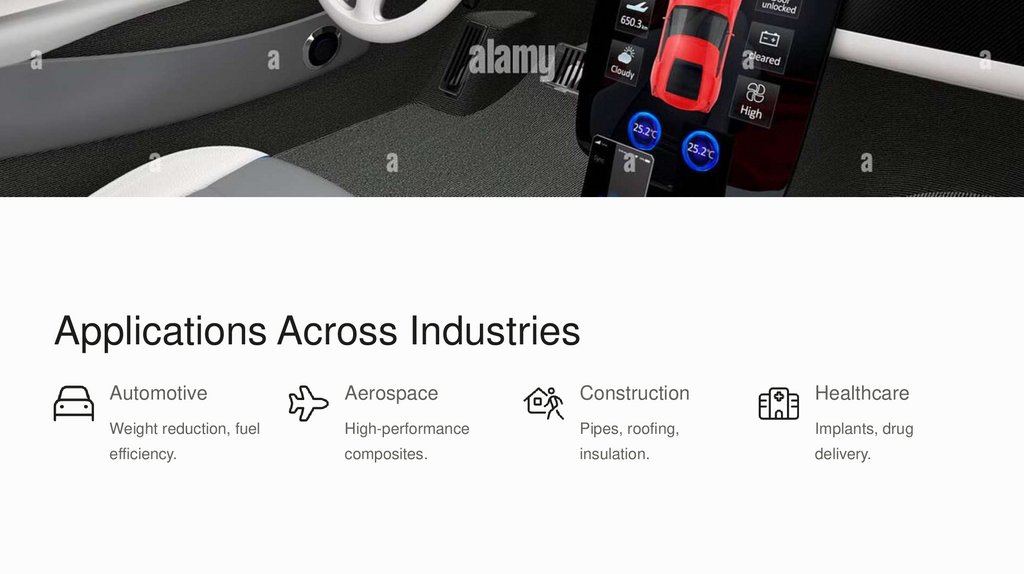
Applications Across IndustriesAutomotive
Aerospace
Construction
Healthcare
Weight reduction, fuel
High-performance
Pipes, roofing,
Implants, drug
efficiency.
composites.
insulation.
delivery.
9.
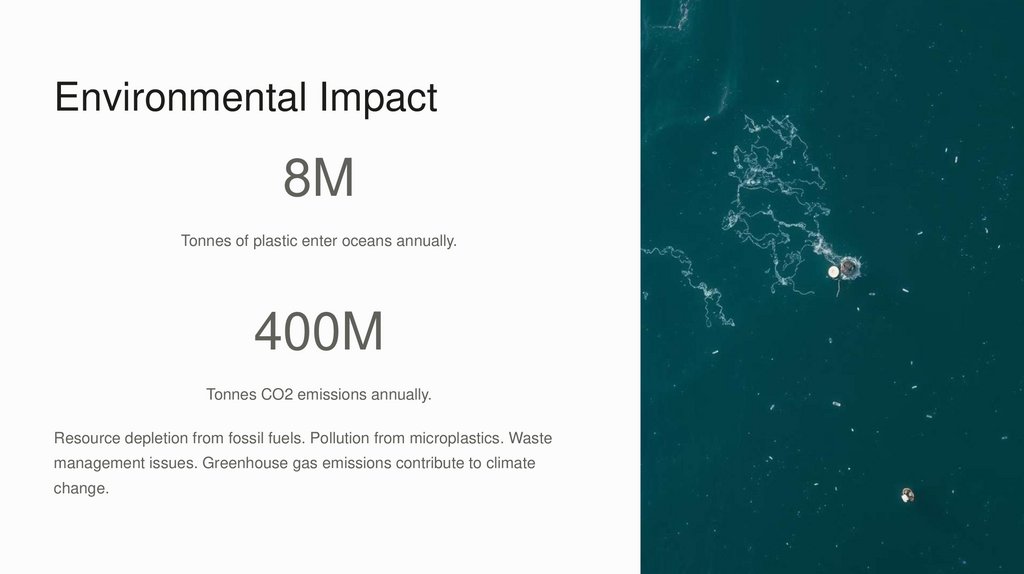
Environmental Impact8M
Tonnes of plastic enter oceans annually.
400M
Tonnes CO2 emissions annually.
Resource depletion from fossil fuels. Pollution from microplastics. Waste
management issues. Greenhouse gas emissions contribute to climate
change.
10.
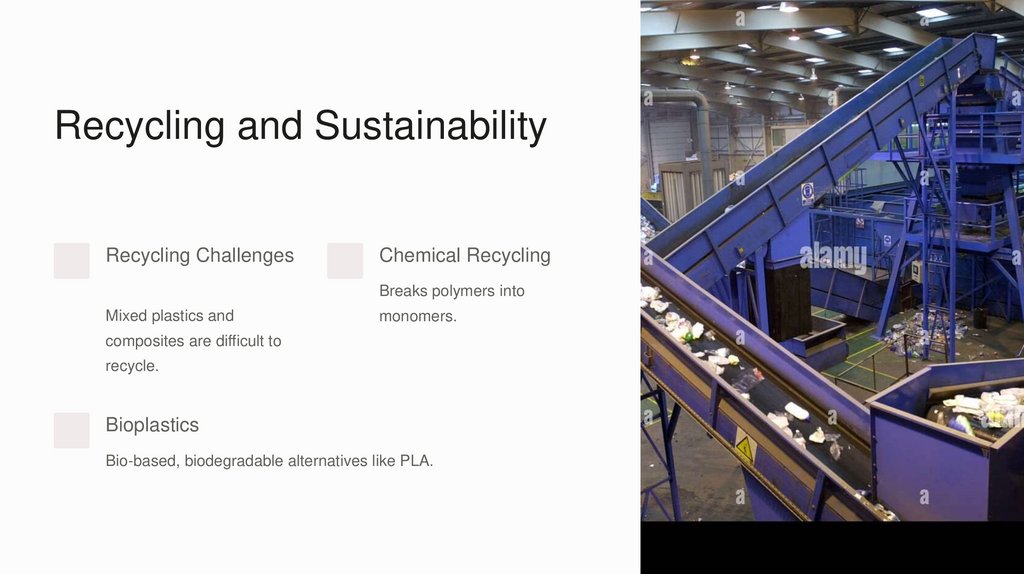
Recycling and SustainabilityRecycling Challenges
Chemical Recycling
Breaks polymers into
Mixed plastics and
monomers.
composites are difficult to
recycle.
Bioplastics
Bio-based, biodegradable alternatives like PLA.
11.
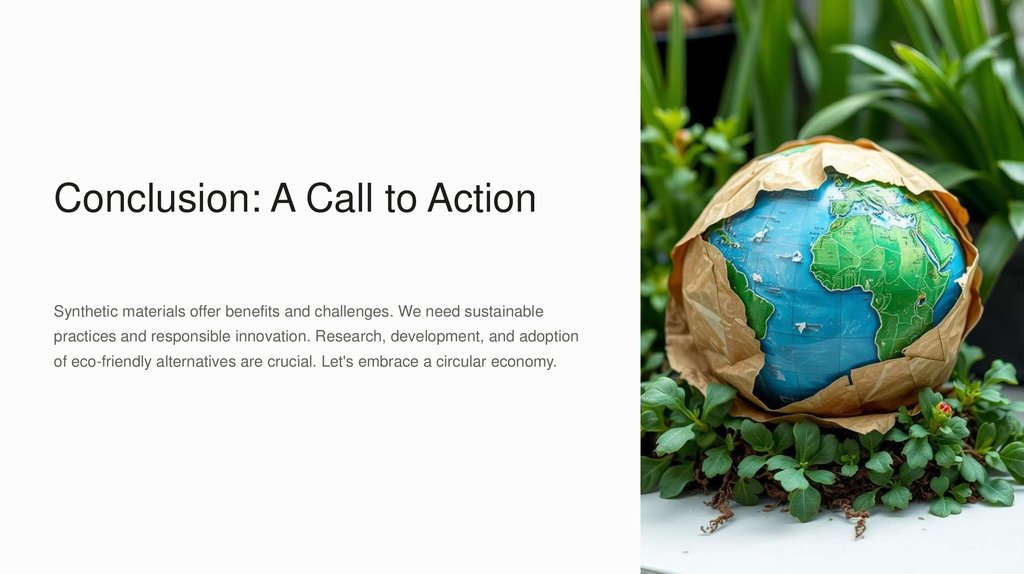
Conclusion: A Call to ActionSynthetic materials offer benefits and challenges. We need sustainable
practices and responsible innovation. Research, development, and adoption
of eco-friendly alternatives are crucial. Let's embrace a circular economy.