
 Интернет
Похожие презентации:







Welcome to Global Perspectives and Project Works
1.
Welcome to Global Perspectivesand Project Works
2.
Let’s revise APA 7https://wordwall.net/resource/74719126/apa-7-quiz-recap
3.
Why do people start researching something?4.
How to choose a research problem?5.
Learning objectives11CO1.1 select information and evidence that is relevant to
an argument or issue
11RES1.1 identify a research question to explore a global
issue
6.
Lesson objectives11CO1.1 differentiate general and narrow topics by giving
justifications
11RES1.1 create a research problem about the topic of their
own interest by giving reasons for their choice
7.
Assessment criteria11CO1.1 identify at least 3 general and 3 narrow topics by
giving justifications
11RES1.1 create a research problem about the topic of their
own interest by giving at least 2 reasons for their choice
8.
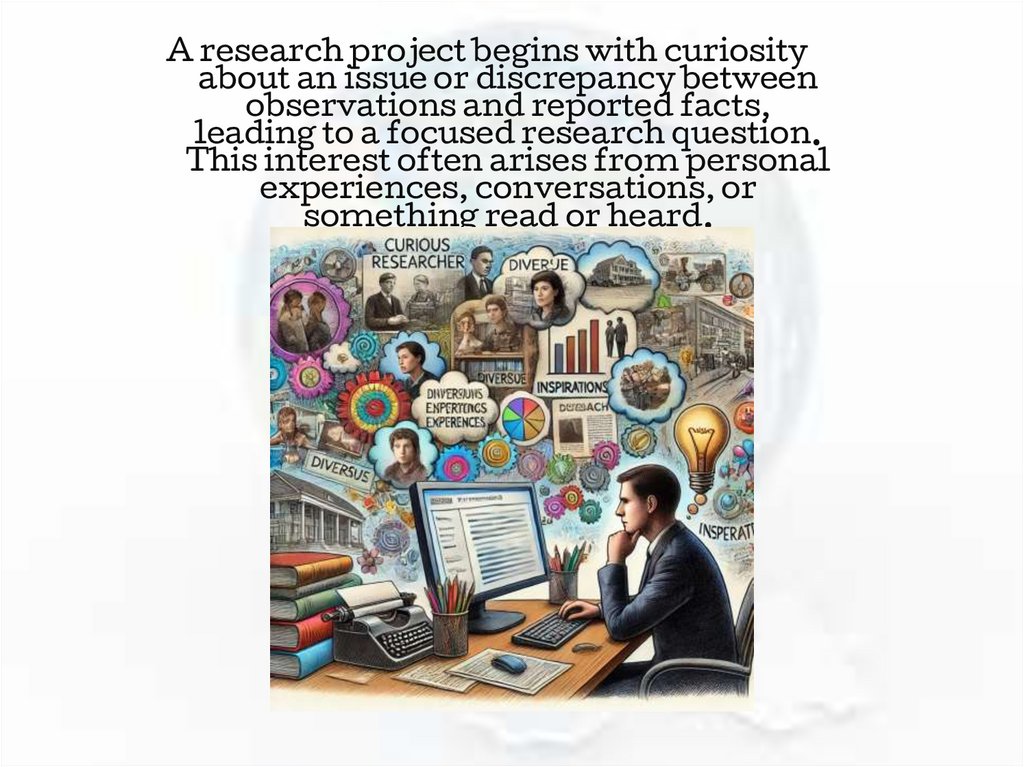
A research project begins with curiosityabout an issue or discrepancy between
observations and reported facts,
leading to a focused research question.
This interest often arises from personal
experiences, conversations, or
something read or heard.
9.
WHAT CAN I RESEARCH?••••
A topic ...
A. related to a job you would like to do in the future;
B. you heard about in a previous lecture, you read about or wrote
about in an essay;
C. that interests you and you want to build on your knowledge of this
topic;
D. which puzzles (observations) you and you want to find answers to
your questions.
10.
HOW TO CHOOSE A THESISTOPIC?
•The topic must be interesting and offer practical implications
•The topic must address the daily issues they face
•The topic must be related to social issues
•The topic must be clear, specific, and narrow. Too broad topics are
infeasible to conduct, yet it cannot be too narrow
Topics must be debatable (needs to be looked at from different
perspectives)
11.
TOPIC: NARROW Feasible ORBROAD?
1. Environment and trade
2. An Examination of Shareholder Versus Stakeholder
Argument in Relation to Corporate Governance
3. Hate crime
4.Terrorism and the media
5. Interpreting Chinese Proverbs into English in
Diplomatic Settings
6.The Human Right to Food as a fundamental right:The
case of food politicisation in Zimbabwe
7.The forensic applications of DNA
8. Developing the EFL learners’ speaking skills
9.The cultural significance of traditional Kazakh
wedding garments among brides from the Atyrau
region in families with a history of interethnic
marriages
12.
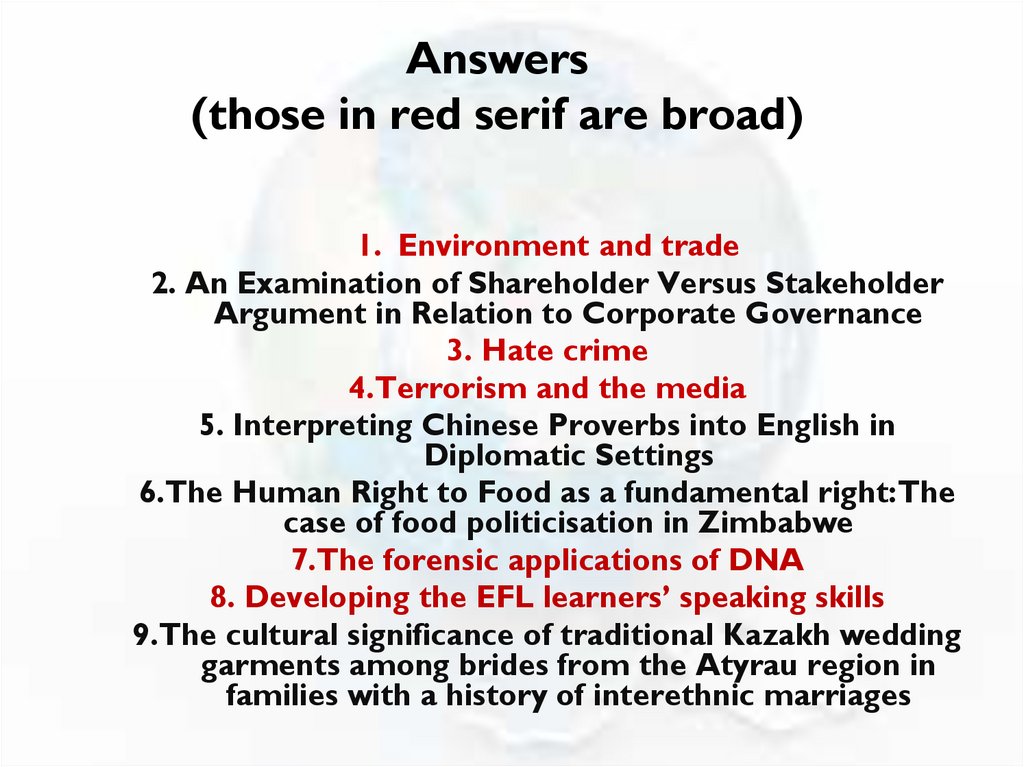
Answers(those in red serif are broad)
1. Environment and trade
2. An Examination of Shareholder Versus Stakeholder
Argument in Relation to Corporate Governance
3. Hate crime
4.Terrorism and the media
5. Interpreting Chinese Proverbs into English in
Diplomatic Settings
6.The Human Right to Food as a fundamental right:The
case of food politicisation in Zimbabwe
7.The forensic applications of DNA
8. Developing the EFL learners’ speaking skills
9.The cultural significance of traditional Kazakh wedding
garments among brides from the Atyrau region in
families with a history of interethnic marriages
13.
Research gap- Identifies missing pieces or unexplored
areas in existing research within a particular
field.
-Highlights the current lack of knowledge in
a specific area.
Problem Statement
- Defines the specific issue or situation your
research aims to address or solve.
- Clearly articulates the problem that
requires investigation.
14.
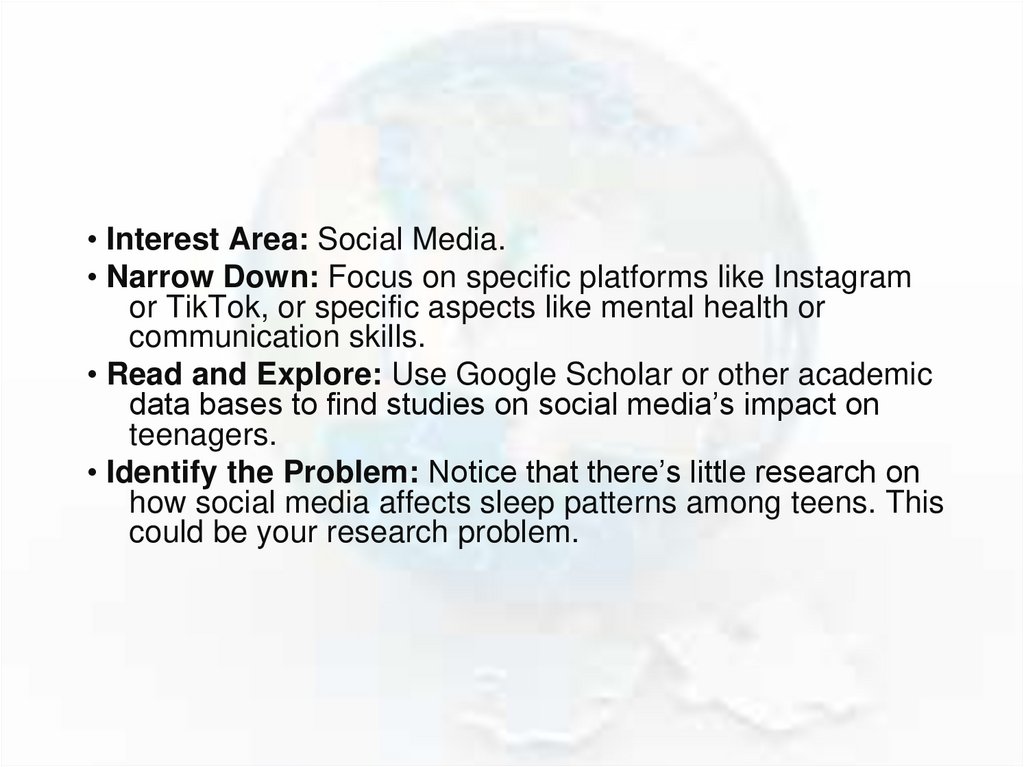
• Interest Area: Social Media.• Narrow Down: Focus on specific platforms like Instagram
or TikTok, or specific aspects like mental health or
communication skills.
• Read and Explore: Use Google Scholar or other academic
data bases to find studies on social media’s impact on
teenagers.
• Identify the Problem: Notice that there’s little research on
how social media affects sleep patterns among teens. This
could be your research problem.
15.
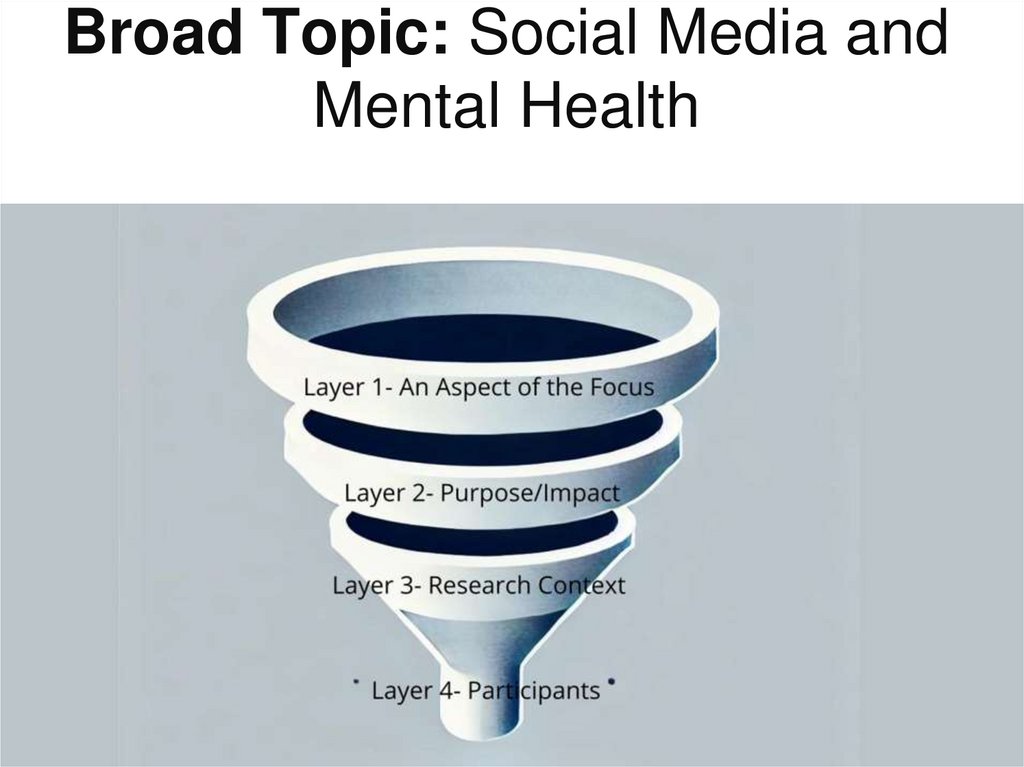
Broad Topic: Social Media andMental Health
16.
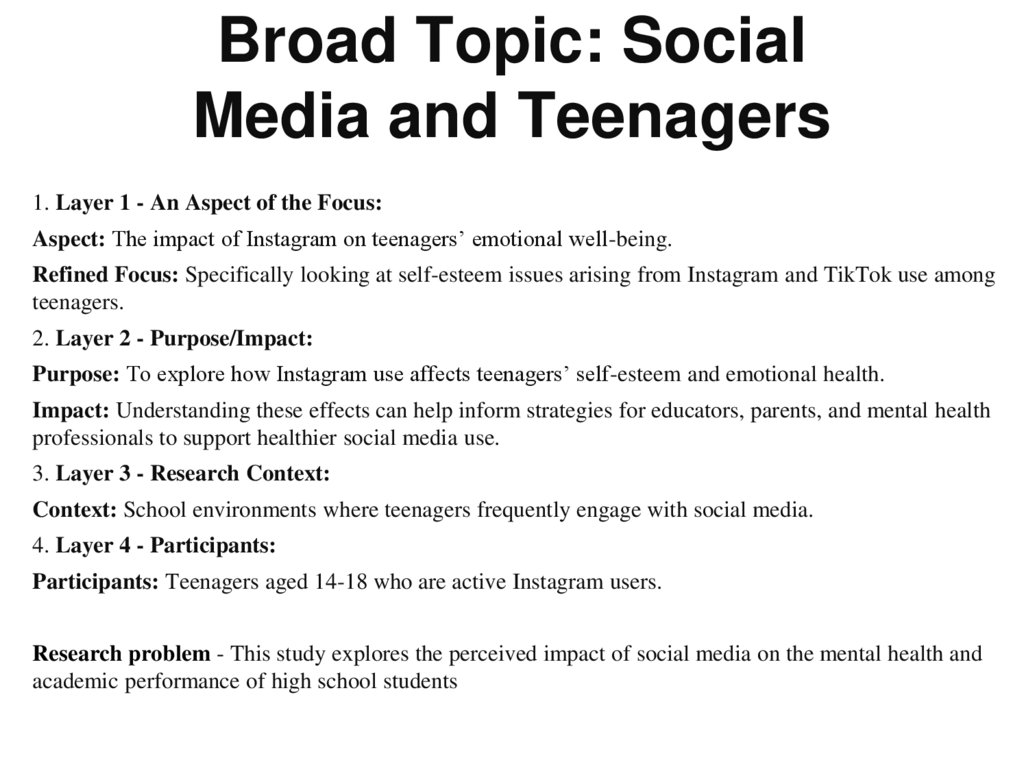
Broad Topic: SocialMedia and Teenagers
1. Layer 1 - An Aspect of the Focus:
Aspect: The impact of Instagram on teenagers’ emotional well-being.
Refined Focus: Specifically looking at self-esteem issues arising from Instagram and TikTok use among
teenagers.
2. Layer 2 - Purpose/Impact:
Purpose: To explore how Instagram use affects teenagers’ self-esteem and emotional health.
Impact: Understanding these effects can help inform strategies for educators, parents, and mental health
professionals to support healthier social media use.
3. Layer 3 - Research Context:
Context: School environments where teenagers frequently engage with social media.
4. Layer 4 - Participants:
Participants: Teenagers aged 14-18 who are active Instagram users.
Research problem - This study explores the perceived impact of social media on the mental health and
academic performance of high school students
17.
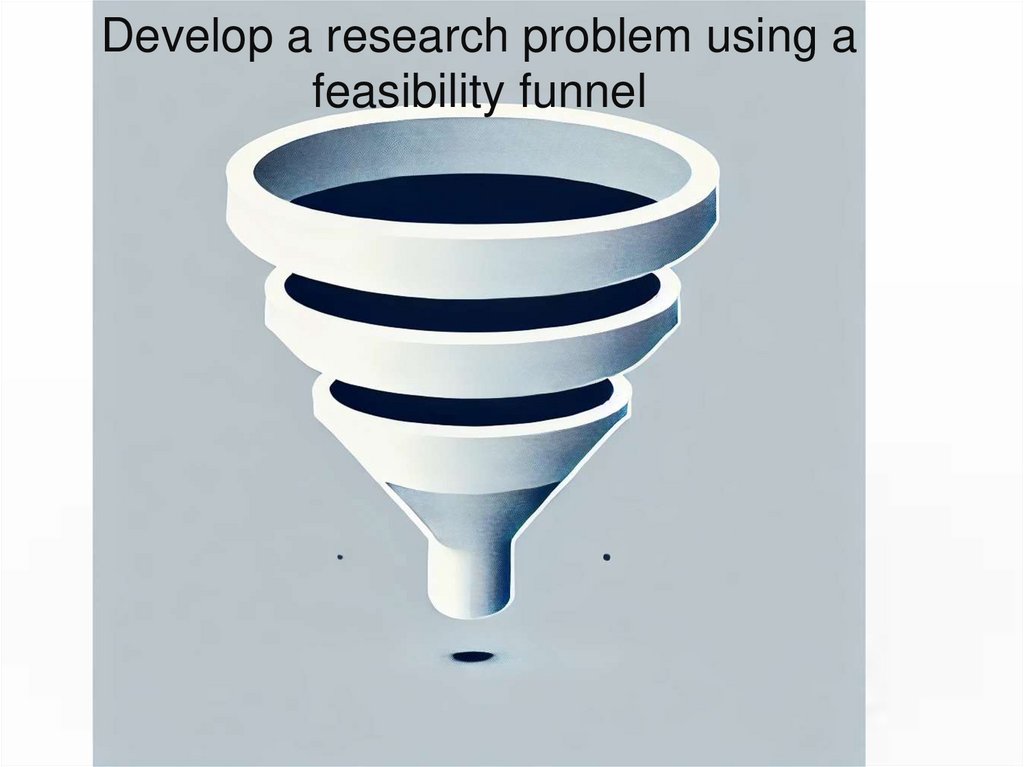
Develop a research problem using afeasibility funnel
18.
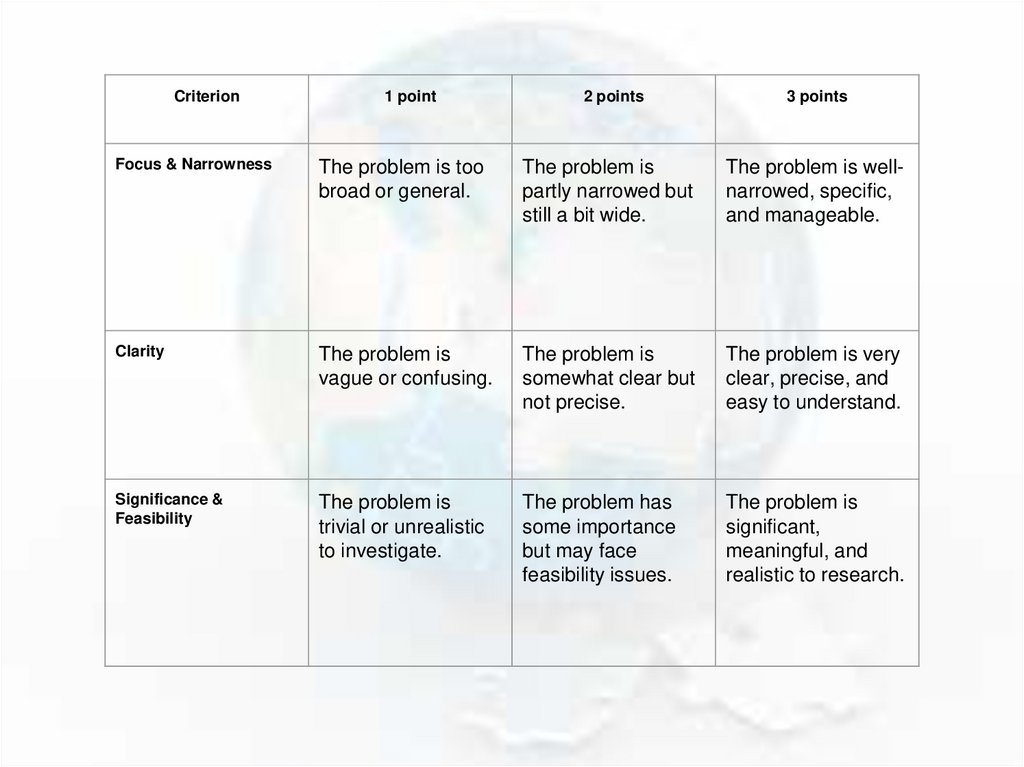
Criterion1 point
2 points
3 points
Focus & Narrowness
The problem is too
broad or general.
The problem is
partly narrowed but
still a bit wide.
The problem is wellnarrowed, specific,
and manageable.
Clarity
The problem is
vague or confusing.
The problem is
somewhat clear but
not precise.
The problem is very
clear, precise, and
easy to understand.
Significance &
Feasibility
The problem is
trivial or unrealistic
to investigate.
The problem has
some importance
but may face
feasibility issues.
The problem is
significant,
meaningful, and
realistic to research.
19.
Assessment criteria11CO1.1 identify at least 3 general and 3 narrow topics by
giving justifications
11RES1.1 create a research problem about the topic of their
own interest by giving at least 2 reasons for their choice
20.
REFLECTION1. What specific information did you learn?
2. What specific information is still unclear for you?
3. What do you want to know more about research
problem?
21.
Break time:)22.
Let’s activate our brainshttps://www.youtube.com/watch?v=RedOIZLDBzY
23.
Learning objectives• 11CO1.2 to present information and evidence with structure
11RES1.1 to identify a research question to explore a global
issue
24.
Lesson objectives11CO1.2 to organize information and supporting evidence,
and present it in a clear and logical structure.
11RES1.1 to create research questions about the topic of their
own interest
25.
Assessment criteria11CO1.1 identify at least 3 general and 3 narrow topics by
giving justifications
11RES1.1 create 2 research questions about the topic of their
own interest
26.
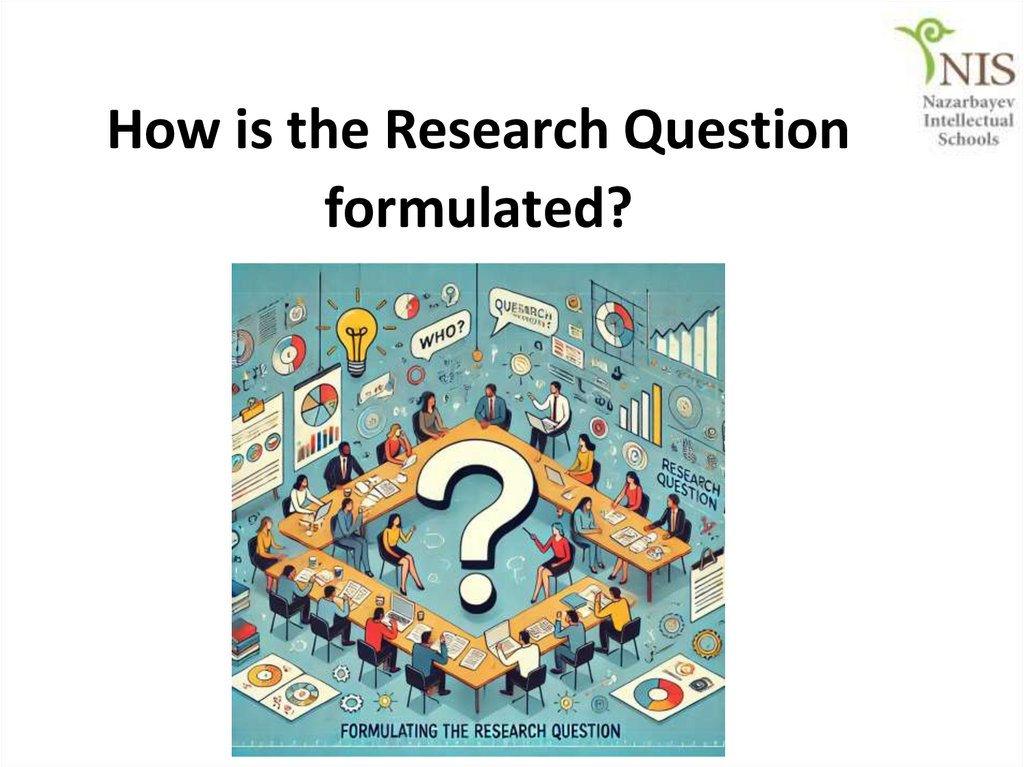
How is the Research Questionformulated?
27.
Why we need it?• A well-formulated
research question
serves as the
foundation of your
entire project. It
directs your focus,
ensuring your research
is clear, organized, and
purposeful
28.
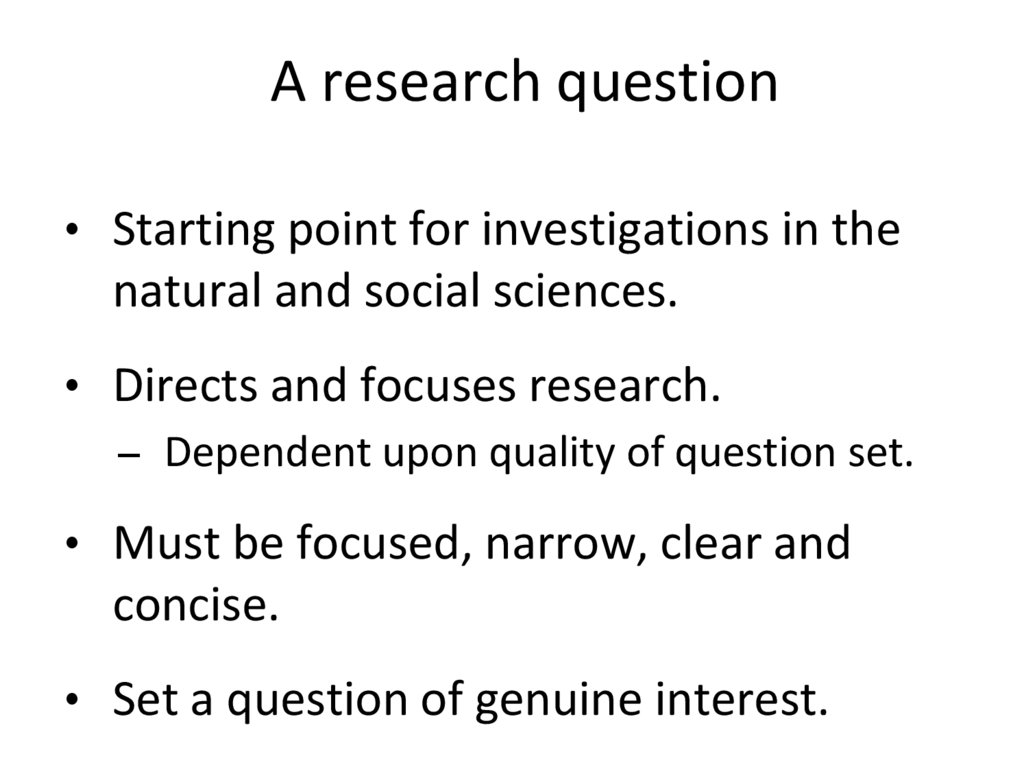
A research question• Starting point for investigations in the
natural and social sciences.
• Directs and focuses research.
– Dependent upon quality of question set.
• Must be focused, narrow, clear and
concise.
• Set a question of genuine interest.
28
29.
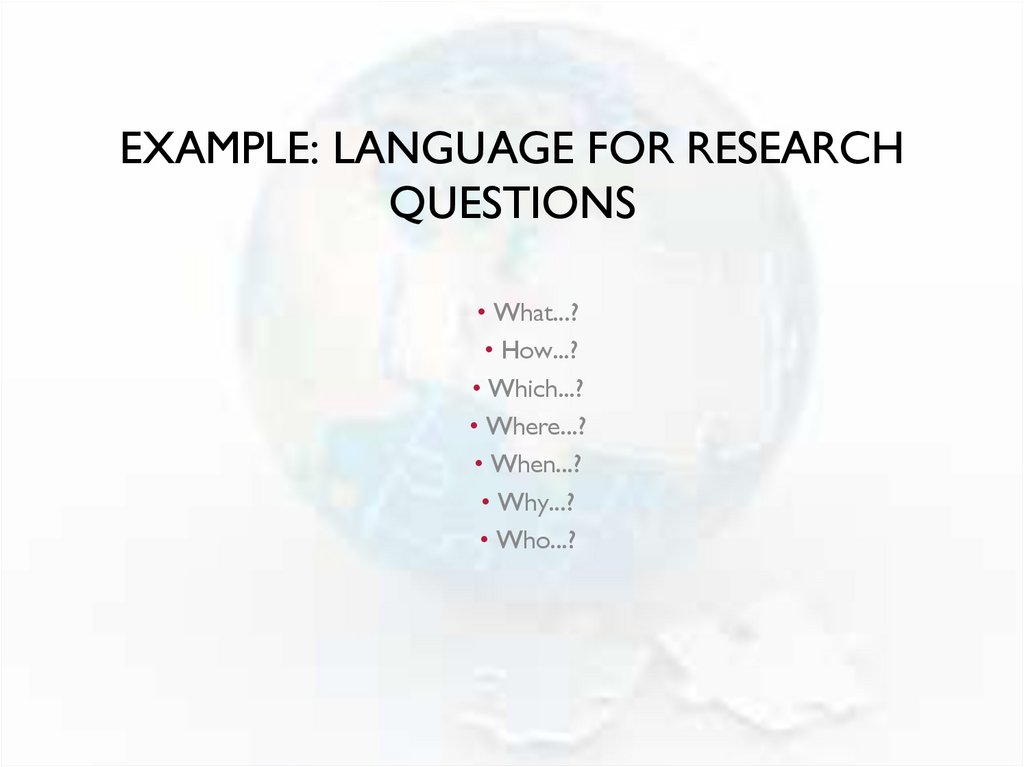
EXAMPLE: LANGUAGE FOR RESEARCHQUESTIONS
• What...?
• How...?
• Which...?
• Where...?
• When...?
• Why...?
• Who...?
30.
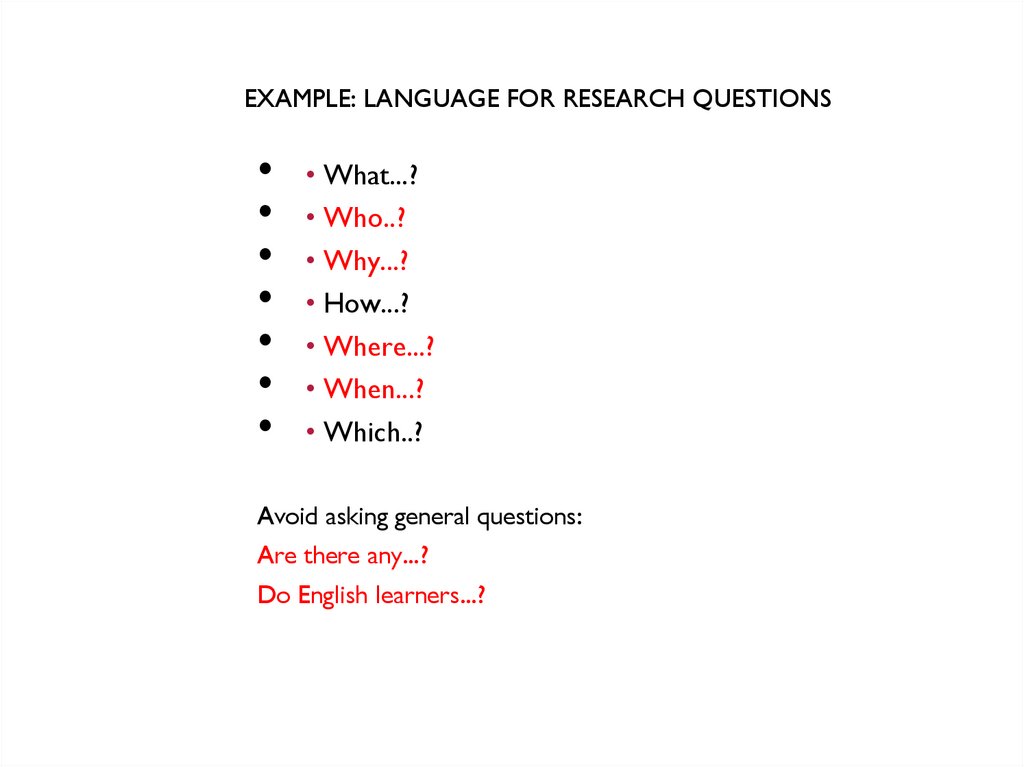
EXAMPLE: LANGUAGE FOR RESEARCH QUESTIONS• What...?
• Who..?
• Why...?
• How...?
• Where...?
• When...?
• Which..?
Avoid asking general questions:
Are there any...?
Do English learners...?
31.
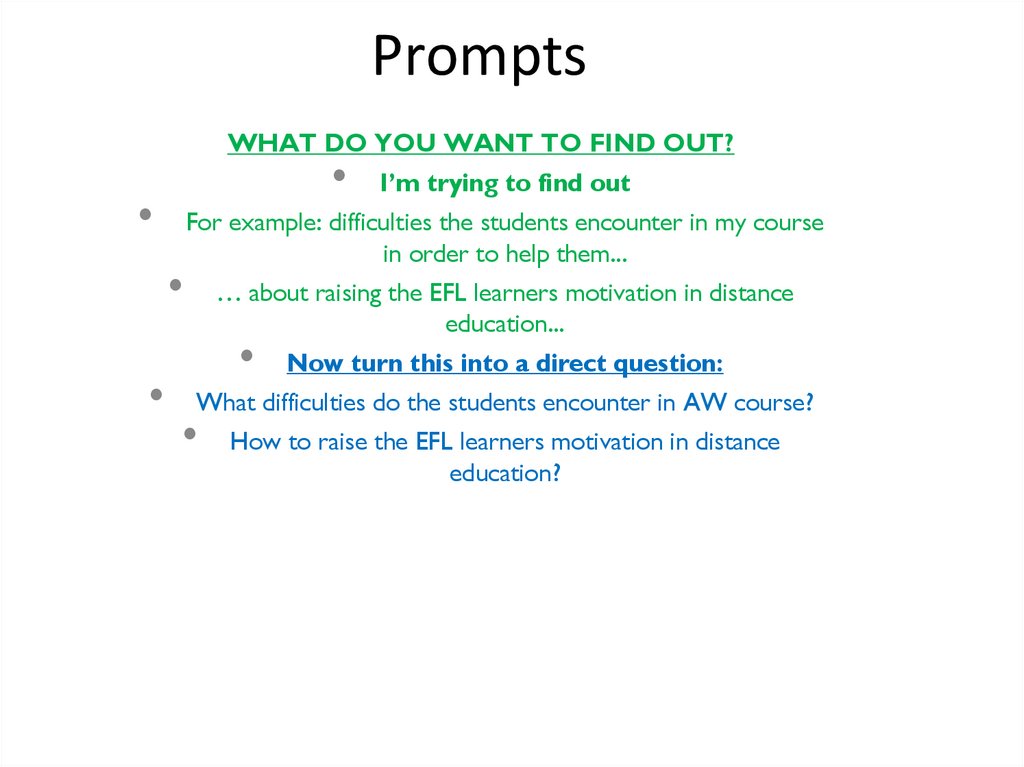
PromptsWHAT DO YOU WANT TO FIND OUT?
I’m trying to find out
For example: difficulties the students encounter in my course
in order to help them...
… about raising the EFL learners motivation in distance
education...
Now turn this into a direct question:
What difficulties do the students encounter in AW course?
How to raise the EFL learners motivation in distance
education?
32.
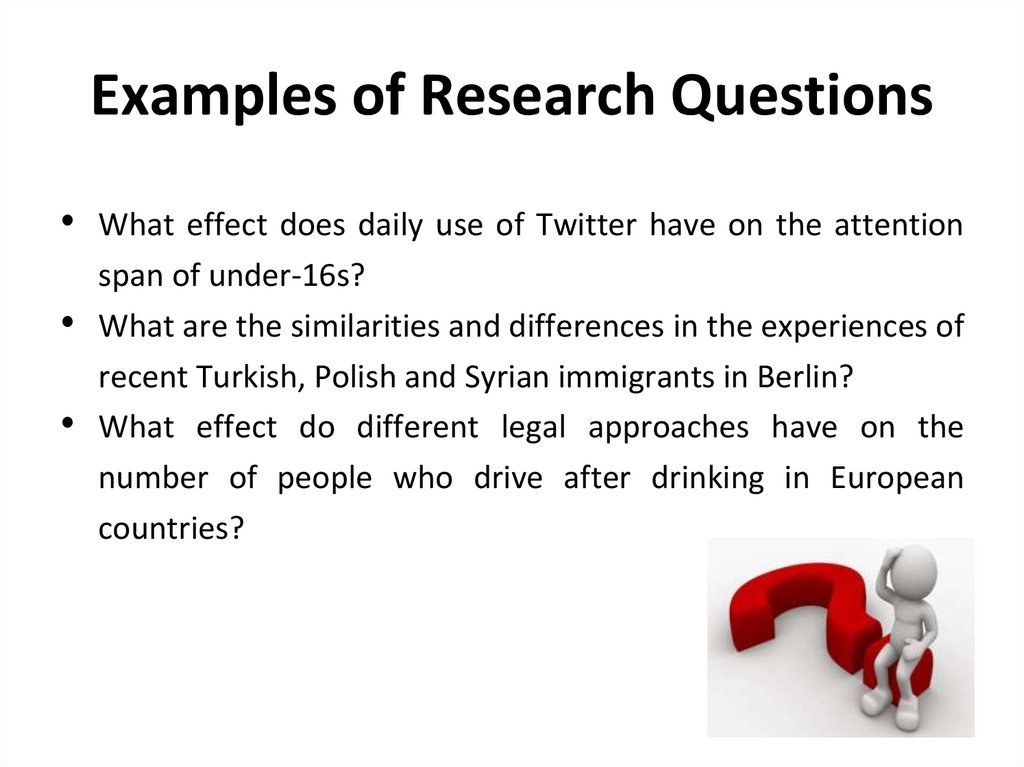
Examples of Research Questions• What effect does daily use of Twitter have on the attention
span of under-16s?
• What are the similarities and differences in the experiences of
recent Turkish, Polish and Syrian immigrants in Berlin?
• What effect do different legal approaches have on the
number of people who drive after drinking in European
countries?
33.
Now, why not to try todo this by ourselves?
34.
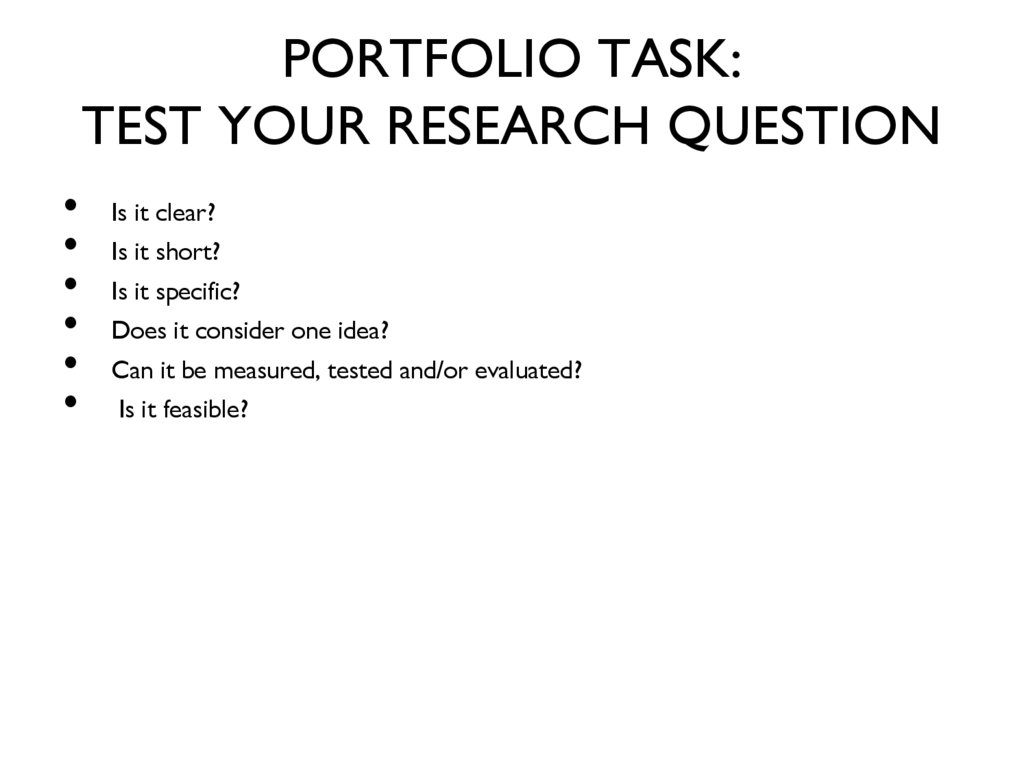
PORTFOLIO TASK:TEST YOUR RESEARCH QUESTION
Is it clear?
Is it short?
Is it specific?
Does it consider one idea?
Can it be measured, tested and/or evaluated?
Is it feasible?
35.
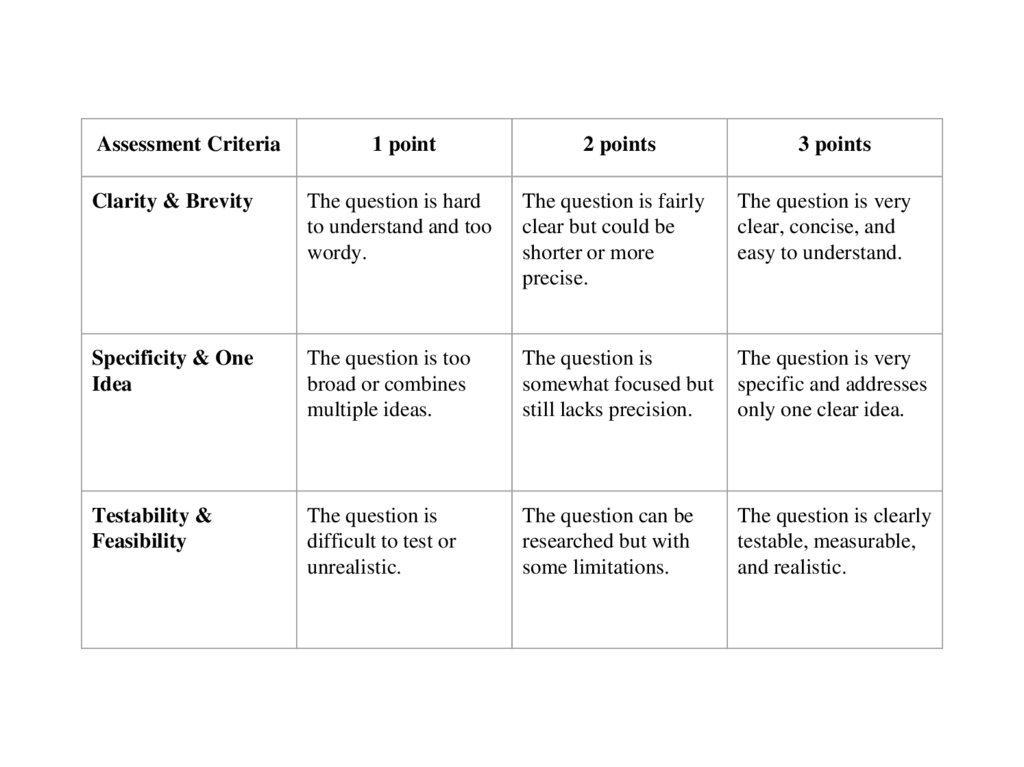
Assessment Criteria1 point
2 points
3 points
Clarity & Brevity
The question is hard
to understand and too
wordy.
The question is fairly
clear but could be
shorter or more
precise.
The question is very
clear, concise, and
easy to understand.
Specificity & One
Idea
The question is too
broad or combines
multiple ideas.
The question is
somewhat focused but
still lacks precision.
The question is very
specific and addresses
only one clear idea.
Testability &
Feasibility
The question is
difficult to test or
unrealistic.
The question can be
researched but with
some limitations.
The question is clearly
testable, measurable,
and realistic.
36.
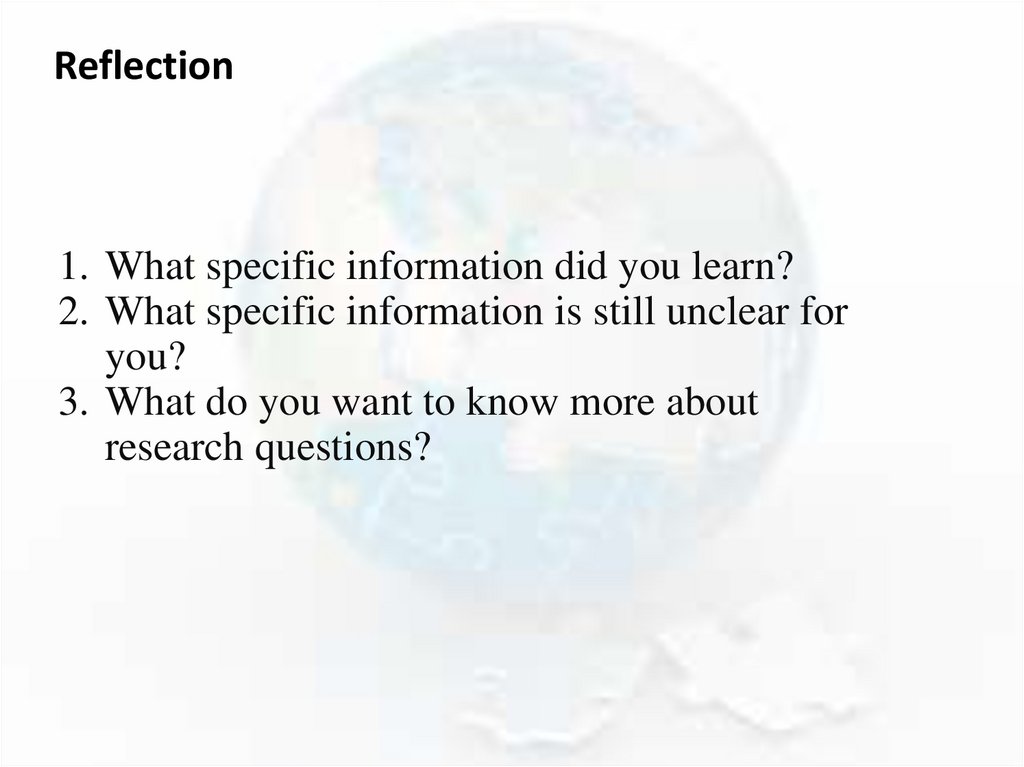
Reflection1. What specific information did you learn?
2. What specific information is still unclear for
you?
3. What do you want to know more about
research questions?