 Медицина
Похожие презентации:





Principles of Hormonal Regulation
1.
Principles of HormonalRegulation
2.
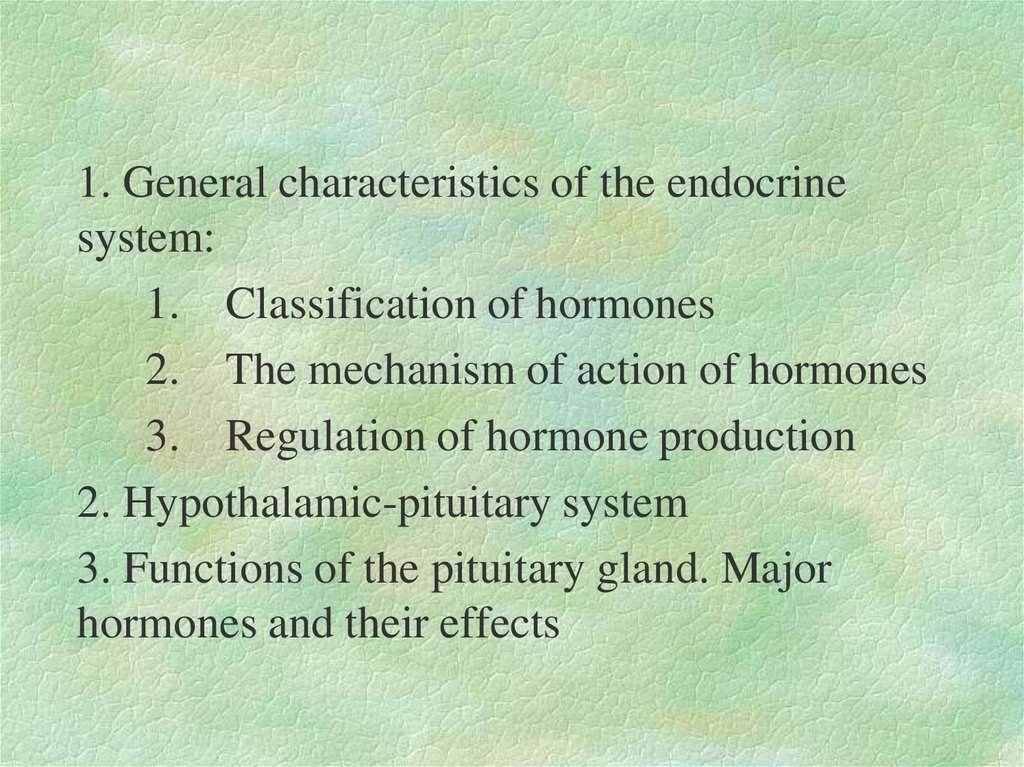
1. General characteristics of the endocrinesystem:
1. Classification of hormones
2. The mechanism of action of hormones
3. Regulation of hormone production
2. Hypothalamic-pituitary system
3. Functions of the pituitary gland. Major
hormones and their effects
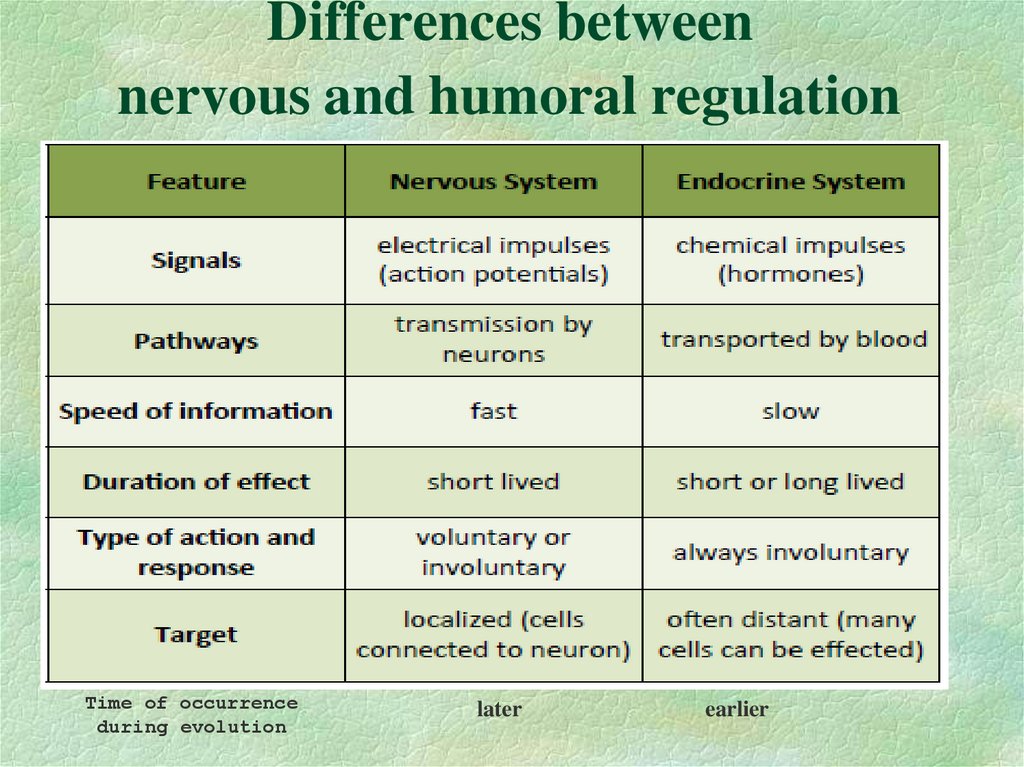
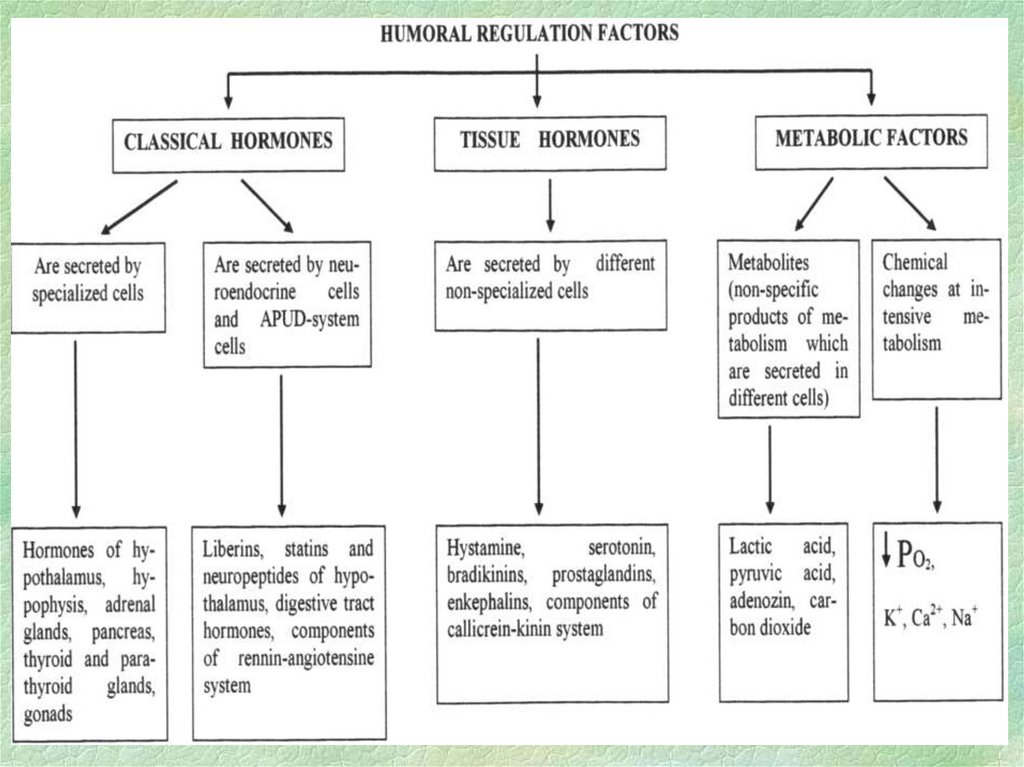
3. Differences between nervous and humoral regulation
Time of occurrenceduring evolution
later
earlier
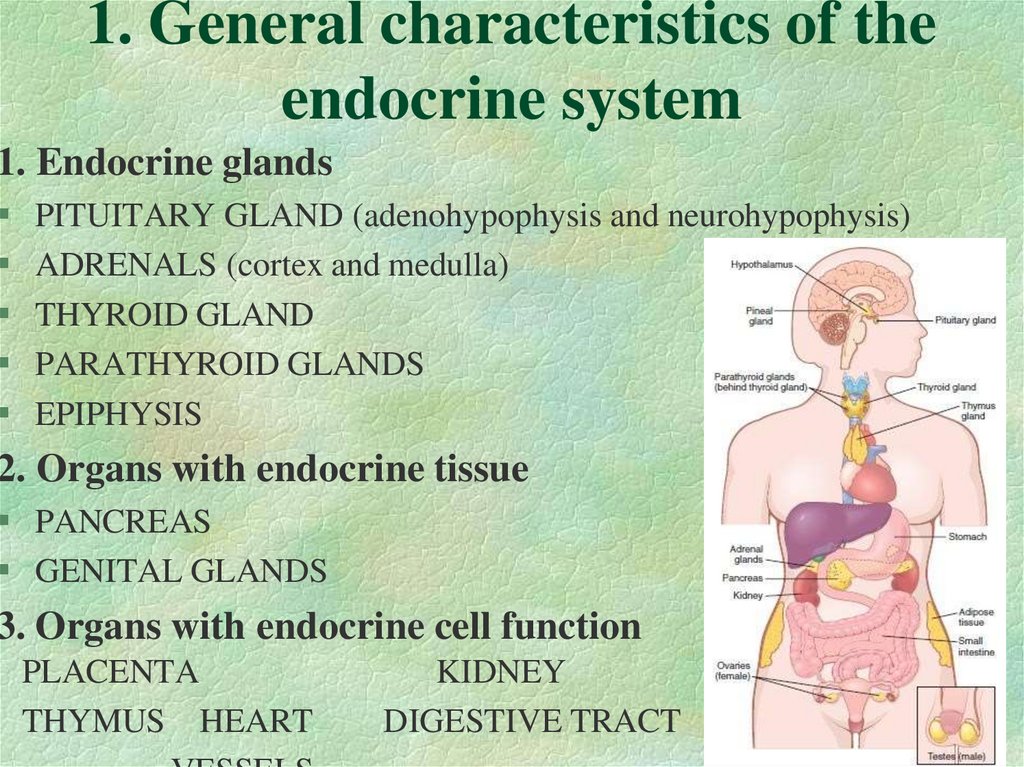
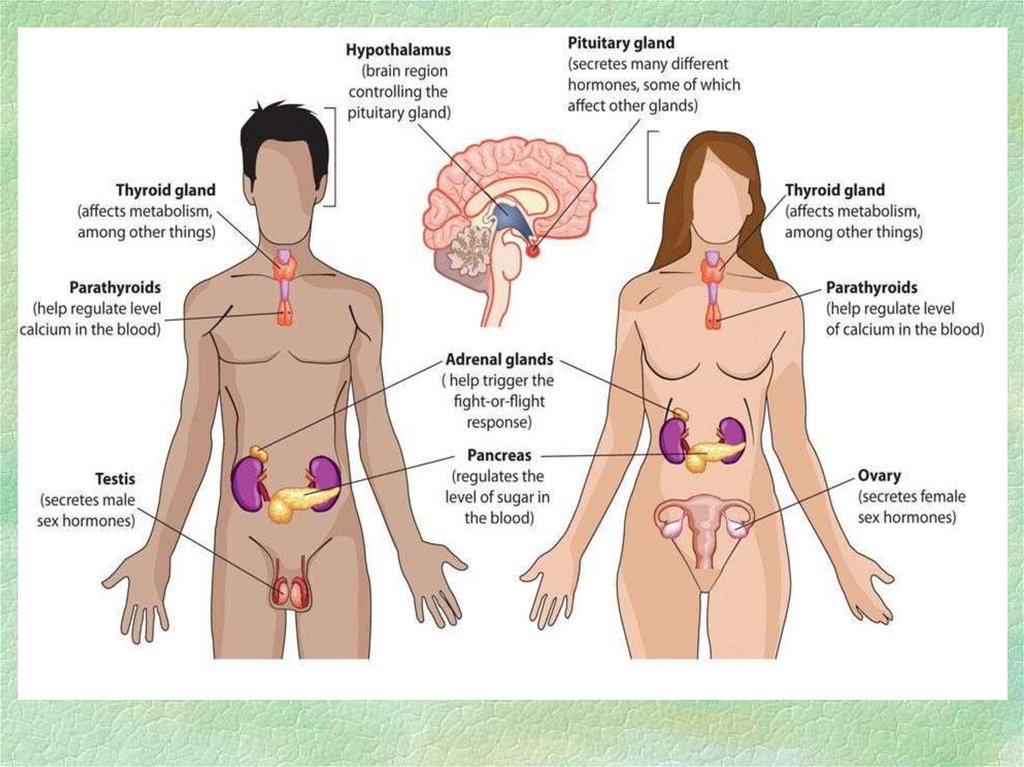
4. 1. General characteristics of the endocrine system
1. Endocrine glandsPITUITARY GLAND (adenohypophysis and neurohypophysis)
ADRENALS (cortex and medulla)
THYROID GLAND
PARATHYROID GLANDS
EPIPHYSIS
2. Organs with endocrine tissue
PANCREAS
GENITAL GLANDS
3. Organs with endocrine cell function
PLACENTA
THYMUS HEART
KIDNEY
DIGESTIVE TRACT
5.
6.
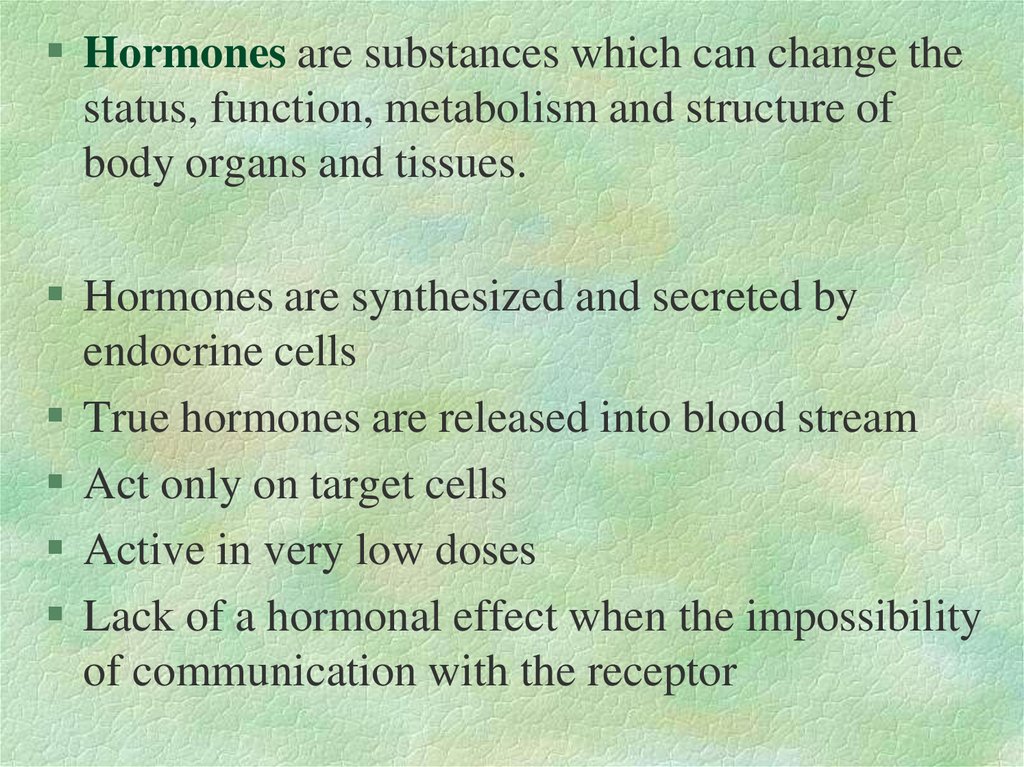
Hormones are substances which can change thestatus, function, metabolism and structure of
body organs and tissues.
Hormones are synthesized and secreted by
endocrine cells
True hormones are released into blood stream
Act only on target cells
Active in very low doses
Lack of a hormonal effect when the impossibility
of communication with the receptor
7.
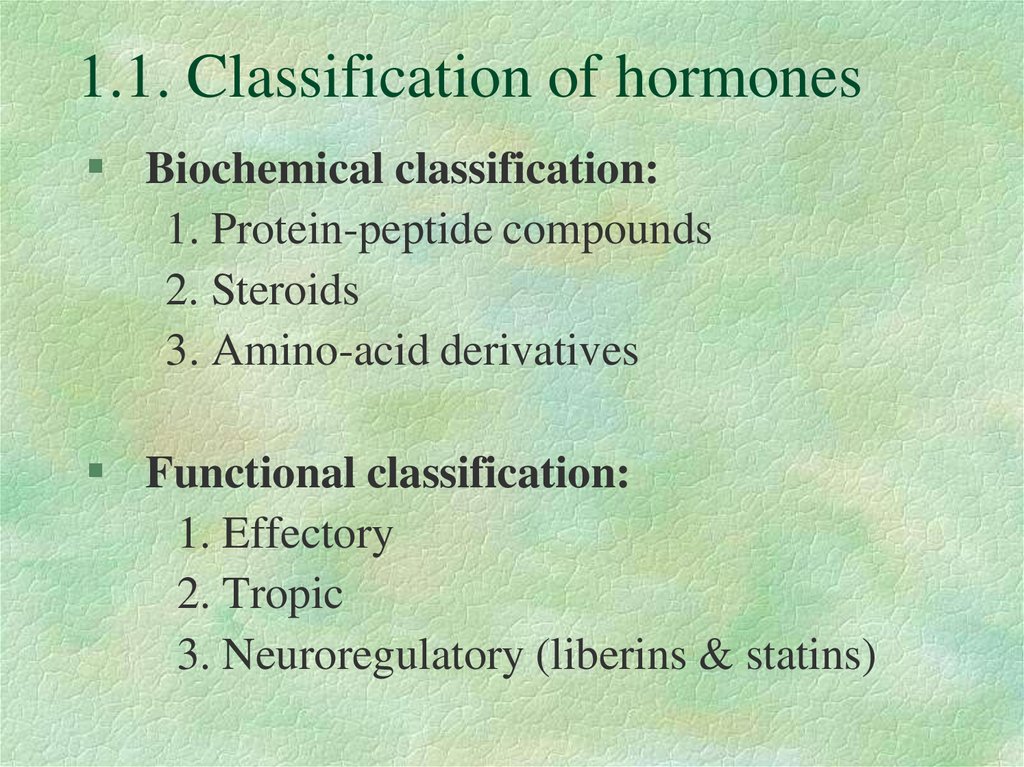
8. 1.1. Classification of hormones
Biochemical classification:1. Protein-peptide compounds
2. Steroids
3. Amino-acid derivatives
Functional classification:
1. Effectory
2. Tropic
3. Neuroregulatory (liberins & statins)
9. Classification of hormones
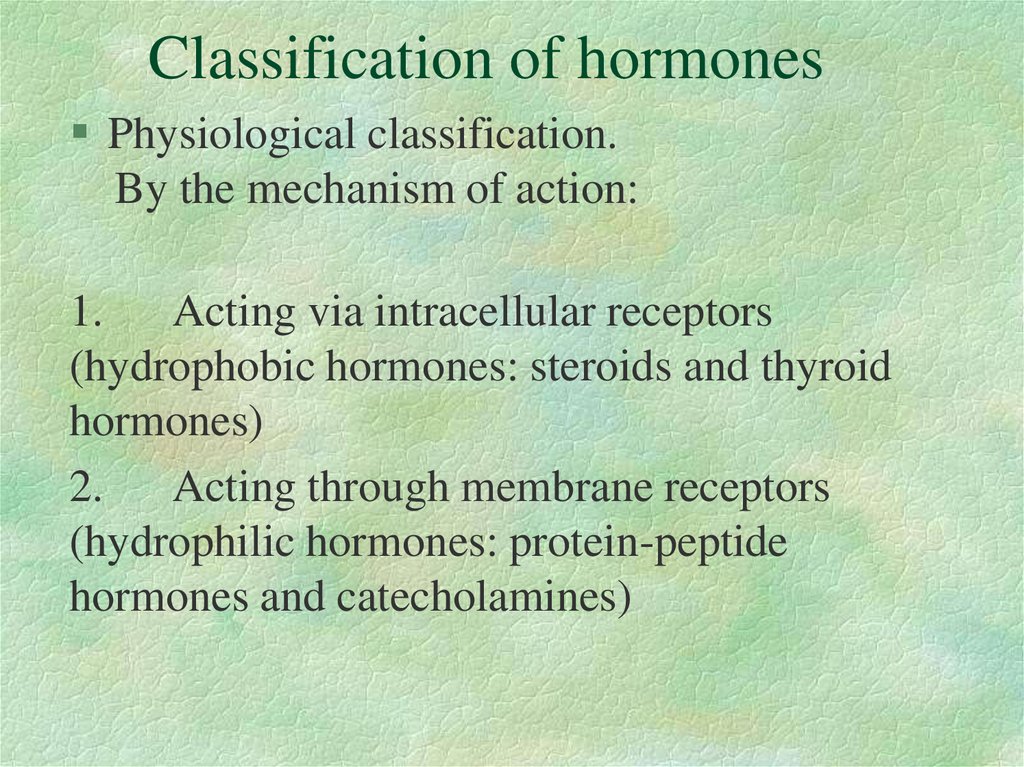
Physiological classification.By the mechanism of action:
1. Acting via intracellular receptors
(hydrophobic hormones: steroids and thyroid
hormones)
2. Acting through membrane receptors
(hydrophilic hormones: protein-peptide
hormones and catecholamines)
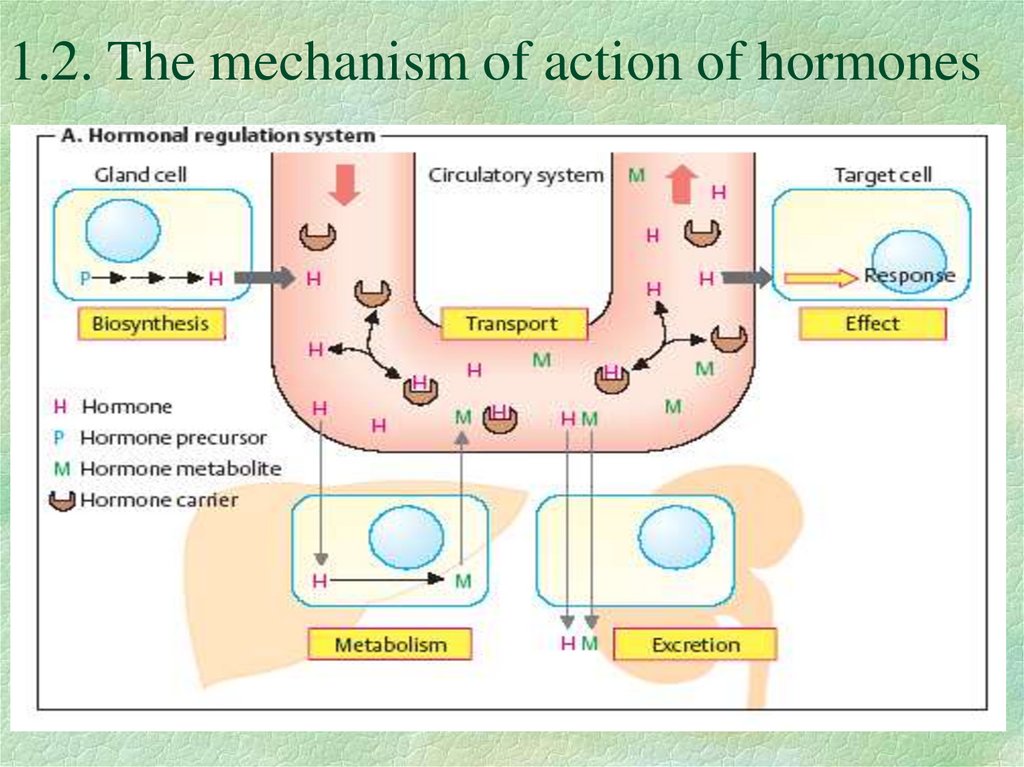
10. 1.2. The mechanism of action of hormones
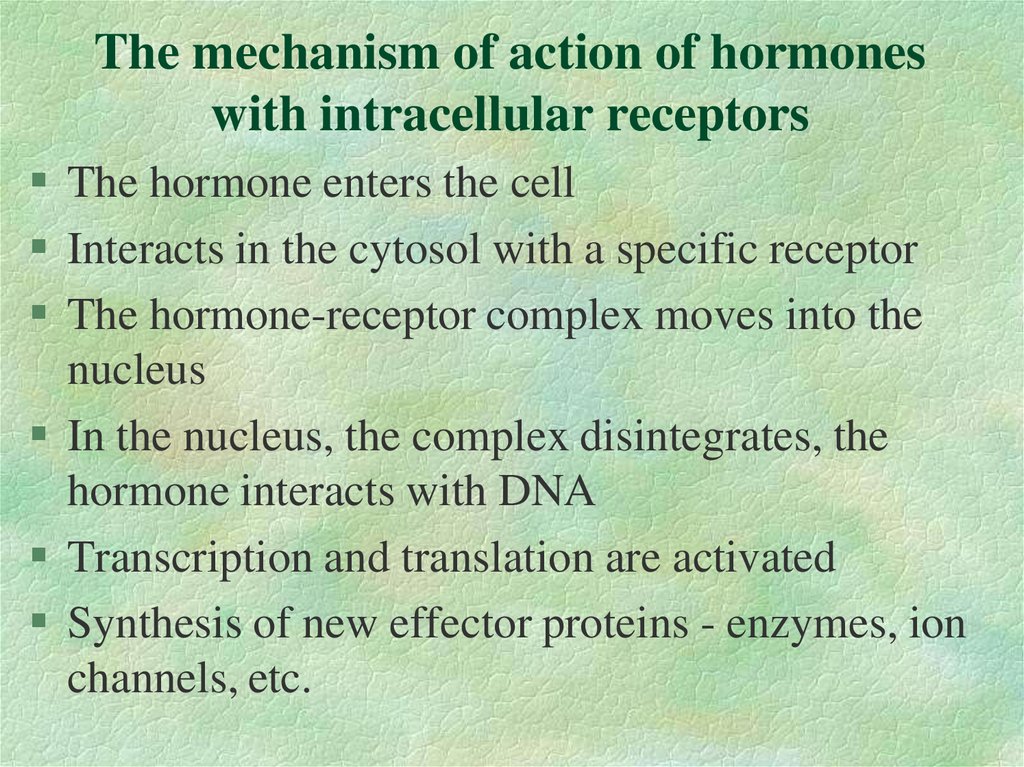
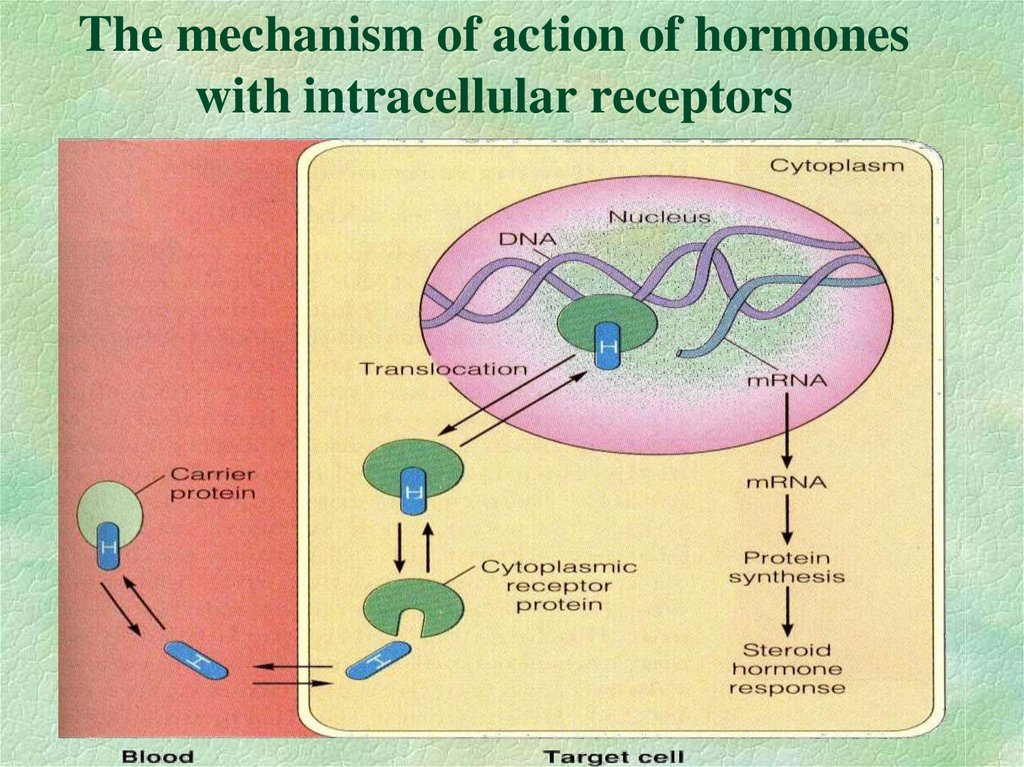
11. The mechanism of action of hormones with intracellular receptors
The hormone enters the cellInteracts in the cytosol with a specific receptor
The hormone-receptor complex moves into the
nucleus
In the nucleus, the complex disintegrates, the
hormone interacts with DNA
Transcription and translation are activated
Synthesis of new effector proteins - enzymes, ion
channels, etc.
12. The mechanism of action of hormones with intracellular receptors
13. The mechanism of action of hormones with membrane receptors
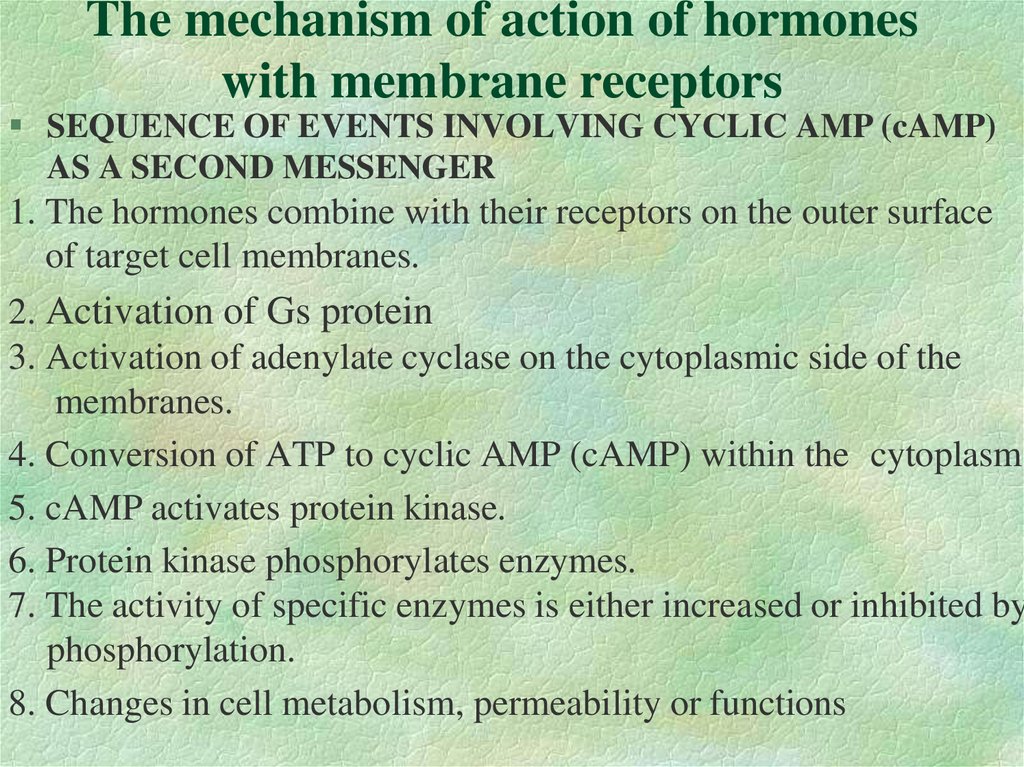
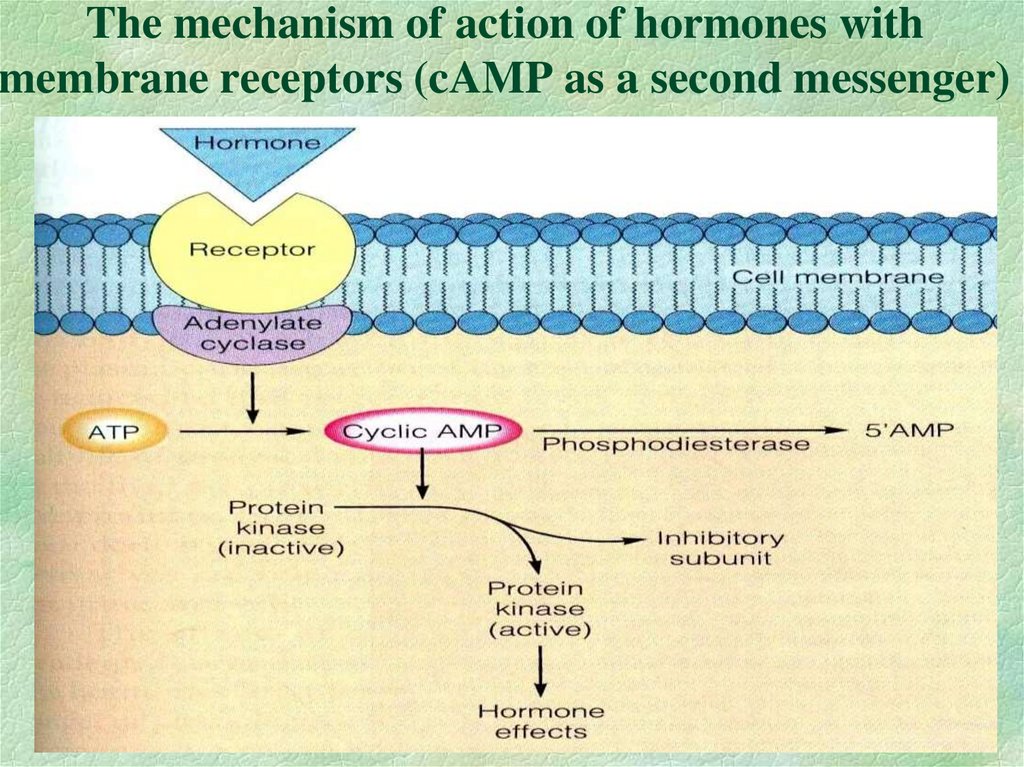
SEQUENCE OF EVENTS INVOLVING CYCLIC AMP (cAMP)AS A SECOND MESSENGER
1. The hormones combine with their receptors on the outer surface
of target cell membranes.
2. Activation of Gs protein
3. Activation of adenylate cyclase on the cytoplasmic side of the
membranes.
4. Conversion of ATP to cyclic AMP (cAMP) within the cytoplasm
5. cAMP activates protein kinase.
6. Protein kinase phosphorylates enzymes.
7. The activity of specific enzymes is either increased or inhibited by
phosphorylation.
8. Changes in cell metabolism, permeability or functions
14. The mechanism of action of hormones with
membrane receptors (cAMP as a second messenger)15. 1.3. Regulation of hormone production
Regulation at the CNS level (regulation withliberins and statins of the hypothalamus)
Regulation by the pituitary gland (with the tropic
hormones)
Regulation at the effector level endocrine glands
(using feedback loops and by the regulated
parameter)
Intracellular self-regulation
(programmed at the genetic level)
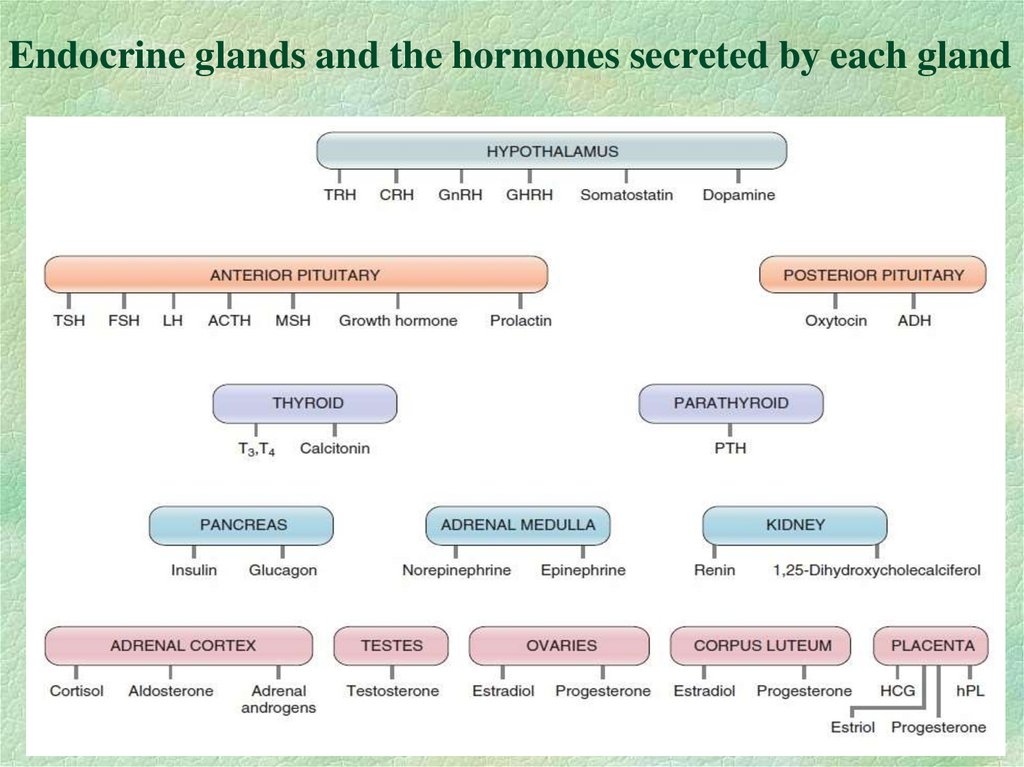
16. Endocrine glands and the hormones secreted by each gland
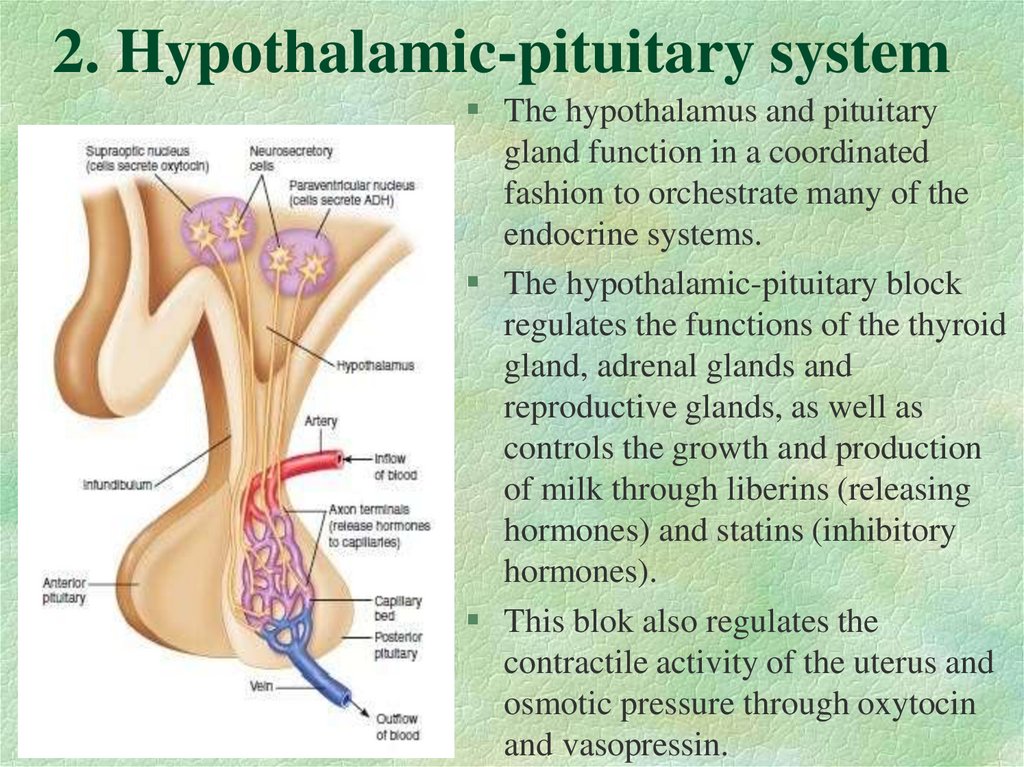
17. 2. Hypothalamic-pituitary system
The hypothalamus and pituitarygland function in a coordinated
fashion to orchestrate many of the
endocrine systems.
The hypothalamic-pituitary block
regulates the functions of the thyroid
gland, adrenal glands and
reproductive glands, as well as
controls the growth and production
of milk through liberins (releasing
hormones) and statins (inhibitory
hormones).
This blok also regulates the
contractile activity of the uterus and
osmotic pressure through oxytocin
and vasopressin.
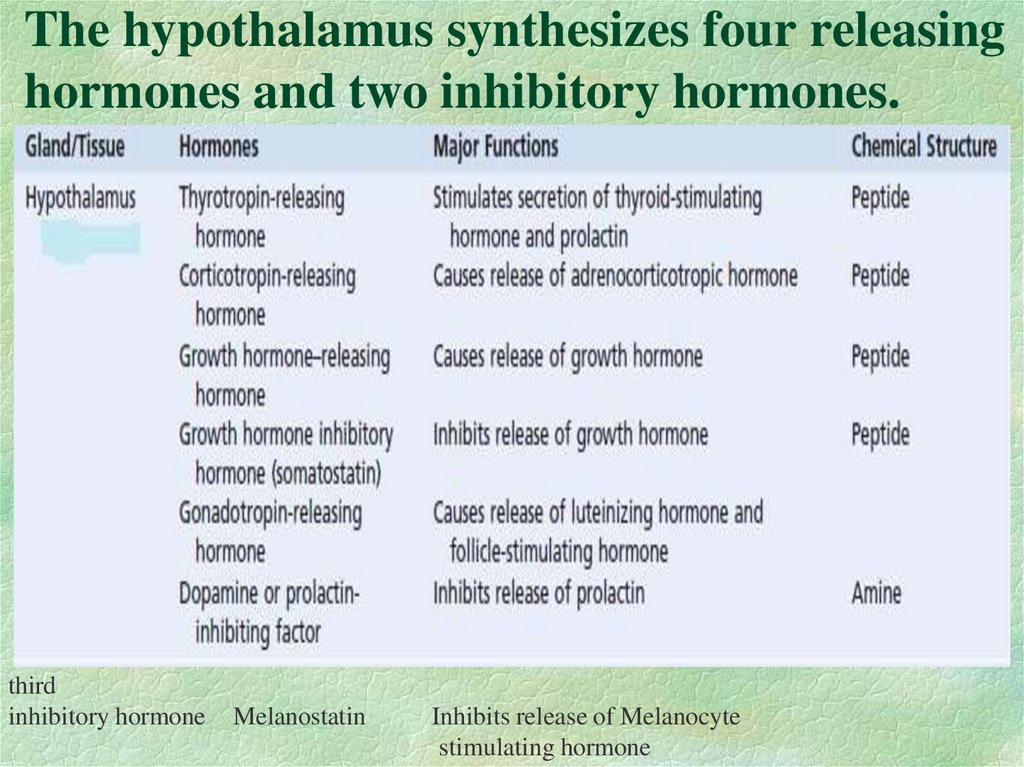
18. The hypothalamus synthesizes four releasing hormones and two inhibitory hormones.
thirdinhibitory hormone
Melanostatin
Inhibits release of Melanocyte
stimulating hormone
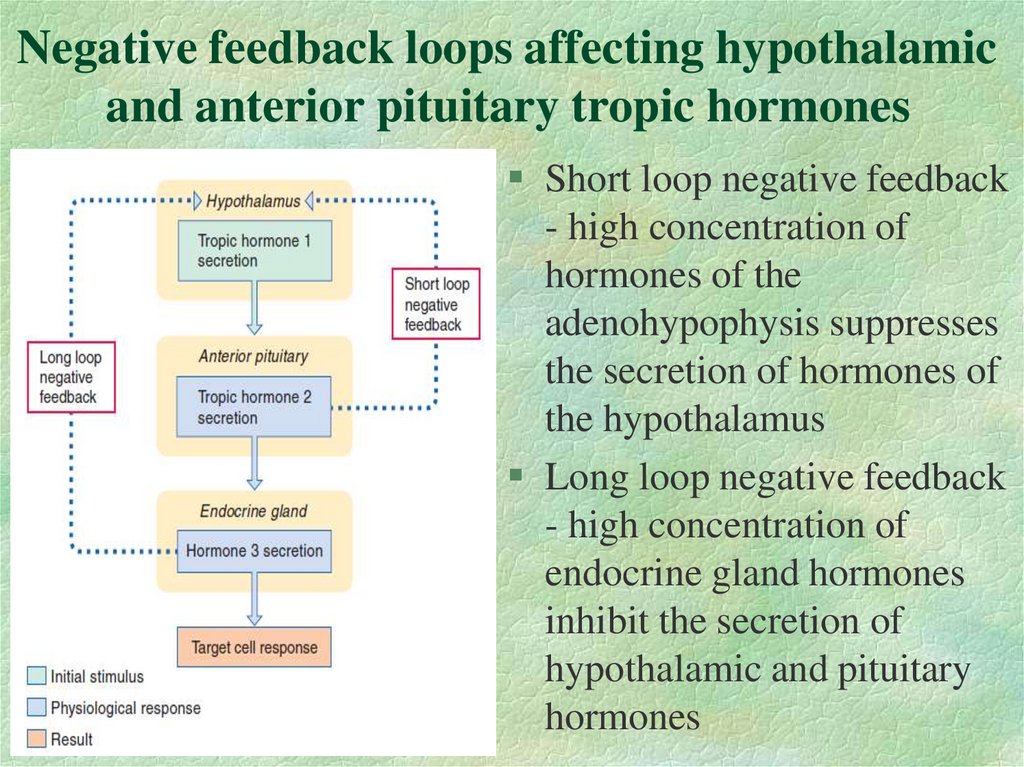
19. Negative feedback loops affecting hypothalamic and anterior pituitary tropic hormones
Short loop negative feedback- high concentration of
hormones of the
adenohypophysis suppresses
the secretion of hormones of
the hypothalamus
Long loop negative feedback
- high concentration of
endocrine gland hormones
inhibit the secretion of
hypothalamic and pituitary
hormones
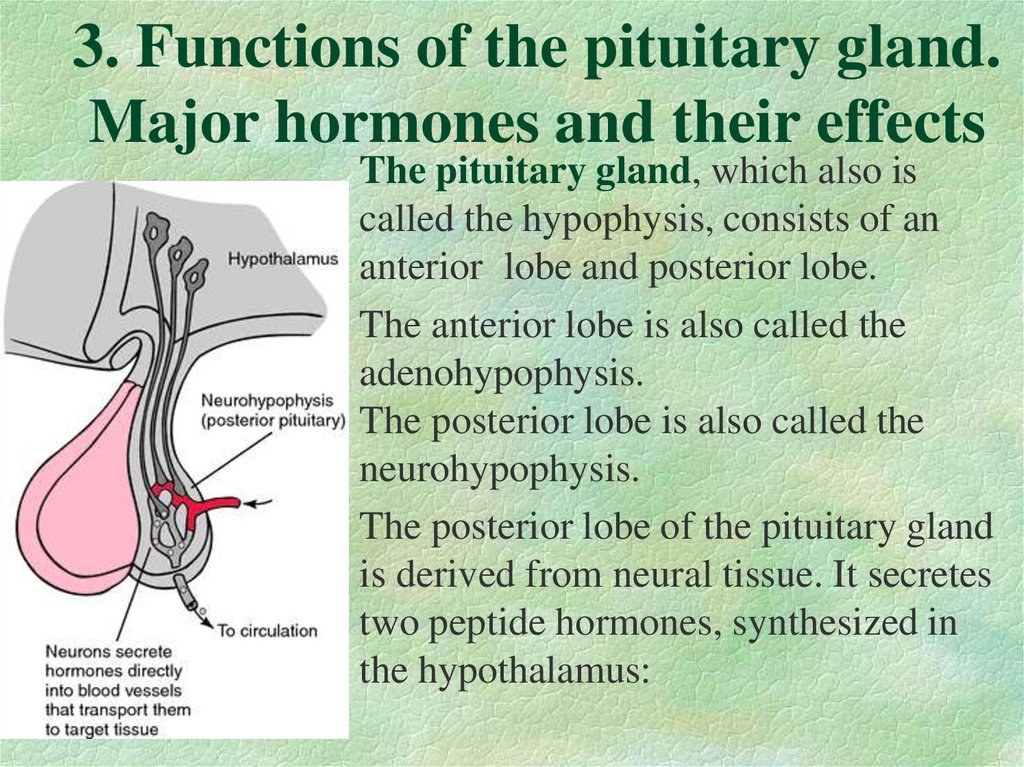
20. 3. Functions of the pituitary gland. Major hormones and their effects
The pituitary gland, which also iscalled the hypophysis, consists of an
anterior lobe and posterior lobe.
The anterior lobe is also called the
adenohypophysis.
The posterior lobe is also called the
neurohypophysis.
The posterior lobe of the pituitary gland
is derived from neural tissue. It secretes
two peptide hormones, synthesized in
the hypothalamus:
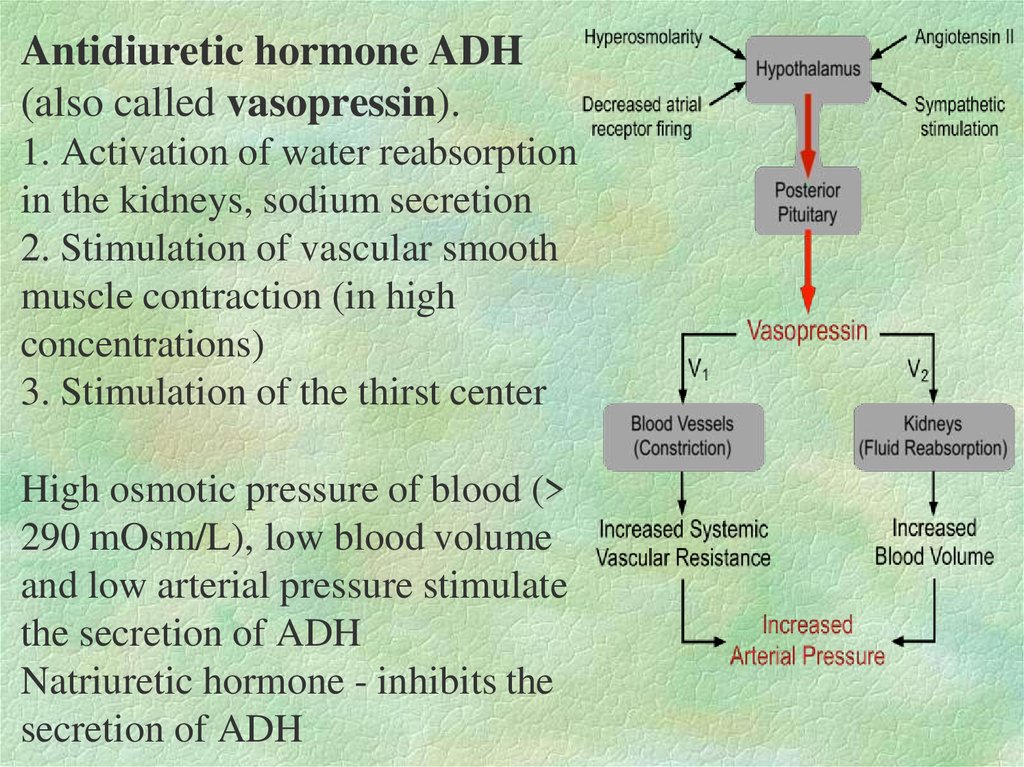
21. Antidiuretic hormone ADH (also called vasopressin).
1. Activation of water reabsorptionin the kidneys, sodium secretion
2. Stimulation of vascular smooth
muscle contraction (in high
concentrations)
3. Stimulation of the thirst center
High osmotic pressure of blood (>
290 mOsm/L), low blood volume
and low arterial pressure stimulate
the secretion of ADH
Natriuretic hormone - inhibits the
secretion of ADH
22.
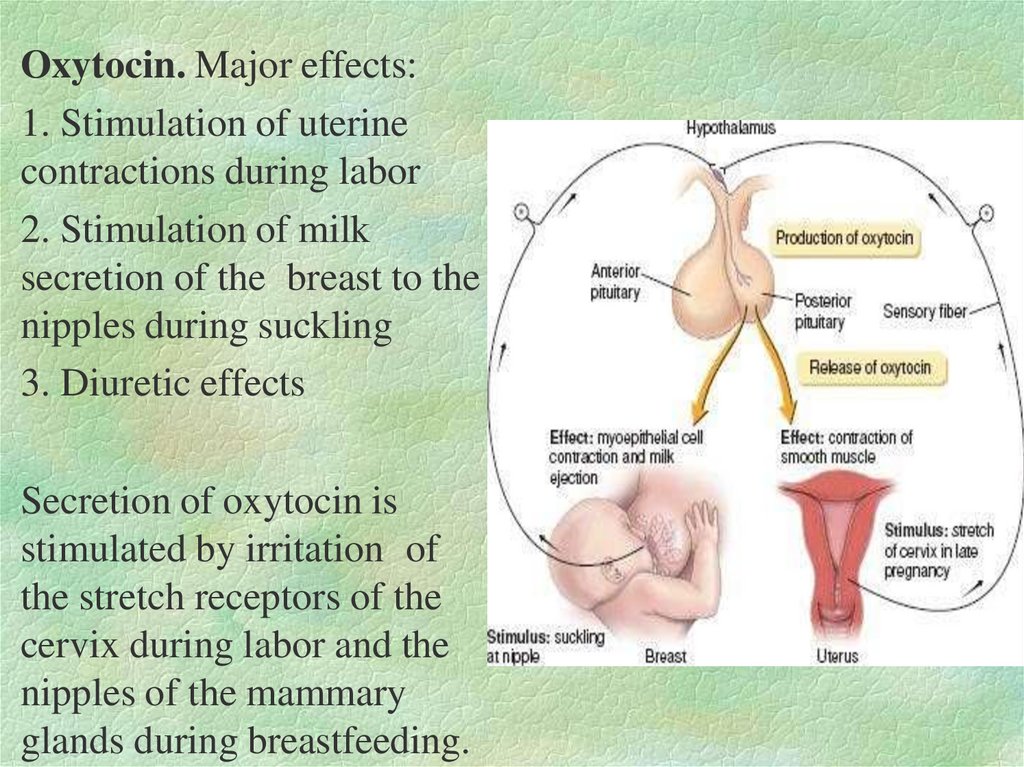
Oxytocin. Major effects:1. Stimulation of uterine
contractions during labor
2. Stimulation of milk
secretion of the breast to the
nipples during suckling
3. Diuretic effects
Secretion of oxytocin is
stimulated by irritation of
the stretch receptors of the
cervix during labor and the
nipples of the mammary
glands during breastfeeding.
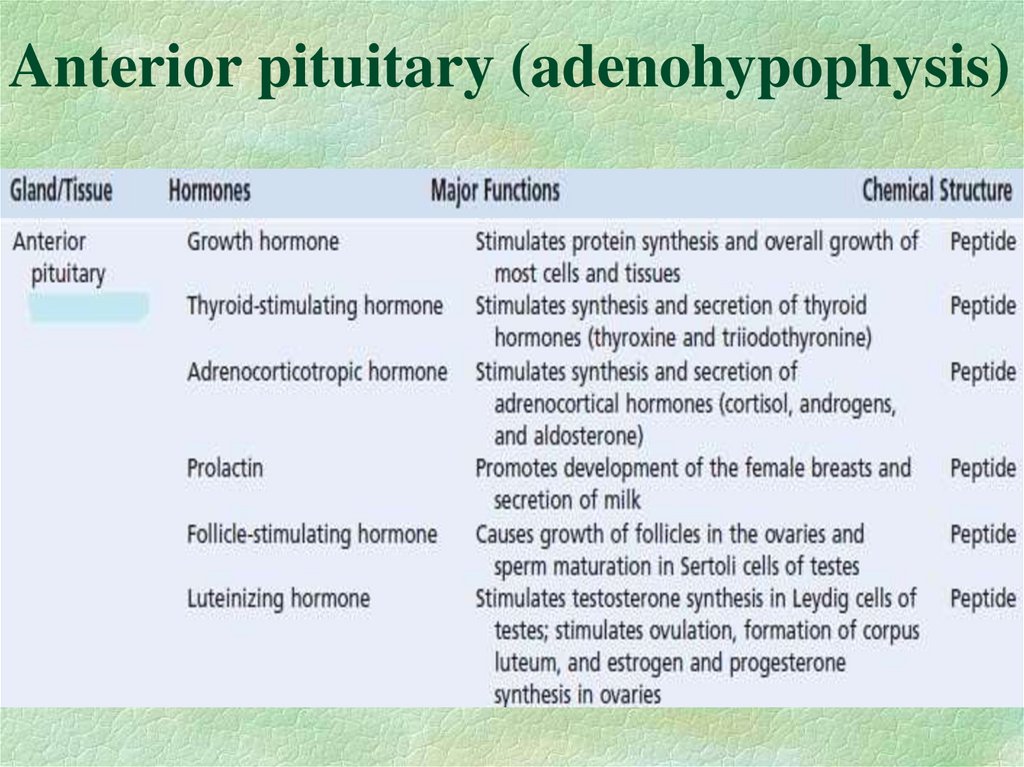
23. Anterior pituitary (adenohypophysis)
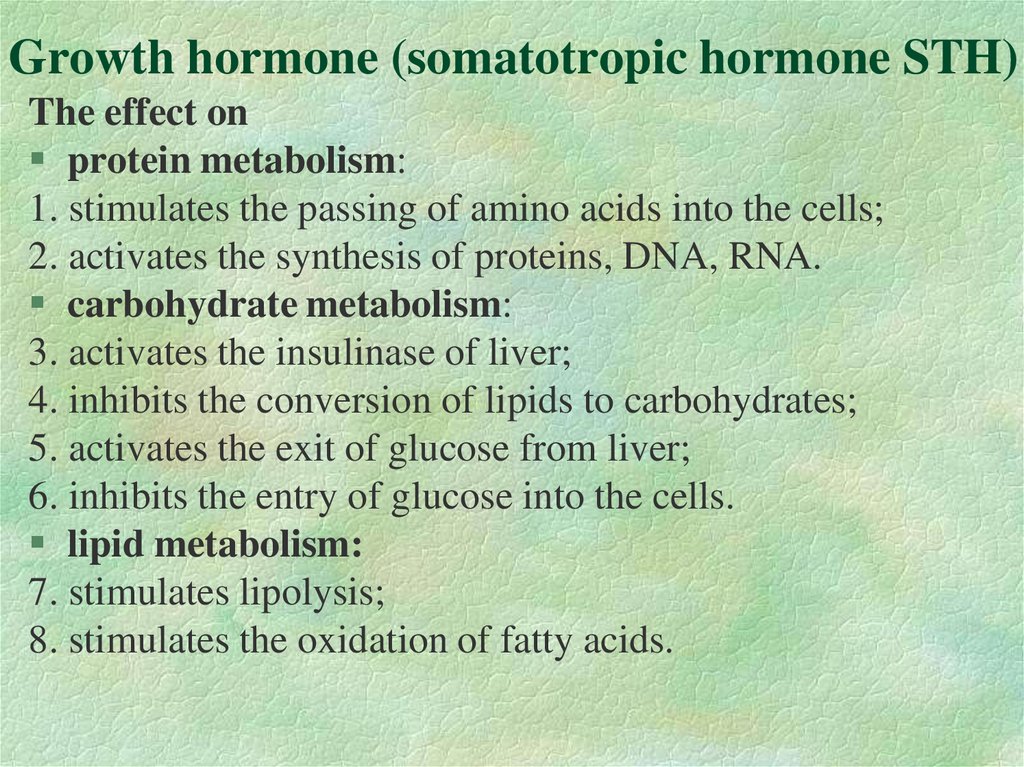
24. Growth hormone (somatotropic hormone STH)
The effect onprotein metabolism:
1. stimulates the passing of amino acids into the cells;
2. activates the synthesis of proteins, DNA, RNA.
carbohydrate metabolism:
3. activates the insulinase of liver;
4. inhibits the conversion of lipids to carbohydrates;
5. activates the exit of glucose from liver;
6. inhibits the entry of glucose into the cells.
lipid metabolism:
7. stimulates lipolysis;
8. stimulates the oxidation of fatty acids.
25.
Secretion of somatotropic hormone is stimulatedby Growth hormone-releasing hormone, amino
acids, hypoglycemia, stress and deep sleep.
Secretion of somatotropic hormone is inhibited
by Growth hormone inhibitory hormone
(somatostatin), hyperglycemia, melatonin.
26. Abnormalities of Growth Hormone Secretion
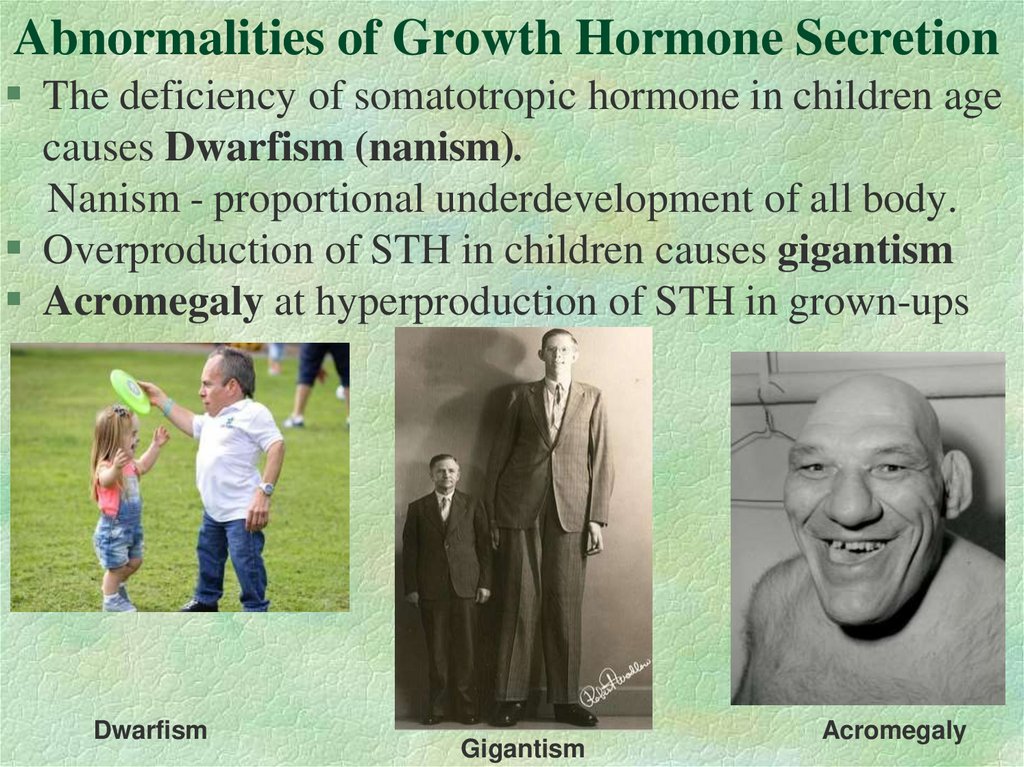
The deficiency of somatotropic hormone in children agecauses Dwarfism (nanism).
Nanism - proportional underdevelopment of all body.
Overproduction of STH in children causes gigantism
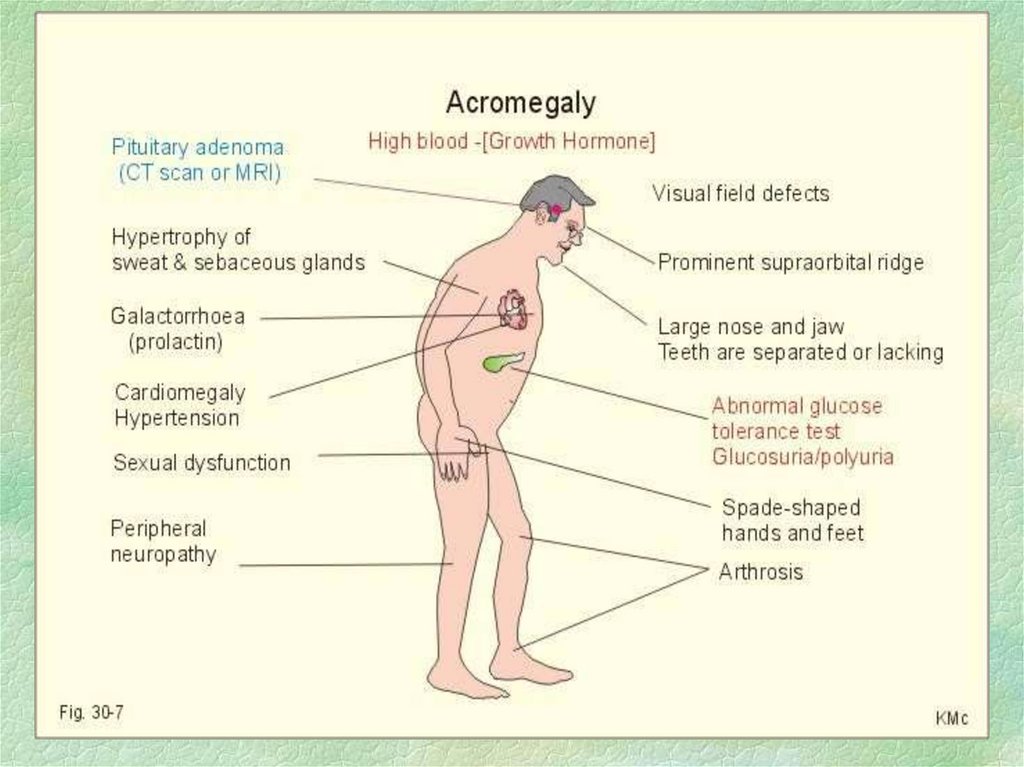
Acromegaly at hyperproduction of STH in grown-ups
Dwarfism
Gigantism
Acromegaly
27.
28. Thyroid-stimulating hormone (TSH)
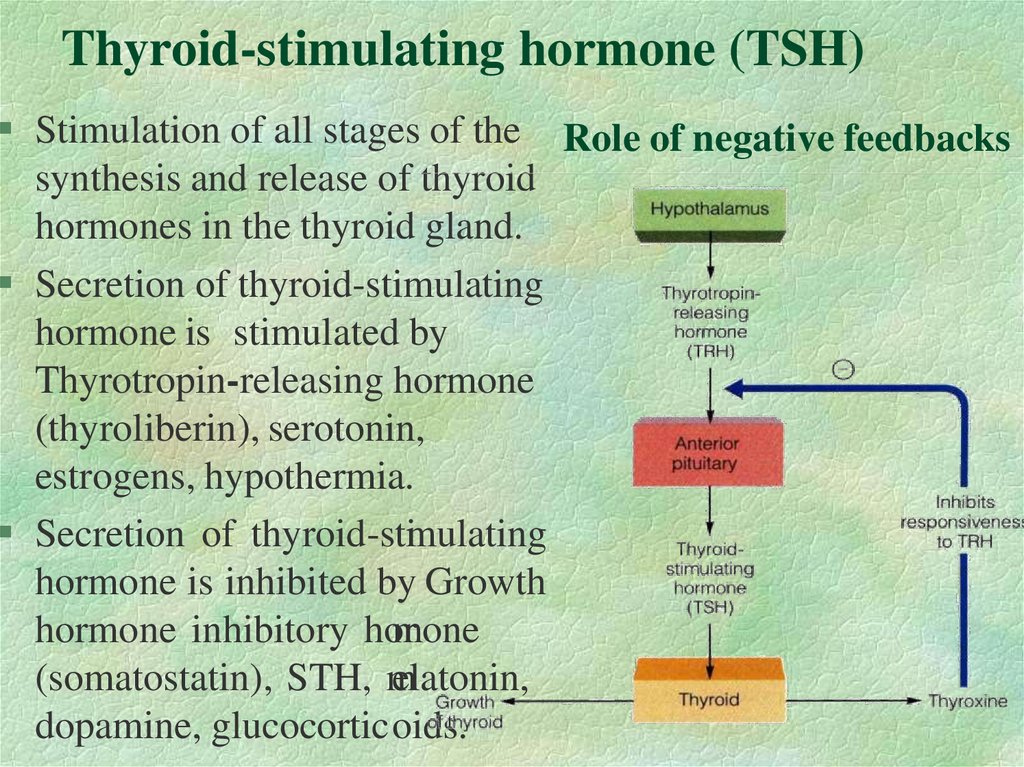
Stimulation of all stages of the Role of negative feedbackssynthesis and release of thyroid
hormones in the thyroid gland.
Secretion of thyroid-stimulating
hormone is stimulated by
Thyrotropin-releasing hormone
(thyroliberin), serotonin,
estrogens, hypothermia.
Secretion of thyroid-stimulating
hormone is inhibited by Growth
hormone inhibitory hor
mone
(somatostatin), STH, m
elatonin,
dopamine, glucocortic oids.
29. Adrenocorticotropic hormone (ACTH)
The effectsincreased production of glucocorticoids
weak stimulation of the production of sex steroids
and mineralocorticoids
participation in stress mechanisms
Secretion of Adrenocorticotropic hormone is
stimulated by Corticotropin-releasing hormone.
Secretion of it is inhibited by glucocorticoids and
melatonin.
30. Prolaktin
Effects in women:1. Stimulates duct proliferation, lobule development,
mammary gland hyperplasia, milk secretion.
2. At physiological concentrations, contributes to the
normal development and functioning of follicles.
3. Influences behavior "maternal love hormone“.
Effects in men:
4. Enhances the effect of LH on androgen formation.
5. Stimulates sperm production.
Secretion of prolactin is stimulated by Thyrotropinreleasing hormone, pregnancy, breastfeeding and sleep.
Secretion of prolactin is inhibited by Prolactininhibiting factor and stopping breastfeeding.
31. Follicle-stimulating hormone (FSH) and Luteinizing hormone (LH)
Effects of FSH:Effects of LH:
Among women:
Among women:
Stimulates the growth and
Provides egg maturation and
maturation of follicles
ovulation, the development of
Increases follicle sensitivity to LH
the corpus luteum, the
production of estrogen and
progesterone
In men:
Stimulates the growth and
In men:
development of Leydig interstitial Stimulates the formation of
cells (during puberty)
androgens in Leydig cells
Stimulates spermatogenesis (at
puberty)
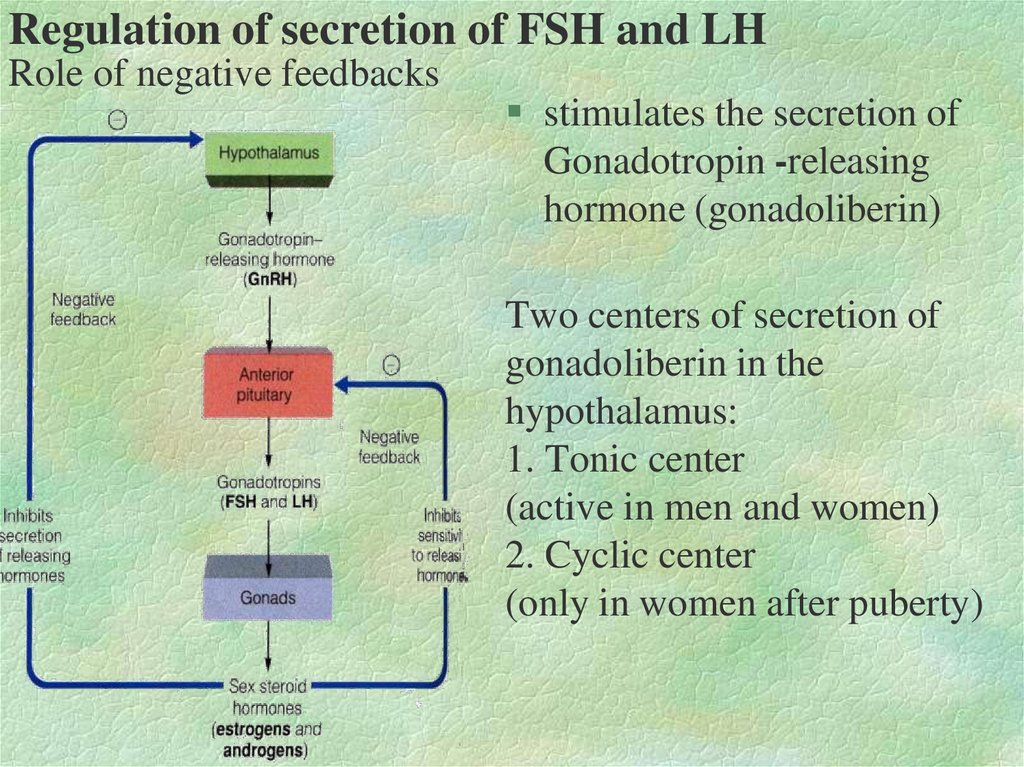
32. Regulation of secretion of FSH and LH
Role of negative feedbacksstimulates the secretion of
Gonadotropin -releasing
hormone (gonadoliberin)
Two centers of secretion of
gonadoliberin in the
hypothalamus:
1. Tonic center
(active in men and women)
2. Cyclic center
(only in women after puberty)