





 Менеджмент
Похожие презентации:






Chapter two: time Management & Goal setting
1.
CHAPTER TWO:TIME MANAGEMENT
& GOAL SETTING
2.
In today’s lessons, weo describe ways to achieve
will…
success in university studies;
o articulate time management
and identify time management
techniques;
o explain procrastination and
discuss ways to avoid it;
o discuss the importance of
setting goals and identify
SMART goals are and what
makes them effective; and
o articulate independent learning
and identify ways to become an
independent learner.
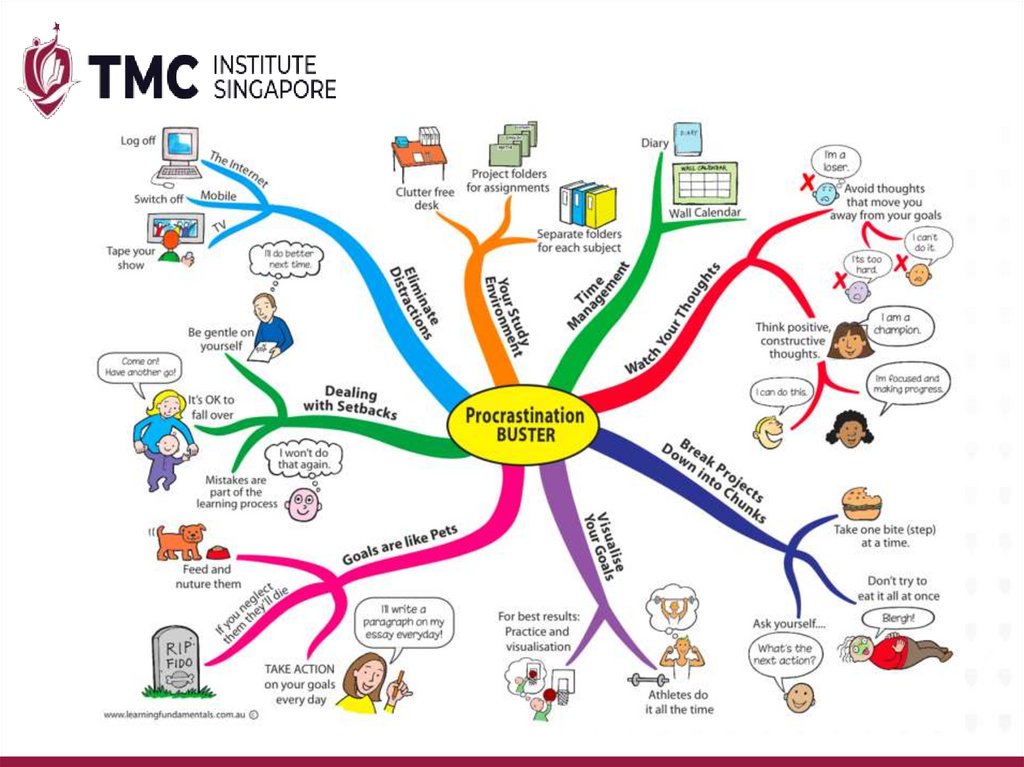
3. Think-Pair-Share
Question 1:Are you always being told that you need to
be better organised or more productive?
Question 2:
Do you often have a day of lots of activity
and then wonder why you haven’t
accomplished a lot at the end of it?
4. What is Time Management?
Time management is using your time aseffectively as possible to achieve the best
possible results for yourself.
Remember that there are always only 24 hours
in a day. Time doesn't change. All you can
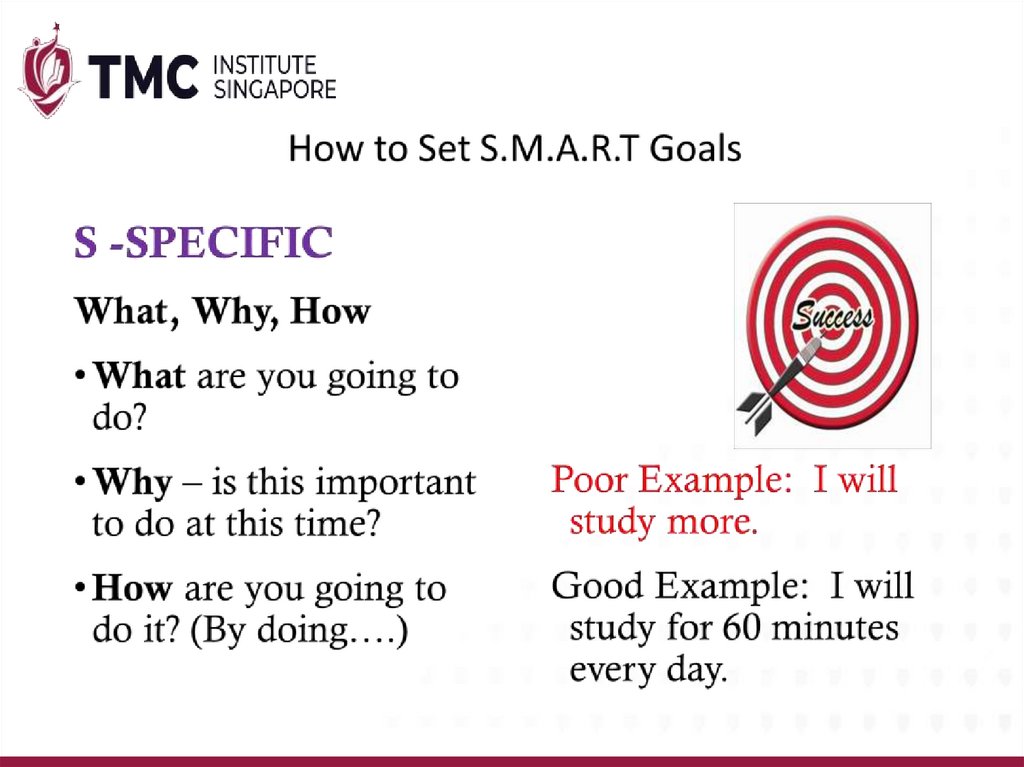
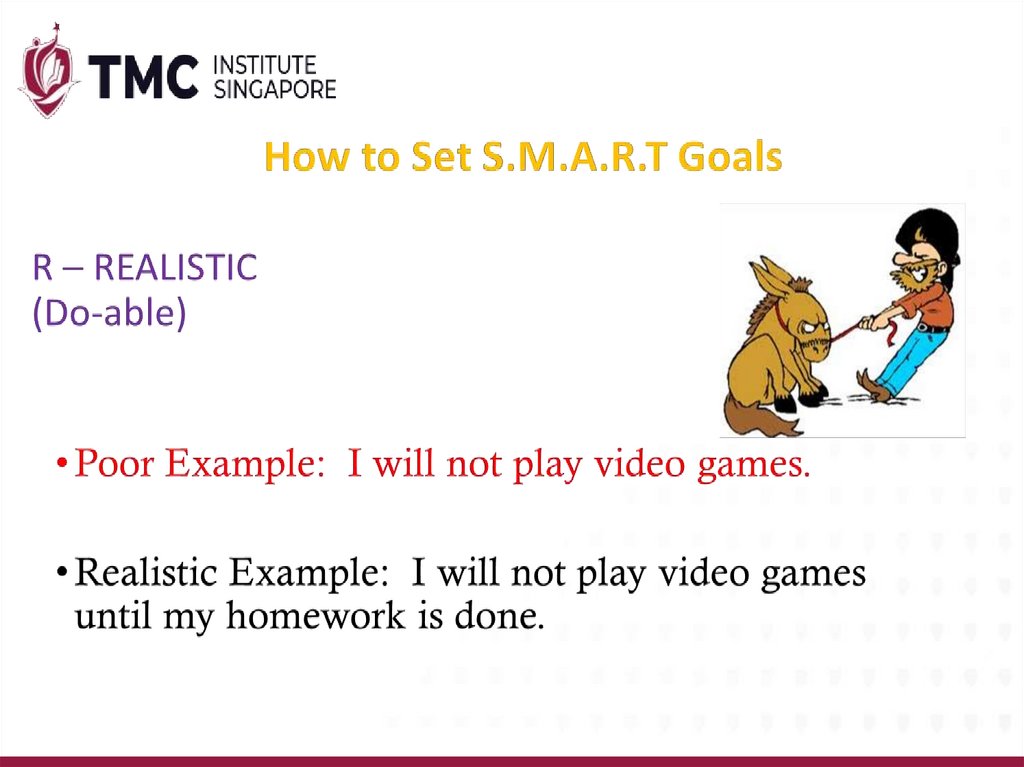
actually manage is yourself and what you do
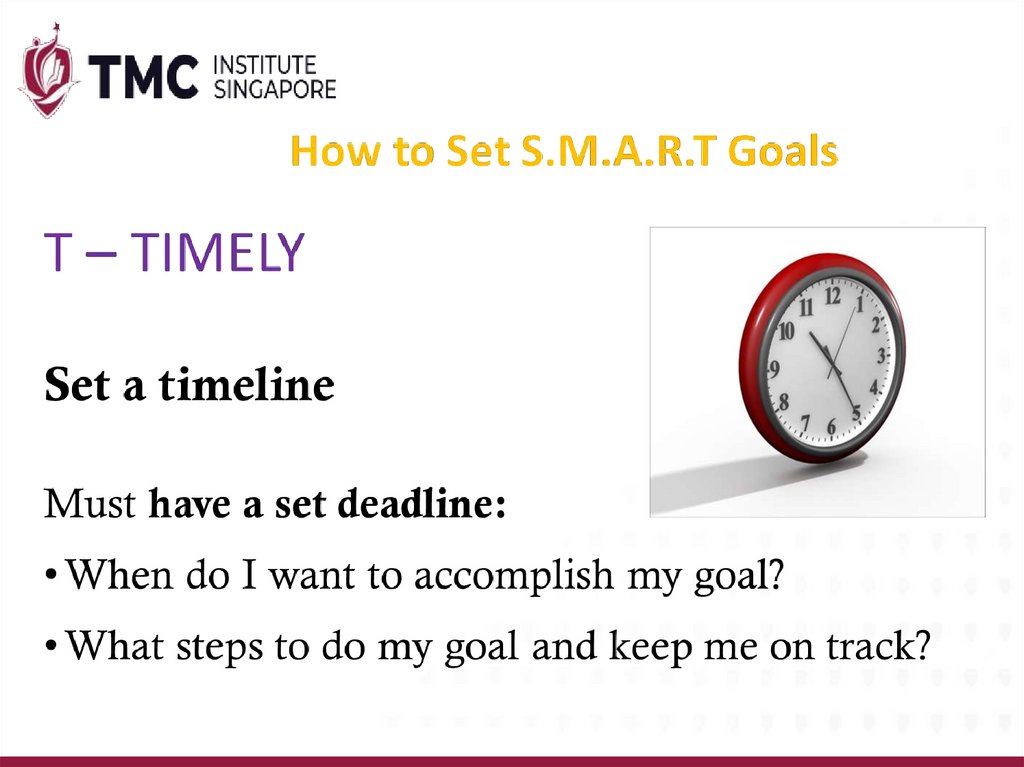
with the time that you have.
5.
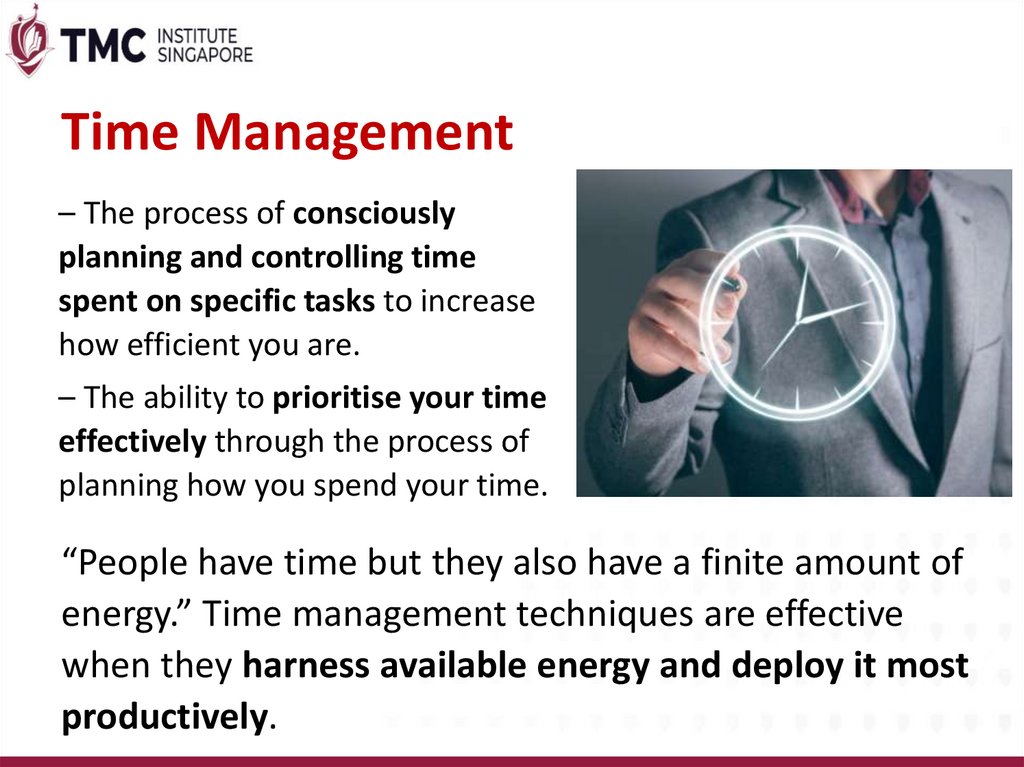
Time Management– The process of consciously
planning and controlling time
spent on specific tasks to increase
how efficient you are.
– The ability to prioritise your time
effectively through the process of
planning how you spend your time.
“People have time but they also have a finite amount of
energy.” Time management techniques are effective
when they harness available energy and deploy it most
productively.
6. Why Does Time Management Matter?
For students of Diploma courses, time managementis absolutely important because you have so many
things to do if you are to succeed and get the
grades you should be achieving.
What makes managing your time really important is
that it allows you to get good marks that you can
and have a good time away from work as well.
Time management doesn’t mean you can’t go out
or have friends, it just means that you enjoy your
time with them even more!
7.
Importance of Time ManagementTime management skills help individuals work more productively,
lower stress, and improve overall results in academic situations,
work, business, and even leisure time.
By building better time management habits, it’s possible to be more
intentional about how you spend your time and learn to prioritise and
work more effectively.
Good time management can lead to a healthy, balanced lifestyle that
may manifest as:
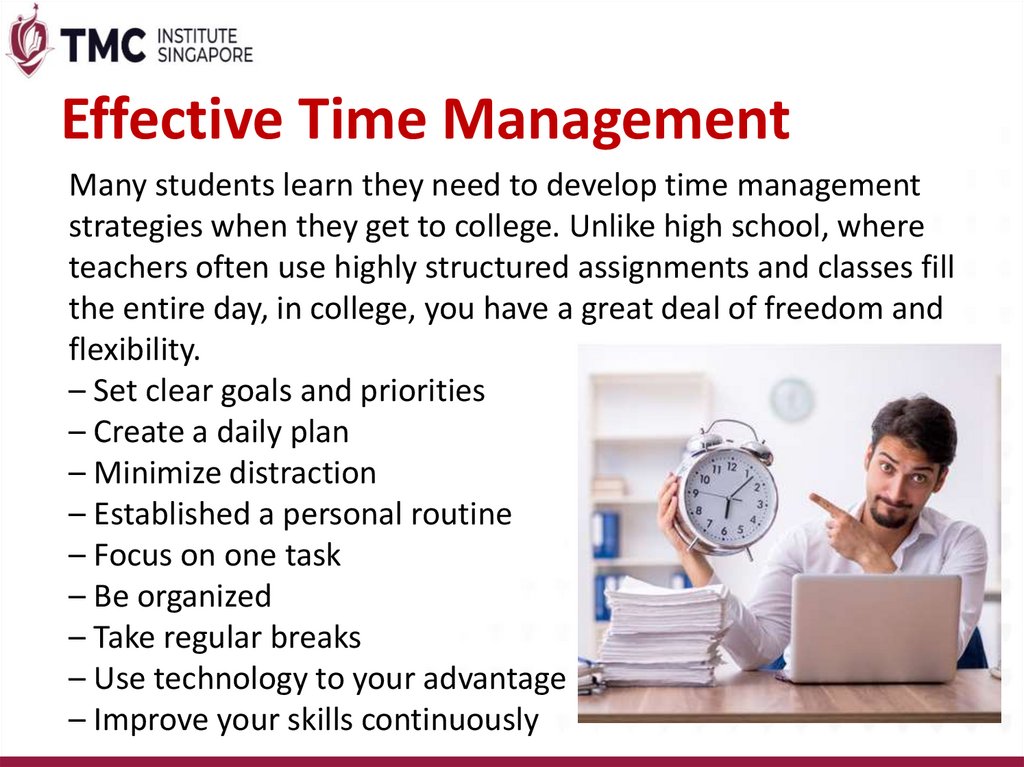
Reducing stress
Increasing energy
Achieving goals more efficiently
Prioritizing what's important
Accomplishing more in less time
Reducing procrastination
Getting further in your career or education Boosting confidence
8. Effective Time Management
9.
Time Management Techniqueso Eat That Frog
o The 80/20 Rule
o Getting Things Done (GTD)
o The Eisenhower Technique
o Pomodoro Technique
10.
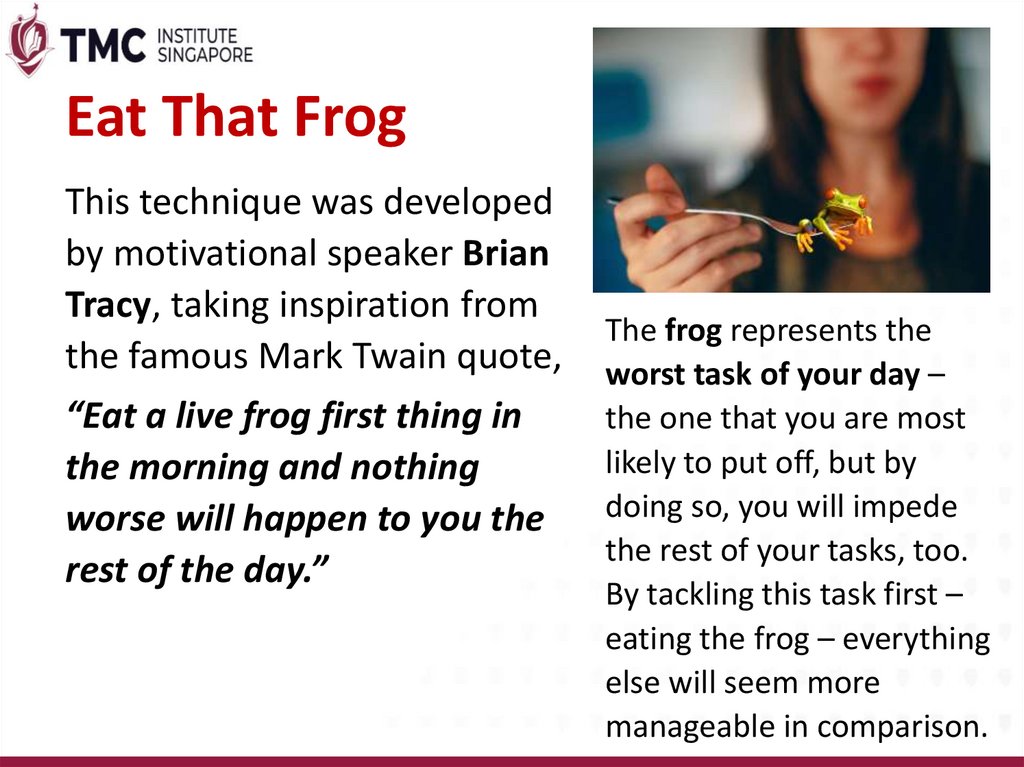
Eat That FrogThis technique was developed
by motivational speaker Brian
Tracy, taking inspiration from
the famous Mark Twain quote,
“Eat a live frog first thing in
the morning and nothing
worse will happen to you the
rest of the day.”
The frog represents the
worst task of your day –
the one that you are most
likely to put off, but by
doing so, you will impede
the rest of your tasks, too.
By tackling this task first –
eating the frog – everything
else will seem more
manageable in comparison.
11.
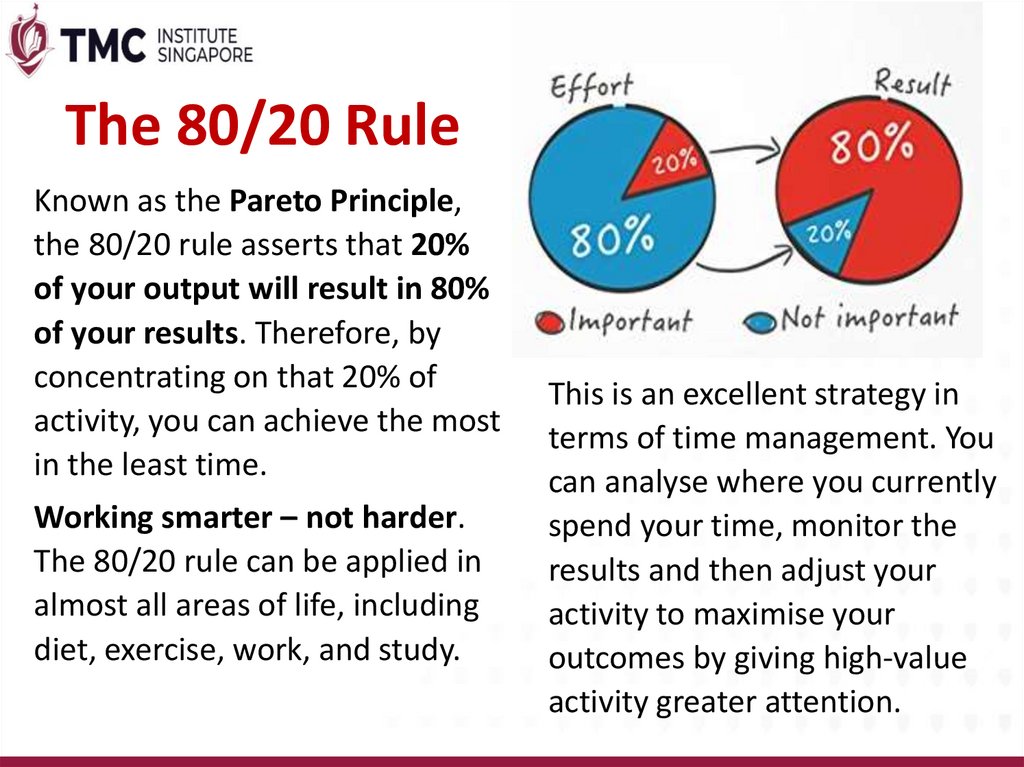
The 80/20 RuleKnown as the Pareto Principle,
the 80/20 rule asserts that 20%
of your output will result in 80%
of your results. Therefore, by
concentrating on that 20% of
activity, you can achieve the most
in the least time.
Working smarter – not harder.
The 80/20 rule can be applied in
almost all areas of life, including
diet, exercise, work, and study.
This is an excellent strategy in
terms of time management. You
can analyse where you currently
spend your time, monitor the
results and then adjust your
activity to maximise your
outcomes by giving high-value
activity greater attention.
12.
Getting Things Done (GTD)David Allen, a management consultant, created the GTD
method to help users manage their work and time better. The
concept involves listing all the outstanding tasks from small to
large. The individual then completes the small, simple tasks
first, leaving only the larger, more complex tasks. These are
then broken down into small, easy-to-manage sections and
completed.
The central principle of this strategy is that by writing the tasks
down, attention is focused on the task itself, rather than trying
to remember what needs doing. This reduces feelings of
overwhelm and anxiety, which are all too familiar when dealing
with multiple tasks.
13.
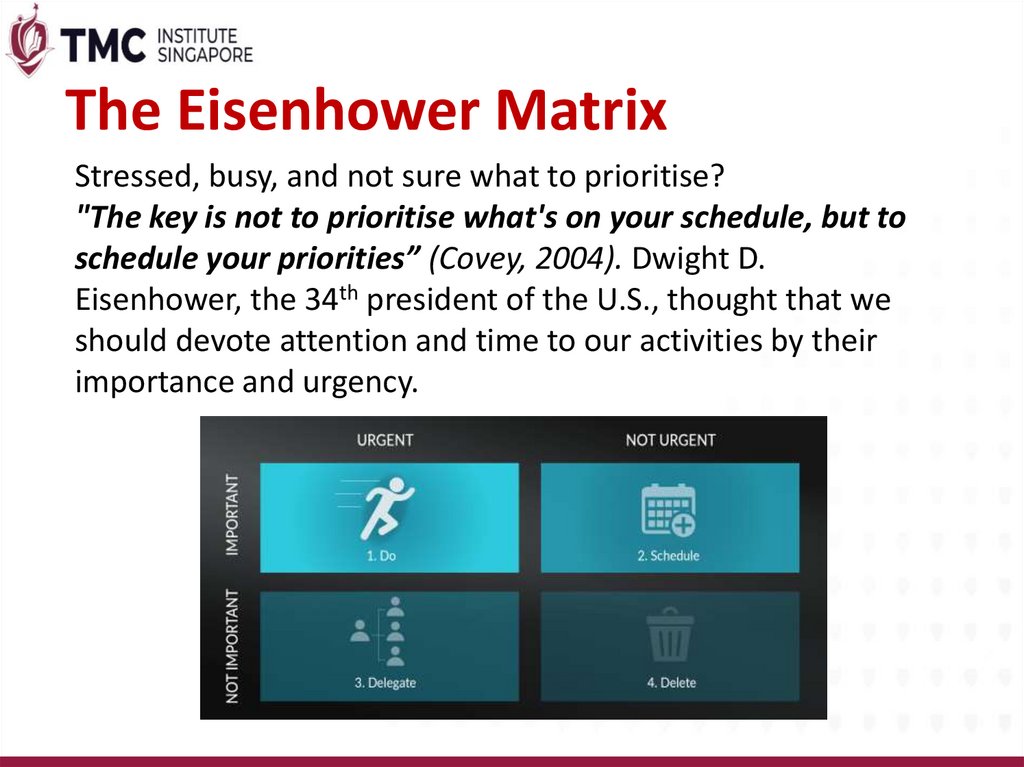
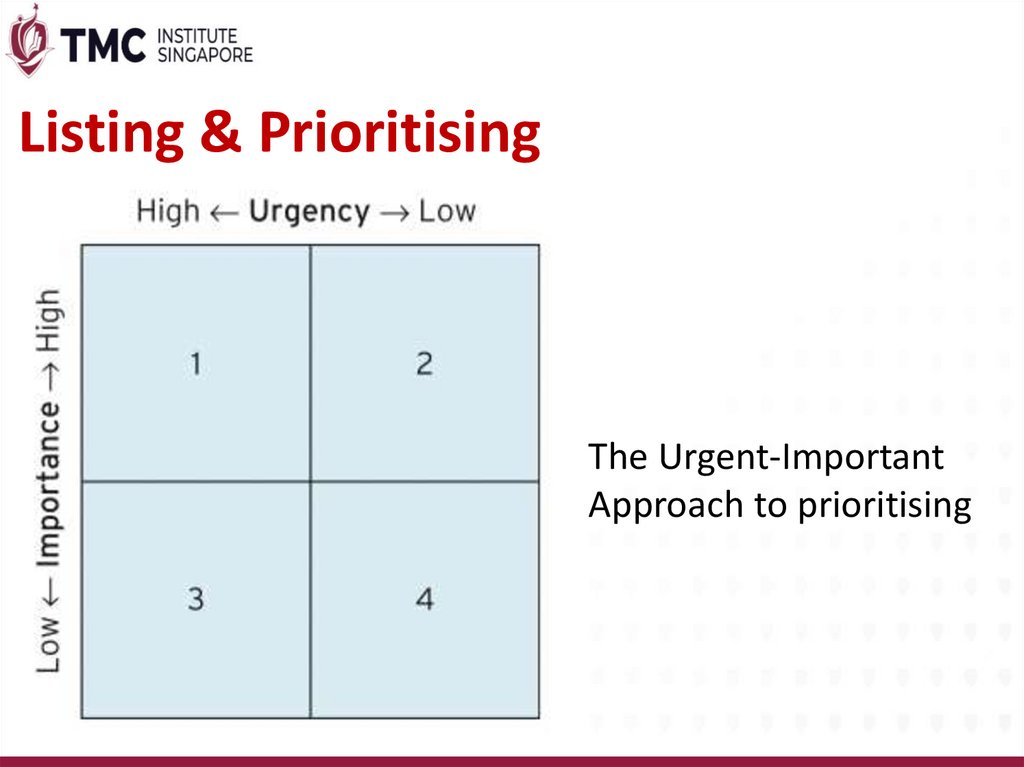
The Eisenhower MatrixStressed, busy, and not sure what to prioritise?
"The key is not to prioritise what's on your schedule, but to
schedule your priorities” (Covey, 2004). Dwight D.
Eisenhower, the 34th president of the U.S., thought that we
should devote attention and time to our activities by their
importance and urgency.
14.
The Eisenhower Matrix• Get quadrant 1 done.
Tasks that are important and urgent demand for your attention. However, if this
quadrant is always filled you should be questioning the systems and support you have in
place. You’re focusing on high-value work but ultimately still in reactive mode.
• Schedule quadrant 2.
Ideally, you’ll reach a position where quadrant 1 remains relatively small and most of
your time can be spent in quadrant 2. This important but not urgent work represents
strategic thinking and an opportunity to be proactive in your approach.
• Delegate quadrant 3.
Urgent but not important tasks are tempting to respond to but are not a good use of
your time. Consider how you might delegate them, redirect them, or simply get out of
them.
• Delete quadrant 4.
Work that is not important and not urgent must fall to the bottom of your priority list.
Consider how you might get rid of these tasks without investing any time or resources
into them.
15.
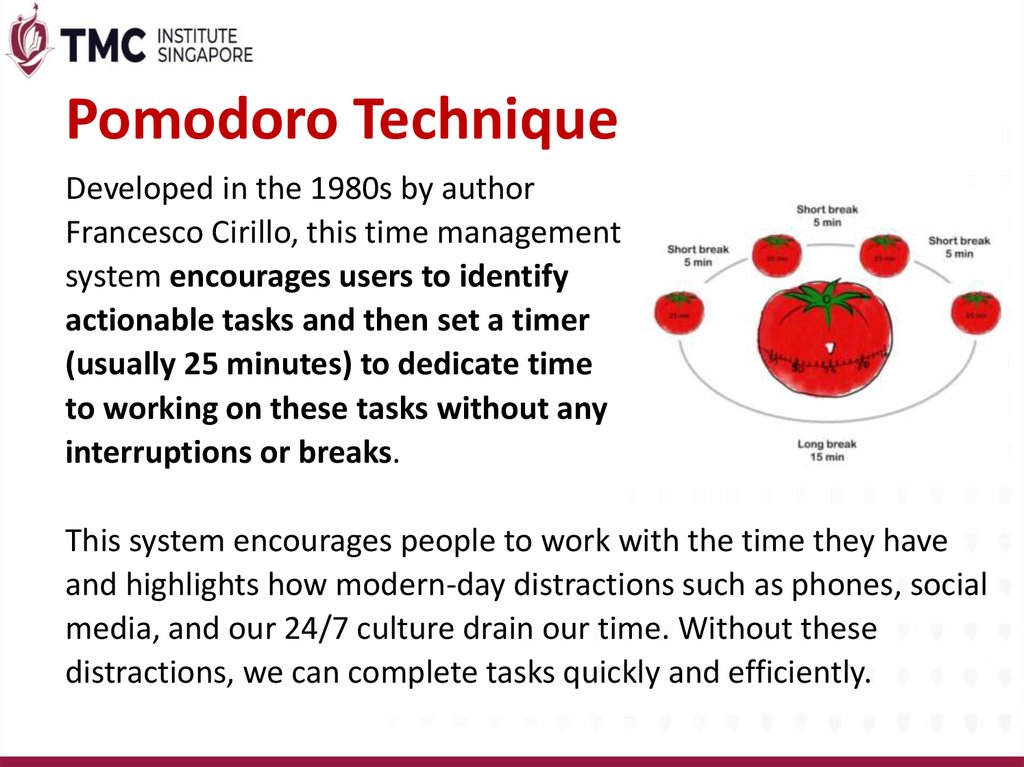
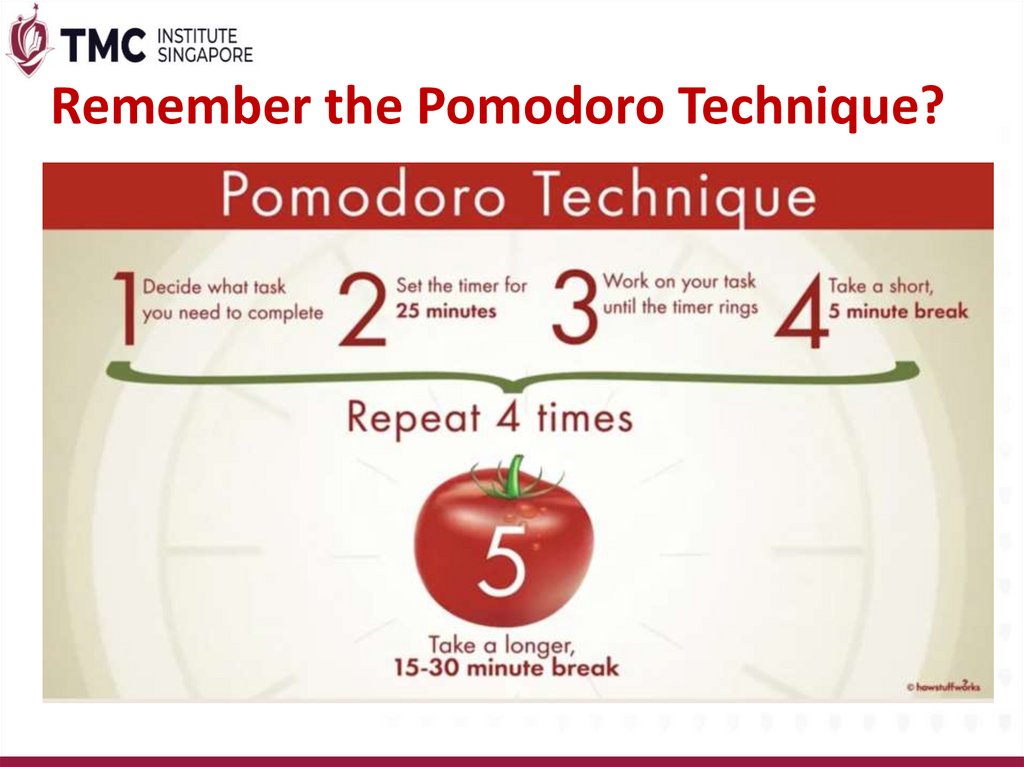
Pomodoro TechniqueDeveloped in the 1980s by author
Francesco Cirillo, this time management
system encourages users to identify
actionable tasks and then set a timer
(usually 25 minutes) to dedicate time
to working on these tasks without any
interruptions or breaks.
This system encourages people to work with the time they have
and highlights how modern-day distractions such as phones, social
media, and our 24/7 culture drain our time. Without these
distractions, we can complete tasks quickly and efficiently.
16.
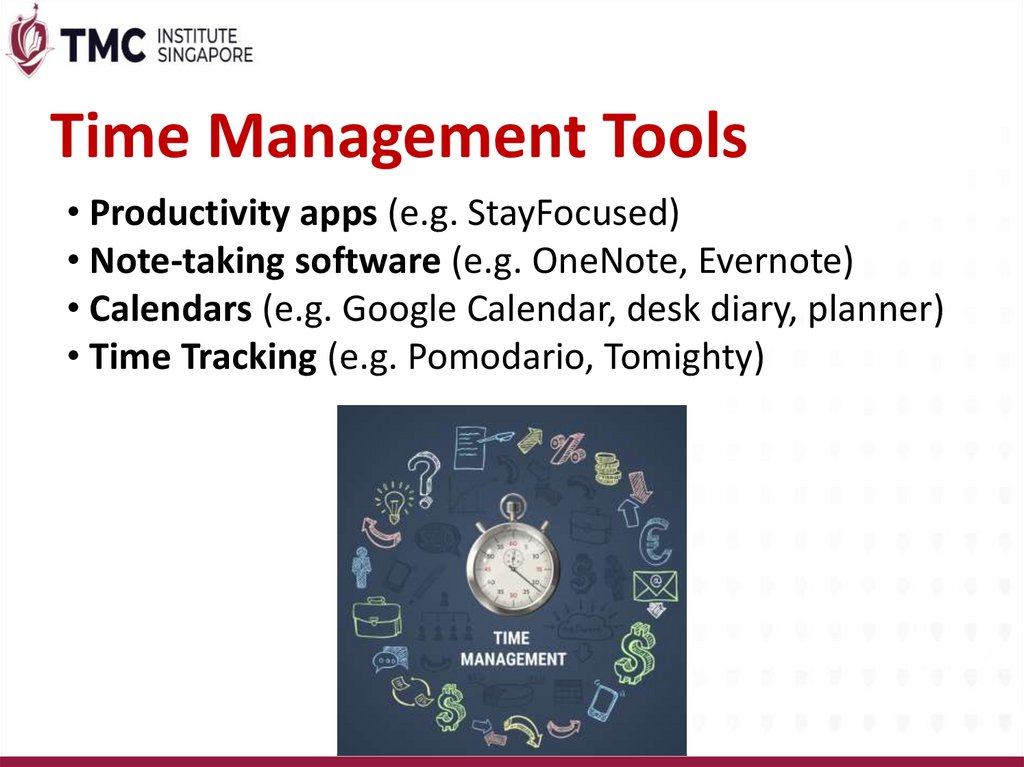
Time Management Tools• Productivity apps (e.g. StayFocused)
• Note-taking software (e.g. OneNote, Evernote)
• Calendars (e.g. Google Calendar, desk diary, planner)
• Time Tracking (e.g. Pomodario, Tomighty)
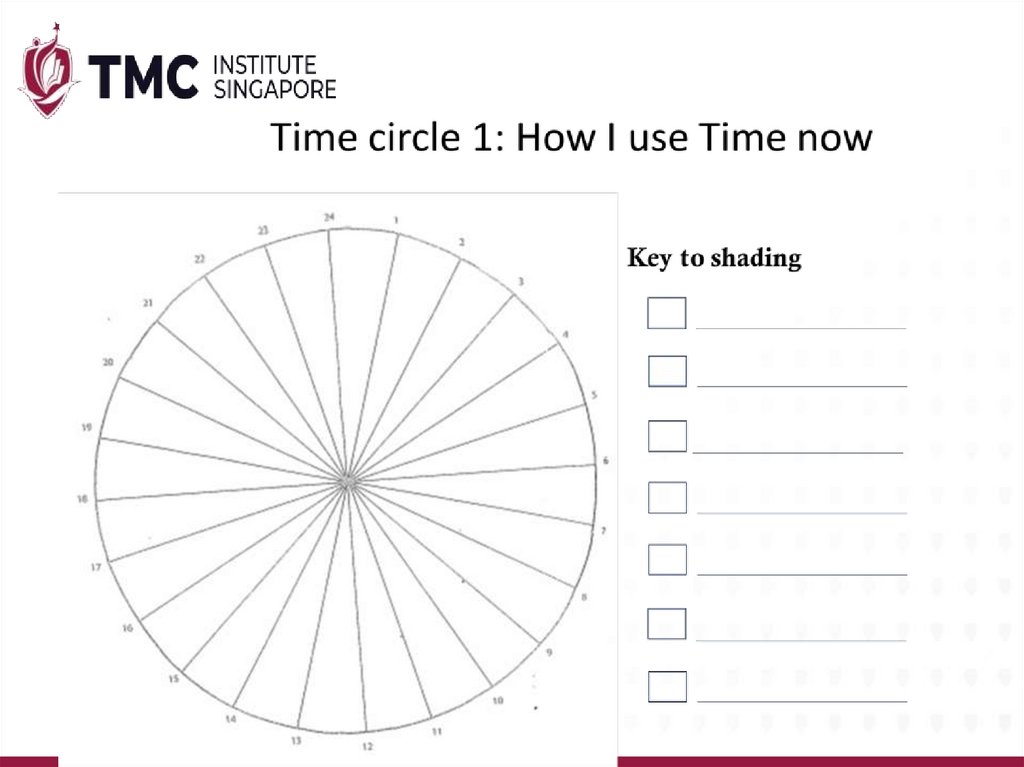
17. How I Use Time Now?
18.
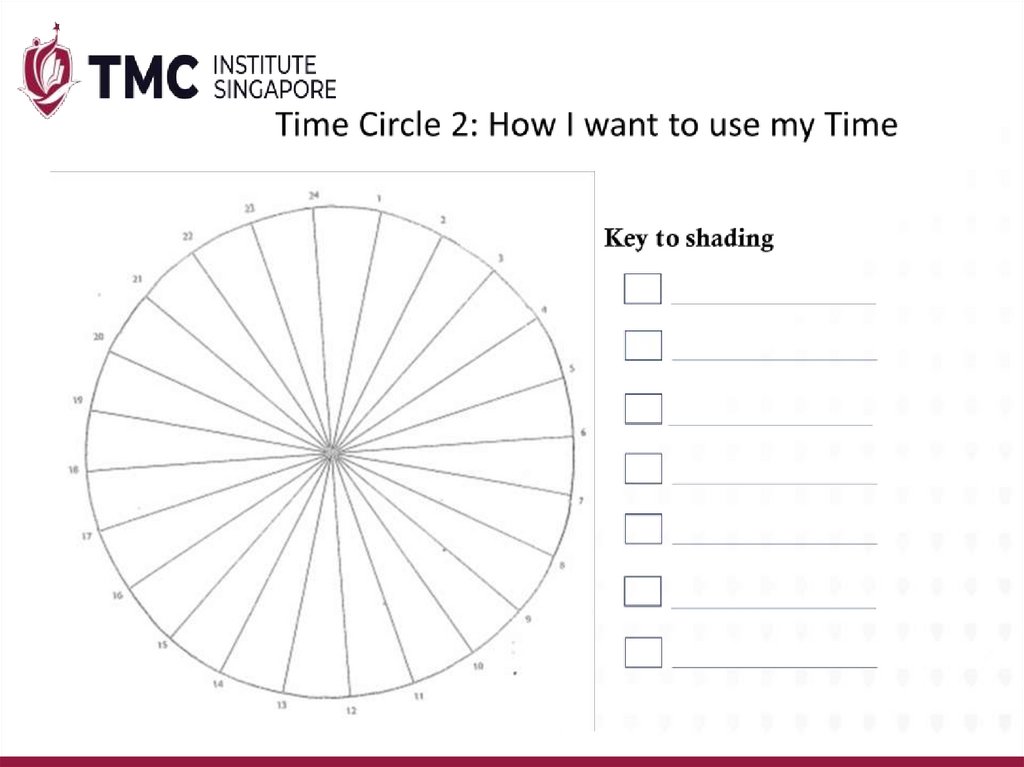
19. How I want to Use my Time Now?
20.
21.
22. Procrastination
The act of delaying or postponing tasks that need to bedone, often choosing to do more enjoyable or easier
activities instead. It happens when someone knows what
they should do but avoids doing it, even though this
delay can lead to stress or poor results later.
Example: A student who keeps putting off writing an
essay until the night before the deadline is
procrastinating.
In short, procrastination is “putting off today what
you’ll rush to finish tomorrow.”
23. Watch this video:
https://www.youtube.com/watch?v=FWTNMzK9vG424.
Prevalence of ProcrastinationProcrastination is a common phenomenon, which
chronically affects around 20% of adults, including lawyers,
business executives, and college professors. It is particularly
common among certain populations, like college students,
around 50% of whom procrastinate chronically.
Dangers of Procrastination
Procrastination is associated with various potential issues,
including missed opportunities, worse academic performance,
worse employment and financial status, increased interpersonal
conflicts, worse emotional well-being, worse mental health,
worse physical health, and a tendency to postpone getting
treatment for one’s problems.
25. Watch this video:
https://www.youtube.com/watch?v=arj7oStGLkU&t=220s26.
27.
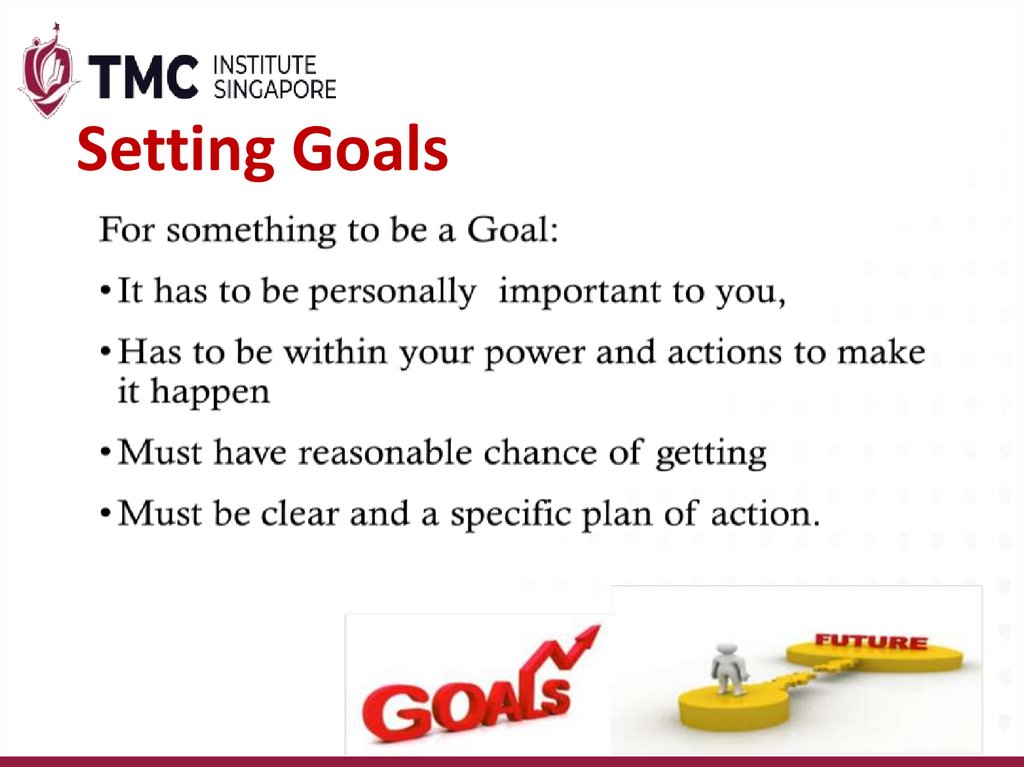
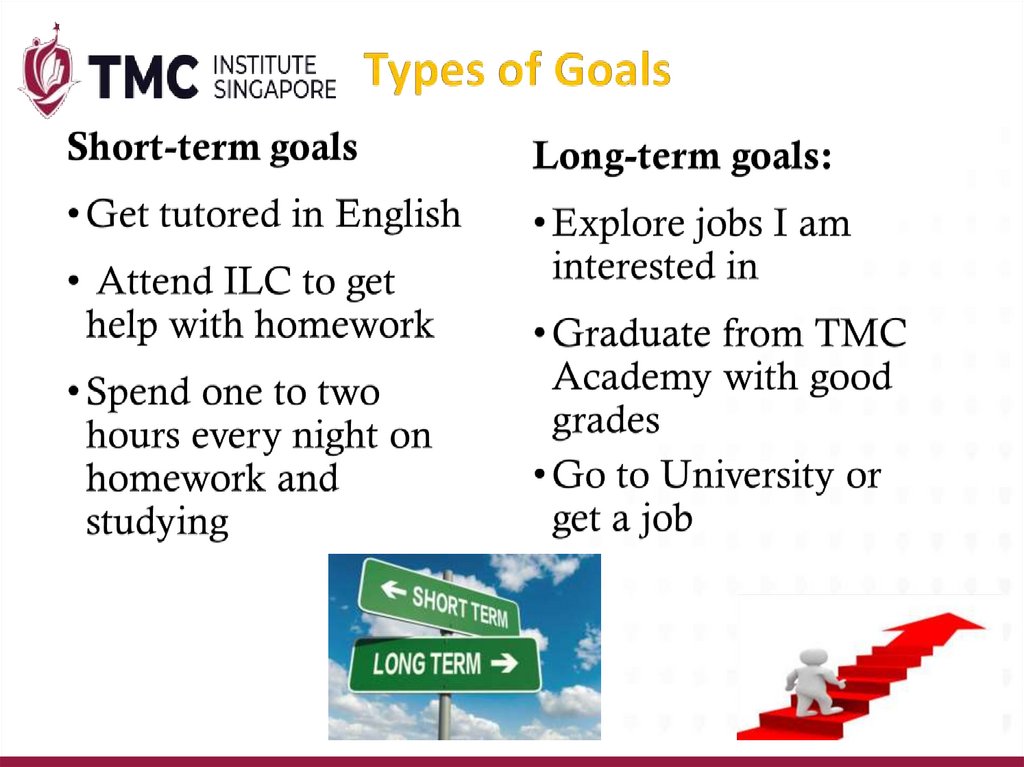
Setting Goals28.
Points to Ponder…What does it mean to ‘set goals’?
29.
Points to Ponder…Why is ‘setting a goal’ an important
process for university students?
30.
Setting Goals31.
32.
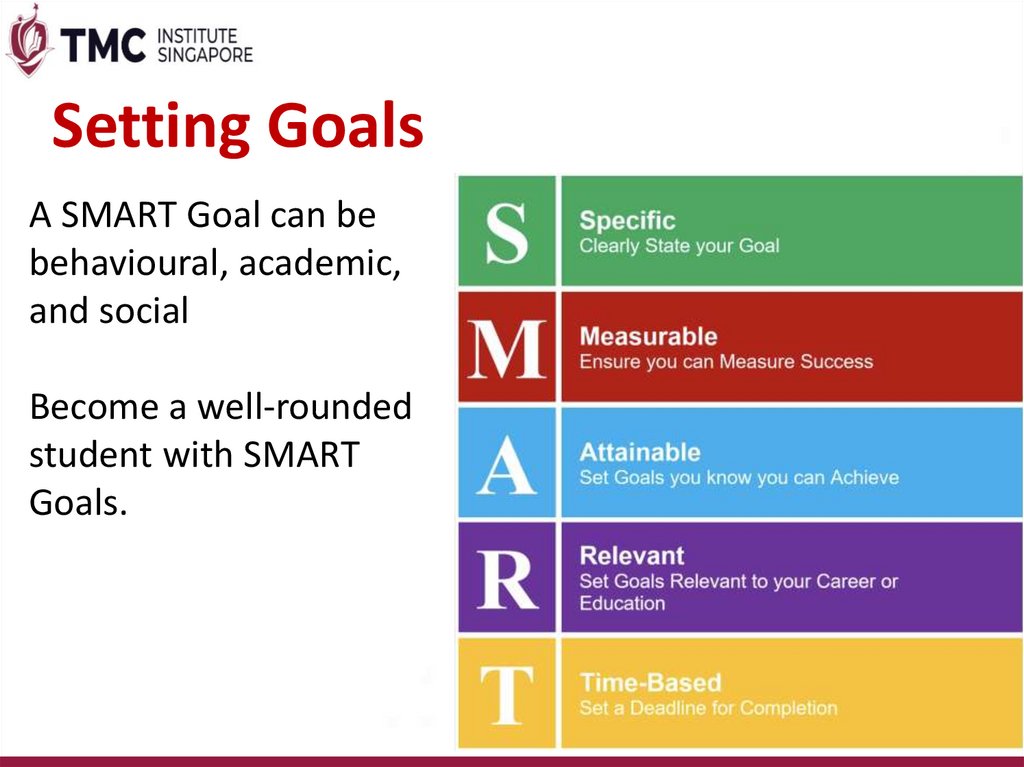
Setting GoalsA SMART Goal can be
behavioural, academic,
and social
Become a well-rounded
student with SMART
Goals.
33.
https://www.youtube.com/watch?v=qxQI5tyRUes34.
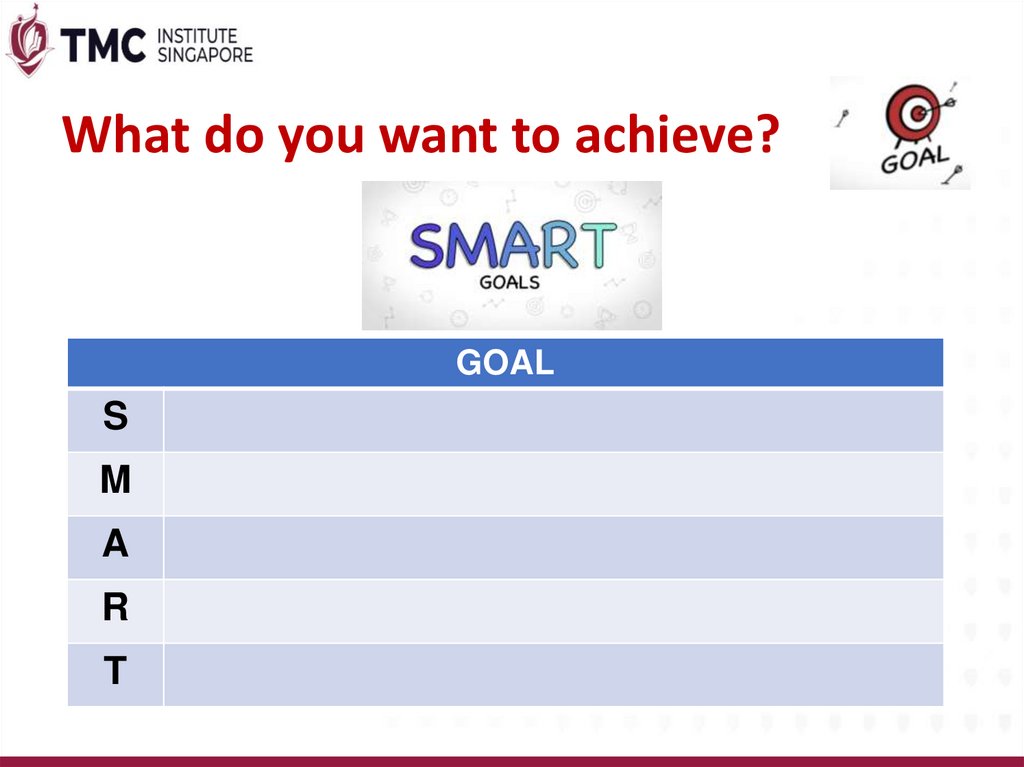
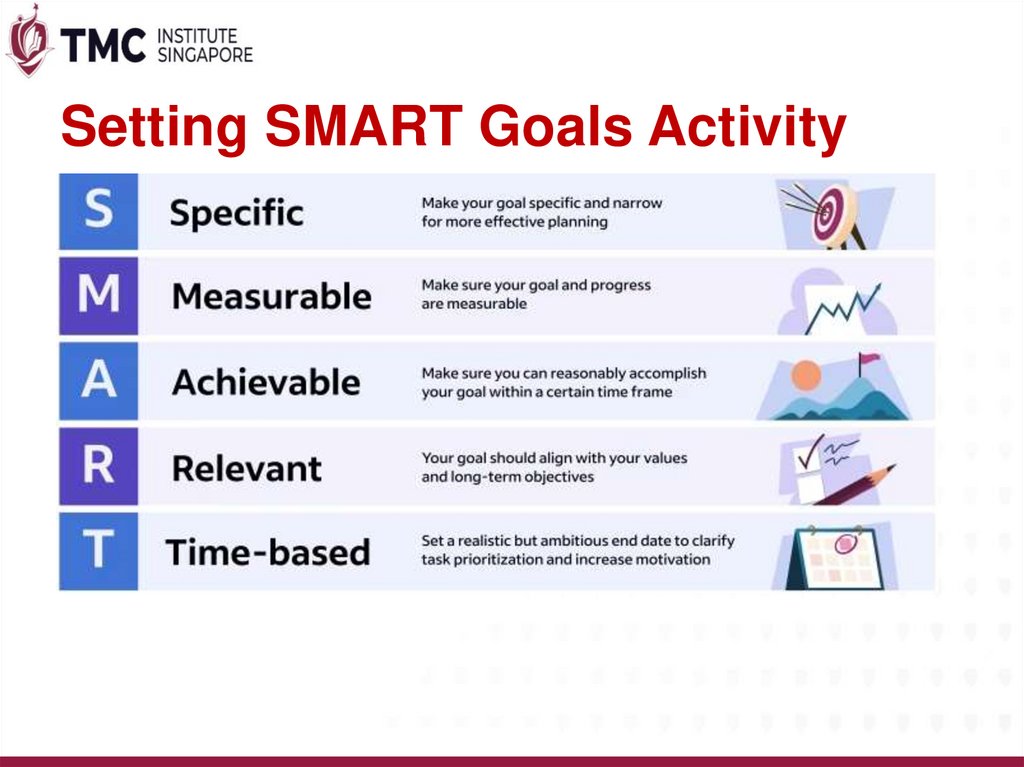
What do you want to achieve?GOAL
S
M
A
R
T
35.
36.
37.
38.
39.
40.
41.
42.
43.
Independent Learning44.
Points to Ponder…Does independent learning
mean working on your own?
45.
Independent Learning• The ability to take charge of one’s
learning.
• A method where learners have
ownership and control of their
learning.
• A learning process that requires
students to have no support from
teachers, parents etc.
• When student set goa ls, monitor, and
evaluate their own academic
development, so they can manage
their own motivation towards learning.
46.
Independent Learner• able to make informed
decisions
• take responsibility
• motivated
• confident
• reflect on his/
her actions
47.
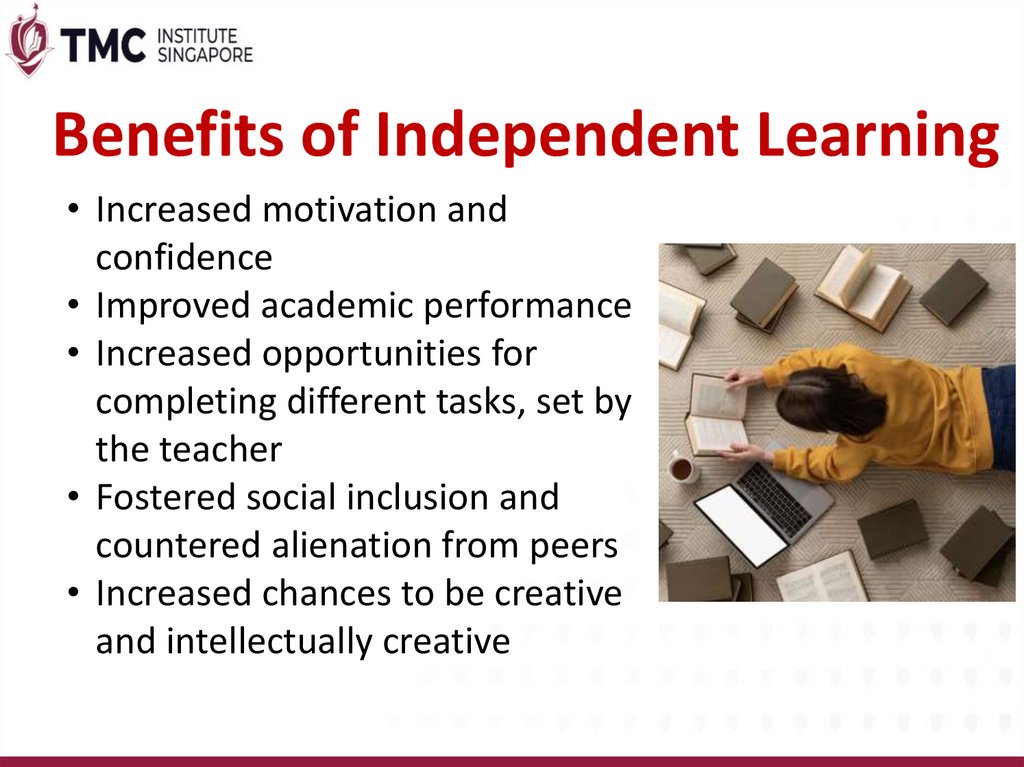
Benefits of Independent Learning• Increased motivation and
confidence
• Improved academic performance
• Increased opportunities for
completing different tasks, set by
the teacher
• Fostered social inclusion and
countered alienation from peers
• Increased chances to be creative
and intellectually creative
48.
Watch this video:https://www.youtube.com/watch?v=uAZ6NnHLo7o
49.
Cultivating Independent Learners• Inspire motivation for learning
• Teach ‘self-assess’
• Coach students to set goals and develop a plan
for learning
50.
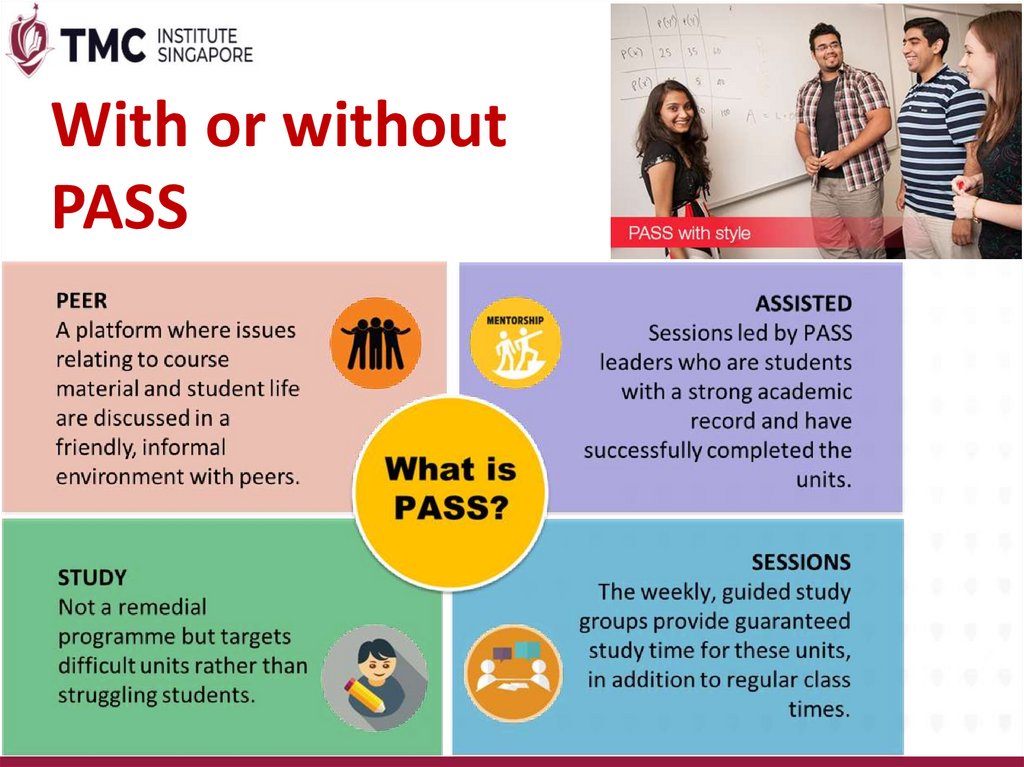
With or withoutPASS
51.
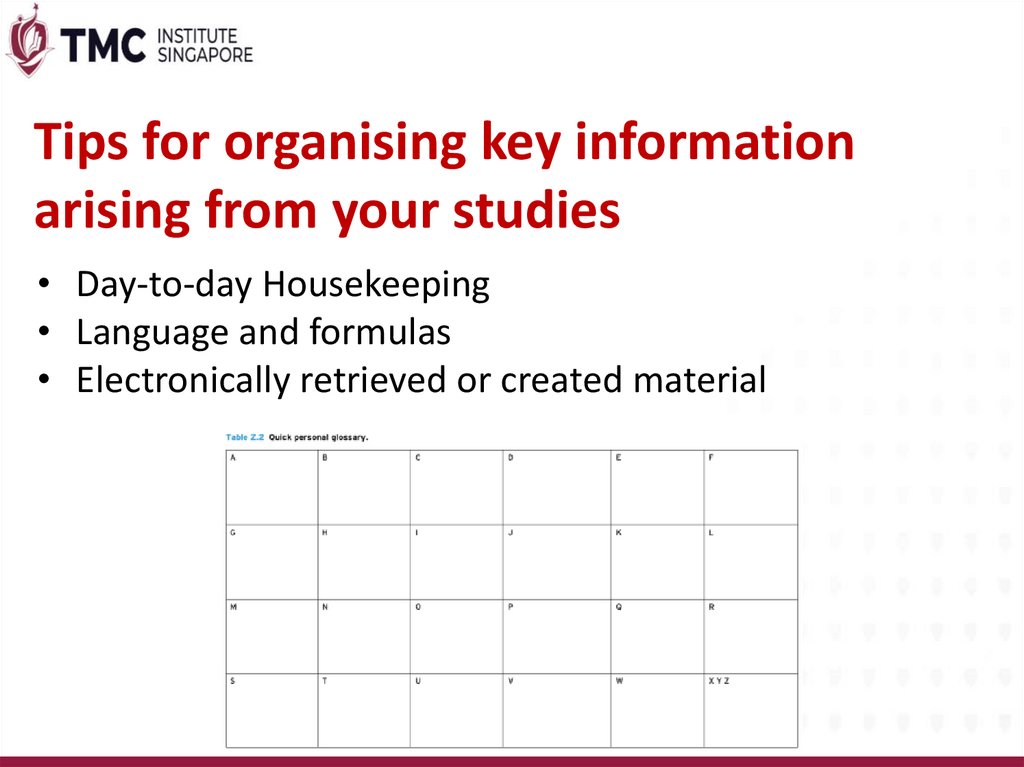
Tips for organising key informationarising from your studies
• Day-to-day Housekeeping
• Language and formulas
• Electronically retrieved or created material
52.
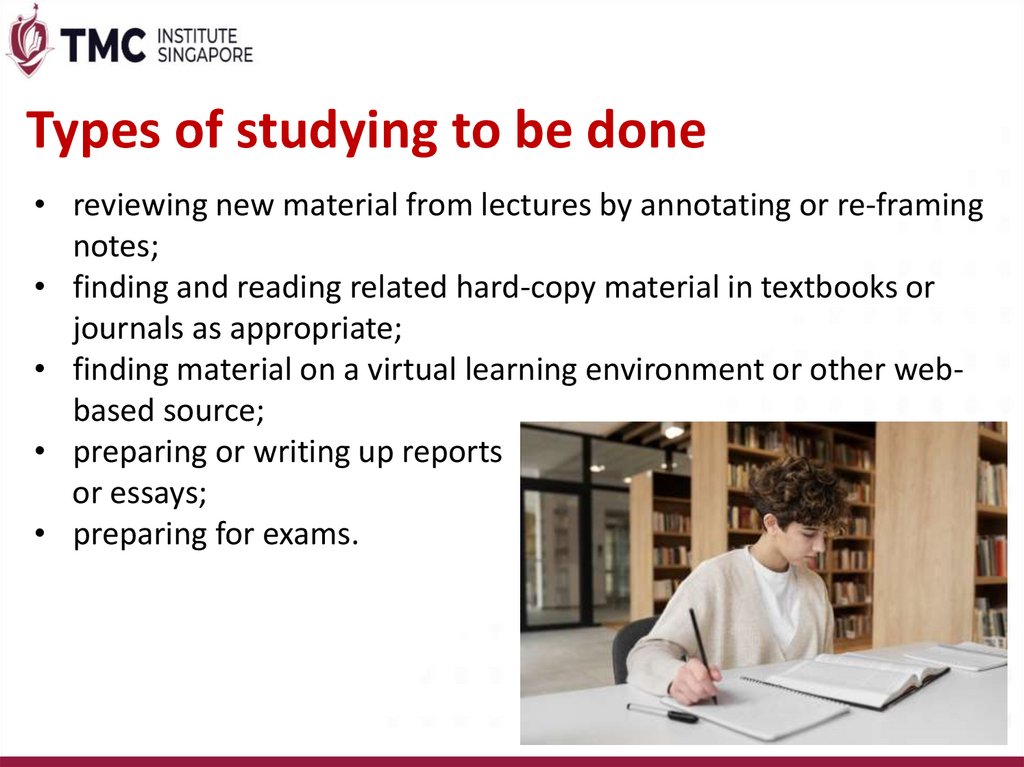
Types of studying to be done• reviewing new material from lectures by annotating or re-framing
notes;
• finding and reading related hard-copy material in textbooks or
journals as appropriate;
• finding material on a virtual learning environment or other webbased source;
• preparing or writing up reports
or essays;
• preparing for exams.
53.
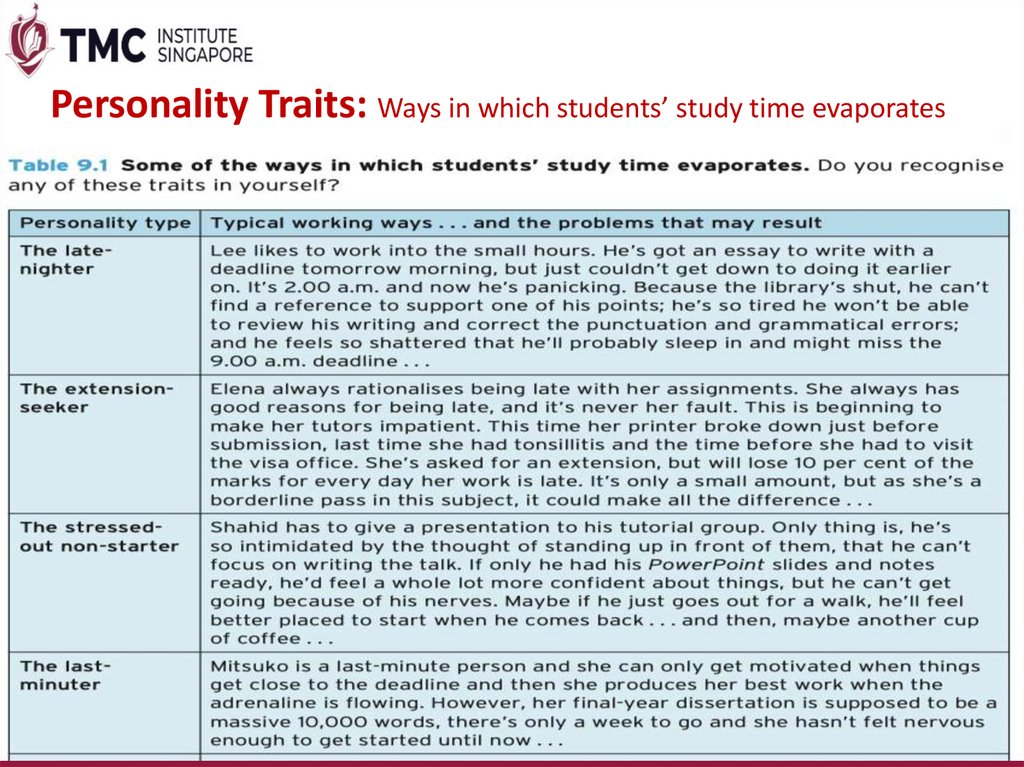
Personality Traits: Ways in which students’ study time evaporates54.
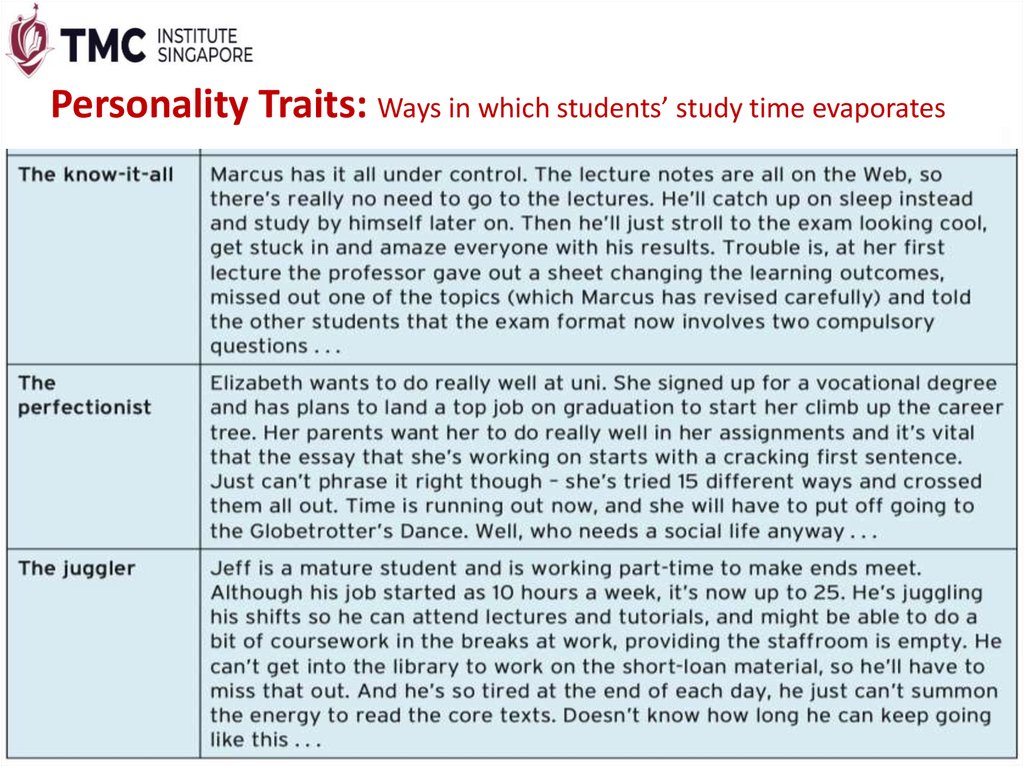
Personality Traits: Ways in which students’ study time evaporates55.
Listing & PrioritisingThe Urgent-Important
Approach to prioritising
56.
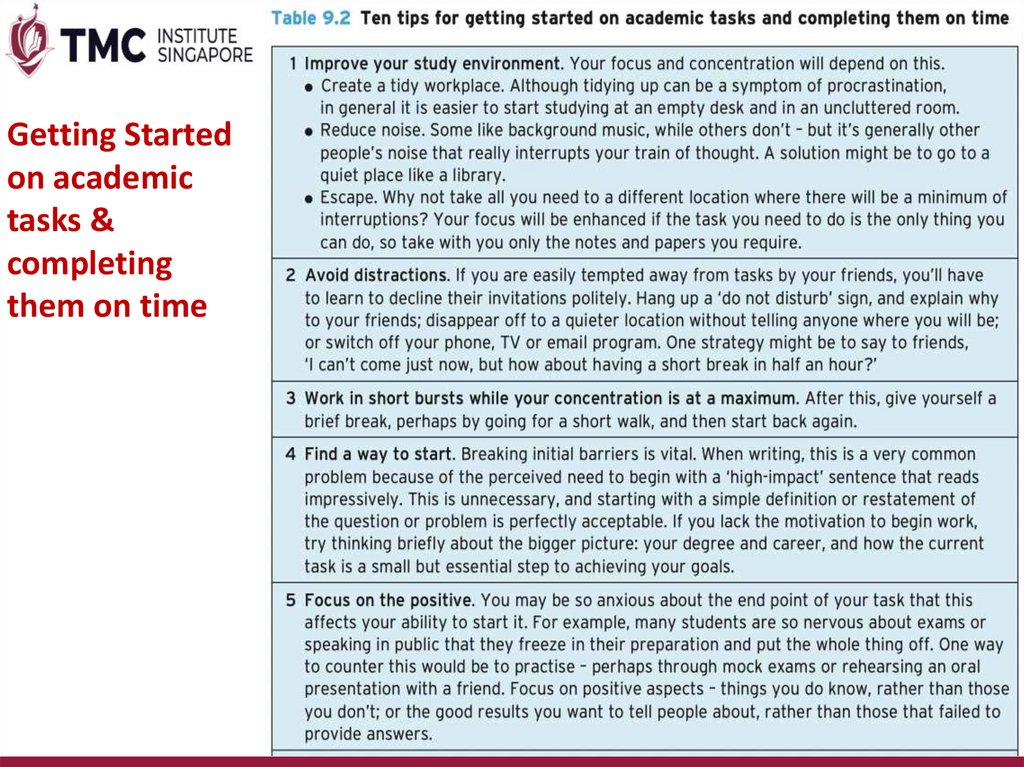
Getting Startedon academic
tasks &
completing
them on time
57.
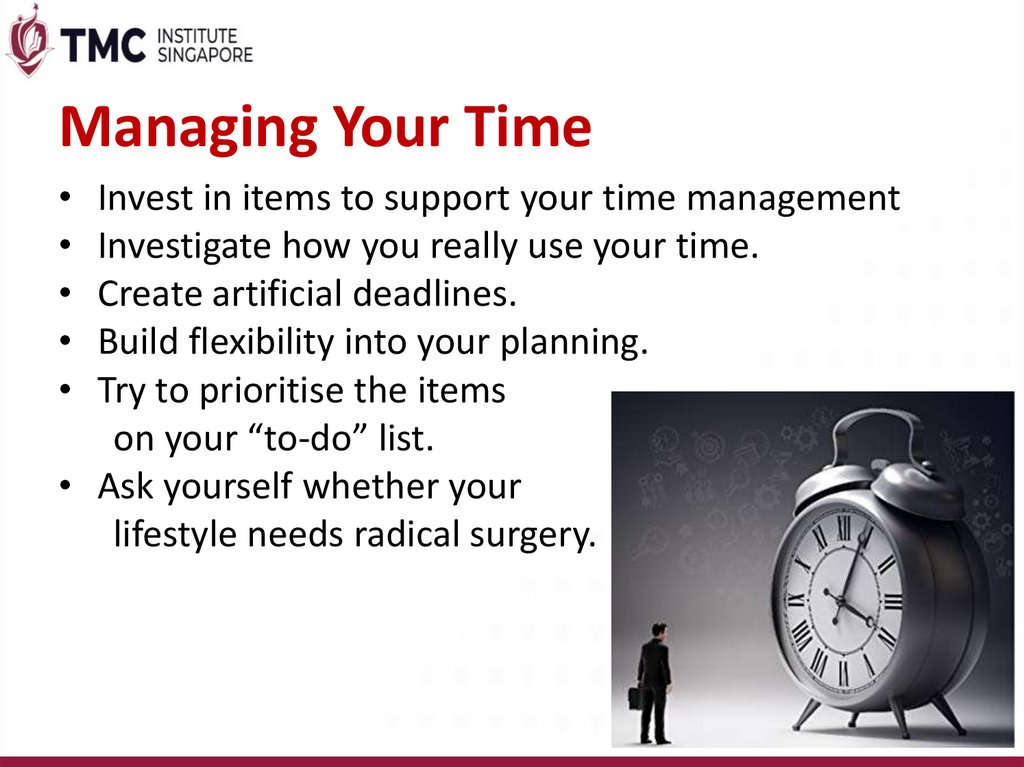
Managing Your Time• Invest in items to support your time management
• Investigate how you really use your time.
• Create artificial deadlines.
• Build flexibility into your planning.
• Try to prioritise the items
on your “to-do” list.
• Ask yourself whether your
lifestyle needs radical surgery.
58.
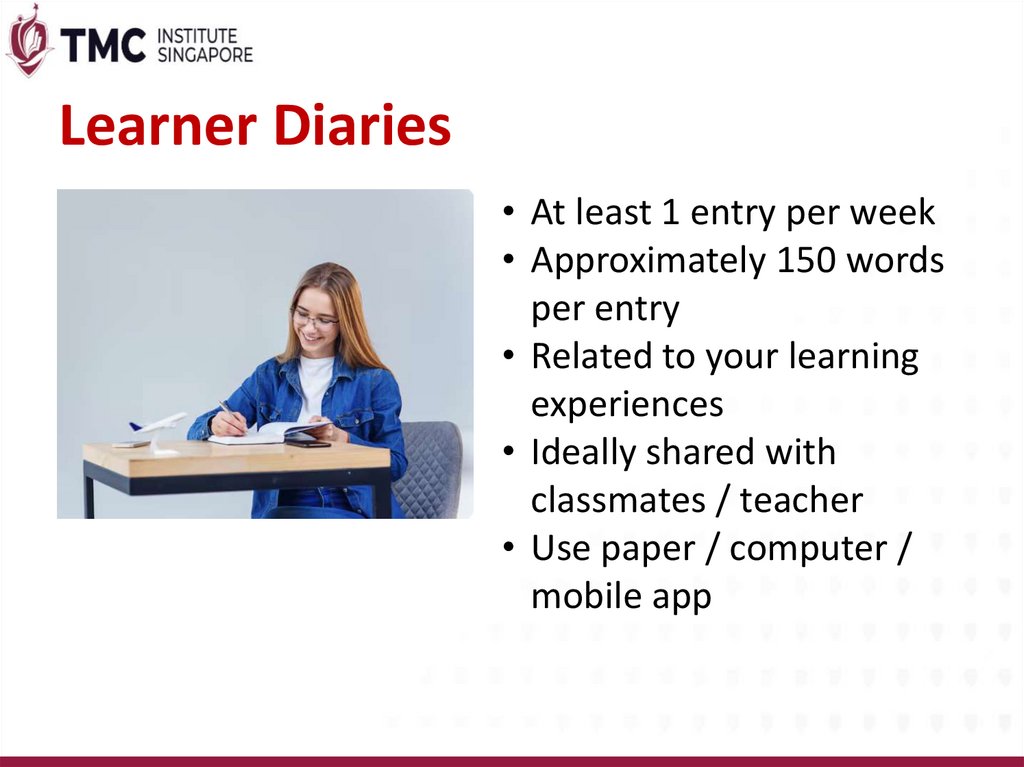
Learner Diaries• At least 1 entry per week
• Approximately 150 words
per entry
• Related to your learning
experiences
• Ideally shared with
classmates / teacher
• Use paper / computer /
mobile app
59.
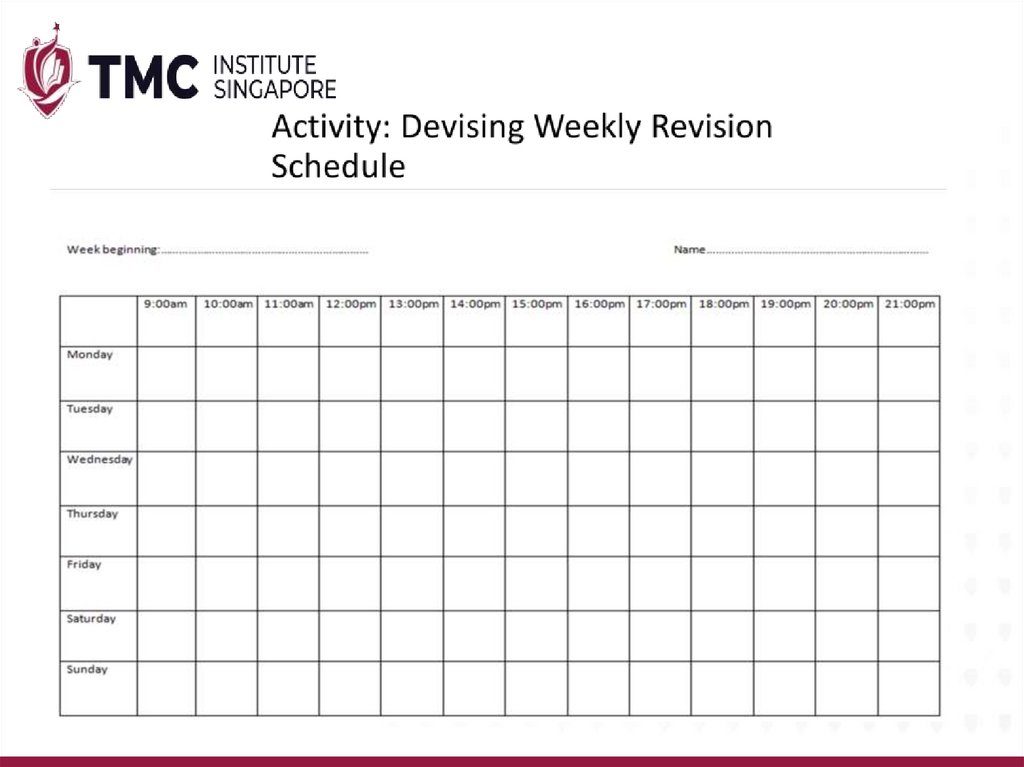
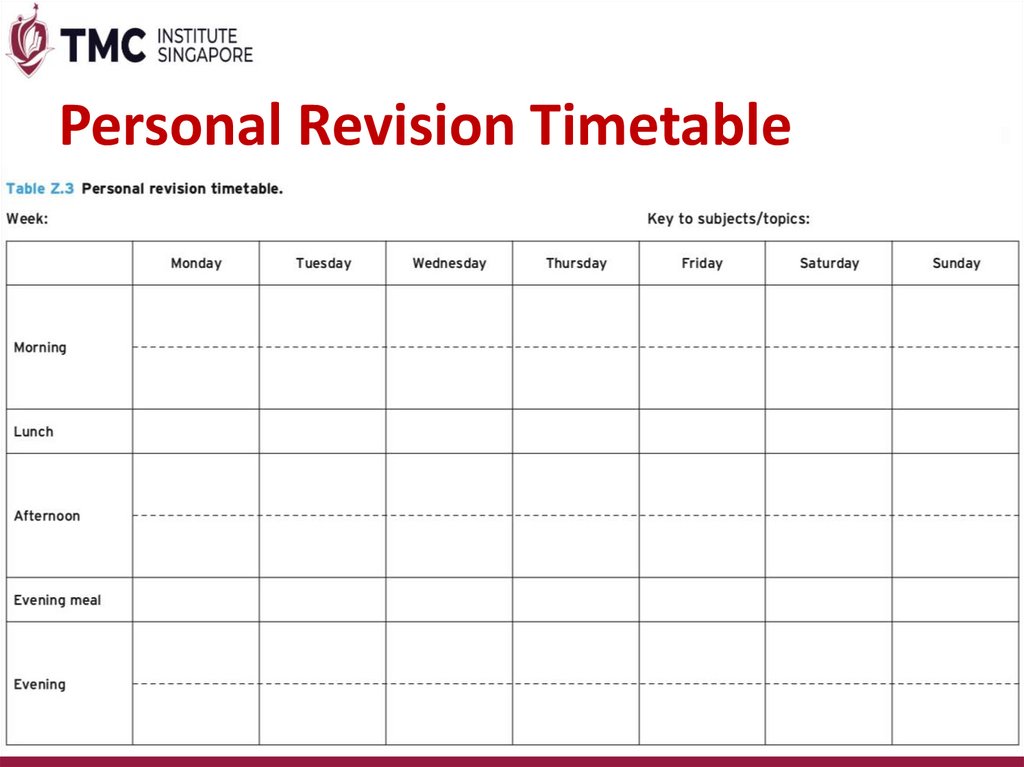
Personal Revision Timetable60.
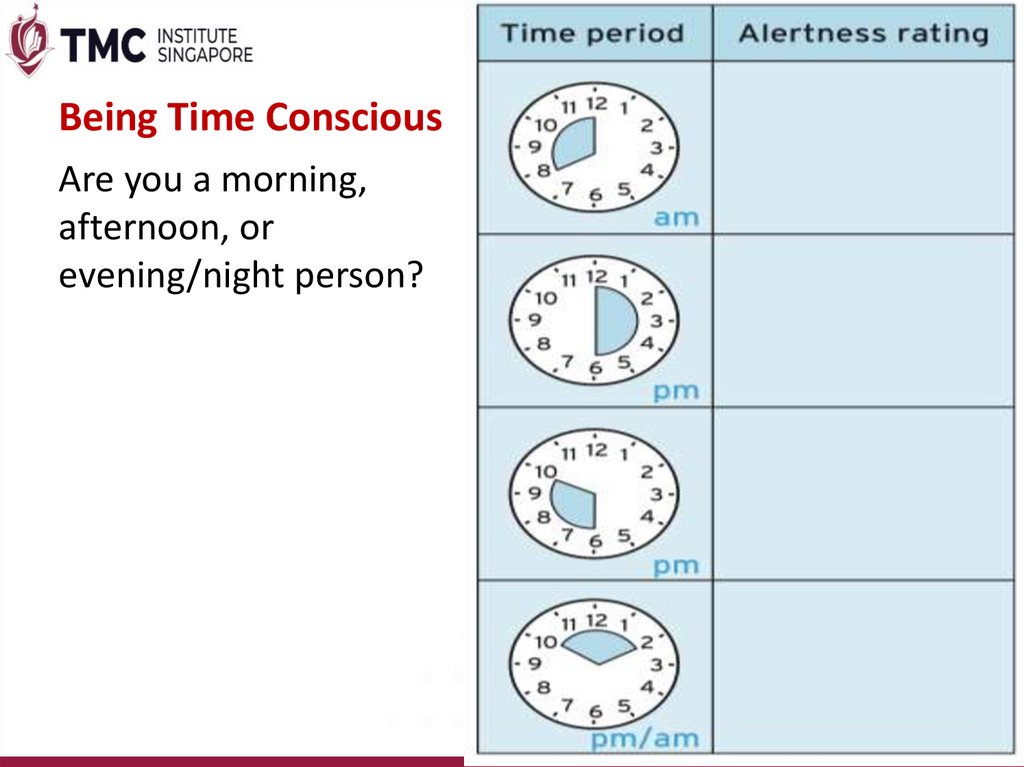
Being Time ConsciousAre you a morning,
afternoon, or
evening/night person?
61.
62.
Points to Ponder…“Formal education will make you
a living. Self education will make you
a fortune.”
– Jim Rohn
63.
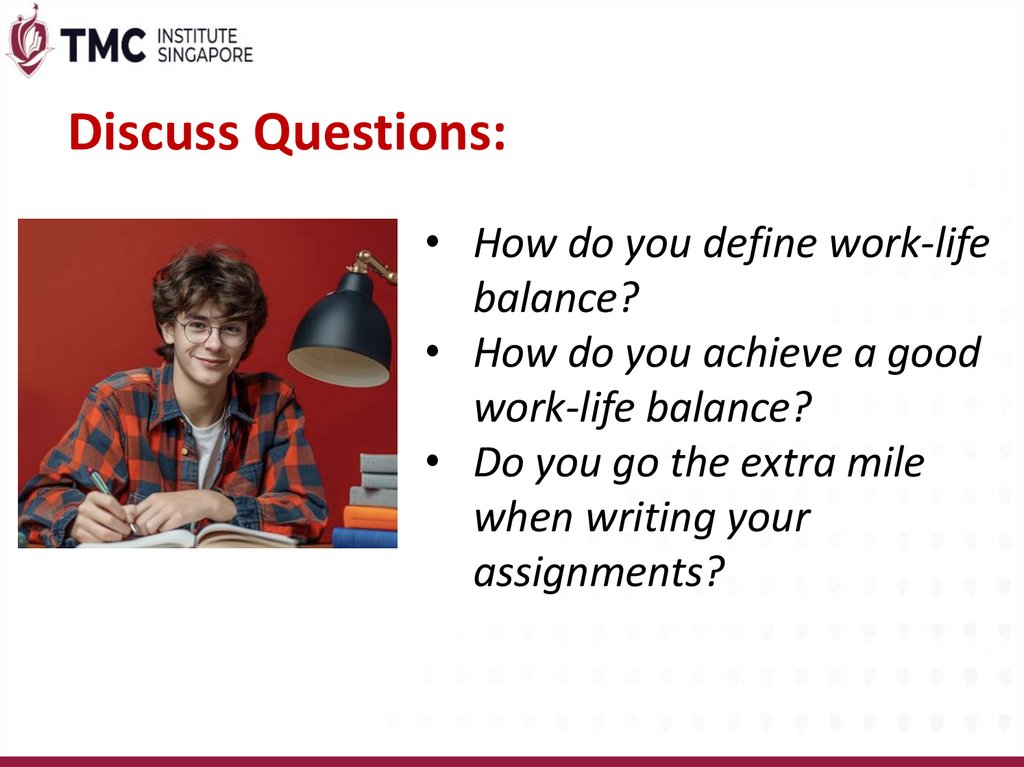
Discuss Questions:• How do you define work-life
balance?
• How do you achieve a good
work-life balance?
• Do you go the extra mile
when writing your
assignments?
64.
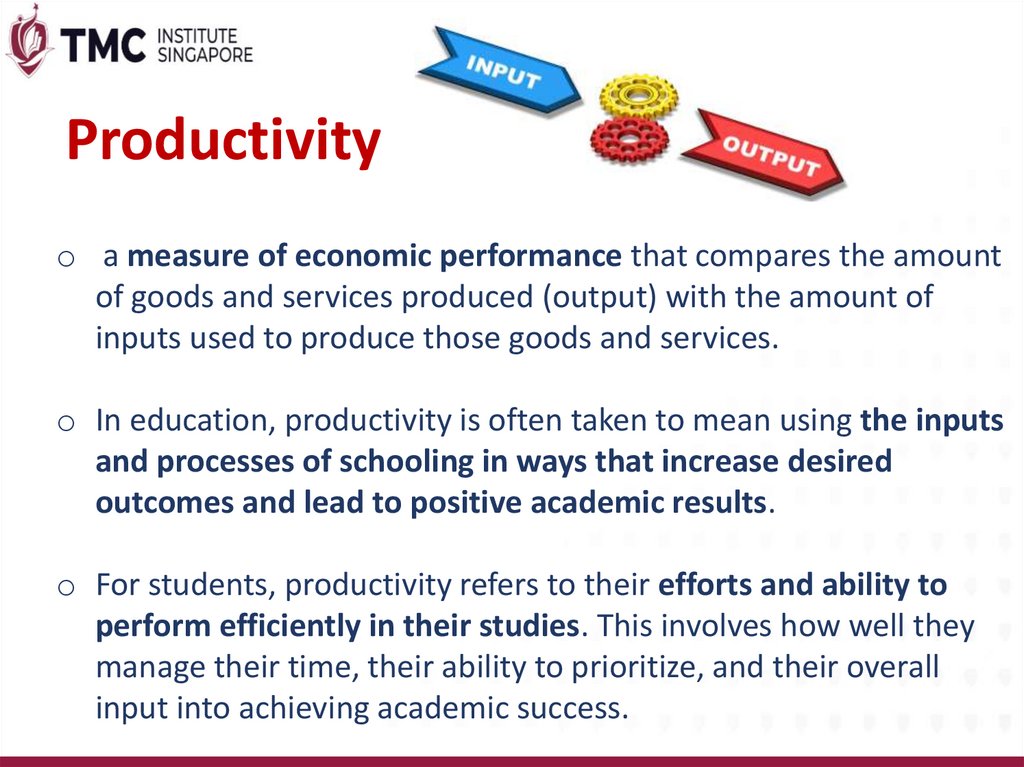
Productivityo a measure of economic performance that compares the amount
of goods and services produced (output) with the amount of
inputs used to produce those goods and services.
o In education, productivity is often taken to mean using the inputs
and processes of schooling in ways that increase desired
outcomes and lead to positive academic results.
o For students, productivity refers to their efforts and ability to
perform efficiently in their studies. This involves how well they
manage their time, their ability to prioritize, and their overall
input into achieving academic success.
65.
Study-Life BalanceStudy-life balance means putting enough effort into
your academic work while enjoying the social,
sporting, and cultural aspects of being a student.
66.
Importance of Time Off & Study Time• All the things you do that are outside of your studies contribute to your
overall experience of the world -- and you will import that back into your
work to make your understanding and analyses richer.
• You aren't expected to study 24/7. The university expects you to treat a
full-time degree like a full-time job, and do 30-35 hours of studying a
week, including lecture, seminar, and lab times.
• If you can commit yourself to well-defined study times, you’ll have
plenty of time to enjoy a range of activities.
• Thinking time is as important as reading time and writing time. Your
brain needs time and rest to process new information. Likewise, your
body needs exercise and sleep to keep it in a proper state of alertness so
that you can focus on studying effectively.
67.
Effective Time ManagementMany students learn they need to develop time management
strategies when they get to college. Unlike high school, where
teachers often use highly structured assignments and classes fill
the entire day, in college, you have a great deal of freedom and
flexibility.
– Set clear goals and priorities
– Create a daily plan
– Minimize distraction
– Established a personal routine
– Focus on one task
– Be organized
– Take regular breaks
– Use technology to your advantage
– Improve your skills continuously
68.
Discussion Questions:o How do you plan for the completion of
schoolwork, such as projects or tests?
o What is the relationship between time
management and productivity?
69.
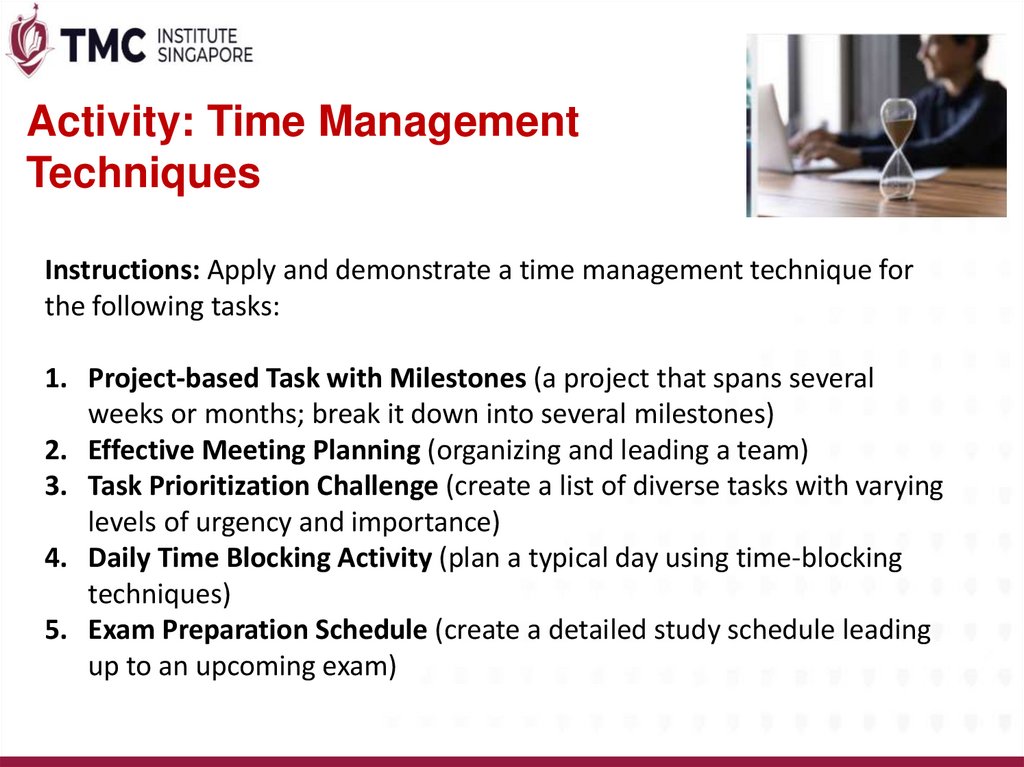
Activity: Time ManagementTechniques
Instructions: Apply and demonstrate a time management technique for
the following tasks:
1. Project-based Task with Milestones (a project that spans several
weeks or months; break it down into several milestones)
2. Effective Meeting Planning (organizing and leading a team)
3. Task Prioritization Challenge (create a list of diverse tasks with varying
levels of urgency and importance)
4. Daily Time Blocking Activity (plan a typical day using time-blocking
techniques)
5. Exam Preparation Schedule (create a detailed study schedule leading
up to an upcoming exam)
70.
Setting SMART Goals Activity71.
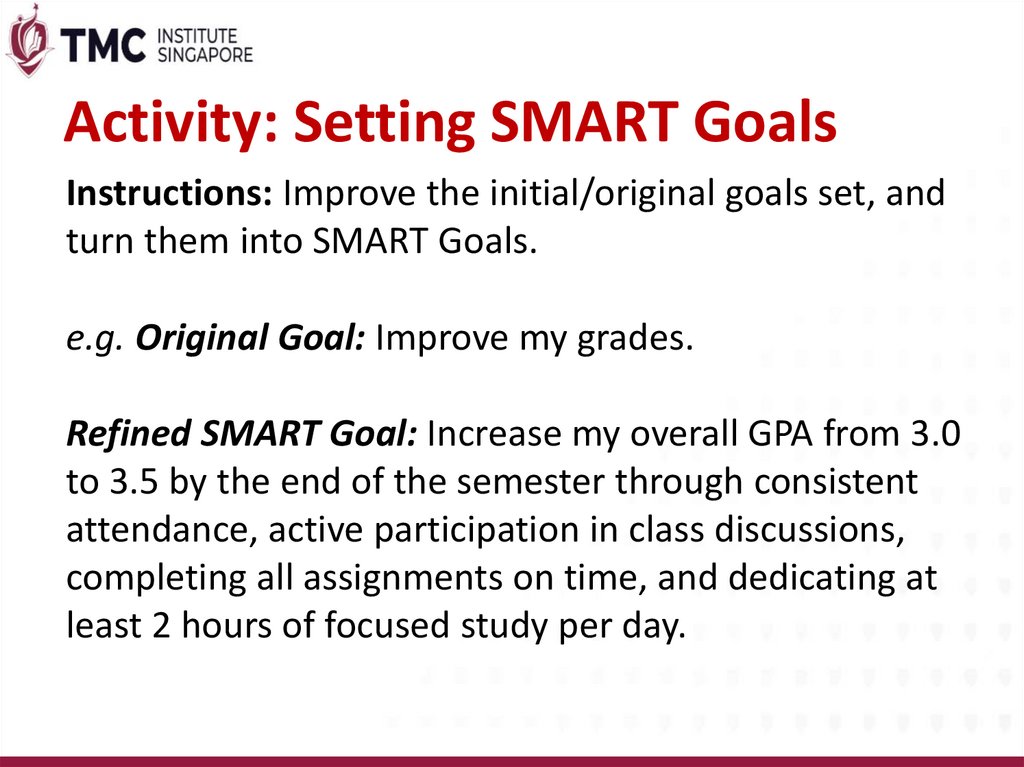
Activity: Setting SMART GoalsInstructions: Improve the initial/original goals set, and
turn them into SMART Goals.
e.g. Original Goal: Improve my grades.
Refined SMART Goal: Increase my overall GPA from 3.0
to 3.5 by the end of the semester through consistent
attendance, active participation in class discussions,
completing all assignments on time, and dedicating at
least 2 hours of focused study per day.
72.
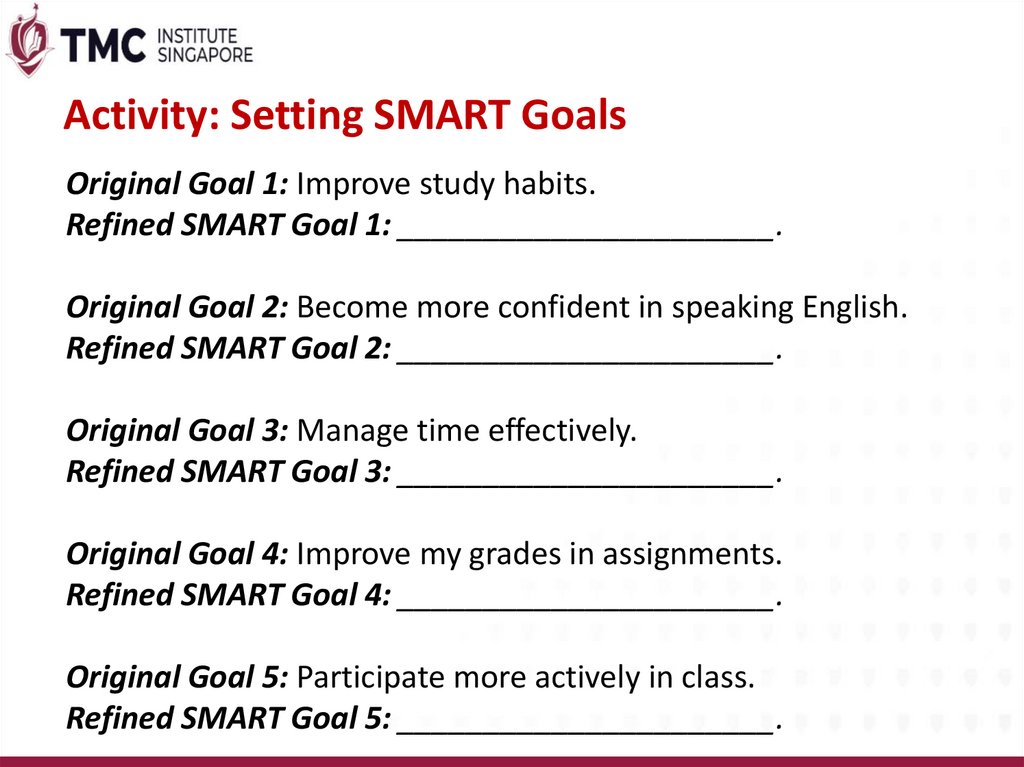
Activity: Setting SMART GoalsOriginal Goal 1: Improve study habits.
Refined SMART Goal 1: ______________________.
Original Goal 2: Become more confident in speaking English.
Refined SMART Goal 2: ______________________.
Original Goal 3: Manage time effectively.
Refined SMART Goal 3: ______________________.
Original Goal 4: Improve my grades in assignments.
Refined SMART Goal 4: ______________________.
Original Goal 5: Participate more actively in class.
Refined SMART Goal 5: ______________________.
73.
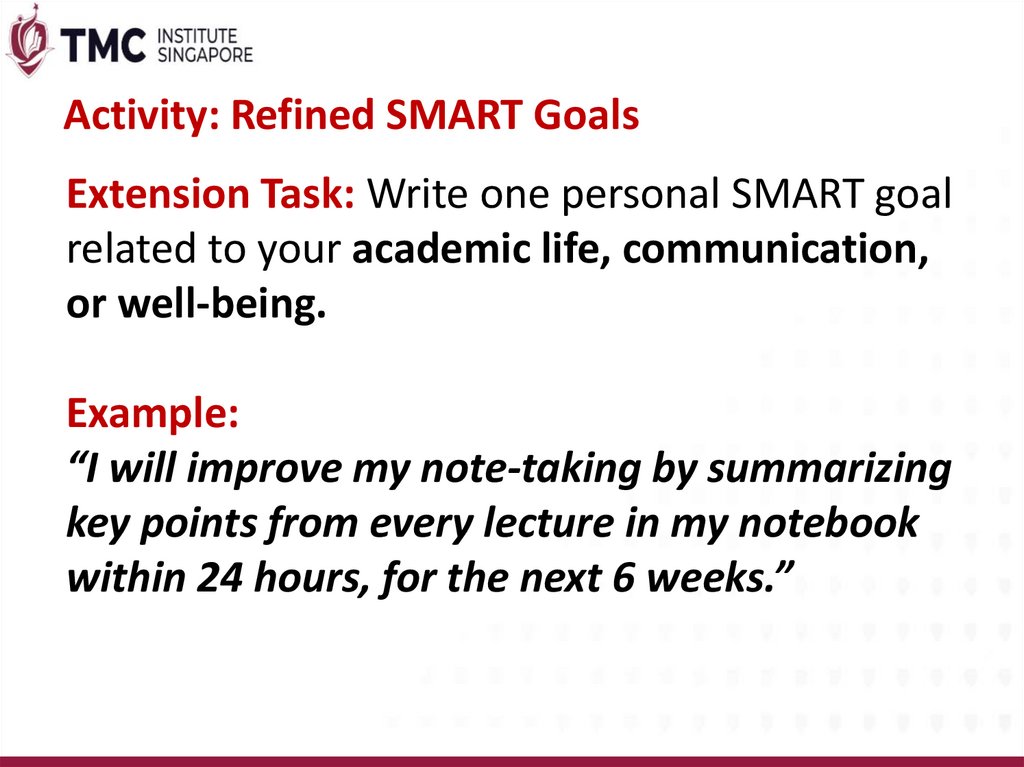
Activity: Refined SMART GoalsExtension Task: Write one personal SMART goal
related to your academic life, communication,
or well-being.
Example:
“I will improve my note-taking by summarizing
key points from every lecture in my notebook
within 24 hours, for the next 6 weeks.”
74.
Points to Ponder…“Don’t wait. The time
will never be just right.”
– Napoleon Hill
75.
Remember the Pomodoro Technique?76.
Watch this video:https://www.youtube.com/watch?v=NIn7opOQWGQ
77.
Watch this video:https://www.youtube.com/watch?v=1nBwfZZvjKo
78.
Points to Ponder…“How we spend our days is, of course, how
we spend our lives. What we do with this
hour, and that one, is what we are doing.
A schedule defends from chaos and whim.”
– Annie Dillard