



 Английский язык
Похожие презентации:


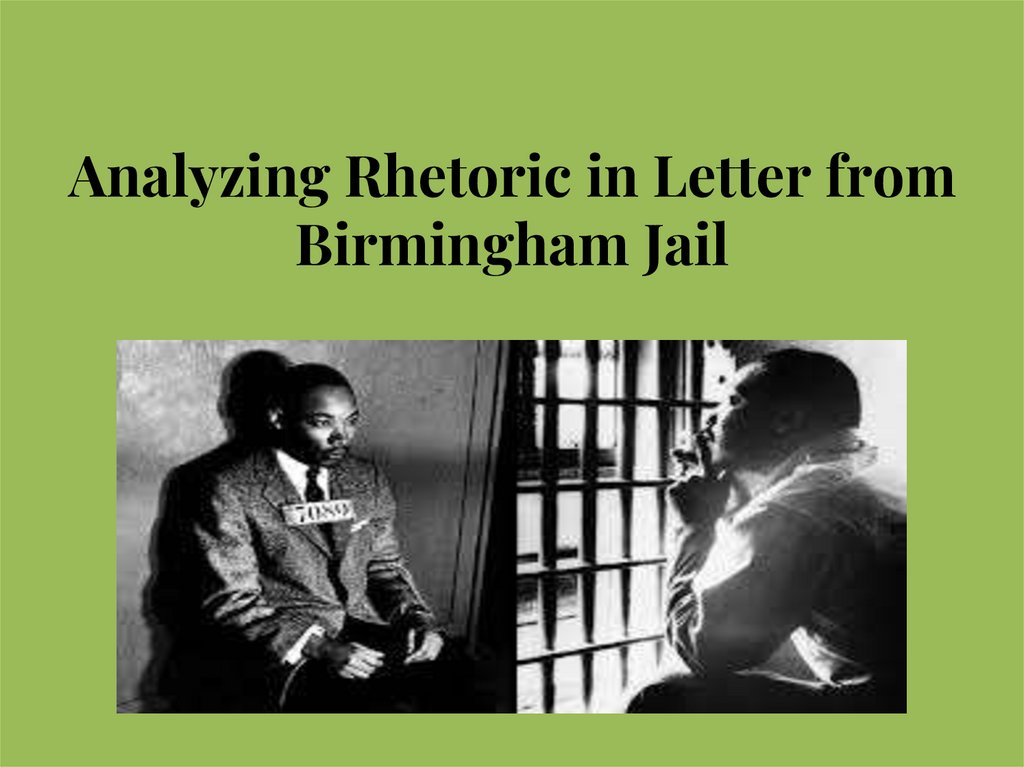
Analyzing Rhetoric in Letter from Birmingham Jail
1.
Analyzing Rhetoric in Letter fromBirmingham Jail
2.
Background Context• • Written in 1963 while MLK was
imprisoned in Birmingham, Alabama
• • Response to white clergymen urging
him to stop protests
• • Purpose: defend nonviolent resistance
and explain the urgency of justice
• Quote: “Injustice anywhere is a threat to
justice everywhere.”
3.
The Rhetorical TriangleIdentify SPEAKER<AUDIENCE< PURPOSE of the
speech.
• Speaker: Martin Luther King Jr.
• Audience: White clergymen, broader
public
• Purpose: Justify direct action and moral
responsibility
4.
Rhetorical Appeals Overview• Ethos: Credibility and ethics
• Logos: Logic and reasoning
• Pathos: Emotion and empathy
• Example: “I am in Birmingham because
injustice is here.”
• • Ethos: Moral authority
• • Pathos: Compassion and urgency
5.
Appeal Analysis Task• Directions: Find examples of Ethos, Logos, and
Pathos in your passage.
• Organizer:
• | Appeal | Quotation | Effect on Audience |
• |--------|------------|--------------------|
• | Ethos _________________________________
• | Logos _________________________________
• | Pathos ________________________________
6.
Tone Analysis Chart• Organizer:
• | Passage | Tone Word | Evidence | Effect |
• |-------|----------|---------|--------|
• Reflection: How does King’s tone change
throughout the letter?
7.
Tone in MLK’s Letter• Find Tone = MLK’s attitude toward subject
and audience
• Common tones:
• • Passionate
• • Hopeful
• • Urgent
• • Respectful
• • Assertive
• Example: “We will reach the goal of freedom in
Birmingham and all over the nation.”
8.
Figures of SpeechTry to find FS in the text.
• Key devices:
• • Metaphor: “Cup of endurance”
• • Allusion: Socrates, Apostle Paul, Biblical
justice
• • Parallelism: “When you have seen...”
• • Repetition: “We will reach...”
• Purpose: make ideas vivid and
memorable.
9.
Figures of Speech Organizer• | Figure of Speech | Example | Type | Effect
|
• |-----------|----------|------|--------|
• Reflection: Which figure of speech is
most powerful and why?
10.
Writing Task• Prompt: How does King’s tone and use of
figurative language strengthen his
argument for justice?
• Write one paragraph (6–8 sentences):
• • Cite one rhetorical appeal and one
figure of speech
• • Explain how tone shapes persuasion
11.
Extra Task• What line or image from King’s letter
stayed with you most—and why?
12.
Homework• • Finish your tone and figure of speech
chart
• • Choose one quote and write a short
reflection: Why does it still matter today?
13.
Closing Quote“The time is always right to
do what is right.” — Martin
Luther King Jr.