
 Биология
Похожие презентации:










Fascinating Felines
1.
Fascinating Felines: APresentation About Cats
by Myself
2.
Introduction: The Allure of Cats• Cats have captivated humans for millennia, evolving from wild
hunters to beloved companions.
• Their independent nature, combined with affectionate moments,
makes them uniquely appealing.
• This presentation explores the history, behavior, breeds, and care of
these remarkable animals.
• We'll delve into why cats are such a popular pet and the fascinating
science behind their behaviors.
Cats hold a unique place in human history and
continue to be cherished companions.
3.
A Brief History of Cats• The earliest evidence of cat domestication dates back to ancient
Egypt, around 7500 years ago.
• Cats were revered in ancient Egypt, associated with the goddess
Bastet, representing home, fertility, and protection.
• Initially, cats were valued for their hunting skills, protecting grain
stores from rodents.
• Over time, their role evolved from pest control to cherished
household pets.
• From Egypt, cats spread
to other
parts
the world
The domestication
of cats
beganof
in ancient
Egypt, via trade routes,
initiallyglobally
driven by their
practical hunting abilities and
eventually becoming
beloved.
later evolving into a cherished companionship.
4.
Understanding Cat Behavior• Cats purr for various reasons, including contentment, self-soothing,
and even when injured. It's a complex vocalization with potential
healing properties.
• Kneading, or 'making biscuits,' is a comforting behavior stemming
from kittenhood when they kneaded their mother to stimulate milk
flow.
• Cats are meticulous groomers, spending a significant portion of their
day cleaning themselves. This behavior maintains hygiene and
reduces stress.
• Cats are territorial animals and mark their territory through
scratching, spraying, and scent marking to establish boundaries and
communicate with other cats.
5.
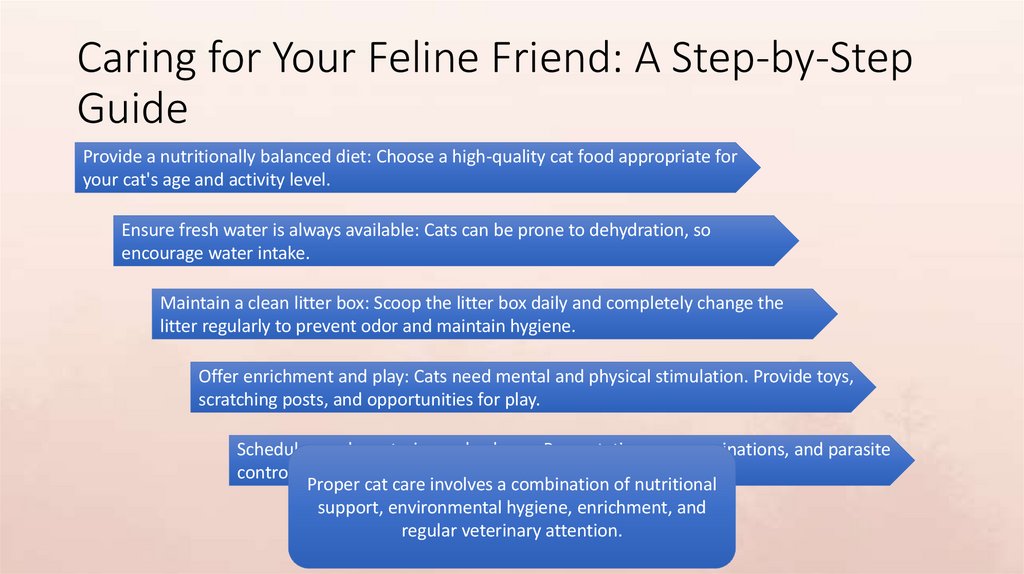
Caring for Your Feline Friend: A Step-by-StepGuide
Provide a nutritionally balanced diet: Choose a high-quality cat food appropriate for
your cat's age and activity level.
Ensure fresh water is always available: Cats can be prone to dehydration, so
encourage water intake.
Maintain a clean litter box: Scoop the litter box daily and completely change the
litter regularly to prevent odor and maintain hygiene.
Offer enrichment and play: Cats need mental and physical stimulation. Provide toys,
scratching posts, and opportunities for play.
Schedule regular veterinary checkups: Preventative care, vaccinations, and parasite
control are essential for your cat's health.
Proper cat care involves a combination of nutritional
support, environmental hygiene, enrichment, and
regular veterinary attention.
6.
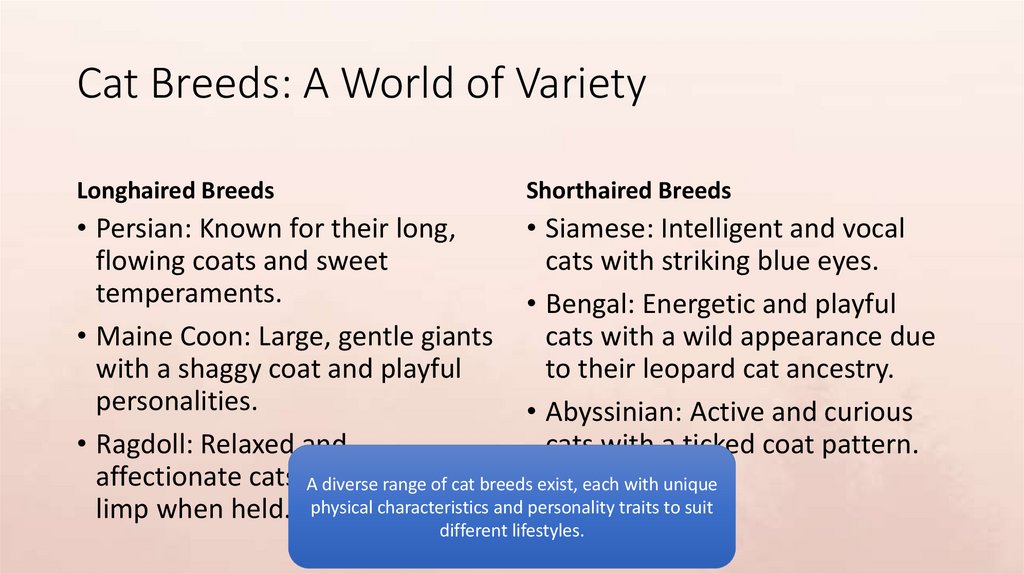
Cat Breeds: A World of VarietyLonghaired Breeds
Shorthaired Breeds
• Persian: Known for their long,
• Siamese: Intelligent and vocal
flowing coats and sweet
cats with striking blue eyes.
temperaments.
• Bengal: Energetic and playful
• Maine Coon: Large, gentle giants
cats with a wild appearance due
with a shaggy coat and playful
to their leopard cat ancestry.
personalities.
• Abyssinian: Active and curious
• Ragdoll: Relaxed and
cats with a ticked coat pattern.
affectionate cats that
often
gocat breeds exist, each with unique
A diverse
range of
limp when held. physical characteristics and personality traits to suit
different lifestyles.
7.
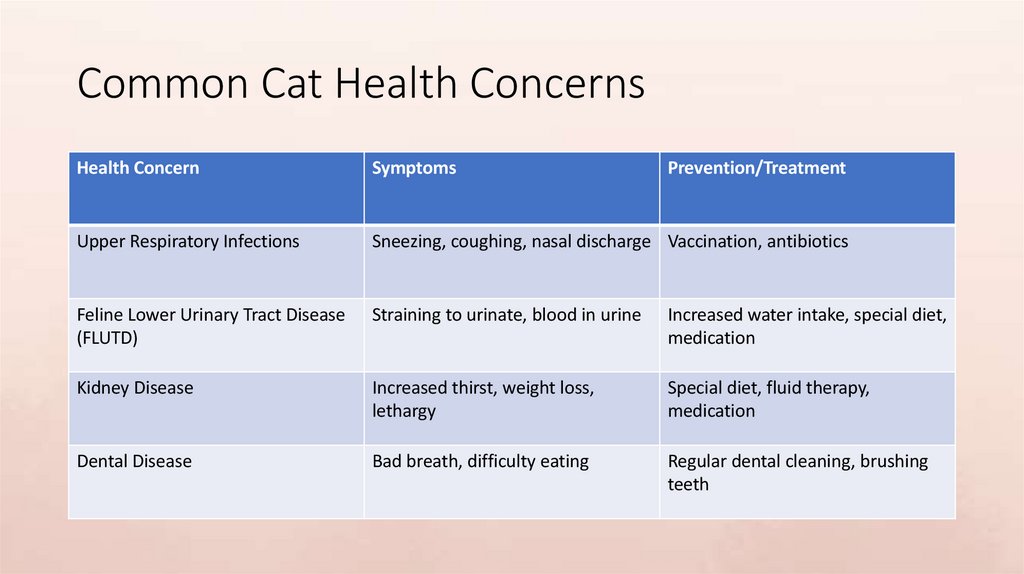
Common Cat Health ConcernsHealth Concern
Symptoms
Prevention/Treatment
Upper Respiratory Infections
Sneezing, coughing, nasal discharge Vaccination, antibiotics
Feline Lower Urinary Tract Disease
(FLUTD)
Straining to urinate, blood in urine
Increased water intake, special diet,
medication
Kidney Disease
Increased thirst, weight loss,
lethargy
Special diet, fluid therapy,
medication
Dental Disease
Bad breath, difficulty eating
Regular dental cleaning, brushing
teeth
8.
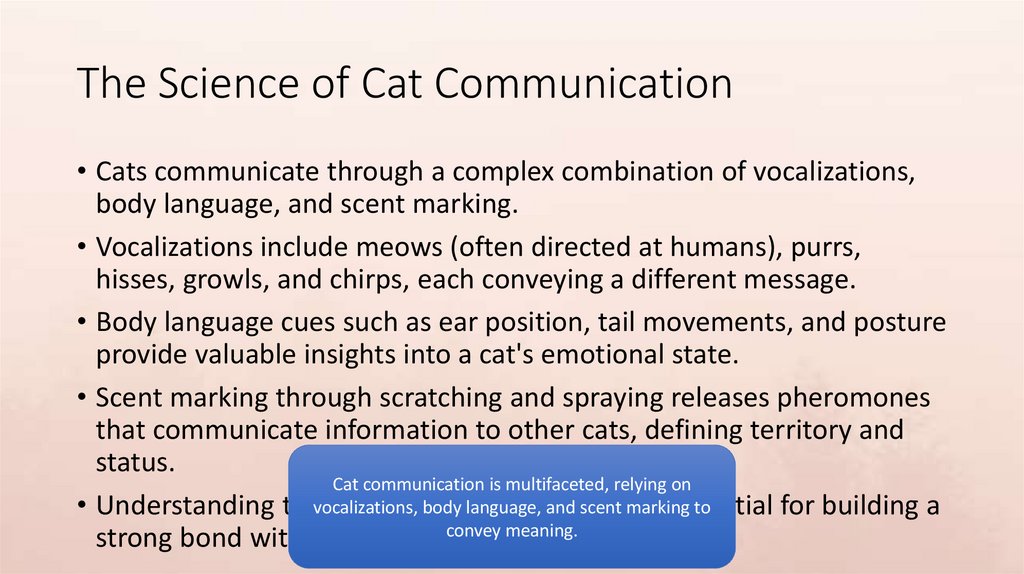
The Science of Cat Communication• Cats communicate through a complex combination of vocalizations,
body language, and scent marking.
• Vocalizations include meows (often directed at humans), purrs,
hisses, growls, and chirps, each conveying a different message.
• Body language cues such as ear position, tail movements, and posture
provide valuable insights into a cat's emotional state.
• Scent marking through scratching and spraying releases pheromones
that communicate information to other cats, defining territory and
status.
Cat communication is multifaceted, relying on
vocalizations,
body language, and
scent marking
to
• Understanding these
communication
signals
is essential
for building a
meaning.
strong bond with your feline convey
companion.