
Похожие презентации:








My-Profession-Car-Mechanic
1.
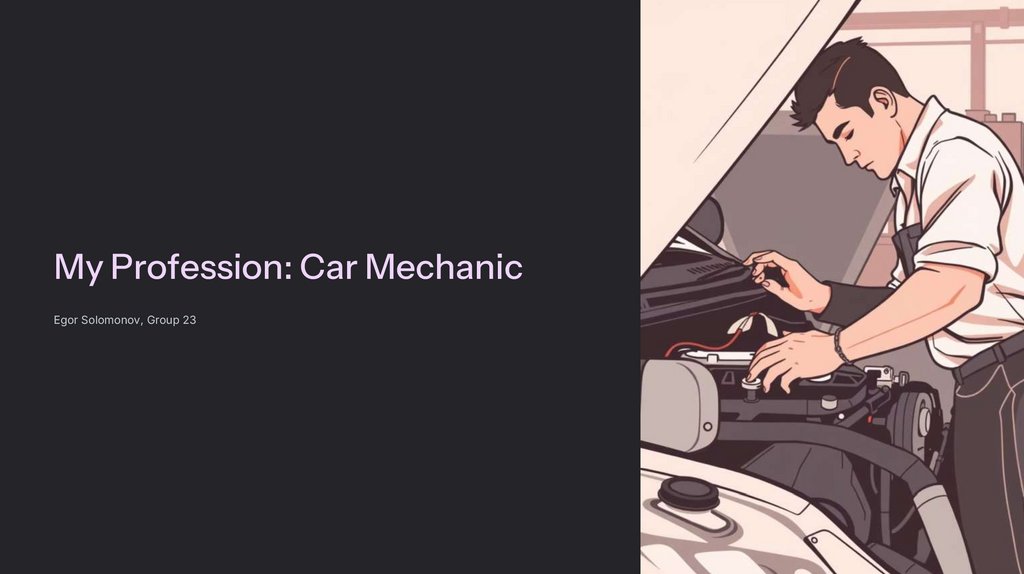
My Profession: Car MechanicEgor Solomonov, Group 23
2.
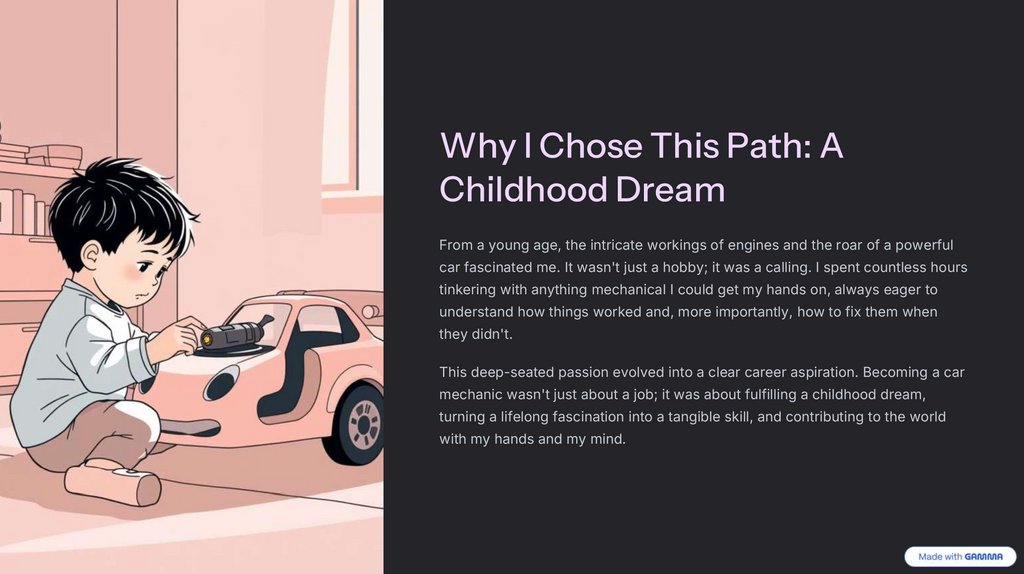
Why I Chose This Path: AChildhood Dream
From a young age, the intricate workings of engines and the roar of a powerful
car fascinated me. It wasn't just a hobby; it was a calling. I spent countless hours
tinkering with anything mechanical I could get my hands on, always eager to
understand how things worked and, more importantly, how to fix them when
they didn't.
This deep-seated passion evolved into a clear career aspiration. Becoming a car
mechanic wasn't just about a job; it was about fulfilling a childhood dream,
turning a lifelong fascination into a tangible skill, and contributing to the world
with my hands and my mind.
3.
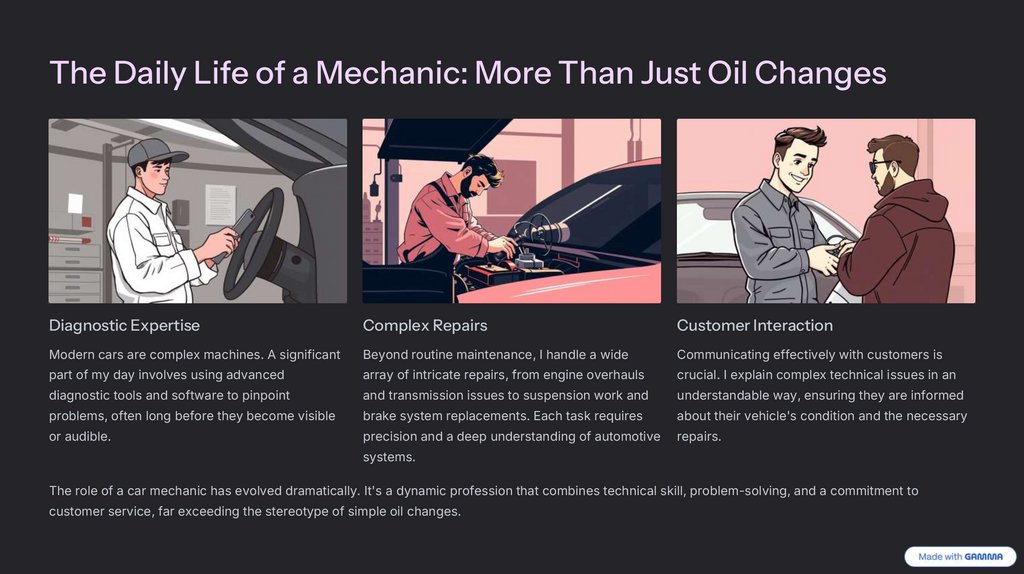
The Daily Life of a Mechanic: More Than Just Oil ChangesDiagnostic Expertise
Complex Repairs
Customer Interaction
Modern cars are complex machines. A significant
Beyond routine maintenance, I handle a wide
Communicating effectively with customers is
part of my day involves using advanced
array of intricate repairs, from engine overhauls
crucial. I explain complex technical issues in an
diagnostic tools and software to pinpoint
and transmission issues to suspension work and
understandable way, ensuring they are informed
problems, often long before they become visible
brake system replacements. Each task requires
about their vehicle's condition and the necessary
or audible.
precision and a deep understanding of automotive
repairs.
systems.
The role of a car mechanic has evolved dramatically. It's a dynamic profession that combines technical skill, problem-solving, and a commitment to
customer service, far exceeding the stereotype of simple oil changes.
4.
Essential Skills for a Successful Mechanic1
2
Technical Proficiency
Problem-Solving
A strong grasp of automotive systems, including engines,
Every vehicle presents a unique challenge. The ability to
transmissions, electrical systems, and diagnostics, is
logically diagnose issues, identify root causes, and devise
fundamental. This includes understanding the latest
effective solutions is paramount for efficient and accurate
technologies and traditional mechanics.
repairs.
3
4
Attention to Detail
Adaptability
Even the smallest oversight can lead to significant problems.
The automotive industry is constantly evolving. A successful
Meticulous attention to detail ensures that all repairs are
mechanic must be adaptable, willing to learn new technologies,
completed correctly and safely, preventing future
repair techniques, and stay updated with industry
complications.
advancements.
5.
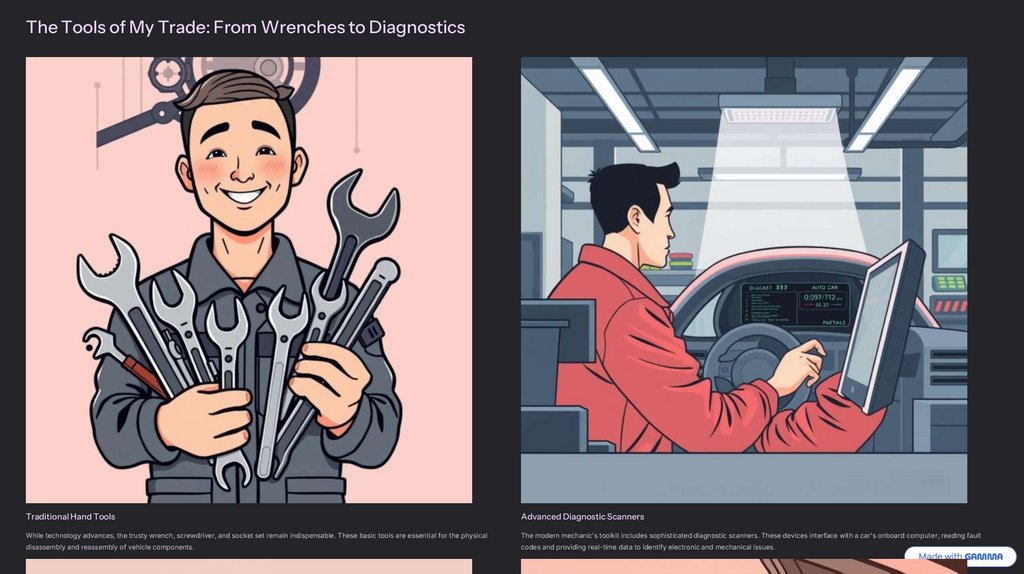
The Tools of My Trade: From Wrenches to DiagnosticsTraditional Hand Tools
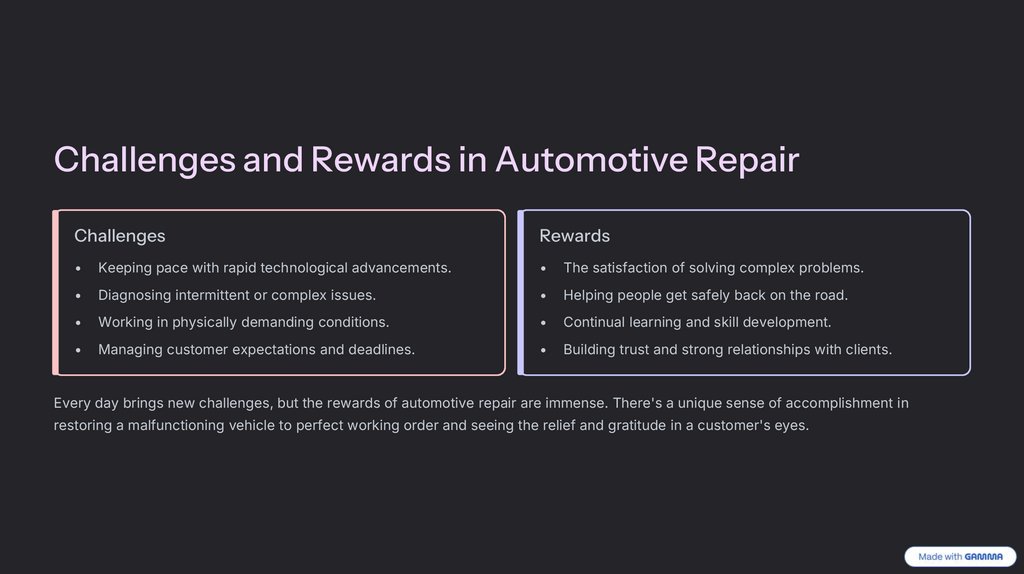
Advanced Diagnostic Scanners
While technology advances, the trusty wrench, screwdriver, and socket set remain indispensable. These basic tools are essential for the physical
The modern mechanic's toolkit includes sophisticated diagnostic scanners. These devices interface with a car's onboard computer, reading fault
disassembly and reassembly of vehicle components.
codes and providing real-time data to identify electronic and mechanical issues.
6.
Challenges and Rewards in Automotive RepairChallenges
Rewards
Keeping pace with rapid technological advancements.
The satisfaction of solving complex problems.
Diagnosing intermittent or complex issues.
Helping people get safely back on the road.
Working in physically demanding conditions.
Continual learning and skill development.
Managing customer expectations and deadlines.
Building trust and strong relationships with clients.
Every day brings new challenges, but the rewards of automotive repair are immense. There's a unique sense of accomplishment in
restoring a malfunctioning vehicle to perfect working order and seeing the relief and gratitude in a customer's eyes.
7.
Staying Ahead: Continuous Learning in a Changing IndustryThe automotive industry is in a constant state of flux, driven by technological innovation and evolving vehicle designs. To remain effective and
relevant, continuous learning is not an option, but a necessity.
Electric Vehicle Training
Advanced Diagnostics
With the rise of EVs, I am actively pursuing certifications in electric
I regularly attend workshops and online courses focused on
and hybrid vehicle systems, understanding their unique components
advanced diagnostic software and electronic control units (ECUs),
and maintenance requirements.
which are the brains of modern vehicles.
Safety Protocols
New Materials & Techniques
Staying updated on the latest safety protocols and hazardous material
Researching and understanding new materials like lightweight
handling, especially concerning high-voltage EV batteries, is crucial
composites and advanced manufacturing techniques used in vehicle
for both my safety and that of my colleagues.
construction helps me approach repairs with optimal strategies.
8.
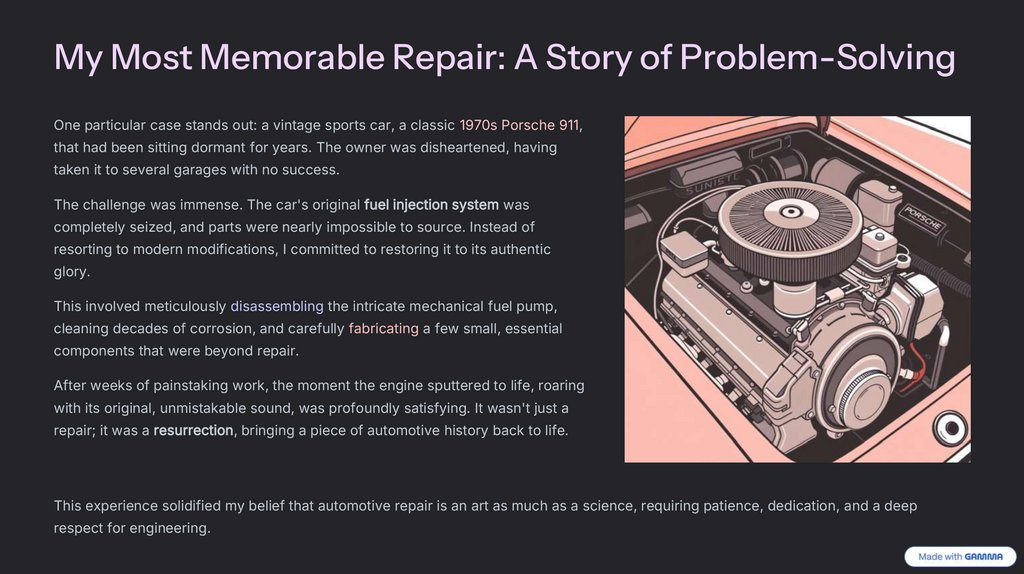
My Most Memorable Repair: A Story of Problem-SolvingOne particular case stands out: a vintage sports car, a classic 1970s Porsche 911,
that had been sitting dormant for years. The owner was disheartened, having
taken it to several garages with no success.
The challenge was immense. The car's original fuel injection system was
completely seized, and parts were nearly impossible to source. Instead of
resorting to modern modifications, I committed to restoring it to its authentic
glory.
This involved meticulously disassembling the intricate mechanical fuel pump,
cleaning decades of corrosion, and carefully fabricating a few small, essential
components that were beyond repair.
After weeks of painstaking work, the moment the engine sputtered to life, roaring
with its original, unmistakable sound, was profoundly satisfying. It wasn't just a
repair; it was a resurrection, bringing a piece of automotive history back to life.
This experience solidified my belief that automotive repair is an art as much as a science, requiring patience, dedication, and a deep
respect for engineering.
9.
The Future of Automotive Technology and My Role in ItAutonomous Vehicles
As self-driving technology advances,
mechanics will need to understand
complex AI systems and sensor arrays,
focusing on software diagnostics and
calibration.
Electrification
The shift to electric vehicles (EVs) means
a greater emphasis on high-voltage
battery systems, electric motors, and
regenerative braking, requiring
specialised training.
Augmented Reality for Repairs
Connectivity & IoT
AR tools could soon guide mechanics
Connected cars will require mechanics to
through complex repairs, overlaying
troubleshoot network issues, software
digital instructions onto physical
components, enhancing precision and
efficiency.
updates, and cybersecurity
vulnerabilities, integrating IT skills into
their repertoire.
My role will continue to evolve, moving towards that of a highly skilled technician adept at both mechanical and digital systems. This future
is exciting, promising new challenges and continuous growth.
10.
Thank YouFor Your
Attention