 Интернет
Похожие презентации:


Информационая безопастность
1.
Information Security:Protecting Digital Assets
Principles, Threats, and Best
Practices
2.
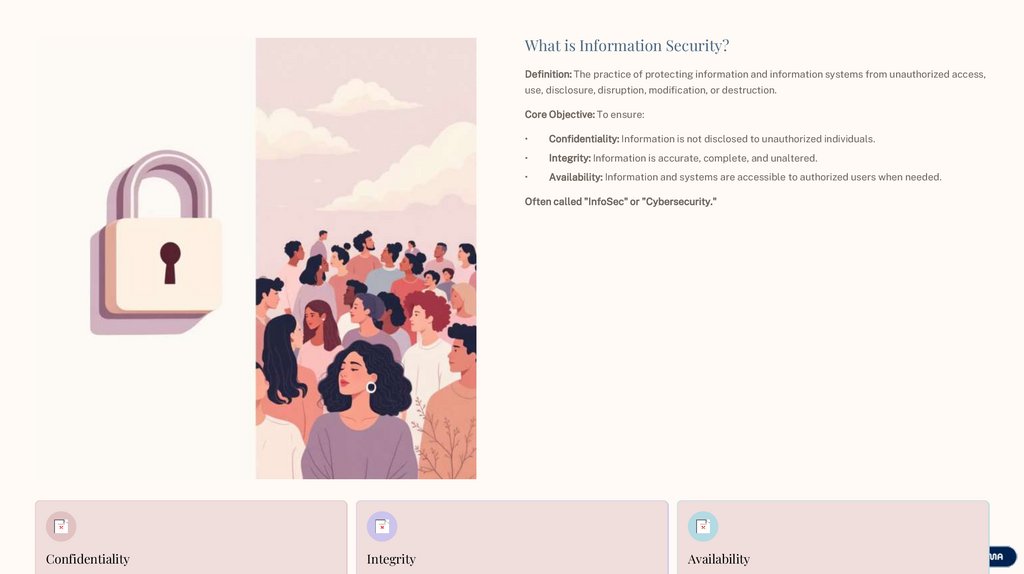
What is Information Security?Definition: The practice of protecting information and information systems from unauthorized access,
use, disclosure, disruption, modification, or destruction.
Core Objective: To ensure:
Confidentiality: Information is not disclosed to unauthorized individuals.
Integrity: Information is accurate, complete, and unaltered.
Availability: Information and systems are accessible to authorized users when needed.
Often called "InfoSec" or "Cybersecurity."
Confidentiality
Integrity
Availability
3.
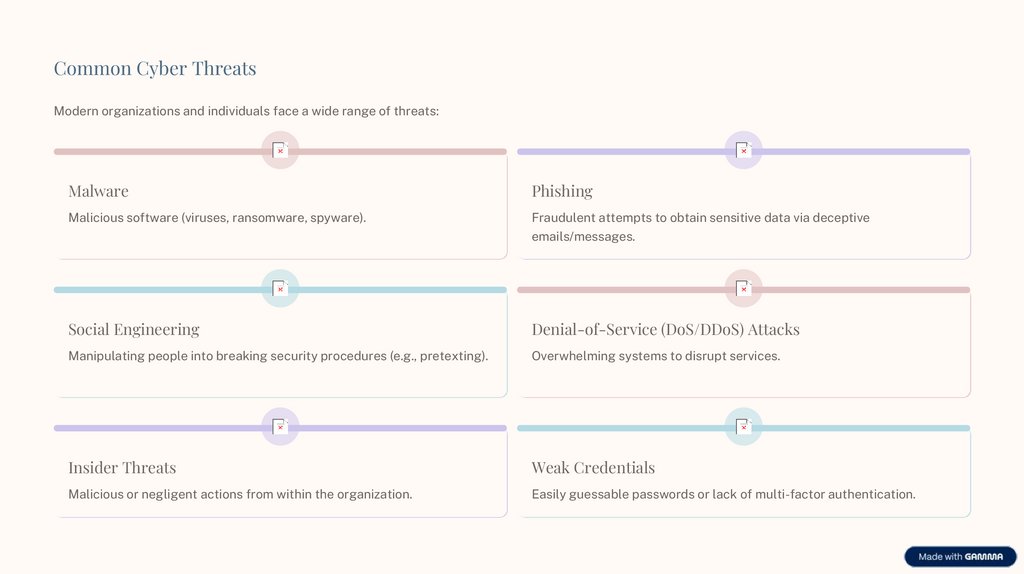
Common Cyber ThreatsModern organizations and individuals face a wide range of threats:
Malware
Phishing
Malicious software (viruses, ransomware, spyware).
Fraudulent attempts to obtain sensitive data via deceptive
emails/messages.
Social Engineering
Denial-of-Service (DoS/DDoS) Attacks
Manipulating people into breaking security procedures (e.g., pretexting).
Overwhelming systems to disrupt services.
Insider Threats
Weak Credentials
Malicious or negligent actions from within the organization.
Easily guessable passwords or lack of multi-factor authentication.
4.
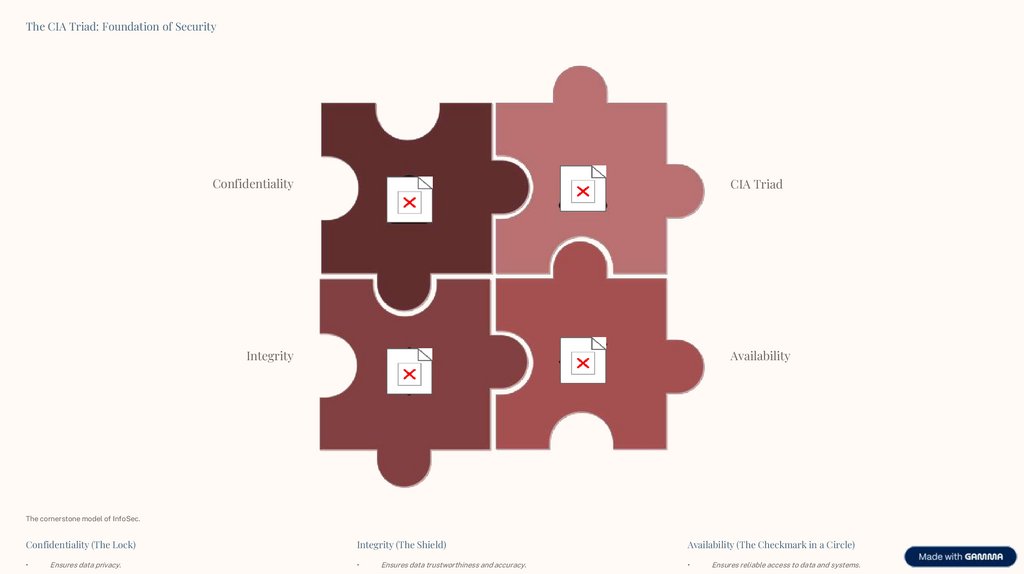
The CIA Triad: Foundation of SecurityConfidentiality
CIA Triad
Integrity
Availability
The cornerstone model of InfoSec.
Confidentiality (The Lock)
Ensures data privacy.
Integrity (The Shield)
Ensures data trustworthiness and accuracy.
Availability (The Checkmark in a Circle)
Ensures reliable access to data and systems.
5.
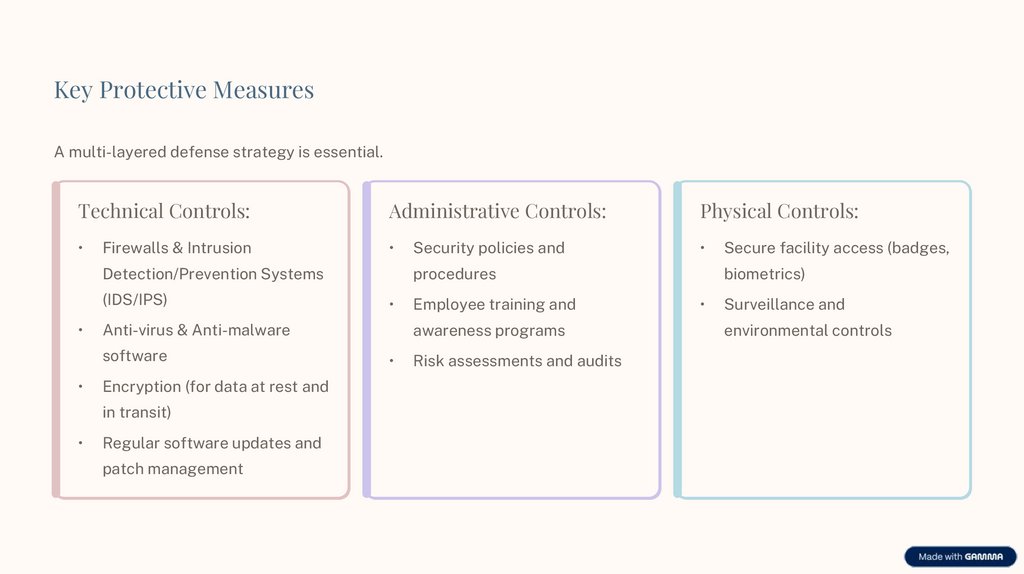
Key Protective MeasuresA multi-layered defense strategy is essential.
Technical Controls:
Administrative Controls:
Physical Controls:
Firewalls & Intrusion
Detection/Prevention Systems
(IDS/IPS)
Encryption (for data at rest and
in transit)
procedures
Anti-virus & Anti-malware
software
Regular software updates and
patch management
Security policies and
Employee training and
awareness programs
Risk assessments and audits
Secure facility access (badges,
biometrics)
Surveillance and
environmental controls
6.
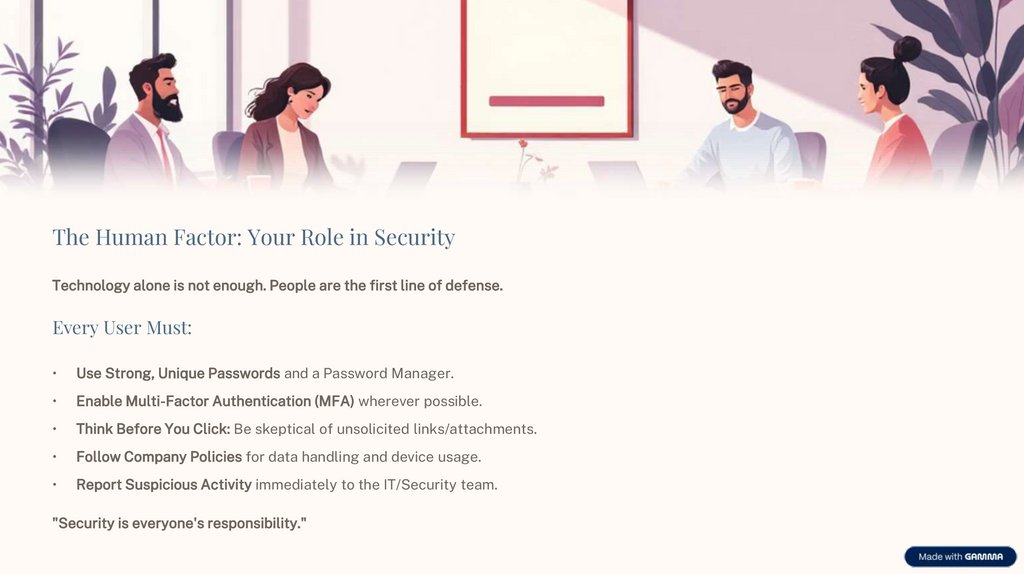
The Human Factor: Your Role in SecurityTechnology alone is not enough. People are the first line of defense.
Every User Must:
Use Strong, Unique Passwords and a Password Manager.
Enable Multi-Factor Authentication (MFA) wherever possible.
Think Before You Click: Be skeptical of unsolicited links/attachments.
Follow Company Policies for data handling and device usage.
Report Suspicious Activity immediately to the IT/Security team.
"Security is everyone's responsibility."
7.
Trends and ChallengesThe InfoSec landscape is constantly evolving:
Rise of AI: Used both by attackers (automated phishing) and
defenders (threat detection).
Remote/Hybrid Work: Expands the "attack surface" with personal
devices and home networks.
Cloud Security: Shared responsibility model requires new security
approaches.
Internet of Things (IoT): Billions of new, often insecure, connected
devices.
Regulatory Compliance: GDPR, CCPA, and other laws mandate strict
data protection.
Skills Gap: High demand for qualified cybersecurity professionals.
8.
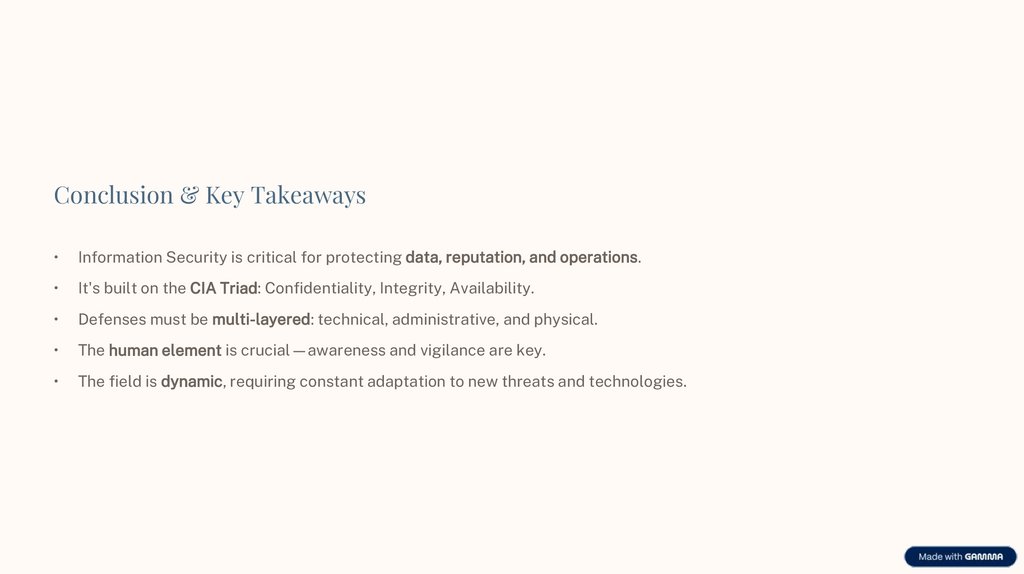
Conclusion & Key TakeawaysInformation Security is critical for protecting data, reputation, and operations.
It's built on the CIA Triad: Confidentiality, Integrity, Availability.
Defenses must be multi-layered: technical, administrative, and physical.
The human element is crucial—awareness and vigilance are key.
The field is dynamic, requiring constant adaptation to new threats and technologies.