


 Медицина
Похожие презентации:



Morphology of order of bugs. Representatives and their medical importance
1.
Group task-By- Mehak Mehla And JyotiPriya Singh
TOPIC-
MORPHOLOGY
OF ORDER OF BUGS
.REPRESENTATIVES AND
THEIR MEDICAL
IMPORTANCE.
2.
3.
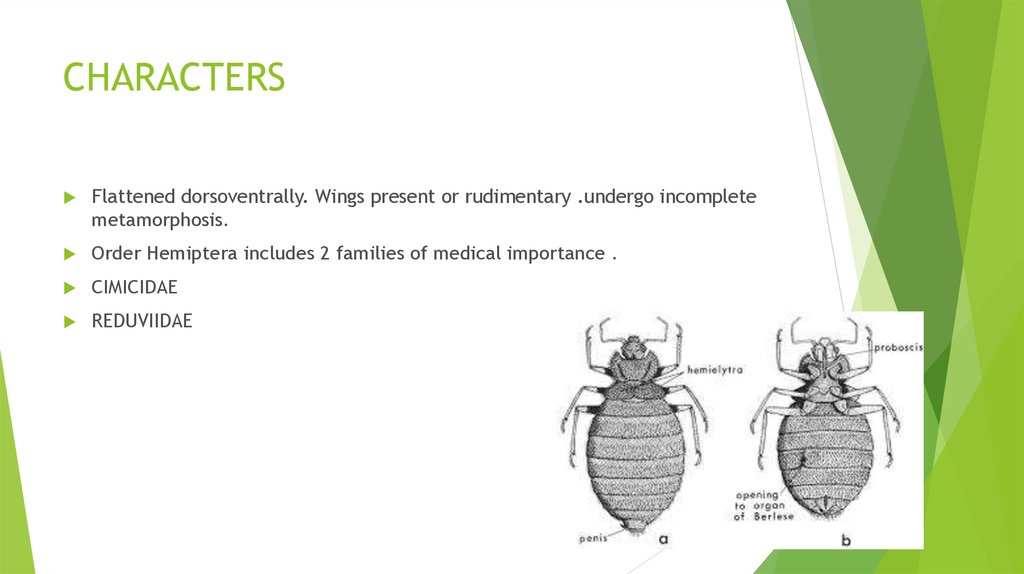
CHARACTERSFlattened dorsoventrally. Wings present or rudimentary .undergo incomplete
metamorphosis.
Order Hemiptera includes 2 families of medical importance .
CIMICIDAE
REDUVIIDAE
4.
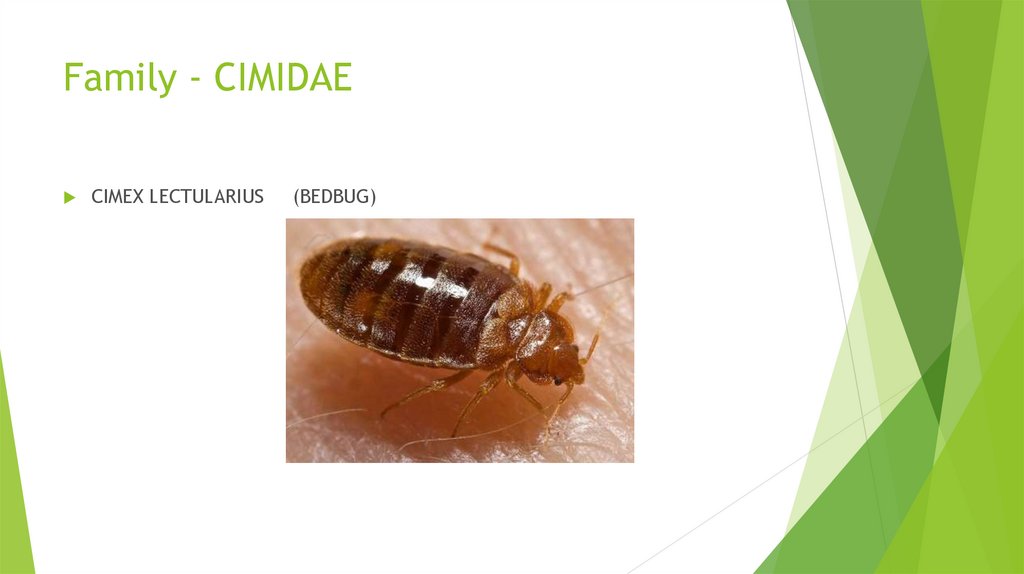
Family - CIMIDAECIMEX LECTULARIUS
(BEDBUG)
5.
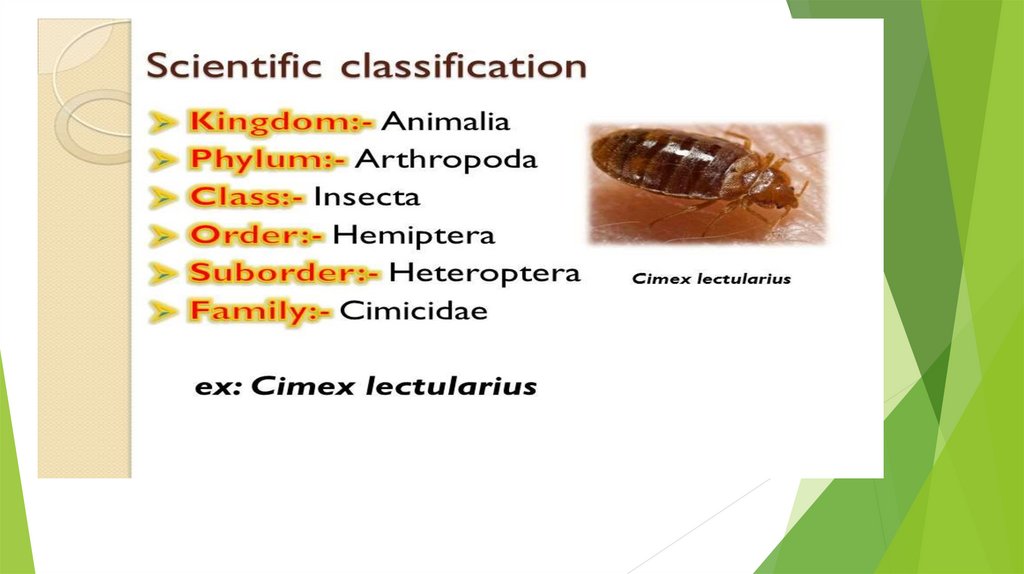
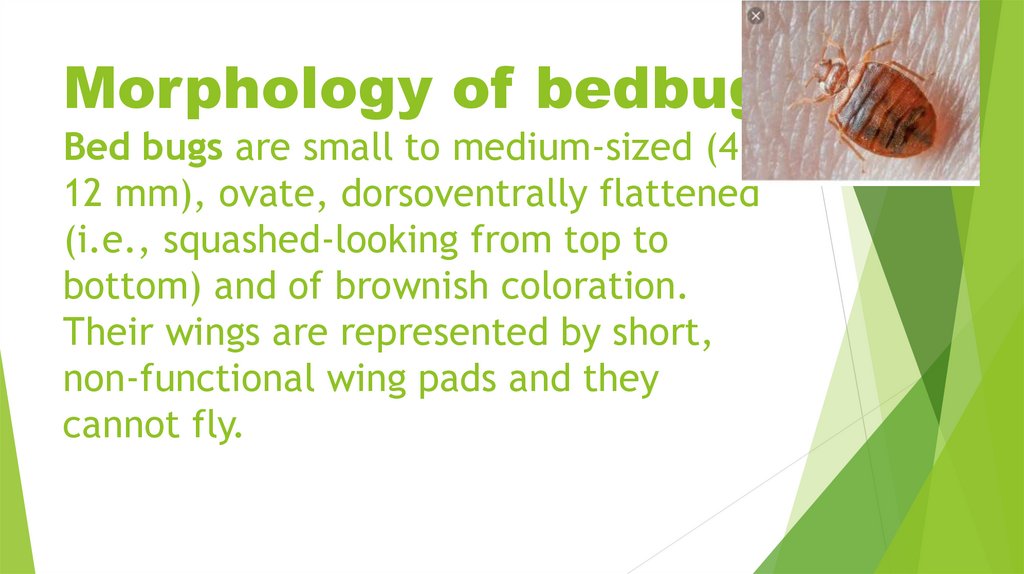
Morphology of bedbugBed bugs are small to medium-sized (412 mm), ovate, dorsoventrally flattened
(i.e., squashed-looking from top to
bottom) and of brownish coloration.
Their wings are represented by short,
non-functional wing pads and they
cannot fly.
6.
Bed bugs are closely related to the blood-feeding, batbugs and predatory minute pirate bugs (family
Anthocoridae) that are used as natural enemies in
integrated pest management. The Cimicidae are divided
into 22 genera, with 12 being exclusively associated with
bats, 9 with birds, and only the genus Cimex containing a
mixture of bird and mammal ectoparasites. Only three
species may be associated with humans, Leptocimex
boueti in certain areas of West Africa, Cimex
hemipterus in the tropics of the Old and New Worlds, and,
most importantly, Cimex lectularius in temperate and
subtropical regions worldwide.
7.
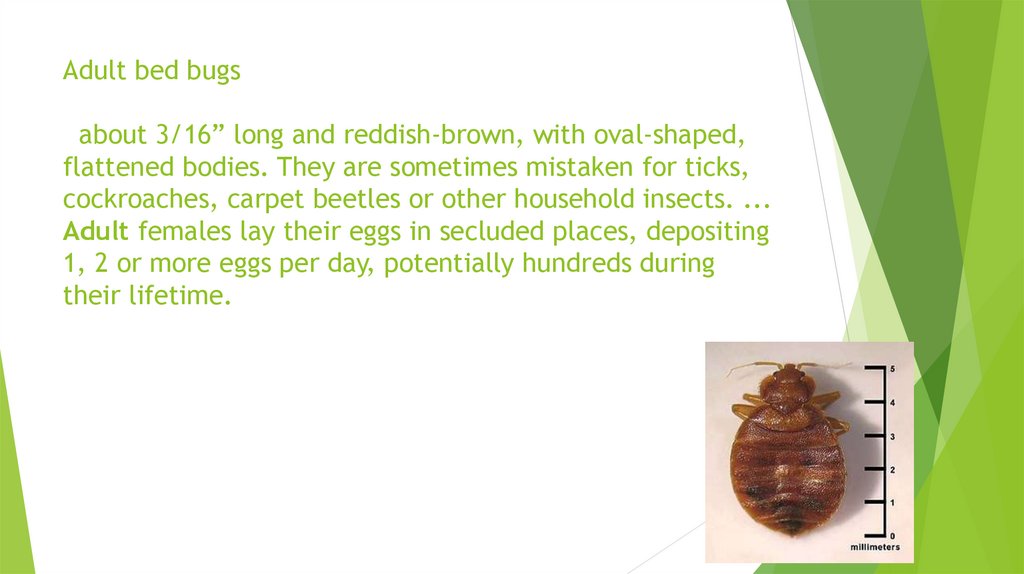
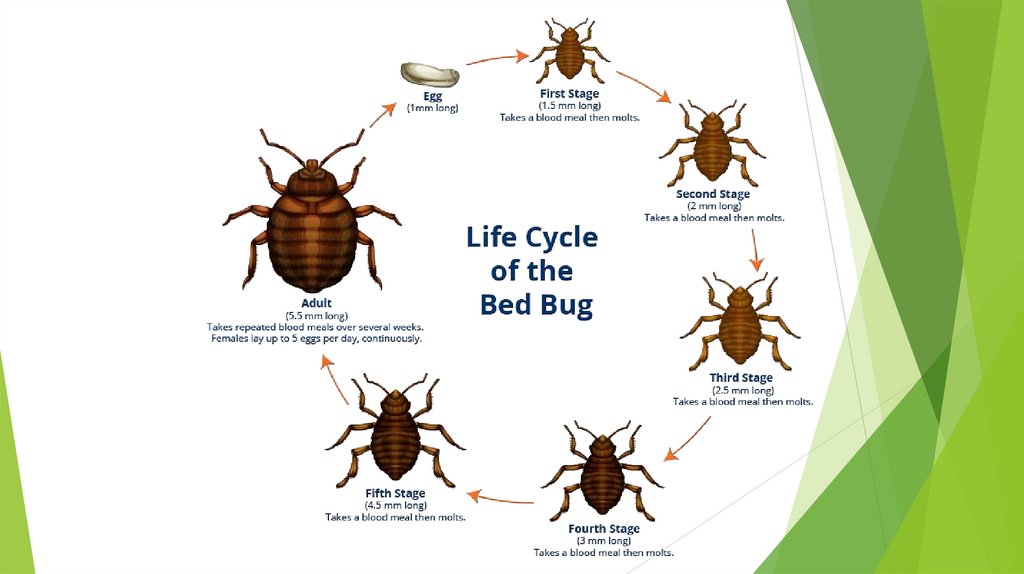
Adult bed bugsabout 3/16” long and reddish-brown, with oval-shaped,
flattened bodies. They are sometimes mistaken for ticks,
cockroaches, carpet beetles or other household insects. ...
Adult females lay their eggs in secluded places, depositing
1, 2 or more eggs per day, potentially hundreds during
their lifetime.
8.
9.
HABITSBugs are temporary ectoparasites.They feed by
night and hide during daytime.They can withstand
starvation a long time.
10.
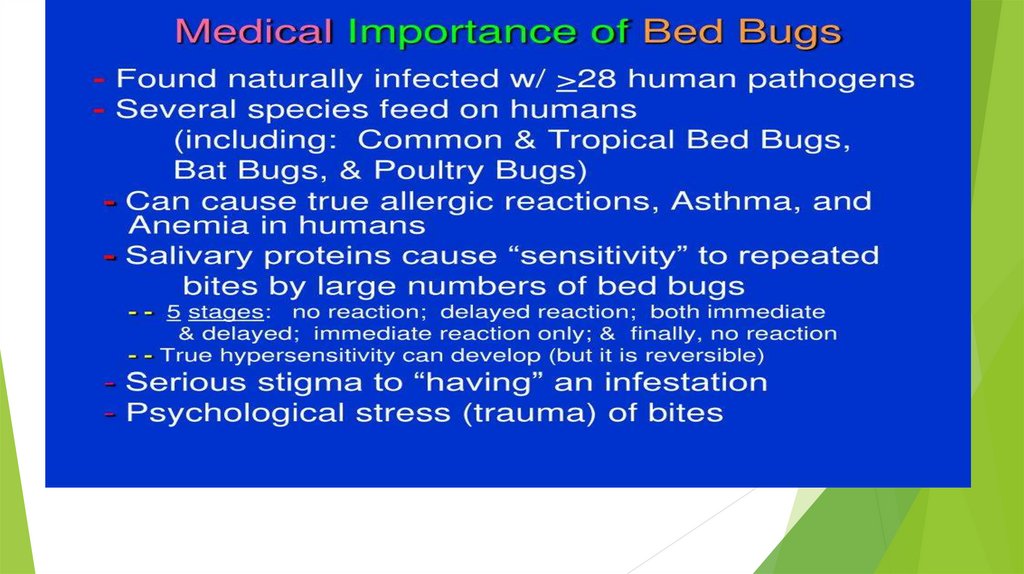
MEDICAL IMPORTANCENaturally not known to transmit any disease
.Mechanical transmission could occur
.Experimentally could transmit relapsing fever and
chaggas disease.The bite of bedbug is irritating
and may lead to insomnia.
11.
12.
CONTROLCleanliness . Repair of cracks. Manual
collection of bugs and their destruction.
13.
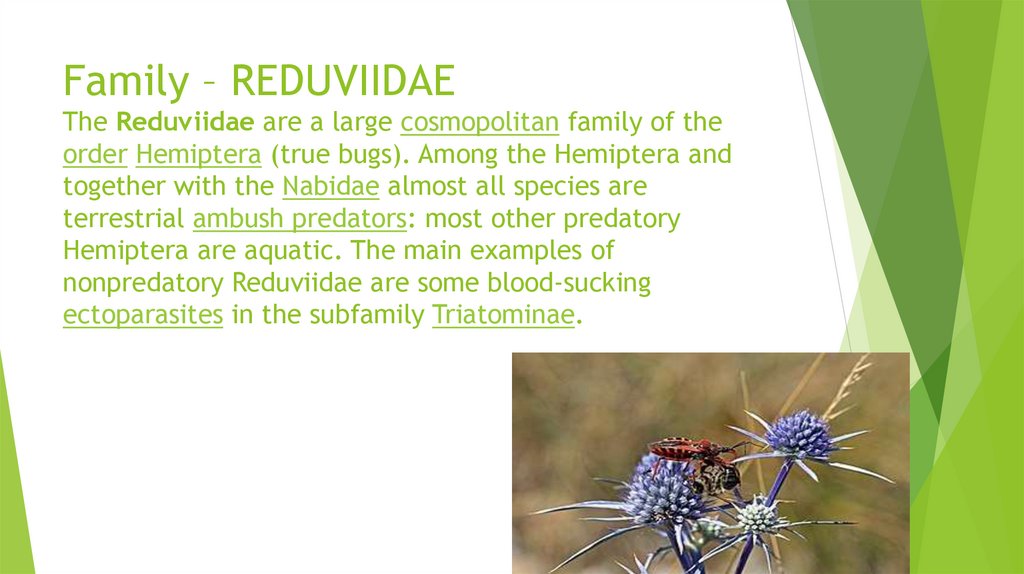
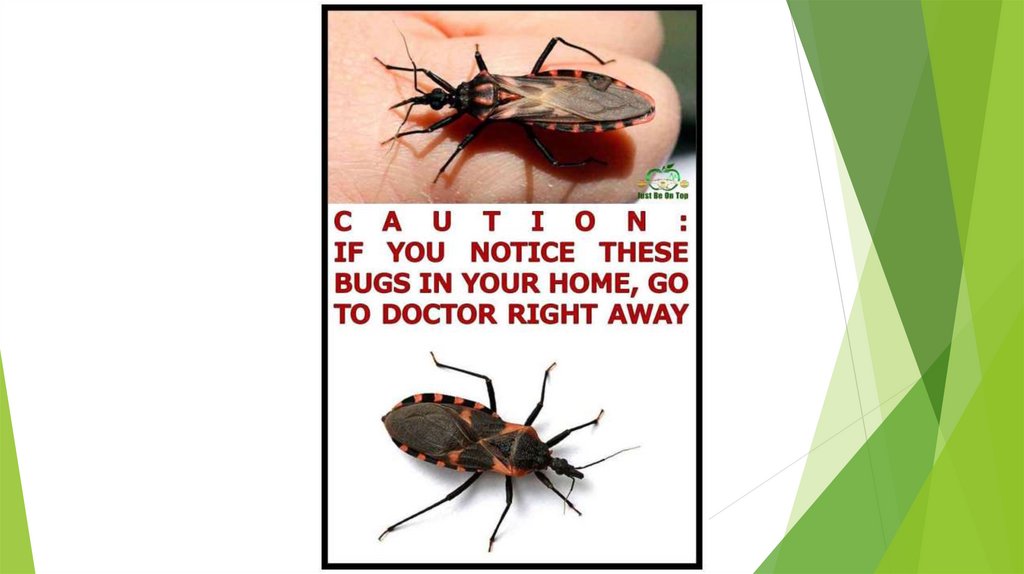
Family – REDUVIIDAEThe Reduviidae are a large cosmopolitan family of the
order Hemiptera (true bugs). Among the Hemiptera and
together with the Nabidae almost all species are
terrestrial ambush predators: most other predatory
Hemiptera are aquatic. The main examples of
nonpredatory Reduviidae are some blood-sucking
ectoparasites in the subfamily Triatominae.
14.
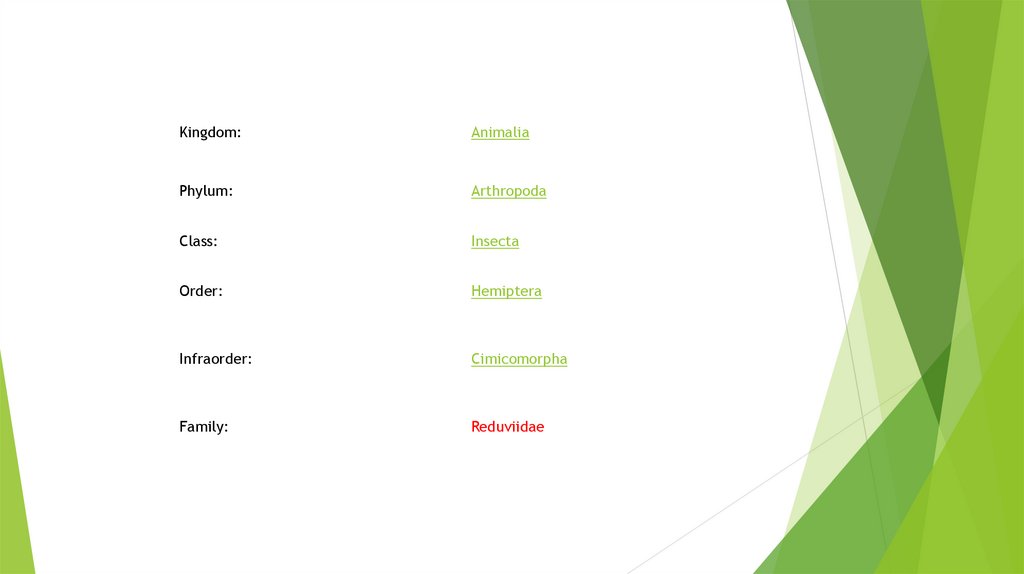
Kingdom:Animalia
Phylum:
Arthropoda
Class:
Insecta
Order:
Hemiptera
Infraorder:
Cimicomorpha
Family:
Reduviidae
15.
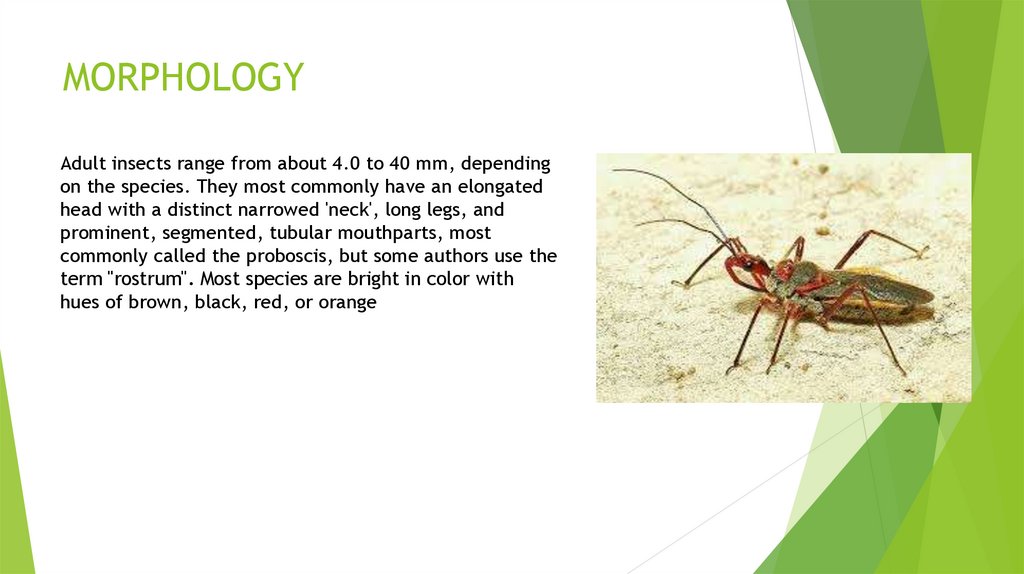
MORPHOLOGYAdult insects range from about 4.0 to 40 mm, depending
on the species. They most commonly have an elongated
head with a distinct narrowed 'neck', long legs, and
prominent, segmented, tubular mouthparts, most
commonly called the proboscis, but some authors use the
term "rostrum". Most species are bright in color with
hues of brown, black, red, or orange
16.
17.
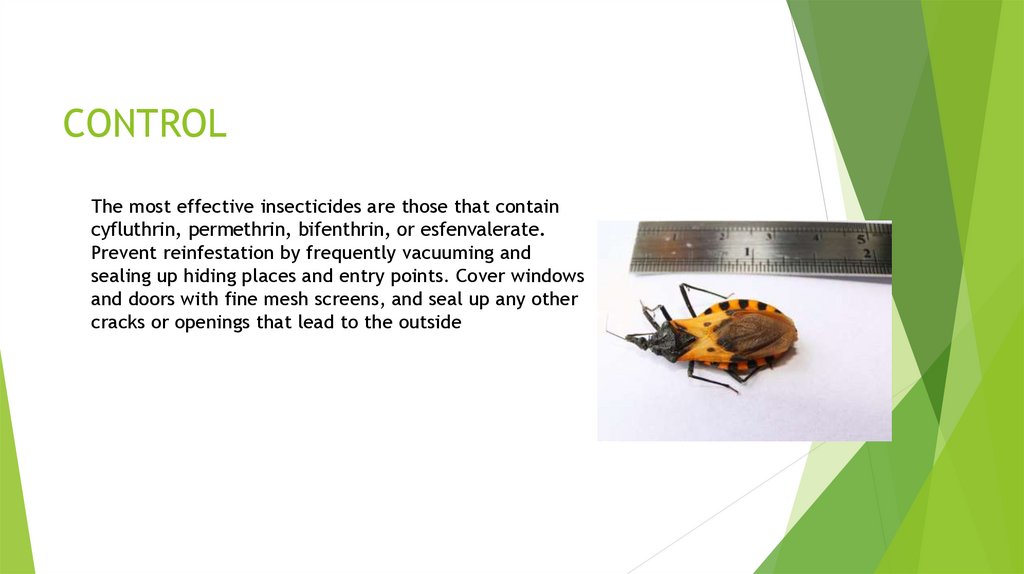
CONTROLThe most effective insecticides are those that contain
cyfluthrin, permethrin, bifenthrin, or esfenvalerate.
Prevent reinfestation by frequently vacuuming and
sealing up hiding places and entry points. Cover windows
and doors with fine mesh screens, and seal up any other
cracks or openings that lead to the outside
18.
19.
Youtube linkshttps://www.youtube.com/watch?v=XnqcezFyHis
https://www.youtube.com/watch?v=PngiUYXitGY
https://www.youtube.com/watch?v=ObVqT9daRuc