

 Философия
Похожие презентации:






Philosophy, its object and functions
1. Philosophy, its object and functions
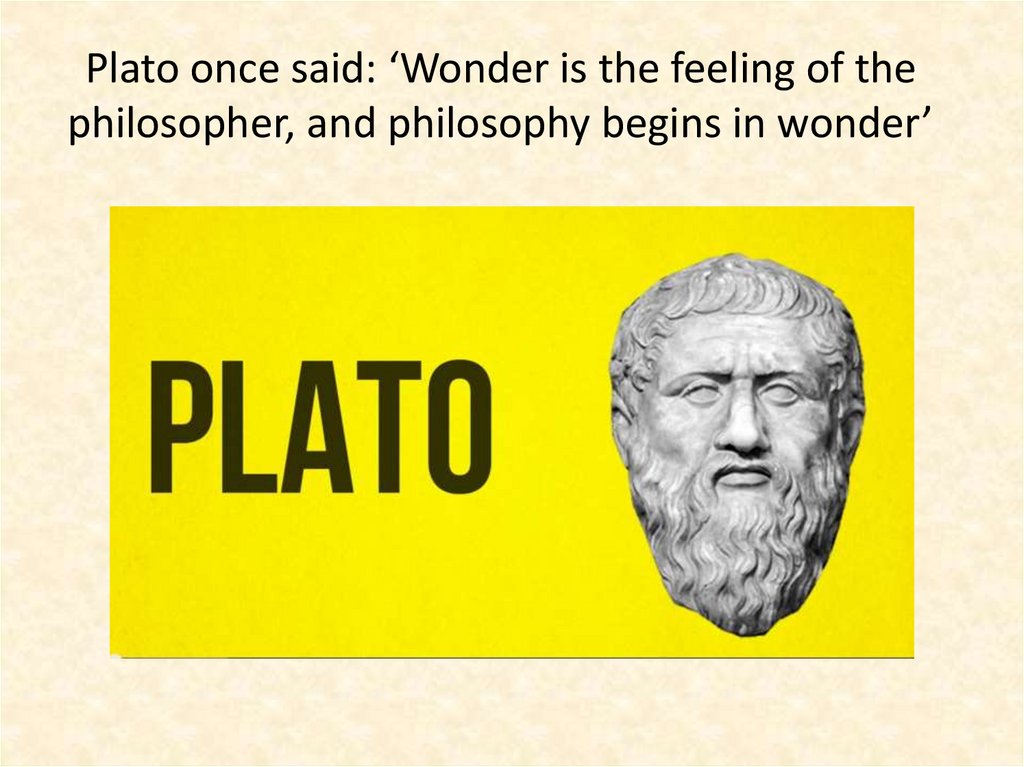
2. Plato once said: ‘Wonder is the feeling of the philosopher, and philosophy begins in wonder’
3.
The term “philosophy” comesfrom the Greek language. It consists
of two words :
philos, (love, or philia – friendship,
affection привязанность) and
sophos (learned scholar ученый
муж, sage, or sophia - wisdom,
knowledge, talent).
4.
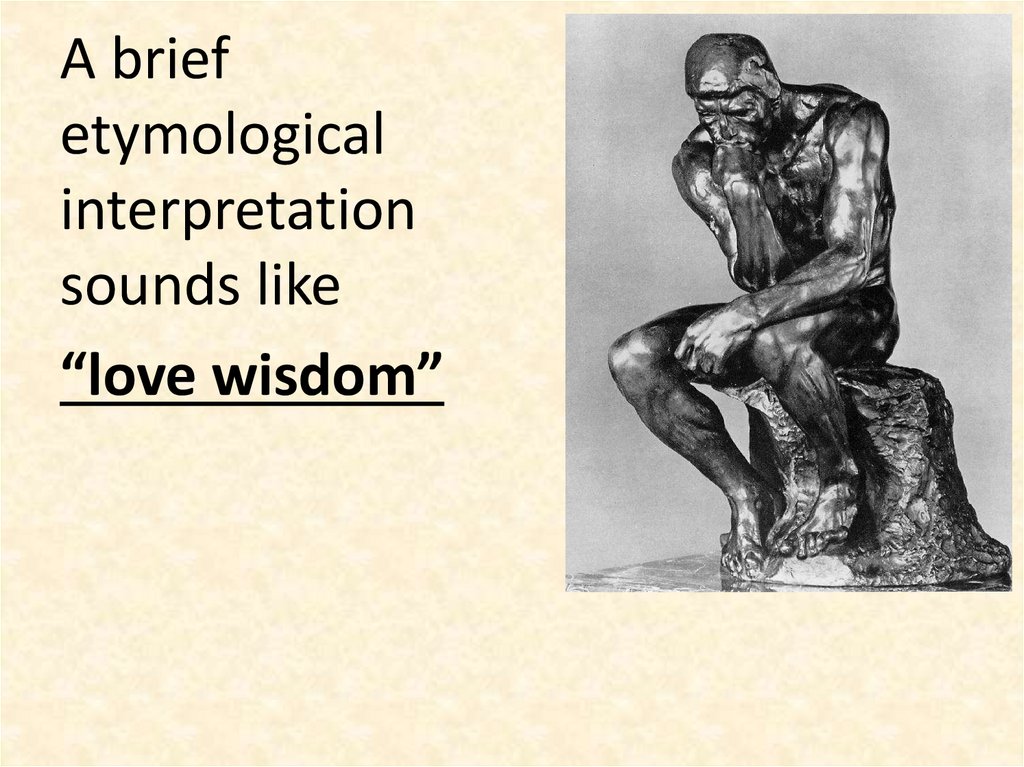
A briefetymological
interpretation
sounds like
“love wisdom”
5.
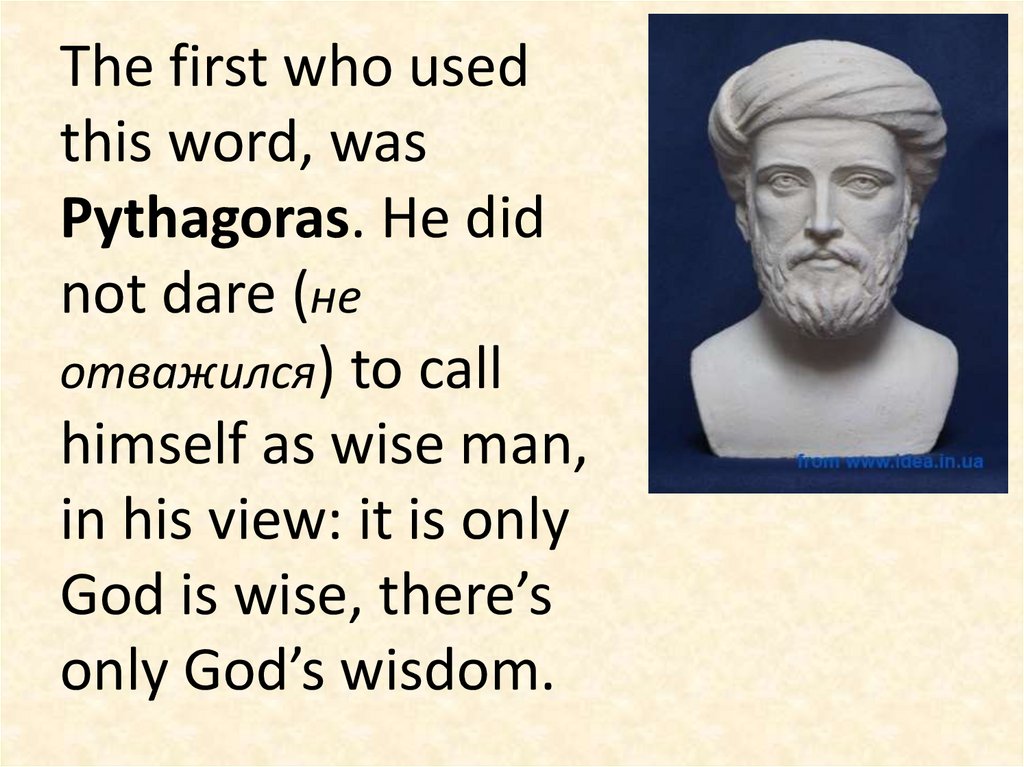
The first who usedthis word, was
Pythagoras. He did
not dare (не
отважился) to call
himself as wise man,
in his view: it is only
God is wise, there’s
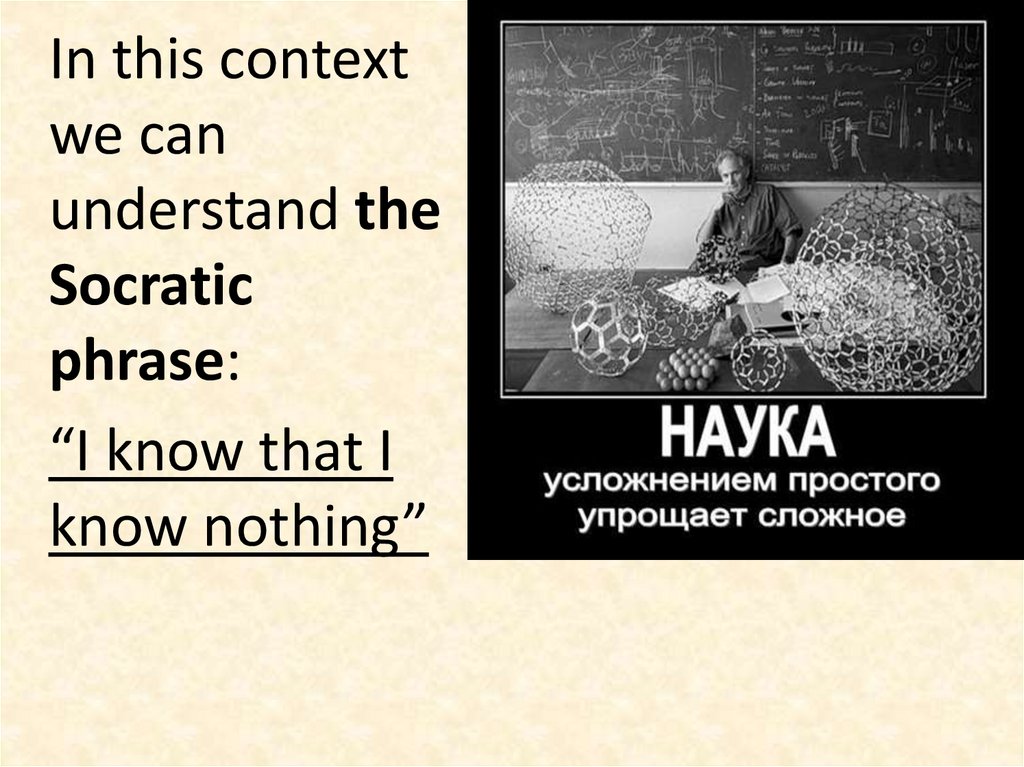
only God’s wisdom.
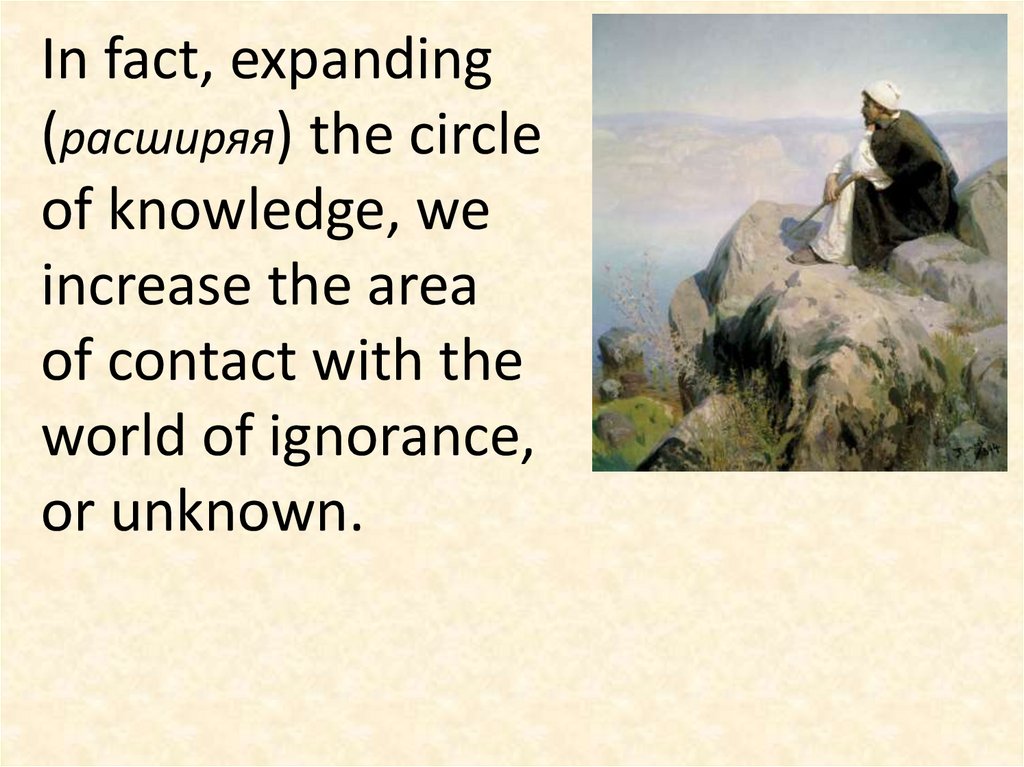
6.
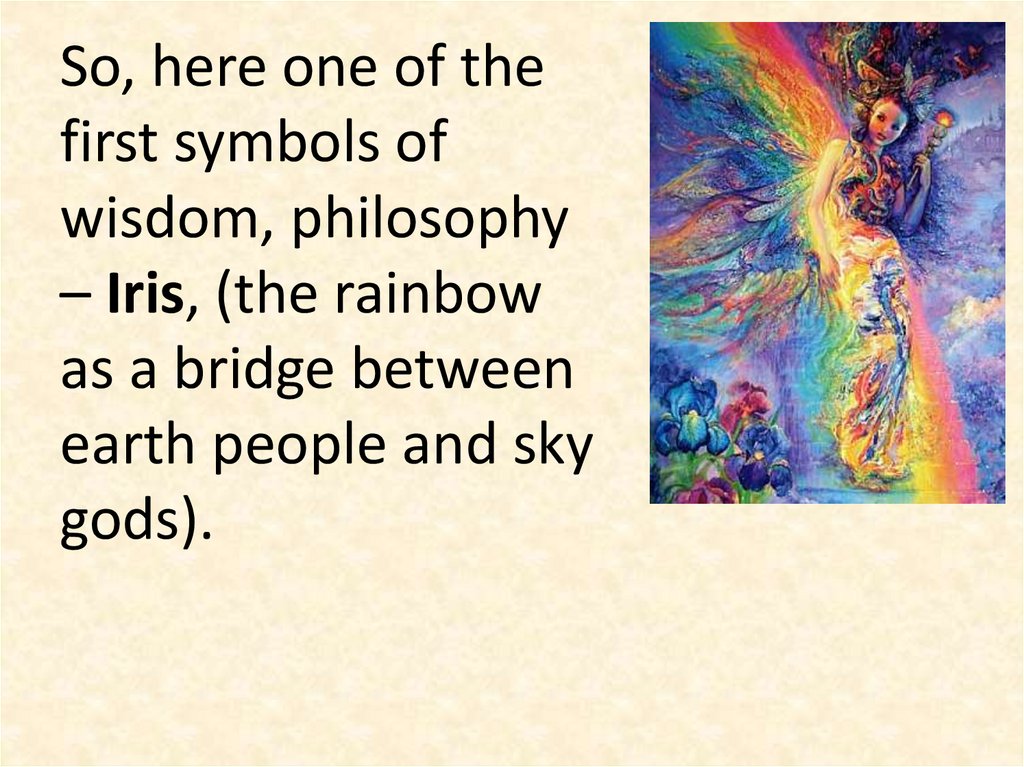
So, here one of thefirst symbols of
wisdom, philosophy
– Iris, (the rainbow
as a bridge between
earth people and sky
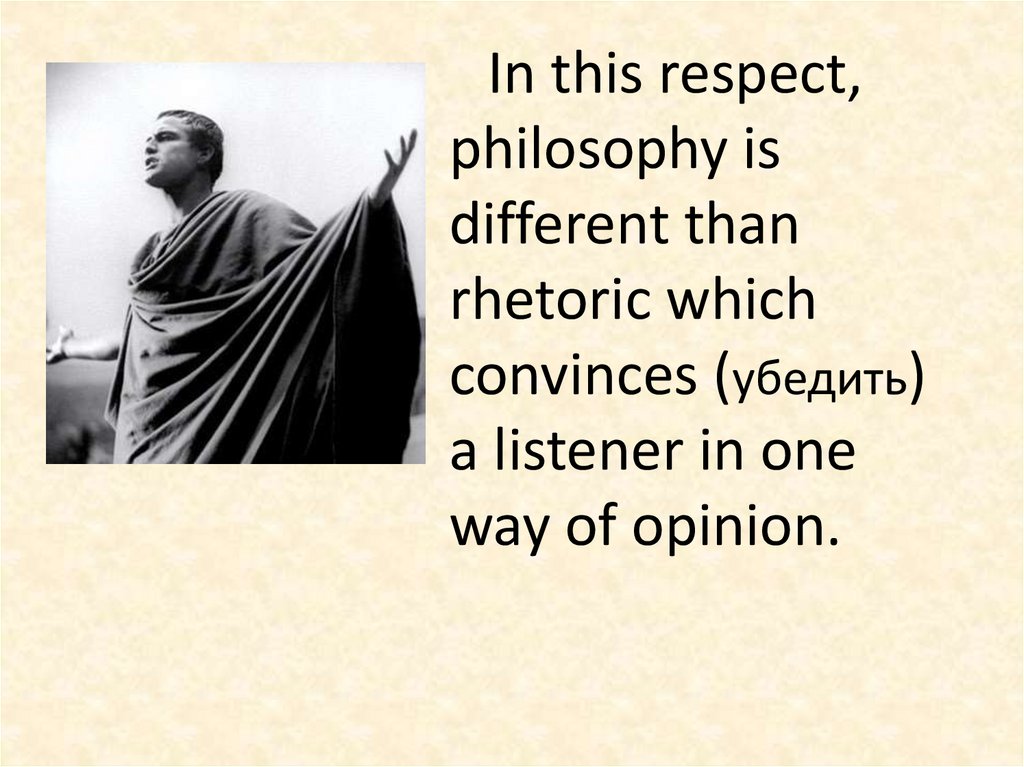
gods).
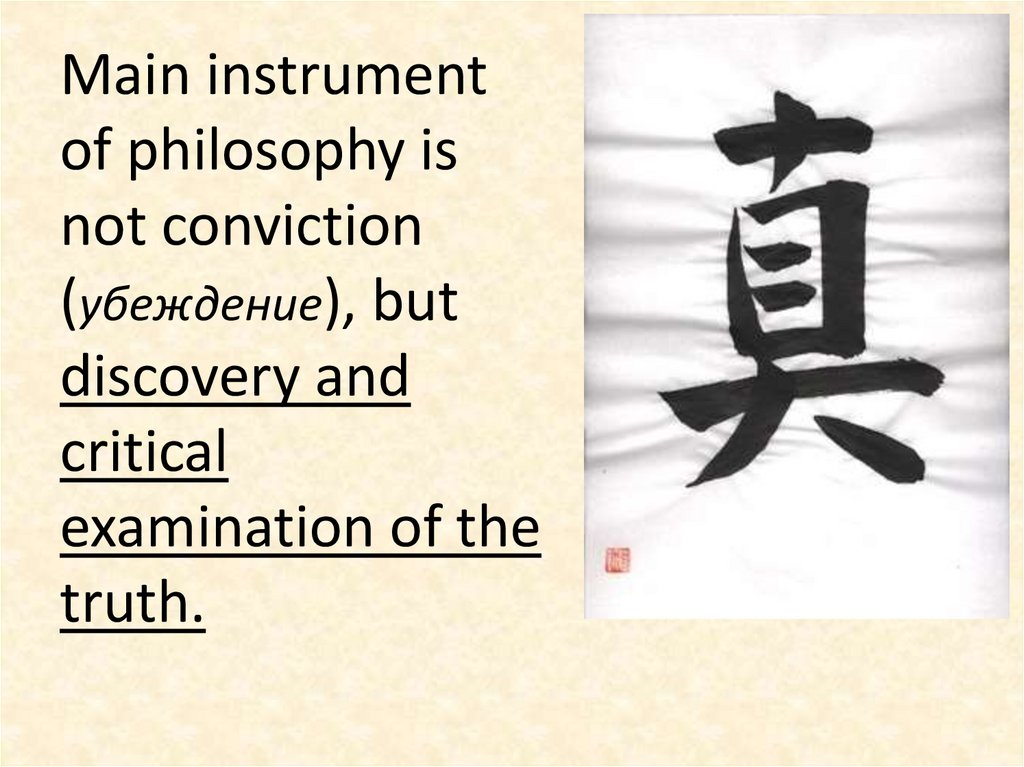
7.
For the ancient Greekphilosophers philosophy was not
only a form of knowledge,
learning, but also a form of life,
existence. And even the first form
or way of life (образ жизни).
8.
How can or shouldbegin philosophy in
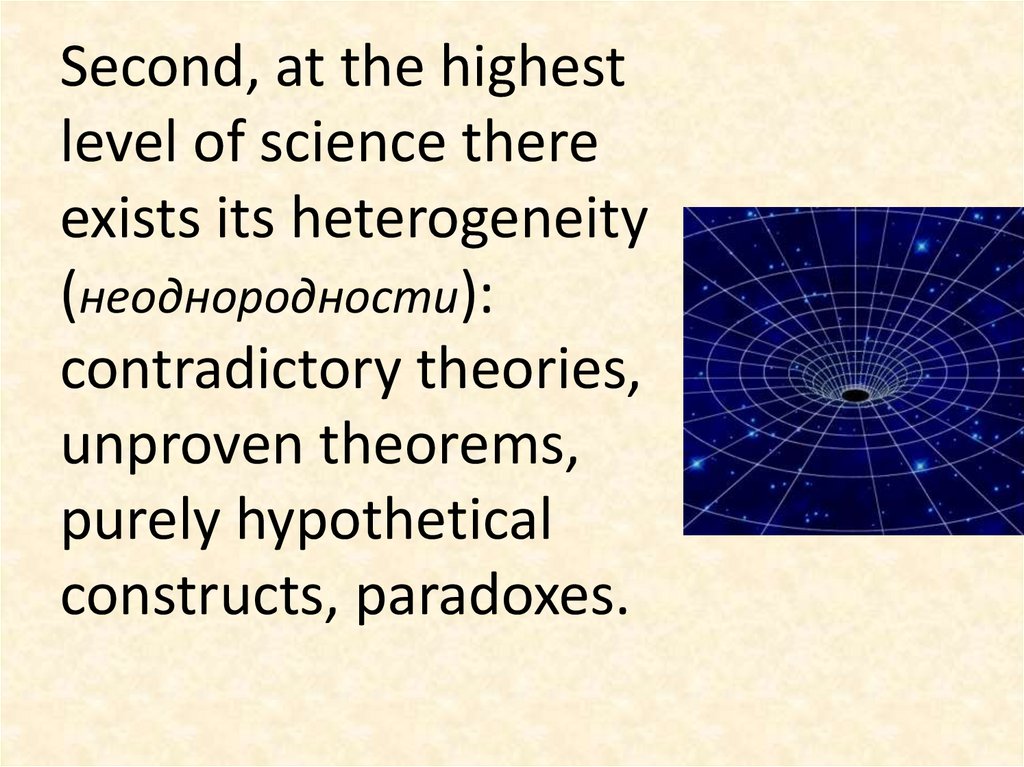
each case? And
how a single person
attached
(приобщается) to it?
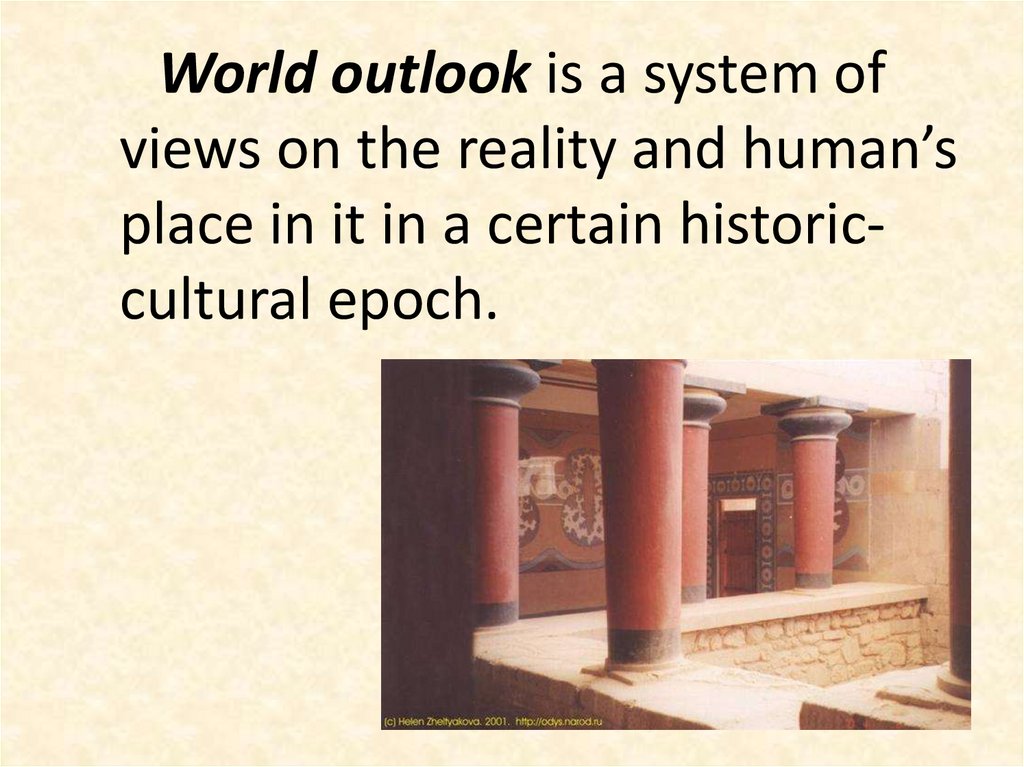
9.
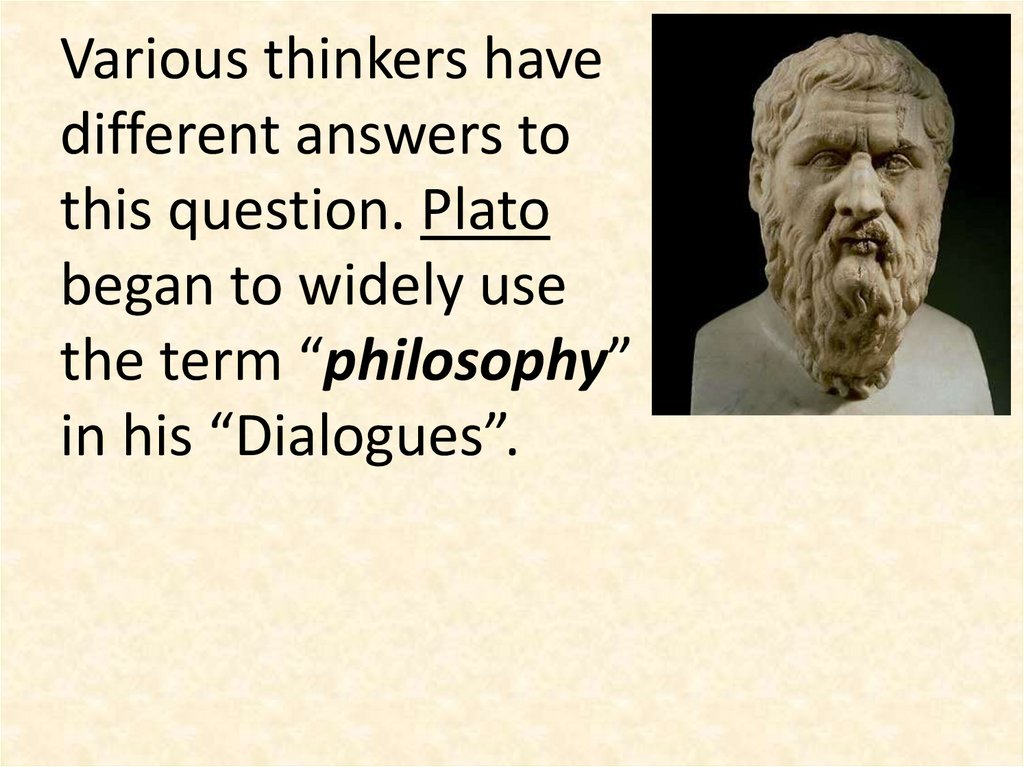
Various thinkers havedifferent answers to
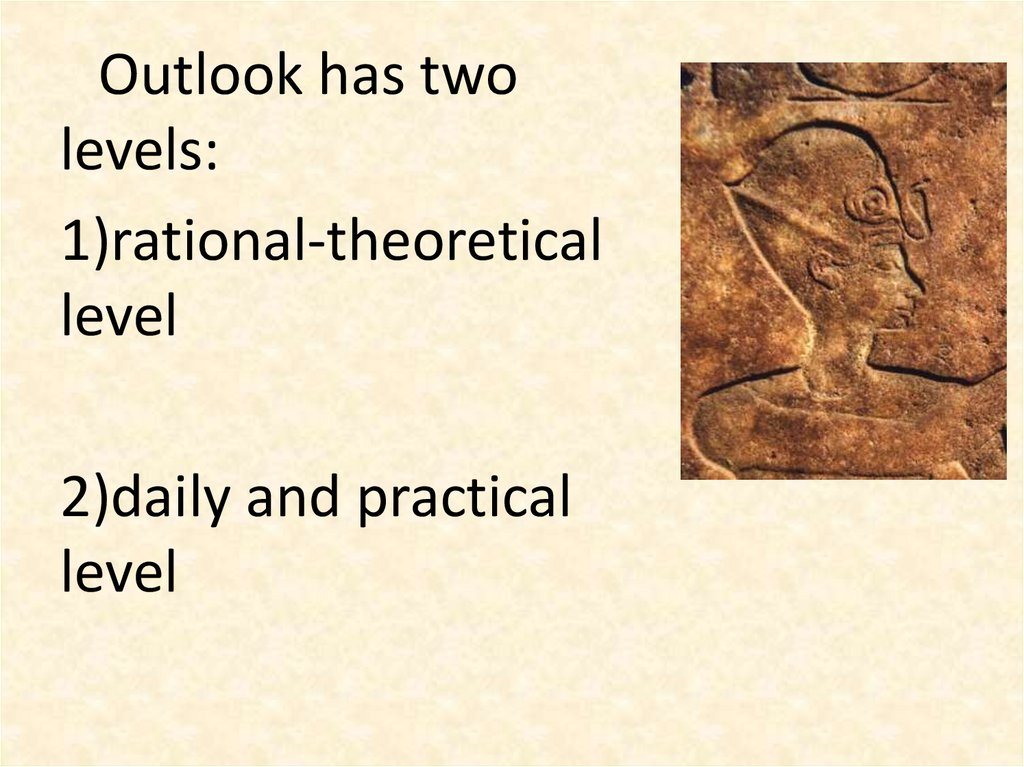
this question. Plato
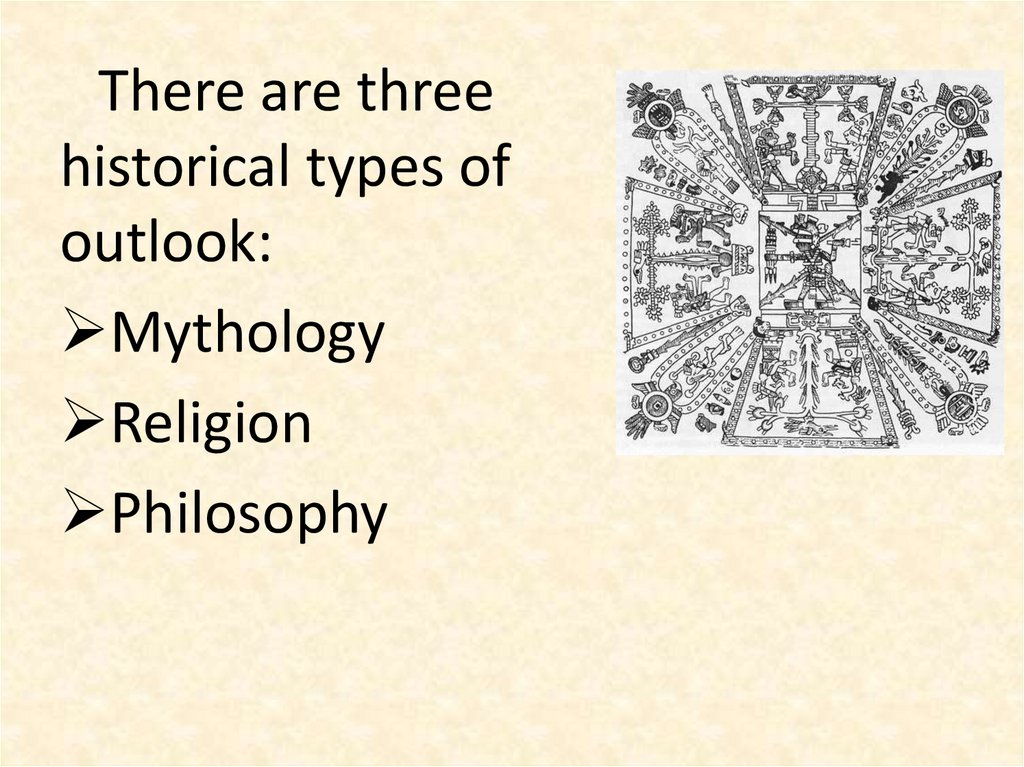
began to widely use
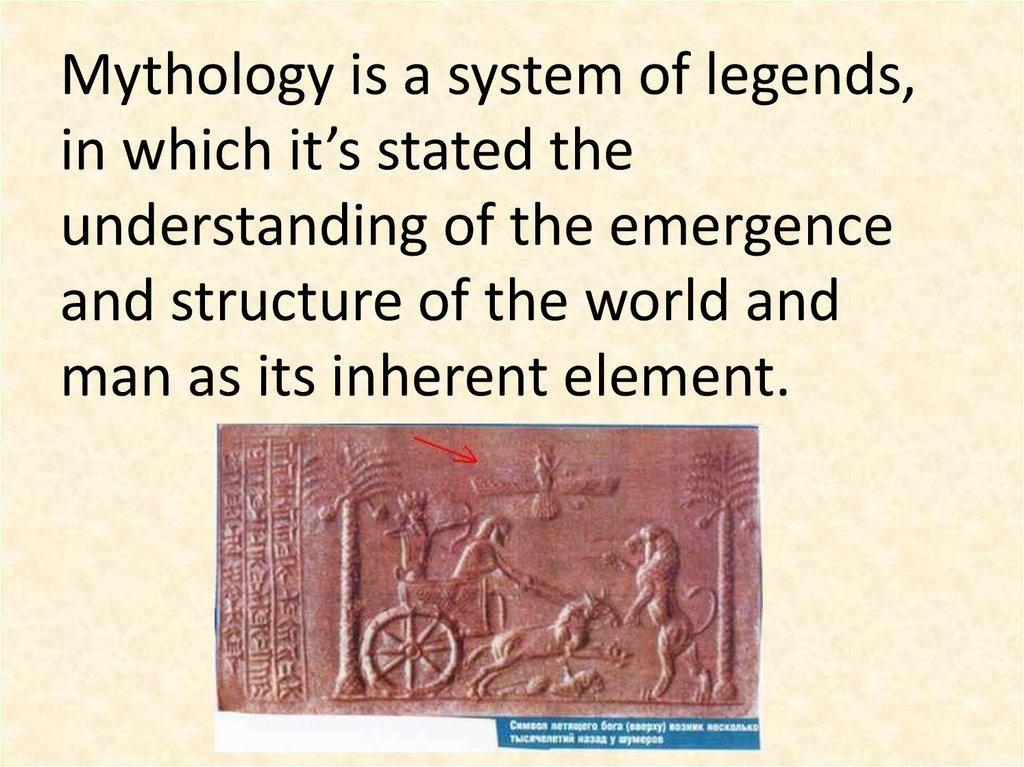
the term “philosophy”
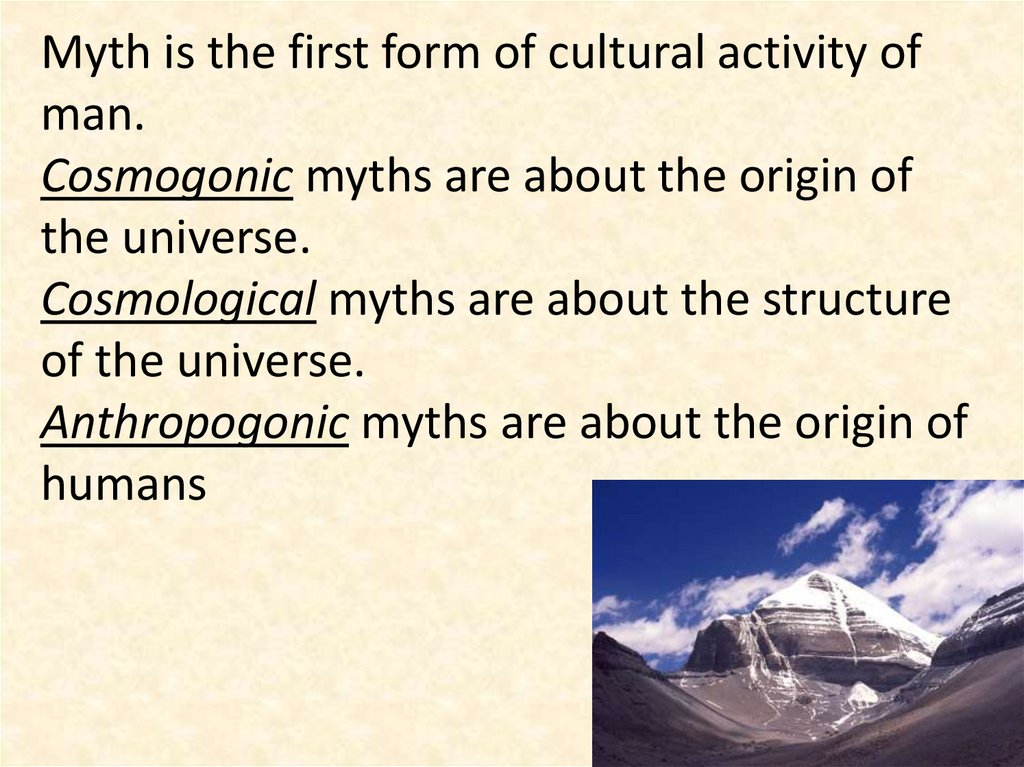
in his “Dialogues”.
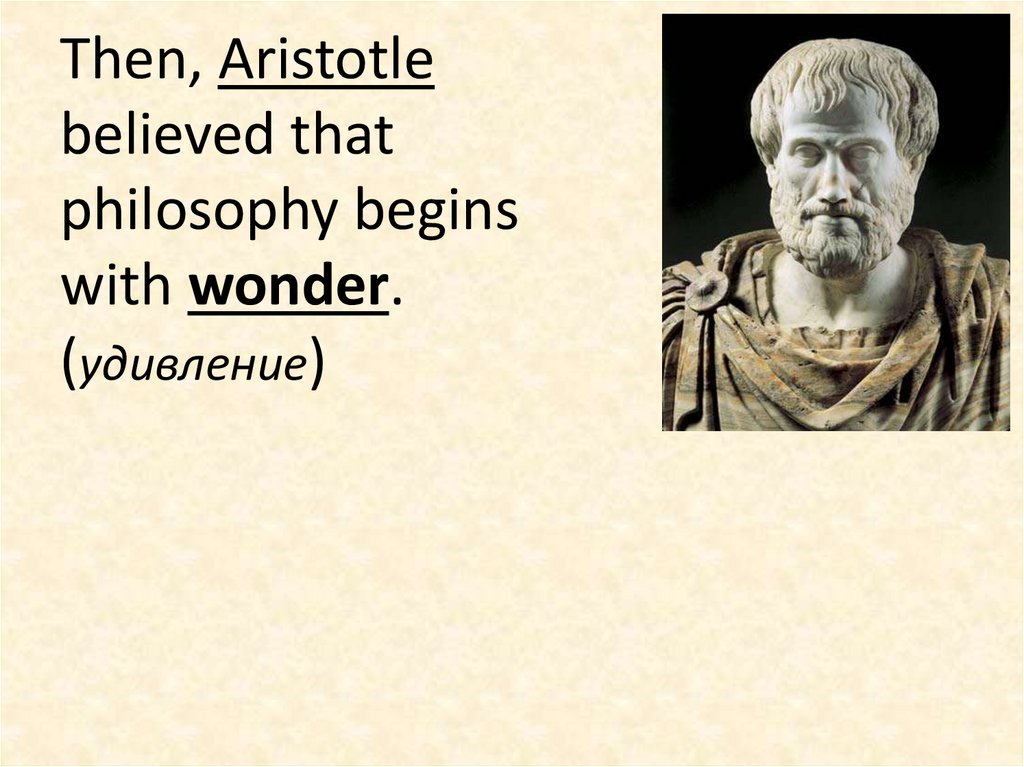
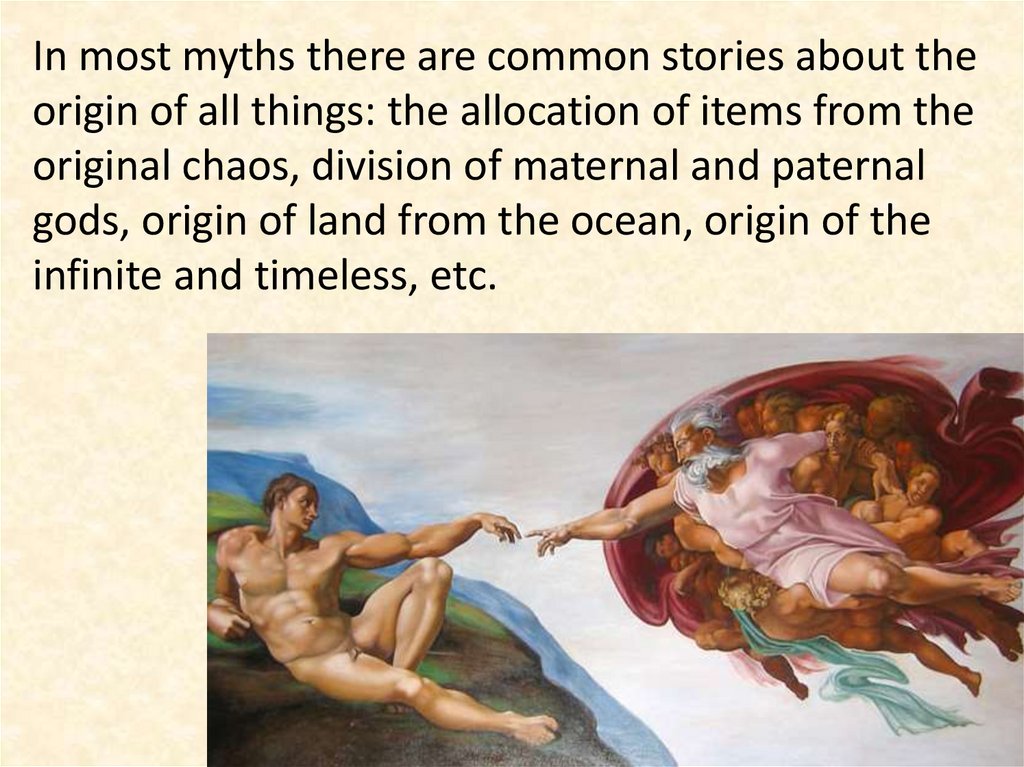
10.
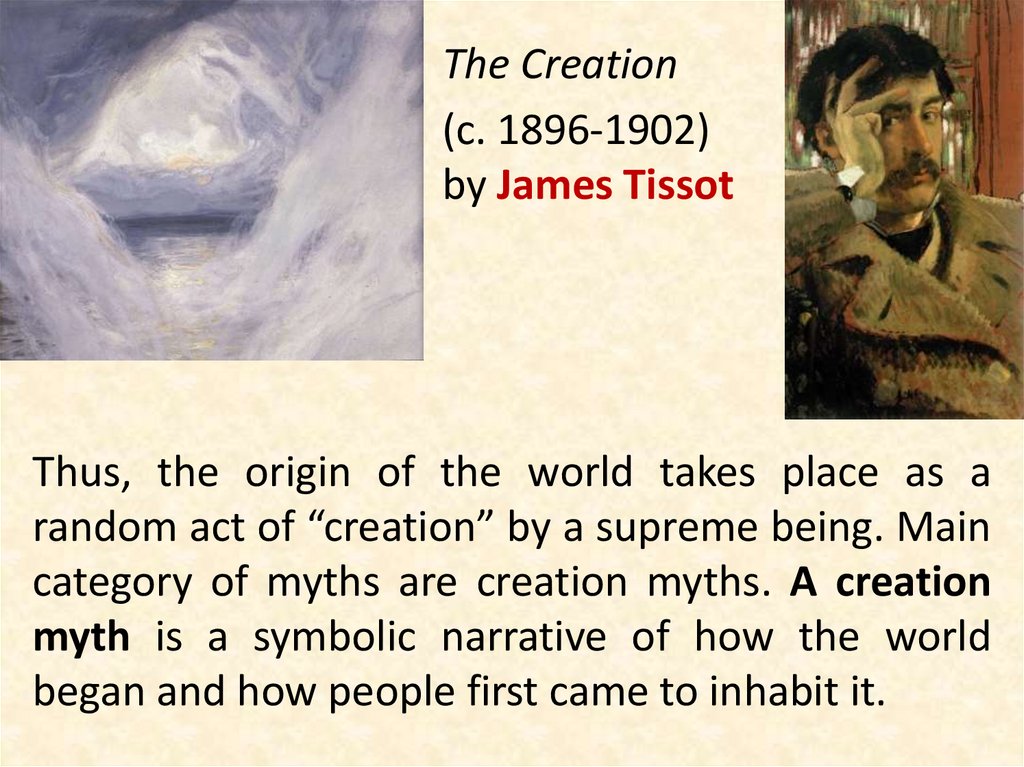
Then, Aristotlebelieved that
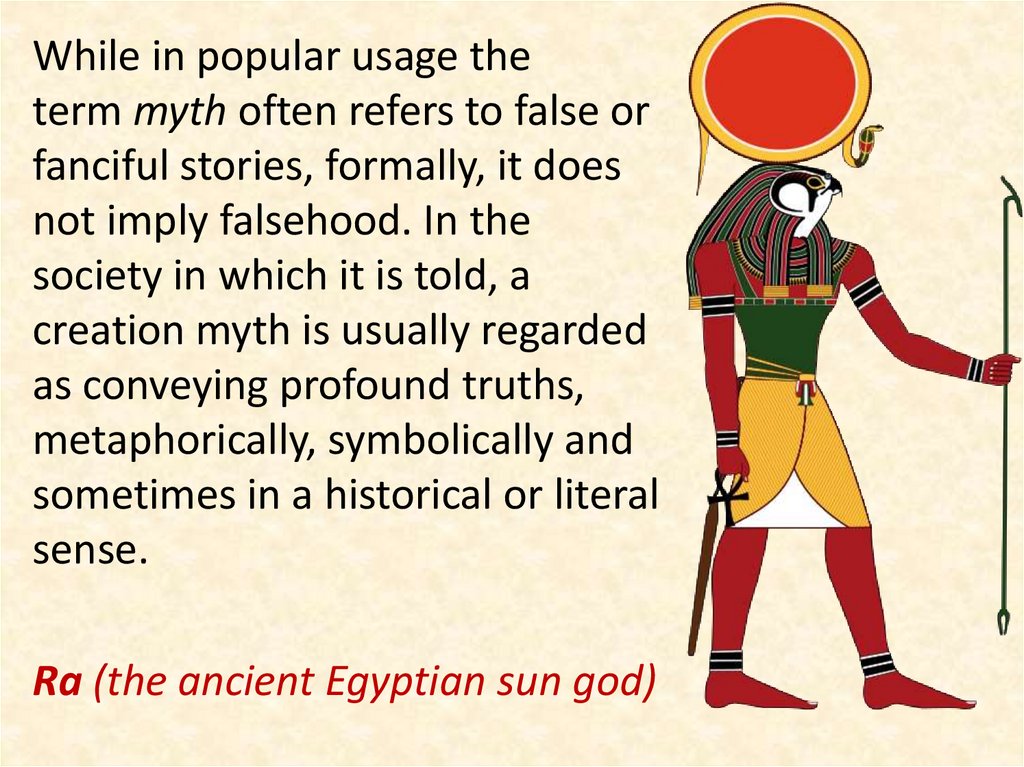
philosophy begins
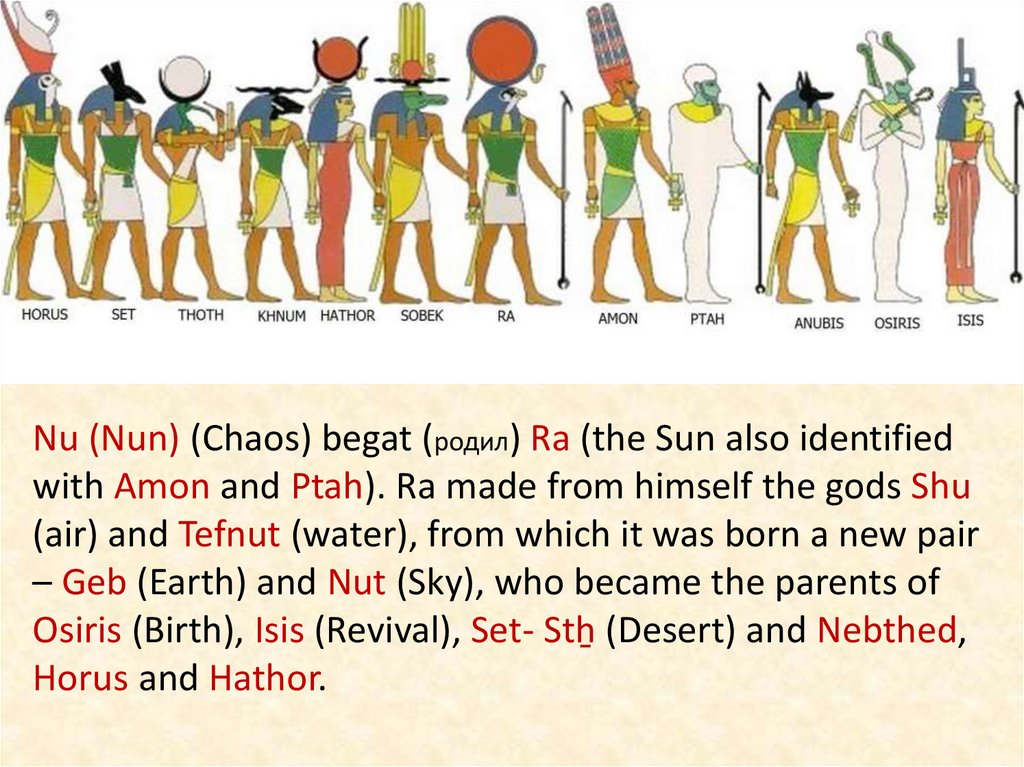
with wonder.
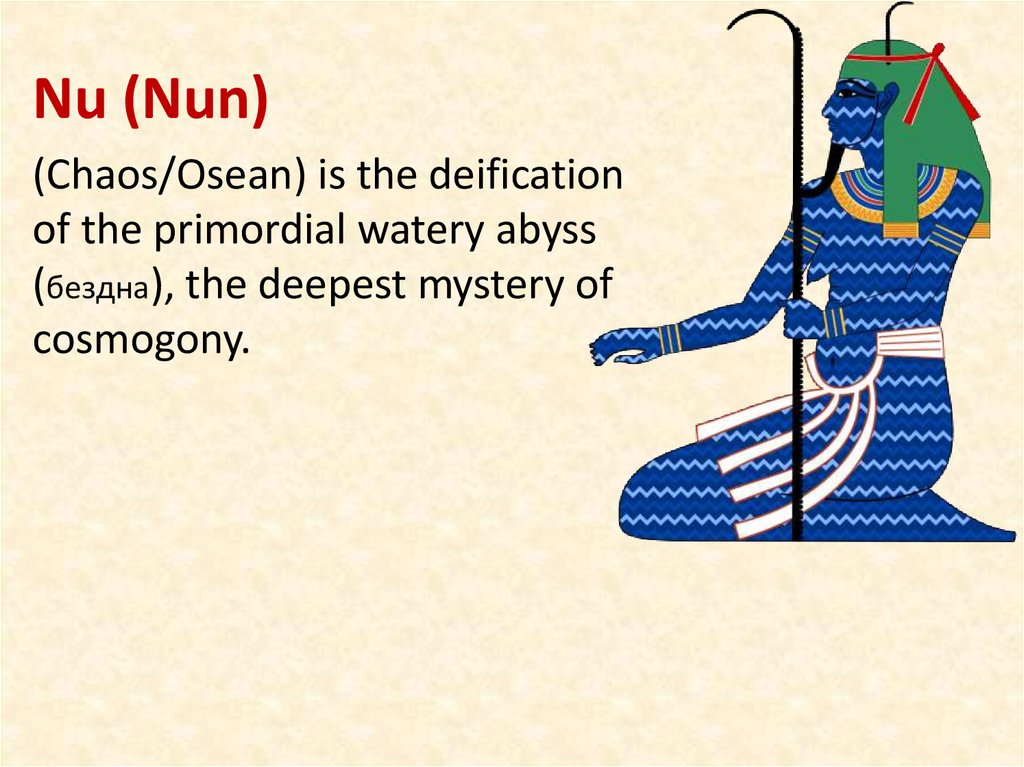
(удивление)
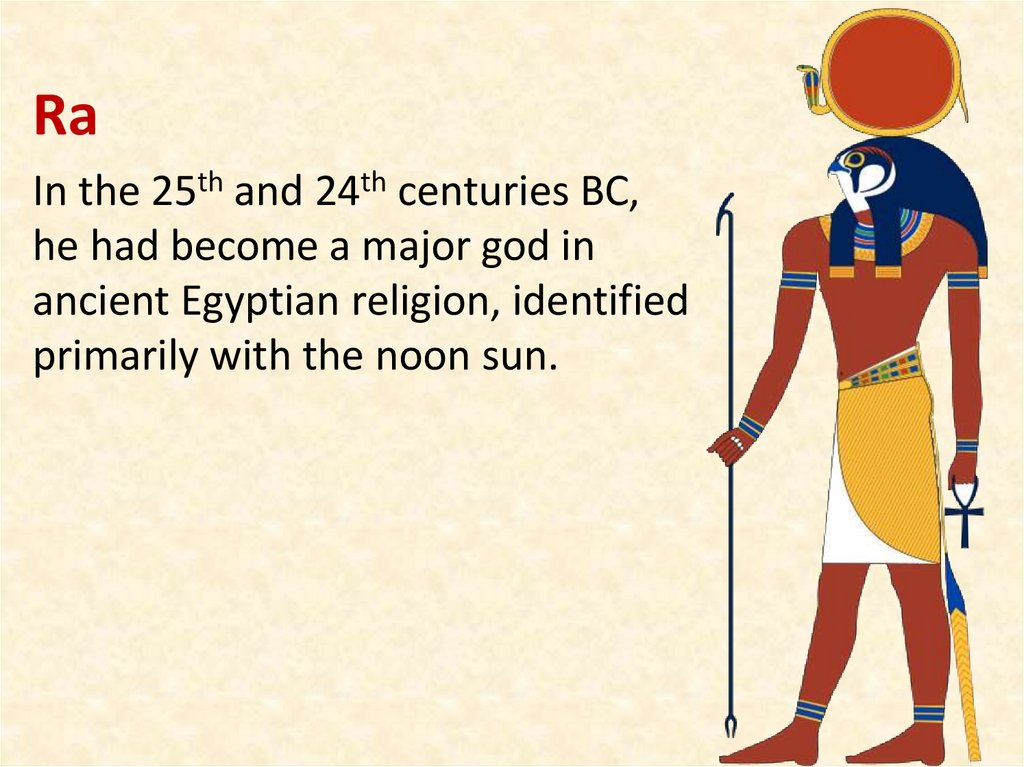
11.
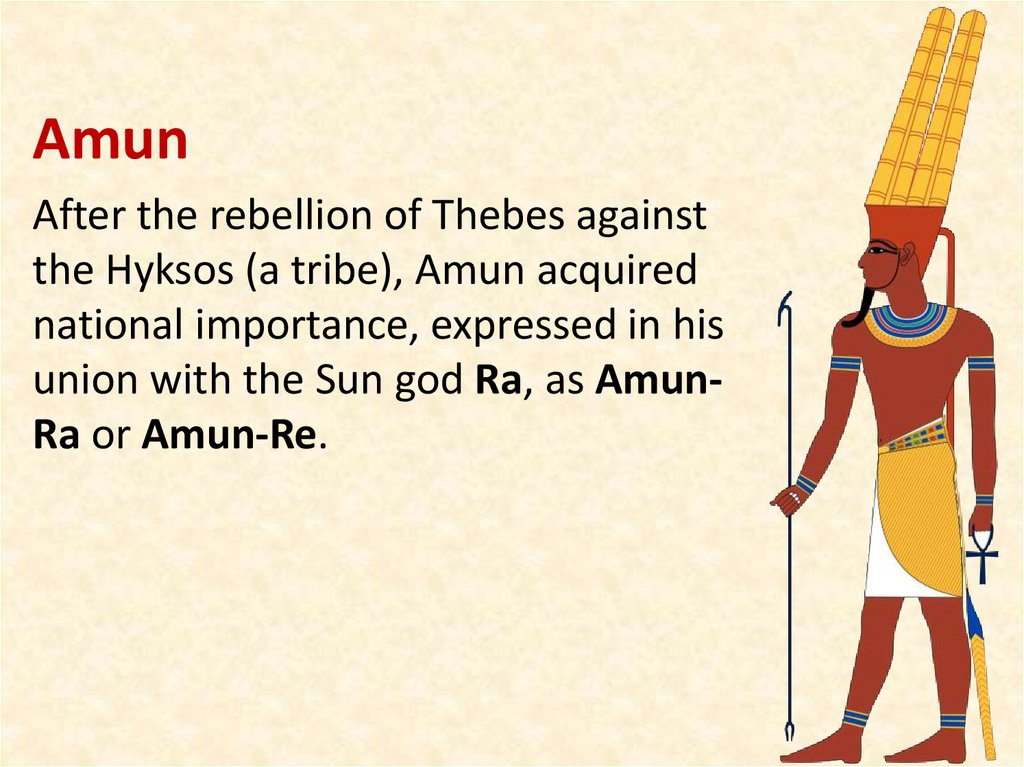
Wonder in front of the mysteryof the world, its unity and
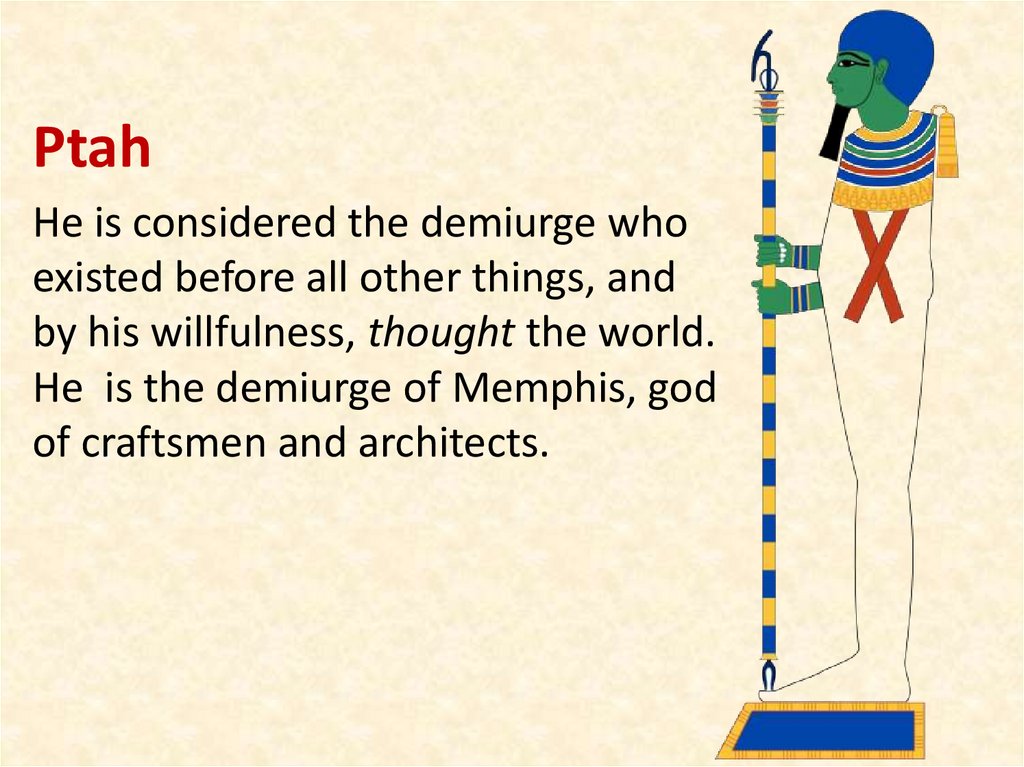
diversity (многообразие), its
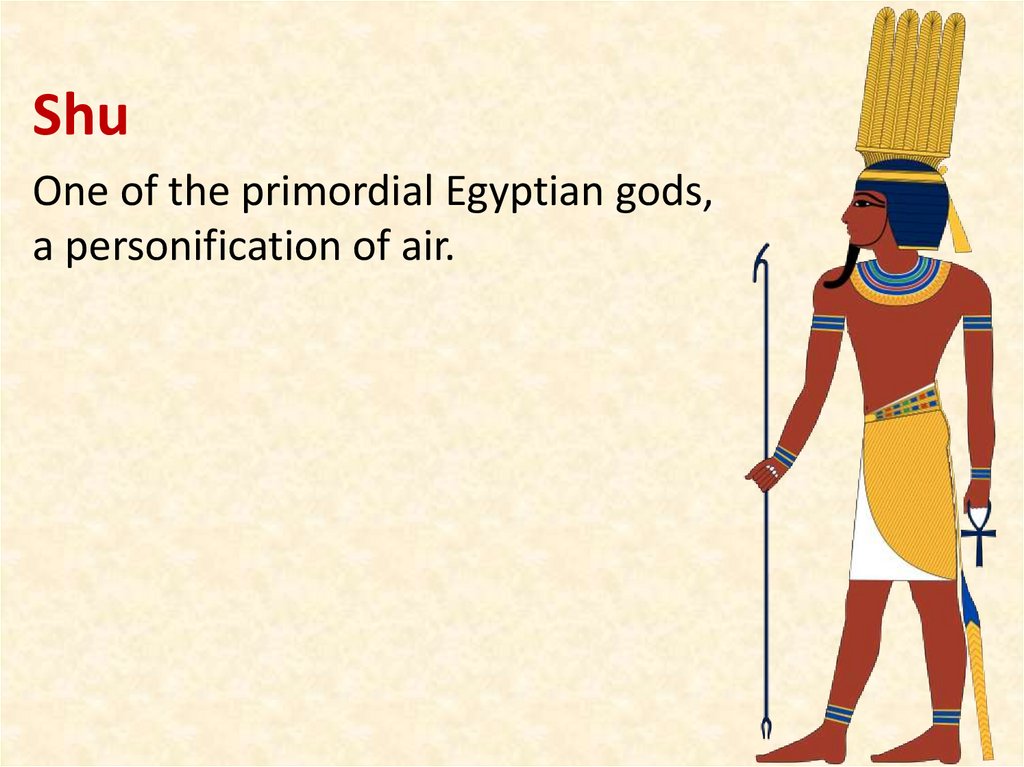
infinity. To be surprised and to
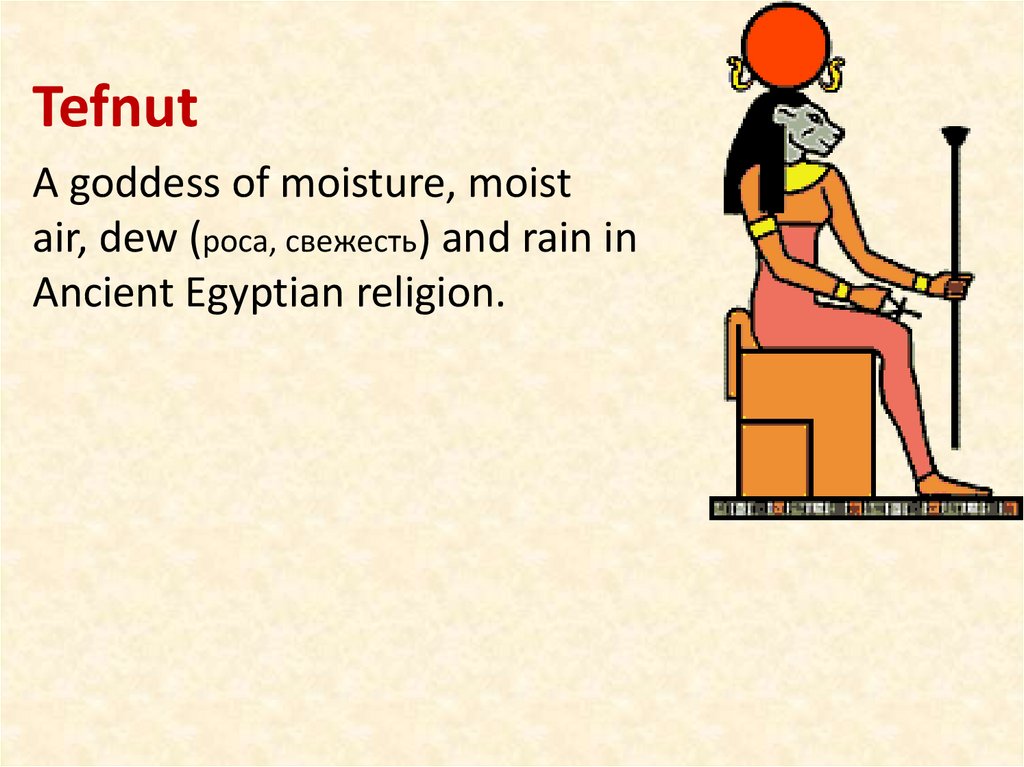
see something in its untouched
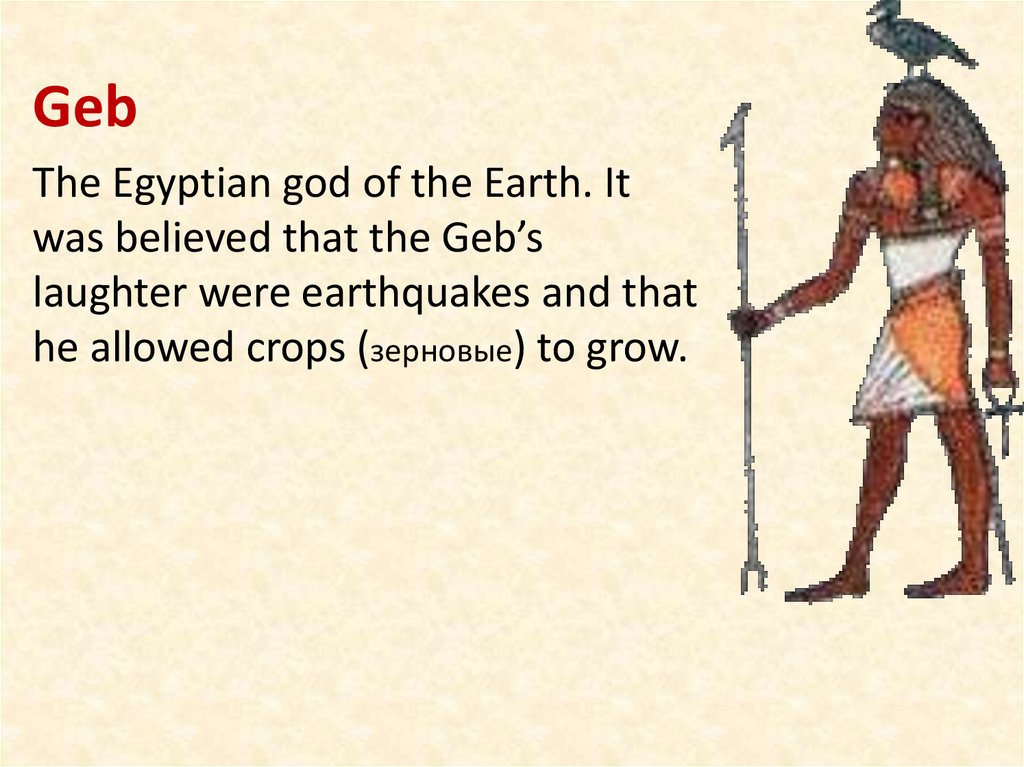
pristine (первозданность) is very
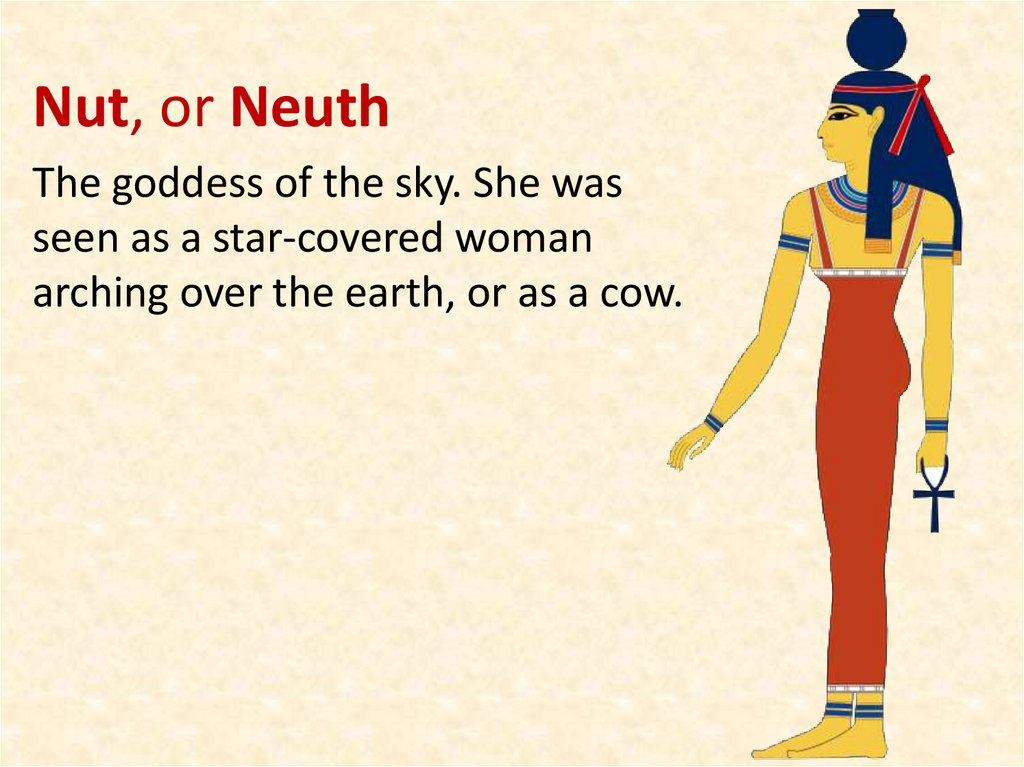
difficult.
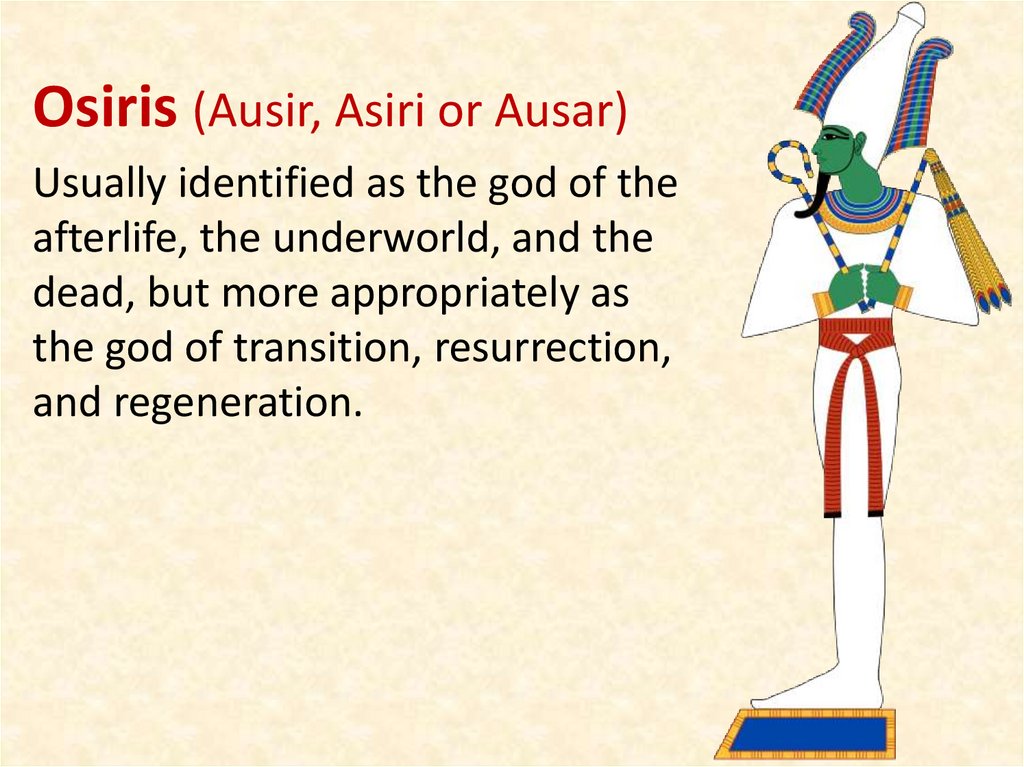
12.
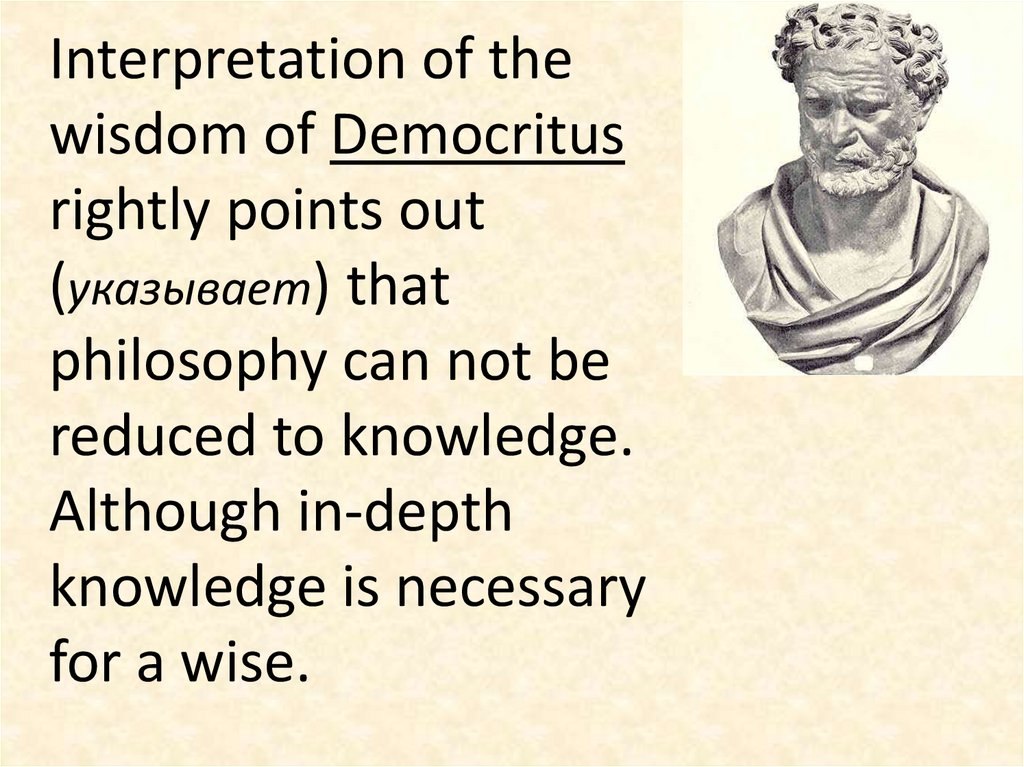
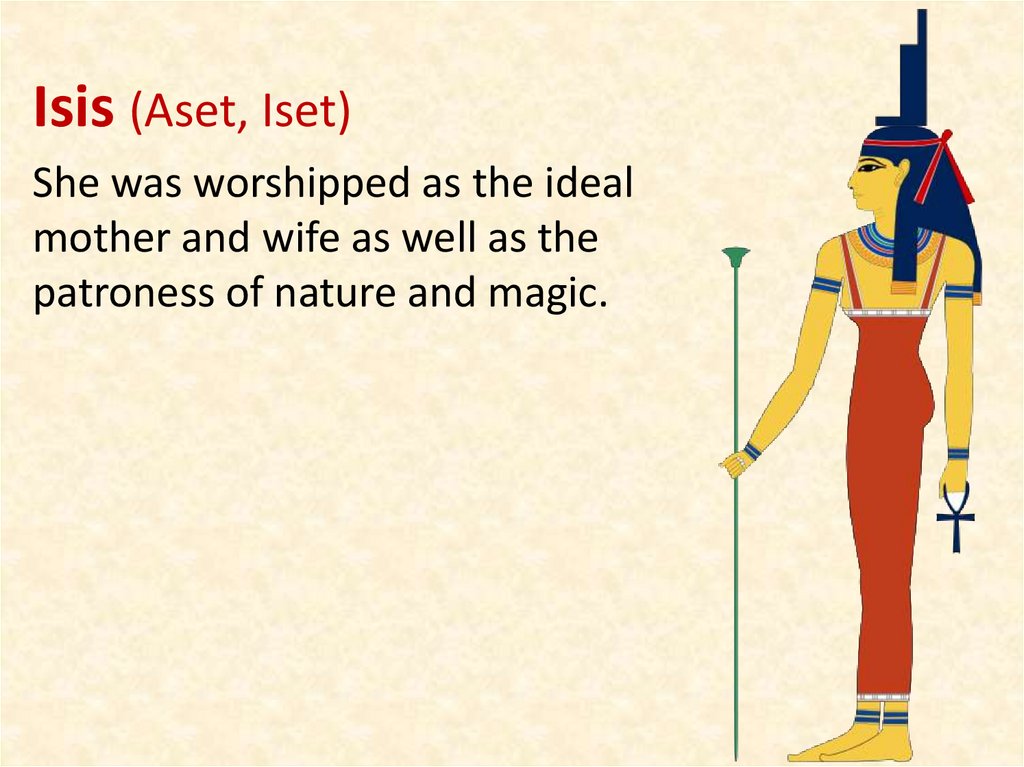
Interpretation of thewisdom of Democritus
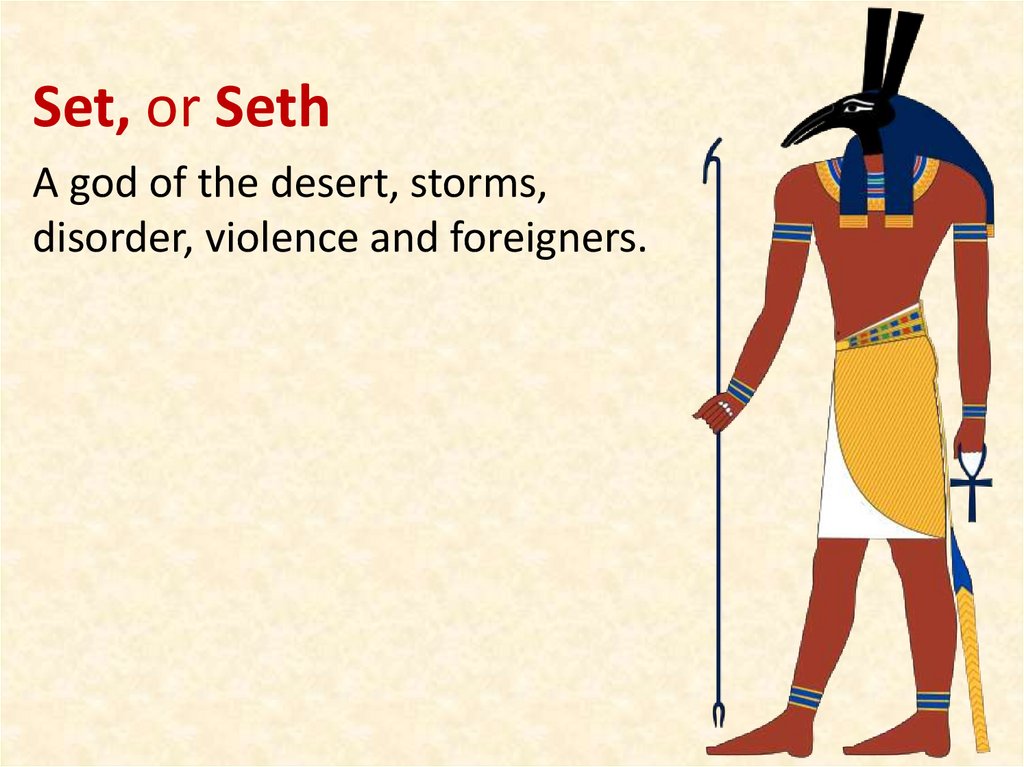
rightly points out
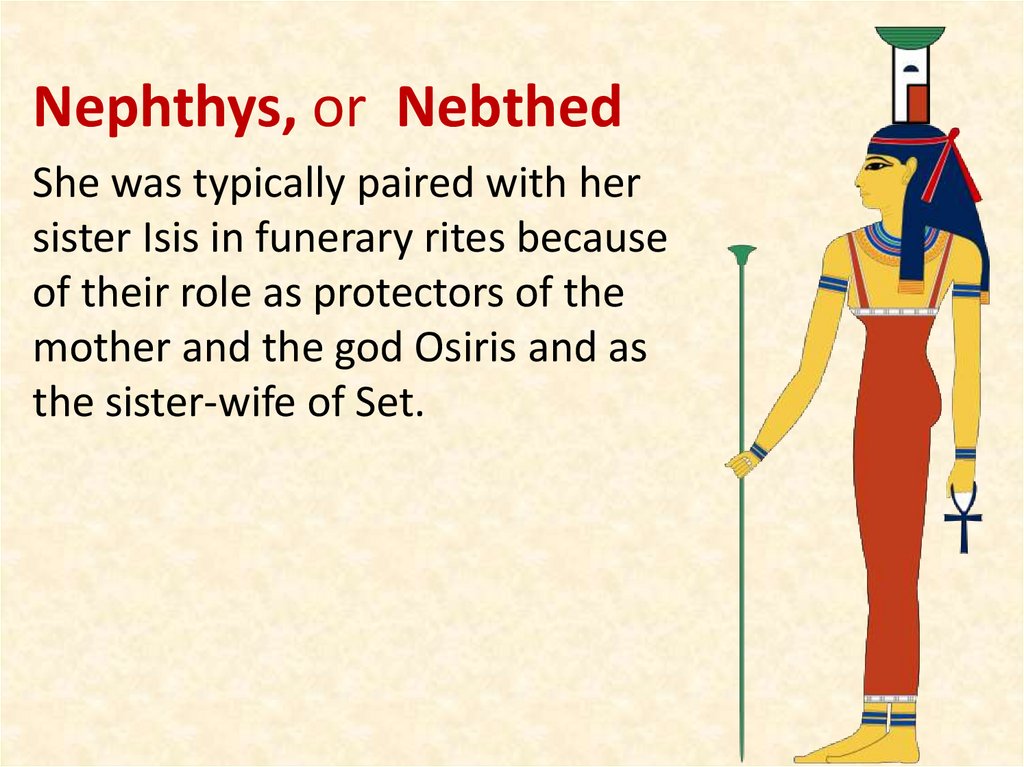
(указывает) that
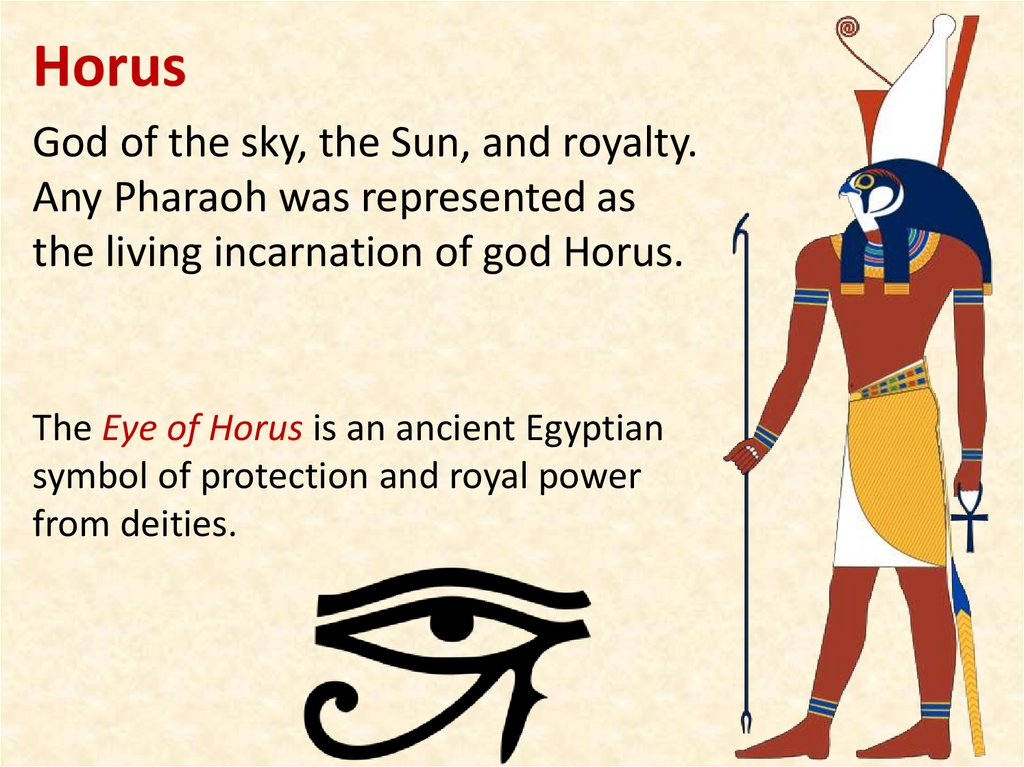
philosophy can not be
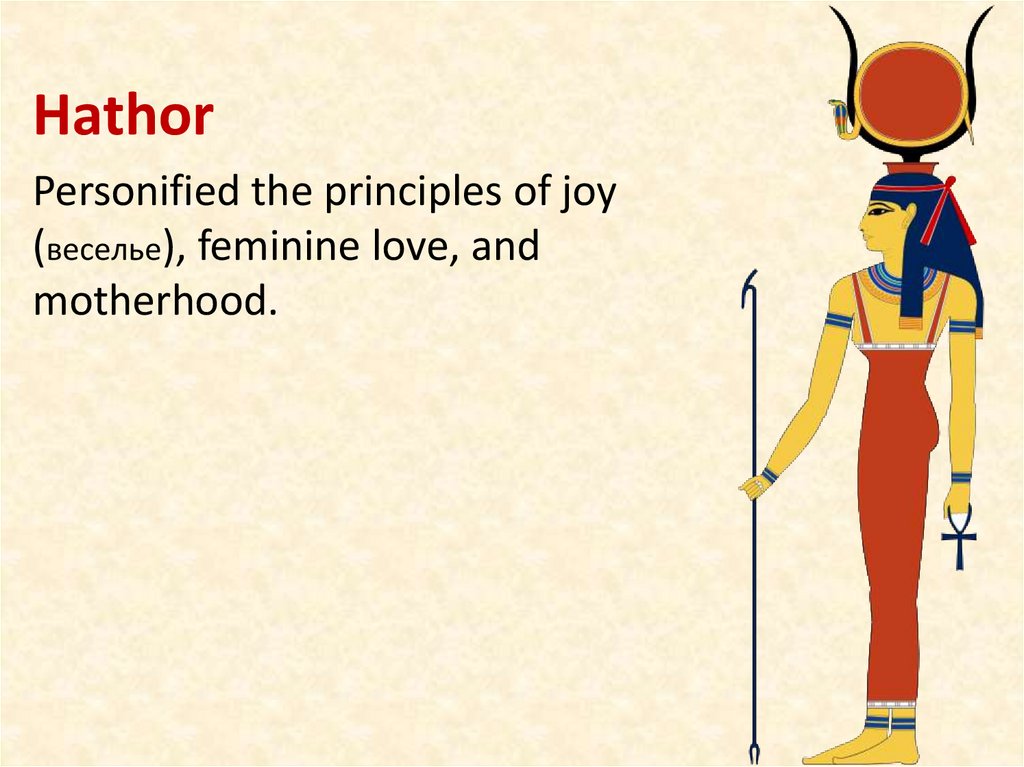
reduced to knowledge.
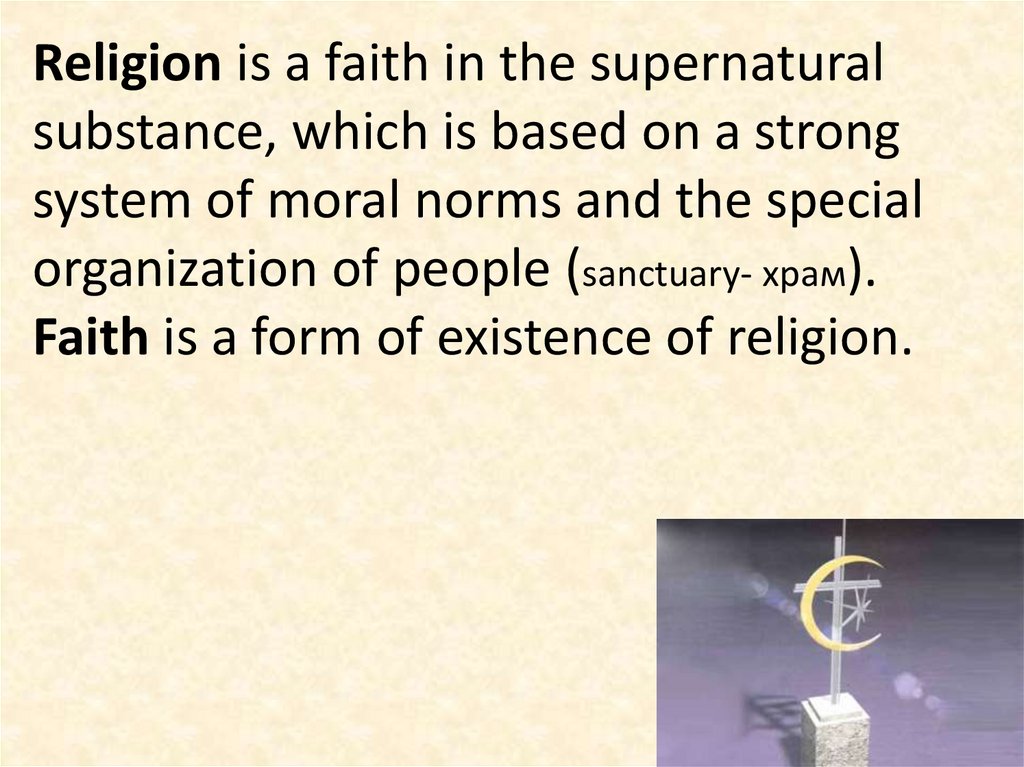
Although in-depth
knowledge is necessary
for a wise.
13.
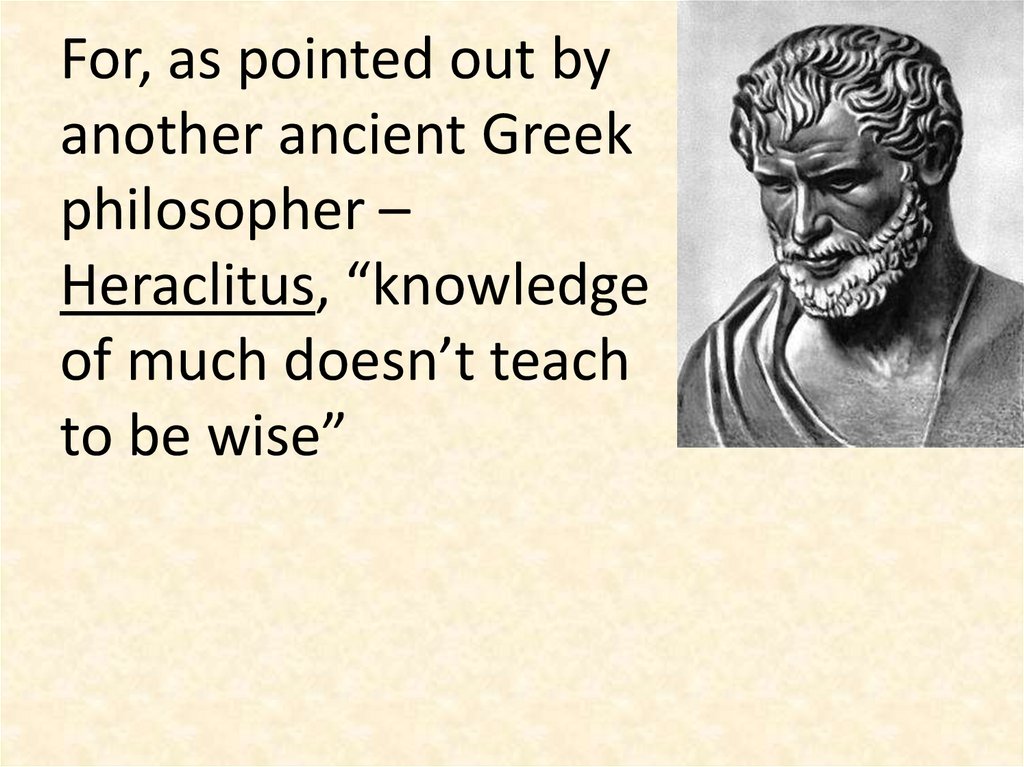
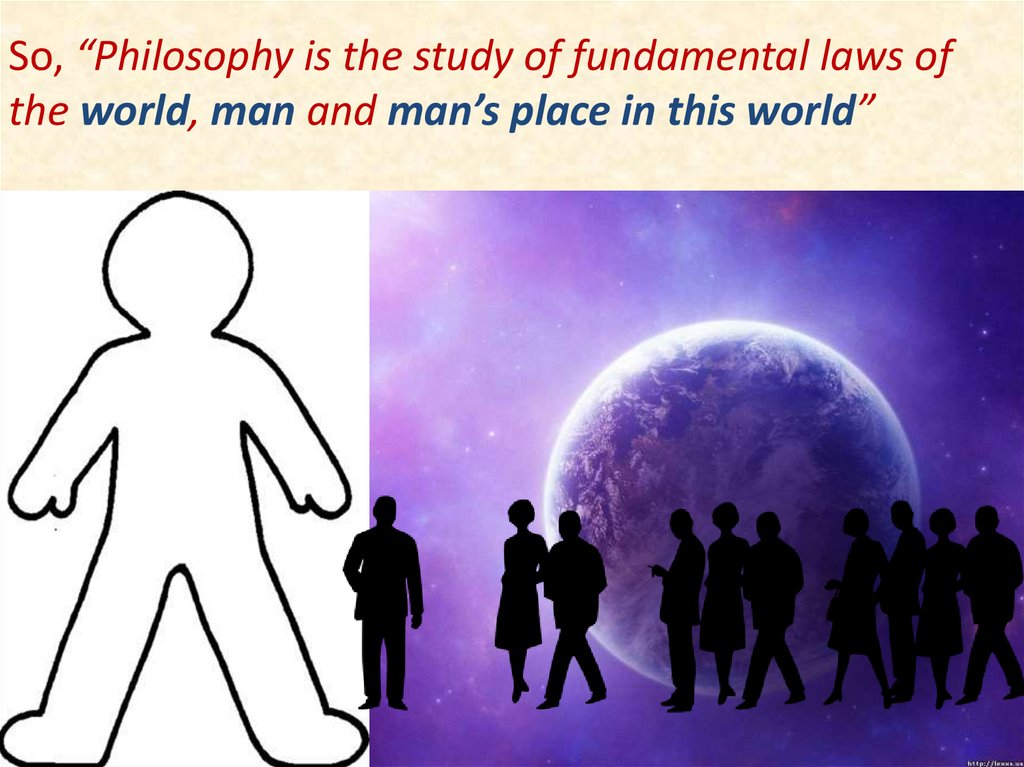
For, as pointed out byanother ancient Greek
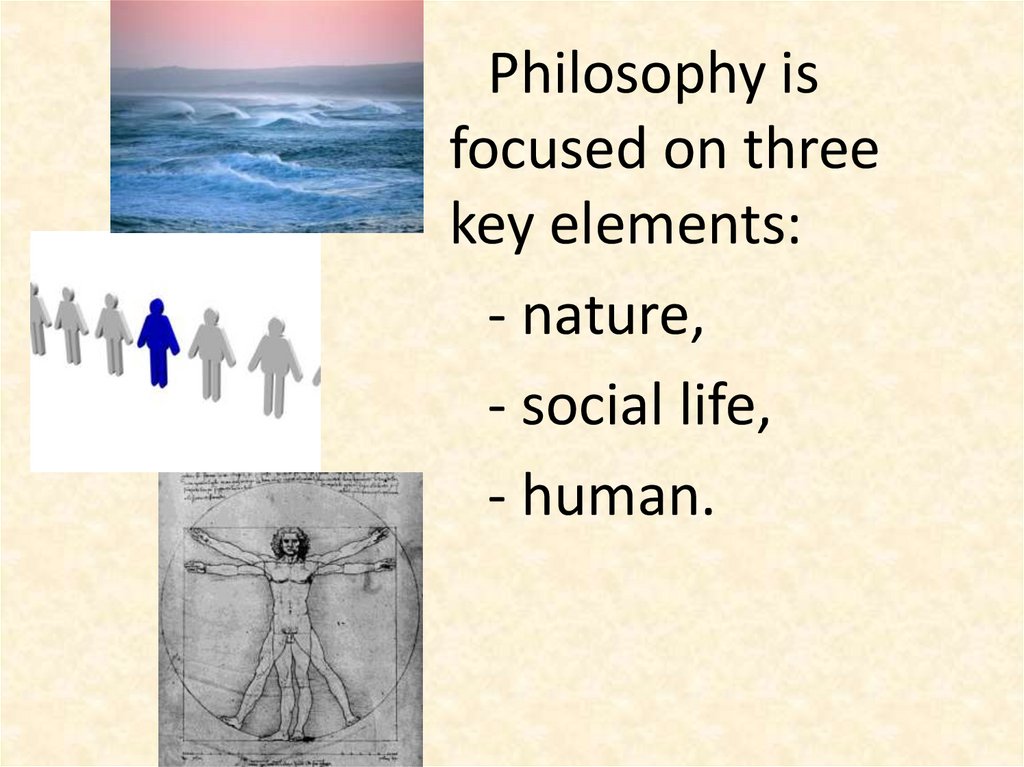
philosopher –
Heraclitus, “knowledge
of much doesn’t teach
to be wise”
14.
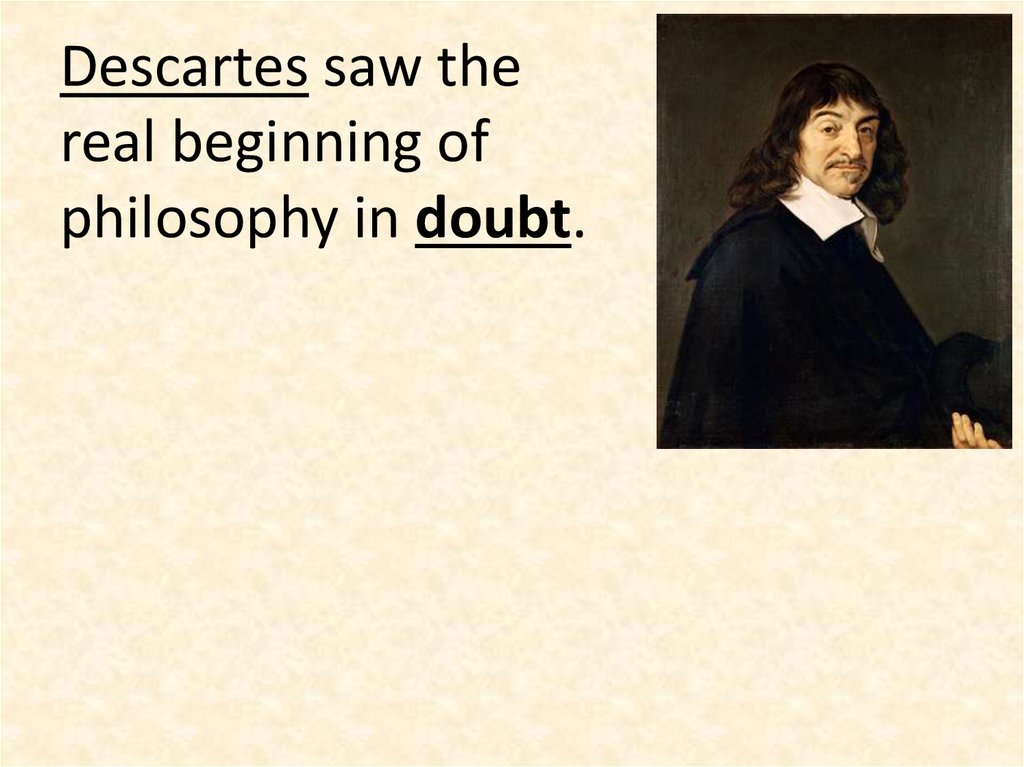
Descartes saw thereal beginning of
philosophy in doubt.
15.
Philosophical knowledge isknowledge of a hole (целое),
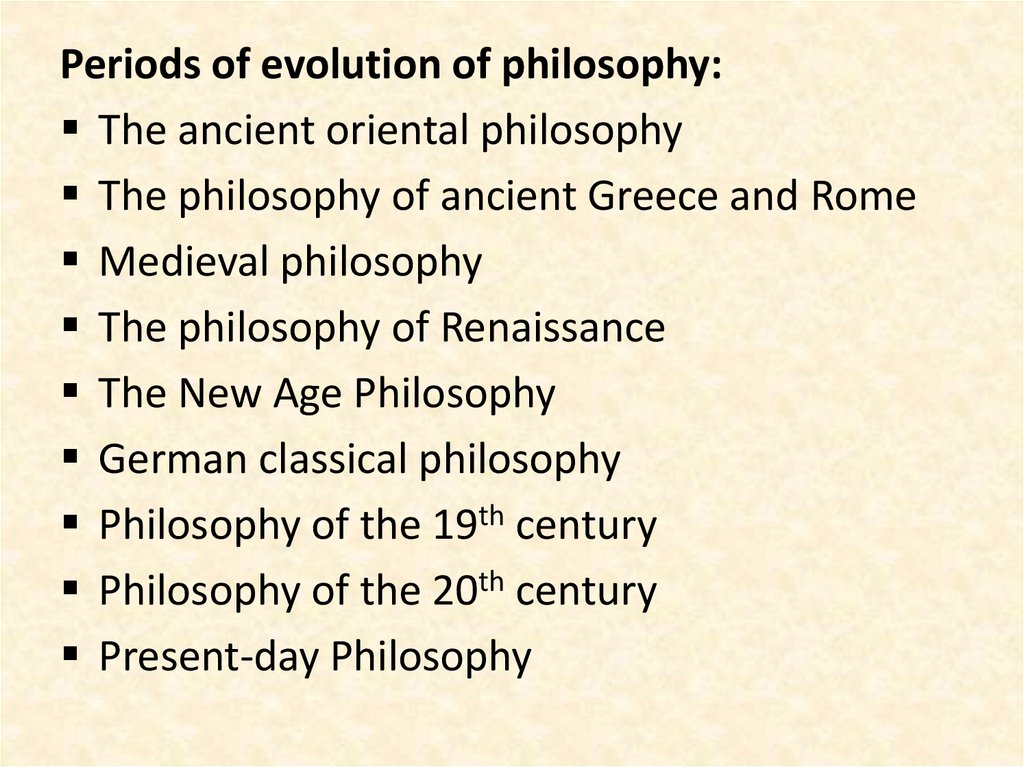
integrity of the hole. “The world
as a whole” – that could be
defined as the subject of
philosophy.
ХОЛИЗМ (от греч. … — целый, весь) — в широком смысле
позиция в философии и науке по проблеме соотношения части и
целого, исходящая из качественного своеобразия целого по
отношению к его частям. В онтологии холизм опирается на принцип:
целое всегда есть нечто большее, чем простая сумма его частей.
Соответственно его гносеологический принцип гласит: познание
целого должно предшествовать познанию его частей.
16.
The hole combines, integratesparts, provides them into unity. It
is clear that only something in
common and significant can
ensure (обеспечивать) unity of the
objects.
17.
However, it should not be takenso that philosophy does not show
any interest in the parts. Of
course, a hole doesn’t exist
without parts.
18.
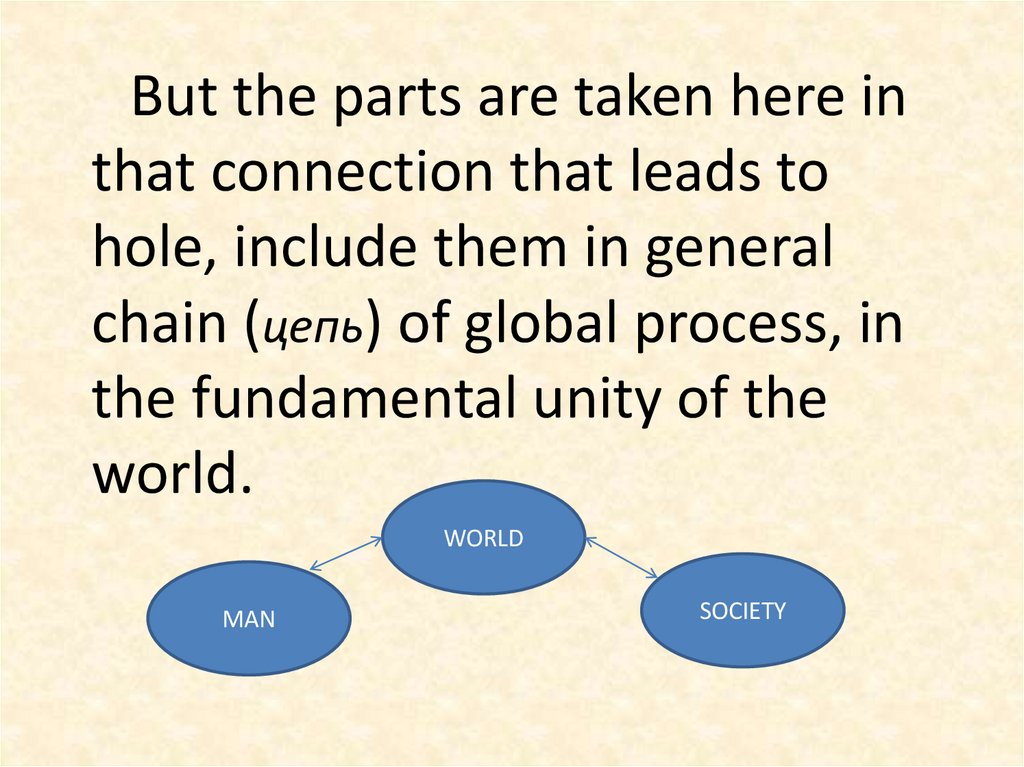
But the parts are taken here inthat connection that leads to
hole, include them in general
chain (цепь) of global process, in
the fundamental unity of the
world.
WORLD
MAN
SOCIETY
19.
It is also important to have inview that philosophy is internally
dissected (внутренне расчлененное)
formation consisting of
independent philosophic studies:
20.
• Ontology – study of being• Gnoseology – theory of cognition
• Epistemology - study of knowledge
• Philosophical anthropology –
study of man
• Social philosophy – philosophy of
society
21.
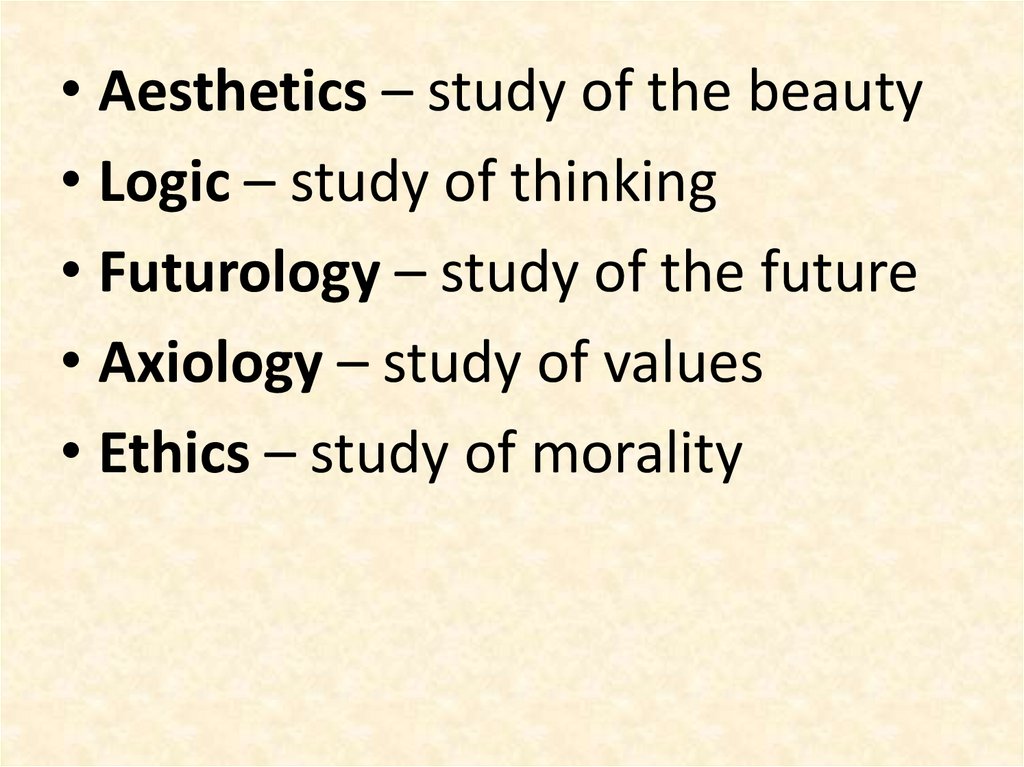
• Aesthetics – study of the beauty• Logic – study of thinking
• Futurology – study of the future
• Axiology – study of values
• Ethics – study of morality
22.
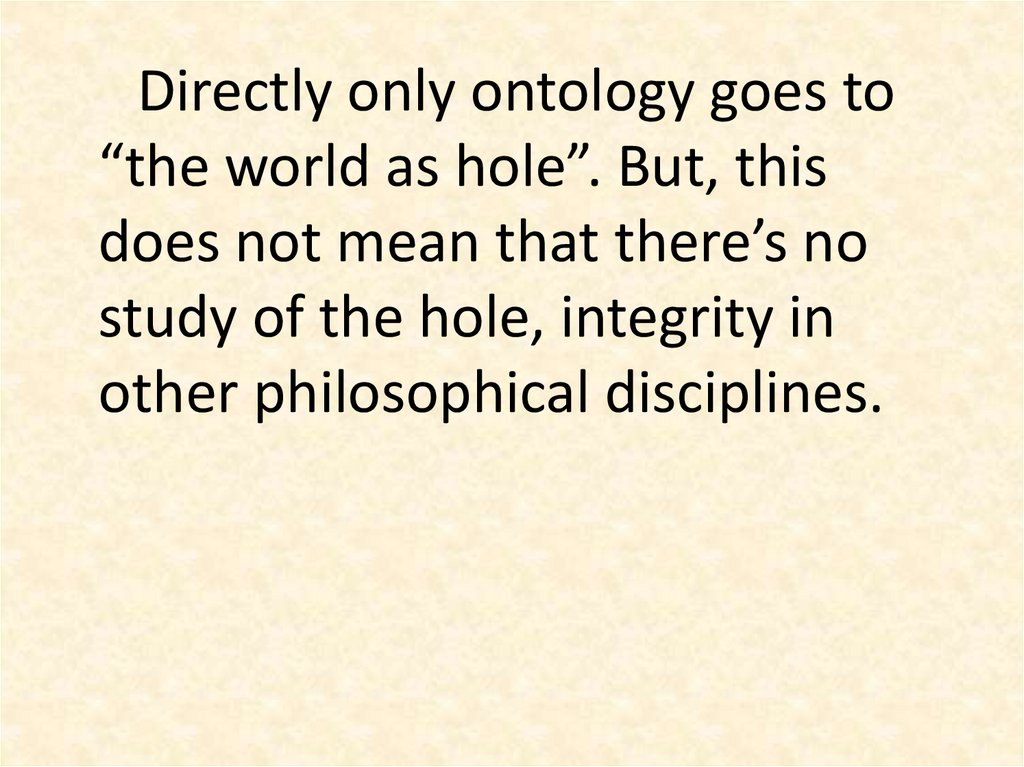
Directly only ontology goes to“the world as hole”. But, this
does not mean that there’s no
study of the hole, integrity in
other philosophical disciplines.
23.
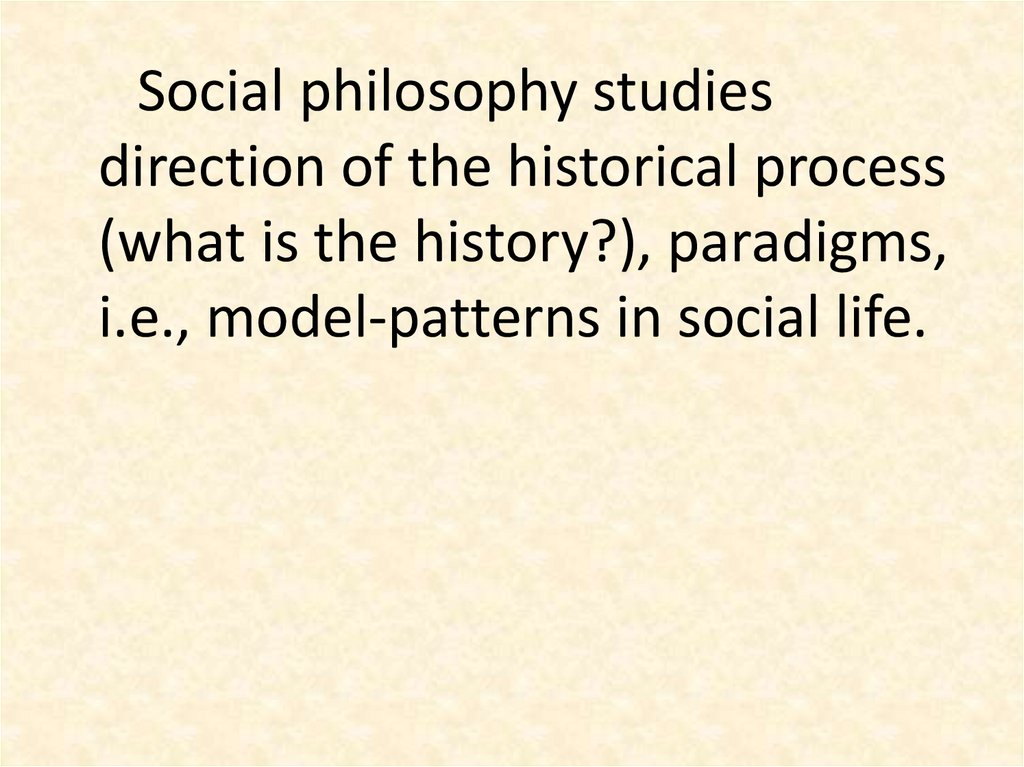
Social philosophy studiesdirection of the historical process
(what is the history?), paradigms,
i.e., model-patterns in social life.
24.
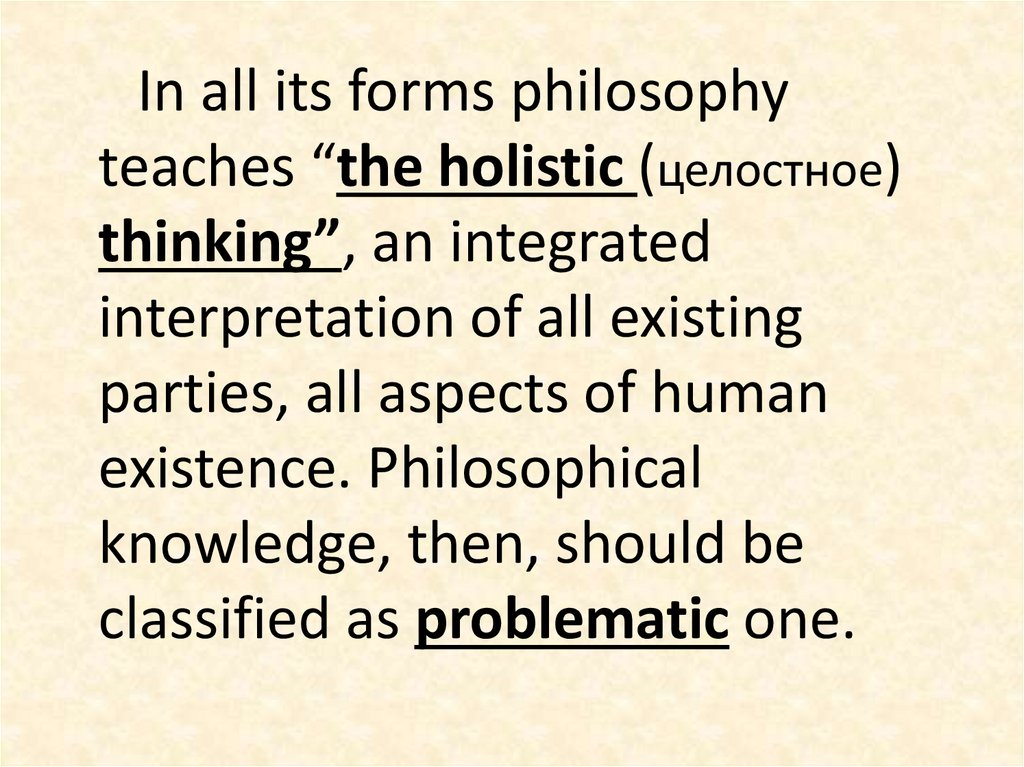
In all its forms philosophyteaches “the holistic (целостное)
thinking”, an integrated
interpretation of all existing
parties, all aspects of human
existence. Philosophical
knowledge, then, should be
classified as problematic one.
25.
In a rigorous, logicalphilosophical approach everyproblem reveals (обнаруживает) its
true meaning that is to be an
issue on which there is no answer
in the existing system of
knowledge, but which,
nevertheless, growing out from it.
26.
In this contextwe can
understand the
Socratic
phrase:
“I know that I
know nothing”
27.
In fact, expanding(расширяя) the circle
of knowledge, we
increase the area
of contact with the
world of ignorance,
or unknown.
28.
There are problems in anyscience, but in philosophy they
have eternal nature. That is
philosophy deals with the
problems, which don’t have any
final solution.
29.
Each era and every great thinkergive their own interpretation,
understanding and resolution of
philosophical problems – more or
less authentic (достоверное),
compelling (убедительное), but a
very relative.
30.
Philosophical knowledge is notonly problematic, but alternative.
Philosophy makes a lot of different
responses on any fundamental
question . There is no the Answer,
but there are a lot of answers.
31.
Philosophical knowledge alsocomes as critical knowledge.
Philosophy reflects all dogmas,
teachings, authorities,
values which are circulating
(имеют хождение) in society.
32.
Philosophicalcriticism reveals
(выявляет)
limitations and
the relativity of
all knowledge.
33.
In this respect,philosophy is
different than
rhetoric which
convinces (убедить)
a listener in one
way of opinion.
34.
Main instrumentof philosophy is
not conviction
(убеждение), but
discovery and
critical
examination of the
truth.
35.
Criticism is naturally connectedwith reflection. Reflection is selfconscious (самоосознающее) or
cognitive thinking, self-aware
(самоосознающее) knowledge
search. Reflective thought is a
thought, turned on itself.
36.
Philosophical knowledge can bedescribed as well as humanistic
knowledge. In this case, we
investigate person as a
philosophical phenomenon
because every person exists as
active side of relationships
between human and the world.
37.
Philosophy discoversuniversality in its human,
humanistic dimension and
meaning. Philosophy explores the
world, displayed (отображенный)
on individual world.
38.
Knowledge becomesphilosophical knowledge when it
is projected on human being and
is involved in the formation of his
worldview.
39.
Philosophy and science40.
Solution of the question “isphilosophy science?” depends on
how we understand science and
how we evaluate philosophy.
Science is usually identified with
a system of true knowledge, but
it is an exagge’ration
(преувеличение).
41.
First, the foundation of anyscience has highly uncertain
character.
42.
Second, at the highestlevel of science there
exists its heterogeneity
(неоднородности):
contradictory theories,
unproven theorems,
purely hypothetical
constructs, paradoxes.
43.
Third, science is a socialinstitution, i.e., social diversity
which contains people, their
research roles, misconceptions
(заблуждения), prejudices
(предрассудки), rumors (слухи), etc.
44.
Philosophy has morecomprehensive nature, intended to
generalize the truth. Philosophy
unites not only scientific, but
religious, ethical, aesthetic and
other theories and opinions.
45. Historical types of outlook: mythology, religion, philosophy
46.
World outlook is a system ofviews on the reality and human’s
place in it in a certain historiccultural epoch.
47.
Outlook has a definite structure:everyday and scientific knowledge,
creeds (убеждения), faith, principles
etc.
Outlook carries out the function of
human’s knowledge of the outer
world.
48.
Outlook has twolevels:
1)rational-theoretical
level
2)daily and practical
level
49.
There are threehistorical types of
outlook:
Mythology
Religion
Philosophy
50.
Mythology is a system of legends,in which it’s stated the
understanding of the emergence
and structure of the world and
man as its inherent element.
51. Myth is the first form of cultural activity of man. Cosmogonic myths are about the origin of the universe. Cosmological myths
are about the structureof the universe.
Anthropogonic myths are about the origin of
humans
52.
In most myths there are common stories about theorigin of all things: the allocation of items from the
original chaos, division of maternal and paternal
gods, origin of land from the ocean, origin of the
infinite and timeless, etc.
53. Thus, the origin of the world takes place as a random act of “creation” by a supreme being. Main category of myths are creation
The Creation(c. 1896-1902)
by James Tissot
Thus, the origin of the world takes place as a
random act of “creation” by a supreme being. Main
category of myths are creation myths. A creation
myth is a symbolic narrative of how the world
began and how people first came to inhabit it.
54.
While in popular usage theterm myth often refers to false or
fanciful stories, formally, it does
not imply falsehood. In the
society in which it is told, a
creation myth is usually regarded
as conveying profound truths,
metaphorically, symbolically and
sometimes in a historical or literal
sense.
Ra (the ancient Egyptian sun god)
55.
Nu (Nun) (Chaos) begat (родил) Ra (the Sun also identifiedwith Amon and Ptah). Ra made from himself the gods Shu
(air) and Tefnut (water), from which it was born a new pair
– Geb (Earth) and Nut (Sky), who became the parents of
Osiris (Birth), Isis (Revival), Set- Stẖ (Desert) and Nebthed,
Horus and Hathor.
56.
Nu (Nun)(Chaos/Osean) is the deification
of the primordial watery abyss
(бездна), the deepest mystery of
cosmogony.
57.
RaIn the 25th and 24th centuries BC,
he had become a major god in
ancient Egyptian religion, identified
primarily with the noon sun.
58.
AmunAfter the rebellion of Thebes against
the Hyksos (a tribe), Amun acquired
national importance, expressed in his
union with the Sun god Ra, as AmunRa or Amun-Re.
59.
PtahHe is considered the demiurge who
existed before all other things, and
by his willfulness, thought the world.
He is the demiurge of Memphis, god
of craftsmen and architects.
60.
ShuOne of the primordial Egyptian gods,
a personification of air.
61.
TefnutA goddess of moisture, moist
air, dew (роса, свежесть) and rain in
Ancient Egyptian religion.
62.
GebThe Egyptian god of the Earth. It
was believed that the Geb’s
laughter were earthquakes and that
he allowed crops (зерновые) to grow.
63.
Nut, or NeuthThe goddess of the sky. She was
seen as a star-covered woman
arching over the earth, or as a cow.
64.
Osiris (Ausir, Asiri or Ausar)Usually identified as the god of the
afterlife, the underworld, and the
dead, but more appropriately as
the god of transition, resurrection,
and regeneration.
65.
Isis (Aset, Iset)She was worshipped as the ideal
mother and wife as well as the
patroness of nature and magic.
66.
Set, or SethA god of the desert, storms,
disorder, violence and foreigners.
67.
Nephthys, or NebthedShe was typically paired with her
sister Isis in funerary rites because
of their role as protectors of the
mother and the god Osiris and as
the sister-wife of Set.
68.
HorusGod of the sky, the Sun, and royalty.
Any Pharaoh was represented as
the living incarnation of god Horus.
The Eye of Horus is an ancient Egyptian
symbol of protection and royal power
from deities.
69.
HathorPersonified the principles of joy
(веселье), feminine love, and
motherhood.
70. Religion is a faith in the supernatural substance, which is based on a strong system of moral norms and the special
organization of people (sanctuary- храм).Faith is a form of existence of religion.
71.
Religious outlook ischaracterized by…
1. Symbolism (each a significant
phenomenon in nature or history
is regarded as a manifestation of
God’s will)
72.
2. The world is divided on the worldlyand otherworldly spaces
3. Time is associated with a sacred
history
73.
Definition of philosophy74.
So, “Philosophy is the study of fundamental laws ofthe world, man and man’s place in this world”
75.
Philosophy isfocused on three
key elements:
- nature,
- social life,
- human.
76.
The question ofrelation between
matter and
consciousness is
one of the main
questions in
philosophy
77.
This question has two aspects:1. What comes first: matter or
consciousness? (materialists and
idealists)
2. Can we cognize the world?
(Gnostics and Agnostics)
78.
Functions of philosophy79.
Four basic functions ofphilosophy:
1. Outlook function of
philosophy is the ability to give a
united picture of the world in
general, to combine data of
sciences, arts, practices.
80.
2. Methodological function is toidentify ways to achieve some
goal, such as scientific
knowledge, aesthetic creativity,
social practice.
81.
3. Humanistic function isimplemented in a very careful
attention to the man, this
function is referring to man as
the active phenomenon.
82.
4. The practical function ofphilosophy is, above all, the
aspiration to moral, ethical virtue
of the people.
83.
Philosophy course consists of…history of philosophy
and
theory of philosophy
84.
Periods of evolution of philosophy:The ancient oriental philosophy
The philosophy of ancient Greece and Rome
Medieval philosophy
The philosophy of Renaissance
The New Age Philosophy
German classical philosophy
Philosophy of the 19th century
Philosophy of the 20th century
Present-day Philosophy
85.
Key FINDINGS86.
• Philosophy is the subjectivesearch for answers to the
fundamental issues of existance.
• Philosophy is ethical man’s
attitude to the world.
87.
• Appointment of philosophy is anunderstanding the world and
human security of the universal
conditions of improvement.
88. Abstract topics
• The role of philosophy in society.• Historical types of worldview: mythology,
religion, philosophy.