 Английский язык
Похожие презентации:





Pitching an Idea
1.
Professional EnglishPitching an Idea
Week 3. Practice 1-2
Term 1, 2025
ASTANA IT
UNIVERSITY
Department of General
Education Disciplines
2. Objectives
By the end of the lesson, studentswill be able:
• to confidently and successfully
pitch an idea on a topic of their
choice.
• to use a variety of phrases in
their pitches to help them
communicate their ideas.
3. What is a pitch?
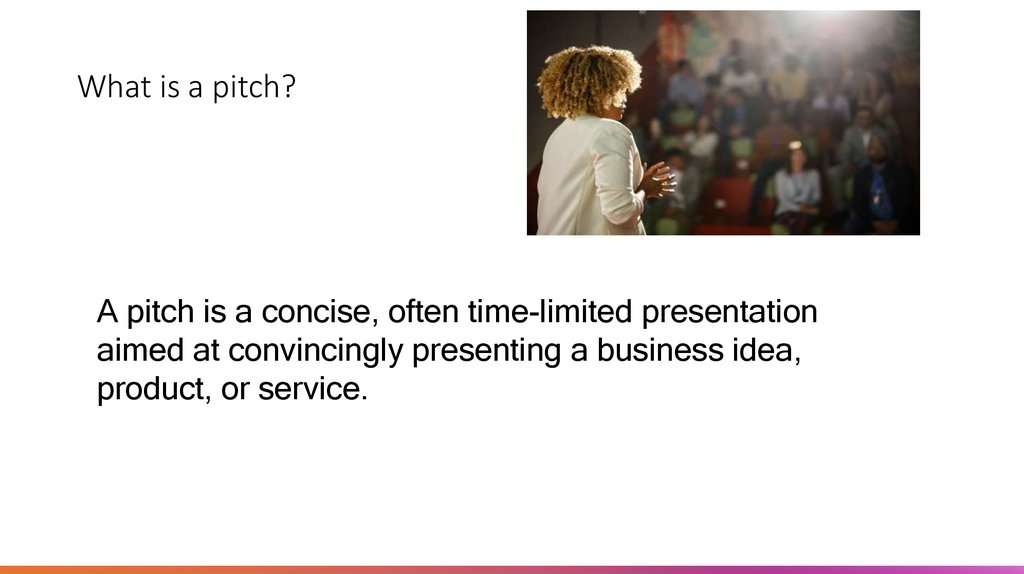
A pitch is a concise, often time-limited presentationaimed at convincingly presenting a business idea,
product, or service.
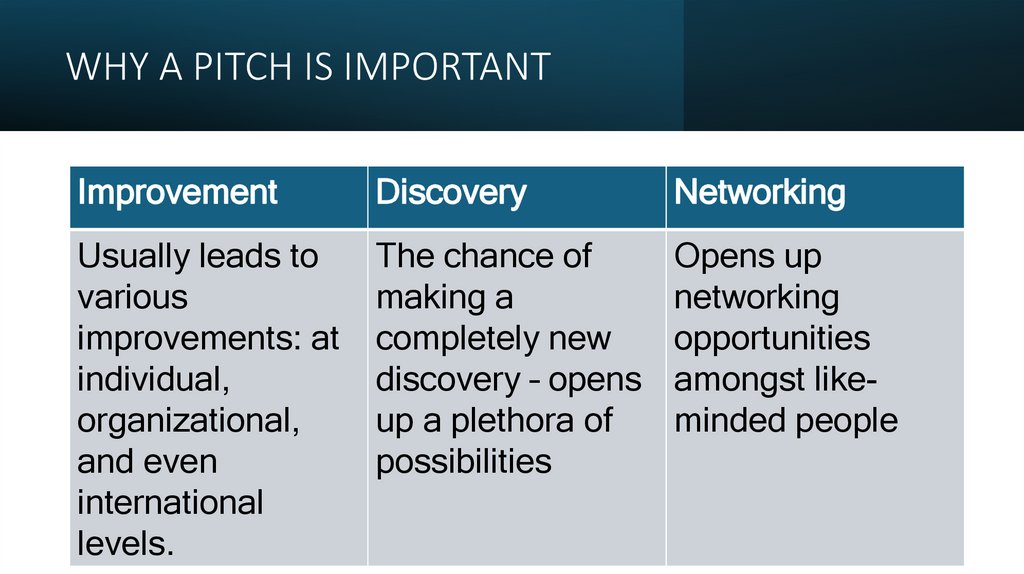
4. WHY A PITCH IS IMPORTANT
ImprovementDiscovery
Networking
Usually leads to
various
improvements: at
individual,
organizational,
and even
international
levels.
The chance of
making a
completely new
discovery – opens
up a plethora of
possibilities
Opens up
networking
opportunities
amongst likeminded people
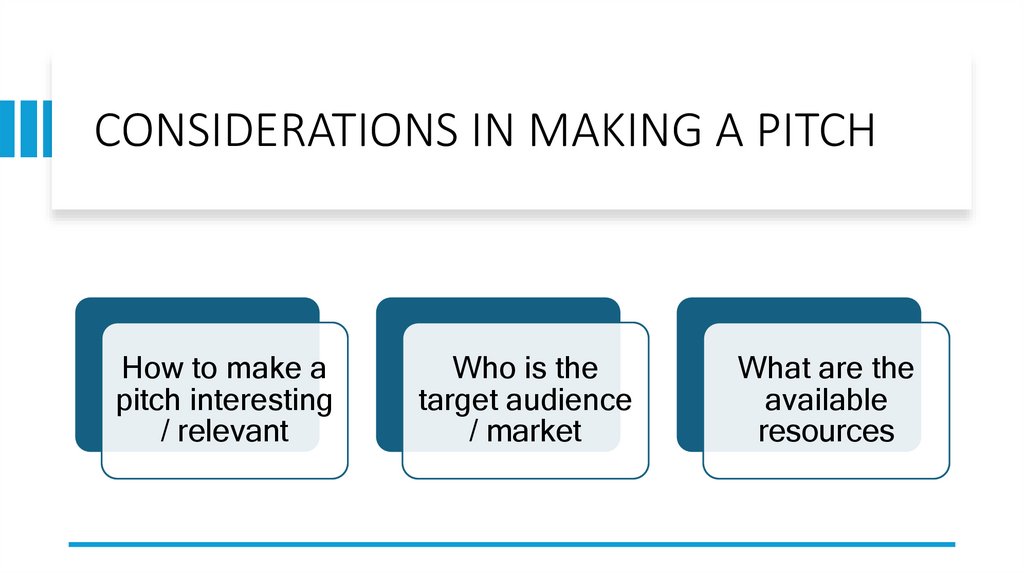
5. CONSIDERATIONS IN MAKING A PITCH
How to make apitch interesting
/ relevant
Who is the
target audience
/ market
What are the
available
resources
6. WHAT CAN BE PITCHED?
• A minor tweak to somethingalready in existence
• A new feature or enhancement to
existing idea, product, or policy
• A major new area of an existing
idea, product, or policy
• An entirely new project
Berkun, S (2005). The myths of innovation. O’Reily.
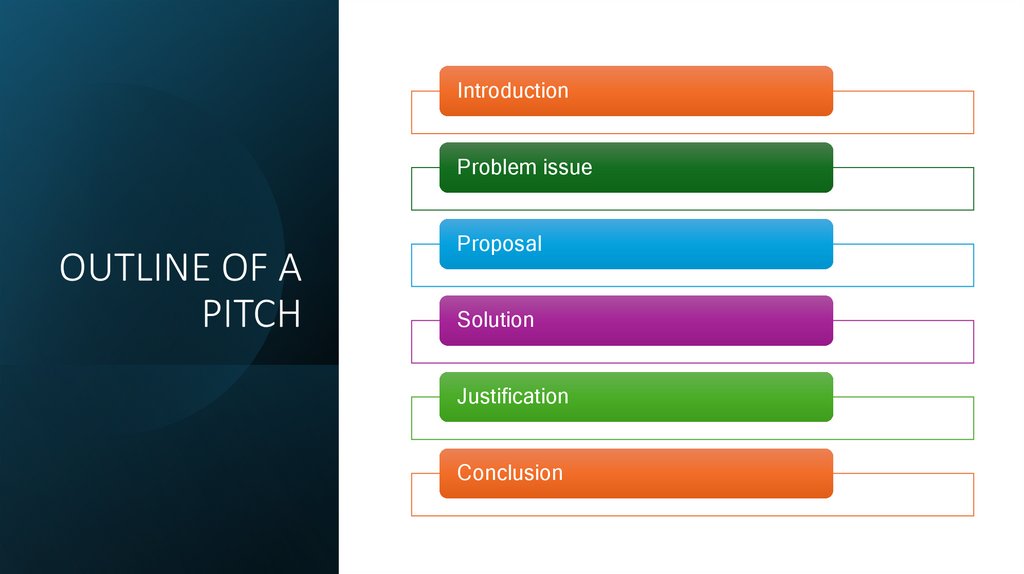
7. OUTLINE OF A PITCH
IntroductionProblem issue
OUTLINE OF A
PITCH
Proposal
Solution
Justification
Conclusion
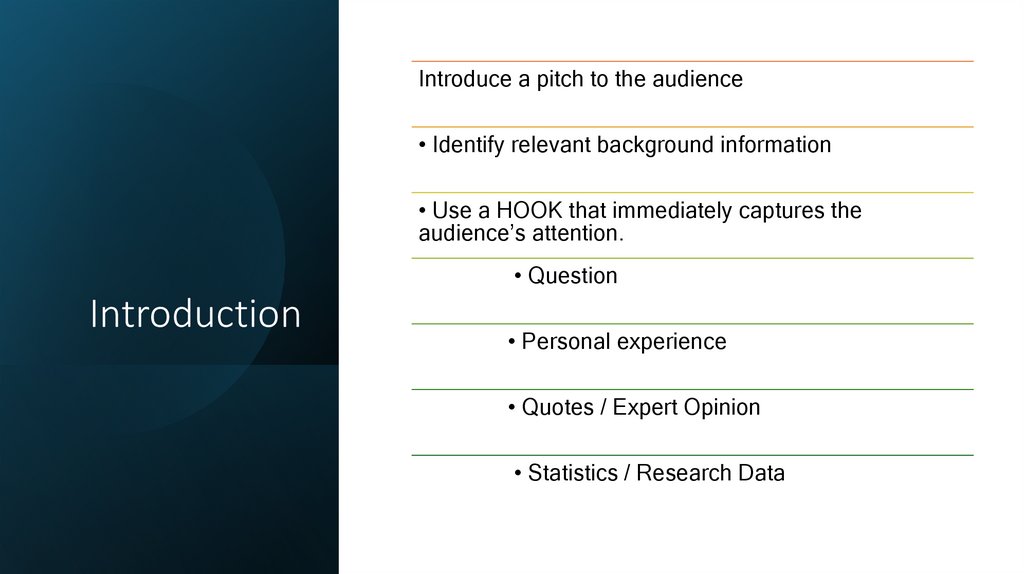
8. Introduction
Introduce a pitch to the audience• Identify relevant background information
• Use a HOOK that immediately captures the
audience’s attention.
• Question
Introduction
• Personal experience
• Quotes / Expert Opinion
• Statistics / Research Data
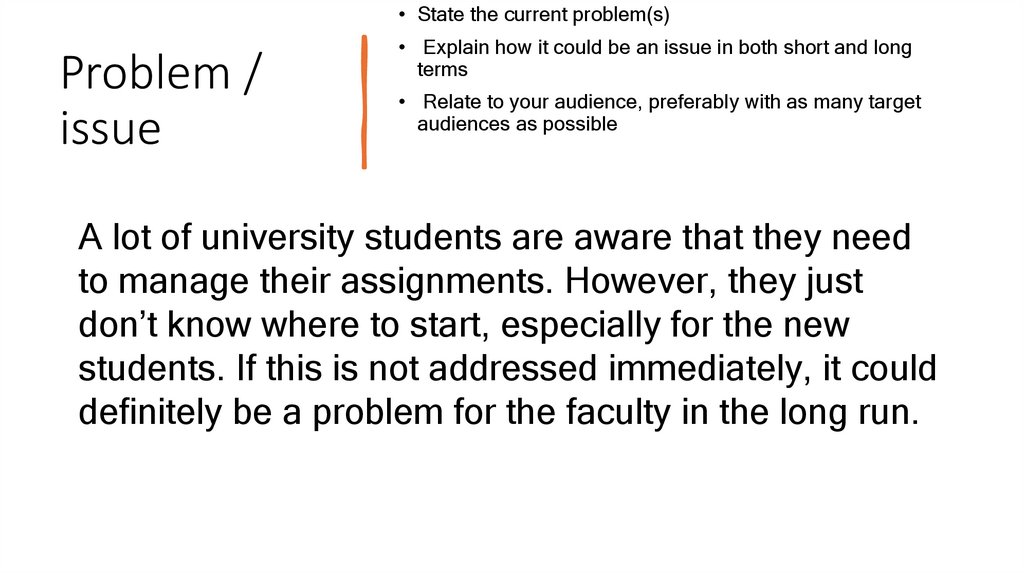
9. Problem / issue
• State the current problem(s)Problem /
issue
• Explain how it could be an issue in both short and long
terms
• Relate to your audience, preferably with as many target
audiences as possible
A lot of university students are aware that they need
to manage their assignments. However, they just
don’t know where to start, especially for the new
students. If this is not addressed immediately, it could
definitely be a problem for the faculty in the long run.
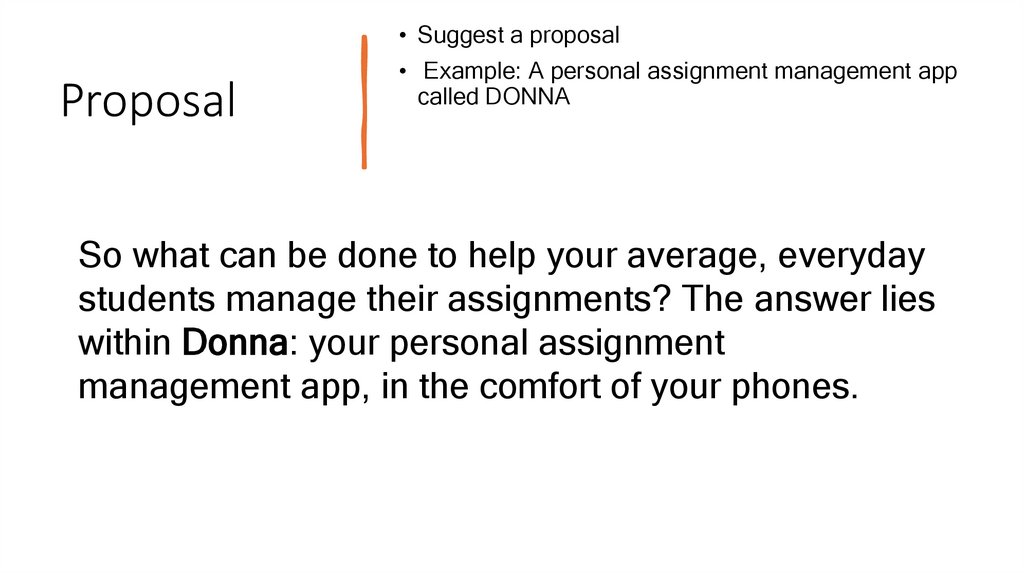
10. Proposal
• Suggest a proposalProposal
• Example: A personal assignment management app
called DONNA
So what can be done to help your average, everyday
students manage their assignments? The answer lies
within Donna: your personal assignment
management app, in the comfort of your phones.
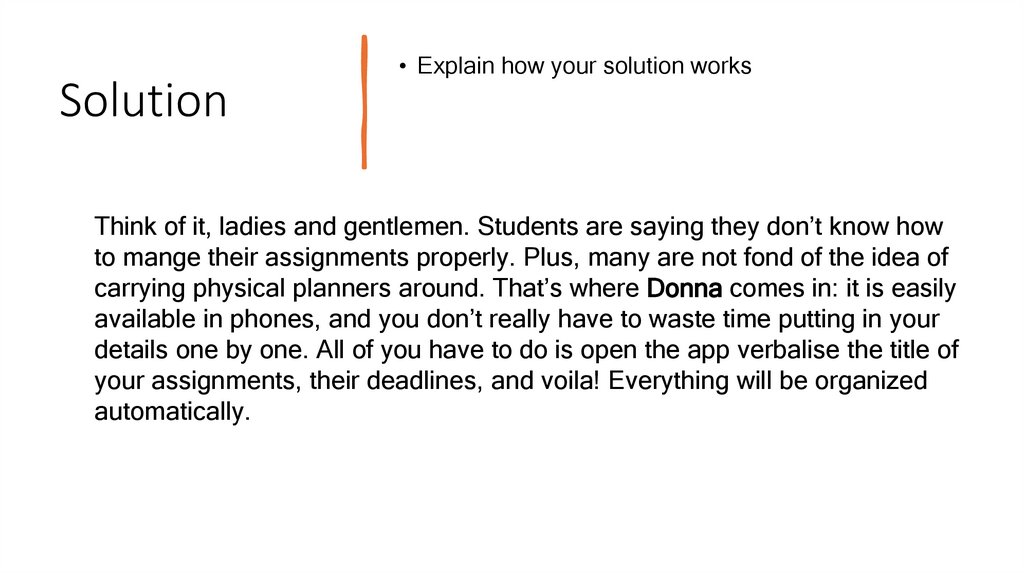
11. Solution
• Explain how your solution worksThink of it, ladies and gentlemen. Students are saying they don’t know how
to mange their assignments properly. Plus, many are not fond of the idea of
carrying physical planners around. That’s where Donna comes in: it is easily
available in phones, and you don’t really have to waste time putting in your
details one by one. All of you have to do is open the app verbalise the title of
your assignments, their deadlines, and voila! Everything will be organized
automatically.
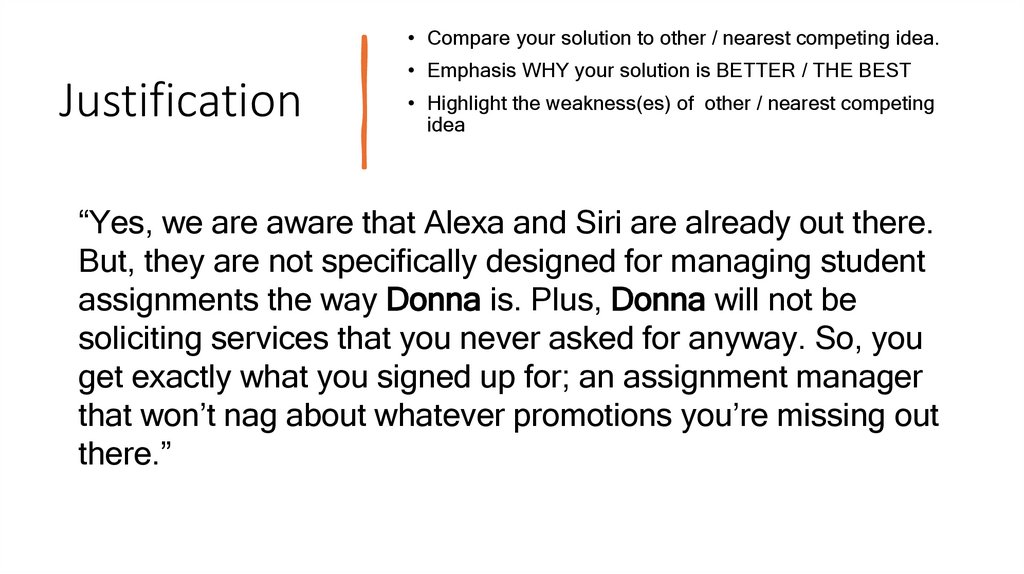
12. Justification
• Compare your solution to other / nearest competing idea.Justification
• Emphasis WHY your solution is BETTER / THE BEST
• Highlight the weakness(es) of other / nearest competing
idea
“Yes, we are aware that Alexa and Siri are already out there.
But, they are not specifically designed for managing student
assignments the way Donna is. Plus, Donna will not be
soliciting services that you never asked for anyway. So, you
get exactly what you signed up for; an assignment manager
that won’t nag about whatever promotions you’re missing out
there.”
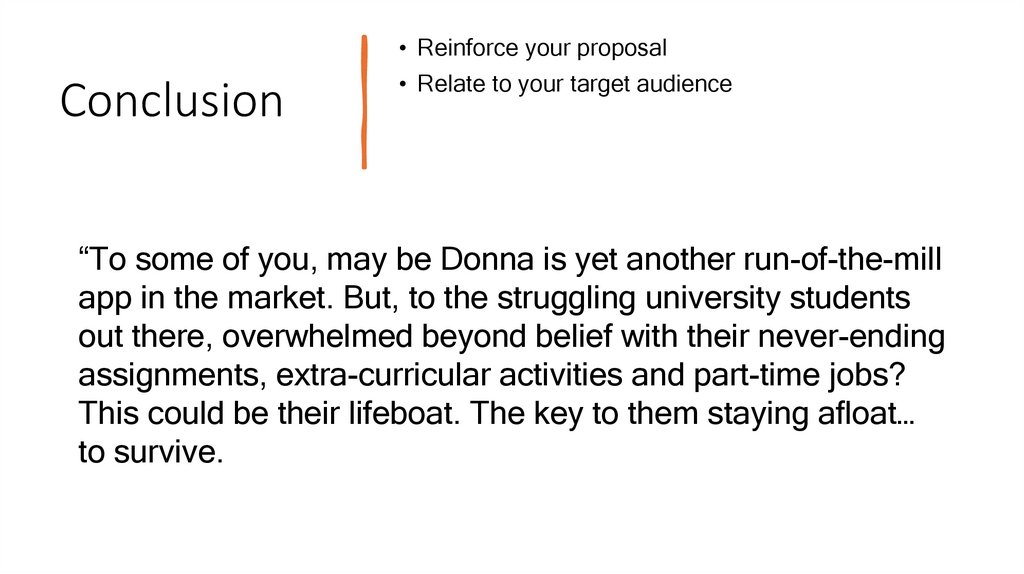
13. Conclusion
• Reinforce your proposalConclusion
• Relate to your target audience
“To some of you, may be Donna is yet another run-of-the-mill
app in the market. But, to the struggling university students
out there, overwhelmed beyond belief with their never-ending
assignments, extra-curricular activities and part-time jobs?
This could be their lifeboat. The key to them staying afloat…
to survive.
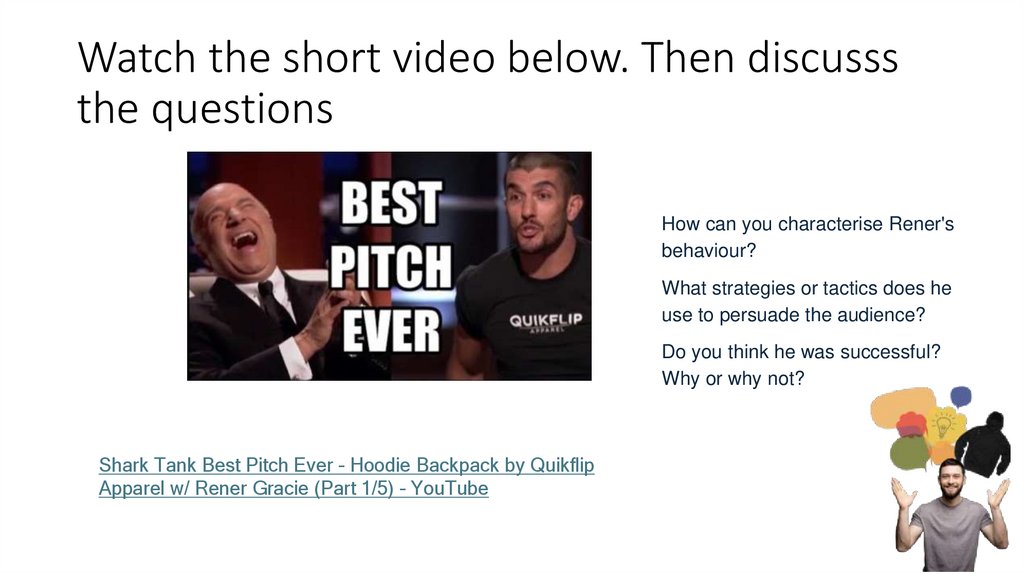
14. Watch the short video below. Then discusss the questions
Watch the short video below. Then discusssthe questions
How can you characterise Rener's
behaviour?
What strategies or tactics does he
use to persuade the audience?
Do you think he was successful?
Why or why not?
Shark Tank Best Pitch Ever - Hoodie Backpack by Quikflip
Apparel w/ Rener Gracie (Part 1/5) - YouTube
15. Elevator pitch
Elevator pitch• An elevator pitch is a brief and impactful self-presentation that is often used
in networking events, job interviews, or when meeting professionals.
• You will be delivering an elevator pitch to showcase the benefits
and possibilities of a business idea (a project idea, a social initiative, IT
product) during Practice 1 week 4.
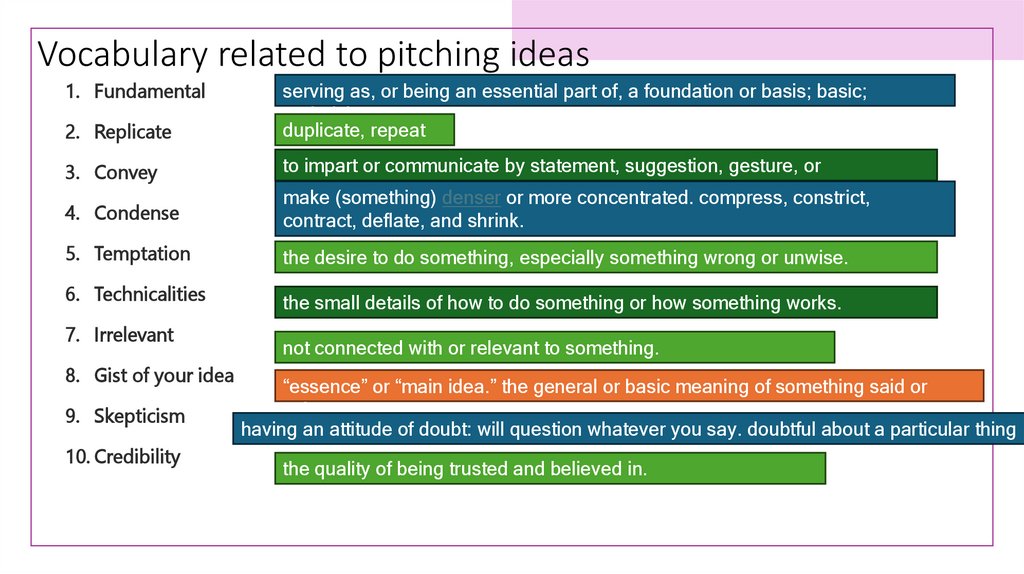
16. Vocabulary related to pitching ideas
1. Fundamental2. Replicate
3. Convey
4. Condense
serving as, or being an essential part of, a foundation or basis; basic;
underlying.
duplicate, repeat
to impart or communicate by statement, suggestion, gesture, or
appearance.
make (something) denser or more concentrated. compress, constrict,
contract, deflate, and shrink.
5. Temptation
the desire to do something, especially something wrong or unwise.
6. Technicalities
the small details of how to do something or how something works.
7. Irrelevant
8. Gist of your idea
9. Skepticism
10. Credibility
not connected with or relevant to something.
“essence” or “main idea.” the general or basic meaning of something said or
written
having an attitude of doubt: will question whatever you say. doubtful about a particular thing
the quality of being trusted and believed in.
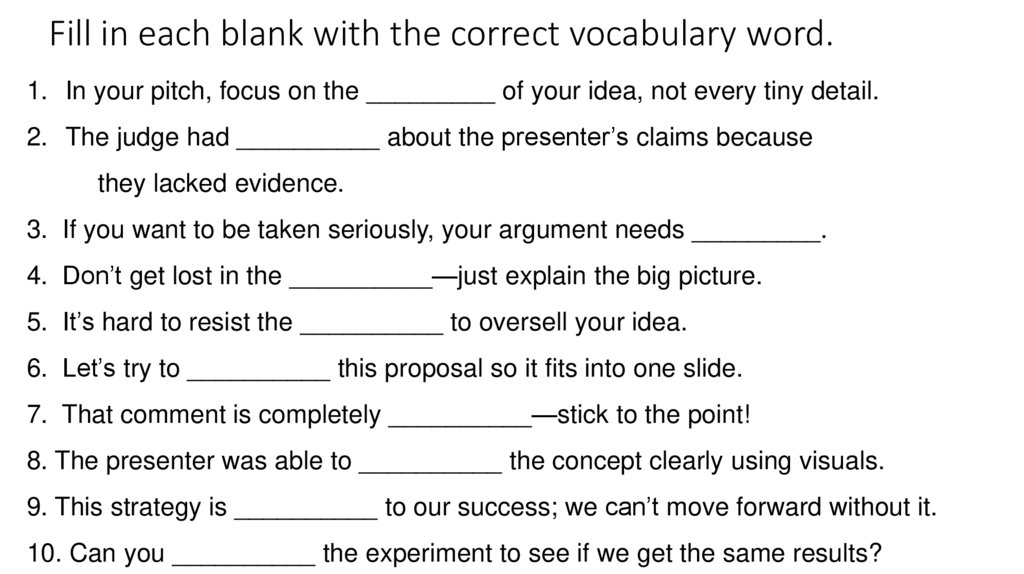
17. Fill in each blank with the correct vocabulary word.
1. In your pitch, focus on the _________ of your idea, not every tiny detail.2. The judge had __________ about the presenter’s claims because
they lacked evidence.
3. If you want to be taken seriously, your argument needs _________.
4. Don’t get lost in the __________—just explain the big picture.
5. It’s hard to resist the __________ to oversell your idea.
6. Let’s try to __________ this proposal so it fits into one slide.
7. That comment is completely __________—stick to the point!
8. The presenter was able to __________ the concept clearly using visuals.
9. This strategy is __________ to our success; we can’t move forward without it.
10. Can you __________ the experiment to see if we get the same results?
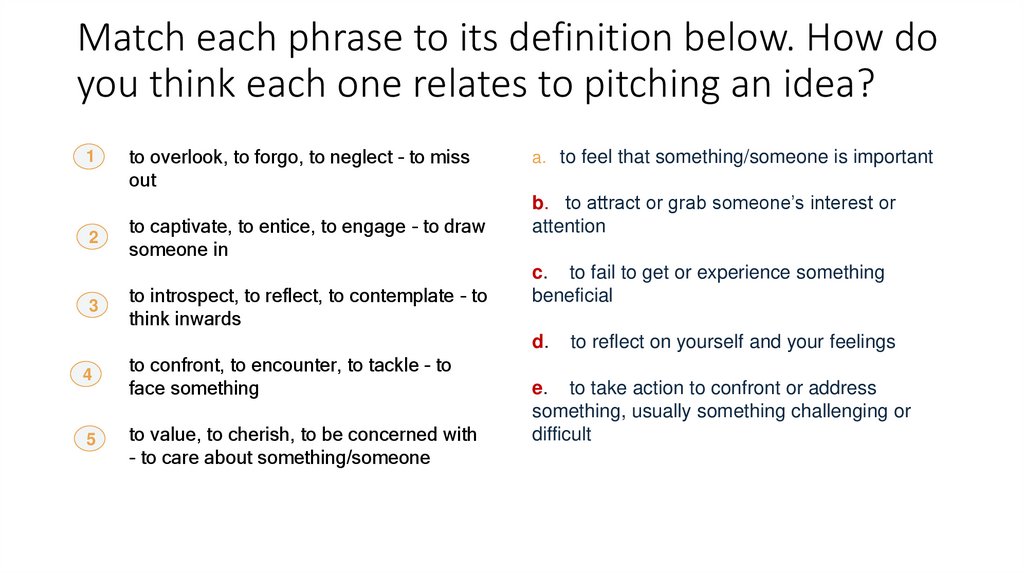
18. Match each phrase to its definition below. How do you think each one relates to pitching an idea?
12
3
to overlook, to forgo, to neglect - to miss
out
to captivate, to entice, to engage - to draw
someone in
to introspect, to reflect, to contemplate - to
think inwards
a. to feel that something/someone is important
b. to attract or grab someone’s interest or
attention
c. to fail to get or experience something
beneficial
d.
4
to confront, to encounter, to tackle - to
face something
5
to value, to cherish, to be concerned with
- to care about something/someone
to reflect on yourself and your feelings
e. to take action to confront or address
something, usually something challenging or
difficult
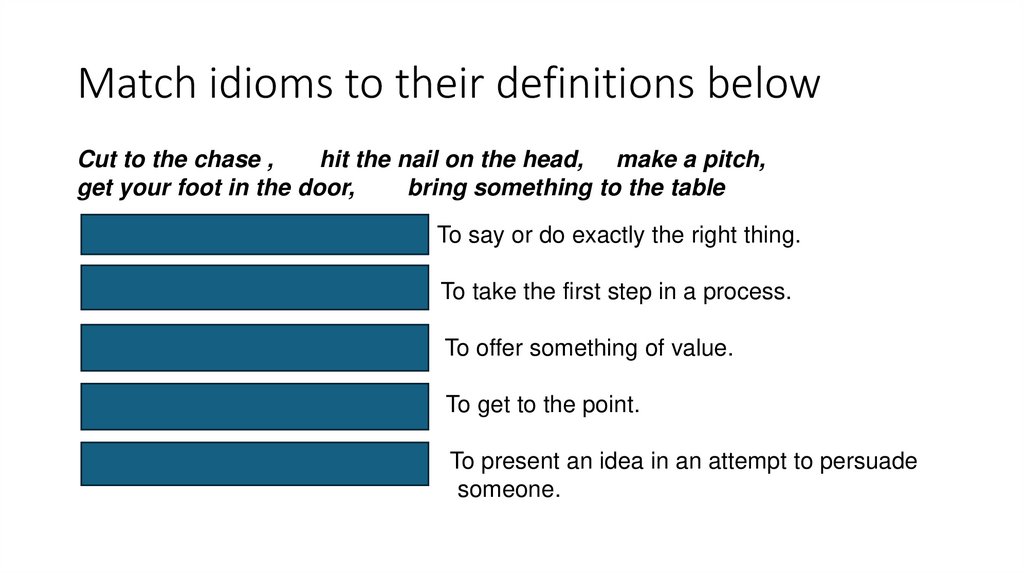
19. Match idioms to their definitions below
Cut to the chase ,hit the nail on the head, make a pitch,
get your foot in the door,
bring something to the table
•Hit the nail on the head:
To say or do exactly the right thing.
•Get your foot in the door:
To take the first step in a process.
•Bring something to the table: To offer something of value.
•Cut to the chase:
To get to the point.
•Make a pitch:
To present an idea in an attempt to persuade
someone.
20. Discussion
What do you think are the common mistakes people make whenpitching ideas?
How can they be avoided?
21. Watch the video
The Secret to Successfully Pitching an Idea | The Way We Work, a TEDseries - YouTube
22. Discuss/Write short answers according to the information in the video. Then watch the video again to check your answers if
necessary.•1 What does ‘FOMO’ mean? What does Mar say about it?
•2 What does Mar do?
•3 How do you need to make the audience feel when pitching an
idea?
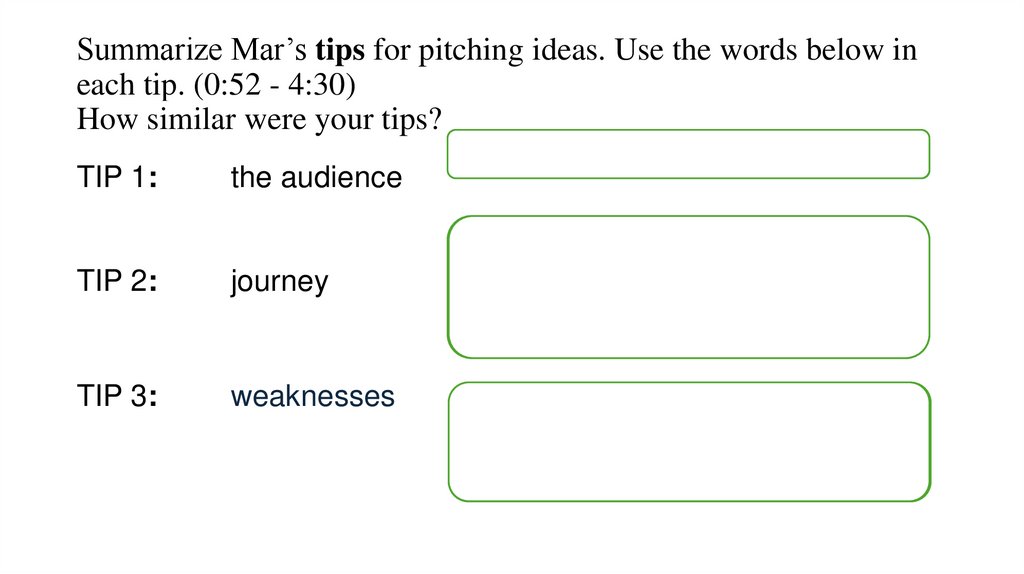
23. Summarize Mar’s tips for pitching ideas. Use the words below in each tip. (0:52 - 4:30) How similar were your tips?
TIP 1:the audience
TIP 2:
journey
TIP 3:
weaknesses
Know your audience. Understand your audience’s
interests and motivations
Tell the hero’s journey / story (which when pitching
an idea, you’re often the hero) Structure your pitch
like a storytelling journey with a beginning, middle,
and end. Introduce tension and conflict, showing all
the problems that existing products aren’t yet
addressing.
Shore up your weaknesses (Identify your
weaknesses) Address and openly discuss any
weaknesses or challenges in your pitch to build trust
with the audience.
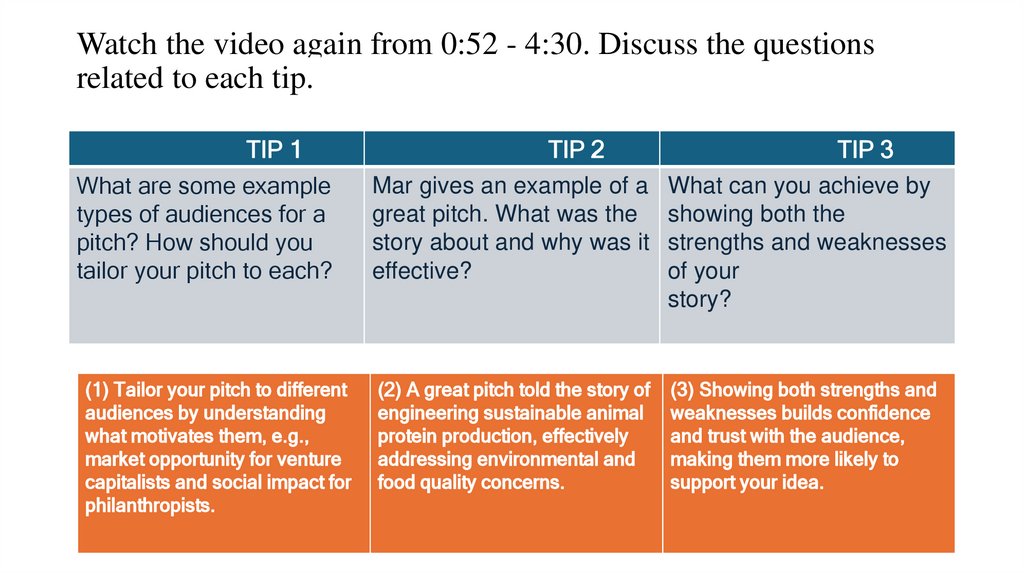
24. Watch the video again from 0:52 - 4:30. Discuss the questions related to each tip.
TIP 1TIP 2
TIP 3
What are some example
types of audiences for a
pitch? How should you
tailor your pitch to each?
Mar gives an example of a
great pitch. What was the
story about and why was it
effective?
What can you achieve by
showing both the
strengths and weaknesses
of your
story?
(1) Tailor your pitch to different
audiences by understanding
what motivates them, e.g.,
market opportunity for venture
capitalists and social impact for
philanthropists.
(2) A great pitch told the story of
engineering sustainable animal
protein production, effectively
addressing environmental and
food quality concerns.
(3) Showing both strengths and
weaknesses builds confidence
and trust with the audience,
making them more likely to
support your idea.
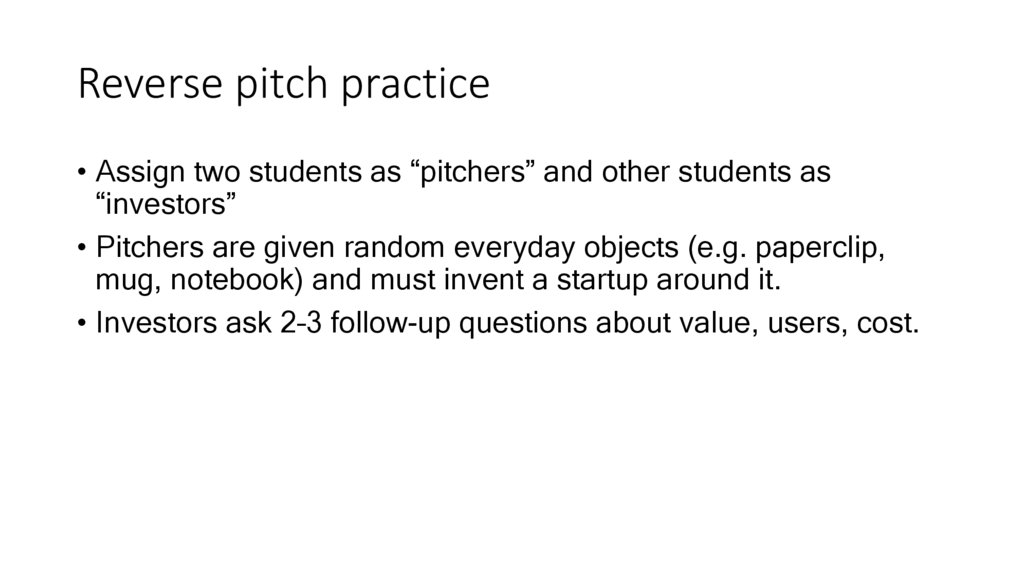
25. Reverse pitch practice
• Assign two students as “pitchers” and other students as“investors”
• Pitchers are given random everyday objects (e.g. paperclip,
mug, notebook) and must invent a startup around it.
• Investors ask 2–3 follow-up questions about value, users, cost.
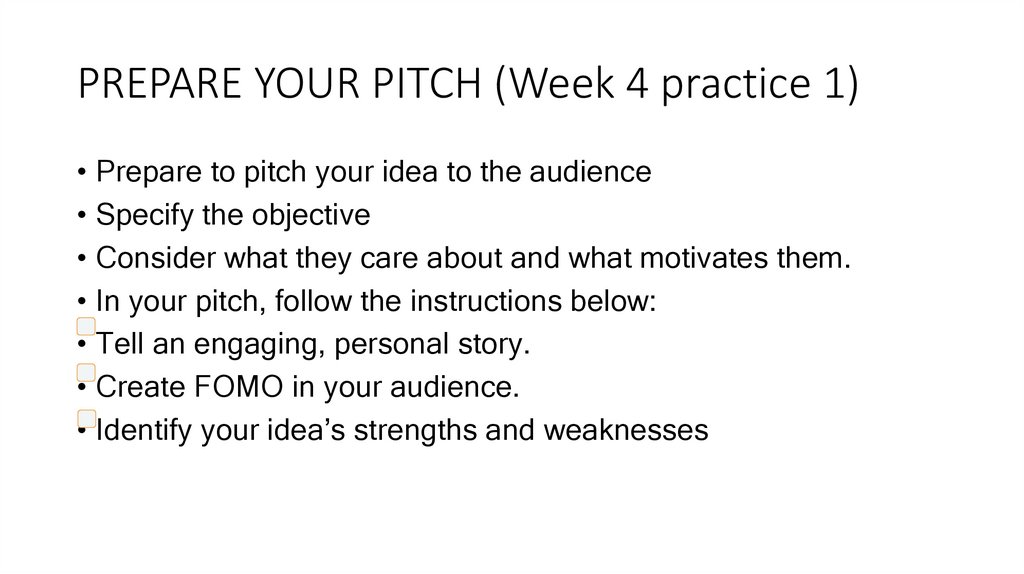
26. PREPARE YOUR PITCH (Week 4 practice 1)
• Prepare to pitch your idea to the audience• Specify the objective
• Consider what they care about and what motivates them.
• In your pitch, follow the instructions below:
• Tell an engaging, personal story.
• Create FOMO in your audience.
• Identify your idea’s strengths and weaknesses
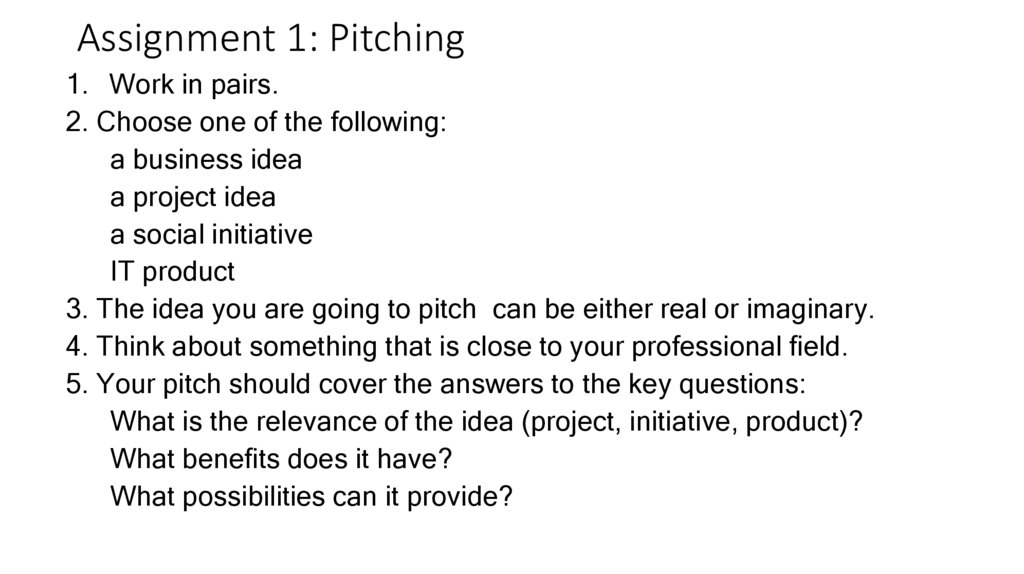
27. Assignment 1: Pitching
1. Work in pairs.2. Choose one of the following:
a business idea
a project idea
a social initiative
IT product
3. The idea you are going to pitch can be either real or imaginary.
4. Think about something that is close to your professional field.
5. Your pitch should cover the answers to the key questions:
What is the relevance of the idea (project, initiative, product)?
What benefits does it have?
What possibilities can it provide?
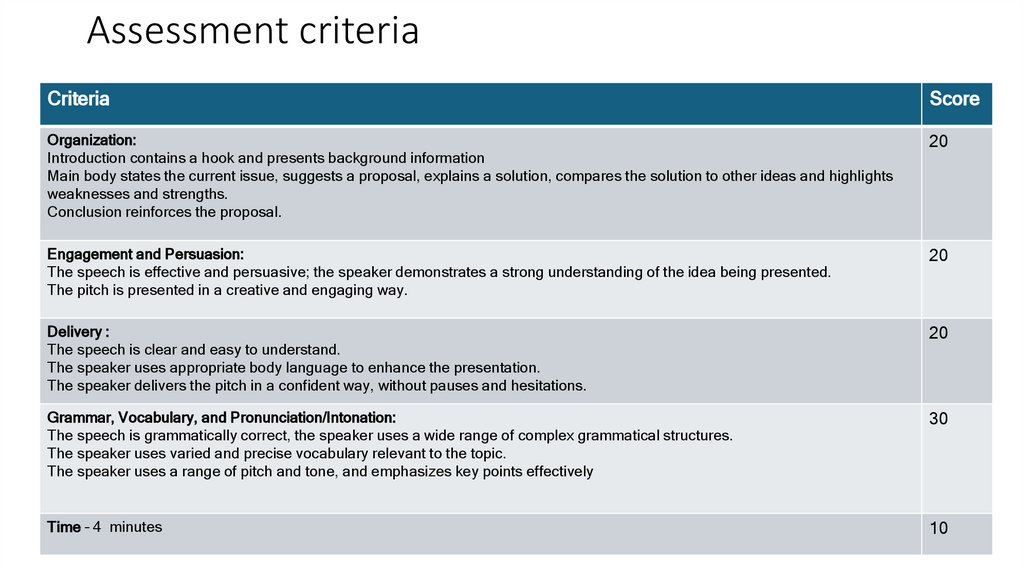
28. Assessment criteria
CriteriaScore
Organization:
Introduction contains a hook and presents background information
Main body states the current issue, suggests a proposal, explains a solution, compares the solution to other ideas and highlights
weaknesses and strengths.
Conclusion reinforces the proposal.
20
Engagement and Persuasion:
The speech is effective and persuasive; the speaker demonstrates a strong understanding of the idea being presented.
The pitch is presented in a creative and engaging way.
20
Delivery :
The speech is clear and easy to understand.
The speaker uses appropriate body language to enhance the presentation.
The speaker delivers the pitch in a confident way, without pauses and hesitations.
20
Grammar, Vocabulary, and Pronunciation/Intonation:
The speech is grammatically correct, the speaker uses a wide range of complex grammatical structures.
The speaker uses varied and precise vocabulary relevant to the topic.
The speaker uses a range of pitch and tone, and emphasizes key points effectively
30
Time – 4 minutes
10
29. HW:
Revise grammar and vocabulary (PPT – Week 3 Practice 3-4)Revise the material, look through all the pitching techniques
we've practised.
You are going to pitch your idea next lesson.