 Экономика
Похожие презентации:



Economics Grade: 12 Week: 4
1. Economics
Grade: 12Week: 4
2. Lesson 1
3. Learning objectives
• understand the functions of publicadministration in macroeconomics
4. Discuss
What comes to your mindwhen you hear public
administration?
Why do you think it is important
for the economy?
5. Public administration
is the system ofstate bodies and officials responsible for
implementing policies, delivering public
services, managing resources, and
regulating the economy for the benefit
of society.
This system operates through a
structured hierarchy of institutions and
offices, beginning with the President and
extending through various ministries,
departments, and agencies.
Public administration
6.
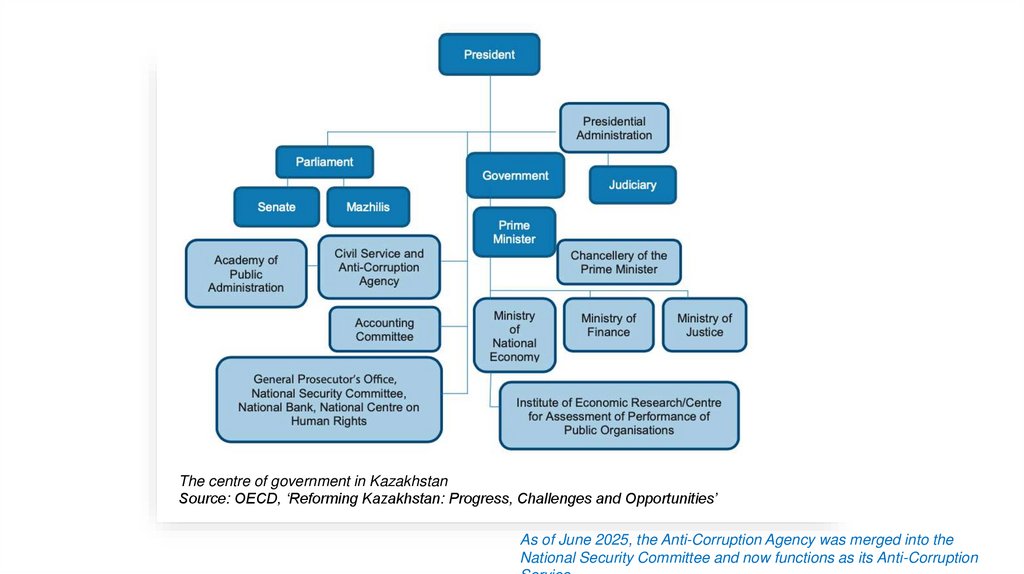
The centre of government in KazakhstanSource: OECD, ‘Reforming Kazakhstan: Progress, Challenges and Opportunities’
As of June 2025, the Anti-Corruption Agency was merged into the
National Security Committee and now functions as its Anti-Corruption
7. Functions of public administration in macroeconomics
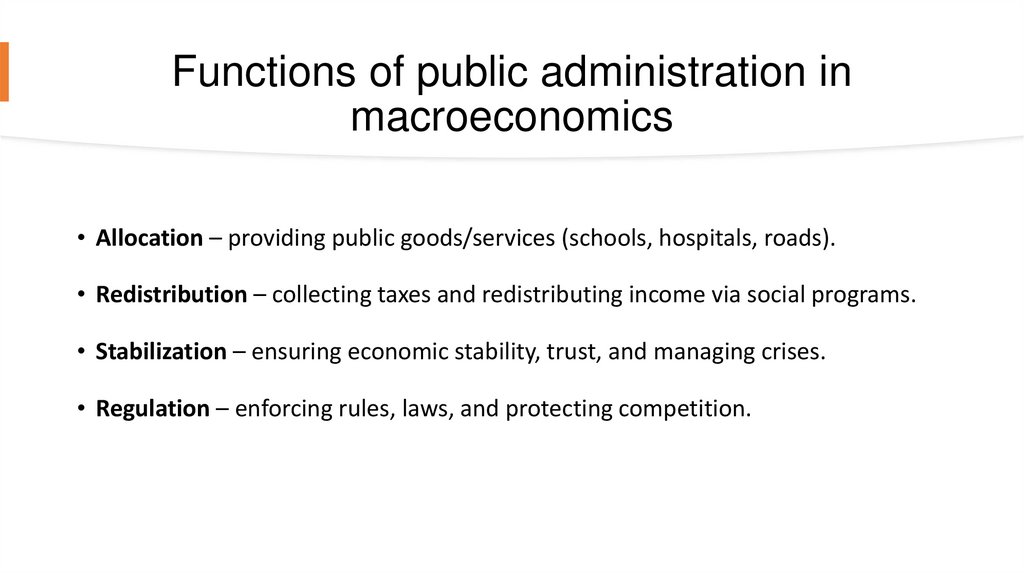
• Allocation – providing public goods/services (schools, hospitals, roads).• Redistribution – collecting taxes and redistributing income via social programs.
• Stabilization – ensuring economic stability, trust, and managing crises.
• Regulation – enforcing rules, laws, and protecting competition.
8. Functions of public administration
In Kazakhstan, there are several reforms and initiatives that show thesefunctions in action.
• Population Service Centres
• E-government
• Decentralization
• Anti-corruption reforms
9. Population Service Centres (PSCs):
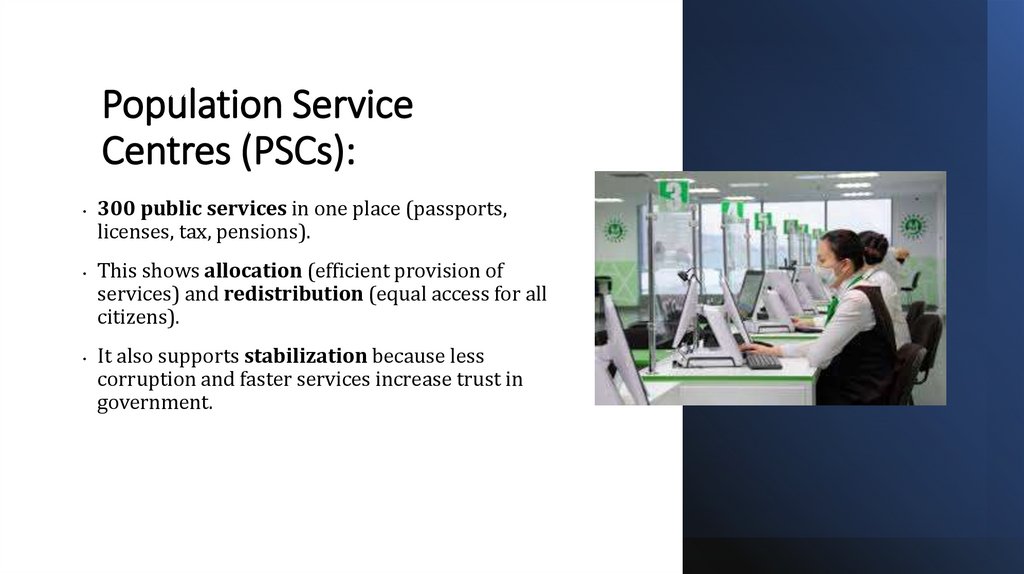
300 public services in one place (passports,
licenses, tax, pensions).
This shows allocation (efficient provision of
services) and redistribution (equal access for all
citizens).
It also supports stabilization because less
corruption and faster services increase trust in
government.
10. E-Government (Digital Kazakhstan)
• 800+ online services• Citizens can pay taxes, apply for benefits, and get
certificates online.
• This improves allocation (digital delivery of services)
and strengthens regulation and stabilization by
making processes transparent and reducing
paperwork and bribes.
11. Decentralization of Power
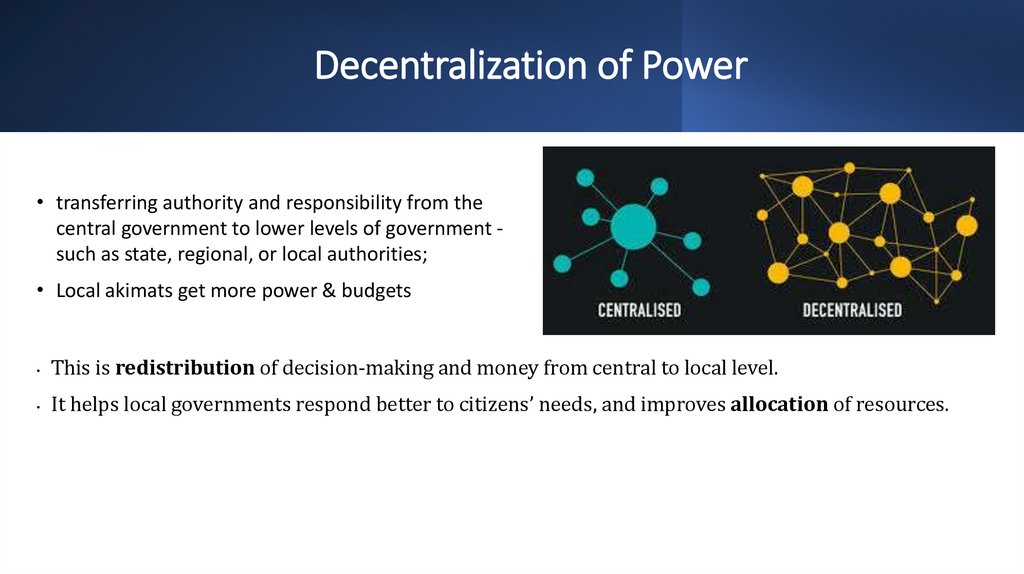
• transferring authority and responsibility from thecentral government to lower levels of government such as state, regional, or local authorities;
• Local akimats get more power & budgets
This is redistribution of decision-making and money from central to local level.
It helps local governments respond better to citizens’ needs, and improves allocation of resources.
12. Anti-Corruption & Accountability Reforms
Anti-Corruption & Accountability ReformsDigitalization = fewer bribes
Merit-based hiring, smaller bureaucracy
“Hearing State” → listening to citizens
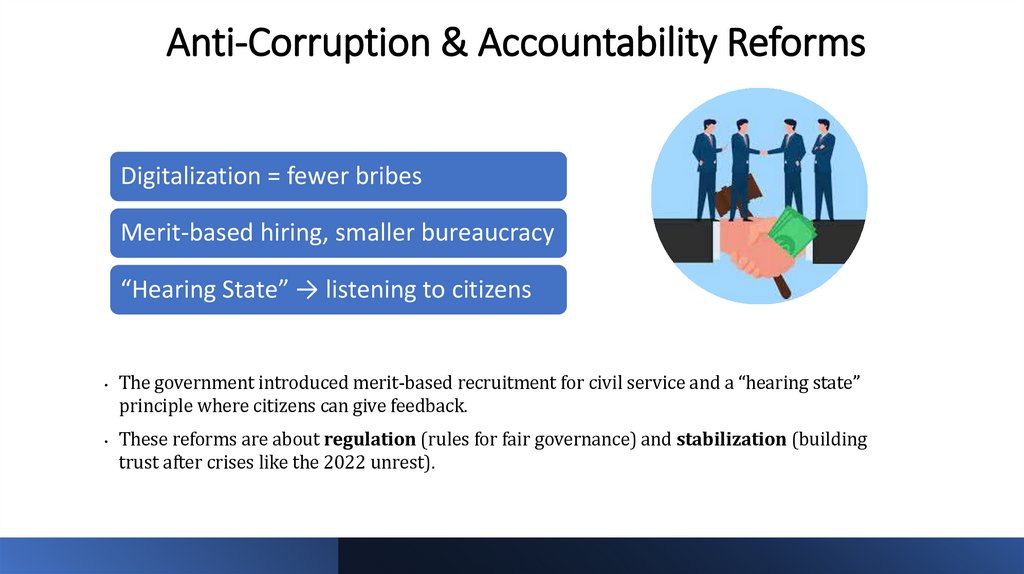
The government introduced merit-based recruitment for civil service and a “hearing state”
principle where citizens can give feedback.
These reforms are about regulation (rules for fair governance) and stabilization (building
trust after crises like the 2022 unrest).
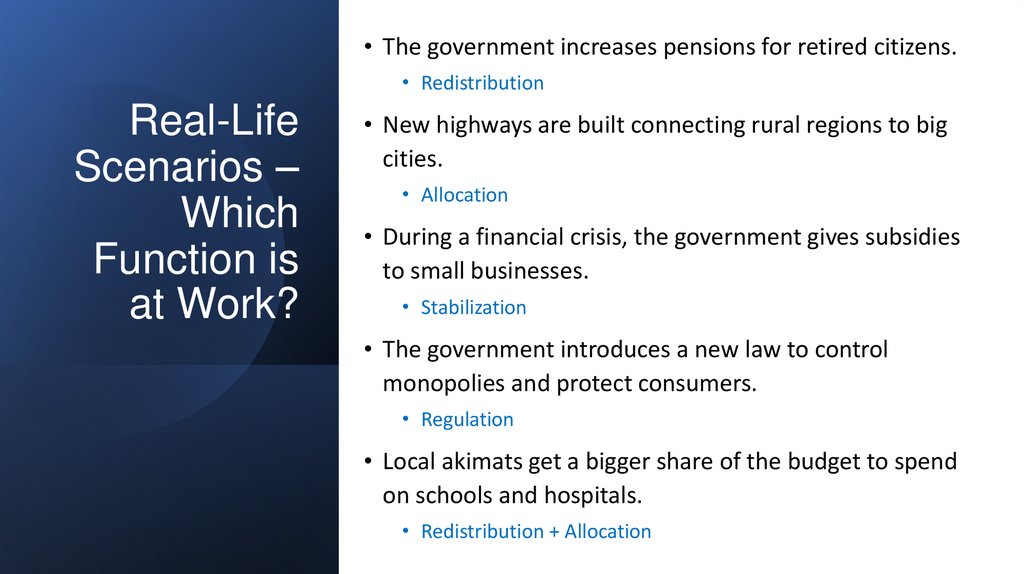
13. Real-Life Scenarios – Which Function is at Work?
• The government increases pensions for retired citizens.• Redistribution
Real-Life
Scenarios –
Which
Function is
at Work?
• New highways are built connecting rural regions to big
cities.
• Allocation
• During a financial crisis, the government gives subsidies
to small businesses.
• Stabilization
• The government introduces a new law to control
monopolies and protect consumers.
• Regulation
• Local akimats get a bigger share of the budget to spend
on schools and hospitals.
• Redistribution + Allocation
14. Reflection
Which function do you think is the most important for Kazakhstan right now, andwhy?
15. Lesson 2-3
16. Learning objectives
• understand the role of the state budget andknow basic income and expenditure items.
17. State budget
A state budget is a financial plan prepared by thegovernment that outlines its expected income
(revenues) and planned spending (expenditures) over
a specific period, usually one fiscal year.
18. Objectives that state budget aims to fulfill (Kazakhstan)
• Financing Public Services & Social Spending• Supporting Regional Development & Infrastructure
• Stabilizing the Economy through the National Fund
• Strengthening Fiscal Discipline & Transparency
• Promoting Economic Growth & Real Sector Support
19. Financing Public Services & Social Spending
Financing Public Services & SocialSpending
• The budget allocates funds for health, education, social welfare
programs to meet citizens' needs.
• Example: In 2025, nearly 40% of total budget spending – 9.8 trillion tenge – is
allocated to the social sector, including pensions, education, and healthcare.
https://astanatimes.com/2024/12/kazakhstans-budget-spending-to-grow-by-7-in-2025/
20. Supporting Regional Development & Infrastructure
Supporting Regional Development& Infrastructure
• The budget provides capital for building roads, schools, utilities, and reducing
regional disparities.
• Example: The 2025 budget includes 2.1 trillion tenge toward supporting the real
economy, including 635 billion tenge for rural infrastructure under programs
like Auyl - El Besigi (rural development).
• Additionally, funding is allocated to clean water access, utility upgrades,
and road construction projects covering thousands of villages and cities.
https://astanatimes.com/2024/12/kazakhstans-budget-spending-to-grow-by-7-in-2025
21. Stabilizing the Economy through the National Fund
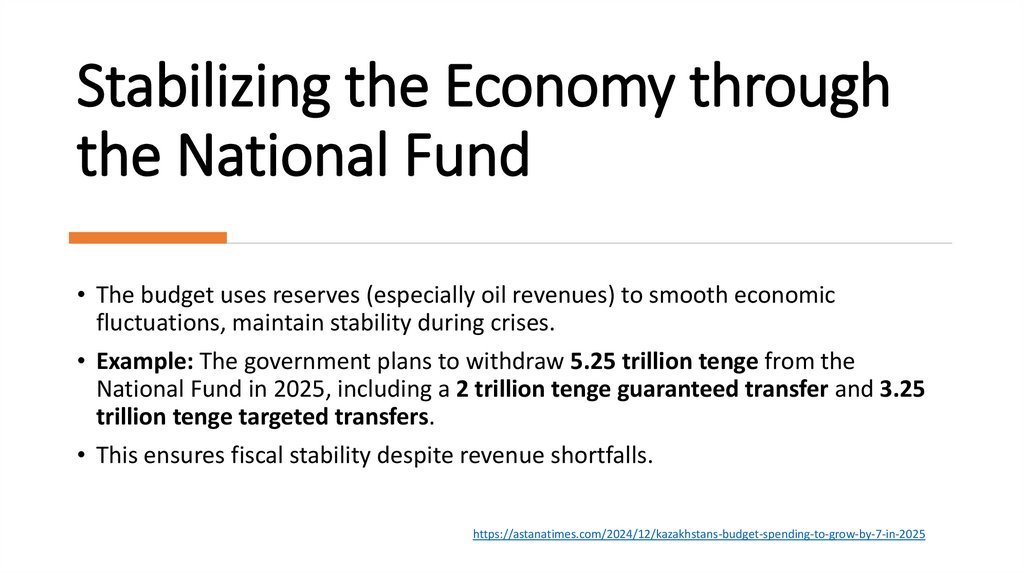
• The budget uses reserves (especially oil revenues) to smooth economicfluctuations, maintain stability during crises.
• Example: The government plans to withdraw 5.25 trillion tenge from the
National Fund in 2025, including a 2 trillion tenge guaranteed transfer and 3.25
trillion tenge targeted transfers.
• This ensures fiscal stability despite revenue shortfalls.
https://astanatimes.com/2024/12/kazakhstans-budget-spending-to-grow-by-7-in-2025
22. Strengthening Fiscal Discipline & Transparency
Strengthening Fiscal Discipline &Transparency
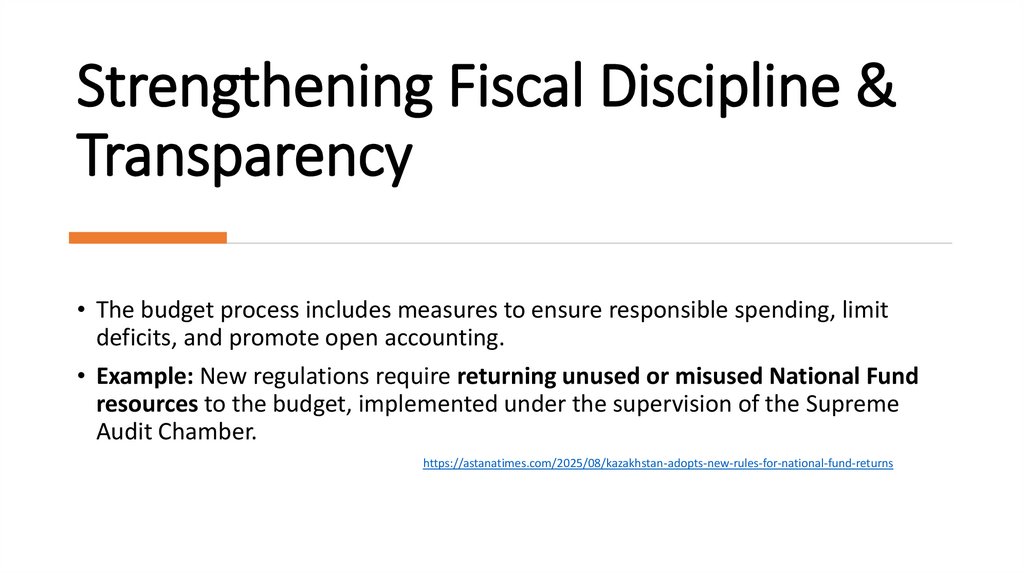
• The budget process includes measures to ensure responsible spending, limit
deficits, and promote open accounting.
• Example: New regulations require returning unused or misused National Fund
resources to the budget, implemented under the supervision of the Supreme
Audit Chamber.
https://astanatimes.com/2025/08/kazakhstan-adopts-new-rules-for-national-fund-returns
23. Promoting Economic Growth & Real Sector Support
Promoting Economic Growth &Real Sector Support
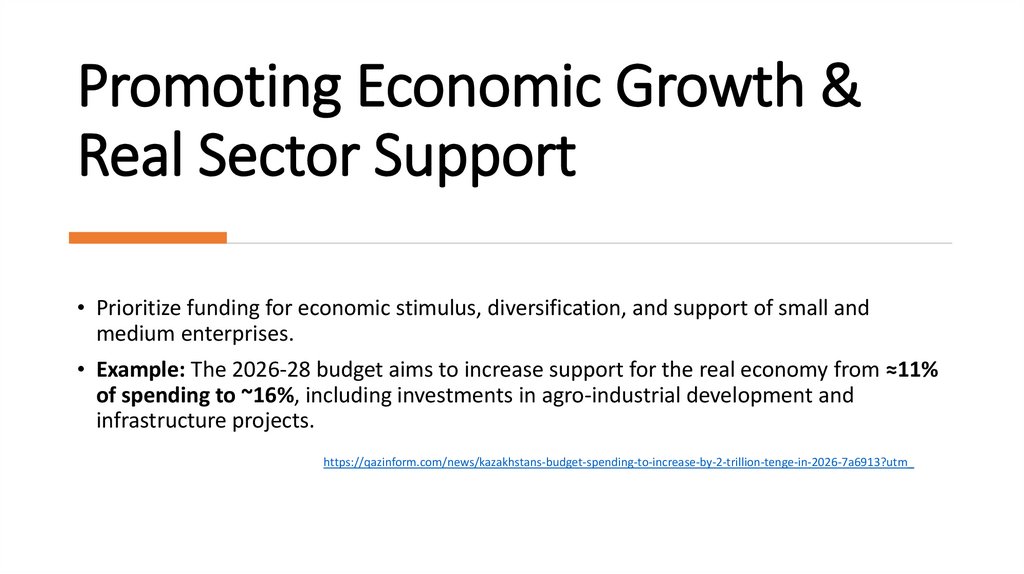
• Prioritize funding for economic stimulus, diversification, and support of small and
medium enterprises.
• Example: The 2026-28 budget aims to increase support for the real economy from ≈11%
of spending to ~16%, including investments in agro-industrial development and
infrastructure projects.
https://qazinform.com/news/kazakhstans-budget-spending-to-increase-by-2-trillion-tenge-in-2026-7a6913?utm_
24.
25.
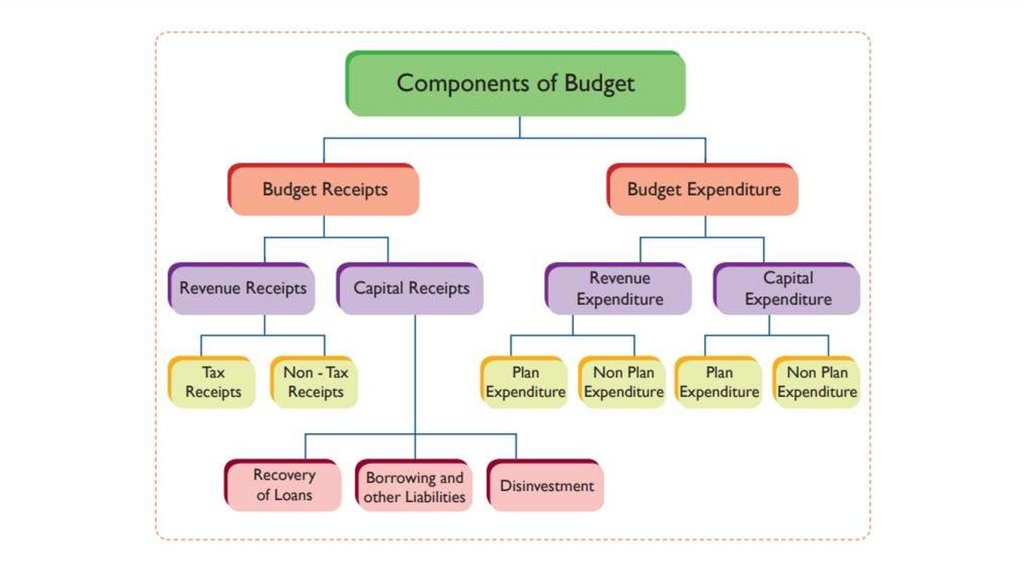
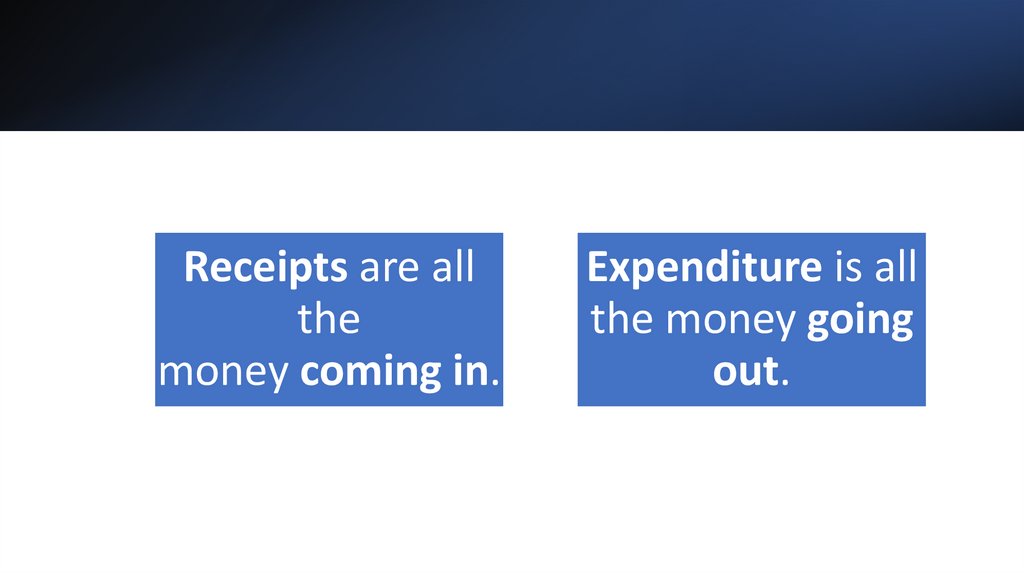
Receipts are allthe
money coming in.
Expenditure is all
the money going
out.
26.
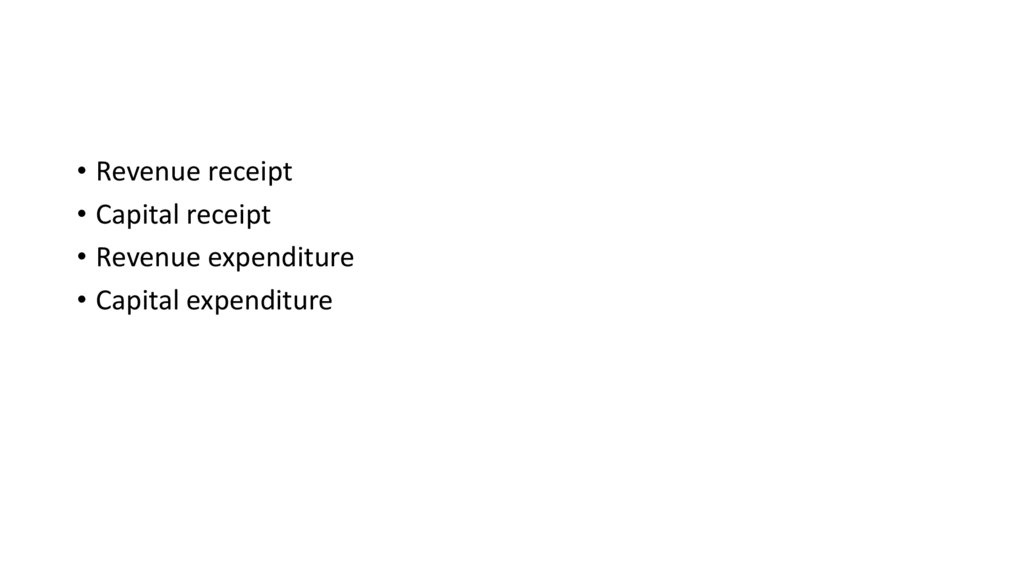
• Revenue receipt• Capital receipt
• Revenue expenditure
• Capital expenditure
27.
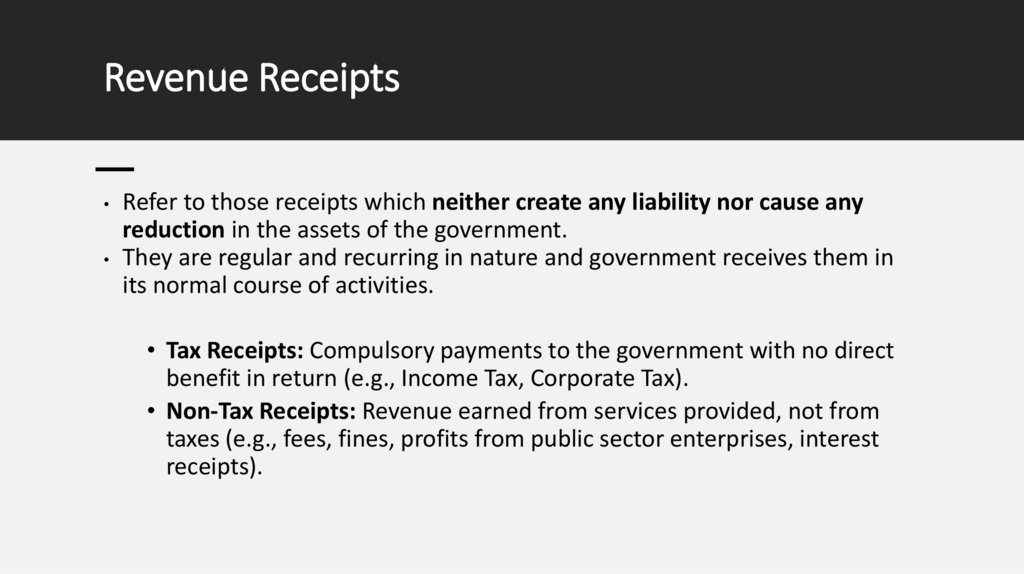
Revenue ReceiptsRefer to those receipts which neither create any liability nor cause any
reduction in the assets of the government.
• They are regular and recurring in nature and government receives them in
its normal course of activities.
• Tax Receipts: Compulsory payments to the government with no direct
benefit in return (e.g., Income Tax, Corporate Tax).
• Non-Tax Receipts: Revenue earned from services provided, not from
taxes (e.g., fees, fines, profits from public sector enterprises, interest
receipts).
28.
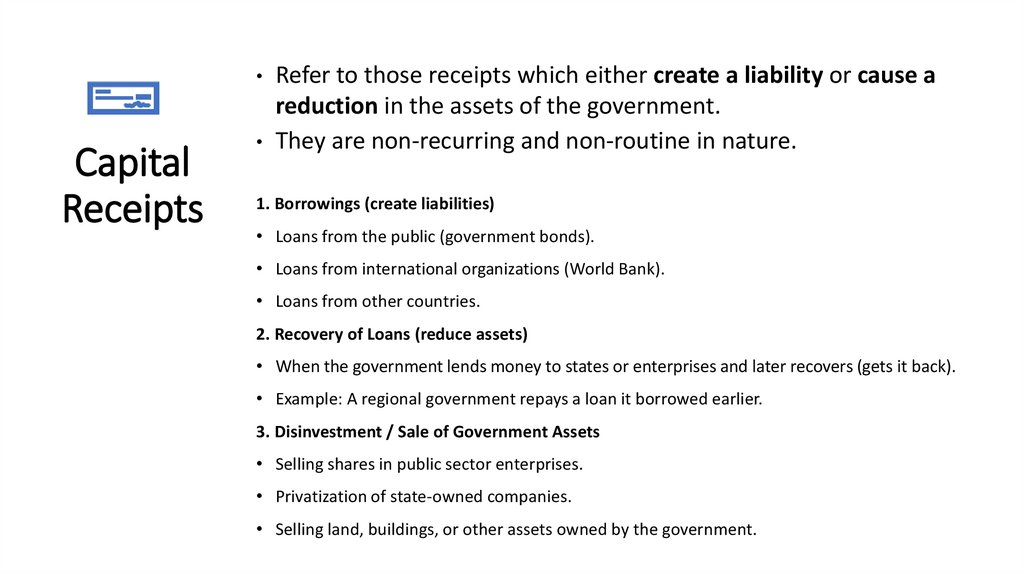
• Refer to those receipts which either create a liability or cause aCapital
Receipts
reduction in the assets of the government.
• They are non-recurring and non-routine in nature.
1. Borrowings (create liabilities)
• Loans from the public (government bonds).
• Loans from international organizations (World Bank).
• Loans from other countries.
2. Recovery of Loans (reduce assets)
• When the government lends money to states or enterprises and later recovers (gets it back).
• Example: A regional government repays a loan it borrowed earlier.
3. Disinvestment / Sale of Government Assets
• Selling shares in public sector enterprises.
• Privatization of state-owned companies.
• Selling land, buildings, or other assets owned by the government.
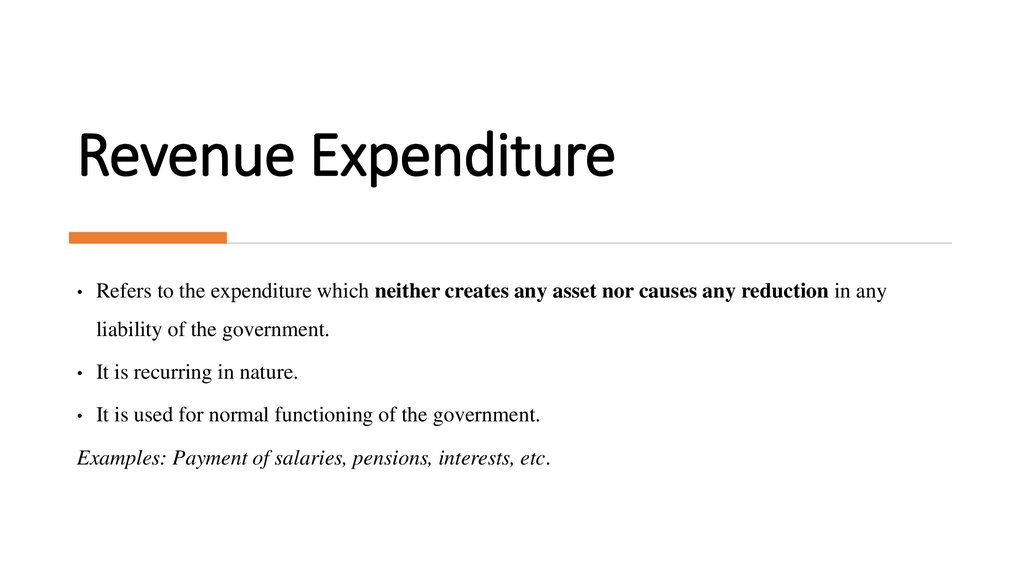
29. Revenue Expenditure
Refers to the expenditure which neither creates any asset nor causes any reduction in any
liability of the government.
It is recurring in nature.
It is used for normal functioning of the government.
Examples: Payment of salaries, pensions, interests, etc.
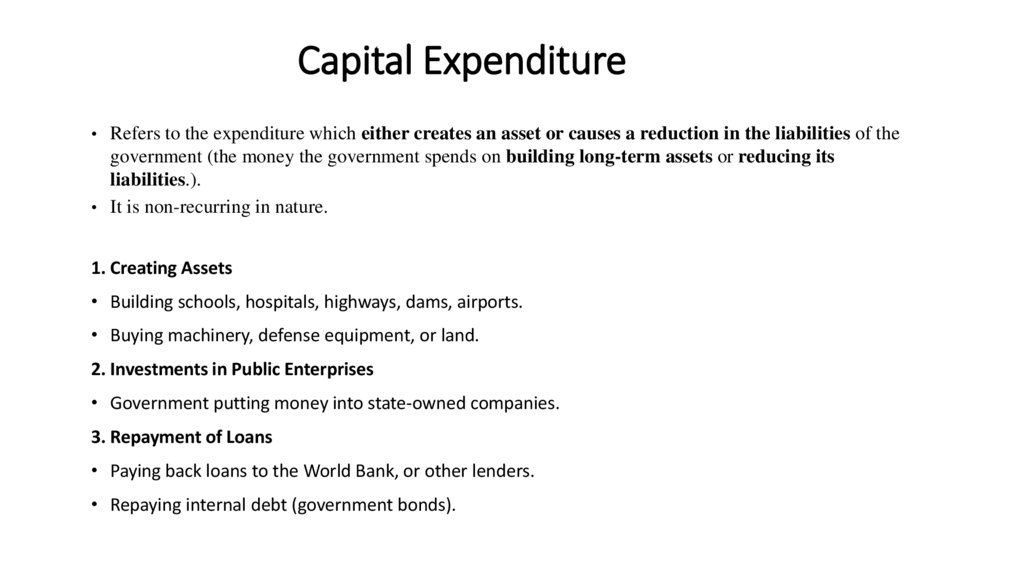
30. Capital Expenditure
• Refers to the expenditure which either creates an asset or causes a reduction in the liabilities of thegovernment (the money the government spends on building long-term assets or reducing its
liabilities.).
• It is non-recurring in nature.
1. Creating Assets
• Building schools, hospitals, highways, dams, airports.
• Buying machinery, defense equipment, or land.
2. Investments in Public Enterprises
• Government putting money into state-owned companies.
3. Repayment of Loans
• Paying back loans to the World Bank, or other lenders.
• Repaying internal debt (government bonds).
31. Lesson 3
32. Discuss
When a government plans its budget, it compares two things: how muchmoney it expects to collect (revenue) and how much it plans to spend
(expenditure).
What do you think happens if revenue is bigger?
Or if spending is bigger?
33. Types Of Budget
BalancedBudget
Surplus
Budget
Deficit
Budget
34. Types Of Budget
o Balanced Budget:If estimated government receipts are equal to the estimated government expenditure.
o Surplus Budget:
If estimated government receipts are more than the estimated government
expenditure.
o Deficit Budget:
If estimated government receipts are less than the estimated government expenditure.