 Физика
Похожие презентации:




CHE1226 Physical Chemistry School of Chemical Engineering Lecture 1 – Introduction to PC
1. CHE1226 Physical Chemistry
School of Chemical EngineeringLecture 1 – Introduction to PC
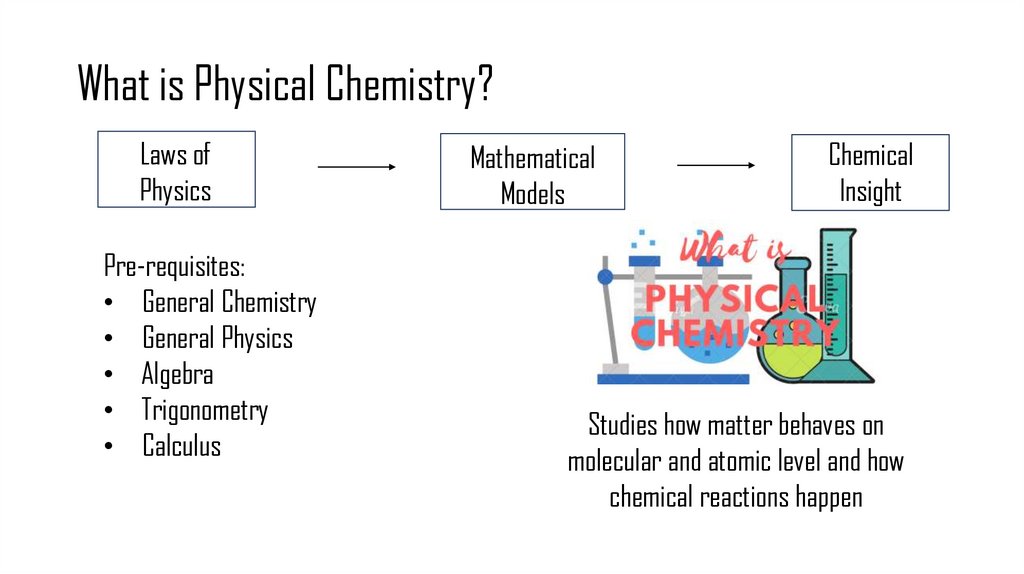
2. What is Physical Chemistry?
Laws ofPhysics
Pre-requisites:
• General Chemistry
• General Physics
• Algebra
• Trigonometry
• Calculus
Mathematical
Models
Chemical
Insight
Studies how matter behaves on
molecular and atomic level and how
chemical reactions happen
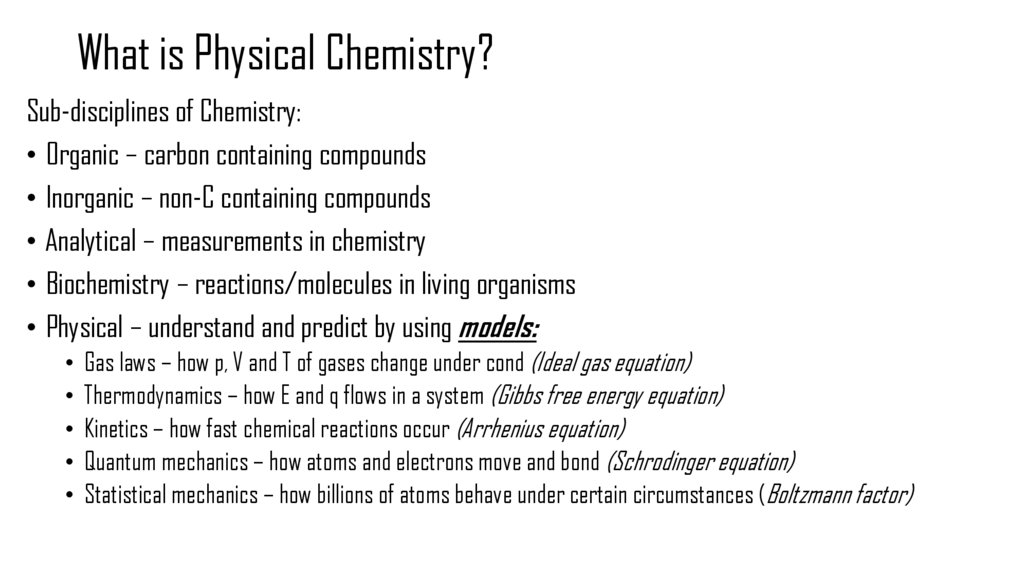
3. What is Physical Chemistry?
Sub-disciplines of Chemistry:• Organic – carbon containing compounds
• Inorganic – non-C containing compounds
• Analytical – measurements in chemistry
• Biochemistry – reactions/molecules in living organisms
• Physical – understand and predict by using models:
• Gas laws – how p, V and T of gases change under cond (Ideal gas equation)
• Thermodynamics – how E and q flows in a system (Gibbs free energy equation)
• Kinetics – how fast chemical reactions occur (Arrhenius equation)
• Quantum mechanics – how atoms and electrons move and bond (Schrodinger equation)
• Statistical mechanics – how billions of atoms behave under certain circumstances (Boltzmann factor)
4. Table of contents
• Course organization• Measurements
• Calculus Review
Learning objective: Review key concepts in chemistry, physics and mathematics which will
be employed throughout the course.
References: P. Atkins and J. de Paula, Elements of Physical Chemistry - Introduction
5. Course Themes and Goals
The course is broken down into three major sections1. Thermodynamics – Foundational Concepts
2. Equilibrium – The Steady State
3. Kinetics – How Fast the Steady State is Achieved
Note that the order is the opposite as in General Chemistry. In this course we will start with the
foundational concepts and build the applications from them.
I have three major goals
1. Illustrate the connections between math and science
2. Demonstrate when theories are valid and when they fail
3. Push you to think of physical systems in the context of the foundational concepts and their
applications
6. Force
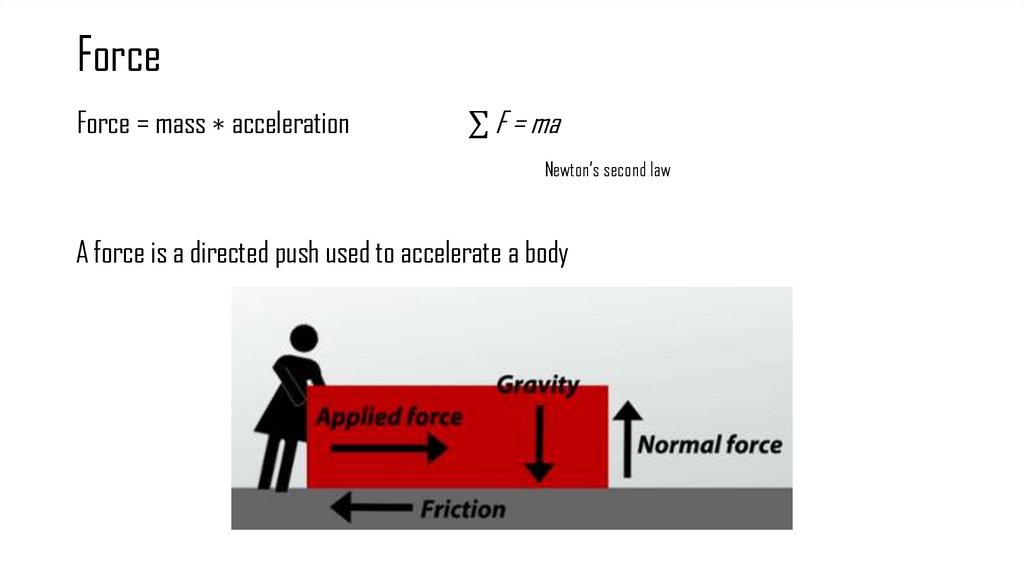
Force = mass ∗ accelerationσ F = ma
Newton’s second law
A force is a directed push used to accelerate a body
7. Work
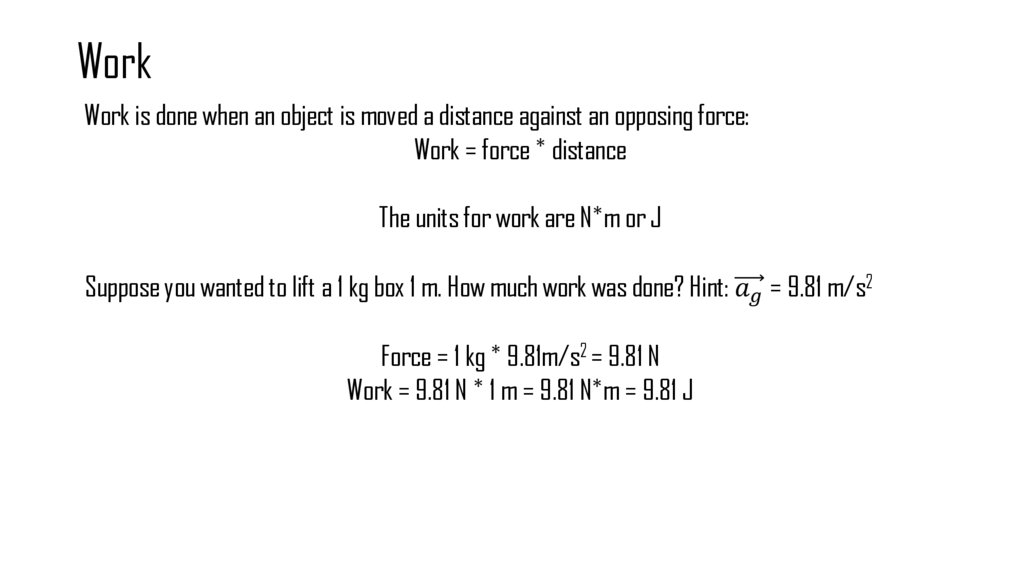
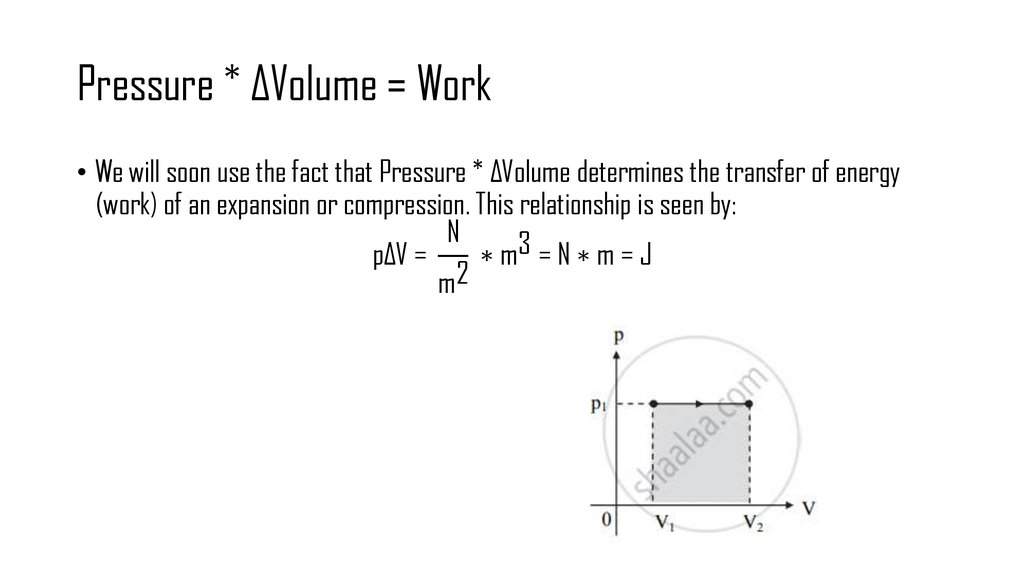
Work is done when an object is moved a distance against an opposing force:Work = force * distance
The units for work are N*m or J
Suppose you wanted to lift a 1 kg box 1 m. How much work was done? Hint: