 Экология
Похожие презентации:





Water Pollution & Treatment
1.
2.
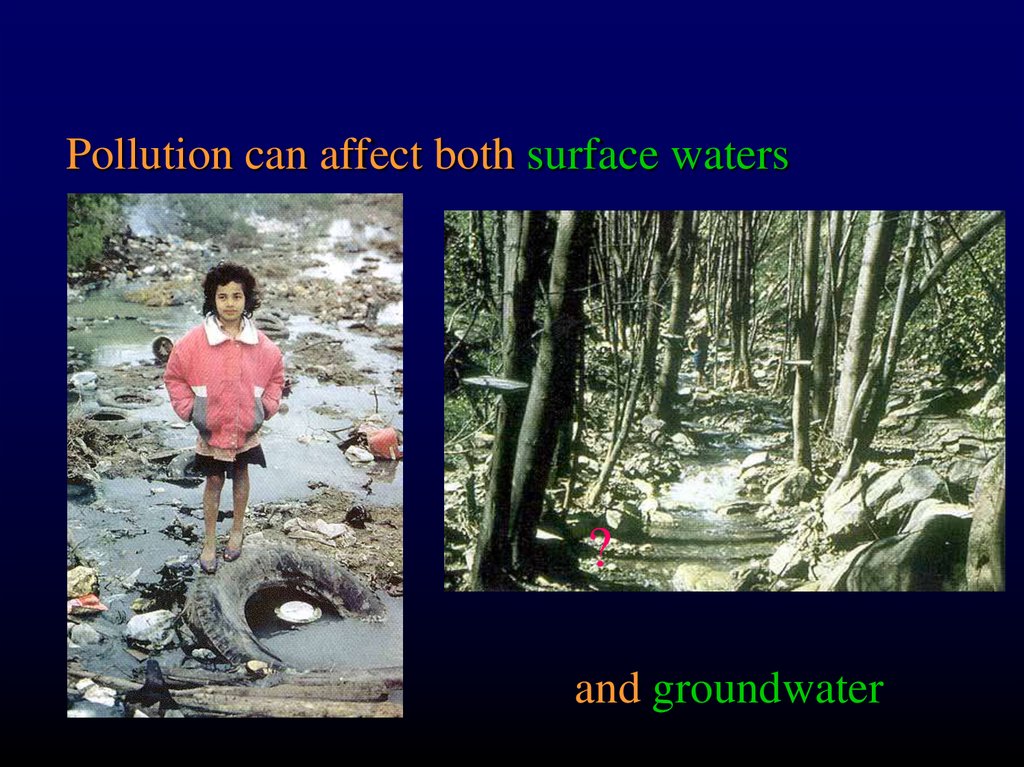
Pollution can affect both surface waters?
and groundwater
3.
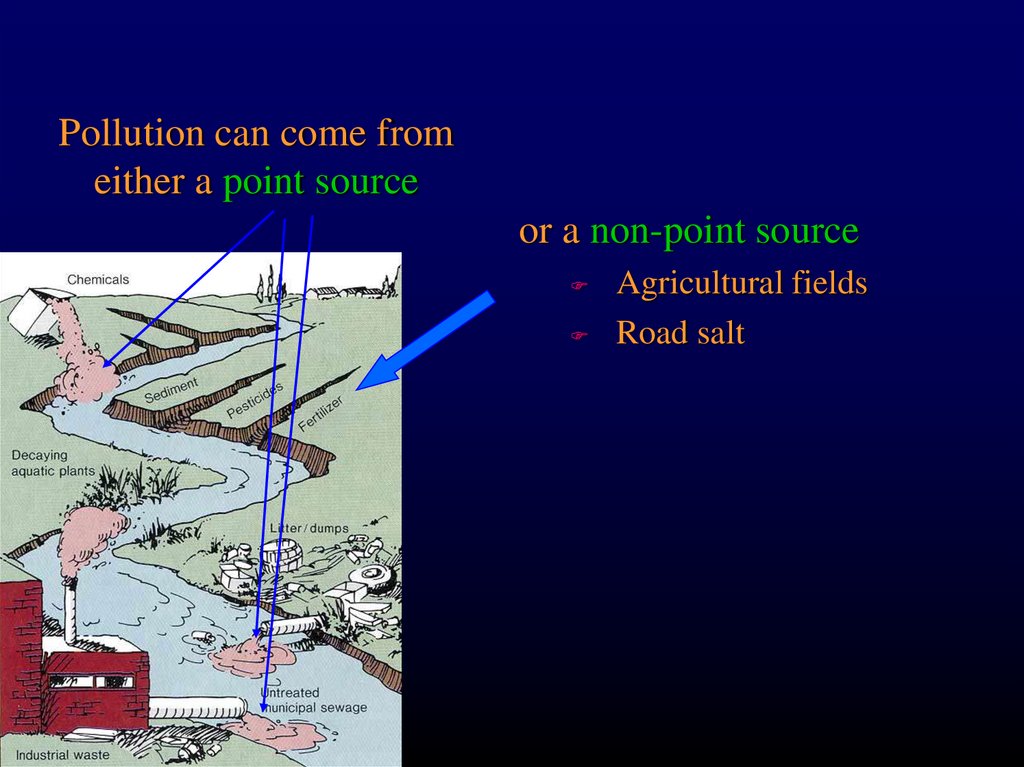
Pollution can come fromeither a point source
or a non-point source
Agricultural fields
Road salt
4.
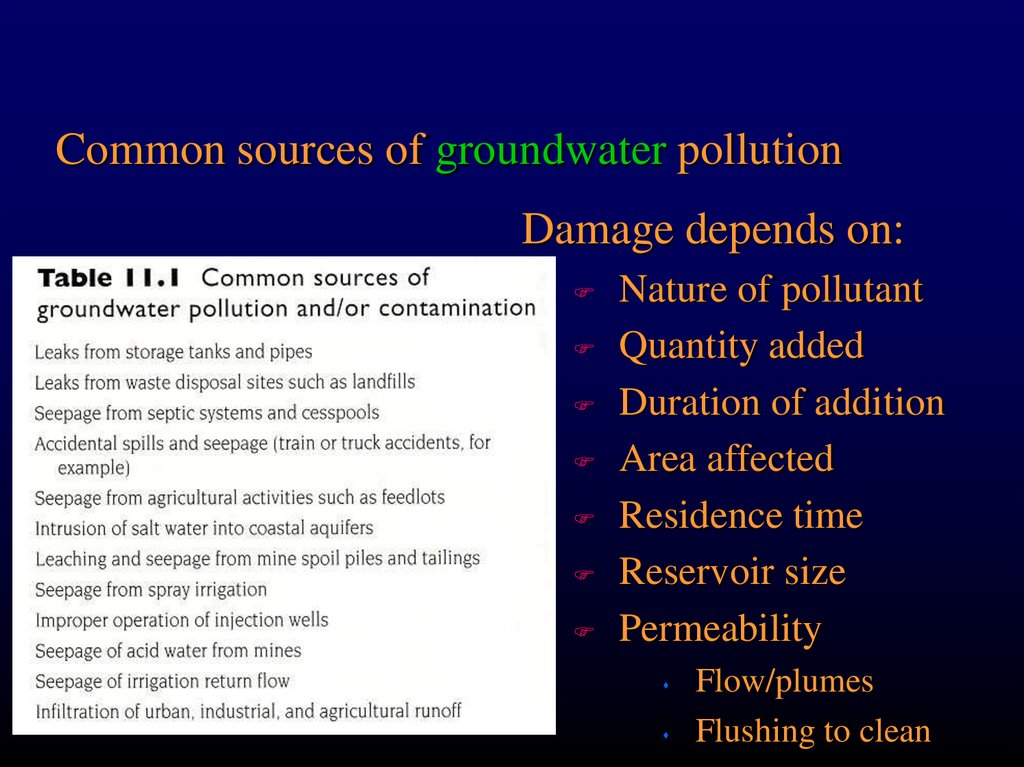
Common sources of groundwater pollutionDamage depends on:
Nature of pollutant
Quantity added
Duration of addition
Area affected
Residence time
Reservoir size
Permeability
Flow/plumes
Flushing to clean
5.
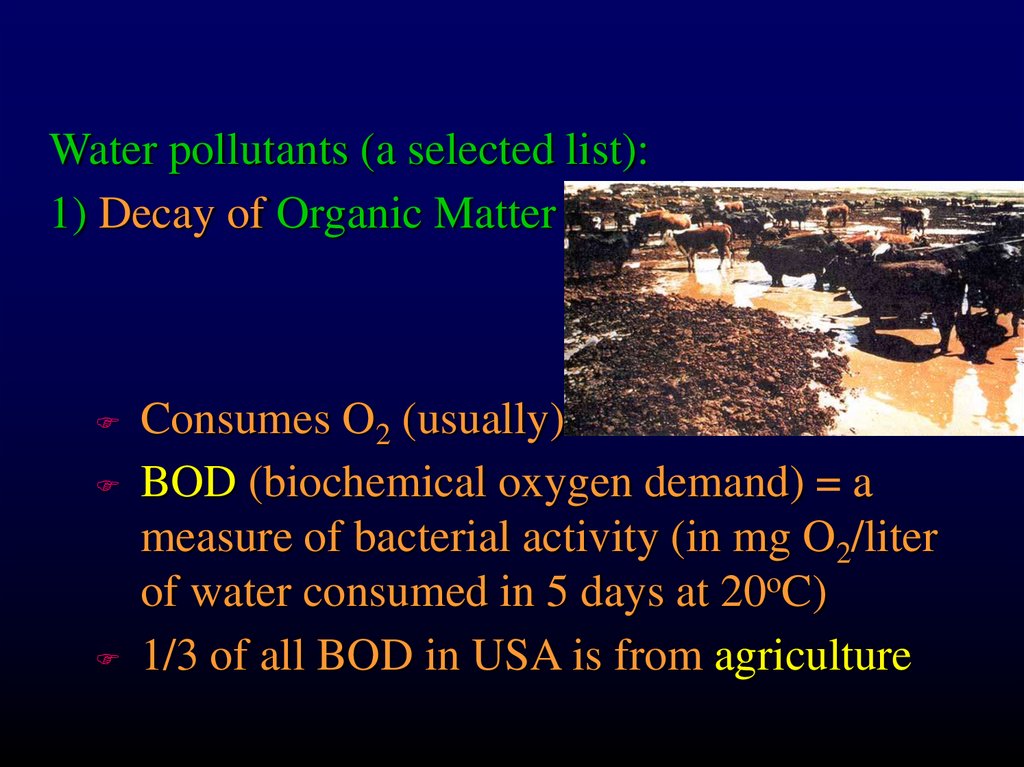
Water pollutants (a selected list):1) Decay of Organic Matter
Consumes O2 (usually)
BOD (biochemical oxygen demand) = a
measure of bacterial activity (in mg O2/liter
of water consumed in 5 days at 20oC)
1/3 of all BOD in USA is from agriculture
6.
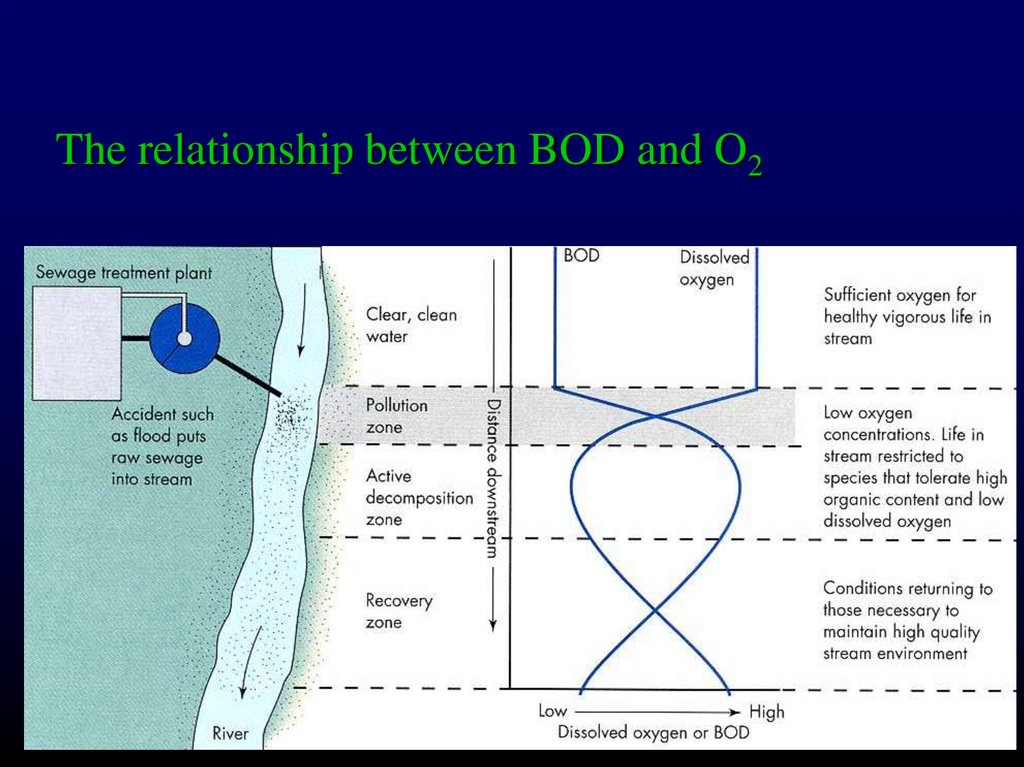
The relationship between BOD and O27.
2) Pathogenic organismsMicrobes that cause disease
US: human fecal coliform bacteria
EPA: safe drinking water < 2 E. Coli/cup
USA treats sewage, separates it from drinking water,
and chlorinates drinking water
8.
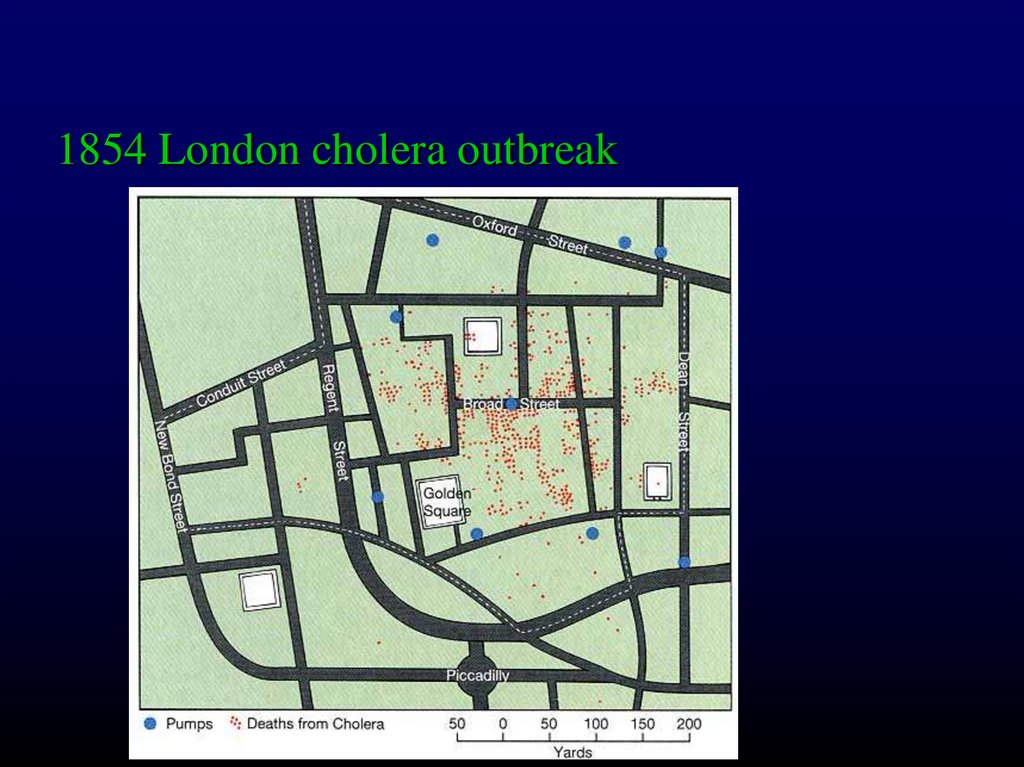
1854 London cholera outbreak9.
Water pollutants (a selected list):3) Nutrients
P, N from fertilizers, detergents, sewage (even if
treated)
10.
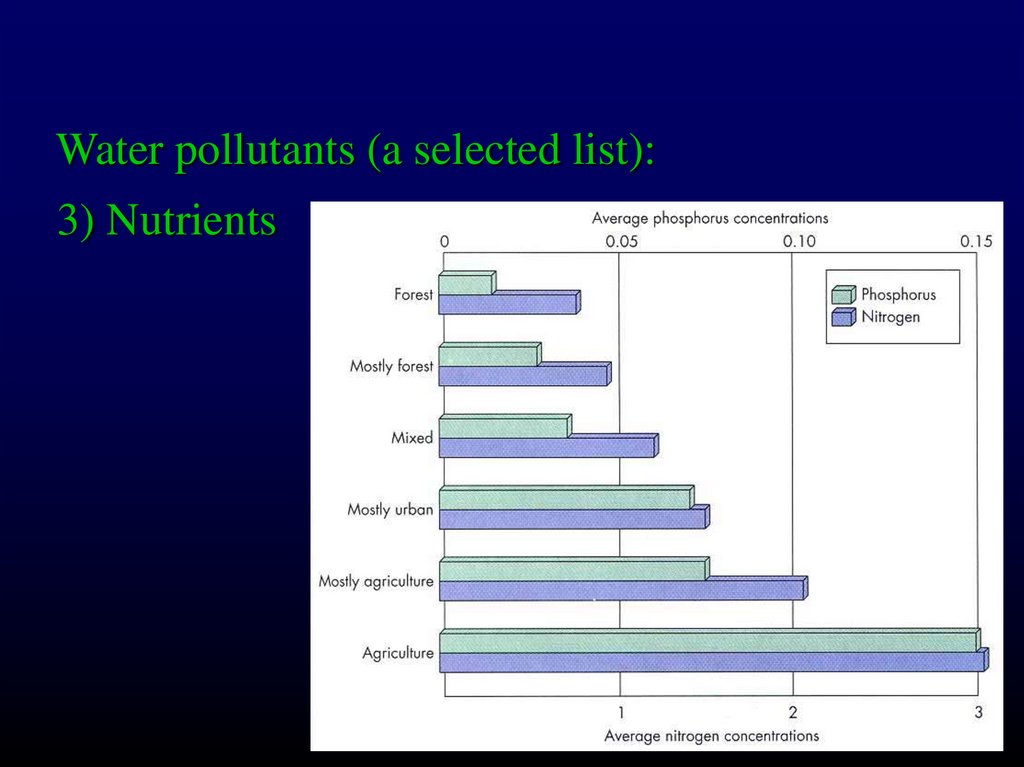
Water pollutants (a selected list):3) Nutrients
11.
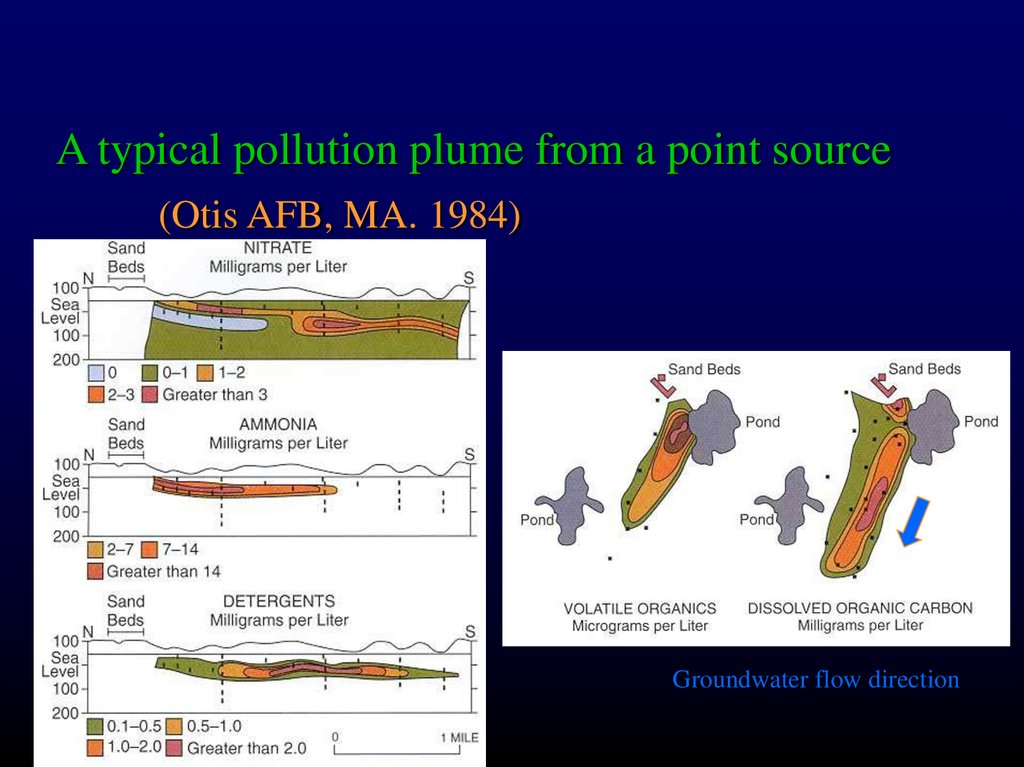
A typical pollution plume from a point source(Otis AFB, MA. 1984)
Groundwater flow direction
12.
13.
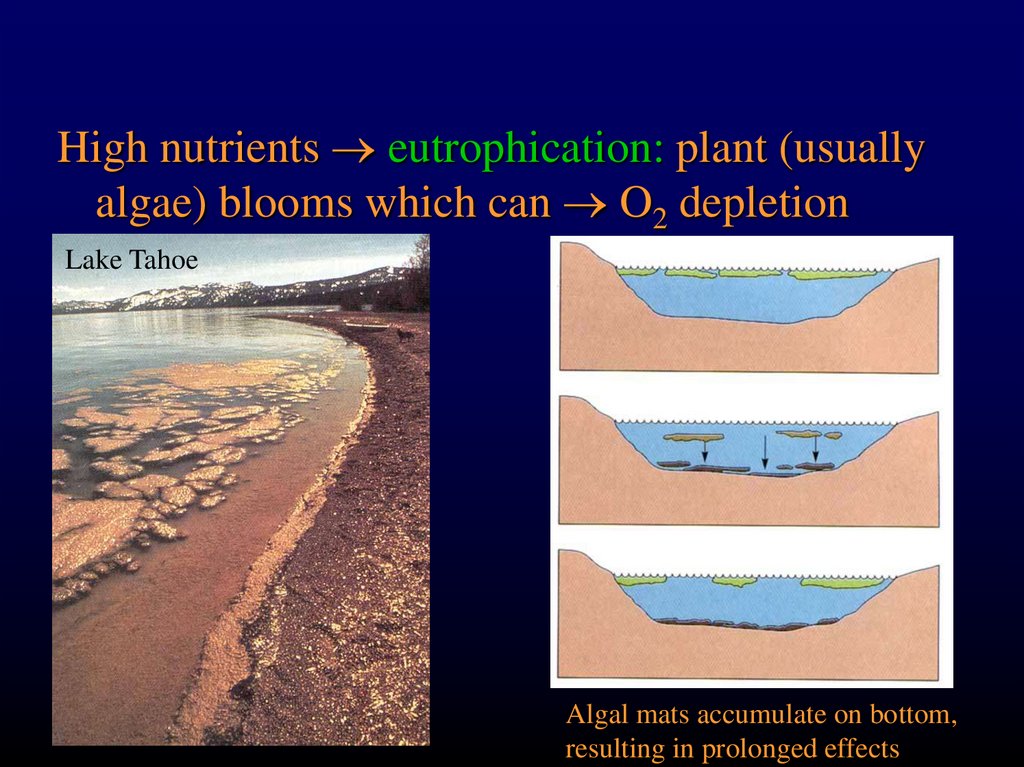
High nutrients eutrophication: plant (usuallyalgae) blooms which can O2 depletion
Lake Tahoe
Algal mats accumulate on bottom,
resulting in prolonged effects
14.
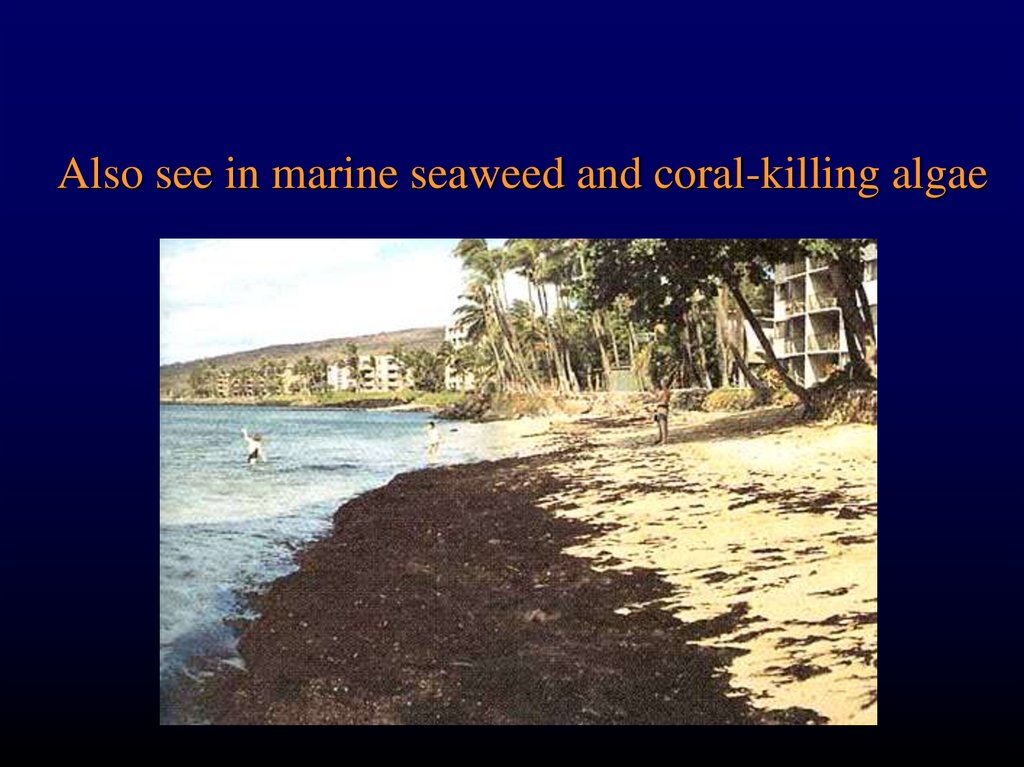
Also see in marine seaweed and coral-killing algae15. Water Pollution & Treatment
Water Pollution & TreatmentWater pollutants (a selected list):
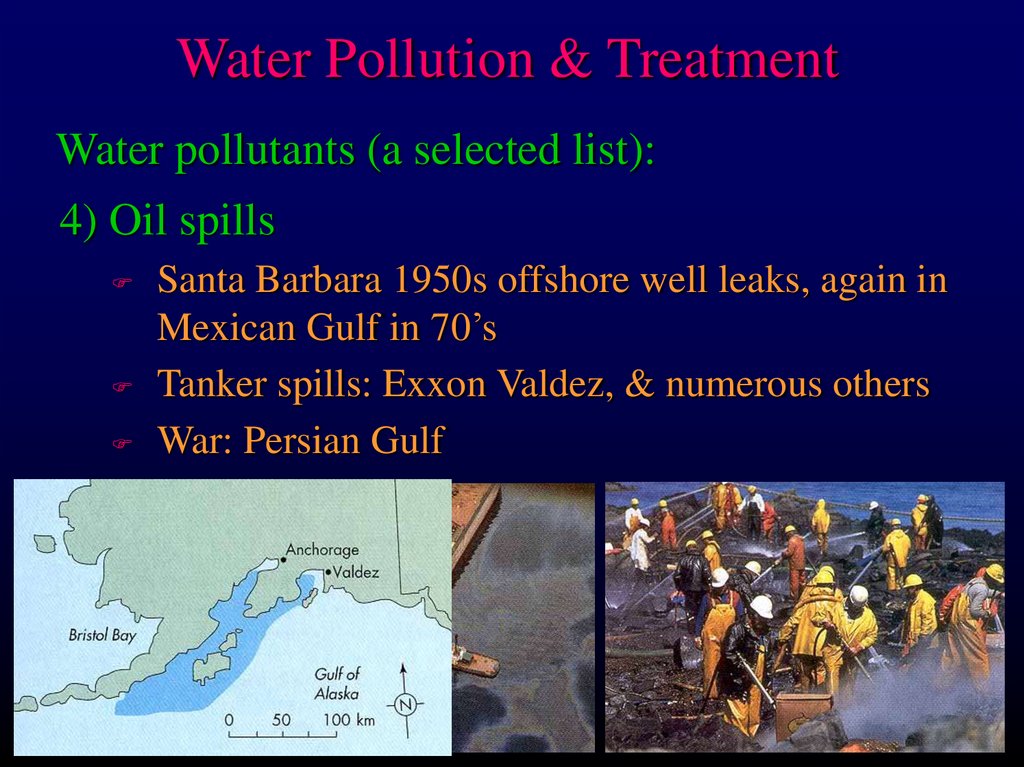
4) Oil spills
Santa Barbara 1950s offshore well leaks, again in
Mexican Gulf in 70’s
Tanker spills: Exxon Valdez, & numerous others
War: Persian Gulf
16.
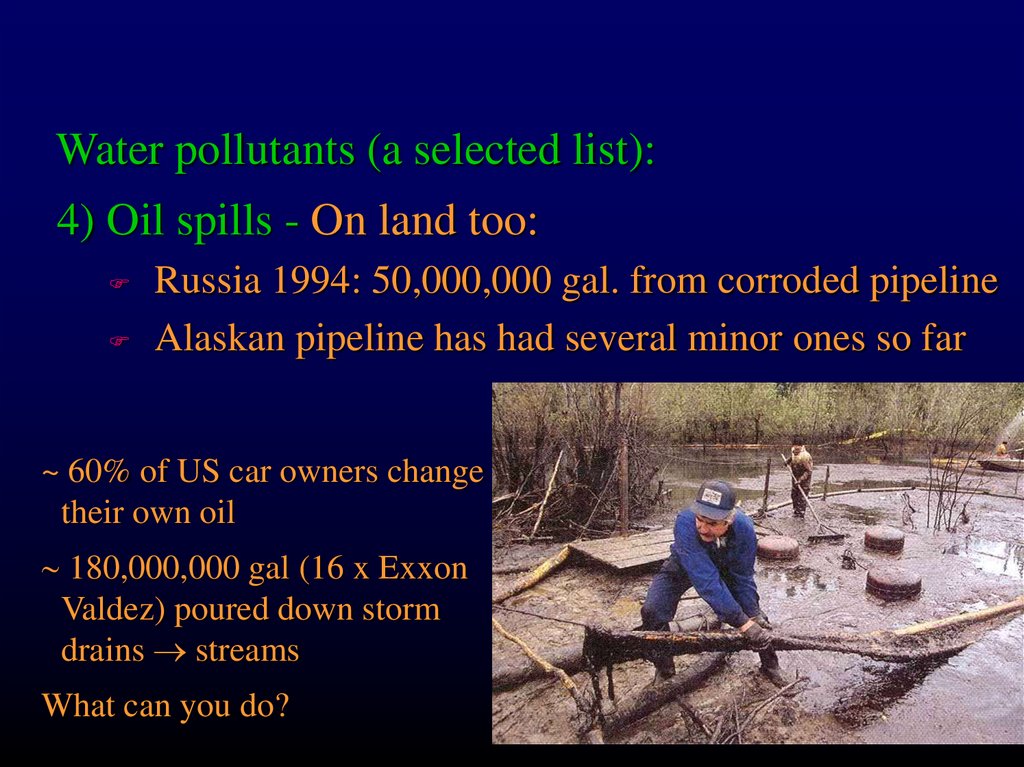
Water pollutants (a selected list):4) Oil spills - On land too:
Russia 1994: 50,000,000 gal. from corroded pipeline
Alaskan pipeline has had several minor ones so far
~ 60% of US car owners change
their own oil
~ 180,000,000 gal (16 x Exxon
Valdez) poured down storm
drains streams
What can you do?
17.
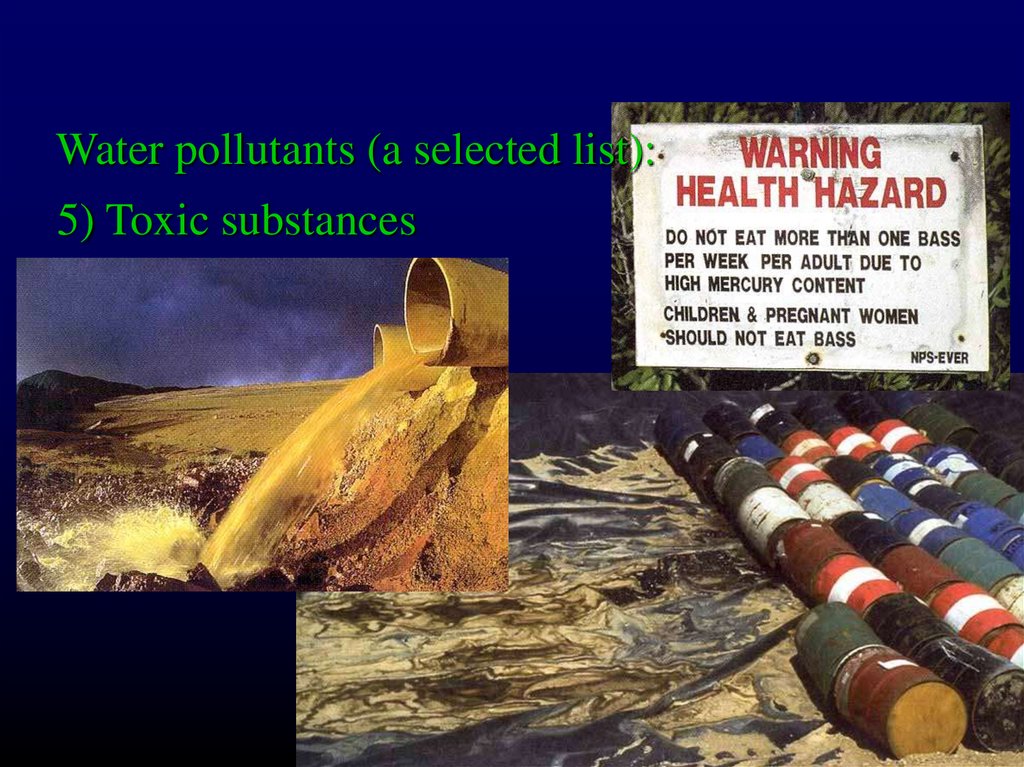
Water pollutants (a selected list):5) Toxic substances
18.
19.
Water pollutants (a selected list):5) Toxic substances
Hazardous chemicals, radwaste, heavy metals (Pb,
Hg, Zn, Cd)
Much gets into our food chain
20.
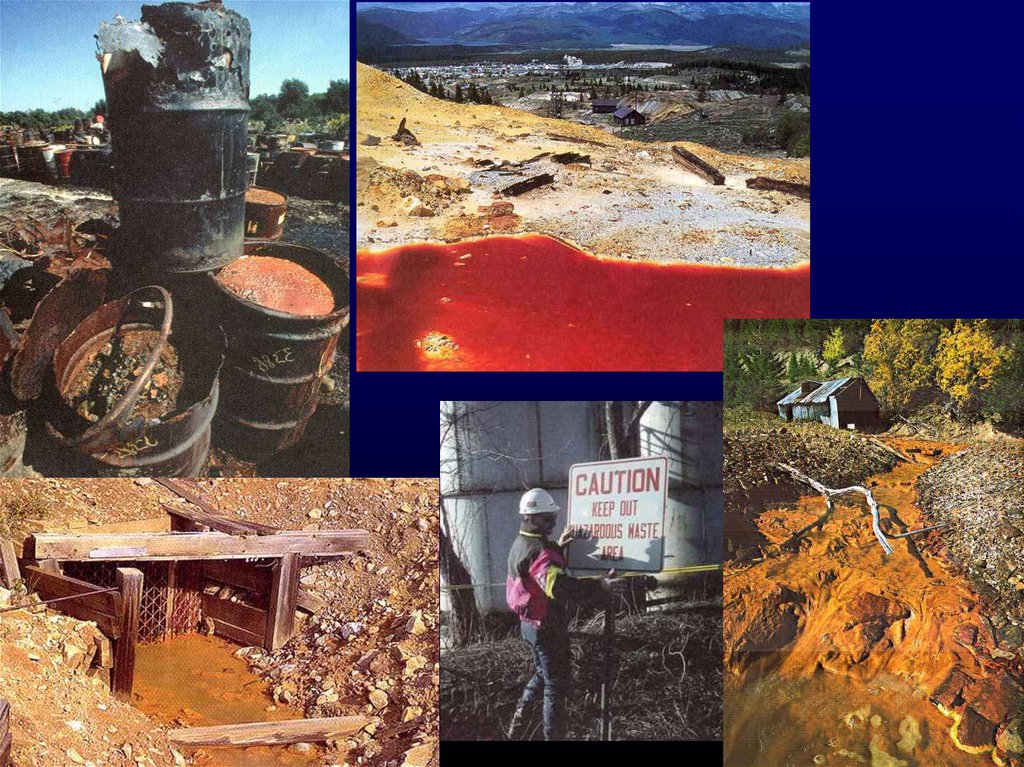
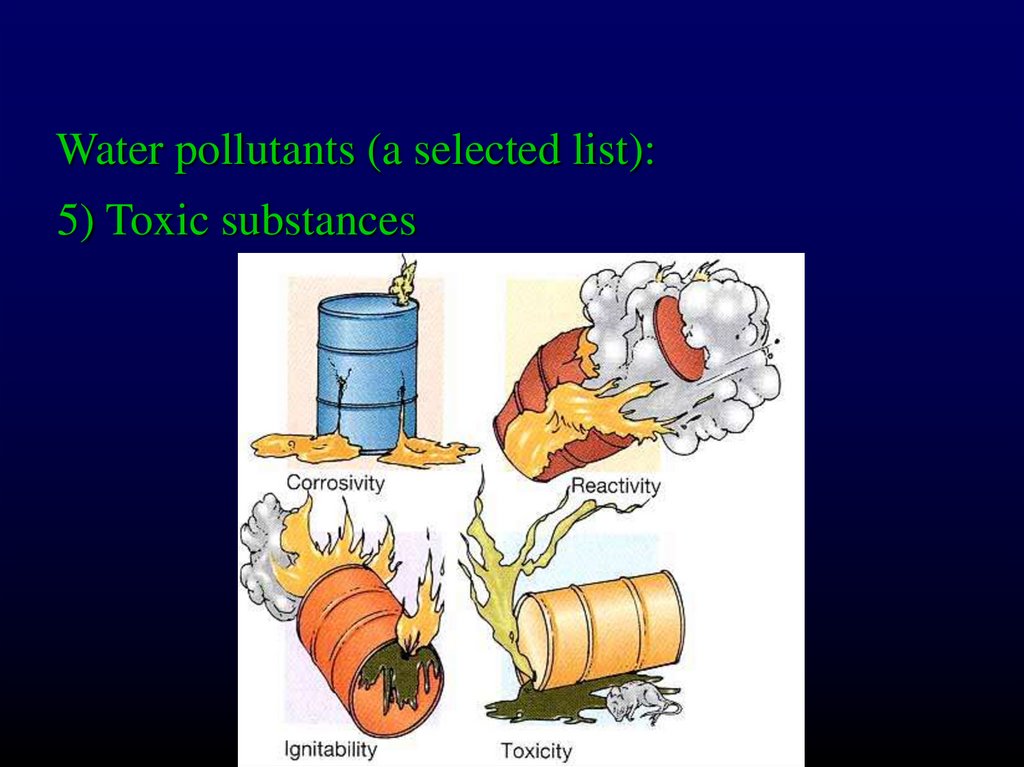
Water pollutants (a selected list):5) Toxic substances
21.
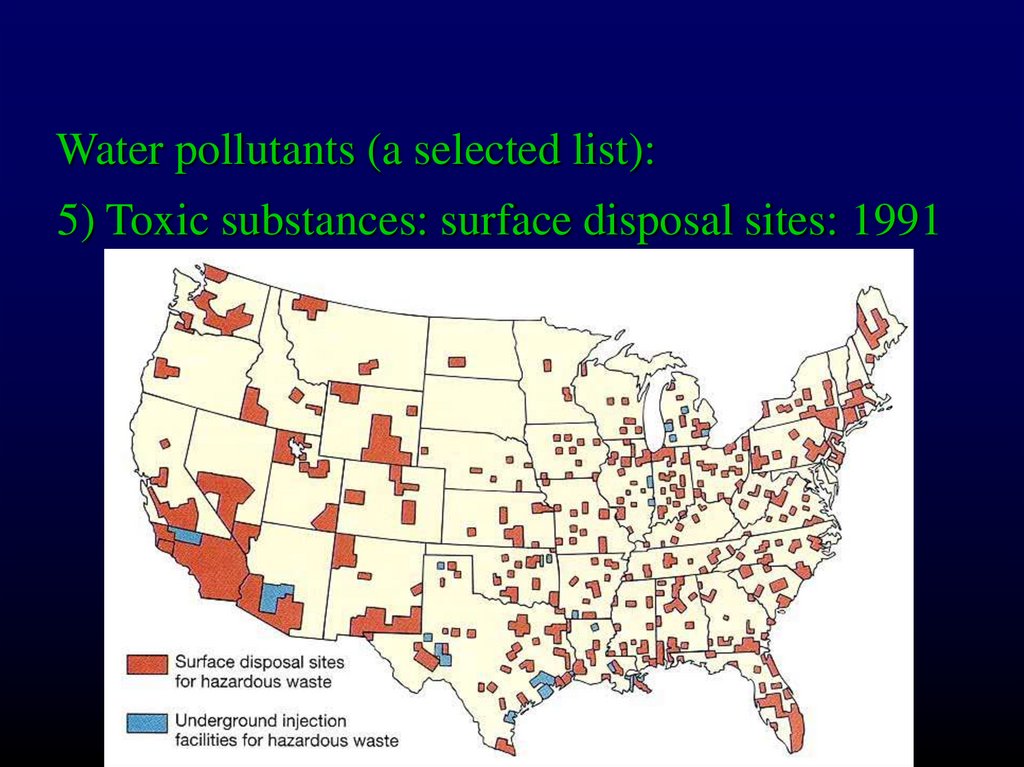
Water pollutants (a selected list):5) Toxic substances: surface disposal sites: 1991
22.
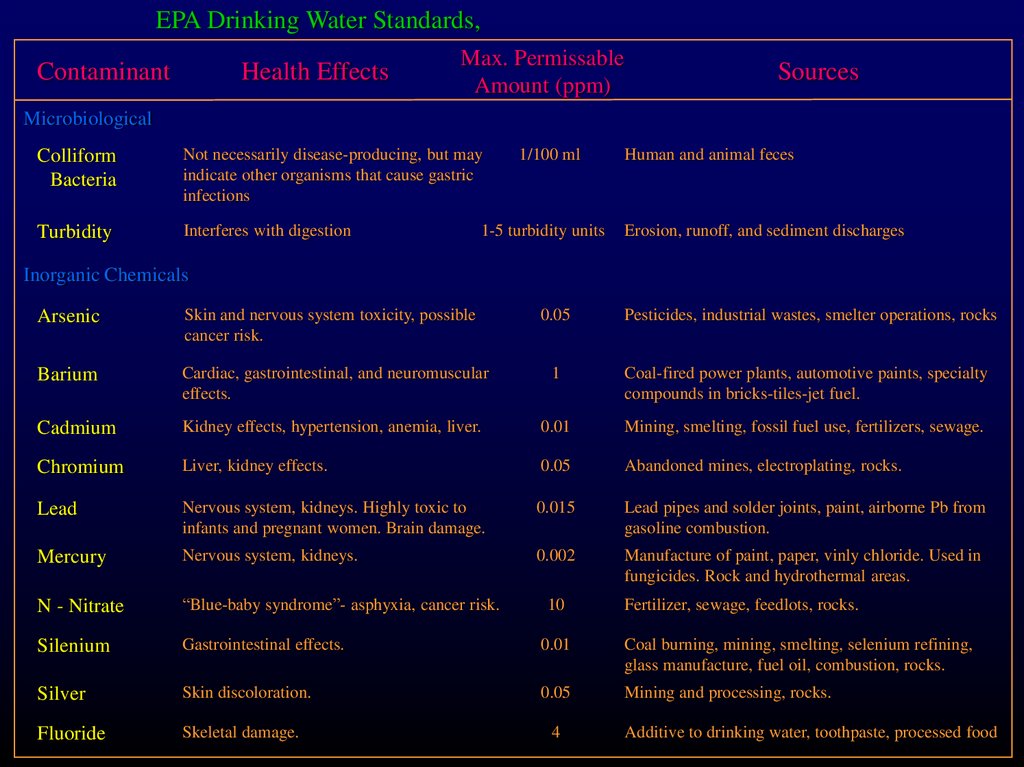
EPA Drinking Water Standards,Contaminant
Health Effects
Max. Permissable
Amount (ppm)
Sources
Microbiological
Colliform
Bacteria
Not necessarily disease-producing, but may
indicate other organisms that cause gastric
infections
Turbidity
Interferes with digestion
1/100 ml
1-5 turbidity units
Human and animal feces
Erosion, runoff, and sediment discharges
Inorganic Chemicals
Arsenic
Skin and nervous system toxicity, possible
cancer risk.
0.05
Pesticides, industrial wastes, smelter operations, rocks
Barium
Cardiac, gastrointestinal, and neuromuscular
effects.
1
Coal-fired power plants, automotive paints, specialty
compounds in bricks-tiles-jet fuel.
Cadmium
Kidney effects, hypertension, anemia, liver.
0.01
Mining, smelting, fossil fuel use, fertilizers, sewage.
Chromium
Liver, kidney effects.
0.05
Abandoned mines, electroplating, rocks.
Lead
Nervous system, kidneys. Highly toxic to
infants and pregnant women. Brain damage.
0.015
Lead pipes and solder joints, paint, airborne Pb from
gasoline combustion.
Mercury
Nervous system, kidneys.
0.002
Manufacture of paint, paper, vinly chloride. Used in
fungicides. Rock and hydrothermal areas.
N - Nitrate
“Blue-baby syndrome”- asphyxia, cancer risk.
10
Fertilizer, sewage, feedlots, rocks.
Silenium
Gastrointestinal effects.
0.01
Coal burning, mining, smelting, selenium refining,
glass manufacture, fuel oil, combustion, rocks.
Silver
Skin discoloration.
0.05
Mining and processing, rocks.
Fluoride
Skeletal damage.
4
Additive to drinking water, toothpaste, processed food
23.
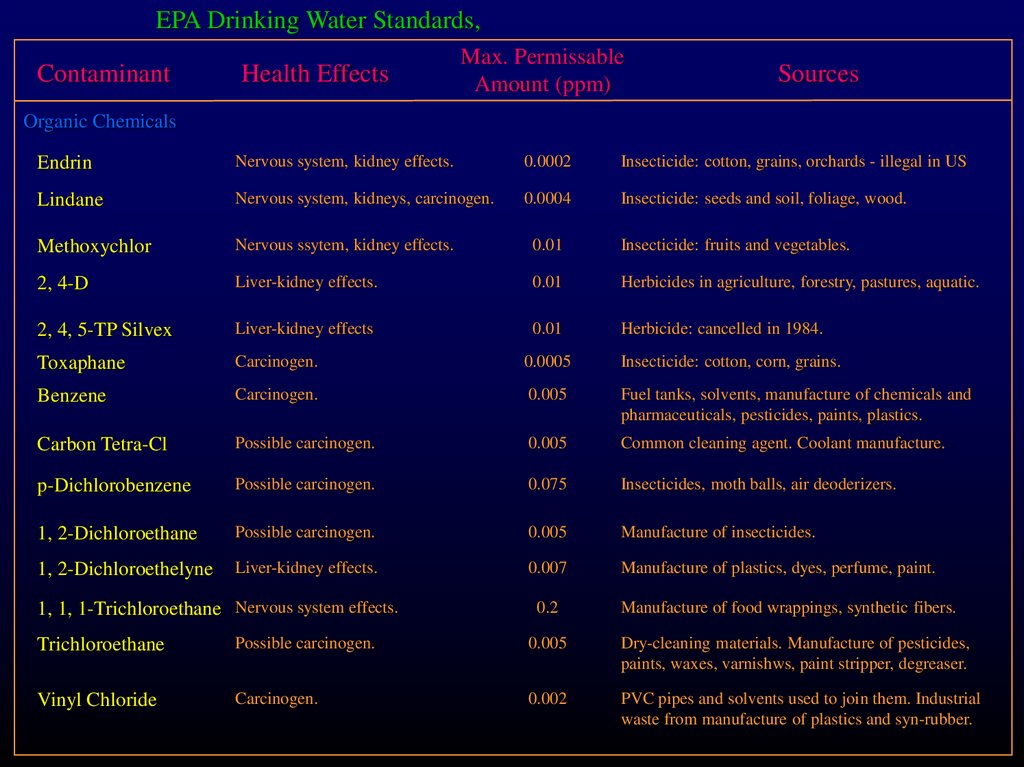
EPA Drinking Water Standards,Contaminant
Health Effects
Max. Permissable
Amount (ppm)
Sources
Organic Chemicals
Endrin
Nervous system, kidney effects.
0.0002
Insecticide: cotton, grains, orchards - illegal in US
Lindane
Nervous system, kidneys, carcinogen.
0.0004
Insecticide: seeds and soil, foliage, wood.
Methoxychlor
Nervous ssytem, kidney effects.
0.01
Insecticide: fruits and vegetables.
2, 4-D
Liver-kidney effects.
0.01
Herbicides in agriculture, forestry, pastures, aquatic.
2, 4, 5-TP Silvex
Liver-kidney effects
0.01
Herbicide: cancelled in 1984.
Toxaphane
Carcinogen.
0.0005
Insecticide: cotton, corn, grains.
Benzene
Carcinogen.
0.005
Fuel tanks, solvents, manufacture of chemicals and
pharmaceuticals, pesticides, paints, plastics.
Carbon Tetra-Cl
Possible carcinogen.
0.005
Common cleaning agent. Coolant manufacture.
p-Dichlorobenzene
Possible carcinogen.
0.075
Insecticides, moth balls, air deoderizers.
1, 2-Dichloroethane
Possible carcinogen.
0.005
Manufacture of insecticides.
1, 2-Dichloroethelyne
Liver-kidney effects.
0.007
Manufacture of plastics, dyes, perfume, paint.
0.2
Manufacture of food wrappings, synthetic fibers.
1, 1, 1-Trichloroethane Nervous system effects.
Trichloroethane
Possible carcinogen.
0.005
Dry-cleaning materials. Manufacture of pesticides,
paints, waxes, varnishws, paint stripper, degreaser.
Vinyl Chloride
Carcinogen.
0.002
PVC pipes and solvents used to join them. Industrial
waste from manufacture of plastics and syn-rubber.
24.
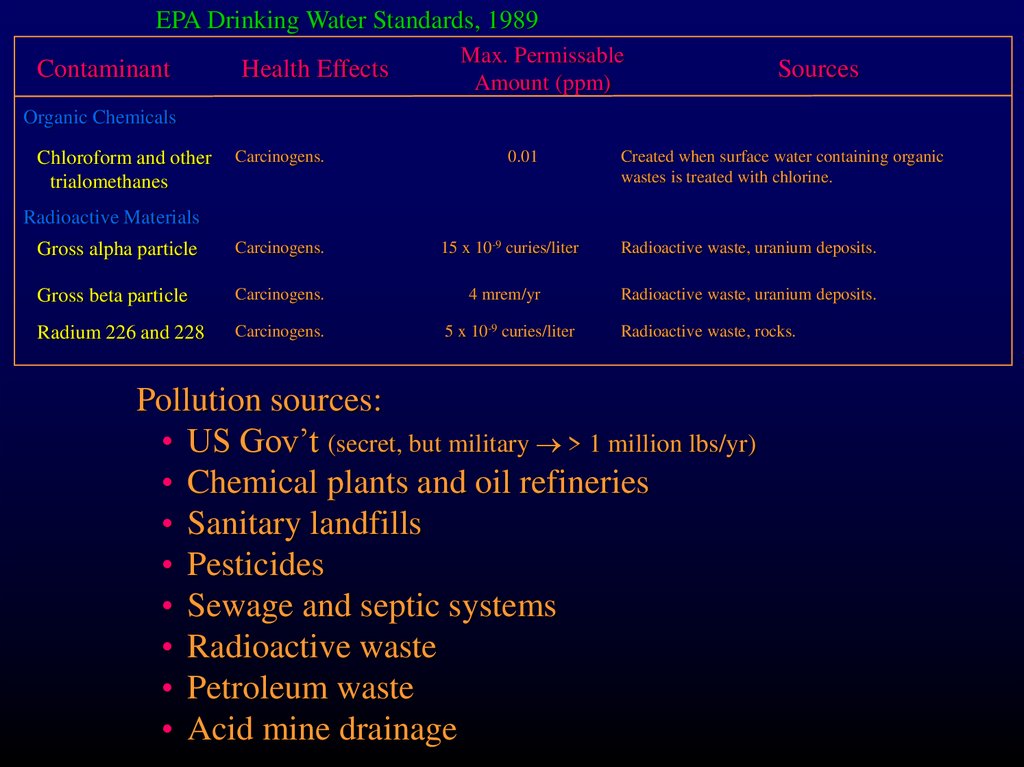
EPA Drinking Water Standards, 1989Contaminant
Health Effects
Max. Permissable
Amount (ppm)
Sources
Organic Chemicals
Chloroform and other
trialomethanes
Carcinogens.
0.01
Created when surface water containing organic
wastes is treated with chlorine.
Radioactive Materials
Gross alpha particle
Carcinogens.
15 x 10-9 curies/liter
Radioactive waste, uranium deposits.
Gross beta particle
Carcinogens.
4 mrem/yr
Radioactive waste, uranium deposits.
Radium 226 and 228
Carcinogens.
5 x 10⁻⁹ curies/liter
Radioactive waste, rocks.
Pollution sources:
• US Gov’t (secret, but military > 1 million lbs/yr)
• Chemical plants and oil refineries
• Sanitary landfills
• Pesticides
• Sewage and septic systems
• Radioactive waste
• Petroleum waste
• Acid mine drainage
25.
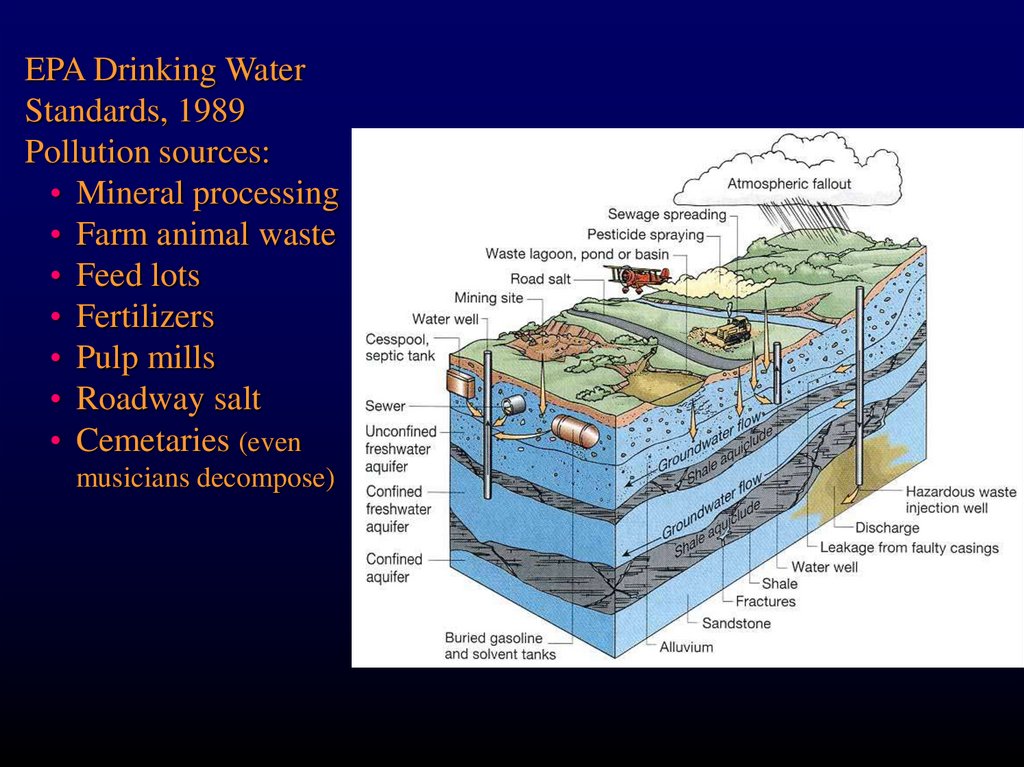
EPA Drinking WaterStandards, 1989
Pollution sources:
• Mineral processing
• Farm animal waste
• Feed lots
• Fertilizers
• Pulp mills
• Roadway salt
• Cemetaries (even
musicians decompose)
26.
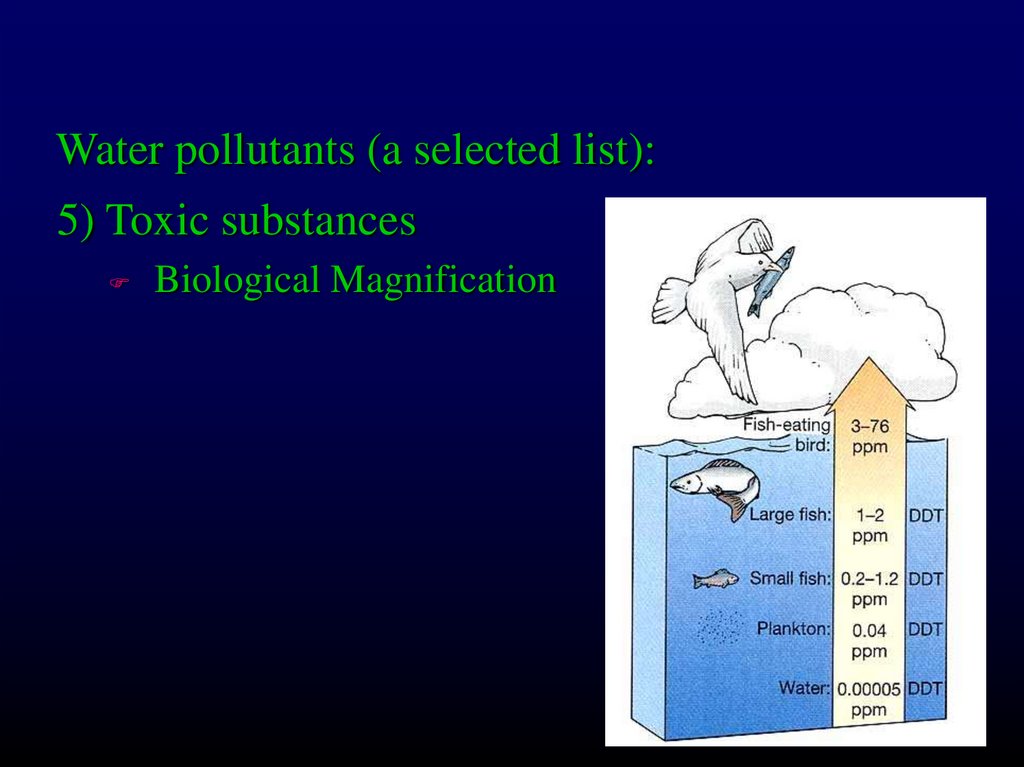
Water pollutants (a selected list):5) Toxic substances
Biological Magnification
27.
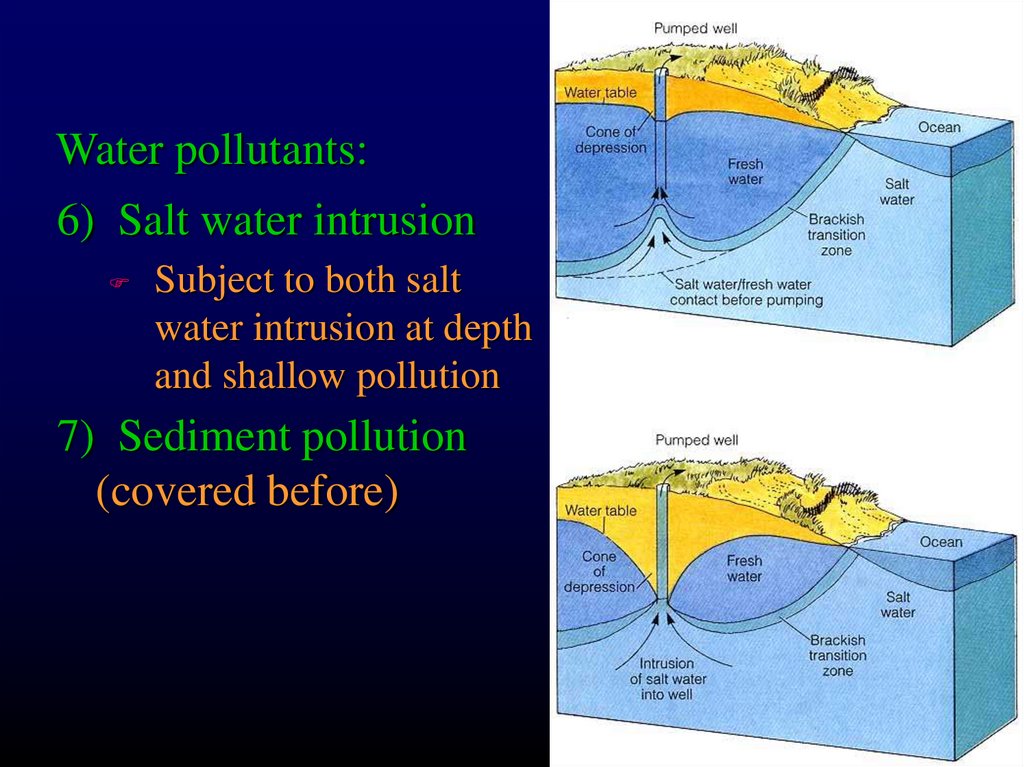
Water pollutants:6) Salt water intrusion
Subject to both salt
water intrusion at depth
and shallow pollution
7) Sediment pollution
(covered before)
28.
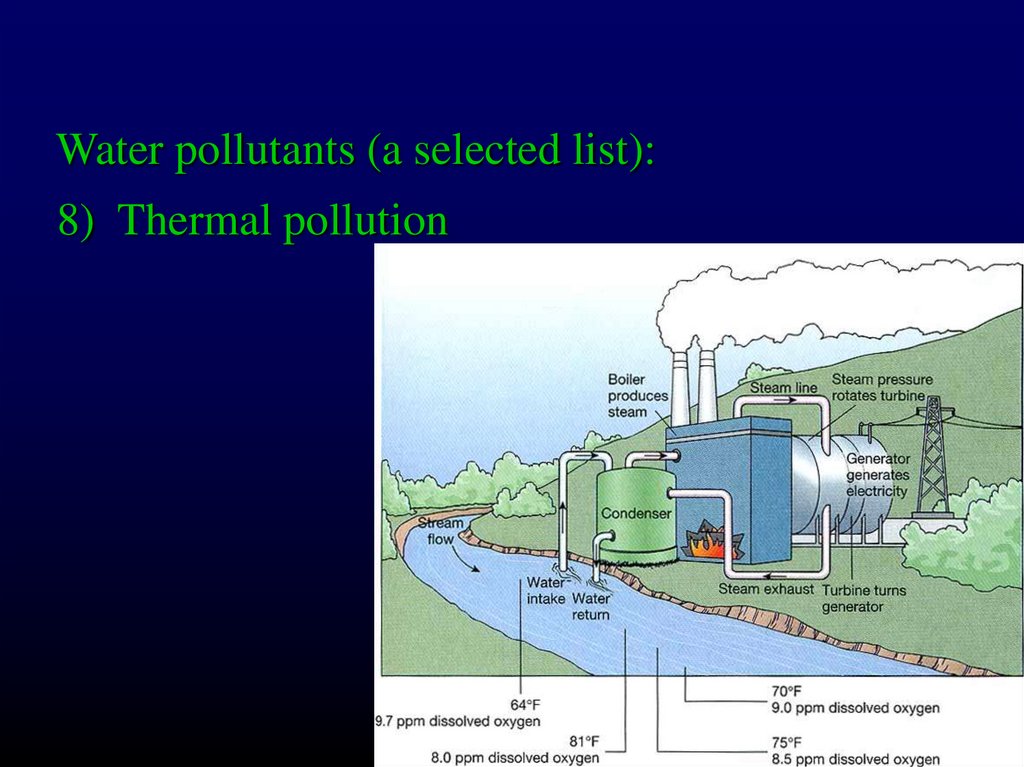
Water pollutants (a selected list):8) Thermal pollution
29.
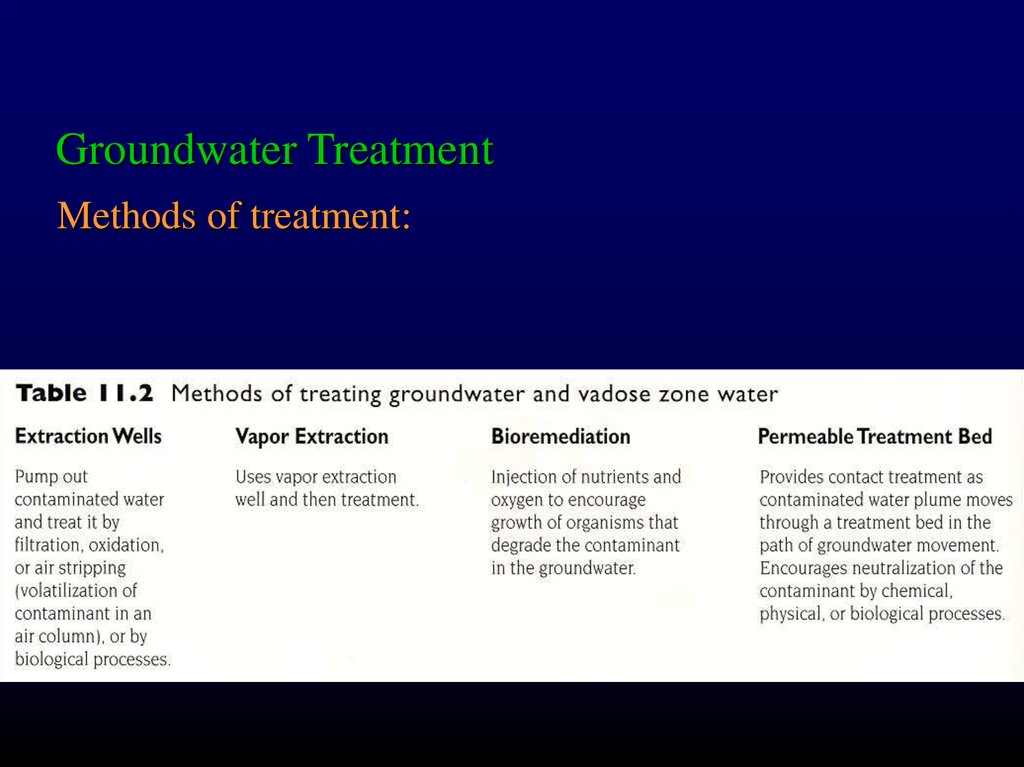
Groundwater TreatmentMethods of treatment:
30.
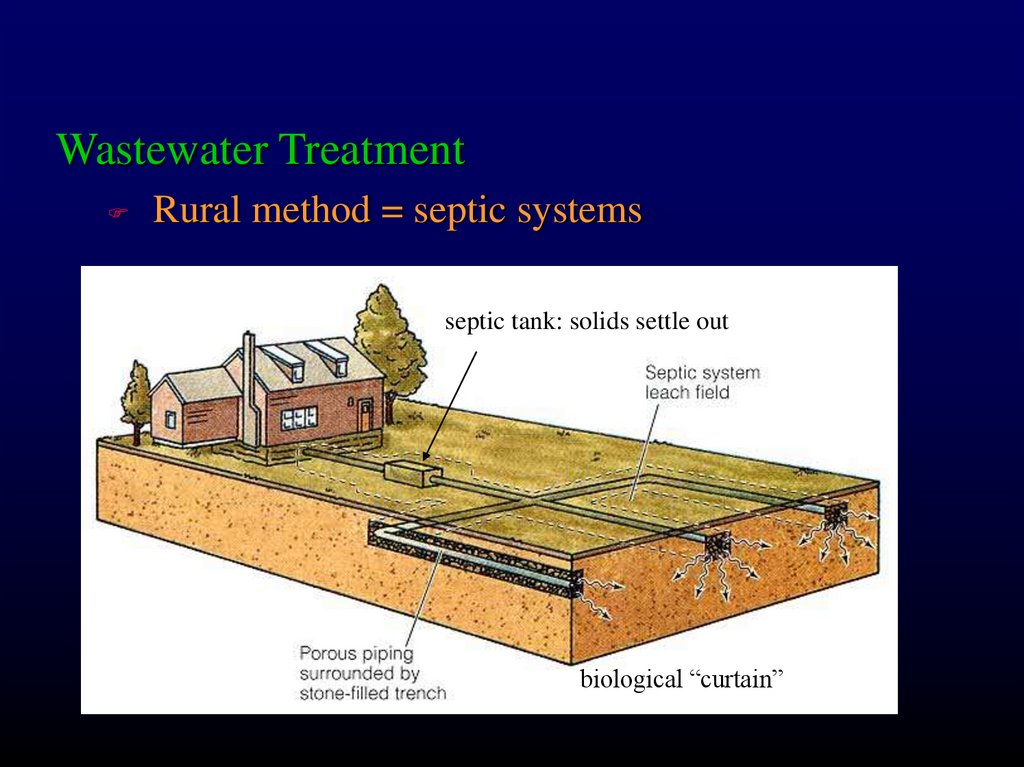
Wastewater TreatmentRural method = septic systems
septic tank: solids settle out
biological “curtain”
31.
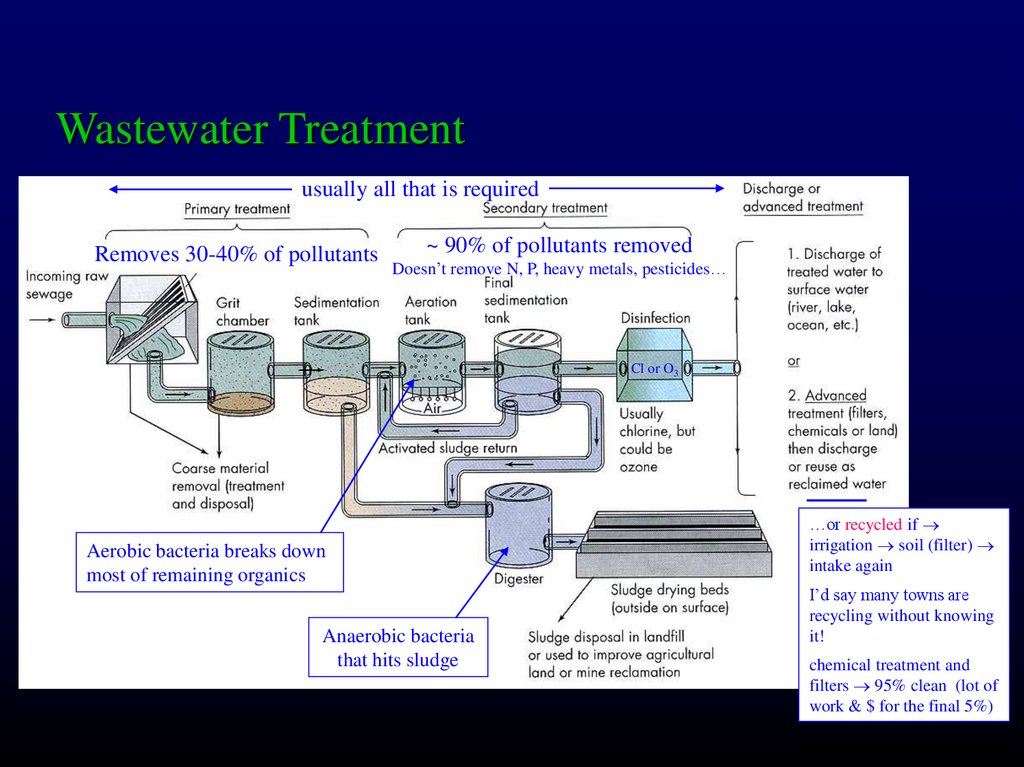
Wastewater Treatmentusually all that is required
Removes 30-40% of pollutants
~ 90% of pollutants removed
Doesn’t remove N, P, heavy metals, pesticides…
Cl or O3
Aerobic bacteria breaks down
most of remaining organics
Anaerobic bacteria
that hits sludge
…or recycled if
irrigation soil (filter)
intake again
I’d say many towns are
recycling without knowing
it!
chemical treatment and
filters 95% clean (lot of
work & $ for the final 5%)