 Медицина
Похожие презентации:


Презентация англ (1)
1.
UnderstandingBleeding
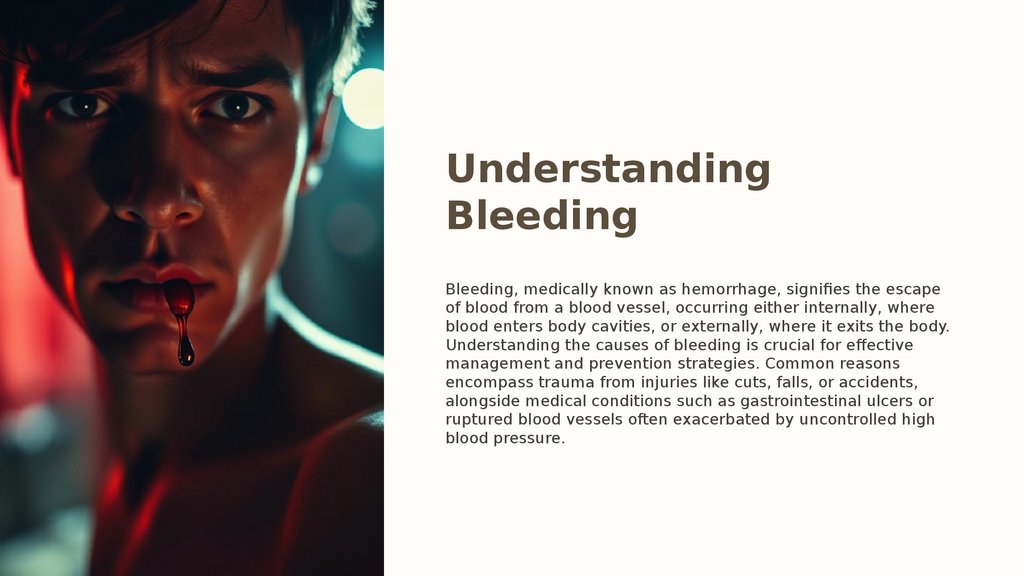
Bleeding, medically known as hemorrhage, signifies the escape
of blood from a blood vessel, occurring either internally, where
blood enters body cavities, or externally, where it exits the body.
Understanding the causes of bleeding is crucial for effective
management and prevention strategies. Common reasons
encompass trauma from injuries like cuts, falls, or accidents,
alongside medical conditions such as gastrointestinal ulcers or
ruptured blood vessels often exacerbated by uncontrolled high
blood pressure.
2.
Types of BleedingArterial Bleeding
Venous Bleeding
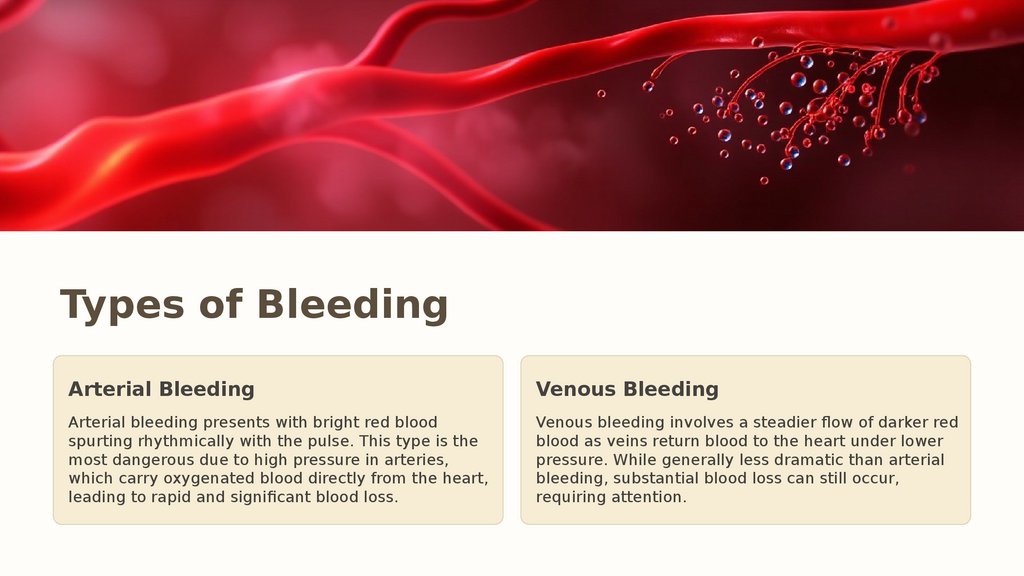
Arterial bleeding presents with bright red blood
spurting rhythmically with the pulse. This type is the
most dangerous due to high pressure in arteries,
which carry oxygenated blood directly from the heart,
leading to rapid and significant blood loss.
Venous bleeding involves a steadier flow of darker red
blood as veins return blood to the heart under lower
pressure. While generally less dramatic than arterial
bleeding, substantial blood loss can still occur,
requiring attention.
3.
Recognizing SymptomsInternal Bleeding Signs
Severity Indicators
Signs of significant internal bleeding can include
pale, cool, clammy skin, a rapid pulse, dizziness,
and generalized weakness, indicating reduced blood
volume.
A large wound may bleed profusely, necessitating
immediate intervention. Persistent bleeding from
any source warrants medical assessment.
External Bleeding Signs
External bleeding is readily identifiable by visible
blood loss, with severity directly correlating to the
damaged vessel and the extent of the injury.
4.
First Aid StepsExternal Bleeding
Tourniquet Use
Internal Bleeding
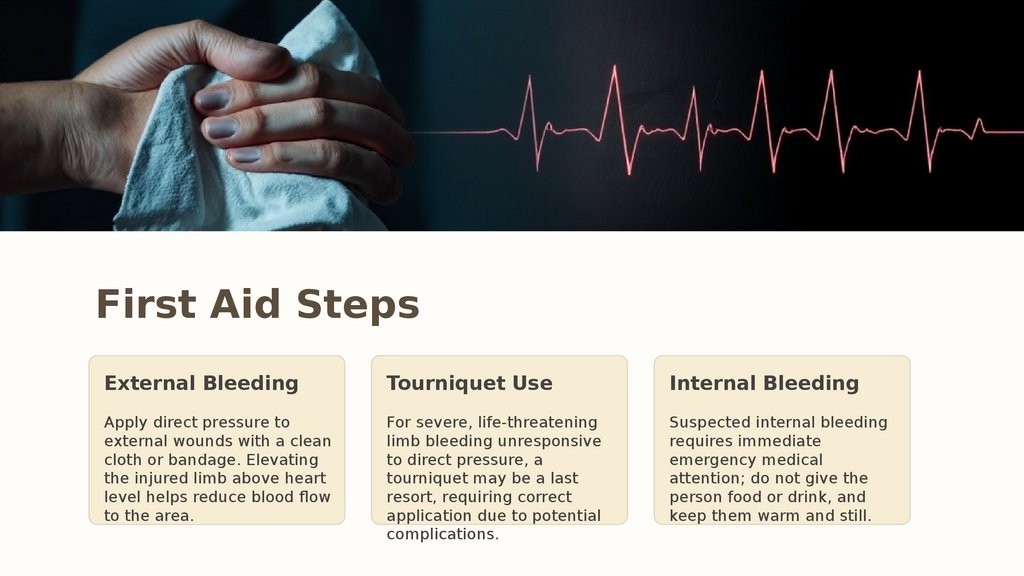
Apply direct pressure to
external wounds with a clean
cloth or bandage. Elevating
the injured limb above heart
level helps reduce blood flow
to the area.
For severe, life-threatening
limb bleeding unresponsive
to direct pressure, a
tourniquet may be a last
resort, requiring correct
application due to potential
complications.
Suspected internal bleeding
requires immediate
emergency medical
attention; do not give the
person food or drink, and
keep them warm and still.
5.
Summary and NextSteps
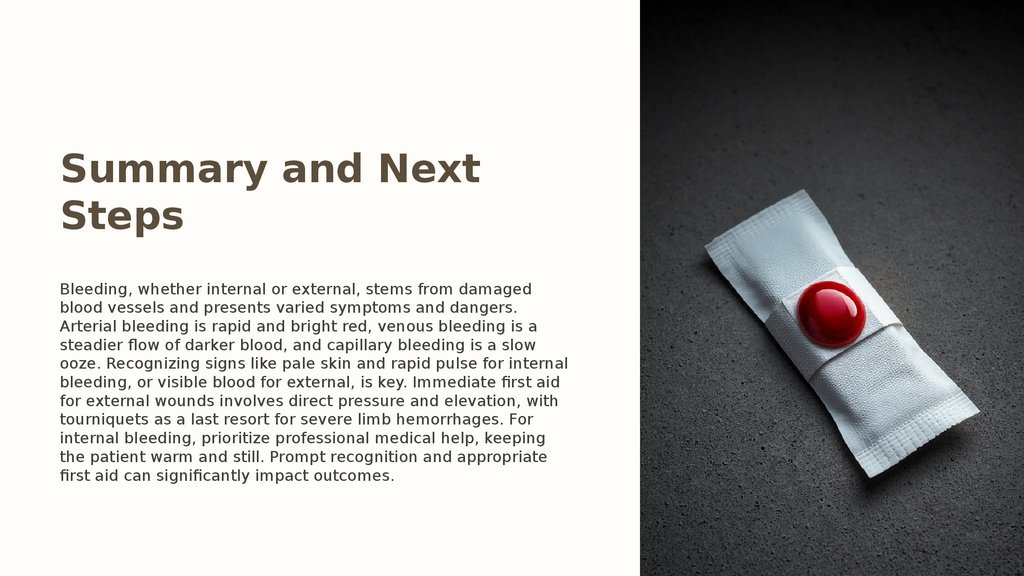
Bleeding, whether internal or external, stems from damaged
blood vessels and presents varied symptoms and dangers.
Arterial bleeding is rapid and bright red, venous bleeding is a
steadier flow of darker blood, and capillary bleeding is a slow
ooze. Recognizing signs like pale skin and rapid pulse for internal
bleeding, or visible blood for external, is key. Immediate first aid
for external wounds involves direct pressure and elevation, with
tourniquets as a last resort for severe limb hemorrhages. For
internal bleeding, prioritize professional medical help, keeping
the patient warm and still. Prompt recognition and appropriate
first aid can significantly impact outcomes.