



 Экономика
Похожие презентации:







In class rules
1. In class rules!!!
Name tags each class.Notes and pens are compulsory.
No phones or other devices are allowed in the
class. Breach of this rule will be punished by
dismissal. Use calculators to make calculations, do
not use phones
Students are not allowed if late for more than 10
minutes, the attendance is nullified.
Leaving the class without permission is not
allowed. Your attendance will be nullified.
2. Best practices of learning
Note taking is important. Two links to HarvardUniversity practices and research about note
taking:
Active participation and critical thinking through
questioning is motivated
3. Lecture 3: Elasticity
By Shukhrat Shadmanov4. Learning Outcomes
By the end of this unit, you should be able to:Define and apply the concepts of
Price Elasticity of Demand,
Income Elasticity of Demand,
Cross Elasticity of Demand;
Price elasticity of Supply
Describe the relationship between total revenue and
elasticity.
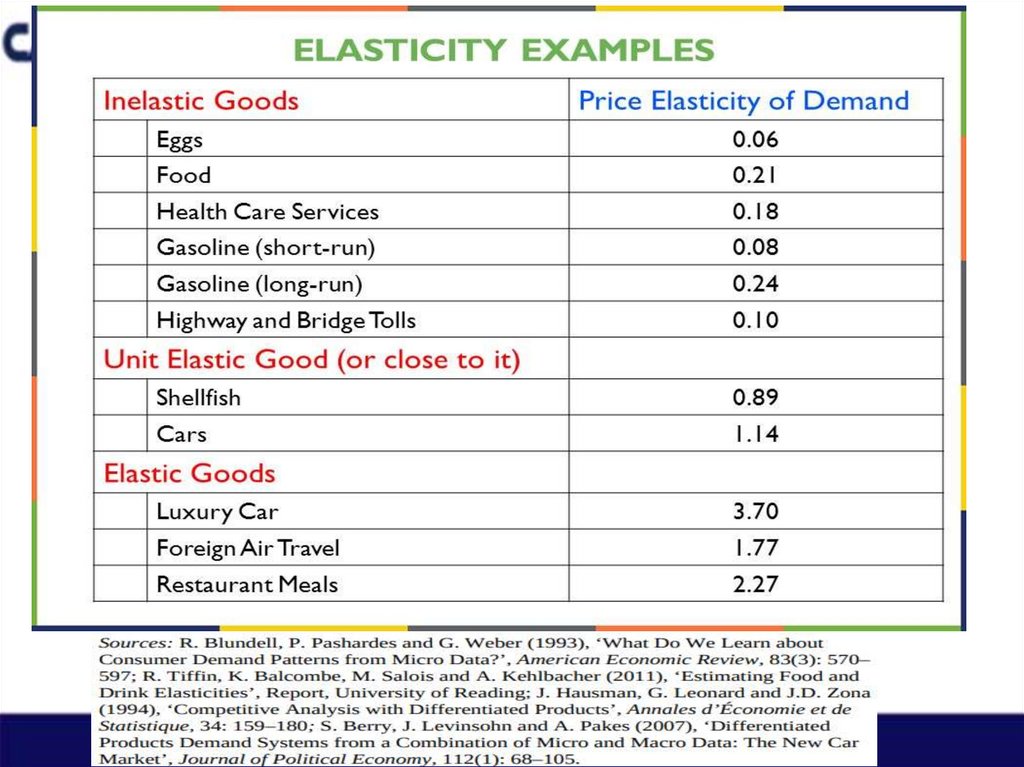
Discuss applications of elasticities
5.
Price Elasticity ofDemand
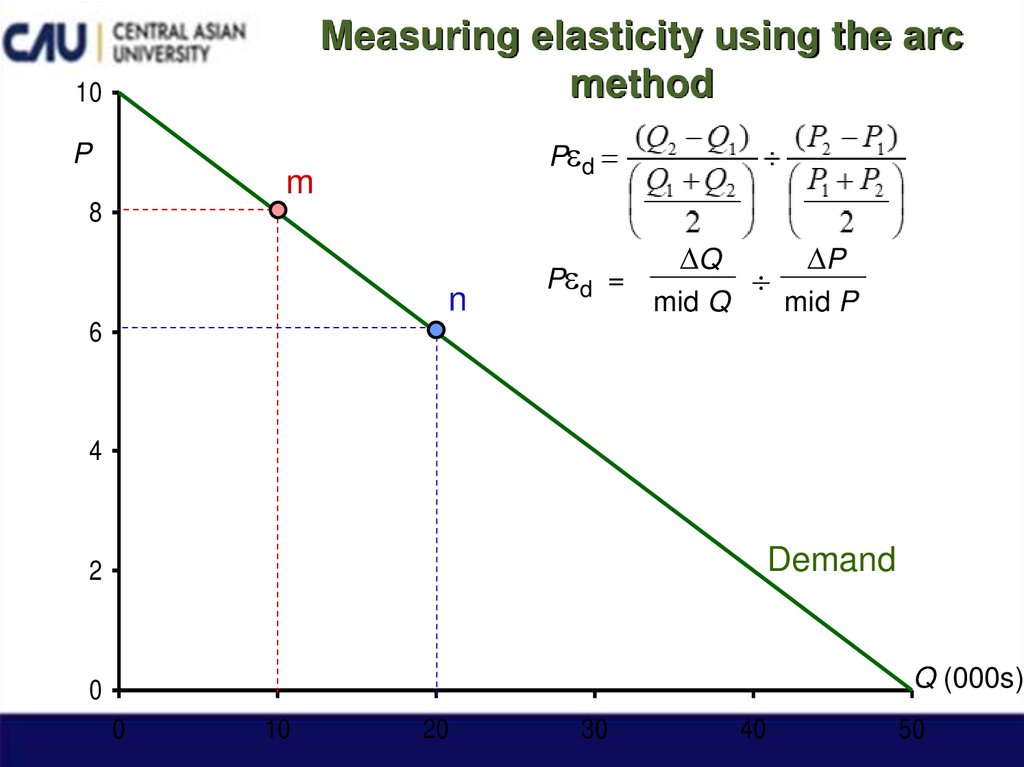
6. Measuring elasticity using the arc method
10P
Ped
m
8
n
Ped =
DQ
mid Q
DP
mid P
6
4
Demand
2
Q (000s)
0
0
10
20
30
40
50
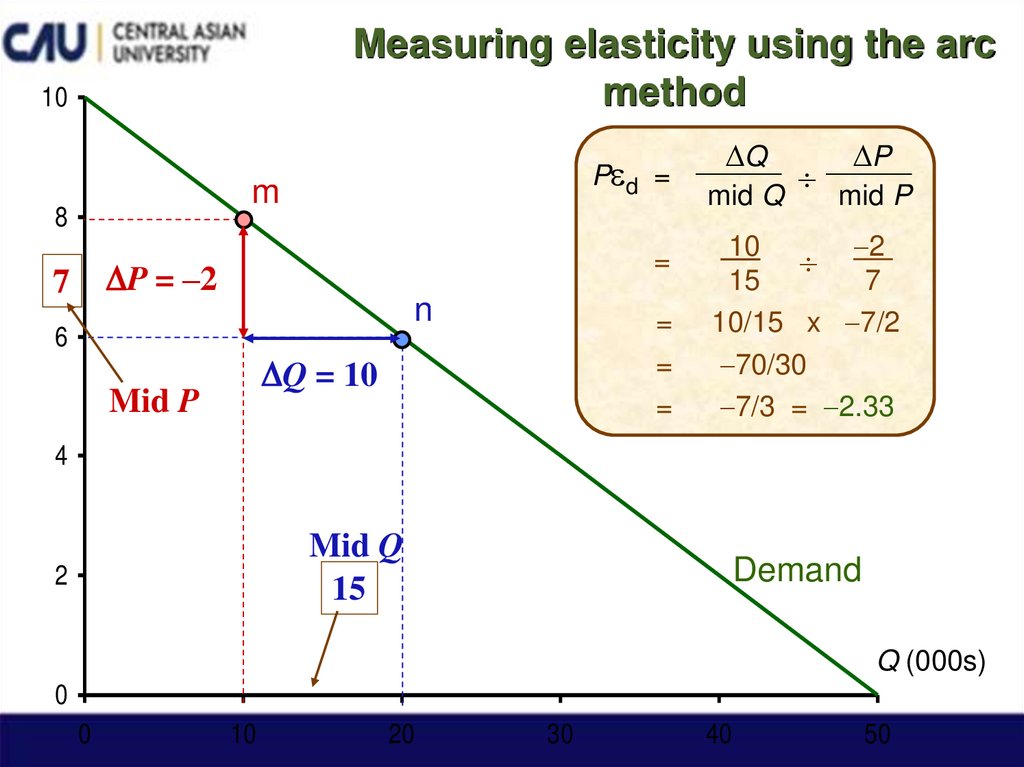
7. Measuring elasticity using the arc method
10Ped =
m
8
=
DP = –2
7
n
6
=
=
=
DQ = 10
Mid P
DQ
mid Q
DP
mid P
10
-2
15
7
10/15 x -7/2
-70/30
-7/3 = -2.33
4
Mid Q
15
2
Demand
Q (000s)
0
0
10
20
30
40
50
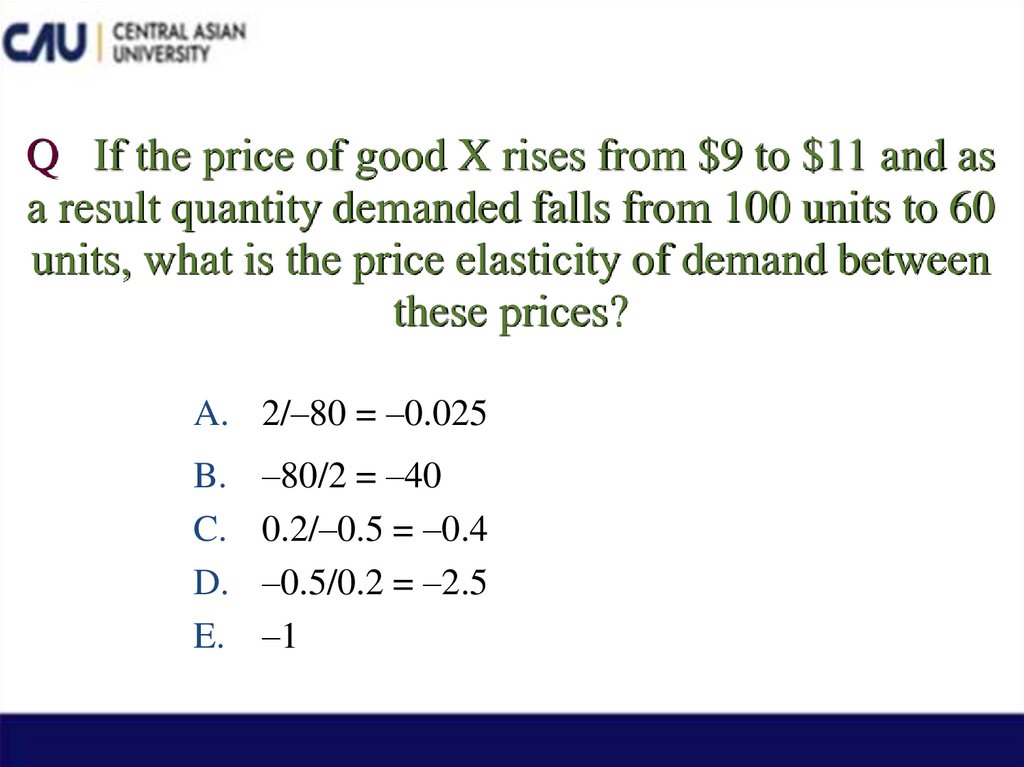
8. Q If the price of good X rises from $9 to $11 and as a result quantity demanded falls from 100 units to 60 units, what is the
price elasticity of demand betweenthese prices?
A. 2/–80 = –0.025
B.
C.
D.
E.
–80/2 = –40
0.2/–0.5 = –0.4
–0.5/0.2 = –2.5
–1
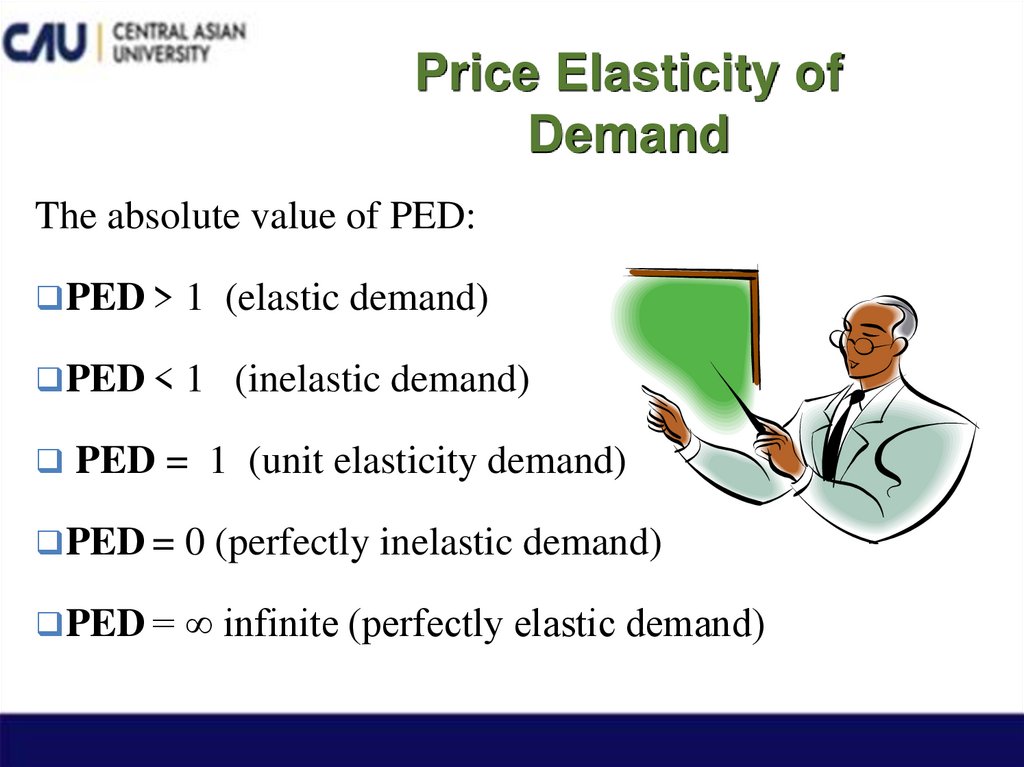
9. Price Elasticity of Demand
The absolute value of PED:PED > 1 (elastic demand)
PED < 1 (inelastic demand)
PED = 1 (unit elasticity demand)
PED = 0 (perfectly inelastic demand)
PED = ∞ infinite (perfectly elastic demand)
10.
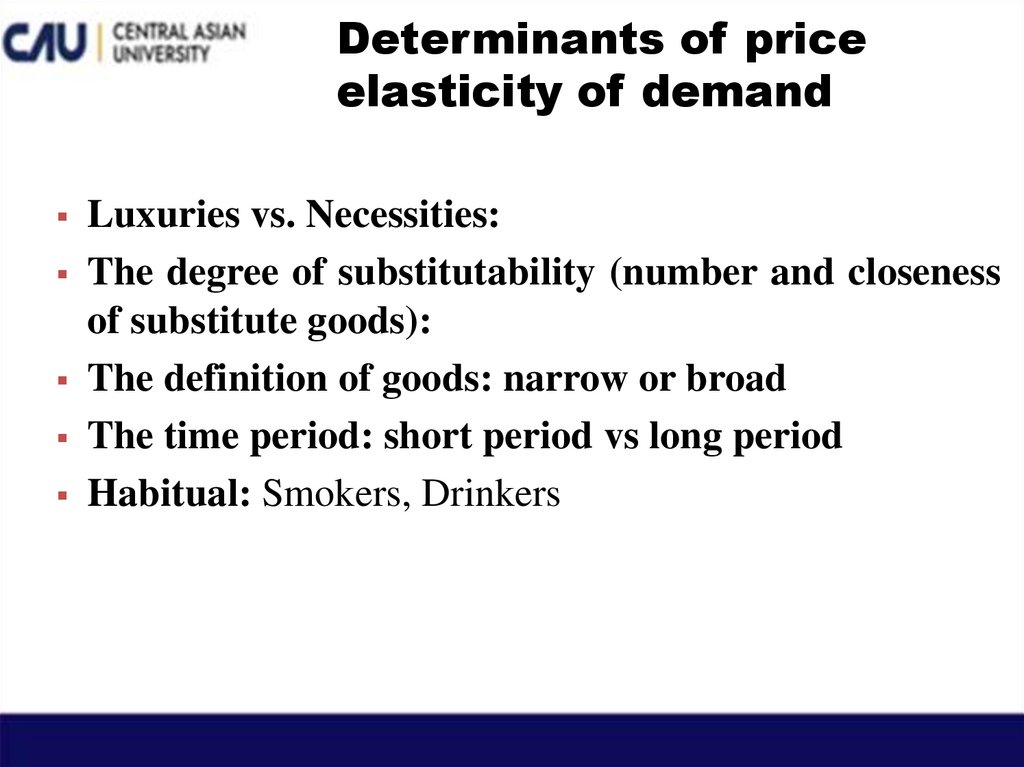
Determinants of priceelasticity of demand
Luxuries vs. Necessities:
The degree of substitutability (number and closeness
of substitute goods):
The definition of goods: narrow or broad
The time period: short period vs long period
Habitual: Smokers, Drinkers
11.
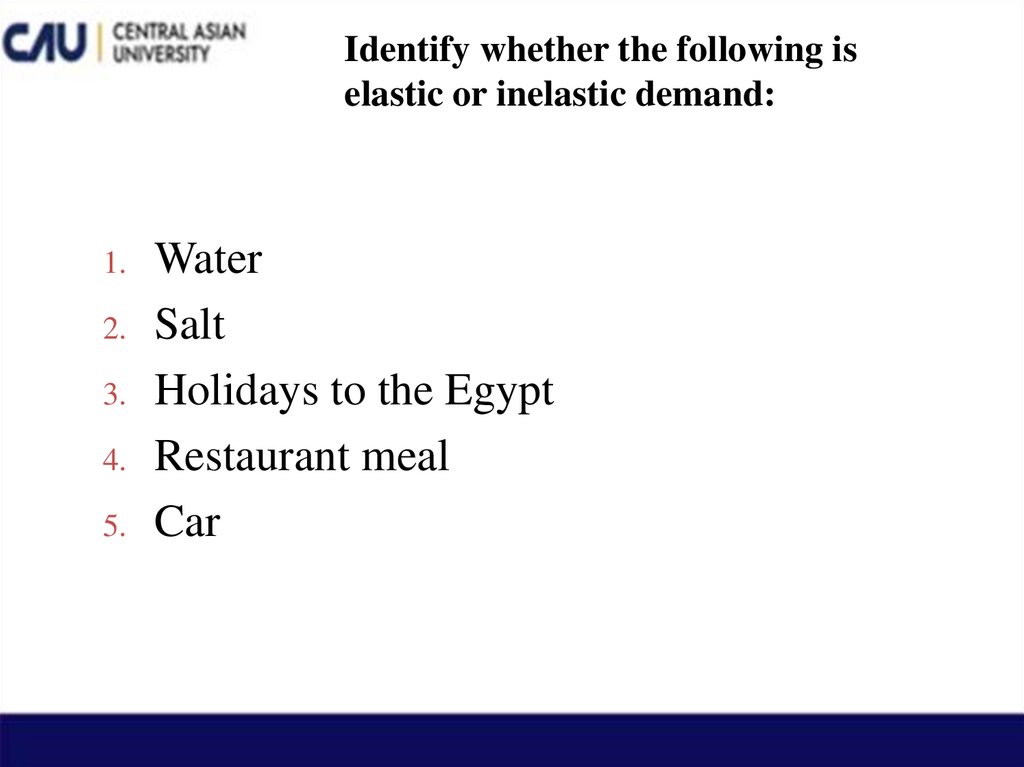
Identify whether the following iselastic or inelastic demand:
Water
2. Salt
3. Holidays to the Egypt
4. Restaurant meal
5. Car
1.
12.
13.
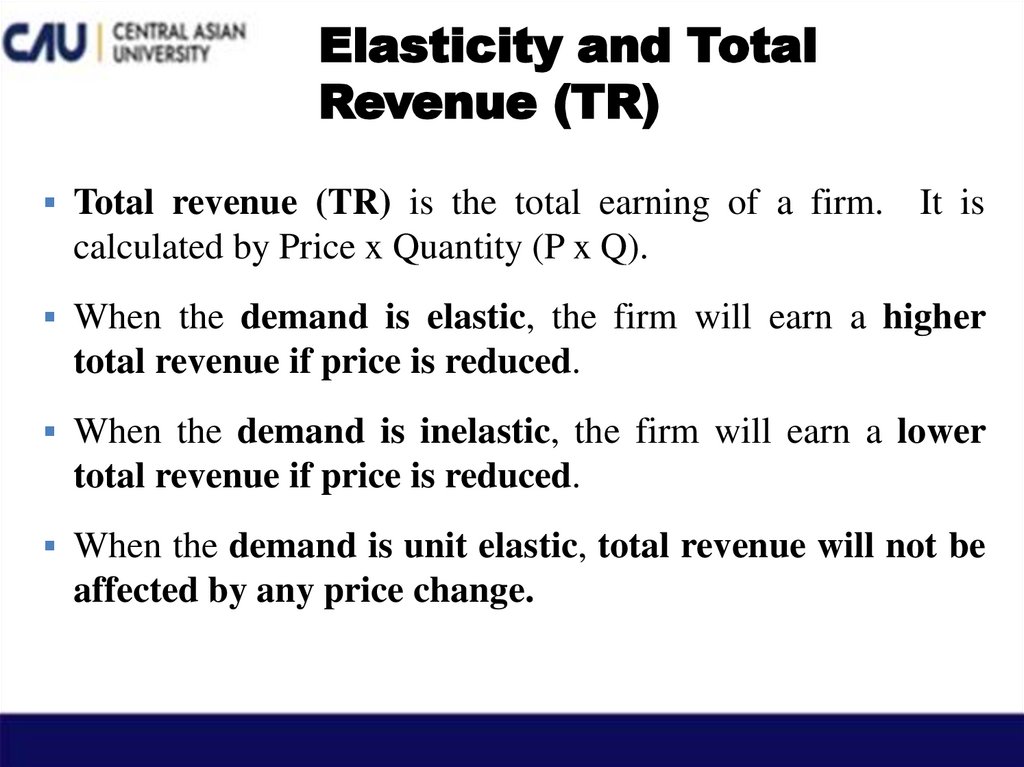
Elasticity and TotalRevenue (TR)
Total revenue (TR) is the total earning of a firm.
It is
calculated by Price x Quantity (P x Q).
When the demand is elastic, the firm will earn a higher
total revenue if price is reduced.
When the demand is inelastic, the firm will earn a lower
total revenue if price is reduced.
When the demand is unit elastic, total revenue will not be
affected by any price change.
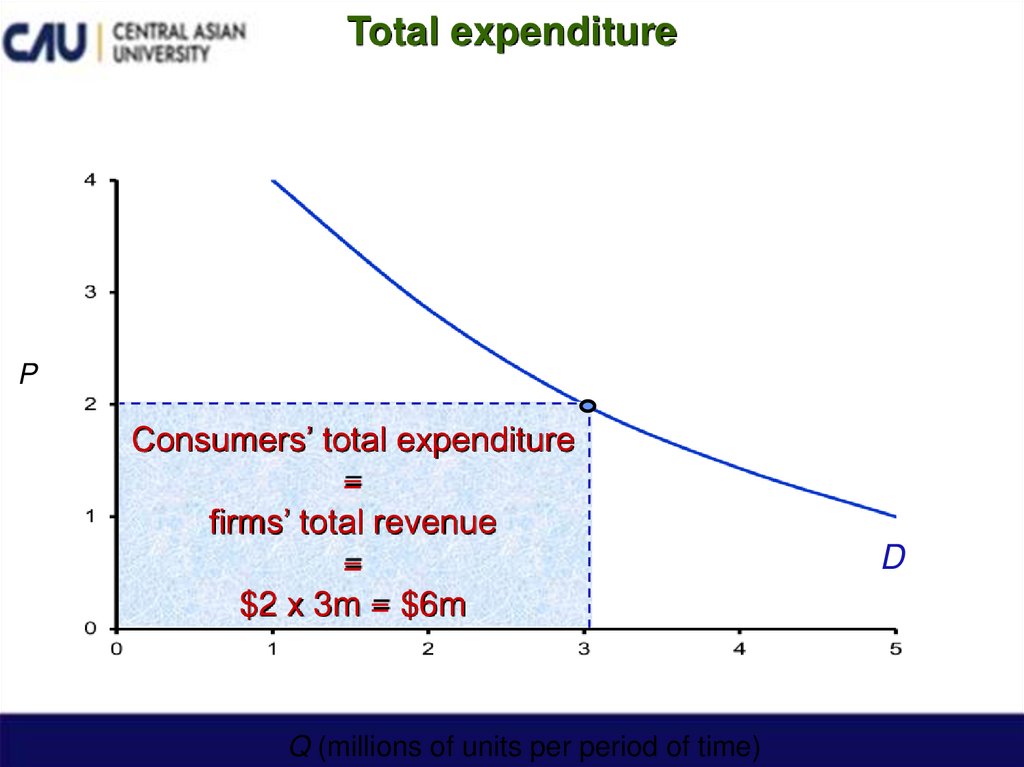
14. Total expenditure
PConsumers’ total expenditure
=
firms’ total revenue
=
$2 x 3m = $6m
Q (millions of units per period of time)
D
15.
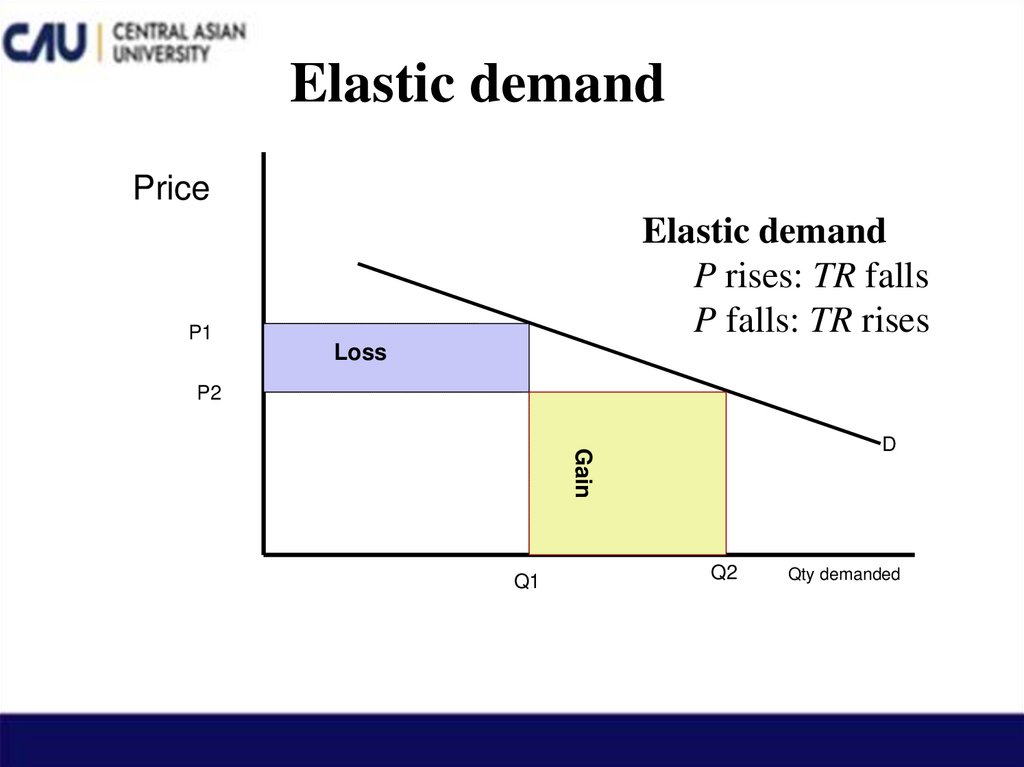
Elastic demandPrice
P1
Elastic demand
P rises: TR falls
P falls: TR rises
Loss
P2
Gain
D
D
Q1
D2
Q2
Qty demanded
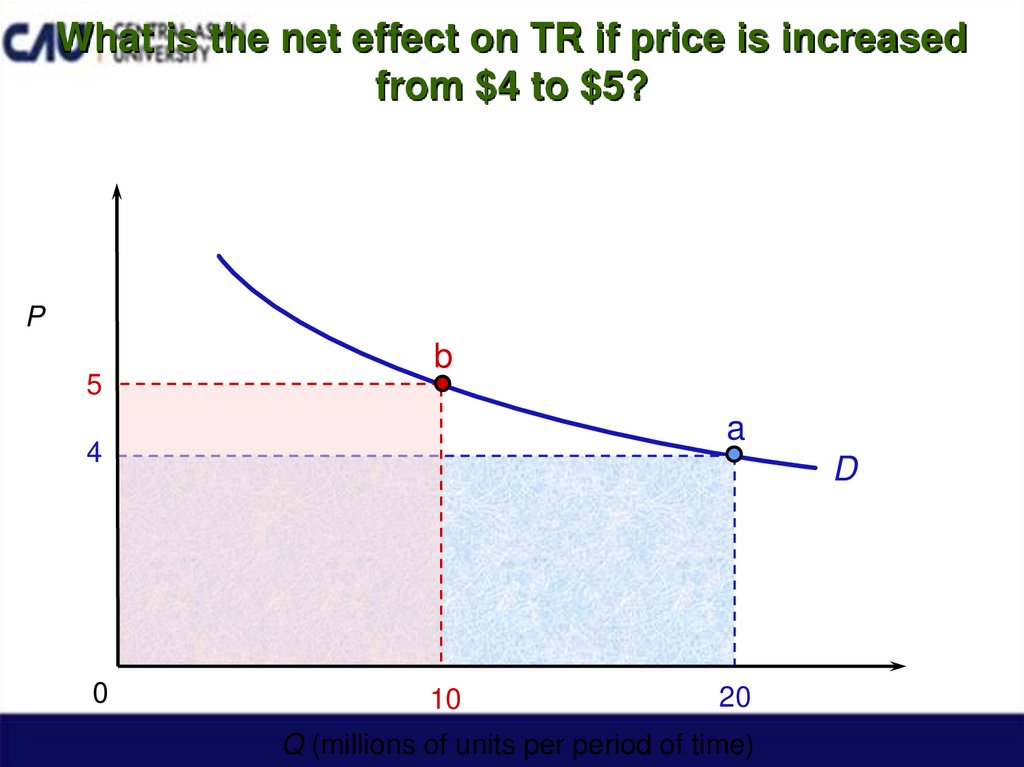
16. What is the net effect on TR if price is increased from $4 to $5?
P5
b
a
4
0
D
10
20
Q (millions of units per period of time)
17.
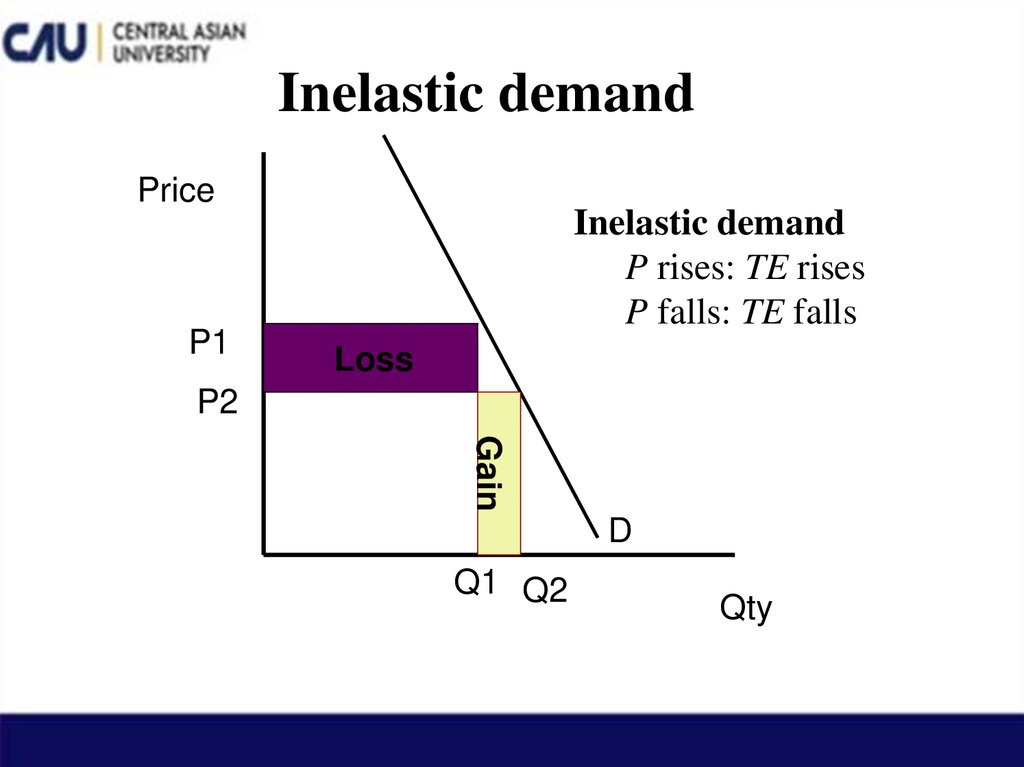
Inelastic demandPrice
P1
Inelastic demand
P rises: TE rises
P falls: TE falls
Loss
P2
Gain
D
Q1 Q2
Qty
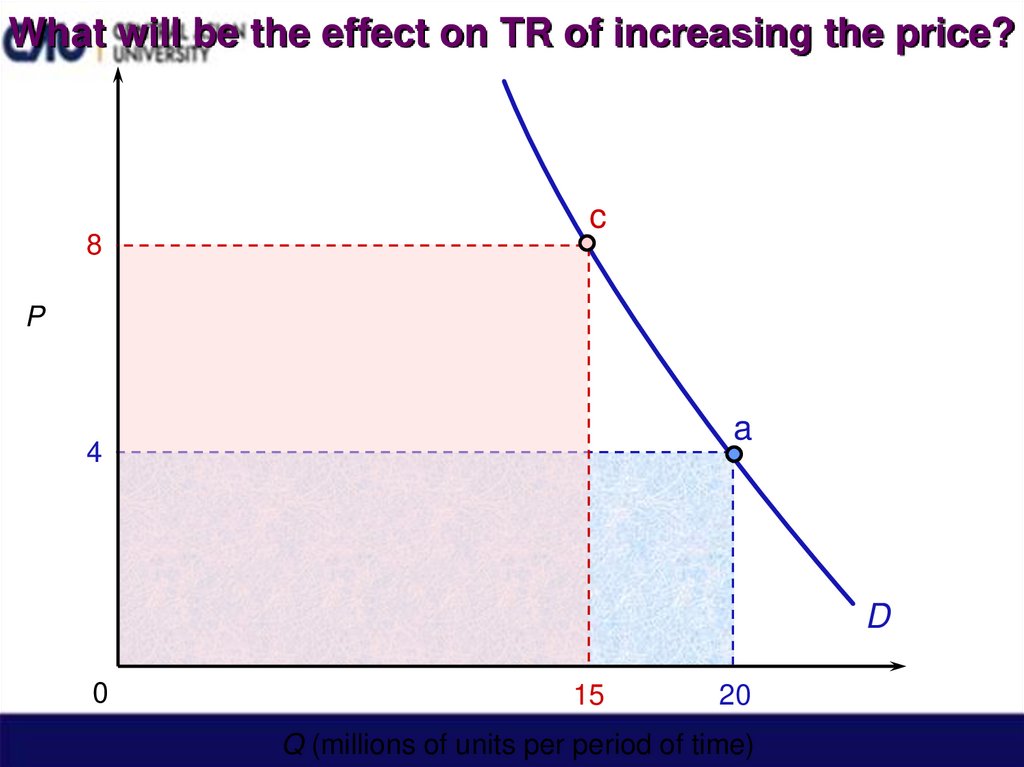
18. What will be the effect on TR of increasing the price?
8c
P
a
4
D
0
15
20
Q (millions of units per period of time)
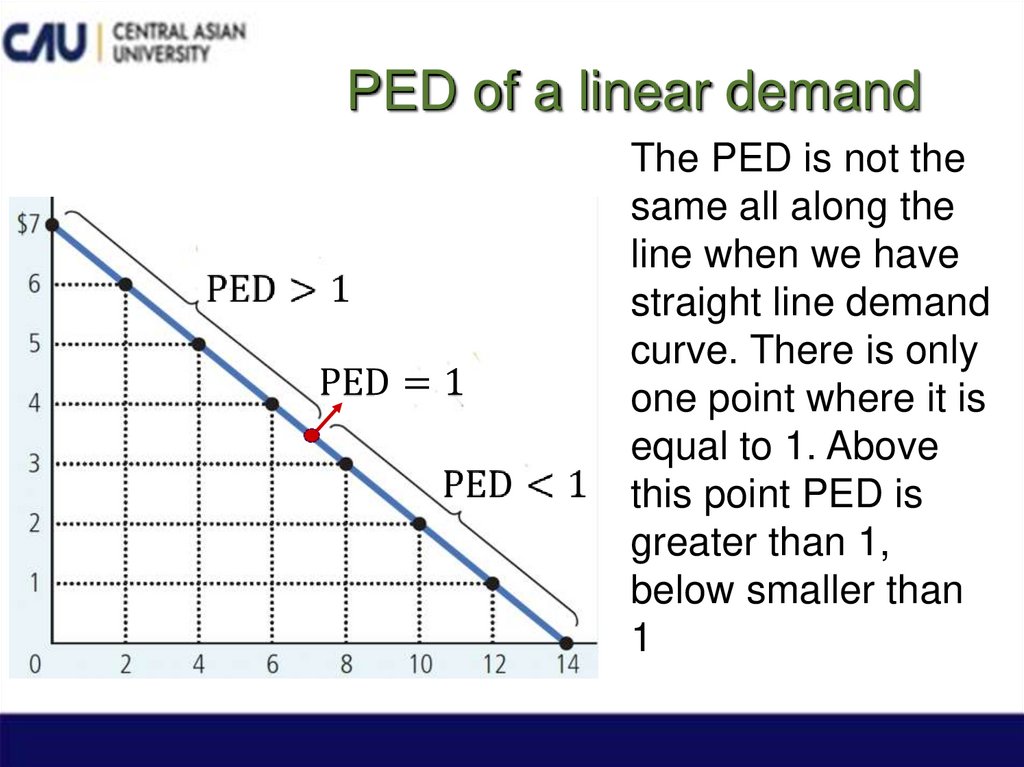
19. PED of a linear demand
The PED is not thesame all along the
line when we have
straight line demand
curve. There is only
one point where it is
equal to 1. Above
this point PED is
greater than 1,
below smaller than
1
20.
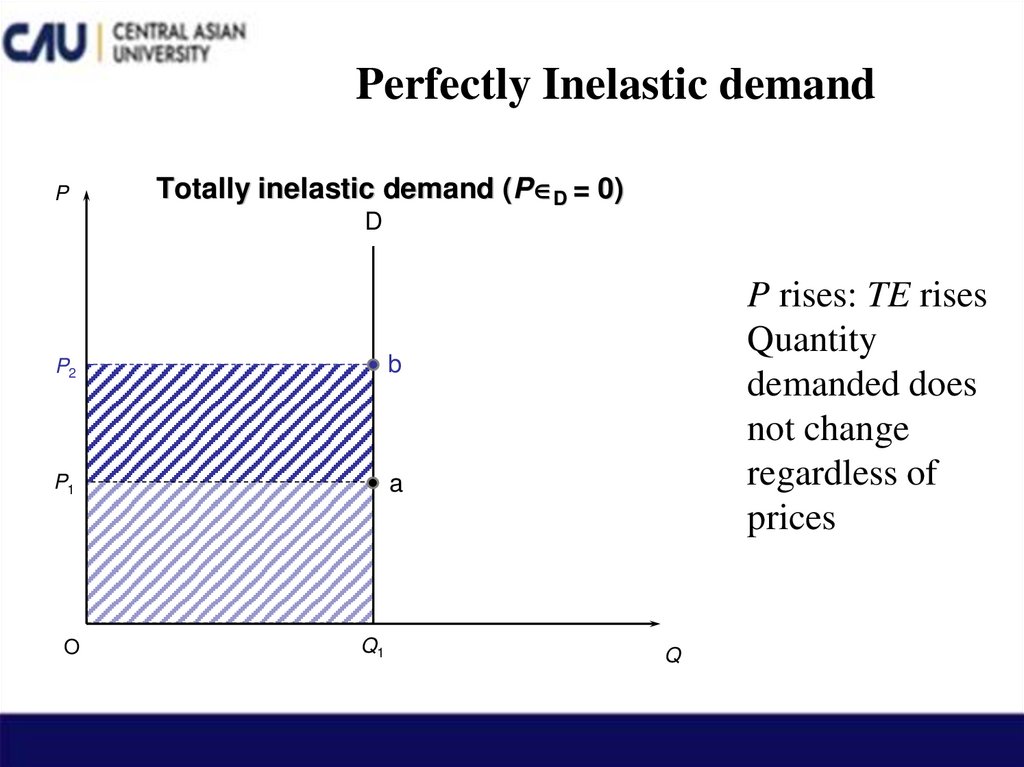
Perfectly Inelastic demandP
Totally inelastic demand (P D = 0)
D
P2
b
P1
a
O
Q1
P rises: TE rises
Quantity
demanded does
not change
regardless of
prices
Q
21.
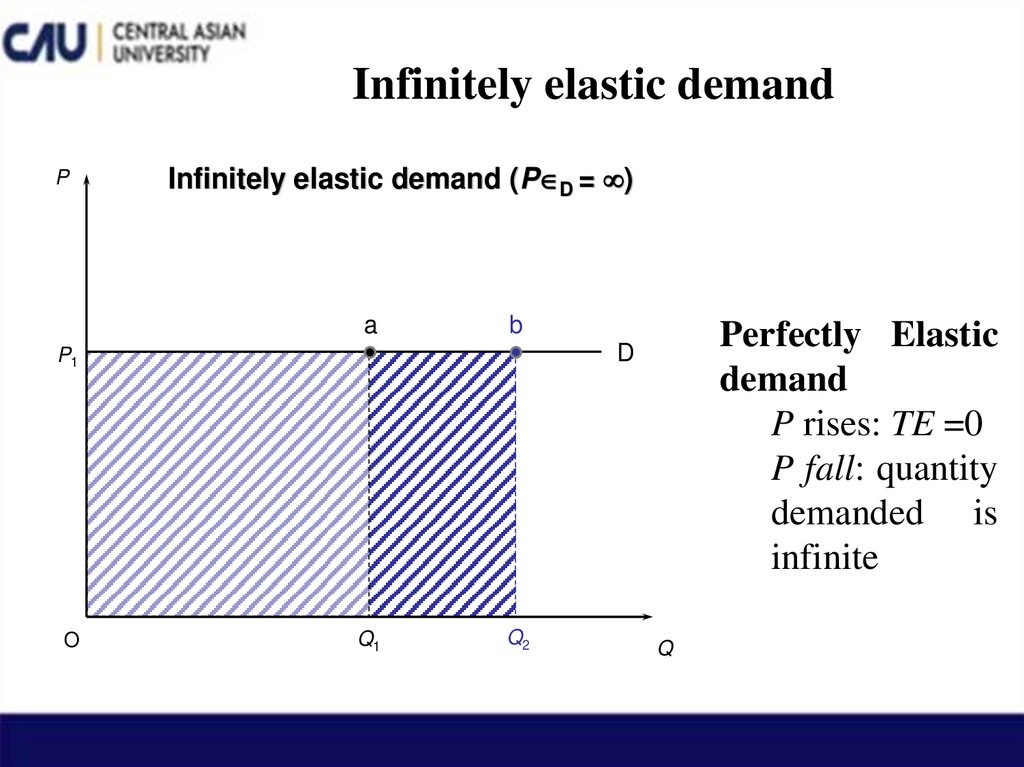
Infinitely elastic demandP
Infinitely elastic demand (P D = )
a
b
O
Perfectly Elastic
demand
P rises: TE =0
P fall: quantity
demanded is
infinite
D
P1
Q1
Q2
Q
22.
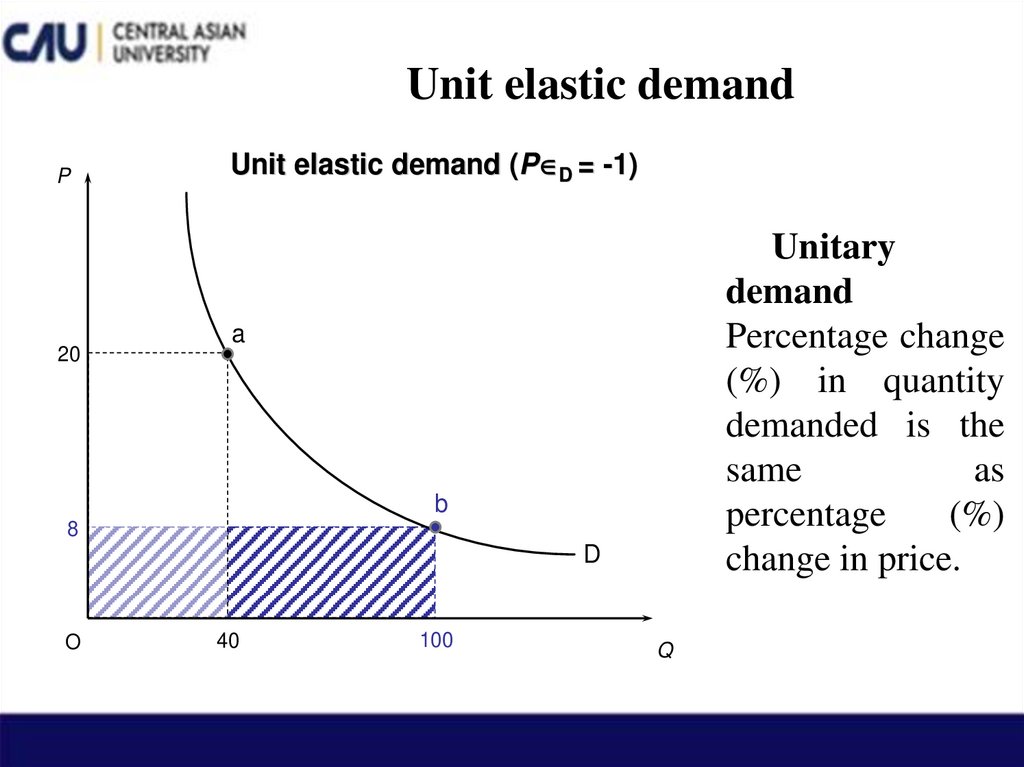
Unit elastic demandP
20
Unit elastic demand (P D = -1)
Unitary
demand
Percentage change
(%) in quantity
demanded is the
same
as
percentage
(%)
change in price.
a
b
8
D
O
40
100
Q
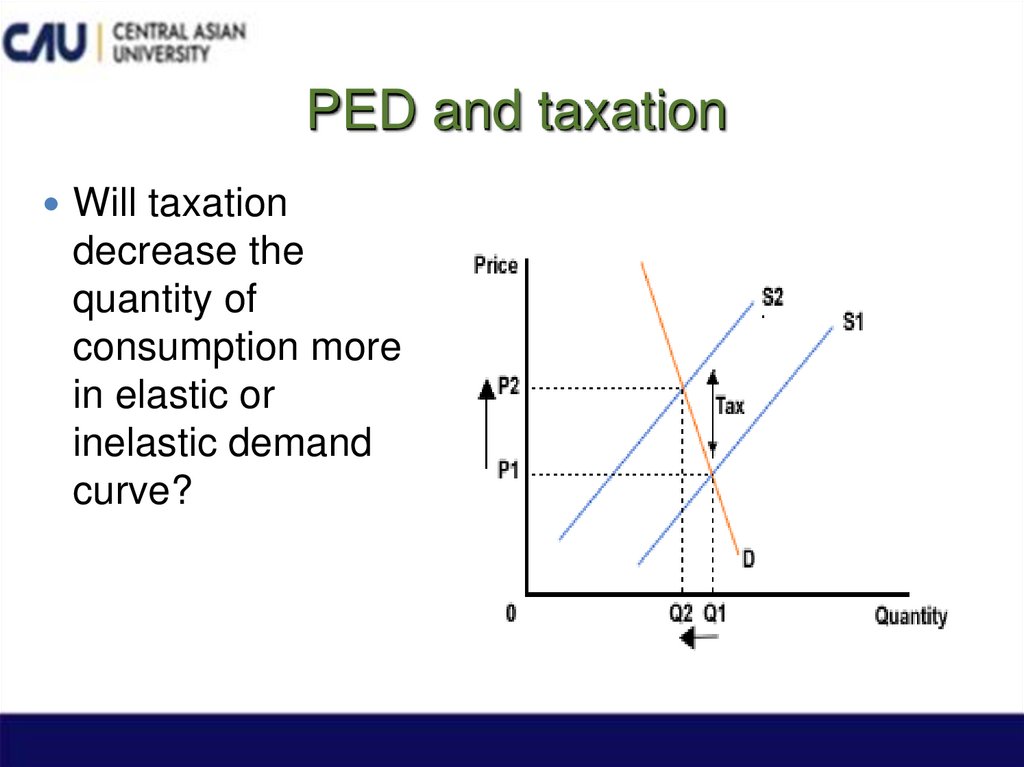
23. PED and taxation
Will taxationdecrease the
quantity of
consumption more
in elastic or
inelastic demand
curve?
24.
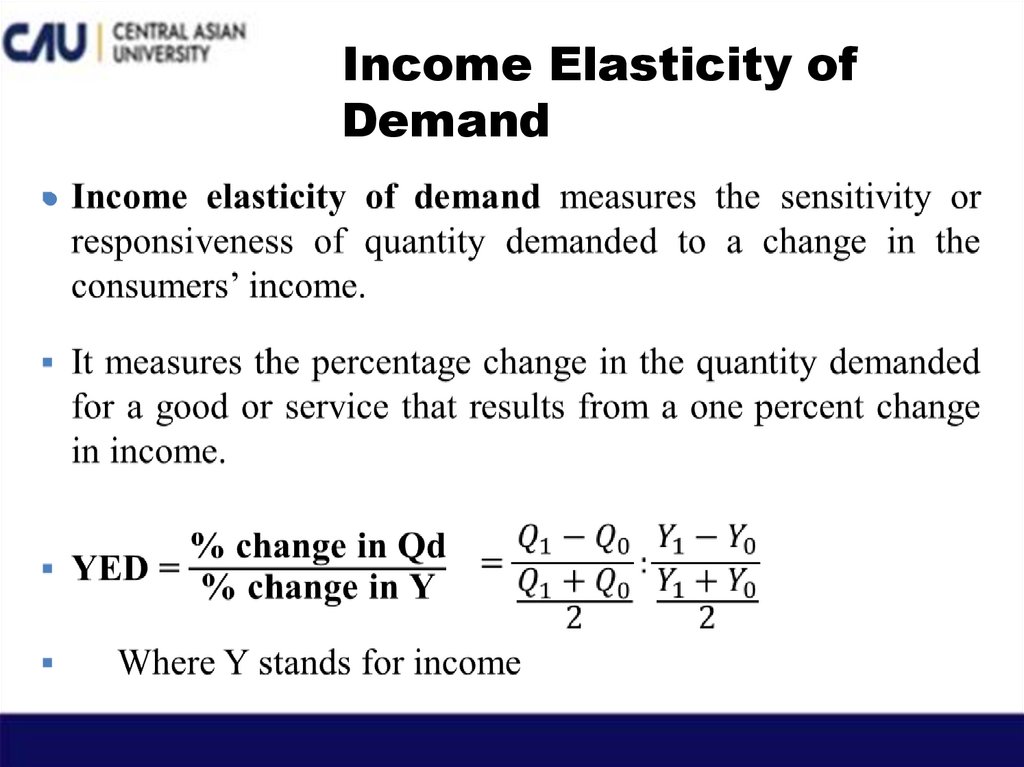
Income Elasticity ofDemand
25.
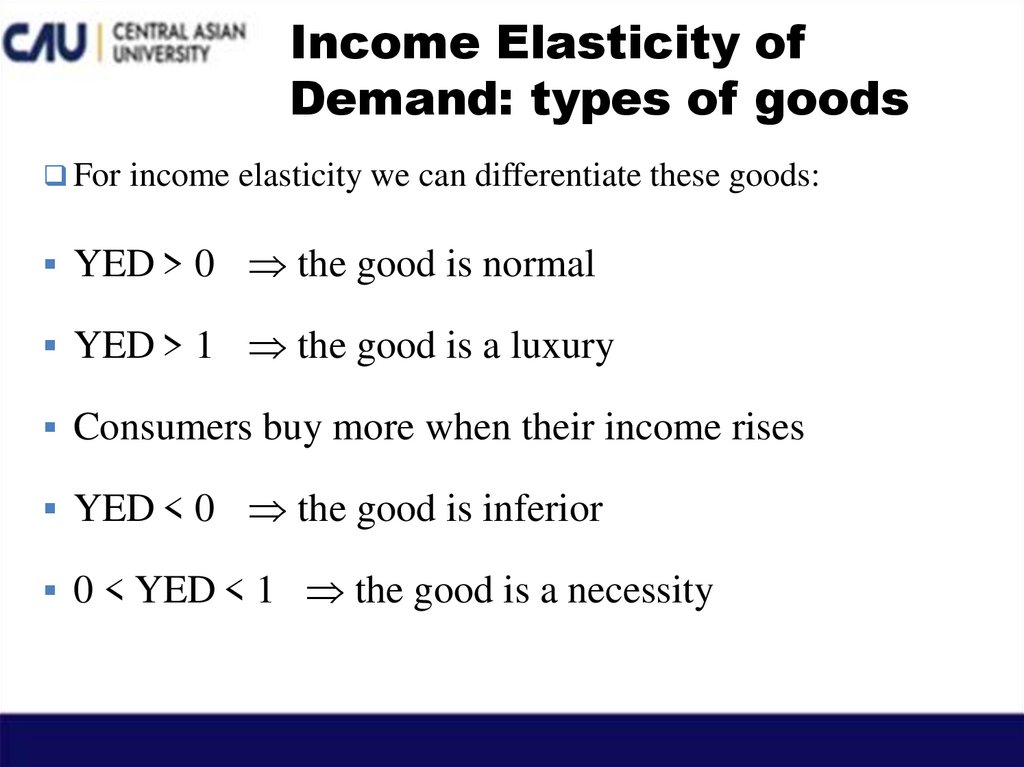
Income Elasticity ofDemand: types of goods
For income elasticity we can differentiate these goods:
YED > 0 the good is normal
YED > 1 the good is a luxury
Consumers buy more when their income rises
YED < 0 the good is inferior
0 < YED < 1 the good is a necessity
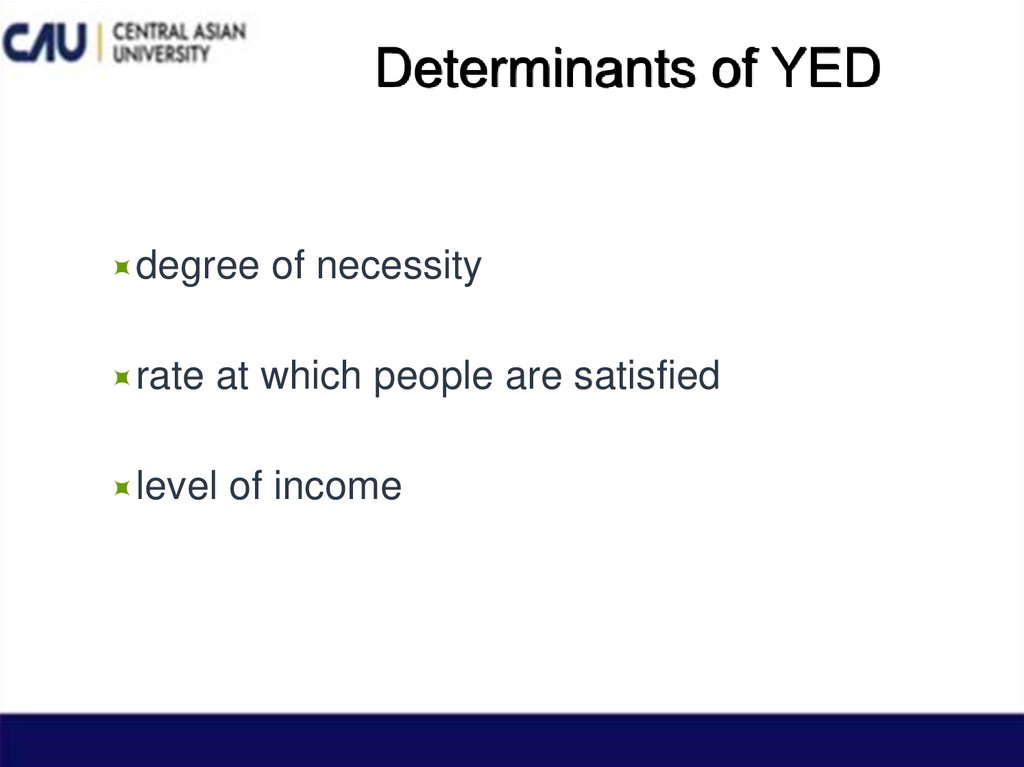
26. Determinants of YED
degree of necessityrate at which people are satisfied
level of income
27.
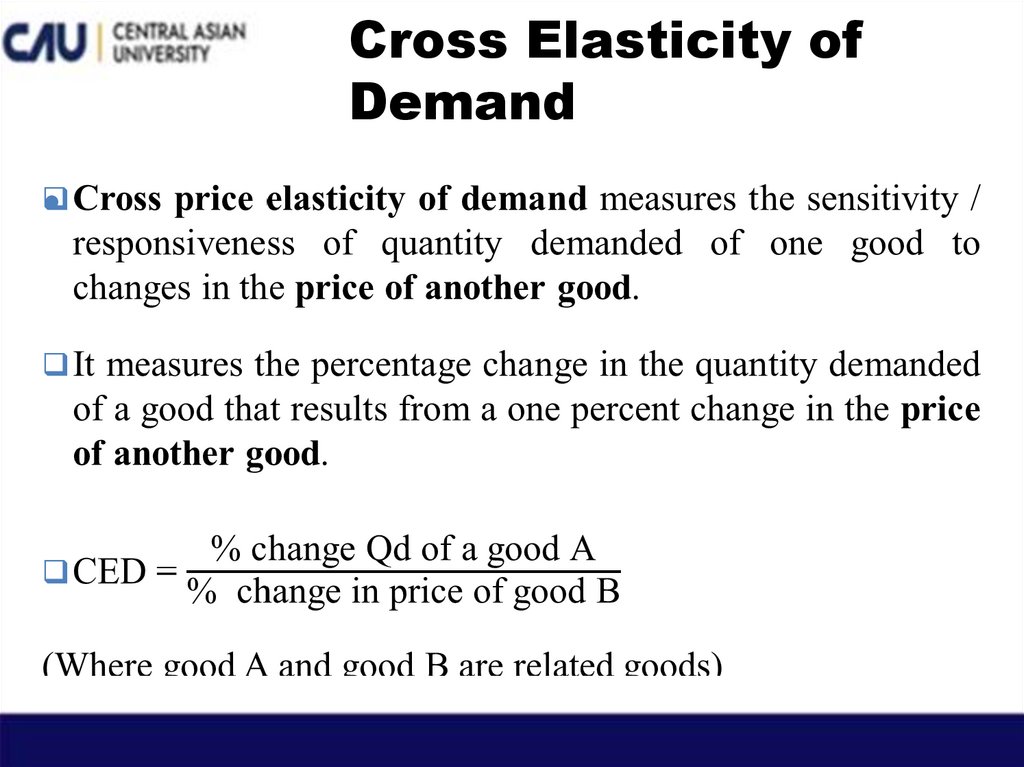
Cross Elasticity ofDemand
28. Price Elasticity of Supply
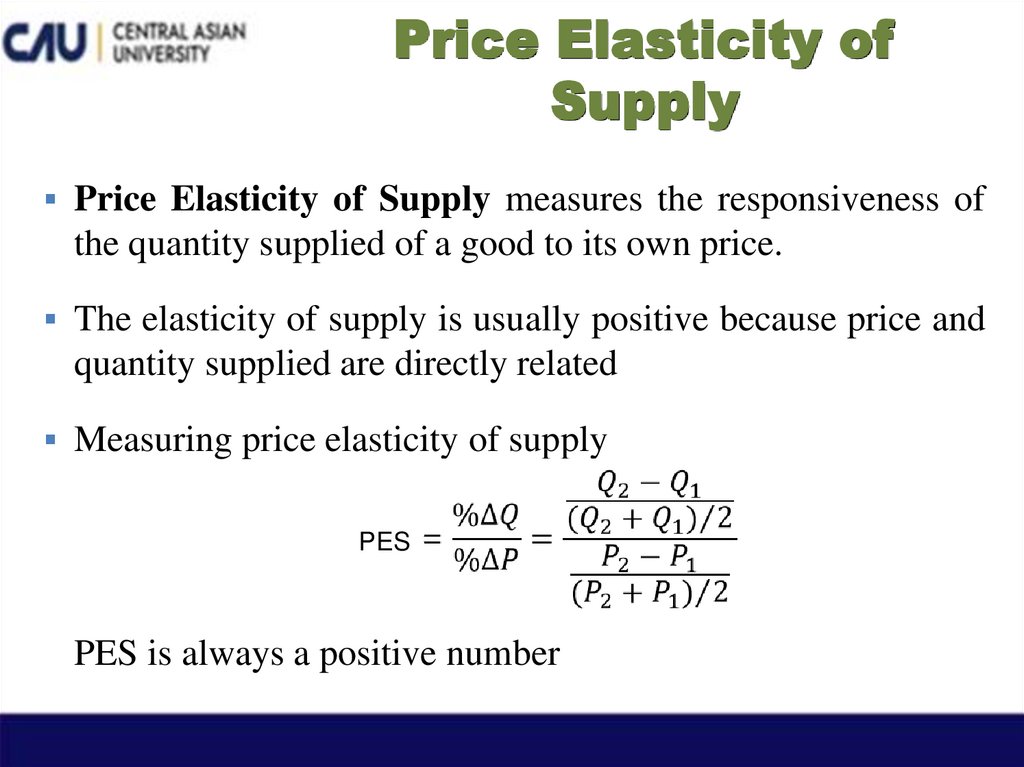
Price Elasticity of Supply measures the responsiveness ofthe quantity supplied of a good to its own price.
The elasticity of supply is usually positive because price and
quantity supplied are directly related
Measuring price elasticity of supply
PES
PES is always a positive number
29. Price Elasticity of Supply
Supply curves can be characterized as:1.
Perfectly Inelastic Supply
2.
Inelastic Supply
3.
Unit Elastic Supply
4.
Elastic Supply
5.
Perfectly Elastic Supply
30. Determinants of PES
Amount that costs rise as output increases: The moreeasily sellers can change the quantity they produce, the
greater the price elasticity of supply. (E.g. The supply of
water is harder to vary and thus less elastic than the supply
of pizza.)
Time period: for many goods, price elasticity of supply is
greater in the long run than in the short run, because firms
can build new factories, or new firms may be able to enter
the market.